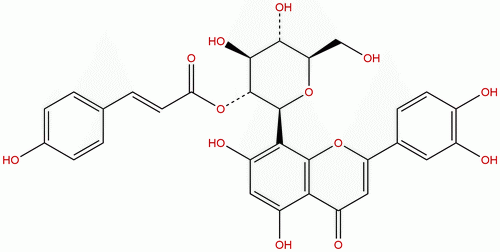


Product name: Orientin-2''-O-p-trans-coumarate
Synonym name:
Catalogue No.: BP3868
Cas No.: 1229437-75-5
Formula: C30H26O13
Mol Weight: 594.525
Botanical Source:
Physical Description:
Type of Compound:
Purity: 95%~99%
Analysis Method: HPLC-DAD or/and HPLC-ELSD
Identification Method: Mass, NMR
Packing: Brown vial or HDPE plastic bottle
The product could be supplied from milligrams to grams
Inquire for bulk scale.
For Reference Standard and R&D, Not for Human Use Directly.
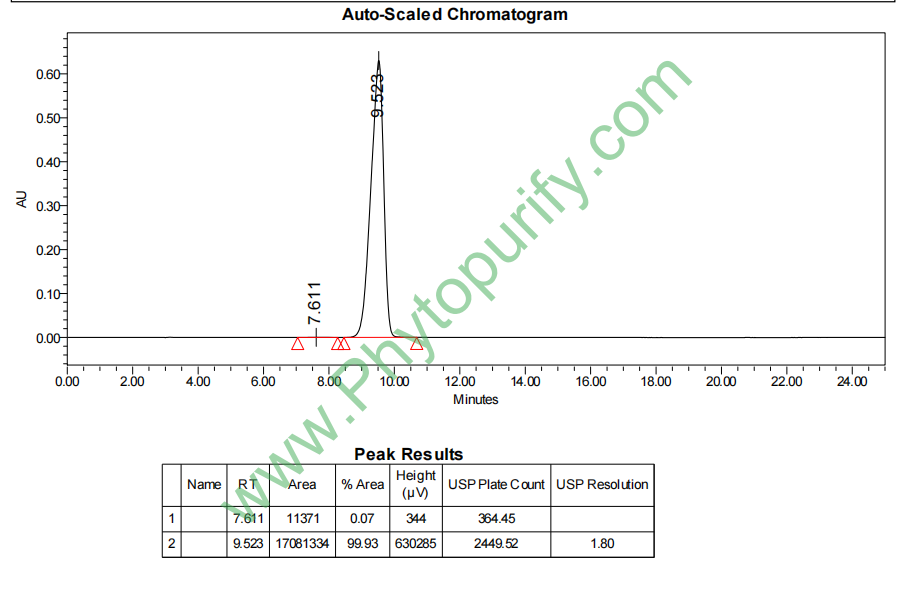
HPLC of Orientin-2''-O-p-trans-coumarate
Storage conditions:Short-term storage at 2~8℃, long-term storage at -20 ~ -80℃
227.5800
1.5842
1.3257
.2668
.7046
.2145
Low
87.2124
4.3300
Yes
No
No
No
Yes
Yes
0.6
Yes
Yes
Yes
Yes
Natural products, as an important source of drug discovery, play an irreplaceable role in the long struggle between humans and diseases. Flavonoids, as the most widely distributed class of secondary metabolites in nature, have attracted much attention due to their structural diversity and extensive biological activity. Among them, Orientin and its derivatives, as representatives of flavonoid carbon glycosides, exhibit significant pharmacological activities such as antioxidant, anti-inflammatory, anti-tumor, and cardiovascular protection. In recent years, with the advancement of separation and purification techniques and structural identification methods, a series of more complex acylated derivatives of paeoniflorin have been discovered, greatly enriching the chemical diversity and biological connotations of this class of compounds.
Orientin-2 '' - O-p-trans-coumarate (CAS number: 1229437-75-5) is one of the notable natural products. This compound introduces a p-coumaroyl structural unit at the 2 '' position of the glucosyl group in the core of paeoniflorin, forming a more complex acylated carbon glycoside skeleton. This structural modification not only changes the physicochemical properties of the molecule, but may also have a profound impact on its biological activity, target selectivity, and in vivo pharmacokinetic behavior. From the perspective of chemical taxonomy, this compound belongs to the acylated derivatives of flavonoid carbon glycosides, and its unique structural characteristics indicate its potential research value in the field of antioxidant stress-related diseases.
This article aims to provide a systematic professional review of 2 '' - O-p-trans coumarin. The article will first elaborate on its chemical structure and physicochemical properties, then trace its plant origin and extraction and separation methods, focus on reviewing the research progress of its antioxidant and other pharmacological activities, and deeply explore its mechanism of action and molecular targets. On this basis, the pharmacokinetic characteristics of the drug are evaluated based on the drug formulation parameters, and finally, the clinical application prospects are discussed. By comprehensively integrating existing research results, this article aims to provide a solid scientific basis for the in-depth development and utilization of this natural product.
The chemical structure of 2 '' - O-p-trans coumarin is the basis of its biological activity. From the perspective of structural composition, the molecule consists of three core components: the flavonoid core (aglycone), the glucose group, and the trans coumaroyl group. Its parent nucleus is Luteolin, which has four hydroxyl groups attached to the 5, 7, 3 ', and 4' positions of the flavonoid basic skeleton. Unlike common flavonoid glycosides, the sugar group (glucose) of paeoniflorin is connected to the C-8 position of the flavonoid nucleus through a carbon carbon bond (C-glycosidic bond). This C-glycosidic bond has strong stability against acid hydrolysis and enzymatic hydrolysis, and is the structural basis for the long-lasting effects of this type of compound in vivo. The unique feature of this compound is that the 2 '' hydroxyl group of the glucose group is connected to p-coumaric acid through an ester bond, forming a 2 '' - O-acylated structure. Trans coumaric acid itself is a phenolic acid widely present in plants, with antioxidant activity. Its introduction may enhance the overall molecular biological function through synergistic or complementary effects.
In terms of physicochemical properties, the molecular weight of the compound is 594.5250 Da, which is within the reasonable range of small molecule drugs. Its lipophilic water partition coefficient (LogP) is 1.5842, indicating that the molecule has a certain degree of lipophilicity, but overall tends to be hydrophilic, which is consistent with the presence of multiple phenolic hydroxyl and sugar structural units in its molecule. The polar surface area (TPSA) is as high as 227.5800 Å ², which is much higher than the generally believed good permeability threshold for oral drugs (about 140 Å ²), indicating that the compound may have difficulty penetrating cell membranes through passive diffusion, and its transmembrane transport may depend on specific transport proteins. The water solubility parameter is 0.2668 mg/mL, which belongs to the category of slight solubility, which may limit its oral bioavailability to some extent. It is worth noting that its blood-brain barrier (BBB) penetration ability was evaluated as "low", which is consistent with its high polarity and high molecular weight characteristics, suggesting that the compound mainly acts on peripheral tissues and may have less impact on the central nervous system. In addition, the risk assessment of hERG inhibition is' no ', indicating a low risk of cardiac toxicity; The Ames test result is 0.6, indicating a low potential risk of genetic toxicity, which provides preliminary positive signals for its safety as a candidate drug.
2 '' - O-p-trans coumarin, as a relatively rare natural product, has limited plant species and mainly exists in certain specific families and genera. The main sources reported in current literature include certain plants in the Poaceae family, such as the golden grass(Pogonatherum crinitum)Bamboo leaves (such as Phyllostachys Certain species of Fabaceae and Fabaceae. In addition, in traditional medicinal plants such as Houttuynia cordata(Polygonum orientale)It has also been found, but the content is usually low. These plants are mostly grown in Asian regions, especially in the traditional Chinese medicine system. Due to the low content of this compound in plants and its coexistence with structurally similar homologs such as 2 '' - O-p-cis coumarin and acylated derivatives at other positions, its isolation and purification pose certain challenges.
The extraction method for this compound usually follows the classic process of natural product chemistry. Firstly, the dried plant materials are crushed and subjected to solvent extraction. Given the polarity of the compound, methanol, ethanol, or aqueous ethanol are commonly used as extraction solvents to obtain crude extracts through methods such as cold soaking, percolation, or reflux extraction. In order to improve extraction efficiency, modern techniques such as ultrasound assisted extraction or microwave-assisted extraction are sometimes used. After obtaining the crude extract, systematic separation and purification are required. The commonly used preliminary separation methods include liquid-liquid extraction (such as sequential extraction with petroleum ether, ethyl acetate, n-butanol) or macroporous adsorption resin column chromatography (such as D101, HP-20 type) to enrich the flavonoid glycoside components where the target compound is located.
Further fine separation relies on the combination of multiple chromatographic techniques. Silica gel column chromatography is a classic choice, often using solvent systems such as chloroform methanol water or ethyl acetate methanol water for gradient elution. Due to the presence of phenolic hydroxyl groups in the compound, irreversible adsorption may occur on silica gel columns, making polyamide column chromatography a superior choice due to its excellent separation selectivity for flavonoids. In addition, Sephadex LH-20 gel column chromatography is effective in removing pigment and further purification. In recent years, preparative high-performance liquid chromatography (Pre HPLC) has become a powerful tool for separating such trace components. By using a C18 reverse phase chromatography column with acetonitrile water or methanol water (often with a small amount of formic acid or acetic acid added) as the mobile phase, efficient separation of target compounds from structurally similar compounds can be achieved. Finally, the structure of the purified compound was confirmed by nuclear magnetic resonance spectroscopy (NMR), high-resolution mass spectrometry (HR-MS), and circular dichroism (CD), especially by two-dimensional NMR techniques (such as HMBC, HSQC) to determine the acyl linkage position (2 '' - O -) and the coumaril configuration (trans).
The pharmacological activity research of 2 '' - O-p-trans coumarin is still in its infancy, but existing studies, especially the exploration of its antioxidant activity, have revealed its enormous potential as a potential antioxidant. Oxidative stress is one of the core pathological mechanisms for the occurrence and development of many chronic diseases (such as cardiovascular diseases, neurodegenerative diseases, diabetes complications and cancer). Therefore, the search for efficient and low toxicity natural antioxidants has important scientific significance and application value.
antioxidant activity This compound is the most widely studied pharmacological effect. Multiple in vitro chemical experiments have shown that 2 '' - O-p-trans coumarin can effectively scavenge various free radicals, including 1,1-diphenyl-2-trinitrophenylhydrazine (DPPH) free radical, 2,2 '- diazobis (3-ethylbenzothiazoline-6-sulfonic acid) cationic free radical, hydroxyl free radical (• OH), and superoxide anion free radical (O ₂⁻ •). Its scavenging ability is usually stronger than its parent compound, coumarin, indicating that the introduction of trans coumarin significantly enhances the molecule's hydrogen or electron donating ability, thereby improving the efficiency of free radical scavenging. In addition, the compound also exhibits excellent activity in total antioxidant capacity evaluation systems such as iron ion reduction/antioxidant capacity (FRAP) and oxygen radical absorption capacity (ORAC).
At the cellular level, this compound has a significant protective effect against oxidative stress-induced cell damage. For example, in the oxidative damage model induced by hydrogen peroxide (H ₂ O ₂), pretreatment with 2 '' - O-p-trans coumarin can significantly improve the survival rate of human skin fibroblasts, liver cells (such as L02 cells), or endothelial cells (such as HUVEC cells). Its protective mechanism is closely related to reducing intracellular reactive oxygen species (ROS) levels, inhibiting the production of lipid peroxidation product malondialdehyde (MDA), and restoring or enhancing the activity of endogenous antioxidant enzymes such as superoxide dismutase (SOD), catalase (CAT), and glutathione peroxidase (GPX). These cellular level evidence strongly support its potential as an intracellular antioxidant.
In addition to its direct antioxidant effect, this compound also exhibits other biological activities related to antioxidant activity. For example, in skin related research, it has been found to inhibit the expression of matrix metalloproteinases (MMPs, such as MMP1 and MMP3), and the overactivation of MMPs is closely related to UV induced skin photoaging. By inhibiting MMPs, this compound may help maintain the integrity of the skin's extracellular matrix and exert anti photoaging effects. In addition, preliminary studies suggest that it may have anti-inflammatory activity by inhibiting the nuclear factor kappa B (NF - κ B) signaling pathway and reducing the production of pro-inflammatory cytokines such as TNF - α and IL-6. These pleiotropic activities indicate that 2 '' - O-p-trans coumarin may exert protective effects in a wider range of pathological processes through the synergistic effect of antioxidant anti-inflammatory networks.
A deep understanding of the mechanism of action of 2 '' - O-p-trans coumarin, especially its interaction with specific molecular targets, is key to advancing it to preclinical research. Based on existing research, its antioxidant mechanism mainly involves two aspects: direct free radical scavenging and indirect regulation of endogenous antioxidant defense system, with the latter being considered more important in exerting sustained and efficient cell protection.
Direct free radical scavenging mechanism As mentioned earlier, the molecular structure contains multiple phenolic hydroxyl groups, especially the ortho dihydroxy group (3 ', 4' - dihydroxy) on the B ring and the 5,7-dihydroxy group on the A ring, as well as the phenolic hydroxyl group on the acyl moiety of coumaric acid. These groups can act as hydrogen atoms or electron donors, directly neutralizing free radicals and blocking free radical chain reactions. This direct clearance effect is rapid, non-specific, and forms the basis of its antioxidant activity.
Indirect regulatory mechanism - activation of NRF2/ARE signaling pathway This is the key molecular mechanism by which the compound exerts its core pharmacological effects. Nuclear factor E2 related factor 2 (NRF2), composed of genes NFE2L2 Coding is the main transcription factor that cells use to respond to oxidative and electrophilic stress. Under normal physiological conditions, NRF2 binds to the inhibitory protein Keap1 in the cytoplasm and is in a low activity state. When cells are stimulated by oxidative stress or electrophilic agents (such as the compound or its metabolites), NRF2 dissociates from Keap1, translocates into the nucleus, binds to antioxidant response elements (ARE), and initiates transcription of a series of downstream protective genes. These genes include:
- antioxidant enzymes As follows:SOD1(Copper zinc superoxide dismutase)SOD2(Manganese Superoxide Dismutase)CAT(Catalase)GPX1(Glutathione peroxidase 1). These enzymes work together to convert superoxide anions and reactive oxygen species such as hydrogen peroxide into harmless water and oxygen.
- Phase II detoxifying enzymes As follows:HMOX1 Heme oxygenase-1 catalyzes the degradation of heme into biliverdin, carbon monoxide, and free iron. The product biliverdin and its reduced product bilirubin are potent endogenous antioxidants.
- Other protective proteins Such as enzymes related to glutathione synthesis.
Research has shown that 2 '' - O-p-trans coumarin can effectively promote nuclear translocation of NRF2 and upregulate the above-mentioned target genes (such as HMOX1、NQO1、SOD2)MRNA and protein expression levels. This activation of the NRF2/ARE pathway is the core mechanism that enhances the overall antioxidant defense ability of cells and provides long-lasting protection. Compared with the parent compound icariin, its stronger NRF2 activation ability may be attributed to the introduction of coumarin, which increases the electrophilicity of the molecule and effectively modifies key cysteine residues on Keap1 protein, promoting the release of NRF2.
Regulation of TYR and MMPs In addition to the NRF2 pathway, this compound may also exert its effects through other targets. Tyrosinase (TYR) is a key rate limiting enzyme in melanin synthesis. The inhibitory effect of this compound on TYR (possibly through chelation of copper ions or competition with enzyme substrates) gives it potential skin whitening activity. Meanwhile, as mentioned earlier, it can inhibit the expression of MMP1 and MMP3. The transcription of MMPs is regulated by multiple signaling pathways, among which AP-1 and NF - κ B are key. This compound may downregulate the expression of MMPs, protect collagen and elastin from degradation, and exert anti skin photoaging effects by inhibiting upstream MAPK signaling pathways (such as ERK, JNK, p38) or directly inhibiting the activation of NF - κ B. These multi-target action characteristics reflect the regulatory advantages of natural products with "multi-target and multi pathway".
To push 2 '' - O-p-trans coumarin from laboratory research to clinical application, a systematic evaluation of its drug like and pharmacokinetic (ADME) properties is necessary. Based on the provided pharmacological parameters, we can conduct preliminary analysis and prediction.
Analysis of drug properties The molecular weight of this compound (594.5 Da) is slightly higher than the classical "Lipinski Five Rules" (MW<500), but its LogP (1.58) is much lower than 5, and there are more hydrogen bond donors (phenolic and sugar hydroxyl groups) and acceptors. Although not fully compliant with the five rules, many successful natural medicines (such as some macrolides and glycosides) also go beyond this range. Its high TPSA value (227.6 Å ²) is the main obstacle affecting its oral absorption and membrane permeability. This suggests that the compound may not be suitable for development as a traditional oral small molecule drug, and its administration route may need to consider local topical (such as skin, mucous membrane) or injection administration.
Pharmacokinetic prediction:
- absorb Due to its poor water solubility (0.27 mg/mL) and extremely high polarity, the passive absorption of this compound in the gastrointestinal tract will be very limited after oral administration. Its absorption may rely on active transport by intestinal transporters such as glucose transporters GLUTs or monocarboxylate transporters MCTs, but the efficiency may not be high. The oral bioavailability is expected to be low.
- distribution This compound is mainly distributed in plasma and extracellular fluid. Due to its high polarity and low BBB permeability, it is difficult for it to enter the central nervous system, which to some extent reduces the risk of neurotoxicity, but also limits its application in brain diseases. Its distribution volume may be relatively small.
- Metabolism As a flavonoid carbon glycoside, its C-glycosidic bond is not easily hydrolyzed in the body, so the main metabolic pathways may occur in the liver and intestines. Metabolic reactions may include: ①Glucuronidation or Sulfation Multiple phenolic hydroxyl groups occur on the molecule, which is the most common II phase metabolic reaction of flavonoids. The product is a more water-soluble complex that is easily excreted from urine and bile. ②methylation Catechin-O-methyltransferase (COMT) may catalyze the methylation of the hydroxyl group of the B-ring ortho phenol. ③hydrolysis The ester bond (2 '' - O-coumaroyl) may be hydrolyzed by esterases in plasma or tissues, releasing coumarin and p-coumaric acid. Therefore, its active form in vivo may be a mixture of the prototype drug and metabolites.
- excretion Metabolites and small amounts of prototype drugs are mainly excreted through bile and kidneys. Due to its high molecular weight and polarity, bile excretion may be its main clearance pathway, and there is a possibility of enterohepatic circulation.
safety evaluation The preliminary toxicity prediction results are positive. HERG inhibition risk is' no ', reducing the risk of cardiac toxicity. The Ames test result is 0.6, which is generally considered negative if it is less than 0.5. 0.6 is near the critical value, indicating a low risk of genetic toxicity, but it still needs to be confirmed through more rigorous in vitro and in vivo genetic toxicity tests (such as micronucleus test, chromosome aberration test). Overall, the compound has good preliminary safety characteristics, but drug development, especially oral bioavailability, is its main challenge.
Based on the unique pharmacological activity and preliminary safety characteristics of 2 '' - O-p-trans coumarin, its application prospects in multiple disease fields are worth looking forward to, especially in skin diseases and metabolic diseases closely related to oxidative stress.
Skin care and anti photoaging This is the most promising application direction of the compound. Its powerful antioxidant properties, inhibition of MMPs (anti collagen degradation), and inhibition of TYR (whitening) activity make it an ideal candidate for developing new functional cosmetics or dermatological drugs. It can be designed as cream, gel or essence for external use to prevent and improve skin photoaging (such as wrinkles and relaxation), pigmentation (such as chloasma and sunburn) and inflammatory skin diseases caused by ultraviolet rays. Local administration can avoid the disadvantage of poor oral absorption and directly act on target organs, exerting the advantages of high efficiency and low systemic side effects.
Cardiovascular protection Oxidative stress and inflammation are the core pathological links of cardiovascular diseases such as atherosclerosis and myocardial ischemia reperfusion injury. This compound enhances the antioxidant defense ability of vascular endothelial cells by activating the NRF2 pathway, inhibits the oxidative modification of low-density lipoprotein (LDL), and may protect vascular function through anti-inflammatory effects. In the future, its potential as a cardiovascular protective agent can be explored, but suitable delivery systems (such as liposomes and nanoparticles) need to be developed to improve its bioavailability.
Liver protection The liver is the center of drug metabolism and detoxification, and is also a common target organ for oxidative stress damage. The protective effect of this compound in a liver cell oxidative damage model suggests that it may have therapeutic potential for chemical liver injury, non-alcoholic fatty liver disease (NAFLD), and other conditions. Similarly, addressing the issue of oral bioavailability is the key to achieving this application.
Future research directions:
1. In depth mechanism research Using gene knockout or RNA interference techniques, confirm the central role of the NRF2 pathway in its protective function in in in vitro and in vivo models. Meanwhile, explore its cross dialogue with other signaling pathways such as NF - κ B, MAPK, PI3K/Akt.
2. Pharmacokinetic optimization Systematically study its pharmacokinetic characteristics under different administration routes (oral, intravenous, local). Develop new drug delivery systems, such as phospholipid complexes, nanoemulsions, polymer micelles, etc., to improve their water solubility, stability, and bioavailability.
3. Pharmacodynamic evaluation in vivo Establish animal disease models related to clinical applications (such as mouse skin photoaging model, rat myocardial ischemia-reperfusion model, mouse liver fibrosis model), and systematically evaluate their in vivo efficacy and safety.
4. Structural modification and structure-activity relationship Using this compound as a lead, modify its structure through chemical synthesis or biotransformation methods (such as changing the type and position of acyl groups, or protecting phenolic hydroxyl groups), explore its structure-activity relationship, in order to obtain derivatives with stronger activity and better drug properties.
2 '' - O-p-trans coumarin, as a structurally unique natural flavonoid carbon glycoside acylation derivative, has shown great research value in the field of oxidative stress-related diseases due to its excellent antioxidant activity, especially its ability to regulate the endogenous defense system by activating the NRF2/ARE signaling pathway. Its multi-target characteristics, including regulation of TYR and MMPs, further broaden its application prospects in the field of skin health. Although its low oral bioavailability is currently the main challenge, this problem is expected to be solved through pharmaceutical methods or structural modification strategies. The preliminary safety evaluation provides confidence for its subsequent development. Future research should focus on further elucidating its molecular mechanisms, optimizing its pharmacokinetic properties, and validating its in vivo efficacy in appropriate animal models. With the continuous deepening of research, this naturally derived molecule is expected to demonstrate unique application potential in functional cosmetics, dermatological drugs, cardiovascular and liver protectants, and other fields, contributing to human health.
