
| Catalog No | Package | Original Price | Price | Inventory | Quantity | Operating |
|---|---|---|---|---|---|---|
| BP1505-1-20mg | 20mg | $20.00 | Sign in |
|


Synonym name: (2E)-2-Methyl-2-butenoic acid; Cevadic acid
Catalogue No.: BP1505-1
Cas No.: 80-59-1
Formula: C5H8O2
Mol Weight: 100.116
Botanical Source: Synthesis
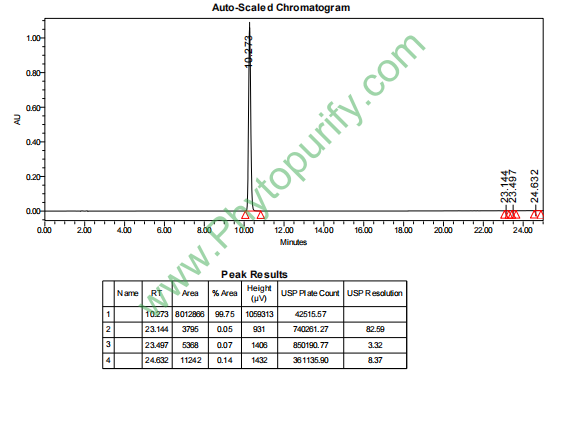
Purity: 95%~99%
Analysis Method: HPLC-DAD or/and HPLC-ELSD
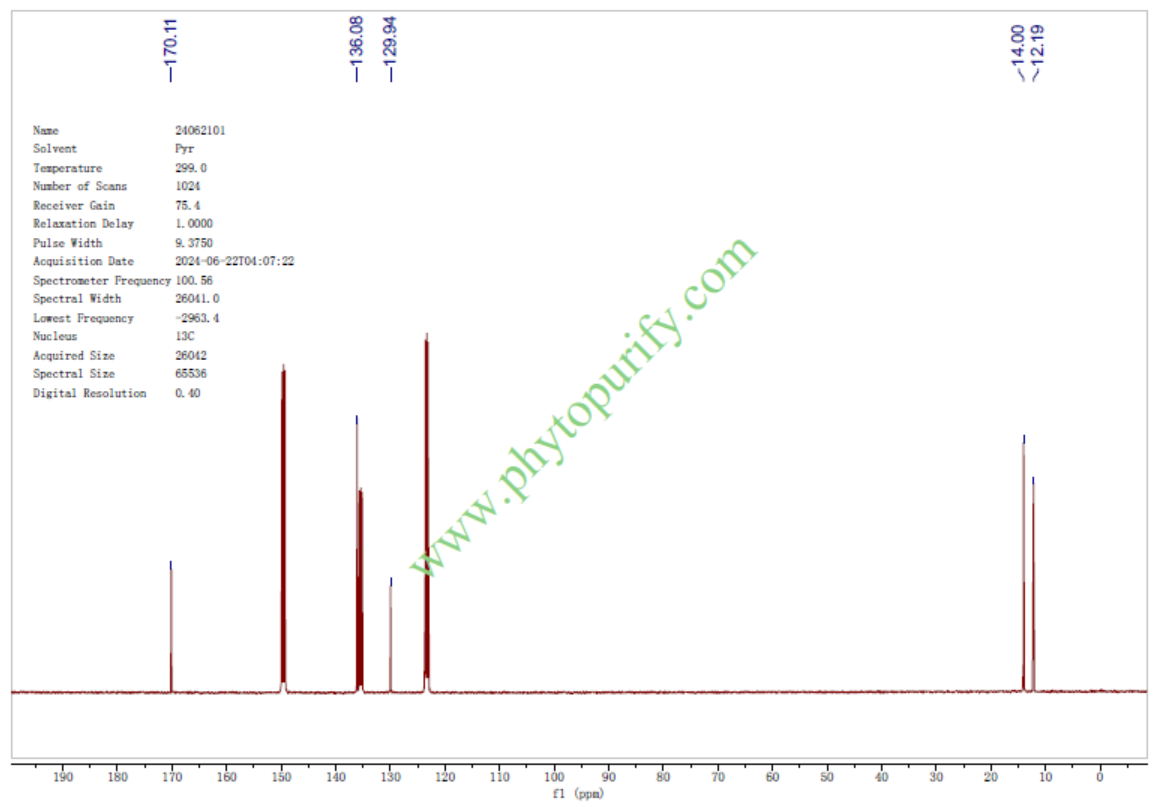
Identification Method: Mass, NMR
Packing: Brown vial or HDPE plastic bottle
Can be supplied from milligrams to grams. Inquire for bulk scale.
For Reference Standard and R&D, Not for Human Use Directly.
NMR of Tiglic acid
HPLC of Tiglic acid
Storage conditions:Short-term storage at 2~8℃, long-term storage at -20 ~ -80℃
37.3000
.7609
-1.3963
56.9392
2.2292
12.9628
Low
65.8162
2.6818
Yes
No
No
No
No
No
0.0
Yes
Yes
Yes
Yes
Tiglic acid, also known as (E) -2-methyl-2-butenoic acid, is a naturally occurring unsaturated monocarboxylic acid. Since its first isolation from croton oil in the 19th century, tigeric acid and its derivatives have attracted attention due to their unique chemical structure and potential biological activity. For a long time, tigeric acid has been mainly regarded as a secondary metabolite of plants or a component of defensive secretions of certain insects, and is often used as a chiral block in the field of chemical synthesis. However, with the deepening of modern pharmacological research, especially the revelation of the function of the short chain fatty acid receptor (FFAR) family, the biological significance of tyrosine has been redefined. Recent studies have found that tigotic acid is an agonist of free fatty acid receptor 2 (FFA2/GPR43), which can up regulate the expression of intestinal hormone peptide YY (PYY), thus expanding its research field to metabolic diseases (such as obesity, diabetes) and inflammation related diseases. In addition, a series of derivatives of tyrosine exhibit significant anti-inflammatory activity, involving the regulation of key targets such as interleukin-6 (IL-6), tumor necrosis factor - α (TNF - α), nuclear factor kappa B (NF - κ B) signaling pathways, cyclooxygenase (COX), transient receptor potential (TRP) channels, etc. This article aims to systematically review the chemical properties, plant sources, pharmacological activities, molecular mechanisms of action, medicinal properties, and application prospects of various acids in the treatment of related diseases, in order to provide comprehensive academic references for the in-depth development and transformation research of this natural product.
The molecular formula of Tijia acid (CAS number: 80-59-1) is C5H8O2, with a molecular weight of 100.1170 g/mol. Its chemical structure is 2-methyl-2-butenoic acid in the (E) - configuration, with a methyl substitution at the 2nd position of the double bond, and the double bond configuration is trans (E). The structure of this α, β - unsaturated carboxylic acid is the basis for its chemical reactivity and biological activity. The cis isomer of Tijia acid is Angelic acid, which is a stereoisomer of each other, but there are often differences in biological activity, reflecting structural specificity.
From the analysis of physical and chemical properties, the calculated lipid water partition coefficient (LogP) of Tijia acid is about 0.7609, indicating that it has a certain lipophilicity, but not highly hydrophobic. Its topological polar surface area (TPSA) is 37.30 Å ², which is relatively small. The predicted water solubility is about 56.94 mg/L, which is slightly soluble in water. These parameters collectively determine the basic distribution characteristics of tyrosine in organisms: it can penetrate cell membranes, but its ability to cross the blood-brain barrier is predicted to be "low", which limits its direct effects on the central nervous system. In terms of preliminary safety prediction, Tigeramide has no inhibitory risk on hERG potassium channels (hERG inhibition: No), and the Ames test predicted a value of 0.0, suggesting that it may not have direct genotoxic mutagenic potential, providing preliminary positive signals for subsequent safety evaluation.
Tijic acid is widely distributed in nature and mainly exists in various plants, especially in Euphorbiaceae plants. Its most classic source is Croton seed Croton tiglium L. seed oil, also known as croton oil. Croton oil contains gallic acid and its ester forms. In addition, tigeric acid is also present in other plants such as Harpagophytum procumbens(Harpagophytum procumbens, Devil's Claw)Malvaceae family Some species and some ferns. Tigeramide can also be found in the defensive secretions of certain insects, such as certain beetles in the beetle family.
The extraction and separation of various acids usually follow the conventional process of natural product chemistry. From plant materials such as croton seeds, crude oil or extract is first obtained by pressing or extracting with organic solvents such as petroleum ether or ether. Tijic acid may exist in the form of free acids or glycerides. For esterification forms, it is usually necessary to perform Saponification reaction(Alkaline hydrolysis), breaking the ester bond and releasing free tigonic acid. Subsequently, utilizing the acidity of Tijia acid, it can be transferred from the organic phase to the aqueous phase through alkaline extraction (such as dilute sodium hydroxide solution), and then re precipitated as free acid after acidification (such as dilute hydrochloric acid). Further purification can be achieved through recrystallization(Common solvents such as hot water or petroleum ether/ether mixed solvents) or Chromatographic technique(such as silica gel column chromatography, high-performance liquid chromatography HPLC) completed. Modern analytical identification mainly relies on techniques such as gas chromatography-mass spectrometry (GC-MS), nuclear magnetic resonance (NMR), and high-performance liquid chromatography (HPLC) to confirm its chemical structure and purity.
In recent years, significant progress has been made in the pharmacological activity research of Tijic acid, mainly focusing on two major fields: metabolic regulation and anti-inflammatory.
Metabolic regulatory activity Tijic acid has been identified as an agonist of free fatty acid receptor 2 (FFA2/GPR43). FFA2 is the main receptor for short chain fatty acids (SCFAs) such as acetic acid and propionic acid, and is highly expressed in adipose tissue, immune cells, and intestinal endocrine cells. Research has shown that Tijic acid can significantly upregulate FFA2 receptors on intestinal L cells by activating them Peptide YY (PYY) Expression and secretion. PYY is an important intestinal hormone that has the effects of suppressing appetite, delaying gastric emptying, and promoting satiety. This mechanism directly links tyrosine with energy balance and food intake regulation, providing a basis for its obesity and Type 2 diabetes The application in treatment provides a solid theoretical basis. Animal model studies have shown that intervention with tigeric acid or its derivatives can improve obesity, insulin resistance, and glucose metabolism disorders induced by a high-fat diet.
anti-inflammatory activity Tijic acid and its structurally modified derivatives (such as amide and ester derivatives) exhibit broad anti-inflammatory potential. In various in vitro inflammatory models (such as macrophages stimulated by lipopolysaccharide LPS) and in vivo models (such as carrageenan induced paw edema in mice and dextran sulfate sodium DSS induced colitis), derivatives of Tijic acid can effectively inhibit inflammatory responses. Specifically manifested as:
In addition, Tijic acid may also have a regulatory effect on inflammatory pain related to sensory nerves, which may affect TRPV1 and TRPA1 Related to nociceptive ion channels. These broad anti-inflammatory effects suggest that Tijic acid has potential value in the treatment of chronic inflammatory diseases such as arthritis, inflammatory bowel disease, and neuroinflammation.
The pharmacological effects of various acids and their derivatives involve a complex regulatory network of multiple targets and pathways, and their core mechanisms can be summarized as follows:
FFA2 receptor activation and PYY upregulation pathway This is the core mechanism by which Tigeramide regulates metabolism. Tijic acid, as an FFA2 ligand, usually couples with Gi/o protein after binding to the receptor, inhibiting intracellular cAMP levels and possibly activating Gq protein signaling. In intestinal L cells, this signal transduction ultimately activates relevant transcription factors, promotes transcription and protein synthesis of PYY genes, increases PYY secretion, and regulates feeding and metabolism through the neuroendocrine network.
Molecular target network for anti-inflammatory effects The anti-inflammatory mechanisms of various acid derivatives are more diverse, forming a synergistic target group:
Based on the basic physicochemical parameters and preliminary biological data of Tijia acid, its pharmacological properties can be preliminarily evaluated.
The pharmacokinetic study of the system, including quantitative analysis of absorption, distribution, metabolism, and excretion, is a key step in the preclinical development of promising derivatives of Tijic acid.
The research on Tijic acid provides new candidate molecules and strategies for the treatment of metabolic and inflammatory diseases, with broad clinical application prospects but also facing challenges.
Potential application directions:
1. Therapeutic agents for metabolic diseases Based on its activation of FFA2 and upregulation of PYY, developed for obesity and Type 2 diabetes Drugs or functional food additives. It can explore its potential as a monotherapy or in combination with existing drugs such as GLP-1 receptor agonists to achieve weight control and blood glucose improvement by regulating appetite and glucose metabolism.
2. antiinflammatory drug Develop a treatment for its multi-target anti-inflammatory properties Rheumatoid arthritis、Osteoarthritis、Inflammatory bowel disease Crohn's disease, ulcerative colitis, and Skin inflammatory diseases New anti-inflammatory drugs for conditions such as dermatitis. It may function through a unique mechanism distinct from traditional NSAIDs or biologics, providing alternative options for drug-resistant or refractory patients.
3. Neurological pain adjuvant therapy Given its potential regulatory effect on TRP channels, investigate its role in Inflammatory pain and neuropathic pain The application value in management.
4. Optimization of lead compounds Tijic acid itself can serve as an advantageous structure for medicinal chemists to conduct in-depth structural modification and structure-activity relationship research, in order to create new chemical entities with stronger activity, higher selectivity, and better pharmacokinetic properties.
Challenges and Future Prospects:
1. Target selectivity and in-depth analysis of mechanisms It is necessary to clarify the affinity and selectivity of various acids and their derivatives for different targets, elucidate their dominant mechanism of action in complex biological networks, and avoid off target effects.
2. Structural optimization and improvement of drug properties It is necessary to solve the potential issues of insufficient efficacy and metabolic instability of the prototype compound through systematic medicinal chemistry work.
3. Comprehensive preclinical and clinical evaluation From the validation of the effectiveness of cell and animal models, to systematic pharmacokinetic and toxicological studies, and ultimately to human clinical trials, it is a long and rigorous process.
4. Formulation development Develop appropriate drug delivery systems and formulations (such as enteric coated formulations, nano formulations) based on their physicochemical properties to optimize their bioavailability.
5. Interdisciplinary research Combining computational chemistry, structural biology, chemical biology, and other methods to conduct structure based rational drug design and explore its synergistic effects with other therapeutic approaches.
Tigeramic acid, a natural organic acid discovered from the traditional medicinal plant croton, has evolved from its initial chemical properties to a star molecule with clear metabolic regulation and anti-inflammatory pharmacological activity. The discovery of upregulation of PYY as an FFA2 receptor agonist has opened up new avenues for intervention in metabolic diseases; The anti-inflammatory effects exhibited by its derivatives through the regulation of multiple targets such as NF - κ B, STAT3, COX, TRP channels, etc., demonstrate its potential in addressing complex inflammatory diseases. Although there may be limitations in the pharmacological properties of Tijic acid itself, it is undoubtedly a highly valuable drug lead compound and Pharmacological tool molecules Future research should focus on in-depth exploration of its mechanism of action, rational drug design based on structure-activity relationships, and systematic pharmacokinetic and toxicological evaluation of its optimized derivatives. With the continuous deepening of research, tigelic acid and its derivatives are expected to provide important source innovation for the development of new drugs for the treatment of obesity, diabetes, arthritis and other major chronic diseases, demonstrating the continuous vitality of natural products in modern drug discovery.
