Introduction/Overview
Natural products, as an important source of drug discovery, play an indispensable role in the long struggle between humans and diseases. Plant secondary metabolites, especially phenolic compounds, have attracted much attention due to their structural diversity and wide range of biological activities. Acetophenone derivatives are an important class of natural phenolic compounds, with a core structure consisting of an acetyl group attached to the benzene ring, often accompanied by substituents such as hydroxyl and methoxy groups. These compounds are widely present in various medicinal plants and exhibit various pharmacological activities such as antibacterial, anti-inflammatory, antioxidant, and anti-tumor effects. They are a highly promising lead compound library in new drug development.
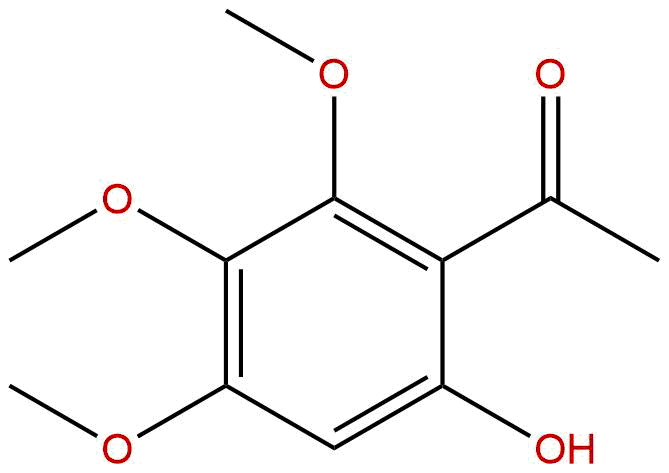
2,3,4-trimethoxy-6-hydroxyacetophenone (HTMA) is a specific member of the acetophenone family, characterized by the substitution of methoxy groups at positions 2, 3, and 4 and hydroxyl groups at position 6 of the benzene ring. This unique substitution pattern endows the molecule with specific physicochemical properties and biological activity. Although the distribution of HTMA in nature may not be as widespread as some common phenolic acids such as chlorogenic acid and ferulic acid, it has attracted the attention of researchers as one of the key active ingredients in specific plant genera, especially Asteraceae plants.
In recent years, with the increasingly severe problem of antibiotic resistance, the search for new antibiotics has become an urgent need in the global public health field. The potential of HTMA and its related analogues in antibacterial activity is gradually being explored. Existing studies have shown that HTMA exhibits inhibitory activity against various pathogenic bacteria and fungi, and its mechanism of action may involve interventions on multiple targets such as bacterial DNA gyrases (GyrA, GyrB), cell division protein FtsZ, fatty acid synthase FabI, dihydrofolate reductase (DHFR), as well as key enzymes in the fungal ergosterol synthesis pathway (such as ERG11, CYP51A1) and resistance related transporters (such as CDR1). This multi-target action characteristic demonstrates unique advantages in dealing with complex infections and overcoming drug resistance.
This article aims to provide a systematic professional review of HTMA. The article will first elaborate on its chemical structure and physicochemical properties, then trace its plant origin and extraction methods, focus on summarizing its pharmacological activity, especially its antibacterial effect and molecular mechanism, and evaluate its pharmacokinetic properties based on drug parameters. Finally, it will explore its clinical application prospects and future research directions, in order to provide comprehensive scientific basis for the in-depth research and development of this natural product.
Chemical structure and physicochemical properties
The chemical name of HTMA is 2,3,4-trimethoxy-6-hydroxyacetophenone, and its IUPAC name is 1- (6-hydroxy-2,3,4-trimethoxyphenyl) ethan-1-one. Its molecular formula is C ₁₁ H ₁₄ O ₅, and its molecular weight is 226.2280 g/mol. The core structure of this compound is a benzene ring, which is connected to an acetyl group (- COOH) and four substituents: one hydroxyl group (- OH) at position 6, and three methoxy groups (- OCH) at positions 2, 3, and 4, respectively. This structure belongs to highly substituted acetophenone derivatives, and the arrangement of its functional groups is crucial for its chemical properties and biological activity.
From the perspective of physical and chemical properties, the lipid water partition coefficient (LogP) of HTMA is 1.6939, indicating that the molecule has a certain degree of lipophilicity but also a certain degree of hydrophilicity. This balance allows it to penetrate biological membranes well while maintaining a certain solubility in aqueous environments. Its water solubility parameter is 1.7700 (unit may be mg/mL or similar, depending on the calculation model), further confirming its moderate water solubility. The topological polar surface area (TPSA) is 64.9900 Å ², which is lower than the commonly believed passive membrane permeability threshold (approximately 140 Å ²), indicating its good oral absorption and cell membrane penetration potential. In addition, its blood-brain barrier (BBB) penetration has been evaluated as "high", suggesting that HTMA may have the ability to enter the central nervous system, which is of great significance for the treatment of central nervous system infections or related diseases, but may also pose potential neurotoxic risks that require further evaluation.
In terms of chemical stability, the phenolic hydroxyl group (6-OH) in HTMA molecules gives them a certain acidity and can act as hydrogen bond donors to participate in intermolecular interactions. Meanwhile, the phenolic hydroxyl group is also prone to oxidation, especially under alkaline conditions or in the presence of metal ions. Three methoxy groups are relatively stable, but hydrolysis may occur under strong acid or strong base conditions. The acetyl moiety can participate in various chemical reactions, such as nucleophilic addition, reduction, etc. Overall, HTMA is a molecule with a relatively stable structure but containing active functional groups, and its chemical properties lay the foundation for its metabolic transformation and interaction with targets in organisms.
Plant sources and extraction methods
HTMA, as a natural product, mainly exists in certain plants of Asteraceae, especially Artemisia(Artemisia)And Aster genus(Aster)Plants. For example, in Artemisia annua(Artemisia annua HTMA has been identified as a minor phenolic component in artemisinin, which is the main source of artemisinin. In addition, in Artemisia scoparia(Artemisia capillaris)Artemisia annua(Artemisia argyi)And some plants of the Aster genus, such as Aster tataricus)It has also been reported to exist in China. These plants are often used in traditional medicine to treat fever, inflammation, infections, and digestive system diseases, and HTMA may be one of the material bases for their pharmacological effects.
The extraction of HTMA usually adopts classical phytochemical methods, which mainly include drying, crushing, solvent extraction, concentration, and separation and purification. Due to the polarity and moderate lipid solubility of HTMA, commonly used extraction solvents include methanol, ethanol, ethyl acetate, or their aqueous solutions. Usually, dried plant materials are crushed and soaked or percolated with methanol or ethanol at room temperature or under heating conditions. The extract is then concentrated under reduced pressure to obtain the crude extract. Subsequently, the crude extract was subjected to liquid-liquid extraction (such as sequentially using petroleum ether, chloroform, ethyl acetate, n-butanol, etc.) for preliminary fractionation, with HTMA typically enriched in the ethyl acetate or chloroform extraction sites.
Further separation and purification mainly rely on various chromatographic techniques. Silica gel column chromatography is the most commonly used method, which uses gradient elution with different ratios of petroleum ether ethyl acetate or chloroform methanol systems. In addition, Sephadex LH-20 gel column chromatography is also commonly used for separation according to molecular size, which can effectively remove pigments and impurities. High performance liquid chromatography (HPLC), especially preparative HPLC, can be used to obtain high-purity HTMA monomers. Thin layer chromatography (TLC) and HPLC-UV/mass spectrometry (MS) combined techniques are widely used to monitor the separation process and identify target compounds during the separation process. Finally, the structure of the purified compound was confirmed by techniques such as nuclear magnetic resonance spectroscopy (NMR, including ¹ H-NMR, ¹ ³ C-NMR, 2D-NMR) and high-resolution mass spectrometry (HR-MS).
It is worth noting that due to the usually low content of HTMA in plants, it is difficult to obtain large amounts from natural resources. Therefore, chemical synthesis methods, especially selective methylation and acetylation reactions based on triphenylphenol or related precursors, have become important pathways for obtaining this compound and its analogues, providing material guarantees for subsequent activity research and structure-activity relationship analysis.
Pharmacological activity research
The pharmacological activity research of HTMA mainly focuses on the antibacterial field, while also involving other potential biological effects.
Antibacterial activity This is the research direction that HTMA is most concerned about. Multiple studies have shown that HTMA is effective against various Gram positive bacteria, such as Staphylococcus aureus Staphylococcus aureus Bacillus subtilis Bacillus subtilis)And Gram negative bacteria (such as Escherichia coli) Escherichia coli Pseudomonas aeruginosa Pseudomonas aeruginosa)All showed a certain inhibitory effect. Its minimum inhibitory concentration (MIC) value is usually in the range of tens to hundreds of micrograms per milliliter, indicating moderate antibacterial activity. It is worth noting that HTMA has also shown activity against resistant strains such as methicillin-resistant Staphylococcus aureus (MRSA), which makes it potentially valuable in addressing antibiotic resistance. In addition, HTMA is effective against certain fungi, such as Candida albicans(Candida albicans)And Cryptococcus neoformans(Cryptococcus neoformans)It also has inhibitory effects, indicating its broad-spectrum antibacterial potential.
Anti inflammatory and antioxidant activity Given that many phenolic compounds have anti-inflammatory and antioxidant properties, HTMA has also been studied for its role in this regard. Preliminary studies suggest that HTMA may exert antioxidant effects by scavenging free radicals such as DPPH and ABTS, and may inhibit the production of nitric oxide (NO) and pro-inflammatory cytokines such as TNF - α and IL-6 in macrophages induced by lipopolysaccharide (LPS). These activities suggest that HTMA may have potential intervention effects on inflammation related diseases.
Other activities: Some studies have also explored the cytotoxicity of HTMA, and found that HTMA has a certain inhibitory effect on some tumor cell lines (such as HepG2 cells and MCF-7 cells of breast cancer), but the selectivity index is usually low, suggesting that its cytotoxicity may be more common. In addition, there are relatively few reports on its antiviral and antiparasitic activities, and further research is needed.
Overall, the pharmacological activity of HTMA is most prominent in its antibacterial effect, but its activity intensity still lags behind existing clinical drugs. Its anti-inflammatory, antioxidant, and anti-tumor activities are still in the preliminary exploration stage and require further in vitro and in vivo research to verify and elucidate.
Mechanism of action and molecular targets
The antibacterial mechanism of HTMA is multi-target, which is related to its potential interactions with key proteins in various bacteria and fungi. Based on the provided target information, we can conduct in-depth analysis from the following aspects:
-
Inhibition of DNA replication and repair The targets GYRA and GYPB encode the A and B subunits of bacterial DNA gyrase, respectively. DNA gyrase is a type II topoisomerase responsible for introducing negative supercoils during DNA replication to alleviate twisting stress on DNA strands. HTMA may inhibit the activity of DNA gyrase by binding to it, thereby blocking bacterial DNA replication and leading to bacterial death. This is the mechanism of action of many quinolone antibiotics, and HTMA may function in a similar but structurally different way.
-
Interference with cell division The target FTSZ encodes the FtsZ protein, which is a key protein in bacterial cell division, similar to the microtubule protein in eukaryotes. FtsZ aggregates to form a Z-ring during cell division, providing a skeleton for cell division. HTMA may inhibit the polymerization of FtsZ or GTPase activity, disrupt the formation of the Z ring, and thus prevent bacterial cell division. This is a relatively novel antibacterial target that is not prone to cross resistance.
-
Block fatty acid synthesis The target FABI encodes acyl acyl carrier protein reductase (FabI), which is a key enzyme in the bacterial type II fatty acid synthesis (FAS II) pathway, catalyzing the final step of fatty acid chain elongation. HTMA may disrupt the integrity of bacterial cell membranes by inhibiting the activity of FabI and blocking the production of fatty acids necessary for phospholipid synthesis. This is the target of antibacterial drugs such as triclosan.
-
folic acid metabolism The target DHFR encodes dihydrofolate reductase, which is a key enzyme in the folate metabolism pathway responsible for reducing dihydrofolate to tetrahydrofolate, a coenzyme essential for one carbon unit transfer in DNA and RNA synthesis. HTMA may inhibit the activity of DHFR, interfere with bacterial nucleotide synthesis, and thus suppress its growth and reproduction. This is the target of action for antibiotics such as trimethoprim.
-
Mechanisms targeting drug-resistant strains The target MECA encodes penicillin binding protein 2a (PBP2a), which is a key protein for MRSA resistance to beta lactam antibiotics. PBP2a has extremely low affinity for β - lactam drugs, making it difficult for the drug to effectively inhibit cell wall synthesis. The activity of HTMA against MRSA may stem from its ability to bypass the PBP2a mediated resistance mechanism or directly inhibit the function of PBP2a. The target PENA encodes penicillin binding protein (PBP), which is a target of β - lactam antibiotics. HTMA may inhibit cell wall synthesis by binding to PBP.
-
Antifungal mechanism The targets ERG11 and CYP51A1 both encode fungal cytochrome P450 14 α - demethylase, which is a key enzyme in the ergosterol biosynthesis pathway. Ergosterol is an important component of fungal cell membrane, similar to cholesterol in mammalian cells. HTMA may exert antifungal effects by inhibiting the activity of the enzyme, blocking the synthesis of ergosterol, leading to disruption of cell membrane structure and dysfunction. This is the mechanism of action of azole antifungal drugs such as fluconazole and itraconazole. The target CDR1 encodes a resistance related transporter protein in Candida albicans, belonging to the ABC transporter family. It is responsible for pumping drugs out of the cell and is one of the main mechanisms by which fungi develop resistance to azole drugs. HTMA may overcome or reverse drug resistance by inhibiting the activity of CDR1 and increasing drug concentration in fungal cells.
In summary, HTMA exhibits a multi-target and multi mechanism antibacterial mode by acting on multiple key pathways and targets, including bacterial DNA replication, cell division, fatty acid synthesis, folate metabolism, cell wall synthesis, as well as fungal ergosterol synthesis and resistance pumps. This mode of action makes it less likely to induce drug resistance and may be effective against existing resistant strains, which is its core advantage as a novel antibacterial lead compound.
Evaluation of drug properties and pharmacokinetics
Based on the provided pharmacological parameters, a preliminary evaluation of the pharmacological properties of HTMA can be conducted.
- Molecular weight and LogP The molecular weight of 226.23 Da is below the "Five Rules" threshold of 500 Da, with a LogP of 1.69, which is within the ideal range of 0-3, indicating that it has good permeability and solubility balance and meets the basic requirements of oral drugs.
- TPSA and blood-brain barrier penetration The TPSA is 65 Å ², which is lower than 140 Å ², indicating its good oral absorption and cell membrane penetration ability. The assessment of blood-brain barrier penetration is' high ', which is both an opportunity and a challenge. For the treatment of central nervous system infections or brain diseases, high BBB penetration is an advantage; However, for the treatment of peripheral infections, there may be an increased risk of central nervous system toxicity, which requires careful evaluation.
- HERG inhibition and Ames test The hERG inhibition assessment is' no ', which is a positive signal indicating that HTMA has a low risk of cardiac toxicity and is unlikely to cause serious arrhythmias such as QT interval prolongation. The Ames test result is 0.6 (usually considered negative for<0.5 and suspicious positive for 0.5-1.0), indicating a possible weak genetic toxicity risk, which requires further in vivo genetic toxicity studies to confirm.
There is currently very limited specialized research on the pharmacokinetic (PK) properties of HTMA. Based on its physical and chemical properties, it can be inferred that:
- absorb Due to its moderate LogP and low molecular weight, HTMA is expected to have good passive absorption in the gastrointestinal tract and may have high oral bioavailability.
- distribution High BBB penetration suggests its widespread distribution and potential entry into various tissues throughout the body, including brain tissue. Its distribution volume (Vd) may be relatively large.
- Metabolism The phenolic hydroxyl and methoxy groups of HTMA are the main metabolic sites. Phenolic hydroxyl groups may undergo glucuronidation or sulfation binding reactions, while methoxy groups may undergo O-demethylation reactions through cytochrome P450 enzymes (such as CYP450) to generate corresponding hydroxyl metabolites. These metabolites may retain or alter their biological activity.
- excretion Metabolites and small amounts of prototype drugs may be excreted through urine and bile.
Overall, the pharmacological parameters of HTMA are relatively ideal, in line with the basic characteristics of lead compounds. However, its high BBB penetration and potential genetic toxicity are potential issues that require special attention and resolution. Future PK research requires a systematic evaluation of its absorption, distribution, metabolism, and excretion characteristics in animals, particularly its metabolic stability, metabolite identification, and tissue distribution (especially in brain tissue).
Clinical application prospects and prospects
As a natural product with multi-target antibacterial activity, HTMA's clinical application prospects are mainly reflected in the following aspects:
-
Lead compounds of novel antibacterial drugs Given the global crisis of antibiotic resistance, it is urgent to develop antibacterial drugs with new mechanisms or multi-target effects. The activity of HTMA against drug-resistant strains, including MRSA, and its ability to act on multiple key targets make it an ideal lead compound for developing novel antibacterial drugs. By structural modification, such as optimizing the positions of methoxy and hydroxyl groups, introducing new functional groups, it is expected to enhance its antibacterial activity, improve pharmacokinetic properties, and reduce potential toxicity.
-
Supplement to the development of antifungal drugs The activity of HTMA against fungi such as Candida albicans, especially its potential inhibition of CDR1 efflux pumps, provides a new approach to overcome fungal drug resistance. It can be combined with existing azole antifungal drugs to restore the sensitivity of resistant strains to azole drugs by inhibiting efflux pumps, achieving synergistic enhancement.
-
Anti inflammatory and antioxidant adjuvant therapy: Although its anti-inflammatory and antioxidant activities are relatively weak, considering that the infection process is often accompanied by a strong inflammatory reaction, HTMA's dual antibacterial and anti-inflammatory activities may enable it to have synergistic advantages in the treatment of infectious diseases, helping to reduce tissue damage and promote recovery.
-
Potential applications of central nervous system infections Its high BBB penetration makes it potentially valuable in the treatment of central nervous system bacterial or fungal infections such as meningitis and brain abscess. However, its neurotoxicity must be rigorously evaluated to ensure medication safety.
Future research directions should focus on:
- In depth structure-activity relationship (SAR) research Systematically synthesize a series of analogues of HTMA, investigate the effects of different substituents (such as the number and position of hydroxyl and methoxy groups) on its antibacterial activity, target selectivity, toxicity, and PK properties, and search for candidate compounds with higher activity and lower toxicity.
- Accurate elucidation of the mechanism of action Using techniques such as molecular docking, surface plasmon resonance (SPR), and isothermal titration calorimetry (ITC), verify the direct binding of HTMA to various targets (such as GyrA, FtsZ, FabI, DHFR, ERG11, CDR1), and determine the binding mode and key amino acid residues.
- Pharmacodynamic and pharmacokinetic studies in vivo Establish infection models in mice or rats (such as skin abscess, abdominal infection, systemic candidiasis models), and systematically evaluate the in vivo antibacterial efficacy, PK parameters, tissue distribution, and toxicity of HTMA and its derivatives.
- Toxicity assessment Conduct comprehensive toxicology studies, including acute toxicity, subchronic toxicity, genetic toxicity (such as in vivo micronucleus test), and neurotoxicity assessment, to determine its safety window.
- Combination therapy research Explore the synergistic effects of HTMA with existing antibiotics such as beta lactams, quinolones, and azoles, and search for the optimal combination therapy to enhance efficacy, reduce dosage, and minimize the development of drug resistance.
Conclusion
2,3,4-trimethoxy-6-hydroxyacetophenone (HTMA) is a natural acetophenone compound with a unique structure derived from Asteraceae plants. Its physical and chemical properties comply with the "Five Rules for Similar Drugs" and demonstrate good potential for drug development. Pharmacological studies have revealed that it has broad-spectrum antibacterial activity, especially effective against drug-resistant strains. Its mechanism of action involves inhibiting DNA replication, cell division, fatty acid synthesis, folate metabolism, cell wall synthesis, as well as fungal ergosterol synthesis and drug-resistant efflux pumps, showing typical multi-target action characteristics. This multi-target mechanism is its core advantage over traditional single target antibiotics and is expected to play an important role in addressing the increasingly severe challenge of antibiotic resistance.
Although HTMA itself may not be suitable for direct clinical use due to limited activity or potential toxicity, it is undoubtedly a highly valuable lead compound. Through systematic structure-activity relationship research, in-depth mechanism exploration, comprehensive pharmacokinetic and toxicological evaluation, and reasonable structural modification, it is expected to develop new, efficient, and low toxicity antibacterial drugs with HTMA as the skeleton. In the future, with the continuous deepening of research, HTMA and its derivatives will undoubtedly show broader application prospects in the field of anti infective therapy, especially in the fight against drug-resistant bacterial and fungal infections. The in-depth study of such natural products not only enriches the treasure trove of natural product chemistry, but also provides new ideas and directions for modern drug discovery.