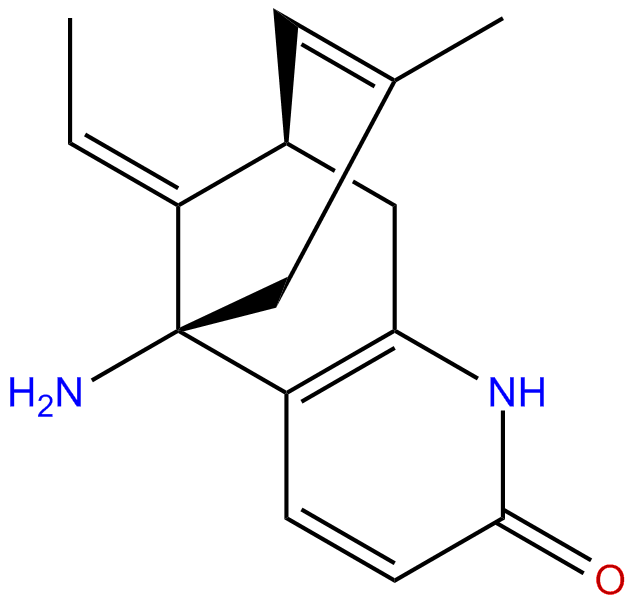


Product name: Huperzine A
Synonym name: Selagine; Fordine; Isoselagine
Catalogue No.: BP0740
Cas No.: 102518-79-6
Formula: C15H18N2O
Mol Weight: 242.322
Botanical Source: Lycopodium serratum Thunb.
Physical Description:
Type of Compound: Alkaloids
Purity: 95%~99%
Analysis Method: HPLC-DAD or/and HPLC-ELSD
Identification Method: Mass, NMR
Packing: Brown vial or HDPE plastic bottle
Storage: Store in a well closed container, protected from air and light. Put into refrigerate or freeze for long term storage.
The product could be supplied from milligrams to grams
Inquire for bulk scale.
Description:
(-)-Huperzine A is a naturally occurring potent reversible AChE inhibitor that penetrates the blood-brain barrier, it also has several neuroprotective effects including modification of beta-amyloid peptide, reduction of oxidative stress, anti-inflammatory, anti-apoptotic and induction and regulation of nerve growth factor.
References:
Chem Biol Interact. 2013 Mar 25;203(1):120-4.
A combination of [+] and [-]-Huperzine A improves protection against soman toxicity compared to [+]-Huperzine A in guinea pigs.
The neuropathologic mechanisms after exposure to lethal doses of nerve agent are complex and involve multiple biochemical pathways. Effective treatment requires drugs that can simultaneously protect by reversible binding to the acetylcholinesterase (AChE) and blocking cascades of seizure related brain damage, inflammation, neuronal degeneration as well as promoting induction of neuroregeneration. (-)-Huperzine A ([-]-Hup A), is a naturally occurring potent reversible AChE inhibitor that penetrates the blood-brain barrier. It also has several neuroprotective effects including modification of beta-amyloid peptide, reduction of oxidative stress, anti-inflammatory, anti-apoptotic and induction and regulation of nerve growth factor.
METHODS AND RESULTS:
Toxicities at higher doses restrict the neuroporotective ability of (-)-Huperzine A for treatment. The synthetic stereoisomer, [+]-Hup A, is less toxic due to poor AChE inhibition and is suitable for both pre-/post-exposure treatments of nerve agent toxicity. [+]-Hup A block the N-methyl-D-aspartate (NMDA)-induced seizure in rats, reduce excitatory amino acid induced neurotoxicity and also prevent soman induced toxicity with minimum performance decrement. Unique combinations of two stereo-isomers of Hup A may provide an excellent pre/post-treatment drug for the nerve agent induced seizure/status epilepticus. We investigated a combination of [+]-Hup A with a small dose of (-)-Huperzine A ([+] and (-)-Huperzine A) against soman toxicity. Our data showed that pretreatment with a combination [+] and (-)-Huperzine A significantly increased the survival rate and reduced behavioral abnormalities after exposure to 1.2 × LD(50) soman compared to [+]-Hup A in guinea pigs. In addition, [+] and (-)-Huperzine A pretreatment inhibited the development of high power of EEG better than [+]-Hup A pretreatment alone.
CONCLUSIONS:
These data suggest that a combination of [+] and (-)-Huperzine A offers better protection than [+]-Hup A and serves as a potent medical countermeasure against lethal dose nerve agent toxicity in guinea pigs.
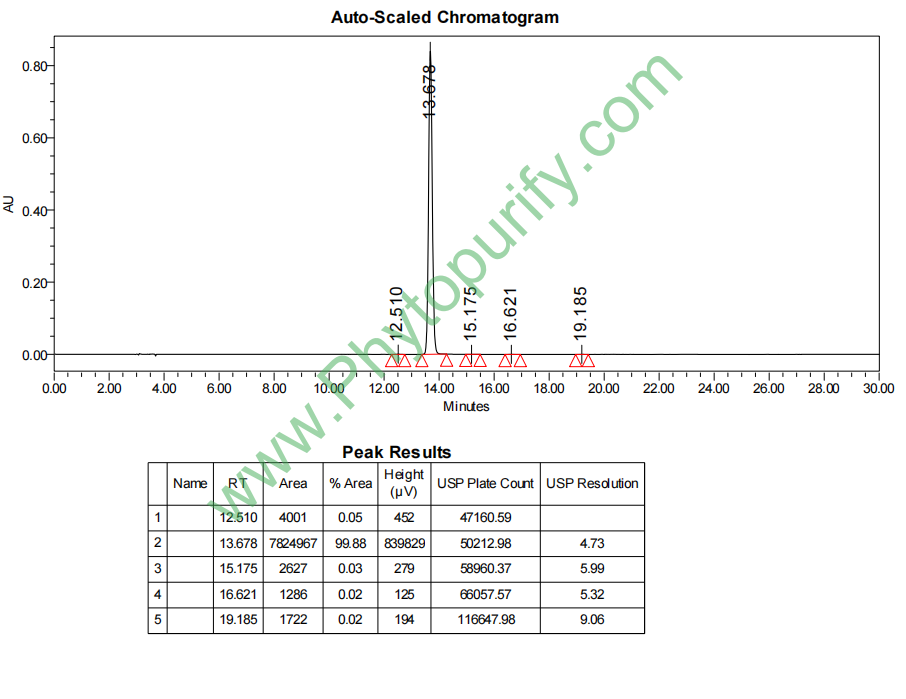
HPLC of Huperzine A
Storage conditions:Short-term storage at 2~8℃, long-term storage at -20 ~ -80℃
58.8800
1.5189
1.2336
.5363
1.7258
6.1932
High
61.1078
4.9406
No
Yes
No
No
Yes
Yes
0.6
No
Yes
Yes
No
Alzheimer's Disease (AD), as a progressive neurodegenerative disease, has become a major global public health challenge. The main pathological features include senile plaques formed by the deposition of β - amyloid protein (A β), neurofibrillary tangles caused by excessive phosphorylation of Tau protein, and accompanying functional deficits of cholinergic neurons. Among various treatment strategies, interventions targeting the cholinergic system, particularly by inhibiting acetylcholinesterase (AChE) to increase synaptic acetylcholine (ACh) levels, are currently the core of first-line clinical treatment. However, traditional AChE inhibitors such as donepezil and galantamine often have gastrointestinal side effects, limited bioavailability, or gradually decreasing efficacy. Therefore, the search for efficient and low toxicity novel AChE inhibitors and multi-target neuroprotective agents from natural products has always been a hot topic in drug development.
Huperzine A (HupA), a traditional Chinese herb derived from the Chinese herb Thousand Layer Pagoda (Ophiopogon japonicus), Huperzia serrata)The unique sesquiterpene alkaloids isolated from the middle are the star molecules that stand out in this context. Since its potent and highly selective AChE inhibitory activity was revealed in the 1980s, HupA has rapidly become an important candidate drug in the field of AD treatment research. Compared with similar drugs, HupA not only has stronger inhibitory efficacy, higher selectivity, and longer duration of action, but also exhibits multiple neuroprotective properties beyond simple cholinesterase inhibition. Its mechanism of action involves regulating the apoptotic pathway, reducing oxidative stress, inhibiting A β toxicity, regulating autophagy, and other aspects, reflecting the potential of "multi-target" intervention in the complex pathological network of AD. This article aims to systematically review the chemical properties, plant sources, pharmacological activities, molecular mechanisms of action, pharmacological evaluation, and clinical application prospects of huperzine A, in order to provide a comprehensive academic perspective for the in-depth research and development of this natural product.
The chemical name of huperzine A is (5R, 9R, 11E) -5-amino-11-ethylene-5,6,9,10-tetrahydro-7-methyl-5,9-methylenecyclooctano [b] pyridin-2 (1H) - one, and its CAS number is 102518-79-6. Its molecular formula is C15H18N2O, with a molecular weight of 242.3220 g/mol.
Structurally, HupA is a unique rigid tricyclic skeleton lycopodium Alkaloids: A bridged quinolone ring system fused with a conjugated pyridone ring. This structure contains a primary amino group, an alpha, beta unsaturated ketone unit, and an outer ring ethylene group. This rigid, nitrogen rich fused ring structure is the structural basis for its high affinity and specific interaction with the AChE active site. Its stereochemistry (5R, 9R configuration) is crucial for its biological activity.
In terms of physicochemical properties, HupA has a lipid water partition coefficient (calculated LogP) of approximately 1.52, indicating its moderate lipophilicity, which facilitates its penetration of cell membranes and the blood-brain barrier. Its topological polar surface area (TPSA) is 58.88 Å ², which is relatively small, further supporting its good membrane permeability. The water solubility measured in the experiment is about 0.54 mg/mL, which is slightly soluble. The key pharmacological parameters show that HupA has a high blood-brain barrier permeability, which is crucial for its central nervous system efficacy. In addition, in the preliminary safety evaluation, its hERG channel inhibition test was negative, indicating a low potential risk of arrhythmia; The Ames test result is 0.6 (usually considered positive if>1.5), indicating that there is no significant mutagenicity. These excellent physicochemical properties and early safety indicators have laid a solid foundation for its subsequent development.
Huperzine A is mainly derived from plants of the genus Huperzine in the family Taxaceae, among which Thousand layer Tower (Snake footed Stone Cedar, Huperzia serrata (Thunb.) Trev.) The most important and well-known resource plant. This plant is a perennial small fern that prefers shady and humid environments. It is distributed in the Yangtze River Basin and southern regions of China, Japan, India, and other places. In traditional Chinese medicine, the Thousand Layer Pagoda herb is used to treat injuries from falls, swelling, schizophrenia, and fever. However, its use in improving memory is not well documented in ancient literature, and modern pharmacological research has revealed its valuable value in "intelligence".
Due to the extremely low content of HupA in plants (about 0.01% -0.1% dry weight) and the slow growth and limited resources of the thousand layer tower, its extraction, separation, and large-scale production face challenges. The traditional extraction method mainly relies on organic solvents (such as methanol, ethanol, chloroform, etc.) for extraction, followed by multiple column chromatography (such as silica gel column, alumina column) for separation and purification. The process is cumbersome and the yield is low. In order to meet research and clinical needs, various improvement and alternative strategies have been developed:
1. Synthetic Chemistry The complete synthesis of HupA and the synthesis of various structurally similar compounds have been successfully achieved, providing possibilities for the study of structure-activity relationships and optimization of lead compounds. However, the total synthesis steps are relatively long and the cost is high.
2. Biological synthesis and synthetic biology Analyzing the biosynthetic pathways within its plant body and attempting to utilize microbial (such as yeast) cell factories for heterologous production is a highly promising direction for green and sustainable production.
3. plant tissue culture HupA production can be achieved by inducing callus tissue or suspension cell culture in the Thousand Layer Pagoda, but the current yield still needs to be improved.
4. Extraction process optimization Modern technologies such as ultrasound assisted extraction, microwave-assisted extraction, and supercritical CO2 extraction are used to improve extraction efficiency and selectivity.
At present, HupA used in clinical trials and commercial products is mainly extracted from cultivated or wild plants, or prepared through semi synthetic methods. The issue of resource sustainability is driving the development of cutting-edge technologies such as synthetic biology.
The pharmacological activity of huperzine A has been extensively and deeply studied, and its core activities can be summarized as follows:
Strong and selective acetylcholinesterase inhibition HupA is one of the strongest known natural AChE inhibitors to date. Its inhibitory activity is stronger than synthetic drugs such as tacrine and donepezil, and its selectivity for AChE is much higher than that for butyrylcholinesterase (BuChE). Its inhibitory effect is reversible and competitively mixed, with a long binding time to the enzyme and a dissociation half-life of about 4-6 hours. This explains why its clinical application can maintain efficacy by administering twice a day.
Significant promotion of intelligence and improvement of memory function HupA can significantly improve learning and memory abilities in various animal models, such as scopolamine, sodium nitrite, electric shock induced memory impairment models, and natural aging animal models. Its function is not only derived from increasing ACh levels, but also closely related to its neuroprotective effects.
Extensive neuroprotective activity This is the outstanding feature of HupA surpassing traditional AChE inhibitors.
Other potential activities The study also suggests that HupA may have anti epileptic, anti myasthenia gravis, and protective effects in diseases such as ischemic stroke and vascular dementia.
The mechanism of action of huperzine A presents a network feature of multi-target and multi pathway interweaving, and its core molecular targets and interactions are as follows:
Main direct target: Acetylcholinesterase (AChE)
HupA efficiently blocks the hydrolysis of AChE by dual binding with the catalytic anion site (CAS) and peripheral anion site (PAS) of the AChE active center. This binding mode may also interfere with AChE mediated A β aggregation, exerting dual benefits.
Key indirect targets and pathways:
In summary, HupA has constructed a comprehensive neuroprotective network based on "cholinesterase inhibition" and supported by "anti apoptosis (Bcl-2/Mgl-1), pro autophagy (AMPK), anti A β, and anti-inflammatory", providing theoretical advantages for its response to the complex pathological mechanisms of AD.
Based on its excellent physicochemical properties, huperzine A exhibits outstanding medicinal properties.
Pharmacokinetic characteristics(Mainly based on animal and human research):
* Absorption and bioavailability Oral absorption is rapid and good, with an absolute bioavailability close to 100% in both rats and humans.
* distribution Widely distributed in the body, due to its high lipid solubility and small molecular weight, it can quickly and massively penetrate the blood-brain barrier, and the concentration of drugs in the brain can reach several times that of plasma, which is crucial for its central role. The protein binding rate is about 50%.
* Metabolism Mainly metabolized by the cytochrome P450 enzyme system (especially CYP3A4) in the liver, it is converted into various hydroxylated metabolites, some of which still have certain activity.
* excretion The prototype drug is mainly excreted through the kidneys and urine, accounting for approximately 10-15% of the administered dose. The elimination half-life (t1/2) in the human body is approximately 4-6 hours, supporting a twice daily dosing regimen.
Preclinical and clinical safety:
*Preclinical toxicology studies have shown that HupA is safe at therapeutic doses. The main toxicity occurs much higher than the effective dose, involving the liver and reproductive system.
*In phase II/III clinical trials, HupA (usually 0.1-0.2 mg, bid) showed good tolerability. The most common adverse reactions are mild and transient cholinergic side effects, such as nausea, vomiting, diarrhea, dizziness, etc., with a lower incidence rate than traditional AChE inhibitors. Serious adverse reactions are rare.
* Drug interactions As a substrate of CYP3A4, when used in combination with potent CYP3A4 inhibitors (such as ketoconazole) or inducers (such as rifampicin), attention should be paid to monitoring changes in blood drug concentration.
Formulation development Currently, regular tablets and capsules are available on the market. New dosage forms such as sustained-release formulations and transdermal patches are being studied to improve patient compliance and reduce blood drug concentration fluctuations.
Huperzine A has been approved in China for the treatment of mild to moderate Alzheimer's disease and is used as a component of health products to improve memory. Its clinical application prospects and future research directions include:
Positioning and Expansion of AD Treatment:
Structural optimization and new drug development:
Deep exploration of the mechanism of action:
Innovation in production technology:
Huperzine A is a successful example of discovering modern value from traditional herbs. It is not only a potent acetylcholinesterase inhibitor, but also a multi-target natural compound with multiple neuroprotective activities. Its unique and rigid chemical structure, excellent brain targeting ability, and multidimensional mechanisms involving cholinergic enhancement, anti apoptosis, autophagy promotion, anti A β, and anti-inflammatory effects together form a solid foundation for its fight against the complex pathological network of Alzheimer's disease. Although there are still challenges in terms of resource sustainability, comprehensive analysis of mechanisms of action, and broader clinical indications, huperzine A undoubtedly provides valuable lead structures and new therapeutic ideas for drug development of neurodegenerative diseases. With the continuous development of synthetic biology, structural pharmacology, and precision medicine, huperzine A and its derivatives are expected to play a more important role in the future treatment of neurological and psychiatric disorders, continuing the glorious chapter of natural products benefiting human health.
