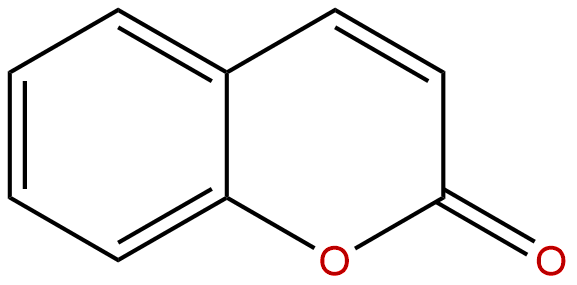
| Catalog No | Package | Original Price | Price | Inventory | Quantity | Operating |
|---|---|---|---|---|---|---|
| BP0402-20mg | 20mg | $30.00 | Sign in |
|


Synonym name: Coumarinic anhydride; alpha-Benzopyrone; Cumarin
Catalogue No.: BP0402
Cas No.: 91-64-5
Formula: C9H6O2
Mol Weight: 146.145
Botanical Source: Occurs in woodruff (Galium odorata), Melilotus sp., tonka beans (Coumarouna odorata, preferred genus name Dipteryx) , lavender oil and other plants
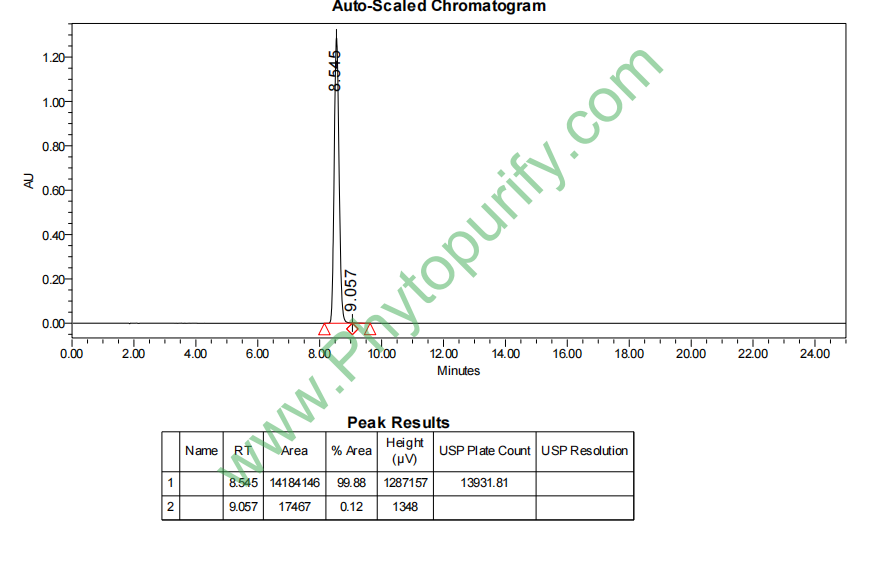
Purity: 95%~99%
Analysis Method: HPLC-DAD or/and HPLC-ELSD
Identification Method: Mass, NMR
Packing: Brown vial or HDPE plastic bottle
Can be supplied from milligrams to grams.
For Reference Standard and R&D, Not for Human Use Directly.
Inquire for bulk scale.
HPLC of Coumarin
Storage conditions:Short-term storage at 2~8℃, long-term storage at -20 ~ -80℃
Coumarin, CAS number 91-64-5, is a natural organic compound widely present in various plants, and has attracted much attention due to its unique aroma and diverse biological activities. As an effective oral anti-inflammatory agent, coumarin not only exhibits significant anti-inflammatory effects, but also has antibacterial, antifungal, and anticancer activities, demonstrating its important value in the field of natural product pharmacology. In recent years, with the in-depth study of the biological activity and mechanism of action of coumarin, its potential in multiple therapeutic fields such as anticoagulant, anti-inflammatory, and anti-tumor has gradually been revealed, becoming one of the hotspots in drug development and clinical application.
This article aims to provide a systematic review of the chemical structure and physicochemical properties, plant sources, and extraction methods of coumarin. Combining the latest pharmacological activity research, it explores its mechanism of action and related molecular targets, evaluates its pharmacological and pharmacokinetic characteristics, and finally looks forward to its clinical application prospects, providing theoretical basis and research direction for natural product pharmacology and new drug development.
The chemical name of coumarin is 1,2-benzo-2-oxo-1-cyclohexenone, with a molecular formula of C9H6O2 and a molecular weight of 146.14. Its structural core is a benzo - α - pyranone ring system with a typical coumarin skeleton. The LogP value of coumarin is 1.39, indicating that it has moderate lipid solubility and is beneficial for penetrating cell membranes and the blood-brain barrier (BBB permeability is high). Its topological polar surface area (TPSA) is 26.3 Å ², with 2 hydrogen bond acceptors, exhibiting low polarity that is favorable for oral absorption and intracellular distribution.
Coumarin has a high water solubility (1700 mg/L), which contributes to its distribution and metabolism in the body. Toxicological data shows that the median lethal dose (LD50) of coumarin is 293 mg/kg, indicating its acute toxicity and hepatotoxicity, but without significant cardiac toxicity or hERG channel inhibition. The Ames test is positive, indicating that it may have a certain risk of genotoxicity, and safety should be carefully evaluated when using it.
Coumarin is widely present in multiple plant families and genera such as Umbelliferae, Leguminosae, and Lamiaceae, with higher levels found in plants such as Melilotus officinalis, Cinnamomum spp., Lithospermum erythrorhizon, and Glycyrrhiza glabra. Coumarins in plants mostly exist in free or bound forms (such as coumarin glycosides), giving plants unique aromas and biological activities.
The traditional methods for extracting coumarins mainly include solvent extraction, distillation, and supercritical fluid extraction. Solvent extraction often uses ethanol, methanol, or ethyl acetate as solvents, combined with ultrasound assisted extraction technology, which can improve extraction efficiency and purity. Distillation method is suitable for the volatile extraction of coumarin, especially steam distillation. In recent years, green extraction techniques such as supercritical CO2 extraction have gradually become a research hotspot for coumarin extraction due to their high efficiency and environmental friendliness.
The extracted coumarins are usually purified by methods such as column chromatography and recrystallization to obtain high-purity compounds for pharmacological research and formulation development.
Coumarin, as an effective oral anti-inflammatory agent, mainly exhibits anti-inflammatory effects by inhibiting the release of inflammatory mediators and regulating inflammatory signaling pathways. Multiple in vitro and in vivo experiments have shown that coumarin can significantly reduce the expression of inflammatory factors such as TNF - α, IL-1 β, and IL-6, and alleviate tissue inflammatory responses. In addition, coumarin exerts anti-inflammatory effects by inhibiting the NF - κ B signaling pathway and MAPK pathway, reducing the activation and infiltration of inflammatory cells.
Coumarin exhibits inhibitory effects on various bacteria and fungi. In vitro experiments have shown that coumarin has certain antibacterial activity against both Gram positive bacteria (such as Staphylococcus aureus) and Gram negative bacteria (such as Escherichia coli). Its antifungal effect mainly targets common pathogenic fungi such as Candida albicans, which may be achieved by disrupting cell membrane structure and inhibiting key enzyme activity.
In recent years, the anticancer potential of coumarin has received widespread attention. Research has found that coumarin can inhibit tumor growth through multiple mechanisms such as inducing apoptosis of tumor cells, blocking the cell cycle, inhibiting tumor angiogenesis and metastasis. Coumarin has cytotoxic effects on breast cancer, lung cancer, colon cancer and other tumor cell lines. Its anticancer activity is closely related to its regulation of multiple signaling pathways, such as PI3K/Akt and Wnt/β - catenin.
The research history of coumarin as an anticoagulant is long, especially its derivative warfarin, which is widely used in clinical anticoagulant therapy. Coumarin itself exerts anticoagulant effects by regulating the activity of coagulation factors and related proteins. Its targets include key coagulation factors and regulatory proteins such as SERPINE1, F3, F2, VKORC1, F7, F9, F10, VWF, PROC, and PROS1, which can effectively prolong clotting time and prevent thrombosis.
The multiple pharmacological activities of coumarin stem from its ability to regulate multiple molecular targets. Its anti-inflammatory mechanism mainly involves inhibiting the NF - κ B and MAPK signaling pathways, reducing the expression of pro-inflammatory cytokines and enzymes. Antibacterial and antifungal effects may involve cell membrane disruption and inhibition of key metabolic enzymes.
In terms of anti-cancer, coumarin achieves growth inhibition and apoptosis induction of tumor cells by regulating apoptosis related proteins (such as Bcl-2, Caspase family), cell cycle regulatory factors (such as Cyclin D1), and signaling pathways (PI3K/Akt, Wnt/β - catenin).
In terms of anticoagulant effects, coumarin inhibits the activity of vitamin K oxidoreductase 1 (VKORC1), blocks the gamma carboxylation process of vitamin K-dependent coagulation factors (F7, F9, F10, F2), reduces coagulation factor activity, and achieves anticoagulant effects. In addition, coumarin also regulates the function of anticoagulant proteins (such as PROC, PROS1) and platelet associated proteins (VWF) in plasma, comprehensively regulating the process of blood coagulation.
The molecular weight of coumarin is 146.14 with a LogP value of 1.39, TPSA 26.3, Compliant with Lipinski's rules, exhibiting good oral bioavailability and cell membrane penetration. Its high water solubility is beneficial for in vivo distribution, but it may also affect its intestinal absorption efficiency. Coumarin can effectively penetrate the blood-brain barrier, indicating its potential application in the treatment of central nervous system diseases.
Toxicological evaluation shows that coumarin poses a certain risk of liver toxicity, and liver safety needs to be a key focus in drug development. Its LD50 is 293 mg/kg, indicating moderate acute toxicity. Coumarin has no significant cardiac toxicity or hERG channel inhibition, reducing the risk of adverse cardiac reactions. However, a positive Ames test suggests that it may have genotoxicity and further in-depth evaluation of its long-term safety is needed.
In terms of pharmacokinetics, coumarin is mainly metabolized in vivo through hepatic hydroxylation reactions, producing metabolites such as hydroxycoumarin. Its metabolic process may involve the cytochrome P450 enzyme system, which poses a potential risk of drug interactions. The half-life of coumarin is moderate and suitable for oral administration, but the dosage form needs to be optimized to improve its bioavailability and safety.
Coumarin, as a multifunctional natural product, has a wide range of pharmacological activities and potential clinical application value. Its anti-inflammatory, antibacterial, antifungal, and anticancer effects provide new ideas and candidate drug foundations for the treatment of various diseases. Especially in the field of anticoagulation, coumarin and its derivatives have become important drugs for clinical anticoagulant therapy. In the future, through structural modification and dosage form innovation, it is expected to develop safer and more effective new anticoagulant drugs.
However, the hepatotoxicity and genotoxicity issues of coumarin limit its widespread use as a drug directly. Future research should focus on its toxicological mechanisms, optimize its structure to reduce toxicity, and strengthen the study of its pharmacokinetic properties to enhance its clinical safety and efficacy.
In addition, based on the structural diversity of coumarin, the development of new derivatives and composite formulations, combined with modern drug delivery systems, is expected to expand its applications in fields such as tumors, infections, and inflammatory diseases. The in-depth analysis of multi-target mechanisms of action will also promote the development of precise treatment strategies for coumarin related drugs.
Coumarin, as a natural product with rich biological activity, has shown broad application potential in various fields such as anti-inflammatory, antibacterial, antifungal, anticancer, and anticoagulant. Its unique chemical structure and excellent physicochemical properties provide a solid foundation for drug development. Despite the existence of certain toxicological risks, coumarin remains an important subject of natural product pharmacology research and new drug development.
In the future, through interdisciplinary collaboration, combined with modern medicinal chemistry, molecular biology, and pharmacology techniques, we will delve into the mechanism of action and safety optimization of coumarin, which is expected to promote its widespread clinical application and benefit more patients. The study of coumarin not only enriches the theoretical system of natural product pharmacology, but also provides valuable examples and inspirations for the innovation of natural medicines.
