| Catalog No | Package | Original Price | Price | Inventory | Quantity | Operating |
|---|---|---|---|---|---|---|
| BP5116-5mg | 5mg | $350.00 | Sign in |
|


Storage conditions:Short-term storage at 2~8℃, long-term storage at -20 ~ -80℃
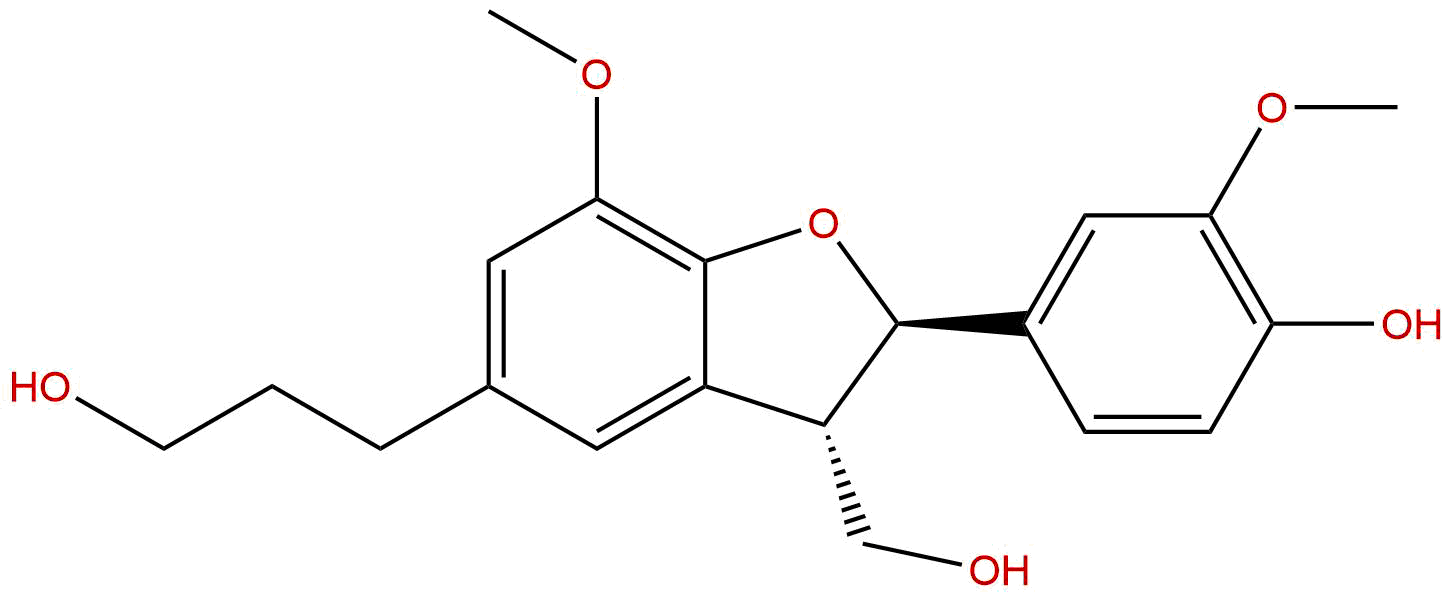
Dihydroerythritol (7R, 8S Dihydroerythringiferol alcohol, CAS number 126253-41) is a naturally occurring lignin unit derivative belonging to the family of guaiacol compounds. As an enantiomer of (2R, 3S) - dihydrodihydrodihydrobis (pine) alcohol, dihydroerythritol mainly serves as one of the constituent units of lignin in plants and participates in the structural construction of plant cell walls. In recent years, with the rapid development of natural product pharmacology, dihydroerythritol has attracted widespread attention due to its unique molecular structure and excellent biological activity, especially in the fields of skin moisturizing and skin barrier repair, showing significant potential.
This article aims to systematically review the chemical structure and physicochemical properties, plant sources, and extraction methods of dihydroerythritol, deeply explore its pharmacological activity and mechanism of action, evaluate its pharmacological properties and pharmacokinetic characteristics, and prospect its potential and development direction in clinical applications, striving to provide comprehensive and in-depth scientific basis for related research.
The chemical structure of dihydroerythritol is based on the guaiacol skeleton, specifically the stereoisomer of (7R, 8S) - dihydrodehydroabietic alcohol. Its molecular formula is C20H24O6 and its molecular weight is 360.4060. The structure contains two benzene rings and one 1-benzofuran ring, and the molecule contains multiple hydroxyl groups (primary alcohol functional groups) and ether bonds, giving it strong polarity and hydrogen bonding ability.
In terms of physical and chemical properties, the LogP value of dihydroerythritol is 2.4212, indicating its moderate lipid solubility, which is beneficial for penetrating biofilms but not excessively hydrophobic. Its topological polar surface area (TPSA) is 88.38 Å ², indicating that it has a certain polarity that facilitates interactions with water and biomolecules. The water solubility is 0.2091 mg/mL, which is not high but sufficient to support dissolution and distribution in living organisms. The blood-brain barrier has high permeability, indicating that its molecules can cross the barrier of the central nervous system and have potential neurological effects. The hERG channel inhibition test was negative, indicating a low risk of cardiac toxicity. The Ames mutagenicity test result was 0.0, indicating an extremely low risk of genetic toxicity.
Overall, dihydroerythritol exhibits excellent medicinal and chemical properties, making it suitable for further pharmacological and pharmacokinetic studies.
Dihydroerythritol is mainly found in various lignin rich plants, especially in the xylem of pine trees and certain angiosperms. As one of the structural units of lignin, although its content is lower than that of major monomers such as guaiacol and p-hydroxyphenylpropanol, it plays a key role in plant cell walls.
Common plant sources include coniferous species such as Pinus spp. and Abies spp., as well as some broad-leaved trees. During the extraction process, organic solvents such as methanol, ethanol, and ethyl acetate are usually used to extract plant xylem, followed by separation and purification through liquid-liquid partitioning, column chromatography, reverse phase high performance liquid chromatography (RP-HPLC), and other techniques.
In recent years, ultrasound assisted extraction and supercritical CO2 extraction technologies have been introduced to improve extraction efficiency and purity, while reducing solvent usage and environmental impact. The purified dihydroerythritol was structurally identified by mass spectrometry (MS), nuclear magnetic resonance (NMR), and infrared spectroscopy (IR) to ensure its purity and structural accuracy.
The pharmacological activity research of dihydroerythritol mainly focuses on the regulation of skin moisturizing and skin barrier function. As a natural derivative of guaiacol, it has the potential to resist oxidation, inflammation, and promote skin cell function.
Multiple in vitro and in vivo studies have shown that dihydroerythritol can significantly enhance the hydration status of the skin's stratum corneum. It enhances the moisturizing ability of the skin by regulating the expression of skin related genes, promoting the synthesis of natural moisturizing factor (NMF) and hyaluronic acid.
Dihydroerythritol has excellent free radical scavenging ability, which can inhibit the generation of peroxidized lipids and alleviate the damage of oxidative stress to skin cells. In addition, it has an inhibitory effect on the expression of inflammatory factors such as TNF - α and IL-1 β, which helps alleviate skin inflammatory reactions.
By regulating the expression of intercellular tight junction proteins (such as CLDN1) and keratinocyte differentiation related proteins (such as FLG), dihydroerythritol promotes the structural integrity and functional recovery of the skin barrier, enhancing the skin's resistance to external stimuli.
The moisturizing and barrier repairing effects of dihydroerythritol on the skin are mainly achieved by regulating multiple key molecular targets:
AQP3 (aquaporin 3)AQP3 is responsible for the transport of water and glycerol in the skin, maintaining hydration of the stratum corneum. Dihydroerythritol can upregulate the expression of AQP3 and promote water balance inside and outside skin cells.
FLG (silk fibroin)FLG is an important protein for keratinocyte differentiation, and its breakdown products provide precursors for natural moisturizing factors in the skin. Dihydroerythritol promotes the expression of FLG gene and enhances skin moisturizing function.
CLDN1 (tight junction protein 1)CLDN1 is a key component of tight intercellular connections, maintaining the physical integrity of the skin barrier. Dihydroerythritol strengthens the skin barrier structure by promoting CLDN1 expression.
HAS2 (Hyaluronic Acid Synthase 2)HAS2 catalyzes the synthesis of hyaluronic acid, which is an important moisturizing factor for the skin. Dihydroerythritol enhances HAS2 activity and increases skin hyaluronic acid content.
CASQ1 (sarcoplasmic reticulum calcium binding protein 1)Although CASQ1 is mainly expressed in muscle tissue, its potential regulatory role in skin cells is still under study. Preliminary data suggests that dihydroerythritol may affect intracellular calcium homeostasis and indirectly regulate skin cell function.
By multiple regulation of the above targets, dihydroerythritol achieves comprehensive regulation of skin moisture metabolism, barrier repair, and anti-inflammatory and antioxidant effects, demonstrating its unique advantages as a skin moisturizing active ingredient.
The pharmacological evaluation of dihydroerythritol shows that it has good potential for drug development:
Molecular weight and lipid solubility The molecular weight of 360.4 Da and moderate LogP value (2.42) comply with Lipinski's rule, which is conducive to oral absorption and skin penetration.
Polarity and solubility TPSA is 88.38 Å ², with moderate water solubility, supporting its distribution and targeting in body fluids.
safety HERG channel inhibition is negative and Ames test shows no mutagenicity, indicating low risk of cardiac toxicity and genetic toxicity, and good safety.
Blood-brain barrier permeability High blood-brain barrier permeability provides potential applications in the central nervous system, but attention should also be paid to the risk of central side effects.
In terms of pharmacokinetics, existing research is relatively limited. Preliminary in vitro metabolic experiments indicate that dihydroerythritol is metabolically stable in liver microsomes and is mainly excreted through phase II metabolic pathways such as glucuronic acid binding. Its bioavailability and in vivo distribution characteristics need to be further clarified through animal models and preclinical studies.
Based on its significant skin moisturizing and barrier repairing activities, dihydroerythritol has broad application prospects in the field of skin care and treatment. Specific directions include:
Skincare ingredients As a natural active moisturizing agent, dihydroerythritol can be developed as the core ingredient of skin care products such as efficient moisturizing cream and lotion to meet the market demand for natural, safe and efficient skin care products.
Adjuvant treatment for skin diseases Dihydroerythritol can be used as an adjuvant therapy ingredient to promote skin barrier repair and inflammation relief for skin barrier disorders such as dry skin disease, eczema, and psoriasis.
Potential for combination therapy Combined with other anti-inflammatory and antioxidant natural products, dihydroerythritol is expected to exert synergistic effects and enhance therapeutic efficacy.
Future research should focus on its in vivo pharmacokinetic characteristics, long-term safety evaluation, and clinical efficacy verification, promoting its transformation from laboratory research to clinical application.
In addition, considering its high blood-brain barrier permeability, exploring the potential application of dihydroerythritol in neuroprotection or neuroinflammatory diseases is also worth paying attention to.
Dihydroerythritol, as a natural derivative of guaiacol with unique structure and multiple biological activities, has demonstrated important pharmacological value in the fields of skin moisturizing and barrier repair. Its good pharmacological parameters and safety features provide a solid foundation for subsequent development. In the future, through systematic pharmacokinetic studies and clinical validation, dihydroerythritol is expected to become a star molecule in the field of natural product pharmacology, promoting the widespread application of natural products in the prevention and treatment of skin diseases and beauty care.
In summary, dihydroerythritol not only enriches the pharmacological activity spectrum of natural products, but also provides new ideas and directions for the research and development of natural product drugs, which is worthy of continuous attention and in-depth exploration by scientific research and industry.
