Yangambin Resin Phenol B Dimethyl Ether: A Systematic Review from Natural Products to Potential Drug Candidates
Introduction/Overview
Natural products have always been an important source of drug discovery and development, especially in the fields of anti-tumor, anti-inflammatory, and cardiovascular disease treatment. Plant derived secondary metabolites exhibit unique chemical diversity and biological activity. Among numerous natural products, lignans, as a class of plant phenolic compounds polymerized from phenylpropanoid units, have attracted much attention due to their extensive pharmacological activities. Yangambin, a typical furan lignan, was initially isolated and identified from Annonaceae plants and later discovered in various plants such as Magnoliaceae.
Yangambin's discovery can be traced back to the 1970s, when researchers noticed significant anti PAF activity in extracts from certain plants in the Annonaceae family during the systematic screening of platelet activating factor (PAF) receptor antagonists in natural products. Further activity tracking and separation ultimately identified Yangambin as the main active ingredient. This discovery has opened up in-depth research on its pharmacological activity, revealing its potential application value in multiple fields such as anti allergy, anti-inflammatory, vasodilation, and anti-tumor.
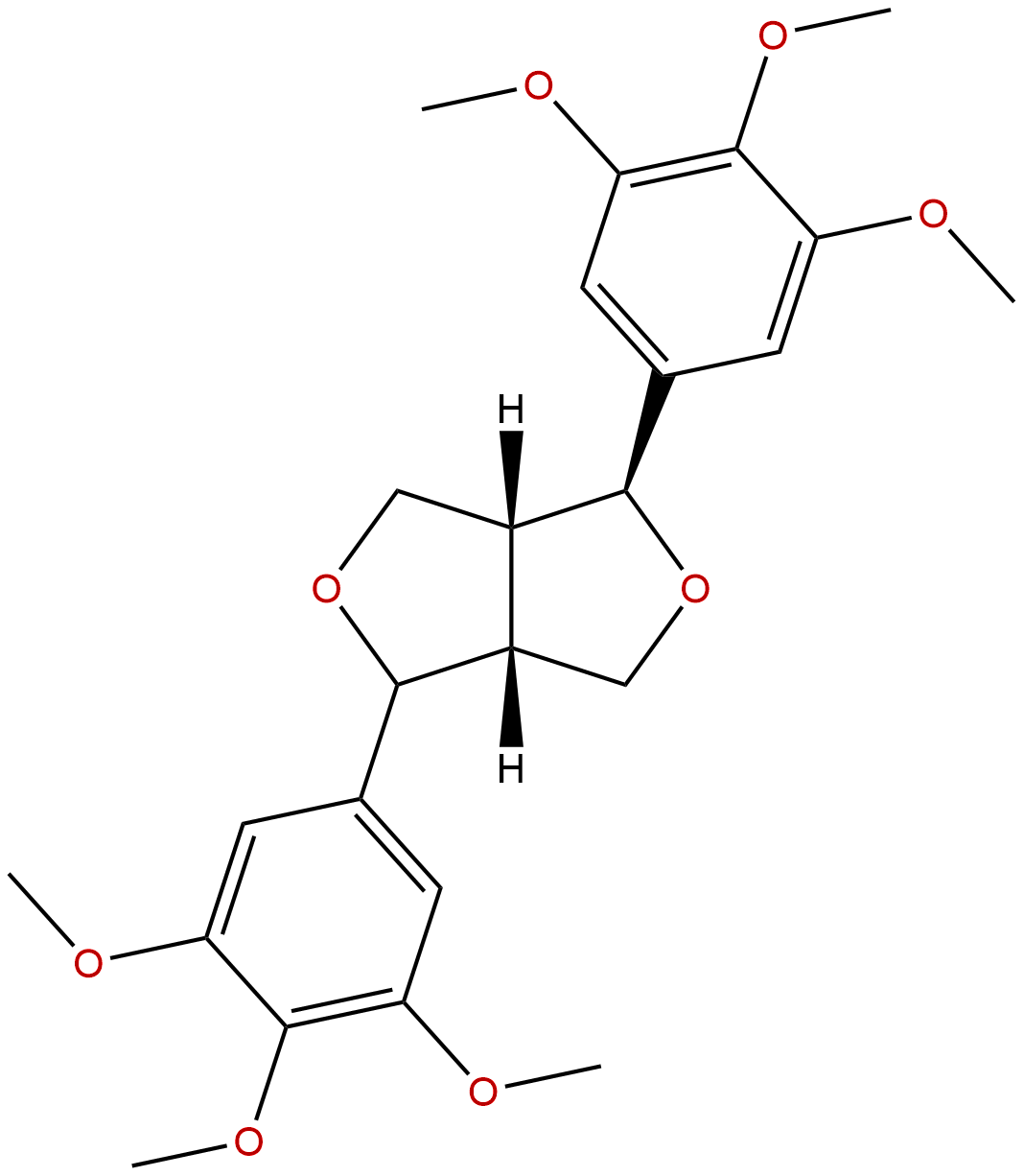
From a chemical structure perspective, Yangambin belongs to the furan lignin subclass, with its core structure being a tetrahydrofuran furan ring system. This rigid skeleton endows the molecule with unique stereochemical characteristics and biological activity. In recent years, with the deepening understanding of the mechanism of action of natural products, the multi-target properties of Yangambin have gradually been revealed, especially its potential in regulating cell apoptosis, inhibiting tumor cell proliferation and metastasis, making it a research hotspot in the field of natural product medicinal chemistry.
This article will provide a systematic review of the research status of Yangambin from multiple dimensions, including chemical structure and physicochemical properties, plant sources and extraction methods, pharmacological activity research, mechanism of action and molecular targets, drug evaluation and pharmacokinetics, clinical application prospects and prospects, in order to provide reference for the further development and utilization of this natural product.
Chemical structure and physicochemical properties
Chemical structural characteristics
The chemical name of Yangambin is Liriodendron Resin Phenol B Dimethyl Ether, and its systematic name is (1S, 2R, 5R, 6S) -2,6-bis (3,4-dimethoxyphenyl) -3,7-dioxane [3.3.0] octane. The molecular formula is C ₂₄ H ∝₀ O ₈, and the molecular weight is 446.4960 g/mol. From a structural classification perspective, Yangambin belongs to furofuran lignan, whose core skeleton is composed of two phenylpropanoid units connected by C8-C8 'bonds, forming a tetrahydrofuran ring system.
The structural features of this molecule include: two 3,4-dimethoxyphenyl groups (i.e., resveratrol groups) connected to the 2nd and 6th positions of the bicyclic skeleton, respectively; The tetrahydrofuran ring system presents a cis fused configuration, endowing the molecule with a rigid three-dimensional spatial structure; Four methoxy groups (- OCH ∝) are distributed at positions 3 and 4 of two benzene rings. This structural feature determines that Yangambin has high lipid solubility, and the methoxy substitution on the benzene ring also affects its interaction with biological targets.
Physicochemical properties
The physicochemical properties of Yangambin provide important basis for its pharmacological evaluation. According to computational chemical analysis, its oil-water partition coefficient (LogP) is 3.1007, indicating that the compound has moderate lipid solubility, which is conducive to transmembrane transport and binding to lipid soluble targets. The topological polar surface area (TPSA) is 73.8400 Å ², which is within the acceptable range for oral medication (usually TPSA<140 Å ²), indicating its good oral absorption potential.
In terms of water solubility, Yangambin has a water solubility value of 0.0327 mg/mL, which belongs to low water solubility compounds. This characteristic may limit its in vivo bioavailability, but it can be improved through formulation techniques such as nanocarriers, liposomes, etc. It is worth noting that Yangambin's blood-brain barrier (BBB) penetration assessment is "high", indicating that the compound may have central nervous system activity, which provides the possibility for its application in the treatment of neurodegenerative diseases or brain tumors.
In terms of safety prediction, the hERG inhibition assessment result was negative, indicating a low risk of Yangambin causing cardiac QT interval prolongation. The Ames test result was 0.0, indicating that the compound did not show significant mutagenicity in the bacterial recovery mutation test, and the preliminary safety was good. These pharmacological parameters have laid a favorable foundation for the further development of Yangambin.
Plant sources and extraction methods
Main plant sources
Yangambin was originally isolated from Annonaceae plants, which are widely distributed in tropical and subtropical regions and are known for their abundant lignans. Currently, it has been reported that plants in the family Lychee containing Yangambin include:
-
Rollinia plants R. Pickeli, R. Exalbida, and R. Mucosa are the main sources of Yangambin. These plants are mainly distributed in Brazil, Peru and other places in South America, and are commonly used in traditional medicine to treat inflammatory diseases and parasitic infections.
-
Annona plants Some plants of the genus Lychee have also been reported to contain Yangambin, although the content is usually lower than that of the genus Rollinia.
-
Magnoliaceae plants Magnolia biondii is another important source of Yangambin. This plant is used in traditional Chinese medicine to treat diseases such as nasal congestion and headaches, and its flower bud (Xinyi) is a commonly used traditional Chinese medicinal herb.
In addition, recent studies have also found that Yangambin exists in some species of other families and genera, such as Lauraceae and Piperaceae, indicating that the distribution of this compound in the plant kingdom may be more widespread than expected.
Extraction and Separation Methods
The extraction of Yangambin is usually carried out using organic solvent extraction method, which utilizes its lipophilic characteristics for separation and purification. The classic extraction process includes:
-
Raw material processing Crush dry plant materials (usually bark, roots, or branches) to an appropriate particle size to improve extraction efficiency.
-
Solvent extraction Extract using a solvent system with increasing polarity. The commonly used initial solvents are ethanol or methanol, and crude extracts are obtained by cold soaking or hot reflux extraction. Research has shown that a 70% -95% ethanol aqueous solution has a higher extraction efficiency for Yangambin.
-
Liquid-liquid distribution Suspend the crude extract in water and extract it sequentially with petroleum ether, ethyl acetate, and n-butanol. Yangambin is mainly enriched in the ethyl acetate extraction phase, which can effectively remove water-soluble impurities and strongly lipophilic components.
-
Column chromatography separation Preliminary separation was performed using silica gel column chromatography, with chloroform methanol or petroleum ether ethyl acetate gradient elution. For further purification, Sephadex LH-20 gel column chromatography can be used to remove pigments and low molecular weight impurities by molecular sieve effect.
-
High performance liquid chromatography (HPLC)For high-purity requirements, reverse phase C18 preparative HPLC can be used to obtain Yangambin monomers with a purity of over 98% through isocratic or gradient elution using acetonitrile water or methanol water systems.
In recent years, green extraction techniques such as supercritical fluid extraction (SFE) and microwave-assisted extraction (MAE) have also been attempted for the extraction of Yangambin. These methods have the advantages of low solvent consumption, short extraction time, and environmental friendliness, but further optimization is needed for industrial applications.
Pharmacological activity research
Antiplatelet activating factor (PAF) receptor antagonistic activity
The earliest pharmacological activity identified by Yangambin was its role as a selective PAF receptor antagonist. PAF is a potent phospholipid inflammatory mediator involved in various physiological and pathological processes such as platelet aggregation, inflammatory response, allergic response, and vascular permeability regulation. Research has shown that Yangambin can competitively bind to PAF receptors, inhibiting PAF induced platelet aggregation and neutrophil activation. Its antagonistic activity is comparable to the classic PAF receptor antagonist ginkgolide B, but with higher selectivity and no significant effect on other lipid mediator receptors such as leukotriene receptors.
Vasodilatory effect
Yangambin has a significant relaxing effect on vascular smooth muscle, which is closely related to its regulation of calcium ion channels. Research has found that Yangambin can inhibit voltage dependent calcium channels (VDCC) and receptor operated calcium channels (ROCC), reduce extracellular calcium influx, and thus lower the concentration of free calcium ions ([Ca ² ⁺] i) in vascular smooth muscle cells. The decrease in calcium ion concentration leads to a decrease in myosin light chain kinase (MLCK) activity, a reduction in muscle motor myosin cross-linking, ultimately causing vascular smooth muscle relaxation and peripheral vasodilation. This mechanism suggests that Yangambin may have potential application value in anti hypertension and improving microcirculation.
Antiallergic activity
In anti allergic studies, Yangambin exhibited inhibitory effects on the release of β - aminocaproidase, with an IC ₅₀ of 33.8 μ M. β - Aminoglucosidase is a hallmark enzyme for degranulation of mast cells, and its release is closely related to allergic reactions. Yangambin exerts anti allergic effects by stabilizing mast cell membranes or inhibiting intracellular signaling pathways, reducing the release of allergic mediators such as histamine and leukotrienes. This activity is similar in mechanism to the commonly used anti allergic drug cromolyn sodium in clinical practice, but Yangambin may have better oral bioavailability.
anti-inflammatory activity
The anti-inflammatory activity of Yangambin has been validated in various inflammatory models. In the macrophage model stimulated by lipopolysaccharide (LPS), Yangambin can significantly inhibit the production of pro-inflammatory factors such as TNF - α, IL-6, IL-1 β, with an IC50 of 37.4 μ M. Further research has shown that its anti-inflammatory mechanism involves inhibition of the nuclear factor kappa B (NF - κ B) signaling pathway, as well as downregulation of cyclooxygenase-2 (COX-2) and inducible nitric oxide synthase (iNOS) expression. In addition, Yangambin can also inhibit the chemotaxis and infiltration of inflammatory cells (such as neutrophils), reducing tissue damage.
Antitumor activity
In recent years, the anti-tumor activity of Yangambin has become a research hotspot. In vitro experiments show that Yangambin has a proliferation inhibitory effect on a variety of tumor cell lines, including breast cancer (MCF-7, MDA-MB-231), lung cancer (A549), liver cancer (HepG2), colon cancer (HT-29) and prostate cancer (PC-3). Its anti-tumor mechanism involves multiple aspects:
-
Inducing apoptosis Yangambin upregulates the pro apoptotic protein Bax and downregulates the anti apoptotic proteins Bcl-2 and Mcl-1 by regulating the expression of Bcl-2 family proteins, activating the mitochondrial apoptosis pathway. At the same time, it can activate caspase-3 and caspase-9, promote PARP lysis, and ultimately lead to cell apoptosis.
-
cell cycle arrest Yangambin can block tumor cells in the G0/G1 or G2/M phase, which is related to changes in the expression of cyclins and cyclin dependent kinases (CDKs).
-
Suppression transfer By downregulating the expression of matrix metalloproteinase-2 (MMP-2) and MMP-9, Yangambin can inhibit the invasion and migration ability of tumor cells and reduce the risk of metastasis.
-
Angiogenesis inhibition Yangambin can inhibit the expression of hypoxia inducible factor-1 α (HIF-1 α), reduce the secretion of vascular endothelial growth factor (VEGF), and thus inhibit the formation of tumor neovascularization.
Mechanism of action and molecular targets
Multi target action characteristics
The pharmacological activity of Yangambin originates from its interactions with multiple molecular targets, exhibiting typical multi-target drug characteristics. Based on existing research, its main molecular targets can be summarized as follows:
-
PAF receptor As a selective PAF receptor antagonist, Yangambin binds to PAF receptors and blocks PAF mediated signal transduction, which is the molecular basis for its anti-inflammatory and anti allergic activities.
-
Calcium ion channel Yangambin exerts vasodilatory effects by inhibiting L-type voltage dependent calcium channels and receptor operated calcium channels, reducing calcium ion influx. This mechanism is also partially involved in its anti-inflammatory and anti-tumor activities, as calcium signaling plays a critical role in cell proliferation, differentiation, and apoptosis.
-
Apoptosis related proteins Yangambin directly or indirectly regulates the expression of Bcl-2 family proteins (Mcl-1, Bcl-2, Bax) and activates the mitochondrial apoptosis pathway. In addition, it can inhibit the phosphorylation of STAT3, block STAT3 mediated survival signals, and enhance the sensitivity of tumor cells to apoptosis.
-
transcription factor Yangambin inhibits nuclear translocation and DNA binding activity of NF - κ B, reducing transcription of pro-inflammatory genes. Meanwhile, it can also downregulate the expression of HIF-1 α, affecting hypoxia adaptation and angiogenesis.
-
Enzyme targets Yangambin can inhibit the activity of topoisomerase I (TOP1) and topoisomerase II alpha (TOP2A), interfere with DNA replication and transcription, which may be another mechanism of its anti-tumor activity. In addition, its inhibitory effect on aromatase (CYP19A1) suggests its potential application in hormone dependent tumors (such as breast cancer).
Signal pathway network
The role of Yangambin involves cross regulation of multiple signaling pathways. In tumor cells, it blocks proliferation signals by inhibiting the MAPK/ERK pathway (target MAPK1) and PI3K/Akt pathway; By activating the JNK and p38 MAPK pathways, stress-induced apoptosis is promoted. In estrogen receptor positive breast cancer, Yangambin can also interact with estrogen receptor alpha (ESR1) to play a selective estrogen receptor modulator (SERM) like role.
It is worth noting that the multi-target effect of Yangambin is not a simple additive effect, but rather a synergistic network formed by regulating key node proteins. For example, simultaneous inhibition of STAT3 and NF - κ B can produce stronger anti-inflammatory and anti-tumor effects, as these two transcription factors have a synergistic effect in inflammation tumor transformation.
Evaluation of drug properties and pharmacokinetics
Analysis of drug properties parameters
Based on computational medicinal chemistry methods, the pharmacological parameters of Yangambin have been preliminarily evaluated. Its molecular weight (446.50 Da) is slightly higher than the threshold of molecular weight<500 in Lipinski's five rules, but still within an acceptable range. The LogP value is 3.10, which meets the lipid solubility requirement (LogP<5). The number of hydrogen bond donors is 0, and the number of hydrogen bond acceptors is 8, satisfying the rule that the number of hydrogen bond acceptors is less than 10. Therefore, Yangambin basically conforms to Lipinski's five rules, indicating its good oral drug potential.
However, water solubility (0.0327 mg/mL) is the main limiting factor for the pharmacological properties of Yangambin. Low water solubility may lead to incomplete oral absorption and affect bioavailability. To solve this problem, formulation technologies such as prodrug design, solid dispersion, lipid nanoparticles, cyclodextrin inclusion complexes, etc. can be used to improve their solubility and dissolution rate.
Pharmacokinetic characteristics
At present, there is insufficient systematic research on the pharmacokinetics of Yangambin in vivo, but based on its physicochemical properties and preliminary animal experiments, the following characteristics can be inferred:
-
absorb Yangambin has a moderate LogP value and theoretically can be absorbed by the gastrointestinal tract through passive diffusion. However, low water solubility may lead to limited absorption rate, and food effects may significantly affect its oral absorption.
-
distribution High BBB penetration suggests that Yangambin can enter the central nervous system, which is of great significance for its treatment of brain diseases such as glioma. In addition, its high lipid solubility may lead to widespread tissue distribution, especially in adipose tissue and liver.
-
Metabolism The metabolism of Yangambin may mainly involve the liver cytochrome P450 enzyme system, including phase I metabolic reactions such as O-demethylation and aromatic ring hydroxylation, as well as phase II binding reactions such as glucuronidation and sulfation. The presence of methoxy groups may affect metabolic rates and metabolite profiles.
-
excretion Yangambin and its metabolites may be mainly excreted into the intestine through bile and partially excreted from the body through feces. Renal excretion may not be the main pathway due to its high molecular weight and lipid solubility.
safety evaluation
Preliminary safety evaluation shows that Yangambin has a low risk of hERG inhibition and a negative Ames test, indicating a low risk of cardiac and genetic toxicity. However, a comprehensive safety evaluation is still needed, including studies on acute toxicity, chronic toxicity, reproductive toxicity, and carcinogenicity. Especially considering its high BBB penetration, it is necessary to pay attention to potential side effects related to the central nervous system.
Clinical application prospects and prospects
Antitumor therapy
The multi-target anti-tumor activity of Yangambin gives it unique advantages in tumor therapy. Compared with single target drugs, multi-target action can reduce the risk of drug resistance and may produce synergistic therapeutic effects. In particular, its regulatory effects on Mcl-1, Bcl-2, STAT3 and HIF-1 α make it potentially useful in refractory tumors (such as triple negative breast cancer and pancreatic cancer). In addition, the inhibitory effects of Yangambin on TOP1 and TOP2A suggest that it may serve as a lead compound for topoisomerase inhibitor chemotherapy drugs.
Future research directions include: developing derivatives of Yangambin to improve selectivity and reduce toxicity; Explore the combination therapy of Yangambin with existing chemotherapy drugs such as paclitaxel and cisplatin; Utilize nano delivery systems to enhance their tumor targeting and bioavailability.
cardiovascular disease
The vasodilatory effect of Yangambin provides a theoretical basis for its application in hypertension and cardiovascular diseases. Compared with existing calcium channel blockers such as nifedipine, Yangambin may have better safety features because it has both anti-inflammatory and antiplatelet aggregation activities, which can comprehensively improve vascular function. In addition, its antagonism to PAF receptor may have positive significance in the prevention and treatment of atherosclerosis.
Inflammation and Allergic Diseases
The anti-inflammatory and anti allergic activities of Yangambin make it potentially applicable in diseases such as asthma, allergic rhinitis, and atopic dermatitis. Its dual mechanism of action (PAF receptor antagonism and mast cell stabilization) may provide better therapeutic effects than single mechanism drugs. Preclinical studies should focus on the feasibility of local administration (such as inhalation or topical use) to reduce potential side effects caused by systemic exposure.
Challenges and Prospects
Although Yangambin exhibits various pharmacological activities and good pharmacological characteristics, its clinical translation still faces several challenges:
-
Source issue The content of Yangambin in natural plants is usually low, and large-scale extraction is costly. Therefore, the development of chemical synthesis or semi synthesis methods, as well as the use of biotechnology (such as plant cell culture, microbial synthesis) to produce Yangambin, is the key to solving the source problem.
-
bioavailability The low water solubility and possible first pass effect limit the oral bioavailability of Yangambin. Innovations in formulation technology, such as self microemulsifying drug delivery systems (SMEDS) and phospholipid complexes, are expected to improve their oral absorption.
-
Selective optimization Although multi-target action is its advantage, a wide activity spectrum may also lead to off target effects. Optimizing the selectivity towards specific targets through structural modification is an effective strategy to improve the therapeutic index.
-
clinical validation At present, Yangambin's research mainly remains at the level of in vitro and animal experiments, lacking systematic clinical studies. In the future, standardized clinical trials are needed to verify its safety, efficacy, and pharmacokinetic characteristics in humans.
Conclusion
Yangambin, a typical natural product of furan lignans, has attracted widespread attention for its unique chemical structure and diverse pharmacological activities. From its initial discovery as a PAF receptor antagonist to in-depth research in multiple fields such as anti-tumor, anti-inflammatory, anti allergic, and vasodilation in recent years, Yangambin has demonstrated enormous potential as a multi-target drug candidate.
Its mechanism of action involves the synergistic regulation of PAF receptors, calcium ion channels, apoptosis related proteins, transcription factors, and multiple enzyme targets, forming a complex signaling network. The pharmacological evaluation shows that Yangambin basically conforms to the drug like molecular characteristics, but low water solubility and limited pharmacokinetic data are still the main obstacles to its clinical translation.
Looking ahead, with advances in synthetic chemistry, pharmaceutical formulation, and molecular pharmacology, Yangambin and its derivatives are expected to play an important role in the treatment of tumors, cardiovascular diseases, and inflammatory diseases. The road from natural products to innovative drugs is full of challenges, but Yangambin's research process once again proves that nature is still an inexhaustible treasure trove for drug discovery. Digging deeper into the therapeutic potential of this natural product will contribute new solutions to the cause of human health.