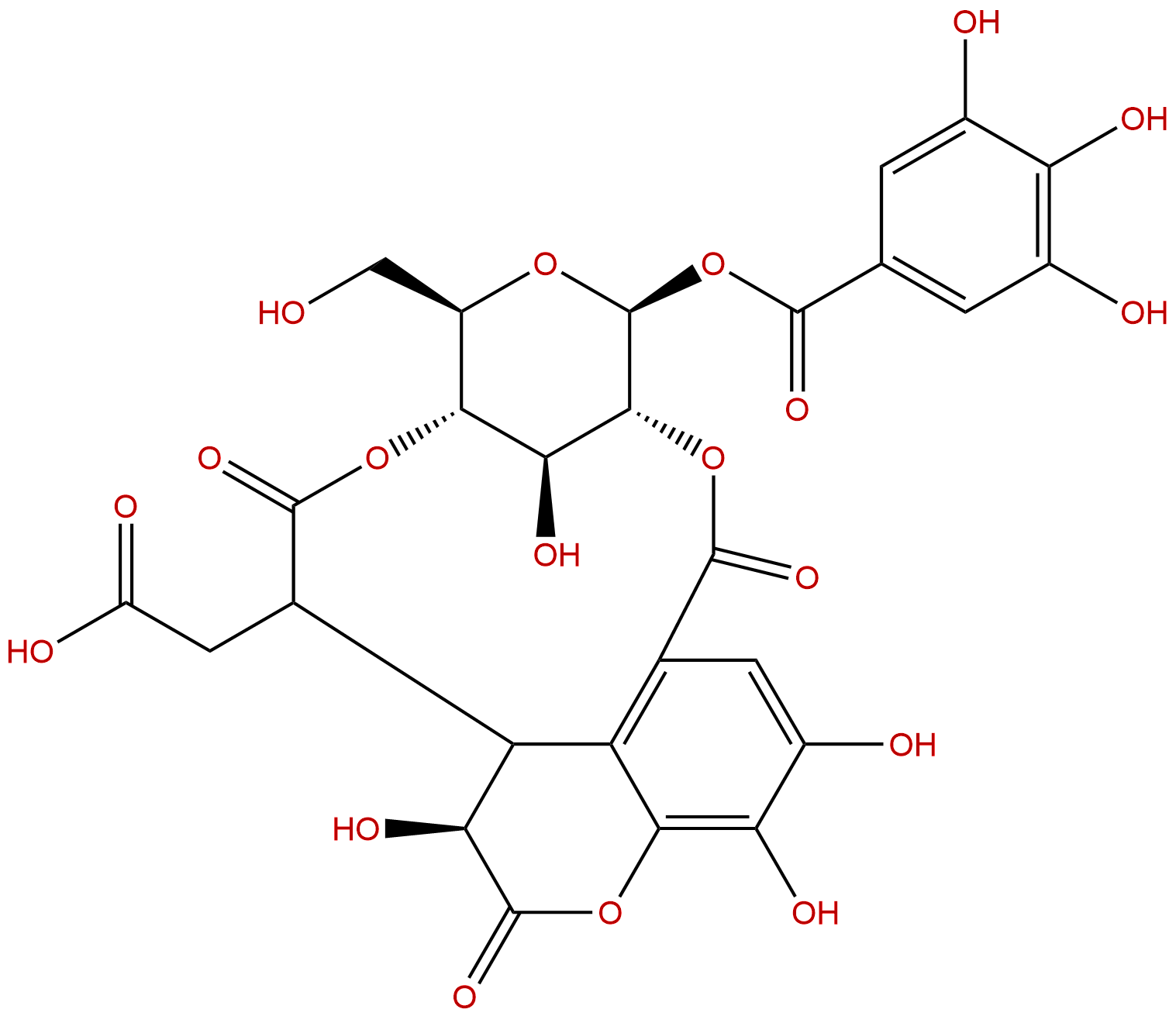


Synonym name: Chebulanin
Catalogue No.: BP2424
Cas No.: 166833-80-3
Formula: C27H24O19
Mol Weight: 652.47
Botanical Source: Tannin derived from divi-divi (fruit of Caesalpinia coriaria) and myrobalans (fruit of Terminalia chebula). Also obtainable from Geranium thunbergii and the seeds of sal (Shorea robusta)
Purity: 95%~99%
Analysis Method: HPLC-DAD or/and HPLC-ELSD
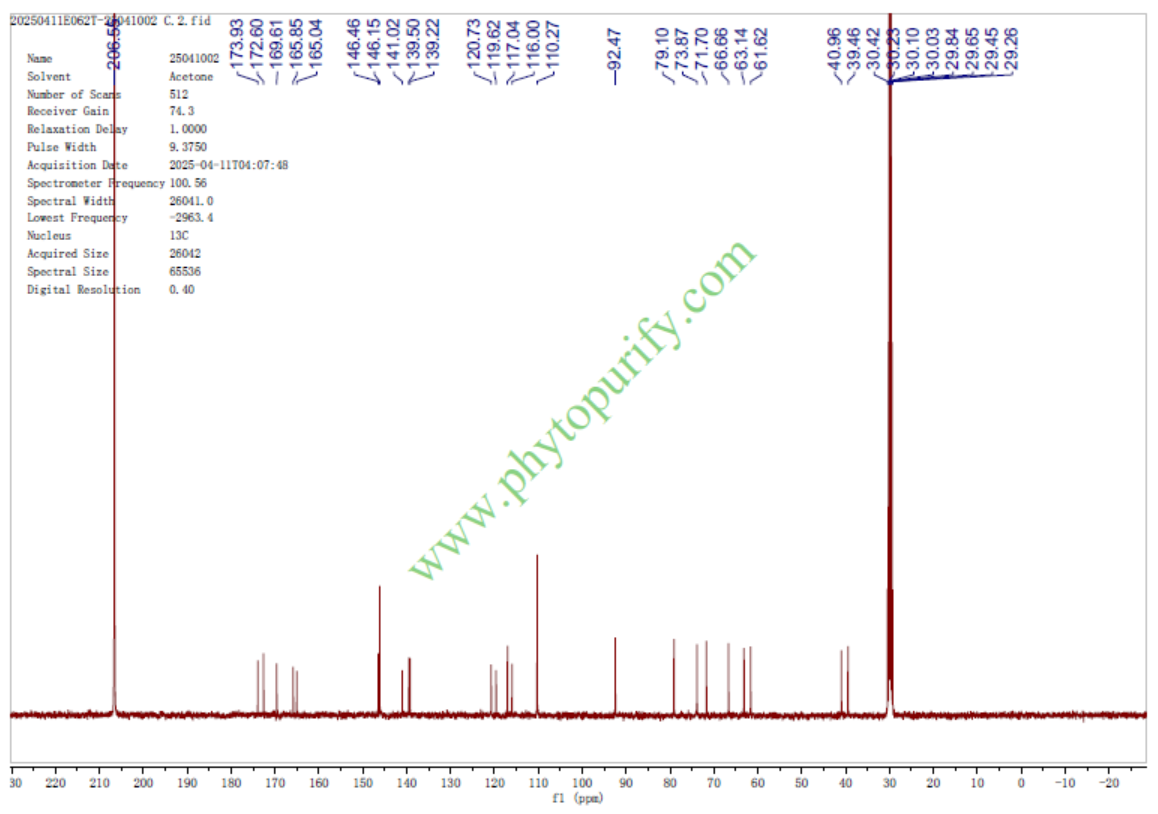
Identification Method: Mass, NMR
Packing: Brown vial or HDPE plastic bottle
Can be supplied from milligrams to grams.
For Reference Standard and R&D, Not for Human Use Directly.
Inquire for bulk scale.
NMR of Chebulanin
Storage conditions:Short-term storage at 2~8℃, long-term storage at -20 ~ -80℃
328.0000
-.5000
Low
No
No
Unknown
Unknown
No
Unknown
Natural products, as an important source of drug discovery, play an irreplaceable role in the long history of human struggle against diseases. In recent years, with the rapid development of modern separation technology and biological activity screening methods, more and more plant secondary metabolites have been discovered and demonstrated significant pharmacological activities. Among them, tannins have attracted much attention due to their unique chemical structures and diverse biological activities. Chebulanin, as a typical hydrolyzable tannin, mainly exists in the Combretaceae plant Chebulanin(Terminalia chebula Retz. and its related plants are one of the characteristic active ingredients of this type of plant.
Hezi, as a traditional Chinese medicine, has a long history of application in the traditional medical systems of Asia, Africa, and the Middle East. In traditional Chinese medicine theory, Hezi has a flat nature and a bitter taste. It has the effects of astringent intestines, stopping diarrhea, converging lungs, stopping cough, reducing fire, and clearing throat. It is commonly used to treat diseases such as chronic diarrhea, diarrhea, rectal bleeding, lung deficiency, wheezing, cough, sore throat, and hoarseness. In Ayurvedic medicine in India, Hezi is revered as the "King of Medicine" and is an important component of the classic Triphala compound. It is widely used in digestive system diseases, inflammatory diseases, anti-aging, and other fields. Modern pharmacological research has confirmed that extracts of Fructus Hedyotis have various biological activities such as antioxidant, anti-inflammatory, antibacterial, antiviral, anti-tumor, hepatoprotective, and hypoglycemic effects, which are closely related to the tannins they contain.
Chebulanin (CAS number: 166833-80-3) is one of the tannin monomers with a relatively high content in Houttuynia cordata, and belongs to the class of galloyl glucose derivatives. Since the first isolation and identification from Hezi in the 1990s, scholars at home and abroad have conducted systematic research on its chemical structure, physicochemical properties, biological activity, and mechanism of action. Research has shown that Hezining has significant pharmacological activities such as antioxidant, anti-inflammatory, anti-tumor, antiviral, hepatoprotective, and neuroprotective effects. Its mechanism of action involves regulating multiple signaling pathways and molecular targets. However, compared to other tannin components in Hezi such as Chebulinic acid and Chebulagic acid, there are relatively few systematic research reports on Hezining. Its pharmacological evaluation and clinical application prospects still need further in-depth exploration.
This article aims to systematically review the chemical structure characteristics, plant sources and extraction methods, pharmacological activity research progress, mechanism of action and molecular targets, pharmacological evaluation and pharmacokinetic characteristics of Hezining, and prospects its clinical application prospects, in order to provide reference for the in-depth research and development of this natural product.
The chemical structure of Hezining belongs to the galloyl glucose compounds in hydrolysable tannins. From a chemical structure perspective, Hezining has β - D-glucose as its core skeleton, and its multiple hydroxyl sites are connected to gallic acid through ester bonds, forming a complex polyphenolic ester structure. Specifically, the hydroxyl groups at positions 1, 2, 3, 4, and 6 of glucose in the Hezining molecule undergo esterification reactions with groups such as galloyl or hexahydroxybiphenylyl (HHDP), forming highly substituted tannin structures.
The molecular formula of Hezining is C ₂₇ H ₂₄ O ₁₇, with a molecular weight of 612.4700 Da. From the perspective of molecular structural characteristics, this compound contains abundant phenolic hydroxyl groups (- OH) and ester bonds (- COO -), which endow Hezining with unique physicochemical properties and biological activity. The presence of phenolic hydroxyl groups gives it strong reducibility and metal ion chelating ability, which is the structural basis of its antioxidant activity. Meanwhile, multiple phenolic hydroxyl groups also contribute to the high polarity and water solubility of Hezining.
In terms of physicochemical properties, the lipid water partition coefficient (LogP) of Hezining is -0.5000, indicating that the compound has strong hydrophilicity and much higher solubility in the aqueous phase than in the lipid phase. This characteristic is consistent with the structural feature of the molecule containing a large number of polar groups (phenolic hydroxyl, ester groups). The topological polar surface area (TPSA) of Hezining is as high as 328.0000 Å ², far exceeding the recommended upper limit of 140 Å ² for oral medications, suggesting that the compound may have difficulty diffusing through biofilms through passive diffusion. In addition, the number of hydrogen bond acceptors in Hezining is 19, further confirming its strong polarity and high water solubility.
From a stability perspective, as a hydrolysable tannin, Hezining is relatively stable under acidic conditions, but its ester bonds are prone to hydrolysis in alkaline environments, leading to structural degradation. In addition, high temperature, light exposure, and oxidation conditions may also affect its chemical stability. These properties have important guiding significance for the extraction, purification, storage, and formulation development of Hezining.
It is worth noting that the chemical structure of Hezining is highly similar to other tannin components in Hezi, such as Hezic acid and Hezitannin. It is centered around glucose and connects different numbers and positions of galloyl and HHDP groups. This structural similarity may lead to synergistic or overlapping effects in their biological activity, but it also increases the difficulty of monomer separation and structural identification.
Hezi Ning mainly comes from plants of the Hezi genus in the family Heterodoniaceae, among which Hezi is the main source(Terminalia chebula Retz. and Vairocana(Terminalia bellirica (Gaertn. Roxb.) is the main source. Hezi is native to South and Southeast Asian regions such as India, Sri Lanka, Myanmar, and Thailand, and has also been introduced and cultivated in provinces such as Yunnan, Guangdong, Guangxi, and Hainan in China. In addition, plants of the same genus such as Terminalia arjuna、Terminalia catappa It has also been reported to contain Hezining or its structural analogues.
In terms of plant organ distribution, Hezining is mainly enriched in the fruit of Hezi, especially in the skin and flesh parts. Research has shown that the total content of tannins in the fruit of Hezi can reach 30% -40%, with Hezi Ning being one of the main tannin monomers. In addition, the presence of Hezining was also detected in the bark, leaves, and seeds of Hezi, but the content is usually lower than that in the fruit. Different production areas, harvesting seasons, tree ages, and processing methods can all affect the content and composition ratio of Hezining.
Regarding the extraction methods of Hezi Ning, the current literature reports mainly include modern extraction techniques such as solvent extraction, ultrasound assisted extraction, microwave-assisted extraction, and supercritical fluid extraction. The traditional solvent extraction method usually uses water or organic solvents containing water (such as methanol, ethanol, acetone, etc.) as extraction solvents, and utilizes the high polarity of Hezining for extraction. Research has shown that using a 50% -70% ethanol aqueous solution as a solvent and refluxing 2-3 times at 60-80 ℃ can achieve a high extraction rate of hezoning. However, traditional solvent extraction methods have disadvantages such as long extraction time, high solvent consumption, and co dissolution of impurities.
The ultrasound assisted extraction method utilizes the cavitation effect and mechanical vibration of ultrasound to effectively destroy plant cell walls and promote the dissolution of active ingredients. This method has the advantages of short extraction time, low temperature, and high efficiency, and is particularly suitable for the extraction of thermosensitive components. Research has shown that under the conditions of ultrasound power of 300-500 W, extraction temperature of 40-60 ℃, and extraction time of 30-60 min, the extraction rate of Hezining is 20% -40% higher than that of traditional reflux method. The microwave-assisted extraction method utilizes the penetrability and selective heating characteristics of microwaves to quickly and efficiently extract target components, but attention should be paid to controlling the microwave power and temperature to avoid degradation of Hezining.
In terms of purification, conventional column chromatography methods are difficult to achieve efficient separation due to the similarity in structure between Hezining and other tannins in Hezi. The commonly used purification strategies currently include macroporous adsorption resin column chromatography (such as D101, HPD100, etc.), polyamide column chromatography, reverse phase silica gel column chromatography, and preparative high-performance liquid chromatography (pre HPLC). Among them, the method of using macroporous adsorption resin combined with gradient elution is widely used for the preliminary purification of Hezining due to its advantages of simple operation, low cost, and scalable production. Further high-purity separation usually requires the combination of reverse phase preparative HPLC, using acetonitrile water or methanol water systems as mobile phases, and adding appropriate amounts of formic acid or trifluoroacetic acid as modifiers, to obtain Hezining monomers with a purity of over 98%.
It is worth noting that Hezining is prone to hydrolysis and oxidative degradation during the extraction and purification process. Therefore, temperature, pH value, and light conditions should be controlled as much as possible during the operation. If necessary, antioxidants (such as vitamin C, sodium sulfite, etc.) can be added to protect the stability of the target components.
In recent years, scholars at home and abroad have conducted systematic research on the pharmacological activity of Hezining, revealing its potential application value in multiple fields such as antioxidant, anti-inflammatory, anti-tumor, antiviral, hepatoprotective, and neuroprotective.
The antioxidant activity of Hezining is one of its most fundamental and important pharmacological effects. Due to the presence of multiple phenolic hydroxyl groups in the molecule, Hezining can effectively scavenge various free radicals, including 1,1-diphenyl-2-trinitrophenylhydrazine (DPPH) free radical, 2,2 '- diazobis (3-ethylbenzothiazoline-6-sulfonic acid) (ABTS) cationic free radical, superoxide anion free radical, and hydroxyl free radical. In vitro studies have shown that the DPPH free radical scavenging ability of Hezining is comparable to that of the positive control vitamin C and is concentration dependent. In addition, Hezining can chelate transition metal ions (such as Fe ² ⁺, Cu ² ⁺), inhibit hydroxyl radicals generated by Fenton reaction, and thus exert indirect antioxidant effects.
At the cellular level, Hezining can alleviate oxidative stress-induced cell damage. Research has shown that pre-treatment with Hezi Ning can significantly reduce the levels of reactive oxygen species (ROS) in liver cells, neurons, and cardiomyocytes induced by hydrogen peroxide (H ₂ O ₂) or tert butyl hydroperoxide (t-BHP), increase the activity of antioxidant enzymes such as superoxide dismutase (SOD), glutathione peroxidase (GPx), and catalase (CAT), and reduce the production of lipid peroxidation product malondialdehyde (MDA).
Hezoning exhibits significant anti-inflammatory effects in various inflammatory models. In a macrophage model stimulated by lipopolysaccharide (LPS), Hezining can inhibit the production of nitric oxide (NO) and prostaglandin E ₂ (PGE ₂), and downregulate the expression of inducible nitric oxide synthase (iNOS) and cyclooxygenase-2 (COX-2). Meanwhile, Hezining can also inhibit the release of pro-inflammatory cytokines such as tumor necrosis factor - α (TNF - α), interleukin-1 β (IL-1 β), and interleukin-6 (IL-6).
In animal models, Hezining exhibits inhibitory effects on both acute and chronic inflammation. For example, in the rat toe swelling model induced by carrageenan, oral administration of Hezining can significantly reduce the degree of swelling; In the adjuvant induced arthritis model, Hezining can reduce joint swelling, lower inflammation scores, and inhibit the expression of inflammatory mediators in synovial tissue. In addition, Hezining also shows a protective effect on inflammation related disease models such as ulcerative colitis and hepatitis.
Hezining exhibits inhibitory effects on proliferation and induces apoptosis in various tumor cell lines. According to research reports, Hezinin can inhibit the proliferation of human liver cancer cells (HepG2, Huh7), colorectal cancer cells (HT-29, HCT116), breast cancer cells (MCF-7, MDA MB-231), lung cancer cells (A549) and melanoma cells (B16F10), and its half inhibitory concentration (IC ≮ ₀) is usually within the range of 10-50 μ M.
Mechanism studies have shown that the anti-tumor effects of Hezining involve multiple aspects: inducing cell cycle arrest (mainly in the G ₁ or G ₂/M phase), activating mitochondrial pathway induced apoptosis (upregulating Bax, downregulating Bcl-2, releasing cytochrome c, activating caspase-3/9), inhibiting PI3K/Akt/mTOR signaling pathway, activating p38 MAPK and JNK signaling pathways, etc. In addition, Hezining also exhibits anti angiogenic activity, which can inhibit the proliferation, migration, and lumen formation of human umbilical vein endothelial cells (HUVEC), and reduce the expression of vascular endothelial growth factor (VEGF).
Hezining has inhibitory effects on various viruses. Research has shown that Hezining can inhibit the replication of influenza viruses (H1N1, H3N2), and its mechanism of action may be related to the inhibition of viral neuraminidase activity or interference with virus adsorption and invasion into host cells. In addition, Hezining also exhibits certain inhibitory activity against herpes simplex virus (HSV-1, HSV-2), human immunodeficiency virus (HIV), hepatitis B virus (HBV), and hepatitis C virus (HCV). It is worth noting that in recent years, studies have reported that Terminalia chebula has binding affinity to the main protease (Mpro) of SARS CoV-2, suggesting that it may have the potential to resist COVID-19, but it needs further experimental verification.
Hezoning exhibits protective effects in various liver injury models. In a mouse model of acute liver injury induced by carbon tetrachloride (CCl ₄), pretreatment with Hezining can significantly reduce serum transaminase (ALT, AST) levels, alleviate liver tissue necrosis and inflammatory infiltration. In the alcoholic liver injury model, Hezining can inhibit alcohol induced hepatic steatosis, reduce liver triglyceride content, and upregulate the activity of ethanol metabolizing enzymes (ADH, ALDH). In addition, Hezining also exhibits protective effects against drug-induced liver injury (such as acetaminophen induction) and non-alcoholic fatty liver disease (NAFLD) models.
In recent years, the neuroprotective effect of Hezining has gradually received attention. Research has shown that Hezi Ning can alleviate the neurotoxicity induced by β - amyloid protein (A β), inhibit tau protein hyperphosphorylation, and improve cognitive function in Alzheimer's disease model mice. In the Parkinson's disease model, Hezi Ning alleviates dopaminergic neuron damage induced by 6-hydroxydopamine (6-OHDA) or 1-methyl-4-phenyl-1,2,3,6-tetrahydropyridine (MPTP) and increases striatal dopamine levels. In addition, Hezining also exhibits protective effects against neurological diseases such as cerebral ischemia-reperfusion injury and spinal cord injury, with mechanisms involving antioxidant, anti-inflammatory, anti apoptotic, and promotion of neurotrophic factor expression.
In addition to the above activities, Hezinin has also been reported to have a variety of pharmacological activities such as antibacterial (including drug-resistant strains), anti diabetes (inhibiting α - glucosidase activity, improving insulin resistance), anti osteoporosis (promoting osteoblast differentiation, inhibiting osteoclast formation), anti allergy (inhibiting mast cell degranulation), and immune regulation.
The pharmacological activity of Hezining involves the regulation of multiple molecular targets and signaling pathways, and its mechanism of action has the characteristics of multiple targets and pathways.
The antioxidant effect of Hezining is mainly achieved through two pathways: direct clearance of free radicals and activation of endogenous antioxidant defense system. At the molecular level, Hezining can activate the nuclear factor E2 related factor 2 (Nrf2)/antioxidant response element (ARE) signaling pathway. Nrf2 is a key transcription factor regulating the expression of antioxidant enzymes, which binds to Keap1 and is anchored in the cytoplasm under normal physiological conditions. Under oxidative stress stimulation, Nrf2 dissociates and translocates from Keap1 into the nucleus, binds to ARE, and initiates the transcription of downstream antioxidant enzyme genes such as SOD, GPx, CAT, HO-1, NQO1, etc. Research has shown that Hezining can promote nuclear translocation of Nrf2, upregulate the expression of HO-1 and NQO1, thereby enhancing the antioxidant capacity of cells.
The anti-inflammatory effect of Hezining is mainly related to the inhibition of nuclear factor kappa B (NF - κ B) and mitogen activated protein kinase (MAPK) signaling pathways. NF - κ B is a core transcription factor that regulates inflammatory responses and exists in the cytoplasm in a resting state by binding to I κ B protein. Inflammatory stimuli such as LPS and TNF - α can activate I κ B kinase (IKK), leading to phosphorylation and degradation of I κ B, release of NF - κ B for translocation into the nucleus, and initiation of transcription of pro-inflammatory genes. Research has shown that Hezining can inhibit the activity of IKK, reduce the degradation of I κ B α, thereby blocking the activation of NF - κ B and downregulating the expression of inflammatory mediators such as iNOS, COX-2, TNF - α, IL-1 β, and IL-6.
In addition, Hezining can also inhibit the phosphorylation of p38, JNK, and ERK1/2 in the MAPK signaling pathway, further suppressing inflammatory responses. Meanwhile, Hezi Ning can activate the adenosine monophosphate activated protein kinase (AMPK) signaling pathway and exert anti-inflammatory effects by inhibiting mTOR activity.
The anti-tumor effect of Hezining involves the regulation of multiple signaling pathways. In terms of cell cycle regulation, Hezi Ning upregulates the expression of cell cycle inhibitory proteins such as p21 and p27, inhibits the expression of cyclin D1, cyclin E, and CDK2/4/6, and blocks tumor cells in the G ₁ phase. In terms of apoptosis regulation, Hezining induces cell apoptosis by activating the mitochondrial pathway (endogenous pathway), manifested as a decrease in mitochondrial membrane potential, release of cytochrome c, and activation of caspase-9 and caspase-3. Meanwhile, Hezi Ning inhibits the PI3K/Akt/mTOR signaling pathway, which plays a crucial role in tumor cell proliferation, survival, and metabolism. In addition, Hezining can activate the p38 MAPK and JNK signaling pathways, promoting the expression of apoptosis related proteins.
In terms of tumor metastasis, Hezining can inhibit the expression and activity of matrix metalloproteinases (MMP-2, MMP-9), reducing the invasion and migration ability of tumor cells. Meanwhile, Hezining exerts anti angiogenic effects by inhibiting the VEGF/VEGFR signaling pathway.
The hepatoprotective effects of Hezining involve multiple aspects such as antioxidant, anti-inflammatory, anti apoptotic, and regulation of lipid metabolism. In the alcoholic liver injury model, Hezining can activate the AMPK signaling pathway, inhibit the activation of steroid regulatory element binding protein-1c (SREBP-1c), reduce the expression of fatty acid synthase (FAS) and acetyl CoA carboxylase (ACC), thereby inhibiting liver fat synthesis. Meanwhile, Hezi Ning upregulates the expression of peroxisome proliferator activated receptor alpha (PPAR alpha) and promotes fatty acid beta oxidation. In addition, Hezining alleviates liver inflammation and fibrosis by inhibiting the NF - κ B and TGF - β/Smad signaling pathways.
The neuroprotective effect of Hezining is mainly related to the inhibition of oxidative stress, neuroinflammation, and cell apoptosis. In the Alzheimer's disease model, Hezining can inhibit the activity of β - secretase 1 (BACE1), reduce the production of A β, and promote the degradation and clearance of A β. In addition, Hezi would rather inhibit the activity of glycogen synthase kinase-3 β (GSK-3 β) and reduce the excessive phosphorylation of tau protein. In the Parkinson's disease model, Hezining protects dopaminergic neurons from oxidative stress and inflammatory damage by activating the Nrf2/ARE signaling pathway and inhibiting the NF - κ B signaling pathway.
According to the provided pharmacological parameters, the molecular weight of Hezining is 612.47 Da, exceeding the recommended range of molecular weight less than 500 Da in Lipinski's "Five Rules". Its LogP value is -0.50, indicating that the compound has strong hydrophilicity and poor lipid solubility, which may affect its passive diffusion ability through biofilms. The TPSA is as high as 328.00 Å ², far exceeding the recommended upper limit of 140 Å ² for oral medications, indicating that the compound may have difficulty penetrating the intestinal epithelial cell membrane and may have low oral bioavailability. The number of hydrogen bond acceptors is 19, which also exceeds the recommendation of not exceeding 10 in the "Five Rules".
In terms of ADMET (absorption, distribution, metabolism, excretion, and toxicity) prediction, the blood-brain barrier permeability was evaluated as "Low", which is consistent with the high polarity and high molecular weight characteristics of the compound, suggesting that Hezining may have difficulty entering the central nervous system to exert neuroprotective effects, but it also reduces the risk of central nervous system toxicity. The results of hepatotoxicity, cardiotoxicity, hERG inhibition, and Ames test are all 'unknown', indicating a lack of systematic toxicological evaluation data, which to some extent limits the completeness of its pharmacological assessment.
Overall, the physicochemical properties of Hezining suggest that its oral bioavailability may be low, which is consistent with its characteristics as a polyphenolic tannin. However, this does not mean that the compound has no drug development value. Many natural polyphenolic compounds (such as curcumin, resveratrol, epigallocatechin gallate, etc.) also have the problem of low oral bioavailability. However, through reasonable formulation strategies (such as nanomaterials, liposomes, phospholipid complexes, etc.) or structural modifications, their pharmacokinetic properties can still be improved and pharmacological activity can be exerted.
At present, there are relatively limited systematic research reports on the pharmacokinetics of Hezining. Existing research suggests that after oral administration of Hezining, partial hydrolysis and metabolism may occur in the gastrointestinal tract. Due to the formation of complexes between tannins and proteins, polysaccharides, etc. in the intestine, their absorption may be influenced by food components. In addition, Hezining may be metabolized by gut microbiota to produce smaller molecular weight phenolic acid metabolites, which may have biological activity and enter the systemic circulation.
In terms of distribution, due to the strong polarity and high molecular weight of Hezining, its tissue distribution may be mainly limited to blood and extracellular fluid, making it difficult to penetrate the cell membrane and enter the cell. However, certain transport proteins, such as the organic anion transport peptide OATP, may mediate its transmembrane transport. In terms of metabolism, Hezining may undergo phase II metabolic reactions such as glucuronidation and sulfation in the liver, generating more water-soluble metabolites and promoting their excretion.
In terms of excretion, Hezining and its metabolites are mainly excreted through bile and urine. Due to its high molecular weight, Hezining may preferentially enter the intestine through bile excretion, and some may be further metabolized or reabsorbed by gut microbiota (enterohepatic circulation).
It is worth noting that there are still many gaps in the pharmacokinetic research of Hezining, such as the absolute bioavailability, plasma protein binding rate, apparent distribution volume, elimination half-life and other key parameters that have not been clearly reported. In addition, further research is needed to investigate the differences in pharmacokinetic characteristics, dose exposure relationships, and potential drug interactions among different routes of administration (oral, intravenous, intraperitoneal, etc.).
At present, there are few research reports on the toxicology of Hezining. Based on the long-term application history of Hezi as a traditional Chinese medicine, its overall safety is relatively high, but the toxicity characteristics of individual compounds may differ from those of crude extracts. Existing studies have shown that Hezining has lower toxicity to normal cells (such as liver cells, fibroblasts, etc.) in vitro cell experiments, and its selectivity index (SI value) is superior to many synthetic compounds. In animal experiments, no significant acute toxicity reactions were observed within the therapeutic dose range of Hezining.
However, systematic toxicological evaluations such as long-term toxicity, reproductive toxicity, genetic toxicity, and carcinogenicity are still lacking. Considering that tannins may cause a certain burden on the liver and kidneys at high doses, and may affect the absorption of metal ions such as iron, the long-term safety of Hezining needs further evaluation. In addition, the risk of hERG inhibition and cardiac toxicity is not yet clear, which is particularly important for the development of indications related to cardiovascular disease.
Based on the rich pharmacological activity and unique mechanism of action of Hezining, its clinical application prospects in multiple disease fields are worth looking forward to.
The significant anti-inflammatory and antioxidant activities of Hezinin make it have potential application value in inflammatory related diseases (such as arthritis, colitis, dermatitis, etc.) and oxidative stress related diseases (such as cardiovascular diseases, diabetes complications, neurodegenerative diseases, etc.). Especially its multi-target action characteristics may provide comprehensive intervention strategies for complex diseases. However, overcoming the bottleneck of low oral bioavailability and developing effective drug delivery systems is the key to achieving clinical translation.
The anti-tumor activity of Hezining and its low toxicity to normal cells make it a potential candidate drug for adjuvant therapy of tumors. Its multi-target mechanism of action (inhibition of proliferation, induction of apoptosis, anti angiogenesis, inhibition of metastasis) may help overcome tumor drug resistance. In addition, the combination of Hezining and chemotherapy drugs (such as cisplatin, 5-fluorouracil, paclitaxel, etc.) may produce synergistic effects while reducing the toxic side effects of chemotherapy drugs. However, current research mainly remains at the level of in vitro and animal models, and systematic in vivo pharmacological and pharmacokinetic studies are still needed to determine the optimal dosing regimen and dosage.
Hezoning has shown protective effects in various liver injury models, indicating its potential application value in liver diseases such as alcoholic liver disease, non-alcoholic fatty liver disease, drug-induced liver injury, and liver fibrosis. Considering the long-term demand for liver disease treatment drugs, the safety evaluation of Hezining is particularly important. In addition, developing liver targeted drug delivery systems may improve their liver distribution and efficacy.
Although the blood-brain barrier permeability of Hezining is low, its neuroprotective activity still deserves attention. Strategies such as intranasal administration, nanocarrier delivery, or prodrug design may improve the distribution of the central nervous system. In addition, the metabolites of Hezining may have better blood-brain barrier permeability, which deserves further research.
Although Hezining has various pharmacological activities, its clinical translation still faces many challenges:
Low oral bioavailability This is a common issue among polyphenolic compounds. Oral absorption can be improved through strategies such as nano formulations (lipid nanoparticles, polymer nanoparticles), phospholipid complexes, self microemulsifying drug delivery systems, and prodrug design.
Poor chemical stability Hezining is prone to degradation under alkaline and high temperature conditions, and stable formulation and storage conditions need to be developed.
The mechanism of action is not yet clear Although some mechanisms have been studied, the molecular targets of Hezining still need further confirmation, especially its direct interaction targets with proteins.
Lack of toxicological data Systematic preclinical toxicology evaluation is required, including acute toxicity, long-term toxicity, reproductive toxicity, genetic toxicity, and carcinogenicity.
Quality Control Standards Establishing quality control standards for Hezining and its preparations, including content determination, impurity control, stability assessment, etc., is the basis for ensuring the safety and effectiveness of clinical medication.
As an important tannin active ingredient in Hedyotis diffusa, Hezining has demonstrated significant scientific value and potential application prospects in the field of natural product medicine research due to its unique chemical structure and rich pharmacological activity. From a chemical structure perspective, the polyphenolic ester structure of Hezining endows it with strong antioxidant and metal ion chelating abilities; From the perspective of pharmacological activity, Hezining exhibits significant activities in antioxidant, anti-inflammatory, anti-tumor, antiviral, hepatoprotective, and neuroprotective aspects. Its mechanism of action involves the regulation of multiple signaling pathways such as Nrf2/ARE, NF - κ B, MAPK, PI3K/Akt/mTOR, AMPK, etc.
However, we should also be aware that the research on Hezining is still in its early stages, and there is still a long way to go from laboratory studies to clinical applications. Its pharmacological parameters (high molecular weight, high polarity, low LogP, high TPSA) suggest that oral bioavailability may be low, which needs to be improved through modern formulation techniques or structural modifications. At the same time, pharmacokinetic studies and toxicological evaluations of the system urgently need to be carried out to comprehensively evaluate its safety and efficacy.
In the future, research on Hezi Ning should focus on the following aspects: firstly, to deeply elucidate its molecular targets and mechanisms of action, especially its direct interactions with proteins; The second is to develop efficient extraction and purification processes and stable formulation formulas; Thirdly, conduct systematic preclinical pharmacokinetic and toxicological studies; The fourth is to explore its synergistic effect with existing drugs, providing a basis for clinical combination therapy; The fifth is to conduct clinical trials to verify its clinical efficacy and safety.
In summary, as a natural polyphenolic compound with multi-target action characteristics, Hezining has unique advantages in innovative drug development. With the continuous deepening of research and technological progress, it is believed that Hezining and its derivatives have the potential to play an important therapeutic role in inflammatory diseases, tumors, liver diseases, and neurodegenerative diseases, and contribute to human health.
