Introduction/Overview
Natural products, as an important source of drug discovery, play an irreplaceable role in human health maintenance and disease treatment. Especially secondary metabolites derived from traditional medicinal plants have always been a hot topic in new drug development due to their structural diversity and unique biological activity. Among numerous natural products with biological activity, stilbeneids have attracted much attention due to their broad pharmacological activities, such as antioxidant, anti-inflammatory, anti-tumor, and cardiovascular protective effects. Resveratrol and its glycoside derivative, Rhaponticin, are typical representatives of this class of compounds. However, there are also a series of more complex stilbene derivatives in nature that exhibit more unique and potent biological activities through glycosylation, acylation, and other modifications. Rhaponticin 2 '' - O-gallate (RG) is a novel and highly active compound of the astragalus class.
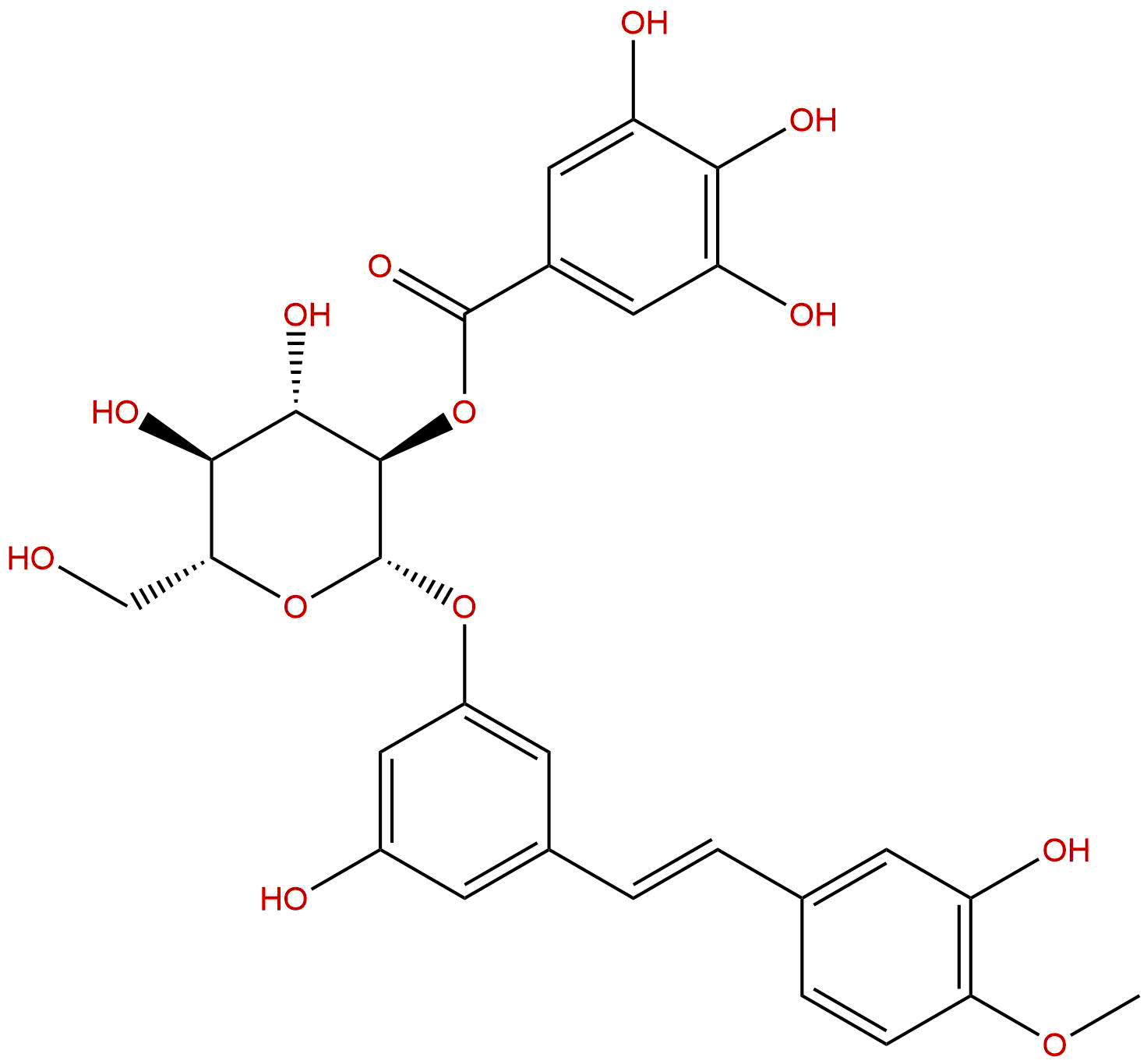
The 2 '' - O-gallic acid ester of rhubarb glycoside, CAS number 94356-24-8, has a galloyl group attached to the glucose group of rhubarb glycoside at the 2 '' position. This structural modification not only increases the complexity of the molecule, but also endows it with unique pharmacological properties beyond the parent compound, emodin. In recent years, with the deepening of research on the active ingredients of natural products, the potential of RG in anti-inflammatory and antioxidant effects, especially for intestinal inflammatory diseases, has gradually been revealed. Research has shown that RG has great potential for treating colitis by regulating multiple signaling pathways and molecular targets closely related to inflammation and oxidative stress. Its target network includes key proteins such as carboxylesterase 1 (CES1), Toll like receptor 4 (TLR4), protein kinase C alpha (PRKCA), nuclear factor E2 related factor 2 (NFE2L2), cysteine aspartate protease 1 (CASP1), farnesol X receptor (NR1H4), lysophosphatidic acid receptor 2 (LPAR2), nuclear factor kappa B subunit p65 (RELA), fatty acid amide hydrolase (FAAH), and sphingosine kinase 1 (SPHK1), indicating its multi-target and multi pathway characteristics in the mechanism of action. This article aims to provide a comprehensive and in-depth review of the chemical structure, plant origin, pharmacological activity, mechanism of action, medicinal properties, and clinical application prospects of 2 '' - O-gallic acid esters from Rheum palmatum, in order to provide a systematic reference for the subsequent research and development of this natural product.
Chemical structure and physicochemical properties
The chemical structure of 2 '' - O-gallic acid ester in rhubarb is the basis of its biological activity. Structurally speaking, it belongs to the gallic acid ester derivatives of stilbene glycosides. Its core skeleton is trans stilbene, where two benzene rings are connected by an ethylene bridge. Under the 3,5-dimethoxy-4 '- hydroxy substitution mode of one of the benzene rings, the structural characteristics of Rhapontigenin are formed. Rhubarb glycoside is formed by linking its 4 '- hydroxyl group to a β - D-glucose group. The uniqueness of RG lies in the fact that the 2 '' hydroxyl group of the glucose group is linked to gallic acid (3,4,5-trihydroxybenzoic acid) through an ester bond, forming a three part chimera: the stilbene nucleus, glucose group, and galloyl group.
This structure endows RG with a series of unique physicochemical properties. Firstly, its molecular weight is 572.5190 Da, which belongs to the category of medium-sized natural product molecules. The calculated lipid water partition coefficient (LogP) is 1.6610, indicating a certain degree of lipophilicity, but overall leaning towards moderate polarity, which is related to the presence of multiple phenolic hydroxyl and sugar groups in its molecule. The topological polar surface area (TPSA) of polarity is as high as 215.8300 Å ², mainly attributed to the abundant hydroxyl (- OH) and ester bond (- COO -) structures in the molecule. High TPSA values typically indicate poor cell membrane permeability and lower oral bioavailability. Its water solubility parameter is 0.8004 mg/mL, belonging to the category of slight solubility, which is related to the presence of both hydrophilic sugar and phenolic hydroxyl groups, as well as hydrophobic stilbene parent nuclei in its structure. It is worth noting that the blood-brain barrier (BBB) penetration ability of this compound has been evaluated as "low", which may be due to its high polarity and molecular weight, limiting its application in the treatment of central nervous system diseases, but may also mean that its peripheral effects are more specialized. In addition, the key pharmacological risk assessment showed that the inhibitory risk of RG on hERG potassium channels was "no", and the Ames test result was 0.0, indicating that it did not exhibit significant genotoxicity or cardiotoxicity risks in these two preliminary safety assessments, which provides a favorable safety basis for its subsequent development.
Plant sources and extraction methods
The main sources of 2 '' - O-gallic acid esters in Polygonaceae are Rheum and Rumex plants. Especially, it is often used as a tiger cane(Reynoutria japonica Houtt., Former name Polygonum cuspidatum)Hand leaf rhubarb(Rheum palmatum L. One of the active ingredients of traditional Chinese medicinal herbs, such as ________, has been isolated and identified. In these plants, the content of RG is usually low and often coexists with emodin, polydatin, and various gallic acid ester compounds, which increases the difficulty of separation and purification. In addition, some plants of the acid mold genus, such as wrinkled leaf acid mold(Rumex crispus L. ) and Batian acid mold(Rumex patientia L. The rhizomes of these plants also contain RG, which is commonly used in folk medicine to treat skin diseases and intestinal inflammation. The pharmacological substance basis of these plants may be related to RG.
For the extraction and separation of RG, classical natural product chemistry methods are usually used. Firstly, the dried plant material (usually roots or rhizomes) is crushed and subjected to cold soaking or hot reflux extraction using polar solvents such as methanol, ethanol, or aqueous ethanol. Due to the presence of multiple phenolic hydroxyl groups in RG, it is important to avoid prolonged heating at high temperatures during the extraction process, which may lead to its decomposition or oxidation. After vacuum concentration, the crude extract is preliminarily segmented by liquid-liquid extraction (such as petroleum ether, ethyl acetate, n-butanol, etc.), and RG is usually enriched in the ethyl acetate or n-butanol extraction layer. Further separation and purification mainly rely on various chromatographic techniques. Silica gel column chromatography is the most commonly used preliminary separation method, using gradient elution systems such as chloroform methanol or ethyl acetate methanol. Due to the similar polarity between RG and structurally similar compounds such as quercetin and resveratrol gallate, it is often difficult to obtain high-purity products using a single silica gel column chromatography. Therefore, subsequent studies often combine reverse phase silica gel column chromatography (such as ODS-C18) and use methanol water or acetonitrile water systems for fine separation. Pre HPLC is the most effective method for obtaining high-purity RG (>98%). By optimizing the mobile phase (such as acetonitrile-0.1% formic acid water) and detection wavelength (usually around 320 nm, the maximum absorption wavelength of stilbene compounds), precise separation of target compounds can be achieved. In addition, high-speed countercurrent chromatography (HSCCC), as a liquid-liquid distribution chromatography technique, has been successfully applied in the separation and purification of polar natural products such as RG in recent years due to its advantages of irreversible adsorption and high sample recovery rate. Finally, the structure of the obtained compound was confirmed by spectroscopic techniques such as nuclear magnetic resonance spectroscopy (NMR) and high-resolution mass spectrometry (HR-MS).
Pharmacological activity research
The pharmacological activity research of 2 '' - O-gallic acid ester in rhubarb mainly focuses on anti-inflammatory, antioxidant, and related intestinal protective effects, especially its remarkable performance in colitis models.
1. Anti inflammatory activity
Inflammation is the body's defense response to injury and infection, but excessive or persistent inflammation can lead to tissue damage and various diseases. RG exhibits significant anti-inflammatory activity. In a macrophage model stimulated by lipopolysaccharide (LPS), RG can dose dependently inhibit the production of pro-inflammatory cytokines such as tumor necrosis factor - α (TNF - α), interleukin-1 β (IL-1 β), and interleukin-6 (IL-6). Meanwhile, it can also downregulate the expression of inducible nitric oxide synthase (iNOS) and cyclooxygenase-2 (COX-2), thereby reducing the release of inflammatory mediators such as nitric oxide (NO) and prostaglandin E2 (PGE2). In a mouse colitis model induced by dextran sulfate sodium (DSS), oral or intraperitoneal injection of RG significantly reduced disease activity index (DAI), including symptoms such as weight loss, diarrhea, and rectal bleeding. Histopathological examination showed that the colon tissue damage, crypt destruction, and inflammatory cell infiltration in the RG treatment group mice were significantly reduced. These results indicate that RG has strong anti-inflammatory potential both in vitro and in vivo.
2. Antioxidant activity
Oxidative stress is an important driving factor for inflammatory responses and a common pathological basis for many chronic diseases. RG molecules contain multiple phenolic hydroxyl groups, especially the three adjacent phenolic hydroxyl groups on the galloyl group, which endow them with strong free radical scavenging ability. In vitro chemical experiments (such as DPPH and ABTS free radical scavenging experiments) have confirmed that the antioxidant activity of RG is significantly stronger than its parent compound, emodin, and even comparable to classical antioxidants such as vitamin C or Trolox. At the cellular level, RG can reduce the levels of reactive oxygen species (ROS) induced by hydrogen peroxide (H ₂ O ₂) or LPS, and increase the activity of endogenous antioxidant enzymes such as superoxide dismutase (SOD), catalase (CAT), and glutathione peroxidase (GPx) in cells. In DSS induced colitis mice, RG treatment significantly reduced the content of malondialdehyde (MDA) in colon tissue and restored the level of reduced glutathione (GSH), effectively alleviating oxidative stress damage to intestinal mucosa.
3. Anti colitis effect
Given its strong anti-inflammatory and antioxidant activities, the application of RG in the treatment of colitis is currently the focus of research. In addition to the DSS model mentioned above, RG also showed a protective effect in another colitis model induced by trinitrobenzenesulfonic acid (TNBS). Its function is not limited to relieving symptoms, but also reflected in protecting the intestinal barrier function. Research has shown that RG can upregulate the expression of tight junction proteins such as Occludin, Claudin-1, ZO-1, thereby repairing damaged intestinal epithelial barriers, reducing intestinal permeability, and preventing bacterial and toxin translocation. In addition, RG can regulate the composition of gut microbiota, increase the abundance of beneficial bacteria (such as Lactobacillus and Bifidobacterium), reduce the proportion of harmful bacteria (such as Escherichia coli and Clostridium), and exert systemic protective effects through mechanisms such as the "gut liver axis" or "gut brain axis". These multifaceted effects collectively constitute the pharmacological basis of RG's anti colitis effect.
Mechanism of action and molecular targets
The pharmacological activity of emodin 2 '' - O-gallate is not achieved through a single target, but acts on a complex signaling network. According to existing research, its key molecular targets and mechanisms of action can be summarized as follows:
1. Regulating the TLR4/NF - κ B signaling pathway
TLR4 is a key receptor for recognizing pathogen associated molecular patterns (PAMPs) such as LPS, and plays a central role in initiating innate immune and inflammatory responses. RG can directly or indirectly inhibit the activation of TLR4. Research has shown that RG may competitively inhibit the binding of LPS to TLR4/MD-2 complex by binding to MD-2 protein, thereby blocking downstream signal transduction. This leads to inhibition of the MyD88 dependent pathway, which in turn prevents phosphorylation and degradation of I κ B α, preventing NF - κ B (composed of subunits such as RELA/p65) from entering the nucleus to initiate transcription of pro-inflammatory genes (such as TNF - α, IL-6, iNOS). Therefore, RG suppresses the inflammatory cascade from the source by inhibiting the TLR4/NF - κ B pathway.
2. Activate the NFE2L2/ARE antioxidant pathway
NFE2L2 (also known as Nrf2) is a core transcription factor that cells use to respond to oxidative stress. Under normal conditions, NFE2L2 binds to Keap1 and is degraded by ubiquitination. When stimulated by oxidants or electrophilic agents (such as phenolic hydroxyl groups in RG), NFE2L2 dissociates from Keap1 and transfers to the nucleus, binding to antioxidant response elements (ARE) and initiating gene expression of a series of antioxidant enzymes and phase II detoxifying enzymes (such as SOD, CAT, HO-1, NQO1). RG has been proven to effectively activate the NFE2L2 signaling pathway, enhance cellular antioxidant defense capabilities, and thereby alleviate ROS damage to intestinal epithelial cells.
3. Regulating NLRP3 inflammasome and CASP1
NLRP3 inflammasome is a multi protein complex, and its activation is a key step in the maturation and secretion of IL-1 β and IL-18. CASP1 (Caspase-1) is an effector protein of NLRP3 inflammasome. RG can inhibit the assembly and activation of NLRP3 inflammasomes, thereby reducing the activation of CASP1 and subsequently lowering the production of IL-1 β and IL-18. This mechanism is closely related to the anti-inflammatory activity of RG, especially playing an important role in inhibiting colitis driven by aseptic inflammation.
4. Intervention of sphingomyelin ceramide metabolism and SPHK1
SPHK1 (Sphingosine Kinase 1) is a key enzyme in sphingomyelin metabolism, catalyzing the phosphorylation of sphingosine to sphingosine-1-phosphate (S1P). S1P, as an important lipid mediator, participates in regulating cell proliferation, migration, survival, and inflammation. In colitis, the SPHK1/S1P signaling axis is often overactivated, promoting inflammation and tumorigenesis. RG may exert anti-inflammatory and anti fibrotic effects by inhibiting the activity of SPHK1 and reducing S1P levels. In addition, RG may regulate cellular signaling by affecting LPAR2 (Lysophosphatidic Acid Receptor 2), which also plays a role in intestinal barrier function and inflammatory response.
5. Affects the endogenous cannabinoid system and FAAH
FAAH (fatty acid amide hydrolase) is the main enzyme that degrades endogenous cannabinoid anandamide (AEA). Inhibition of FAAH can increase the level of AEA, thereby activating cannabinoid receptors CB1 and CB2, exerting anti-inflammatory, analgesic, and intestinal protective effects. Studies have shown that certain natural polyphenols can inhibit FAAH activity. Whether RG enhances endogenous cannabinoid signaling by inhibiting FAAH, thereby exerting a protective effect in colitis models, is a new mechanism worth exploring.
6. Other potential targets
RG may also affect drug and lipid metabolism by regulating CES1 (carboxylesterase 1); Regulating bile acid homeostasis and intestinal barrier function by activating NR1H4 (FXR, farnesol X receptor); By inhibiting PRKCA (PKC α), it affects cell signaling transduction and inflammatory response. The synergistic effects of these multiple targets constitute a complex and intricate pharmacological network of RG.
Evaluation of drug properties and pharmacokinetics
Although RG has shown excellent performance in both in vitro and in vivo pharmacological studies, its pharmacological evaluation is a key factor in determining whether it can ultimately be applied in clinical settings.
1. Analysis of pharmacological parameters
According to the provided parameters, the molecular weight of RG (572.52 Da) exceeds the limit of molecular weight less than 500 in Lipinski's Rule of Five. Its LogP (1.66) conforms to the rule (<5), but its TPSA (215.83 Å ²) is much higher than the commonly used threshold of 140 Å ². High TPSA typically indicates low oral absorption and bioavailability. Although the water solubility (0.80 mg/mL) is not extremely poor, it still belongs to the category of slight solubility. These parameters suggest that the oral bioavailability of RG may be a challenge. However, its good preliminary safety assessment (no hERG inhibition, Ames negative) is an important bonus point.
2. Pharmacokinetic characteristics
At present, there is insufficient specialized research on the pharmacokinetics of RG, but inferences can be made based on its structural characteristics and knowledge of similar compounds such as resveratrol glycosides and gallic acid. After oral administration, RG may undergo hydrolysis in the gastrointestinal tract. Its ester bond (2 '' - O-gallic acid ester) may be hydrolyzed by esterases (such as CES1) in the intestine or liver, releasing quercetin and gallic acid. Therefore, RG may serve as a prodrug, and its in vivo efficacy is the result of the combined action of the prototype drug and metabolites. The prototype drug and its metabolites (emodin, gallic acid, and further metabolized sulfate/glucuronic acid complexes) enter the systemic circulation and are distributed to target organs (such as the colon). Due to the high polarity and molecular weight of RG, its tissue distribution may be limited, but through oral administration, the drug can directly reach the colon and achieve local treatment. Further research is needed on its half-life and clearance pathway. Developing suitable drug delivery systems, such as nanoparticles, liposomes, or colon targeted formulations, may be an effective strategy to improve their oral bioavailability and therapeutic efficacy.
Clinical application prospects and prospects
As a natural product with multi-target and multi pathway mechanisms of action, 2 '' - O-gallic acid esters of rhubarb have shown unique advantages in the treatment of complex diseases, and their clinical application prospects are broad.
1. Treatment of inflammatory bowel disease (IBD)
This is the most direct and promising application area for RG. IBD (including ulcerative colitis and Crohn's disease) is a chronic, recurrent inflammatory bowel disease, and existing treatment drugs (such as 5-aminosalicylic acid, immunosuppressants, biologics) have limited efficacy, significant side effects, or high costs. RG can effectively alleviate symptoms of colitis through multiple mechanisms such as anti-inflammatory, antioxidant, repair of intestinal barrier, and regulation of intestinal microbiota, and its preliminary safety assessment is good. Therefore, RG is expected to be developed as a novel natural medicine or dietary supplement for IBD treatment or adjuvant therapy.
2. Metabolic diseases and liver protection
In view of the potential regulatory effect of RG on NR1H4 (FXR), CES1 and other targets, as well as its strong antioxidant activity, it may play a role in non-alcoholic fatty liver disease (NAFLD), non-alcoholic steatohepatitis (NASH), type 2 diabetes and other metabolic diseases. By regulating bile acid metabolism, improving insulin resistance, and alleviating liver oxidative stress, RG may provide new treatment strategies for these diseases.
3. Antitumor and chemoprevention
Many natural astragalus compounds, such as resveratrol, have anti-tumor activity. The galloyl structure of RG may enhance its anti proliferative and pro apoptotic abilities. In the future, it is necessary to study the chemopreventive and therapeutic effects of RG in tumors closely related to chronic inflammation, such as colorectal cancer. It may also play a role in regulating the tumor microenvironment by inhibiting the SPHK1/S1P signaling axis.
4. Challenges and Prospects
Despite the bright future, RG's research and development still faces many challenges.The primary challenge is low oral bioavailability Developing new drug delivery systems, such as phospholipid complexes, nanoemulsions, and polymer nanoparticles, is the key to solving this problem.Secondly, more in-depth and systematic pharmacokinetic studies are needed Clarify its absorption, distribution, metabolism, and excretion processes in the body, especially its metabolic fate as a prodrug.Thirdly, a comprehensive toxicological evaluation is required Including long-term toxicity, reproductive toxicity, etc., to ensure its safety.Fourthly, it is necessary to conduct high-quality clinical research Verify its effectiveness and safety in the human body. In addition, using systems pharmacology and network pharmacology methods, combined with multi omics techniques, to deeply analyze the "multi-target multi pathway" action network of RG will help clarify its complex mechanism of action and provide theoretical guidance for its precise application.
Conclusion
Rhubarb glycoside 2 '' - O-gallic acid ester is a naturally occurring compound with unique structure and significant activity. It achieves synergistic effects of multiple pharmacological functions such as anti-inflammatory, antioxidant, and intestinal barrier protection by ingeniously combining the mother nucleus of astragalus, glucosyl, and galloyl groups. Its regulation of multiple key signaling pathways and molecular targets, such as TLR4/NF - κ B, NFE2L2/ARE, NLRP3/CASP1, SPHK1/S1P, reveals its enormous potential for treating inflammatory diseases such as colitis. Although there are challenges in drug development, especially in terms of oral bioavailability, its good initial safety and multi-target mode of action make it an important candidate molecule for developing new natural medicines. In the future, by combining modern research methods in medicinal chemistry, pharmacy, and pharmacology, we will deeply explore the pharmacological mechanisms of RG and focus on solving its delivery and metabolism problems. This will have the potential to promote the clinical application of this natural product from laboratory research and contribute to human health.