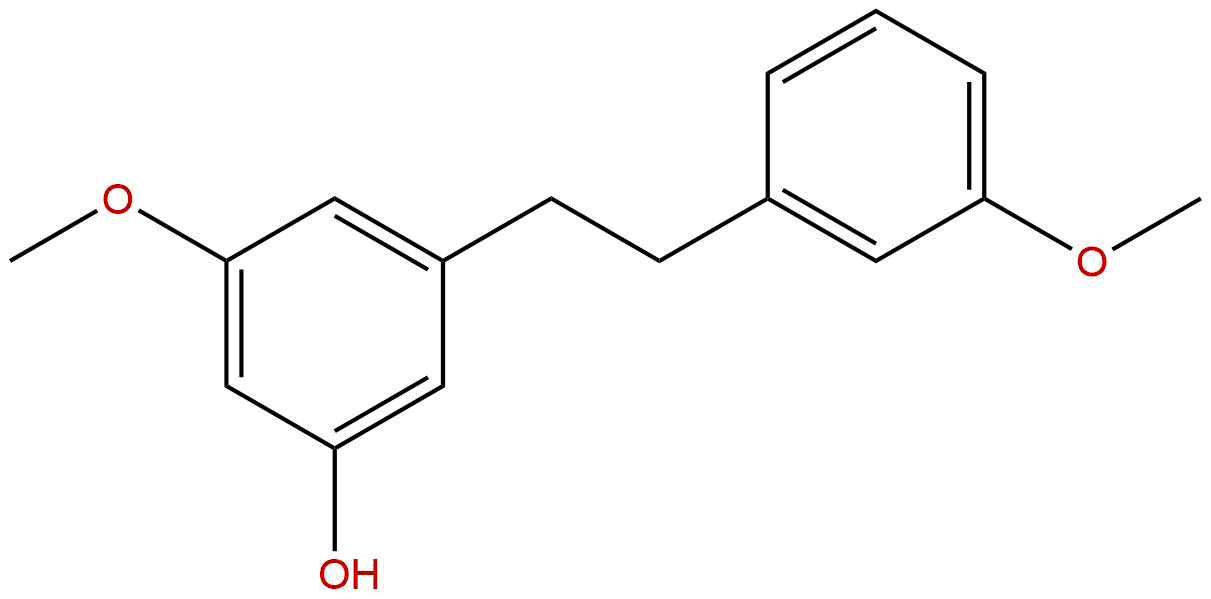
Storage conditions:Short-term storage at 2~8℃, long-term storage at -20 ~ -80℃
38.6900
3.6234
3.6221
.1247
6.6936
18.7202
High
92.5306
1.8097
Yes
No
Yes
No
No
No
0.0
No
Yes
No
No
Natural products, as an important source of drug discovery, play an irreplaceable role in the long history of human struggle against diseases. Stilbeneoids are a class of naturally occurring polyphenols with distinct structural features, with a core skeleton of 1,2-diphenylethylene. They are widely present in various plants, such as grapes, peanuts, rhubarb, and certain orchids and Dioscoreaceae plants. These compounds have received continuous attention from medicinal chemists and pharmacologists due to their diverse biological activities, especially antioxidant, anti-inflammatory, anti-tumor, neuroprotective, and cardiovascular protective effects. Resveratrol is undoubtedly the most prestigious member of the stilbene family, but the unique pharmacological activity and potential application value of numerous structurally similar compounds found in nature are gradually being revealed.
3 '- O-Methylbutatasin III (CAS number: 101330-69-2) is a type of natural styrene product that deserves further investigation. It originated from plants in the Dioscoreaceae family, such as yam Dioscorea batatas)Separation and identification are important members of the Batatasin family. Yam extract compounds are secondary metabolites produced during the growth, dormancy, and stress response processes of yam, with multiple physiological functions. The structural feature of 3 '- O-methylyamin III is that specific hydroxyl groups on its parent nucleus styrene skeleton are methylated and modified. This structural fine-tuning often significantly affects the physicochemical properties, metabolic stability, and interaction mode with biological targets of the molecule.
Although the research history of 3 '- O-methylyam extract III is relatively short compared to resveratrol, existing studies have preliminarily revealed its multifaceted pharmacological potential, particularly in the fields of anti-inflammatory, antioxidant, anti-tumor, and neuroprotective activities, demonstrating remarkable activity. Its unique chemical structure endows it with biological properties that are distinct from other stilbene compounds. This article aims to systematically review the research progress of 3 '- O-methyl yam extract III, and provide a comprehensive professional review of this natural product from multiple dimensions such as chemical structure, plant sources, extraction methods, pharmacological activity, mechanism of action, drug evaluation, and clinical application prospects. The goal is to provide a solid theoretical basis and reference for further in-depth research and development.
3 '- O-Methyl Yam III belongs to the class of stilbene compounds, and its chemical structure determines its physicochemical properties and biological activity. Structurally, it consists of a stilbene core, where two benzene rings are connected by an ethylene bridge (- CH=CH -). Compared to the simplest stilbene, 3 '- O-methylyam III has specific hydroxyl and methoxy substituents on its benzene ring. Specifically, the key modifications in its structure include: methylation of the 3 'hydroxyl group on a benzene ring, forming a 3' - methoxy group (- OCH ∝); On the other benzene ring, one or more hydroxyl (- OH) substituents are retained. This specific substitution pattern distinguishes it from other yam extract compounds, such as Batatasin III (with a hydroxyl group at position 3 ') or Batatasin I (with different substitution patterns).
The molecular formula of this compound is C ₁₅ H ₁₄ O ₄, with a molecular weight of 258.3170 g/mol. Its precise chemical naming is usually based on IUPAC rules and can be described as 3-hydroxy-5- (3-methoxyphenyl) styrene or similar names, depending on the configuration of the double bond (usually the trans configuration, i.e. the E-configuration, which is the most common and biologically active form of natural stilbene compounds). The LogP value of this molecule is 3.6234, which is an important parameter for measuring lipid solubility. A LogP value between 3-4 indicates that the compound has moderate lipid solubility, which allows it to penetrate biological membranes (such as cell membranes and blood-brain barriers) well as a certain degree of water solubility, facilitating absorption and distribution in the body. Its topological polar surface area (TPSA) is 38.6900 Å ². TPSA reflects the total surface area of polar atoms (such as oxygen and nitrogen) and their connected hydrogen atoms in a molecule, and is closely related to the molecule's intestinal absorption, blood-brain barrier permeability, and other factors. Generally, molecules with TPSA less than 60 Å ² are considered to have good oral bioavailability and high blood-brain barrier permeability. The TPSA value of 3 '- O-methyl yam extract III is exactly below this threshold, indicating its good oral absorption potential and central nervous system permeability.
Water solubility is a key parameter in drug development. According to calculations, the water solubility of 3 '- O-methyl yam extract III is 0.1247 mg/mL (or approximately 0.48 mM), which belongs to the category of slight solubility. This solubility level is common in natural products, and although it may affect its administration at high concentrations, it can be improved through appropriate formulation techniques such as the use of co solvents, liposomes, cyclodextrin inclusion complexes, etc. In addition, the permeability of the compound to the blood-brain barrier (BBB) was evaluated as "high", which is highly consistent with the aforementioned LogP and TPSA values, suggesting its potential as a therapeutic drug for central nervous system (CNS) diseases. In terms of early safety assessment, the predicted result of hERG inhibition is' no ', indicating a low risk of causing QT interval prolongation and apical torsion ventricular tachycardia; The Ames test result is 0.0, indicating that it does not have significant genotoxicity. These preliminary pharmacological parameters provide positive signals for the drug development prospects of 3 '- O-methylyamin III.
3 '- O-Methyl Yam III was initially discovered in plants of the Dioscoreaceae family, with yam being the primary source(Dioscorea batatas Decne., Also known as Dioscorea opposita Thunb.)。 Yam, as a plant with medicinal and edible properties, has a long history of consumption and medicinal use in East Asia, especially in China, Japan, and South Korea. The underground tubers of yam are rich in various active ingredients, including polysaccharides, saponins, allantoin, and yamin compounds. Research has shown that there are differences in the distribution and content of yam extract compounds in the tubers, rhizomes, and aboveground parts of yam, and their accumulation is influenced by factors such as plant growth and development stage, environmental stress (such as low temperature, drought), and post harvest treatment. Except for yam, other plants of the Dioscorea genus, such as Huangdu(Dioscorea bulbifera)Chuanlong Dioscorea(Dioscorea nipponica)Wait, it may also contain the compound or its structural analogues, but the content is usually low. In addition, there are literature reports that certain orchid plants (such as Dendrobium) Dendrobium)3 '- O-methylyamin III was also isolated from the plant kingdom, indicating that its distribution in the plant kingdom may be more widespread than expected.
The extraction of 3 '- O-methyl yam extract III usually follows the classic process of natural product chemistry, which mainly includes the following steps:
Raw material pretreatment Crush fresh or dried yam tubers or other plant materials collected to increase the contact area between the extraction solvent and plant cells and improve extraction efficiency. The crushed sample usually needs to undergo degreasing treatment, such as soaking in petroleum ether or n-hexane, to remove fat soluble impurities (such as fatty acids, wax, chlorophyll, etc.) and avoid interference with subsequent separation and purification.
Solvent extraction The defatted plant powder is usually extracted using highly polar organic solvents. Methanol, ethanol, or their aqueous solutions are commonly used extraction solvents because they have good solubility for moderately polar stilbene compounds. Extraction methods include traditional cold soaking, percolation, reflux extraction, as well as modern and efficient ultrasound assisted extraction (UAE), microwave-assisted extraction (MAE), and pressurized solvent extraction (PLE). Among them, ultrasound and microwave-assisted extraction can significantly shorten the extraction time and improve the yield. The extraction process is usually repeated 2-3 times, and the extraction solutions are combined.
Concentration and preliminary separation Concentrate the merged extracts under reduced pressure conditions (such as rotary evaporator) to a paste like consistency. Subsequently, the extract was dispersed in an appropriate amount of water and subjected to liquid-liquid extraction using organic solvents of different polarities, such as petroleum ether, ethyl acetate, and n-butanol. Due to the moderate polarity of 3 '- O-methylyam III, it is usually enriched in the ethyl acetate extraction layer. This step can effectively separate the target compound from a large amount of water-soluble impurities (such as sugars, proteins) and strongly lipophilic impurities.
Chromatographic separation and purification After obtaining the crude extract, various chromatographic techniques need to be used for fine separation and purification. The most commonly used method is silica gel column chromatography, which uses mixed solvents such as petroleum ether ethyl acetate or chloroform methanol in different ratios for gradient elution. Collect fractions containing the target compound through thin-layer chromatography (TLC) monitoring. Subsequently, other separation methods can be combined, such as Sephadex LH-20 gel column chromatography (separation according to molecular size and shape), reverse phase silica gel column chromatography (such as C18 column, using methanol water or acetonitrile water system), and preparative high-performance liquid chromatography (Prep HPLC) to obtain high-purity 3 '- O-methylxanthin III monomer compound. Finally, the isolated compound was structurally identified using spectroscopic techniques such as nuclear magnetic resonance spectroscopy (NMR) and mass spectrometry (MS), confirming its identity as 3 '- O-methylyamin III.
In recent years, there has been an increasing amount of pharmacological activity research on 3 '- O-methylyam extract III, revealing its potential therapeutic effects in multiple disease models. Its main pharmacological activities can be summarized as follows:
1. Anti inflammatory activity
Inflammation is the common pathological basis of many chronic diseases, such as cardiovascular diseases, diabetes, neurodegenerative diseases and cancer. Research has shown that 3 '- O-methyl yam extract III exhibits significant anti-inflammatory effects both in vitro and in vivo. In the macrophage model stimulated by lipopolysaccharide (LPS), this compound can effectively inhibit the production of pro-inflammatory cytokines (such as tumor necrosis factor - α TNF - α, interleukin-6 IL-6, interleukin-1 β IL-1 β) and nitric oxide (NO). Its mechanism of action may be related to the inhibition of the activation of the nuclear factor kappa B (NF - κ B) signaling pathway, which is a key transcription factor regulating inflammatory responses. In addition, it may exert anti-inflammatory effects by regulating the mitogen activated protein kinase (MAPK) pathway, such as the phosphorylation levels of p38, JNK, and ERK.
2. Antioxidant activity
Stilbene compounds generally have strong antioxidant capacity, and 3 '- O-methylyam III is no exception. The phenolic hydroxyl group in its molecular structure is the main active group for scavenging free radicals. In vitro chemical experiments (such as DPPH and ABTS radical scavenging experiments) have confirmed that the compound can effectively scavenge various free radicals and exhibit a certain degree of reducing ability. In cell models, it can reduce the increase in reactive oxygen species (ROS) levels caused by oxidative stress inducers such as hydrogen peroxide H ₂ O ₂ and tert butyl hydroperoxide t-BHP, protecting cells from oxidative damage. This antioxidant activity may be related to its upregulation of the expression and activity of antioxidant enzymes such as superoxide dismutase (SOD), glutathione peroxidase (GPx), catalase (CAT), as well as activation of the nuclear factor E2 related factor 2 (Nrf2)/antioxidant response element (ARE) signaling pathway.
3. Antitumor activity
Preliminary studies have shown that 3 '- O-methylyam extract III has a proliferative inhibitory effect on various cancer cell lines. For example, in cell lines such as breast cancer (MCF-7), liver cancer (HepG2), colon cancer (HT-29) and melanoma (B16), the compound can inhibit cell viability in a dose and time-dependent manner. Its anti-tumor mechanism may involve multiple aspects: inducing cell cycle arrest (such as blocking cells in G0/G1 or G2/M phases), inducing cell apoptosis (by activating Caspase family proteins and regulating Bcl-2 family protein expression), inhibiting tumor cell migration and invasion (possibly by downregulating the expression of matrix metalloproteinases MMPs), and inhibiting angiogenesis (such as inhibiting the expression of vascular endothelial growth factor VEGF). However, current research on its anti-tumor activity is still in its early stages, and the in vivo anti-tumor activity and specific molecular mechanisms need further clarification.
4. Neuroprotective activity
Given its excellent blood-brain barrier permeability, the potential of 3 '- O-methylyam III in neuroprotection is particularly noteworthy. In neuronal injury models such as PC12 cells and primary cortical neurons, this compound can counteract neurotoxicity induced by glutamate, beta amyloid (A β), or oxidative stress. The protective mechanism may include reducing intracellular calcium overload, inhibiting mitochondrial dysfunction, lowering ROS levels, inhibiting apoptosis signaling pathways, and regulating the expression of neurotrophic factors such as brain-derived neurotrophic factor BDNF. These findings suggest that 3 '- O-methylyam extract III may have potential therapeutic value for neurodegenerative or damaging diseases such as Alzheimer's disease, Parkinson's disease, and cerebral ischemia.
5. Other activities
In addition to the main activities mentioned above, other biological effects of 3 '- O-methyl yam extract III have been reported, such as:
- Antibacterial activity Has a certain inhibitory effect on certain bacteria and fungi.
- Whitening activity By inhibiting tyrosinase activity and reducing melanin production, it has potential applications in the field of cosmetics.
- Plant growth regulatory activity As a member of the yam extract family, it itself participates in regulating the dormancy and germination of tubers within the plant.
The pharmacological activity of 3 '- O-methyl yam extract III is the result of its interaction with specific molecular targets. Although the current research on its molecular targets is not as in-depth as that of resveratrol, existing studies have revealed its possible mechanisms of action and key signaling pathways.
1. Regulating the inflammatory signaling pathway
- NF - κ B pathway NF - κ B is the core regulatory factor of inflammatory response. In the resting state, NF - κ B binds to its inhibitory protein I κ B and exists in an inactive form in the cytoplasm. When cells are stimulated by LPS, TNF - α, etc., I κ B kinase (IKK) is activated, leading to phosphorylation and degradation of I κ B, releasing NF - κ B. Free NF - κ B immediately enters the nucleus and initiates the transcription of various pro-inflammatory genes, such as TNF - α, IL-6, iNOS, COX-2. Research has shown that 3 '- O-methylyam extract III can inhibit the activity of IKK or directly block the degradation of I κ B, thereby preventing nuclear translocation of NF - κ B and ultimately inhibiting the production of inflammatory mediators.
- MAPK pathway The MAPK family includes three main pathways, ERK, JNK, and p38, which play important roles in regulating inflammation, cell proliferation, differentiation, and apoptosis. 3 '- O-methylyamin III was found to inhibit LPS induced phosphorylation of p38 and JNK, thereby downregulating the expression of downstream inflammatory factors.
2. Activate the antioxidant defense system
- Nrf2/ARE pathway Nrf2 is the main transcription factor that cells use to respond to oxidative stress. Under normal circumstances, Nrf2 binds to Keap1 protein, is anchored in the cytoplasm, and is continuously degraded by ubiquitination. When cells are stimulated by oxidative stress or electrophilic agents, the conformation of Keap1 changes and Nrf2 is released. After entering the nucleus, Nrf2 binds to antioxidant response elements (ARE) and initiates gene expression of a series of antioxidant enzymes and phase II detoxifying enzymes (such as SOD, GPx, CAT, HO-1, NQO1). 3 '- O-methylyamin III has been shown to promote nuclear translocation of Nrf2, thereby enhancing the antioxidant capacity of cells and protecting them from oxidative damage.
3. Inducing apoptosis of tumor cells
- Mitochondrial pathway (endogenous apoptotic pathway)Many anti-cancer drugs induce cell apoptosis by damaging mitochondria. 3 '- O-methylyamin III may increase mitochondrial membrane permeability, leading to the release of cytochrome c from mitochondria into the cytoplasm. Cytochrome c binds with Apaf-1 and procaspase-9 to form apoptotic bodies, which in turn activate Caspase-9, which in turn activates downstream executive caspases (such as Caspase-3 and Caspase-7), ultimately leading to cell apoptosis. This process is strictly regulated by the Bcl-2 family of proteins, where the ratio of anti apoptotic proteins (such as Bcl-2, Bcl xL) and pro apoptotic proteins (such as Bax, Bak) determines the fate of cells. Research has shown that 3 '- O-methylyam extract III can downregulate Bcl-2 expression and upregulate Bax expression, thereby disrupting the balance and promoting apoptosis.
- Death receptor pathway (exogenous apoptosis pathway)This pathway is initiated by the binding of death receptors (such as Fas and TNF receptors) on the cell membrane to their corresponding ligands, thereby activating Caspase-8. At present, there is insufficient direct evidence on whether 3 '- O-methylyamin III induces apoptosis through this pathway, but it is worth further exploration.
4. Potential molecular targets
In addition to the aforementioned signaling pathways, 3 '- O-methylyamin III may also directly bind to certain proteins and exert its biological effects. For example, some stilbene compounds have been reported to be activators of SIRT1 (deacetylase) or have weak affinity for estrogen receptors (ER). Given its structural similarity to resveratrol, 3 '- O-methylyamin III may also interact with these targets, but more direct binding experiments (such as surface plasmon resonance SPR, drug affinity reaction target stability DARTS) and functional experiments are needed to verify. In addition, its anti-inflammatory and anticancer activities may also be related to the inhibition of cyclooxygenase (COX-2) or lipoxygenase (LOX) activity.
The successful conversion of natural products into clinical drugs requires a systematic evaluation of their pharmacological properties, including physical and chemical properties, pharmacokinetic (ADME: absorption, distribution, metabolism, excretion) characteristics, and safety. Based on existing computational predictions and preliminary experimental data, a preliminary evaluation of the pharmacological properties of 3 '- O-methyl yam extract III can be conducted.
1. Physical and chemical properties and drug like properties
As mentioned earlier, the molecular weight of 3 '- O-methylyam III (258.3 Da) is less than 500 Da, LogP (3.62) is within the ideal range of 1-5, TPSA (38.69 Å ²) is less than 140 Å ², and the number of hydrogen bond donors (phenolic hydroxyl groups) and acceptors (methoxy and phenolic hydroxyl groups) meets the criteria of Lipinski's Rule of Five. These parameters indicate that the compound has good drug like properties and has the basic physical and chemical basis to become an oral medication.
2. Pharmacokinetic characteristics
- absorb Its moderate lipid and water solubility (0.1247 mg/mL) suggests that it may have moderate absorption after oral administration. LogP and TPSA values also support its good intestinal permeability. However, natural polyphenolic compounds often face issues with intestinal first pass metabolism and P-glycoprotein (P-gp) efflux, which may affect their oral bioavailability. The specific absorption fraction and bioavailability need to be accurately determined through in vivo pharmacokinetic experiments.
- distribution High blood-brain barrier permeability is one of its most prominent distribution characteristics, which provides significant advantages for its application in central nervous system diseases. In addition, its moderate lipid solubility suggests that it may have a large apparent distribution volume (Vd) and can be widely distributed in tissues throughout the body.
- Metabolism Styrenes are mainly biotransformation in the liver through phase II metabolism (glucuronidation, sulfation) and phase I metabolism (oxidation). The phenolic hydroxyl group of 3 '- O-methylyam III is a potential site for phase II metabolism, while the methoxy group may be metabolized to yam III through O-demethylation. The activity and toxicity of metabolites need further research. Its metabolic stability is a key factor determining its half-life and duration of action in the body.
- excretion Metabolites and small amounts of prototype drugs are mainly excreted through bile and urine.
3. Safety evaluation
The preliminary computer toxicology prediction results are encouraging: the risk of hERG inhibition is low, and the Ames test is negative (no genotoxicity). This greatly reduces the risk of failure due to cardiac toxicity and carcinogenicity in its early development stage. However, this is only a prediction based on computational models and cannot completely replace actual toxicology experiments. In the future, a systematic in vitro and in vivo toxicological evaluation is needed, including acute toxicity, subchronic toxicity, genetic toxicity, reproductive toxicity, and potential toxicity to major organs (liver, kidney, heart), to comprehensively assess their safety.
4. Challenges and improvement strategies faced
Despite the promising potential of 3 '- O-methylyam extract III as a drug, it still faces some challenges:
- bioavailability The oral bioavailability of natural polyphenolic compounds is generally low, which is one of the main bottlenecks in their development. Improvement strategies include designing prodrugs (such as acetylating or phosphorylating phenolic hydroxyl groups to enhance lipid or water solubility), adopting novel drug delivery systems (such as liposomes, nanoparticles, phospholipid complexes, self microemulsifying drug delivery systems), and combining with other drugs or excipients (such as piperine, a known bioavailability enhancer).
- Metabolic stability By structural modification, such as introducing fluorine atoms or other metabolic blocking groups, the metabolic rate in the body can be slowed down and the action time can be prolonged.
- Water solubility Although its water solubility is still acceptable, in order to meet the needs of high-dose administration or intravenous injection, its water solubility can be improved by methods such as salt formation (if there are ionizable groups in the molecule) or preparation of cyclodextrin inclusion complexes.
Based on its unique pharmacological activity and preliminary evaluation of good pharmacological properties, 3 '- O-methylyam extract III has shown broad application prospects in multiple therapeutic fields.
1. Neurodegenerative diseases
This is the most promising application direction of 3 '- O-methyl yam extract III. Its powerful antioxidant, anti-inflammatory, and direct neuroprotective activities, coupled with its ability to efficiently penetrate the blood-brain barrier, make it an ideal candidate molecule for treating diseases such as Alzheimer's disease (AD), Parkinson's disease (PD), Huntington's disease, and amyotrophic lateral sclerosis (ALS). In the AD model, it may exert a comprehensive therapeutic effect by inhibiting A β aggregation, reducing tau protein hyperphosphorylation, protecting synaptic plasticity, and inhibiting neuroinflammation. In the PD model, it may protect dopaminergic neurons from damage caused by toxins such as MPTP or 6-OHDA. More pharmacological studies on genetically modified animal models are needed in the future to validate their clinical translational potential.
2. Chronic inflammatory diseases
Given its significant anti-inflammatory activity, 3 '- O-methylyamin III can be used to treat various chronic inflammatory diseases, such as rheumatoid arthritis, inflammatory bowel disease (IBD, including Crohn's disease and ulcerative colitis), asthma, and chronic obstructive pulmonary disease (COPD). By inhibiting key inflammatory pathways such as NF - κ B and MAPK, it can effectively reduce inflammatory responses and alleviate disease symptoms. Local administration (such as enema therapy for IBD, inhalation therapy for asthma) may be an effective strategy to improve efficacy and reduce systemic side effects.
3. Adjuvant therapy for tumors
Although its anti-tumor activity may not be as good as some potent chemotherapy drugs, the potential of 3 '- O-methylyamin III as an adjuvant therapy or chemopreventive agent for tumors is worth exploring. It can be used in combination with conventional chemotherapy drugs or radiotherapy to exert a synergistic effect by enhancing the sensitivity of tumor cells to treatment (sensitizing effect) or reducing the toxic side effects caused by treatment (such as chemotherapy-induced neuropathy, cardiac toxicity). In addition, its antioxidant and anti-inflammatory properties make it an ideal candidate for cancer chemoprevention.
4. Metabolic disorders
Oxidative stress and chronic inflammation are common characteristics of metabolic diseases such as type 2 diabetes, obesity and non-alcoholic fatty liver disease (NAFLD). 3 '- O-methylyamin III may exert therapeutic effects by improving insulin resistance, regulating lipid metabolism, reducing liver steatosis, and protecting pancreatic beta cell function.
5. Cosmetics and Skin Health
Its antioxidant, whitening (inhibiting tyrosinase), and anti-inflammatory properties make it valuable in the field of functional cosmetics. It can be developed as a product for anti-aging, whitening, soothing, and repairing the skin.
Future research direction outlook:
3 '- O-methyl yam extract III, as a natural product of stilbene derived from the traditional medicinal plant yam, has been endowed with various biological activities and good medicinal potential due to its unique chemical structure. This article systematically reviews the research progress of this compound in terms of chemical structure, plant origin, extraction process, pharmacological activity, mechanism of action, evaluation of drug properties, and clinical application prospects. Existing evidence suggests that 3 '- O-methylyam extract III has significant anti-inflammatory, antioxidant, neuroprotective, and anti-tumor activities. Its mechanism of action involves the regulation of key signaling pathways such as NF - κ B, MAPK, and Nrf2, and may induce tumor cell apoptosis through the mitochondrial pathway. What is particularly noteworthy is that its high blood-brain barrier permeability gives it unique advantages in the treatment of central nervous system diseases.
However, we must also be aware that current research on 3 '- O-methylyam extract III is still in its early stages and there is still a long way to go before it can be truly clinically applied. Its exact molecular targets, detailed pharmacokinetic characteristics in vivo, comprehensive safety evaluation, and clinical efficacy all need to be elucidated and validated through more in-depth and systematic research. The future research focus should be on utilizing advanced technology to elucidate its molecular mechanism, conducting standardized pharmacokinetic and toxicological studies, developing efficient drug delivery systems, and conducting rational structural optimization based on structure-activity relationships.
In summary, 3 '- O-methyl yam extract III is a natural product lead compound with great research and development value. It is not only an important chemical substance basis for understanding the medicinal value of yam, but also has the potential to become a new drug candidate molecule for treating various complex diseases such as neurodegenerative diseases and chronic inflammatory diseases. With the continuous deepening of research, the potential therapeutic value of this naturally occurring molecule will be more fully explored and released, contributing to the cause of human health.
Batch can search by a CAS number,one per line