| Catalog No | Package | Original Price | Price | Inventory | Quantity | Operating |
|---|---|---|---|---|---|---|
| BP0880-100mg | 100mg | $30.00 | Sign in |
|


Synonym name: Levomenthol; (-)-Menthol;
Catalogue No.: BP0880
Cas No.: 2216-51-5
Formula: C10H20O
Mol Weight: 156.269
Botanical Source: Present in large amts. in Mentha piperita (peppermint) oil, also in other Mentha spp., Artemisia spp., Glechoma hederacea and others
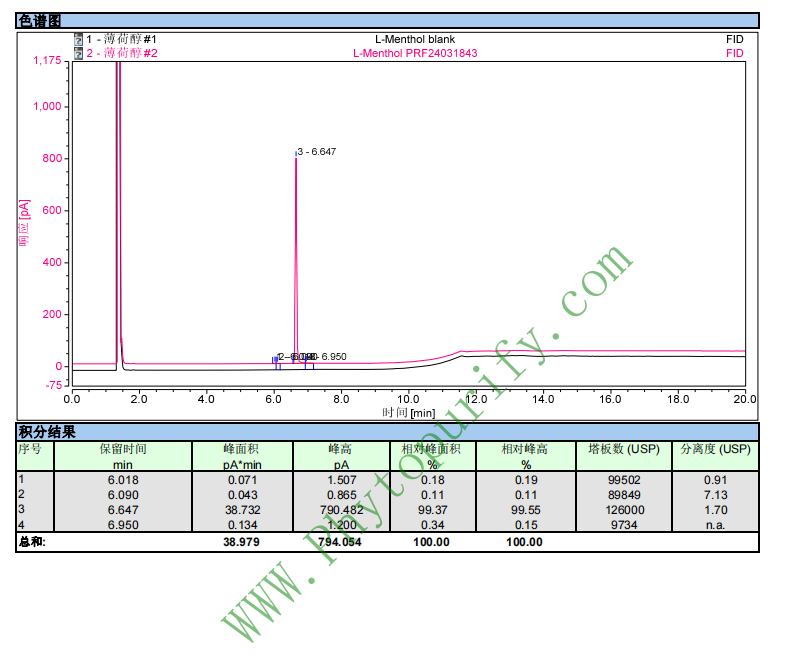
Purity: 95%~99%
Analysis Method: HPLC-DAD or/and HPLC-ELSD
Identification Method: Mass, NMR
Packing: Brown vial or HDPE plastic bottle
Can be supplied from milligrams to grams.
For Reference Standard and R&D, Not for Human Use Directly.
Inquire for bulk scale.
HPLC of L-Menthol
Storage conditions:Short-term storage at 2~8℃, long-term storage at -20 ~ -80℃
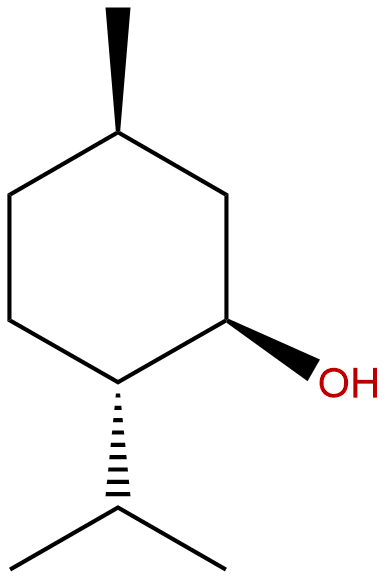
L-Menthol, CAS number 2216-51-5, is a naturally occurring monoterpene alcohol compound with a stereochemical configuration of (1R, 2S, 5R), and is the main natural enantiomer of menthol. As one of the most abundant active ingredients in peppermint plants, L-menthol has long been widely used in the fields of medicine, food, cosmetics, etc. due to its unique cooling sensation and diverse pharmacological activities. In recent years, with the in-depth study of its molecular mechanism of action, L-menthol has shown significant therapeutic potential in various physiological and pathological processes such as analgesia, spasmolysis, and itching relief, and has attracted widespread attention in the field of pain management.
The purpose of this review is to systematically summarize the chemical structure and physicochemical properties, plant sources, and extraction methods of L-menthol, with a focus on its pharmacological activity and mechanism of action. Combined with drug parameters and pharmacokinetic characteristics, it explores its clinical application prospects and future research directions, providing reference for researchers in the field of natural product pharmacology.
The chemical name of L-menthol is (-) - menthol-3-ol, with a molecular formula of C10H20O and a molecular weight of 156.2690. Its structural feature is a monocyclic terpene skeleton containing a hydroxyl (- OH) functional group, endowing it with hydrophilicity and the ability to interact with biological targets. The stereochemical configuration is (1R, 2S, 5R), which exhibits significant differences in biological activity compared to the enantiomer (+) - menthol.
In terms of physical and chemical properties, the LogP value of L-menthol is 3.2688, indicating that it has moderate lipid solubility and is beneficial for penetrating biofilms. The topological polar surface area (TPSA) is 20.23 Å ², and a lower polar surface area contributes to its blood-brain barrier (BBB) penetration ability. Experimental data also shows that it has high BBB permeability. The water solubility is 0.5241 mg/mL, which is a low solubility compound, but sufficient to support its bioavailability in vivo. The hERG channel inhibition experiment showed a negative result, indicating a low risk of cardiac toxicity. The Ames test result is 0, indicating that it has no significant induction of gene mutations and is relatively safe.
L-menthol is mainly found in the mint genus of the family Lamiaceae, especially abundant in Mentha piperita and Mentha spicata. Peppermint plants are widely cultivated for their cool aroma and medicinal value, with L-menthol being the main component of their volatile oil.
Traditional extraction methods include steam distillation and organic solvent extraction. Steam distillation is still the main method for industrial scale extraction of L-menthol due to its simple operation and low cost. In recent years, supercritical CO2 extraction technology has gradually become the preferred method for extracting L-menthol due to its high selectivity, solvent-free residue, and environmental advantages. In addition, microwave-assisted extraction and ultrasound assisted extraction techniques have also been applied to improve extraction efficiency and purity.
After extraction, purity analysis and enantiomer identification are often carried out through fractionation and chromatographic techniques such as gas chromatography-mass spectrometry (GC-MS) to ensure the production of high-purity L-menthol for medicinal purposes.
L-menthol has various pharmacological activities, mainly including analgesic, antispasmodic, and anti itch effects. In addition, it also exhibits potential activities such as anti-inflammatory, antibacterial, and neuromodulatory effects.
Analgesia is one of the most significant pharmacological effects of L-menthol. In vitro and in vivo experiments have shown that L-menthol can effectively alleviate inflammatory and neuropathic pain, and the mechanism involves the regulation of multiple ion channels and receptors. Its analgesic effect is particularly prominent when applied locally, often used to relieve muscle pain, headaches, and neuralgia.
L-menthol has a spasmolytic effect on smooth muscles, which can alleviate smooth muscle spasms in the gastrointestinal and respiratory tracts. It reduces muscle spasms and related discomfort symptoms by regulating calcium ion channels and neurotransmitter release.
The anti itch effect of L-menthol is mainly reflected in local application on the skin, which can alleviate itching symptoms caused by various reasons. It reduces skin itching by activating cold receptors and inhibiting the release of inflammatory mediators.
Some studies have reported that L-menthol has anti-inflammatory activity, which can inhibit the production and release of inflammatory factors and alleviate inflammatory reactions. In addition, L-menthol has shown certain potential in antibacterial, antioxidant, and neuroprotective aspects, which deserves further in-depth research.
The pharmacological effects of L-menthol are mainly achieved through multi-target and multi pathway synergistic regulation, involving multiple ion channels and receptors, especially targets closely related to pain regulation.
L-menthol is a classic agonist of the cold receptor TRPM8, activating the TRPM8 channel to produce a cooling sensation and regulating pain signal transduction. In addition, L-menthol can also regulate TRPV1 and TRPA1 channels, both of which are involved in the regulation of pain and inflammatory responses. By negatively regulating TRPV1, L-menthol can alleviate thermal hyperalgesia; Regulating TRPA1 can help alleviate inflammatory pain.
L-menthol has a certain regulatory effect on opioid receptors (OPRM1, OPRD1, OPRK1) and participates in central and peripheral analgesic mechanisms. By enhancing opioid receptor-mediated signaling, L-menthol can exert a synergistic analgesic effect and alleviate pain perception.
CNR1 receptors play an important role in the regulation of pain in the nervous system. L-menthol participates in the regulation of neuroinflammation and pain signaling by modulating CNR1 activity, enhancing analgesic effects.
L-menthol has an inhibitory effect on cyclooxygenase-1 and cyclooxygenase-2 (COX-1 and COX-2), reducing the synthesis of prostaglandins, thereby exerting anti-inflammatory and analgesic effects. This mechanism is similar to the action of nonsteroidal anti-inflammatory drugs (NSAIDs), providing a molecular basis for their anti-inflammatory and analgesic effects.
L-menthol also affects serotonin transporter (SLC6A4) and dopamine D2 receptor (DRD2), regulates neurotransmitter balance in the central nervous system, participates in the regulation of emotions and pain, and may have an adjuvant therapeutic effect on chronic pain and related emotional disorders.
In summary, L-menthol forms a complex analgesic and antispasmodic network through multi-target synergistic regulation, providing a molecular basis for its multiple pharmacological effects.
The pharmacological parameters of L-menthol indicate that it has good potential for drug development. The moderate molecular weight (156.2690) and LogP (3.2688) comply with Lipinski's rules, indicating good oral bioavailability. The lower TPSA (20.23 Å ²) and higher blood-brain barrier permeability support its ability to act on the central nervous system.
In terms of safety, the hERG channel inhibition test was negative, indicating a low risk of cardiac toxicity. The Ames test has no mutagenicity, further ensuring its safety. Although its water solubility is low, its bioavailability can be improved by optimizing the formulation process.
Pharmacokinetic studies have shown that L-menthol is rapidly absorbed and widely distributed in the body after oral administration, especially with high accumulation in the central nervous system. Metabolism is mainly carried out through the liver enzyme system, generating various metabolic products that are ultimately excreted through the kidneys. Its half-life is moderate and suitable for multiple administrations to maintain efficacy.
However, the low water solubility and rapid metabolism of L-menthol may limit its oral efficacy, and new drug delivery systems such as nano formulations and liposome encapsulation are needed to improve its stability and bioavailability.
L-menthol has shown broad prospects in clinical applications due to its multi-target and multi mechanism pharmacological properties. Currently, L-menthol has been widely used in topical analgesic ointments, oral cooling agents, anti itch creams, and other formulations, with good safety and high patient tolerance.
In the future, based on its analgesic and neuroprotective effects, L-menthol is expected to be developed as an adjuvant drug for the treatment of chronic pain, neuropathic pain, and related mental disorders. Combining modern drug delivery technologies such as transdermal drug delivery systems and nanocarriers can further enhance their therapeutic efficacy and patient compliance.
In addition, the application of L-menthol in the fields of spasmolysis and itching relief is also worth exploring, especially its potential therapeutic effects in gastrointestinal disorders and skin lesions. By combining precise regulation of molecular targets, personalized therapy is expected to be achieved in the future.
It should be pointed out that although L-menthol has high safety, its toxicological characteristics in high-dose or long-term use still need to be systematically evaluated. Preclinical and clinical studies should further clarify its pharmacokinetics, pharmacodynamics, and safety, providing scientific basis for the development of new drugs.
As a classic natural monoterpene alcohol, L-menthol has become a hot topic in natural product pharmacology research due to its unique chemical structure and diverse pharmacological activities. It exerts multiple physiological effects such as analgesia, spasmolysis, and itching by regulating TRP channels, opioid receptors, cannabinoid receptors, and cyclooxygenase, and has significant clinical application value.
The pharmacological evaluation shows that L-menthol has good potential for drug development, high safety, and can effectively penetrate the blood-brain barrier, supporting its application in central nervous system diseases. In the future, combining modern drug delivery technology and precision medicine concepts, L-menthol is expected to play a greater role in pain management and related disease treatment.
Overall, as a safe and effective natural product, L-menthol still needs to undergo systematic basic and clinical research to further reveal its mechanism of action, optimize formulation technology, expand its clinical application fields, and promote its transformation and development into a new type of natural medicine.
