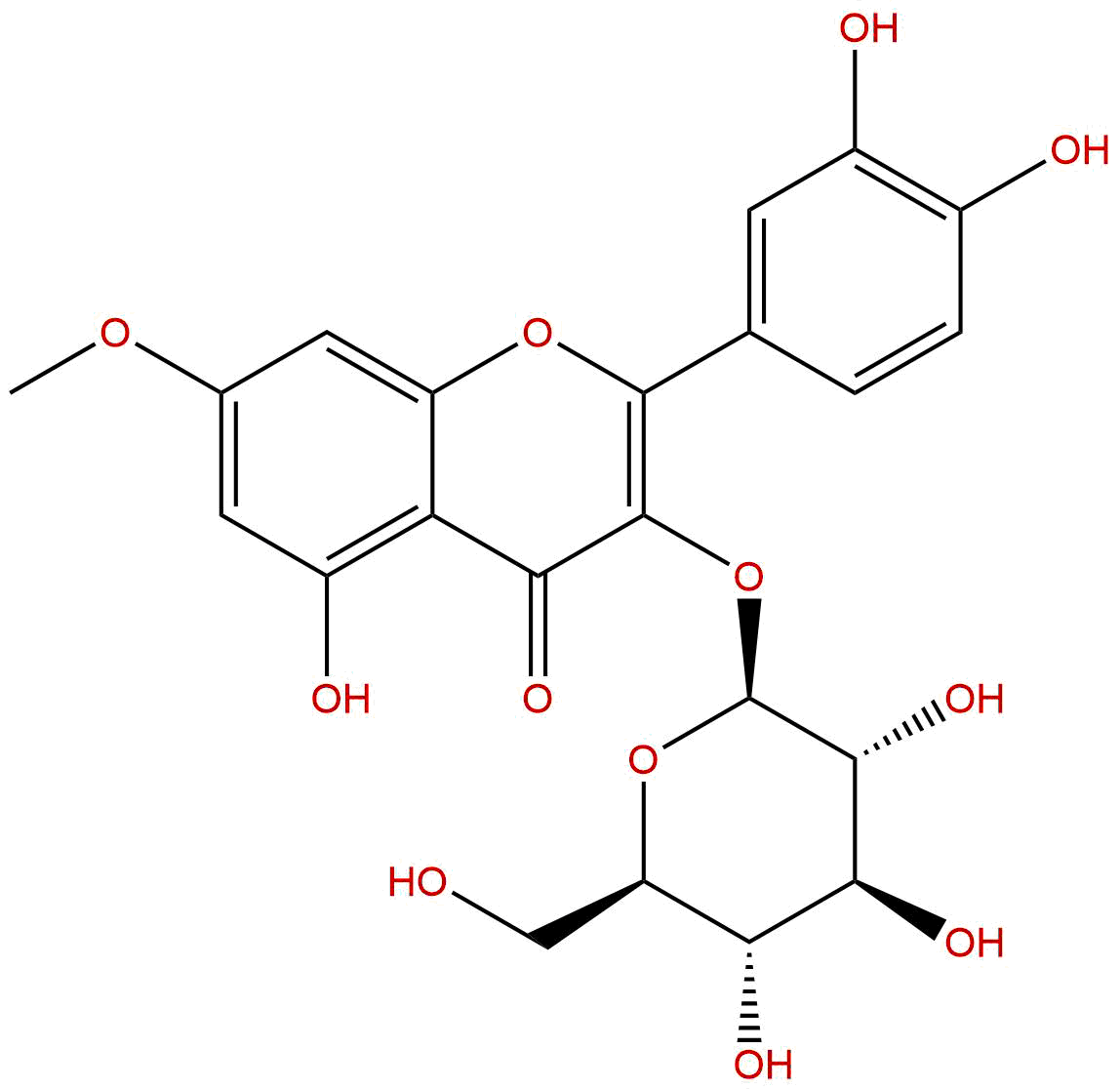


Product name: Rhamnetin-3-O-β-D-Glucoside
Synonym name: Rhamnetin 3-O-glucoside;Rhamnetin 3-glucoside
Catalogue No.: BP2270
Cas No.: 27875-34-9
Formula: C22H22O12
Mol Weight: 478.406
Botanical Source:
Type of Compound: Flavonoids
Purity: 95%~99%
Analysis Method: HPLC-DAD or/and HPLC-ELSD
Identification Method: Mass, NMR
Packing: Brown vial or HDPE plastic bottle
Storage: Store in a well closed container, protected from air and light. Put into refrigerate or freeze for long term storage.
Whenever possible, you should prepare and use solutions on the same day. However, if you need to make up stock solutions in advance, we recommend that you store the solution as aliquots in tightly sealed vials at -20℃. Generally, these will be useable for up to two weeks.
The product could be supplied from milligrams to grams
Inquire for bulk scale.
For Reference Standard and R&D, Not for Human Use Directly.
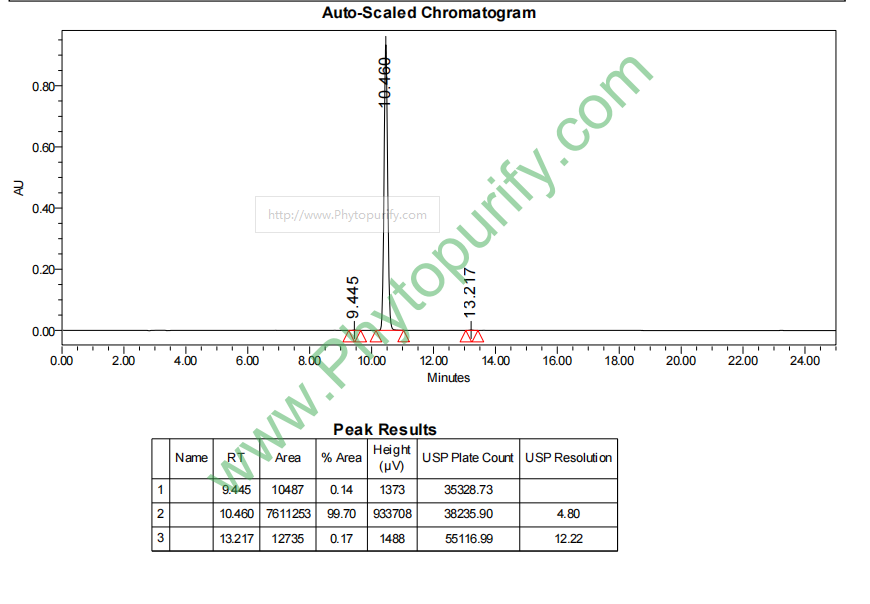
HPLC of Rhamnetin-3-O-β-D-Glucoside
Storage conditions:Short-term storage at 2~8℃, long-term storage at -20 ~ -80℃
Rhamnetin-3-O - β - D-Glucoside (hereinafter referred to as Rhamnetin-3-G) is a natural flavonoid compound belonging to the flavonoid glycosides of flavonols. As an important member of the flavonoid family, Rhamnetin-3-G has received widespread attention in recent years due to its significant biological activity, particularly in the field of antioxidant potential. The antioxidant capacity is a hot topic in the pharmacological research of natural products, as it is closely related to various chronic diseases such as cardiovascular disease, neurodegenerative diseases, inflammation, and tumors. This article aims to systematically review the chemical structure and physicochemical properties, plant sources and extraction methods, pharmacological activity and mechanism of action, pharmacological evaluation and pharmacokinetic characteristics of Rhamnetin-3-G, and finally explore its clinical application prospects and future research directions.
The molecular formula of Rhamnetin-3-G is C22H22O12, with a molecular weight of 478.4060 and a CAS number of 27875-34-9. The core of its structure is Rhamnetin, which is 7-hydroxy-3 ', 4', 5-trimethoxyflavonol, and the 3rd hydroxyl group is modified by β - D-glucosylation. This glycosylation modification significantly affects its water solubility, bioavailability, and pharmacological activity.
In terms of physical and chemical properties, the LogP value of Rhamnetin-3-G is 0.2106, indicating its low lipid solubility and tendency towards aqueous distribution. The polar surface area (TPSA) is as high as 199.51 Å ², indicating its strong polarity, which is conducive to water solubility and intermolecular hydrogen bonding formation. The water solubility index is 1.3512, indicating good solubility in water. The low permeability of the blood-brain barrier suggests that its direct action in the central nervous system may be limited. The negative result of hERG channel inhibition experiment indicates a low risk of cardiac toxicity. The Ames mutagenicity test score is 0.6, indicating a low risk of genotoxicity and a certain level of safety.
Rhamnetin-3-G is widely present in various plants, especially in the Rhamnus genus and some leguminous and rhododendron family plants. Common plants rich in this compound include Rhamnus cathartica, Rhamnus purshiana, and certain traditional Chinese medicinal herbs such as Scutellaria baicalensis.
The extraction method often uses solvent extraction combined with chromatographic separation technology. Generally, ethanol or methanol aqueous solution is used as the extraction agent to obtain crude extract through ultrasound assisted extraction or reflux extraction. Subsequently, liquid-liquid partitioning, silica gel column chromatography, reverse phase high-performance liquid chromatography (RP-HPLC) and other methods were used for purification and separation. In recent years, green extraction techniques such as supercritical fluid extraction (SFE) and microwave-assisted extraction (MAE) have gradually been applied to the efficient extraction of flavonoid glycosides, significantly improving extraction efficiency and purity.
The main pharmacological activity of Rhamnetin-3-G is concentrated in the field of antioxidant activity. Numerous in vitro experiments have shown that this compound can effectively scavenge free radicals, inhibit lipid peroxidation, and protect cells from oxidative stress damage. Its antioxidant activity is achieved by enhancing the expression and activity of endogenous antioxidant enzyme systems such as superoxide dismutase (SOD), catalase (CAT), glutathione peroxidase (GPX1), etc.
Oxidative stress is closely related to inflammatory response, and Rhamnetin-3-G exhibits significant anti-inflammatory effects by regulating the expression of nuclear factor NF - κ B and related inflammatory factors. Animal model studies have shown that this compound can alleviate damage to inflammatory tissues and reduce the levels of pro-inflammatory cytokines such as TNF - α and IL-6.
Partial studies have revealed that Rhamnetin-3-G has inhibitory effects on proliferation and induces apoptosis in various tumor cells. The mechanism may be related to regulating cell cycle proteins, activating apoptosis related signaling pathways, and inhibiting the activity of tumor associated matrix metalloproteinases (MMP1, MMP3), thereby blocking the invasion and metastasis of tumor cells.
Although the permeability of the blood-brain barrier is low, Rhamnetin-3-G shows certain neuroprotective potential by regulating the expression of antioxidant enzymes in the peripheral nervous system and reducing neuroinflammation, and is expected to be applied as an adjuvant therapy for neurodegenerative diseases.
The antioxidant mechanism of Rhamnetin-3-G mainly relies on its regulation of multiple key targets:
NFE2L2/NRF2 signaling pathway Rhamnetin-3-G can activate nuclear factor E2 related factor 2 (NFE2L2, also known as NRF2), promote gene expression mediated by antioxidant response elements (ARE), enhance the expression of intracellular antioxidant enzymes such as SOD1, SOD2, CAT, GPX1, and HMOX1, and improve cellular antioxidant capacity.
Metalloproteinase inhibition By inhibiting the activity of matrix metalloproteinases MMP1 and MMP3, Rhamnetin-3-G slows down extracellular matrix degradation, preventing inflammation and the invasion and spread of tumor cells.
Tyrosinase (TYR) regulation This target involves melanin synthesis and oxidative stress response, and the regulation of TYR by Rhamnetin-3-G contributes to the antioxidant and anti-inflammatory effects.
Anti inflammatory signaling pathway By inhibiting the NF - κ B and MAPK signaling pathways, reducing the release of pro-inflammatory cytokines, and alleviating inflammatory responses.
In summary, Rhamnetin-3-G exerts a wide range of biological effects through multi-target and multi pathway synergistic effects.
The pharmacological parameters of Rhamnetin-3-G indicate that it has certain potential for drug development. Although the molecular weight of 478.4 is slightly higher than the ideal range, it is still within an acceptable range. Low LogP value and high TPSA indicate good water solubility, which is beneficial for the dissolution and absorption of oral preparations, but may also limit the cell membrane penetration ability, especially the blood-brain barrier penetration.
The low permeability of the blood-brain barrier suggests that its direct therapeutic effect on the central nervous system is limited, but it may indirectly exert neuroprotective effects by regulating the peripheral system. The hERG channel inhibition negative and low mutagenicity (Ames test 0.6) indicate good safety and low risk of cardiac and genetic toxicity.
At present, there is limited research on the pharmacokinetics of Rhamnetin-3-G. Preliminary data indicates that its oral absorption rate is moderate, and its metabolism in the body is mainly through the liver's phase II metabolism pathway (such as glucuronidation and sulfation), while excretion is mainly through the kidneys and bile. Further systematic evaluation of its bioavailability, metabolic stability, and in vivo distribution characteristics is needed in the future.
Given the excellent antioxidant and anti-inflammatory activities of Rhamnetin-3-G, it has broad application prospects in the field of chronic disease prevention and treatment. Especially in cardiovascular diseases, complications of diabetes, neurodegenerative diseases and adjuvant treatment of tumors, Rhamnetin-3-G is expected to play an active role as a natural drug or functional health care product ingredient.
The future clinical translation needs to focus on addressing the following issues:
Formulation development and optimization of administration routes Enhance its bioavailability, improve oral absorption, and explore new delivery systems such as nanocarriers and liposomes.
System pharmacokinetics and safety evaluation Conduct systematic toxicology research and long-term safety assessment to clarify its metabolites and potential drug interactions.
Clinical trial design Based on its multi-target mechanism of action, design clinical trials targeting specific diseases to verify its efficacy and safety.
Structural modification and derivative development By chemical modification, its blood-brain barrier penetration and targeting can be improved, expanding its application in neurological diseases.
Murin-3-O-glucoside, as a natural flavonoid glycoside with significant antioxidant and anti-inflammatory activities, exhibits good pharmacological properties and safety. Its multi-target and multi mechanism mode of action provides a theoretical basis and practical basis for the development of new natural medicines. Although the research on its pharmacokinetics and clinical applications is still in its infancy, with the advancement of extraction technology and drug delivery systems, Rhamnetin-3-G is expected to become an important candidate molecule in the field of antioxidant and related disease treatment. Future research should focus on elucidating its mechanism of action, optimizing drug properties, and promoting clinical translation, in order to achieve its widespread application in modern medicine.
