| Catalog No | Package | Original Price | Price | Inventory | Quantity | Operating |
|---|---|---|---|---|---|---|
| SBP02191-5mg | 5mg | $250.00 | Sign in |
|


Storage conditions:Short-term storage at 2~8℃, long-term storage at -20 ~ -80℃
94.8300
2.5594
1.9723
.1247
2.7684
6.0985
Low
90.4247
2.4010
Yes
No
No
No
Yes
Yes
1.2
Yes
Yes
Yes
Yes
Natural products, as an important source of drug discovery, play an irreplaceable role in the long history of human struggle against diseases. Anthraquinone compounds, as a class of secondary metabolites widely present in nature, have attracted much attention due to their structural diversity and significant biological activity. Among them, plants of the Rubiaceae family, especially the Rubiaceae genus(Rubia)Plants, known for their abundant anthraquinone components, are commonly used medicinal herbs in traditional medical systems. Multiple anthraquinone compounds isolated from madder, such as Alizarin and Purpurin, have been proven to have various pharmacological activities including anti-inflammatory, antioxidant, and anti-tumor effects.
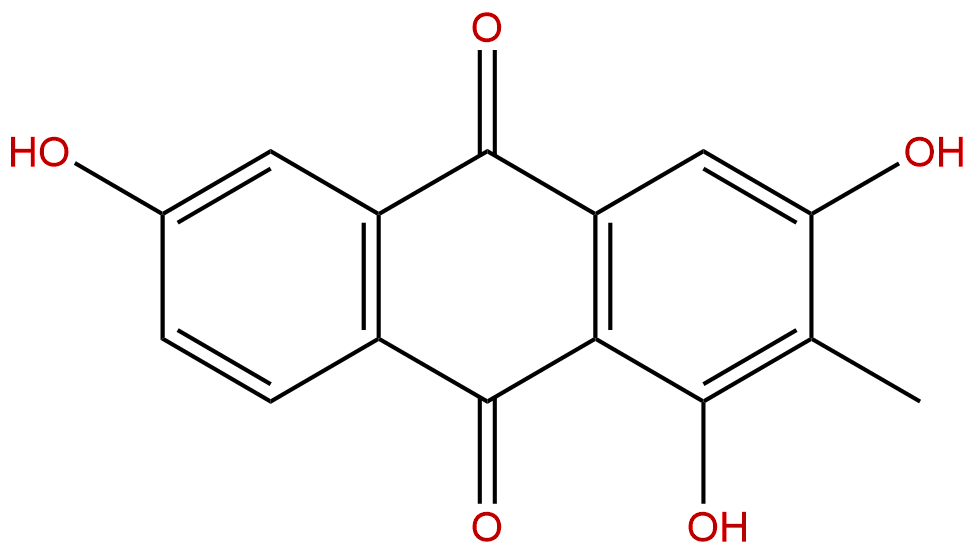
6-Hydroxyrubiadin, also known as 1,3,6-trihydroxy-2-methyl-9,10-anthraquinone, is a compound derived from Yunnan madder(Rubia yunnanensis)Natural anthraquinone compounds isolated from roots. As a hydroxylated derivative of Rubiadin, its unique chemical structure endows it with a biological activity spectrum distinct from other anthraquinone compounds. In recent years, research on 6-hydroxymethyl isoquercetin has gradually deepened, especially in the field of anti-tumor, showing remarkable potential. Research has shown that this compound can act on multiple key signaling pathways, including MCL1、BCL2、STAT3、MMP2、TOP1、HIF1A、TOP2A、MAPK1、ESR1、CYP19A1 The multiple molecular targets closely related to tumor occurrence, development, invasion, and drug resistance exhibit multi-target and multi pathway anti-tumor activity characteristics. In addition, its anti-inflammatory activity also makes it a candidate compound for treating inflammation related diseases. This article aims to provide a systematic review of the chemical structure, plant origin, pharmacological activity, mechanism of action, medicinal properties, and clinical application prospects of 6-hydroxymethyl isoquercetin, in order to provide comprehensive scientific basis for the in-depth development and utilization of this natural product.
The core skeleton of 6-hydroxymethyl isoquercetin is 9,10-anthraquinone, which is composed of three benzene rings fused together, with two carbonyl groups located at positions 9 and 10, respectively. Its structural feature lies in the substituent pattern at specific positions on the anthraquinone nucleus: one hydroxyl group (- OH) is attached to each of the 1st, 3rd, and 6th positions, and one methyl group (- CH3) is attached to the 2nd position. According to the IUPAC nomenclature, its system name is 1,3,6-trihydroxy-2-methyl-9,10-anthraquinone. This structure classifies it as a trihydroxyanthraquinone compound. Compared with the parent compound methyl isoquercetin (1,3-dihydroxy-2-methyl-9,10-anthraquinone), 6-hydroxymethyl isoquercetin has an additional hydroxyl group at position 6, which significantly affects its physicochemical properties, biological activity, and interactions with biomolecules.
From the perspective of physical and chemical properties, the molecular formula of 6-hydroxymethyl isoquercetin is C ₁₅ H ₁₀ O ₆, with a molecular weight of 270.2400 g/mol. Its lipid water partition coefficient (LogP) is 2.5594, indicating that the compound has a certain lipophilicity, which is conducive to its penetration of the cell membrane and entry into the cell to exert pharmacological effects. The topological polar surface area (TPSA) is 94.8300 Å ², which reflects the total surface area of polar atoms (such as oxygen and nitrogen atoms) in the molecule, and is usually related to the oral absorption and blood-brain barrier penetration ability of the compound. The TPSA value of 6-hydroxymethyl isoquercetin suggests that it may have some oral bioavailability, but its blood-brain barrier penetration ability is low, which may limit its application in central nervous system diseases, but at the same time may also reduce potential side effects on the central nervous system. Its water solubility (LogS) is 0.1247, indicating its low solubility in water, which may be a limiting factor for its pharmacokinetic behavior in vivo and needs to be improved through appropriate drug delivery systems or structural modifications. In addition, the predicted results showed that the compound did not exhibit hERG (human Ether - à - go Related Gene) potassium channel inhibitory activity, indicating a low risk of cardiac toxicity. The Ames test result is 1.2, and it is generally believed that when the value is less than 2, the risk of mutagenicity is low, indicating a lower risk of genetic toxicity. These preliminary pharmacological parameters provide positive signals for the subsequent development of 6-hydroxymethyl isoquercetin.
6-Hydroxymethyl isorubicin mainly comes from the Rubiaceae family, Rubiaceae genus(Rubia)Plants, especially Yunnan madder(Rubia yunnanensis The root of Diels. Yunnan madder, also known as small red ginseng or Yunnan madder, is a unique plant species in China, mainly distributed on the slopes, forest edges or grasslands of Yunnan, Sichuan, Guizhou and other places. Its root is often used in folk medicine as a medicine to promote blood circulation, remove blood stasis, cool blood, and stop bleeding. Except for Yunnan madder, other madder plants such as madder(Rubia cordifolia L. It may also contain the compound, but the content is usually low. The accumulation of anthraquinone compounds in plants is influenced by various factors, including plant species, growth environment, harvest season, plant age, etc. Therefore, selecting suitable plant sources and harvesting times is the key to obtaining high levels of 6-hydroxymethyl isoquercetin.
The extraction of 6-hydroxymethyl isoquercetin from plant materials usually follows the classic process of natural product chemistry. Firstly, crush the dried roots of the Chinese parasol tree to improve extraction efficiency. Subsequently, solvent extraction was employed, with commonly used solvents including methanol, ethanol, or their aqueous solutions. Due to the lipophilicity of 6-hydroxymethyl isoquercetin, the extraction efficiency of high concentration ethanol or methanol is usually better than that of pure water. Extraction methods can include cold soaking, percolation, or heating reflux. Heating reflux extraction has a high efficiency, but attention should be paid to controlling temperature and time to avoid degradation of thermosensitive components. The crude extract is obtained by filtering and concentrating the extract under reduced pressure.
In order to obtain high-purity 6-hydroxymethyl isoquercetin, it is necessary to systematically separate and purify the crude extract. Common methods include:
1. Liquid-liquid extraction By using solvents of different polarities (such as petroleum ether, ethyl acetate, n-butanol) for fractional extraction of crude extracts, the target compounds can be enriched in specific polar regions. 6-Hydroxymethyl isoquercetin is usually enriched in the ethyl acetate or n-butanol extraction layer.
2. Column chromatography method This is the core step of separation and purification. Common stationary phases include silica gel, polyamide, Sephadex LH-20, etc. Silica gel column chromatography is the most commonly used method, which can separate anthraquinone compounds of different polarities by adjusting the polarity gradient of eluents such as petroleum ether ethyl acetate, chloroform methanol, etc. Polyamide column chromatography has a special adsorption effect on compounds containing phenolic hydroxyl groups, such as anthraquinone, and is commonly used for further purification. Sephadex LH-20 gel column chromatography is mainly based on molecular size for separation, which can be used to remove pigments or separate compounds with similar molecular weight.
3. High performance liquid chromatography (HPLC)For isomers with very similar structures or when high-purity samples are required, preparative HPLC is an effective means of final purification. Usually, a reverse phase C18 chromatographic column is used, with methanol water or acetonitrile water system as the mobile phase, and monitored by a UV detector (such as 254 nm or 280 nm).
The entire extraction and separation process requires real-time monitoring using thin-layer chromatography (TLC) or HPLC to track the distribution of the target compound. The final pure product was structurally confirmed by spectroscopic techniques such as nuclear magnetic resonance spectroscopy (NMR) and mass spectrometry (MS).
The pharmacological activity research of 6-hydroxymethyl isoquercetin mainly focuses on two fields: anti-tumor and anti-inflammatory, among which anti-tumor activity is currently a hot research topic.
1. Antitumor activity
Numerous in vitro and in vivo studies have confirmed that 6-hydroxymethyl isorubicin exhibits significant proliferation inhibition and induces apoptosis in various types of tumor cells.
2. Anti inflammatory activity
Inflammation is an important driving factor for the occurrence and development of many diseases, including cancer. 6-Hydroxymethyl isoquercetin has been preliminarily validated for its anti-inflammatory activity as a candidate compound for treating inflammatory diseases.
The pharmacological activity of 6-hydroxymethyl isoquercetin, especially its anti-tumor effect, does not originate from a single target, but rather forms a complex regulatory network by acting on multiple signaling nodes within the cell. Its core mechanism of action can be summarized as regulating multiple key signaling pathways and intervening in multiple important molecular targets.
1. Regulation of apoptosis related proteins
2. Regulation of tumor invasion and metastasis related targets
3. Regulation of DNA Topoisomerase and Cell Proliferation
4. Regulation of hormone related tumor targets
In summary, 6-hydroxymethyl isoquercetin forms a multidimensional regulatory network involving apoptosis, proliferation, metastasis, angiogenesis, and hormone signaling by directly or indirectly acting on multiple targets such as MCL1, BCL2, STAT3, MMP2, TOP1, HIF1A, TOP2A, MAPK1, ESR1, CYP19A1, etc. This multi-target mode of action is a potential reason for its broad-spectrum anti-tumor activity and low susceptibility to drug resistance.
Developing natural products into clinical drugs requires not only clear pharmacological activity, but also a systematic evaluation of their drug like and pharmacokinetic properties. Based on the physical and chemical parameters and preliminary predictions mentioned earlier, a preliminary evaluation of the pharmacological properties of 6-hydroxymethyl isoquercetin can be conducted.
1. Evaluation of drug properties
2. Pharmacokinetic characteristics
At present, there is relatively limited publicly available research data on the pharmacokinetics of 6-hydroxymethyl isoquercetin in vivo, but reasonable speculation can be made based on its physicochemical properties and studies of similar compounds.
Overall, 6-hydroxymethyl isoquercetin has a certain pharmacological basis, but its low water solubility and potential rapid metabolism are the main challenges it faces. Future pharmaceutical chemistry research should focus on overcoming these obstacles through structural modifications (such as introducing polar groups, prodrug design) or advanced drug delivery systems, in order to obtain candidate molecules with better pharmacokinetic properties.
Based on the unique pharmacological activity and multi-target mechanism of action of 6-hydroxymethyl isorubicin, it has shown broad application prospects in the treatment of various diseases, especially in the fields of tumors and inflammatory diseases.
1. Anti tumor therapy
2. Treatment of inflammatory diseases
3. Future research directions
Despite the bright prospects, there are still many challenges to promote the clinical application of 6-hydroxymethyl isoquercetin. Future research should focus on the following aspects:
6-Hydroxymethylisorubicin, a natural anthraquinone compound derived from Yunnan madder, exhibits biological activity potential beyond its parent compound due to its unique 1,3,6-trihydroxy-2-methyl-9,10-anthraquinone structure. It constructs a multi-level anti-tumor regulatory network by acting on a series of molecular targets closely related to tumor occurrence, development, metastasis, and drug resistance, such as MCL1, BCL2, STAT3, MMP2, TOP1, HIF1A, TOP2A, MAPK1, ESR1, CYP19A1, etc., while also exhibiting significant anti-inflammatory activity. The preliminary pharmacological evaluation also provides positive signals for its subsequent development.
Although there are still challenges in terms of pharmacokinetic properties and safety, 6-hydroxymethyl isoquercetin is undoubtedly a natural product lead compound with great research and development value. Future research requires the integration of multidisciplinary forces such as medicinal chemistry, pharmacology, pharmacy, toxicology, etc., to deeply elucidate their mechanisms of action, optimize their pharmacokinetic properties, and systematically evaluate their safety and in vivo efficacy. We have reason to believe that with the continuous deepening of research, 6-hydroxymethyl isorubicin and its derivatives are expected to provide new strategies and candidate drugs for the treatment of tumors and inflammatory diseases in the future, contributing to the cause of human health. The research process of 6-hydroxymethyl isoquercetin is a vivid embodiment of the concept of exploring the value of modern medicine from traditional herbs.
Batch can search by a CAS number,one per line
