| Catalog No | Package | Original Price | Price | Inventory | Quantity | Operating |
|---|---|---|---|---|---|---|
| BP3520-100mg | 100mg | $20.00 | Sign in |
|


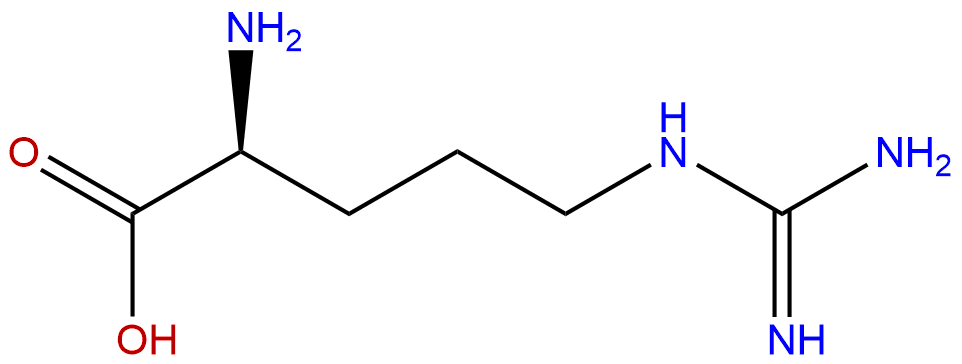
Product name: L-Arginine
Synonym name:
Catalogue No.: BP3520
Cas No.: 74-79-3
Formula: C6H14N4O2
Mol Weight: 174.204
Botanical Source:
Physical Description:
Type of Compound: Amino Acids
Purity: 95%~99%
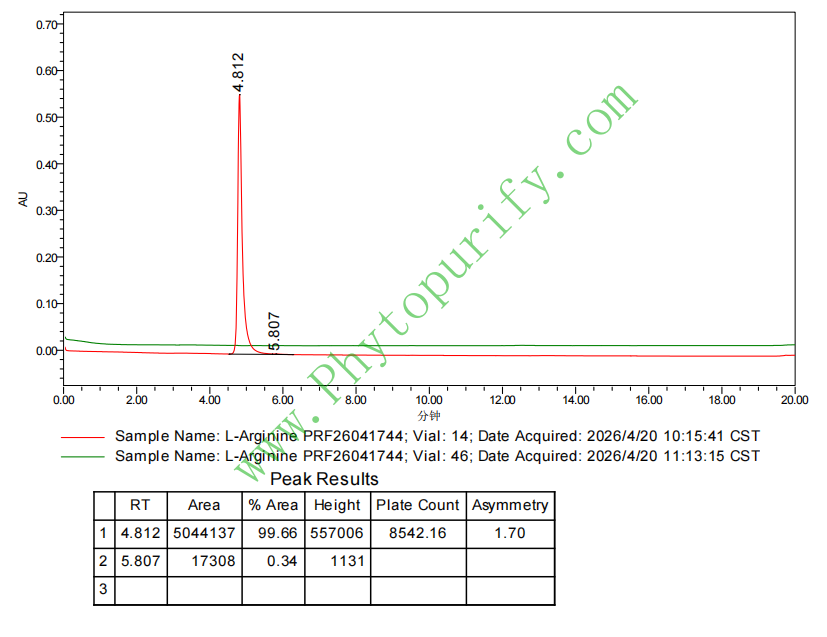
Analysis Method: HPLC-DAD or/and HPLC-ELSD
Identification Method: Mass, NMR
Packing: Brown vial or HDPE plastic bottle
Storage: Store in a well closed container, protected from air and light. Put into refrigerate or freeze for long term storage.
Whenever possible, you should prepare and use solutions on the same day. However, if you need to make up stock solutions in advance, we recommend that you store the solution as aliquots in tightly sealed vials at -20℃. Generally, these will be useable for up to two weeks.
The product could be supplied from milligrams to grams
Inquire for bulk scale.
For Reference Standard and R&D, Not for Human Use Directly.
HPLC of L-Arginine
Storage conditions:Short-term storage at 2~8℃, long-term storage at -20 ~ -80℃
125.2200
-1.5453
-2.3052
41.5541
.2148
.5286
Low
13.4371
2.7742
Yes
Yes
No
No
No
No
0.0
No
No
No
No
L-Arginine, also known as 2-amino-5-guanidinovaleric acid in the chemical system, is an alkaline semi essential amino acid that plays a crucial role in human physiology and pathology. Since the first isolation and naming of L-arginine from lupine seedlings by Swiss chemist Ernst Schulze in 1886, research on L-arginine has spanned over a century. Early research mainly focused on its core functions in protein synthesis and urea cycle. However, in the late 1980s, with the discovery of nitric oxide (NO) as endothelial derived relaxing factor (EDRF) and L-arginine as the sole physiological substrate for nitric oxide synthase (NOS), its biological significance was completely reshaped. This milestone discovery not only reveals the core regulatory role of L-arginine in the cardiovascular system, but also pushes it to the forefront of modern pharmacology and clinical medicine research.
L-arginine exerts its biological effects in the body through various metabolic pathways. In addition to serving as a raw material for protein synthesis, it is mainly metabolized through three key pathways: firstly, it generates NO and citrulline under the catalysis of nitric oxide synthase (NOS), which is its most well-known and extensively studied biological function; Secondly, under the action of arginase, ornithine is hydrolyzed into ornithine and urea, and ornithine is further converted into polyamines (such as putrescine, spermine, and spermidine) and L-proline, which participate in cell proliferation, differentiation, and collagen synthesis; Thirdly, it participates in the synthesis of creatine under the action of arginine glycine amidine transferase (AGAT). The balance and regulation of these metabolic pathways determine the ultimate effect of L-arginine under different physiological and pathological conditions.
In the cardiovascular system, L-arginine produces NO through endothelial nitric oxide synthase (eNOS), which serves as a key gas messenger molecule. By activating soluble guanylate cyclase (sGC), NO increases intracellular cyclic guanosine monophosphate (cGMP) levels, thereby mediating vasodilation, inhibiting platelet aggregation, suppressing leukocyte adhesion, and promoting vascular smooth muscle cell proliferation. These effects collectively form the molecular basis for the cardiovascular protective effect of L-arginine. In addition, L-arginine is also involved in regulating immune response, promoting wound healing, and regulating endocrine function. It is worth noting that L-arginine can induce acute pancreatitis under specific experimental conditions. This contradictory effect suggests the complexity of its biological effects and highlights the importance of systematic evaluation of its pharmacological activity.
In recent years, with a deeper understanding of the L-arginine metabolic regulatory network, its potential application value in cardiovascular diseases, metabolic diseases, immune regulation, and tumor therapy has been increasingly recognized. However, the clinical application of L-arginine still faces many challenges, including limited oral bioavailability, complex metabolic pathways in vivo, and differential effects under different pathological states. This article will provide a systematic professional review of L-arginine from the aspects of chemical structure and physicochemical properties, sources and extraction methods, pharmacological activity, mechanism of action, drug evaluation, and clinical application prospects, in order to provide comprehensive and in-depth references for research in this field.
The chemical structure of L-arginine has typical amino acid characteristics and contains a unique guanidine side chain. Its molecular formula is C ₆ H ₁₄ N ₄ O ₂, and its molecular weight is 174.20 g/mol. Structurally, L-arginine contains an alpha amino group, an alpha carboxyl group, and a guanidine side chain with four nitrogen atoms. The presence of guanidine group endows L-arginine with significant alkaline characteristics, with an isoelectric point (pI) of approximately 10.76 and a positive charge under physiological pH conditions. This strong alkaline property makes it often exist in cationic form in the body and determines its interaction mode with biomolecules such as proteins and nucleic acids.
The stereochemical configuration of L-arginine is crucial for its biological activity. The naturally occurring L-arginine is in the S configuration, and although its D-enantiomer (D-arginine) can be utilized by some organisms, it cannot be used as a substrate for mammalian NOS. In the molecular structure of L-arginine, the delta nitrogen atom of the guanidine group is a key site for NOS catalyzed reactions, and this nitrogen atom is oxidized to NO and citrulline through a two-step monooxygenation reaction. In addition, the strong basicity of guanidine groups enables them to form stable ionic and hydrogen bonding networks with negatively charged amino acid residues such as aspartic acid and glutamic acid, which is crucial for their binding to transporters and receptors.
In terms of physical and chemical properties, L-arginine is a white crystalline powder, odorless, and slightly bitter in taste. Its solubility in water is extremely high, reaching about 150 g/L (25 ° C), which is consistent with its strong polarity and ionic properties. The calculated LogP value is -1.55, indicating that it has extremely strong hydrophilicity and is almost insoluble in organic solvents such as ethanol and ether. The topological polar surface area (TPSA) is 125.22 Å ², which is much higher than the recommended upper limit of 140 Å ² for oral medications, indicating poor transmembrane permeability. The melting point of L-arginine is 222 ° C (decomposition), which is stable under acidic conditions, but can undergo de guanidine reaction under strong alkaline conditions. Its aqueous solution is alkaline, with a pH value of approximately 10.5-12.0 (1% aqueous solution).
The UV absorption characteristics of L-arginine are weak, with only terminal absorption at about 205 nm, which poses certain difficulties for its direct quantitative detection. Common detection methods include high-performance liquid chromatography (HPLC) combined with pre - or post column derivatization (such as ortho benzaldehyde OPA derivatization), mass spectrometry, and enzymatic detection. It is worth noting that L-arginine can compete with other amino acids (such as lysine and ornithine) for transport in vivo through cationic amino acid transporters (CATs), which has a significant impact on its pharmacokinetic behavior.
L-arginine is widely distributed in nature, not only in animal bodies, but also one of the abundant amino acids in many plants. In plants, L-arginine is not only a component of proteins, but also plays an important role in nitrogen storage, transport, and stress response. Plant resources rich in L-arginine mainly include legume seeds (such as soybeans, lupines, peas), nuts (such as walnuts, almonds, peanuts), grains (such as oats, wheat germ), and certain algae (such as spirulina). Among them, the content of L-arginine in soy protein can reach 7-8% of total amino acids, making it an important dietary source. In addition, certain medicinal plants such as astragalus, wolfberry, ginseng, etc. have also been reported to contain high levels of free L-arginine.
The method of extracting L-arginine from plants has undergone evolution from traditional to modern. Early extraction methods were mainly based on protein hydrolysis and ion exchange chromatography. Firstly, protein rich plant materials such as defatted soybean meal are subjected to acid hydrolysis (usually using 6 M HCl, 110 ° C, 24 hours) to break down the protein into free amino acids. After neutralization and filtration, the hydrolysate is separated by a cation exchange resin column (such as sulfonic acid resin). L-arginine, due to its strong alkalinity, binds tightly to resins under acidic conditions and can be separated from other alkaline amino acids such as lysine and histidine through gradient elution (such as using different concentrations of ammonia or sodium hydroxide solutions). Collecting eluent rich in L-arginine, through concentration, crystallization, recrystallization and other steps, high-purity L-arginine products can be obtained. This method has mature technology and low cost, but there are problems such as the hydrolysis process damaging some amino acids (such as tryptophan), generating a large amount of waste acid, and product purity being limited by separation efficiency.
With the development of biotechnology, enzymatic and fermentation methods have gradually become the mainstream methods for industrial production of L-arginine. Enzymatic methods utilize specific enzymes such as arginase or arginine deaminase to convert inexpensive substrates (such as L-citrulline or L-ornithine) into L-arginine. This method has mild reaction conditions and high product purity, but the cost and stability of the enzyme are key factors limiting its large-scale application. Fermentation method utilizes genetically engineered microorganisms (such as Corynebacterium glutamicum or Escherichia coli) to excessively accumulate L-arginine under optimized conditions. Through metabolic engineering methods, such as enhancing the expression of key enzymes in the biosynthesis pathway of L-arginine, blocking or weakening its catabolic pathway, and optimizing substrate supply and cofactor regeneration, the yield of L-arginine can be significantly increased. At present, fermentation has become the core process for industrial production of L-arginine, with a yield of over 100 g/L.
For laboratory research or small-scale preparation, membrane separation technologies such as ultrafiltration and nanofiltration combined with electrodialysis can be used to achieve efficient separation and purification of L-arginine. In addition, new separation methods such as molecular imprinting technology and simulated moving bed chromatography developed in recent years have also provided new options for the high-purity preparation of L-arginine. It is worth noting that the selection of extraction methods should comprehensively consider factors such as raw material characteristics, target purity, production costs, and environmental impact. For pharmaceutical grade L-arginine, it is usually required to have a purity of over 99% and strict control of impurities such as endotoxins and heavy metals.
The pharmacological activity research of L-arginine mainly focuses on its core function as a precursor of NO, and also involves the biological effects mediated by the polyamine and proline metabolic pathways. In the cardiovascular system, the pharmacological activity of L-arginine is most prominent. Numerous studies have shown that exogenous supplementation of L-arginine can significantly improve endothelial function and promote vasodilation. In animal models, L-arginine can lower blood pressure in spontaneously hypertensive rats, improve vascular reactivity in hypercholesterolemic rabbits, and alleviate ischemia-reperfusion injury. Clinical studies have also confirmed that oral or intravenous injection of L-arginine can increase NO production in healthy volunteers and cardiovascular disease patients (such as hypertension, coronary heart disease, heart failure), and improve blood flow mediated vasodilation function (FMD). In addition, L-arginine also showed anti atherosclerosis effects, including inhibiting the oxidation of low-density lipoprotein (LDL), reducing the expression of vascular cell adhesion molecules (such as VCAM-1, ICAM-1), and inhibiting platelet aggregation.
In terms of metabolic regulation, L-arginine enhances insulin sensitivity and improves glucose tolerance through the NO pathway. Research has shown that L-arginine can stimulate pancreatic beta cells to secrete insulin, while also exerting hypoglycemic effects by increasing skeletal muscle blood flow and glucose uptake. In obesity and type 2 diabetes models, L-arginine supplementation can reduce insulin resistance, improve lipid metabolism, and reduce plasma triglyceride and free fatty acid levels. In addition, L-arginine is also involved in regulating adipose tissue function, promoting thermogenesis in brown adipose tissue, and inhibiting inflammation in white adipose tissue.
In the field of immune regulation, the action of L-arginine is bidirectional. On the one hand, NO produced by inducible nitric oxide synthase (iNOS) is an important effector molecule for macrophages to kill pathogenic microorganisms, and sufficient supply of L-arginine is crucial for host defense. On the other hand, L-arginine is also an essential amino acid for T cell proliferation and functional maintenance, and its deficiency can lead to T cell dysfunction and immune suppression. Under stress conditions such as trauma, burns, and sepsis, the consumption of L-arginine increases. Supplementing with L-arginine can improve immune function and promote wound healing. However, under specific inflammatory conditions, excessive production of NO may exacerbate tissue damage, suggesting that the immunomodulatory effects of L-arginine are dose-dependent and context dependent.
It is worth noting that L-arginine exhibits a unique induction effect in experimental acute pancreatitis models. Intraperitoneal injection of high-dose L-arginine (usually 4-8 g/kg body weight) can induce typical acute pancreatitis pathological changes in rats and mice, including pancreatic edema, acinar cell necrosis, inflammatory cell infiltration, and elevated serum amylase and lipase. This model is widely used in the pathogenesis research and drug screening of acute pancreatitis. The mechanism of L-arginine induced pancreatitis involves multiple pathways such as oxidative stress, endoplasmic reticulum stress, mitochondrial dysfunction, and abnormal activation of trypsinogen. This contradictory effect reminds us that the pharmacological activity of L-arginine has a significant dose-response relationship, and may produce toxic effects at high doses.
In the reproductive system, L-arginine participates in the regulation of penile erection function through the NO pathway. Clinical studies have shown that supplementation with L-arginine can improve erectile function in patients with mild to moderate erectile dysfunction (ED). In addition, L-arginine also plays a role in female reproductive health, including regulating follicular development, improving endometrial blood flow, and participating in placental angiogenesis.
The pharmacological mechanism of L-arginine is complex and diverse, and its core lies in serving as a substrate and signaling molecule for multiple metabolic pathways. The most classic mechanism of action is the catalytic generation of NO through the NOS family. NOS has three subtypes: neuronal type (nNOS/NOS1), inducible type (iNOS/NOS2), and endothelial type (eNOS/NOS3). The binding of L-arginine to NOS requires the involvement of multiple cofactors, including flavin adenine dinucleotide (FAD), flavin mononucleotide (FMN), heme, tetrahydrobiopterin (BH4), and calmodulin (CaM). In eNOS and nNOS, enzyme activity is regulated by intracellular calcium ion concentration, while iNOS is continuously expressed in a calcium independent manner. The guanidine nitrogen atom of L-arginine undergoes a two-step oxidation reaction catalyzed by NOS, ultimately producing NO and L-citrulline. As a lipophilic gas molecule, NO can freely diffuse to adjacent cells, activate soluble guanylate cyclase (sGC), and catalyze the conversion of GTP to cGMP. As a second messenger, cGMP further activates cGMP dependent protein kinase (PKG), leading to relaxation of vascular smooth muscle cells, inhibition of platelet aggregation, and regulation of neurotransmission.
In terms of cardiovascular protection, L-arginine plays a central role through the eNOS-NO-cGMP pathway. However, its target of action goes far beyond that. L-arginine can also exert its effects by regulating various gene expression and signaling pathways. For example, L-arginine can upregulate the expression of peroxisome proliferator activated receptor gamma (PPARG) and enhance insulin sensitivity; Inhibit the expression of vascular cell adhesion molecule-1 (VCAM1) and intercellular adhesion molecule-1 (ICAM1), and reduce the adhesion between monocytes and endothelial cells; Regulating the activity of 3-hydroxy-3-methylglutaryl-CoA reductase (HMGCR) and affecting cholesterol metabolism; And promote cell survival and angiogenesis through the AKT1 (protein kinase B) signaling pathway. In addition, L-arginine can directly or indirectly affect the activity of angiotensin-converting enzyme (ACE) and participate in the regulation of the renin-angiotensin system. It is worth noting that the regulatory effect of L-arginine on β 2-adrenergic receptors (ADRB2) and potassium ion channels (such as the hERG channel encoded by KCNH2) also provides additional molecular basis for its cardiovascular effects.
In the arginase pathway, L-arginine is hydrolyzed into ornithine and urea. Ornithine further generates polyamines under the action of ornithine decarboxylase (ODC), or proline under the action of ornithine aminotransferase (OAT). Polyamines (putrescine, spermine, spermidine) are important regulatory factors for cell proliferation, differentiation, and apoptosis, affecting gene expression and signal transduction by binding to DNA, RNA, and proteins. L-proline is an important raw material for collagen synthesis and plays a crucial role in wound healing and tissue repair. Arginase and NOS compete for the common substrate L-arginine. Therefore, the up regulation of arginase activity can lead to the reduction of NO production. This mechanism is of great significance in aging, hypertension, atherosclerosis and other pathological conditions.
The transport mechanism of L-arginine is also an important link in its pharmacological effects. L-arginine mainly enters cells through cationic amino acid transporters (CATs, including CAT-1, CAT-2A, CAT-2B, etc.). CATs belong to the solute carrier family 7 (SLC7), and their activity is regulated by various factors, including substrate concentration, pH value, cytokines, and hormones. In vascular smooth muscle cells, the transport of L-arginine is one of the rate limiting steps in NO production. In addition, L-arginine can also be exchanged and transported with neutral amino acids through transporters such as y+LAT1/2 (SLC7A7/SLC7A6). The abnormal expression and function of these transporters are closely related to the occurrence and development of various diseases, such as hypertension, pulmonary arterial hypertension, and immunodeficiency.
L-arginine, as an endogenous substance, has unique characteristics in evaluating its pharmacological properties. From the perspective of physical and chemical properties, the molecular weight of L-arginine is 174.20 Da, which meets the basic requirements of small molecule drugs. However, its LogP value is -1.55, indicating strong hydrophilicity and poor lipid solubility, which limits its transmembrane permeability. The TPSA is 125.22 Å ², which is higher than the recommended upper limit of 140 Å ² for oral medications, further suggesting that its oral bioavailability may be low. The water solubility is as high as 41.55 mg/mL, which is beneficial for the development of injectable formulations. Low blood-brain barrier penetration suggests that the direct action of L-arginine in the central nervous system may be limited. The hERG inhibition test result is negative, indicating a low risk of cardiac toxicity. The Ames test result is 0.0, indicating no significant mutagenicity. Overall, L-arginine has good safety characteristics, but its oral bioavailability and targeted delivery are key challenges for drug formulation optimization.
In terms of pharmacokinetics, the oral absorption of L-arginine is mainly mediated by cationic amino acid transporters in the intestine. However, oral administration of L-arginine faces dual challenges of first pass effects and intestinal metabolism. Both arginase in the intestinal mucosa and gut microbiota can metabolize L-arginine, resulting in an oral bioavailability typically below 20-30%. Intravenous administration can bypass the first pass effect and achieve higher plasma concentrations. L-arginine is widely distributed in the body, mainly in the liver, kidneys, muscles, and vascular tissues. Its plasma protein binding rate is relatively low, about 10-20%. The metabolism of L-arginine mainly occurs through three pathways: the NOS pathway generates NO and citrulline (approximately 5-15%), the arginase pathway generates ornithine and urea (approximately 50-60%), and the AGAT pathway generates creatine (approximately 10-20%). In addition, some L-arginine can be directly excreted through the kidneys, and the reabsorption mechanism of renal tubules involves cationic amino acid transporters. The plasma half-life of L-arginine is relatively short, about 1-2 hours, which is consistent with its rapid metabolism and clearance rate.
There are various ways of administering L-arginine, including oral administration, intravenous injection, topical application, and inhalation. The common dosage for oral administration of L-arginine is 3-9 g/day, taken in divided doses. Intravenous injection is commonly used in clinical research or acute treatment, with a dose typically ranging from 0.5-1 g/kg body weight. It is worth noting that high-dose oral administration of L-arginine (>10 g/day) may cause gastrointestinal discomfort (such as diarrhea and bloating), which is related to the osmotic effect of unabsorbed L-arginine in the intestine. In addition, L-arginine competes with cationic amino acids such as lysine and histidine for transport, which may affect the absorption of other amino acids.
The pharmacokinetic characteristics of L-arginine are influenced by various factors, including age, gender, disease status, and concomitant medications. Under pathological conditions such as cardiovascular disease, diabetes, and renal insufficiency, the metabolism and clearance of L-arginine may change. For example, in patients with hypertension and atherosclerosis, the arginase activity increases, leading to increased consumption of L-arginine and reduced NO production. In addition, L-arginine may have synergistic or antagonistic effects with certain drugs (such as nitrate esters, ACE inhibitors, statins), which require attention in clinical applications.
L-arginine has broad clinical application prospects, especially in the field of cardiovascular disease. Based on its core mechanism of improving endothelial function through the eNOS-NO pathway, L-arginine has been explored as an adjuvant therapy for various cardiovascular diseases such as hypertension, coronary heart disease, heart failure, and peripheral arterial disease. Multiple clinical studies have shown that supplementation with L-arginine can lower blood pressure, improve angina symptoms, enhance exercise tolerance, and improve peripheral vascular function. However, the results of large-scale randomized controlled trials are not entirely consistent, and some studies have failed to confirm significant clinical benefits. This inconsistency may be related to the heterogeneity of the study population, differences in dosage and course of treatment, as well as individual differences in the L-arginine metabolism pathway. In the future, based on the concept of precision medicine, identifying specific patient subgroups that may benefit from L-arginine treatment (such as patients with low eNOS function or elevated arginase activity) will be the key to improving its clinical application value.
In the field of metabolic diseases, L-arginine shows potential in improving insulin resistance, treating type 2 diabetes and non-alcoholic fatty liver disease (NAFLD). Clinical studies suggest that L-arginine supplementation can improve blood glucose control and blood lipid profile in patients with diabetes. In addition, the role of L-arginine in obesity treatment has also received attention, as it may contribute to weight management by promoting brown adipose tissue activation and energy expenditure. However, the long-term efficacy and safety of L-arginine in metabolic diseases still need to be validated through larger and longer-term clinical trials.
L-arginine has been used for nutritional support in surgical, trauma, and burn patients in terms of immune regulation and wound repair. Clinical evidence shows that L-arginine enhanced immunonutritional formulas can reduce infection complications, shorten hospitalization time, and improve wound healing. The use of L-arginine in sepsis patients is controversial as it may produce excessive NO through the iNOS pathway, exacerbating circulatory failure and tissue damage. Therefore, the application of L-arginine in critically ill patients needs to be carefully evaluated and personalized adjustments based on the patient's immune status and inflammatory response.
In the field of reproductive health, L-arginine has been used as an adjuvant therapy for male erectile dysfunction and female infertility. Although some studies have shown its effectiveness, the overall evidence strength is limited, and the efficacy is much lower than that of phosphodiesterase-5 (PDE5) inhibitors such as sildenafil. The role of L-arginine in the prevention of preeclampsia has also received attention, but clinical research results are still inconsistent.
Looking ahead, the research and application of L-arginine will develop in the following directions: firstly, the development of novel L-arginine derivatives or prodrugs to enhance their oral bioavailability and targeting. For example, esterification derivatives of L-arginine, conjugates with antioxidants or NO donors, etc., may have better pharmacokinetic characteristics and pharmacological activity. Secondly, explore the combined application strategies of L-arginine and other drugs. For example, L-arginine combined with PDE5 inhibitors for erectile dysfunction, combined with statins for atherosclerosis, and combined with antioxidants (such as vitamin C and E) to improve endothelial function may have synergistic effects. Thirdly, based on the regulation of the L-arginine metabolism network, develop specific regulators targeting arginase, NOS subtypes, or transporters. For example, arginase inhibitors can increase the NO pathway utilization of L-arginine, while iNOS selective inhibitors can alleviate inflammation related tissue damage. Fourthly, targeted delivery and controlled release of L-arginine can be achieved through delivery systems such as nanotechnology, liposomes, or extracellular vesicles to enhance its therapeutic efficacy and reduce side effects. Fifth, conduct large-scale precision medicine research, combining genomics, metabolomics, proteomics and other omics data to identify biomarkers of L-arginine treatment response and achieve personalized medication.
L-arginine, as a physiological substrate of nitric oxide synthase, plays an irreplaceable role in multiple physiological processes such as cardiovascular protection, metabolic regulation, immune response, and reproductive health. Its pharmacological activity originates from the precise regulation of multiple metabolic pathways, as well as the synergistic effects of active metabolites such as NO, polyamines, and proline. Although L-arginine has made significant progress in basic research and clinical applications, its pharmacological challenges (such as low oral bioavailability and rapid metabolic clearance) and inconsistent clinical efficacy remain the main bottlenecks restricting its widespread application. In the future, with a deeper understanding of the L-arginine metabolic network and signal regulation mechanisms, as well as the development of novel delivery systems and drug combination strategies, L-arginine and its related derivatives are expected to provide new effective means for the prevention and treatment of cardiovascular diseases, metabolic diseases, and immune related diseases within the framework of precision medicine. The research process of L-arginine vividly illustrates the scientific exploration path from basic discovery to clinical translation, and also provides valuable experience and inspiration for the development of drugs with other endogenous active molecules.
