| Catalog No | Package | Original Price | Price | Inventory | Quantity | Operating |
|---|---|---|---|---|---|---|
| BP5126-5mg | 5mg | $420.00 | Sign in |
|


Storage conditions:Short-term storage at 2~8℃, long-term storage at -20 ~ -80℃
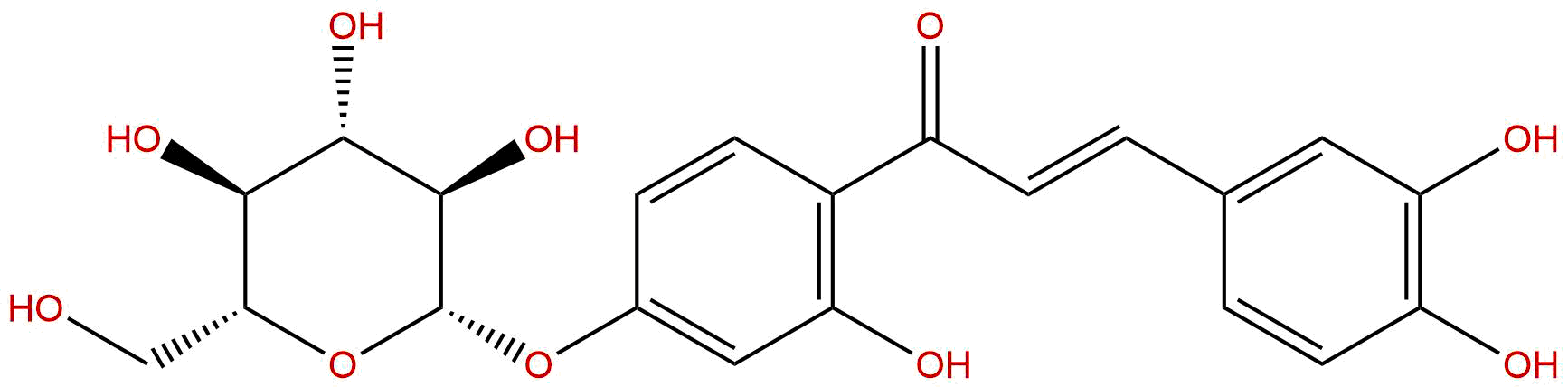
Coreopsin (CAS number: 499-29-6) is a natural product isolated from the flowers of the Coreopsis tinctoria Nutt plant. As a natural flavonoid compound with multiple biological activities, steviol glycosides have gradually gained attention in traditional medicine and modern pharmacological research. In recent years, with the in-depth study of its antiallergic, antihypertensive, anti diabetes and other pharmacological effects, Chrysanthemum morifolium has shown good drug development potential. This article aims to provide a systematic review of the chemical structure, physicochemical properties, plant sources, and extraction processes of chrysanthemums glycosides, combined with their pharmacological activities and mechanisms of action, to explore their medicinal properties and clinical application prospects, and to provide theoretical basis and reference for subsequent basic research and drug development.
The molecular formula of Jinji Chrysanthemum Glycoside is C21H2O_10, with a molecular weight of 434.3970. Its structure belongs to flavonoid glycoside derivatives, with a typical flavonoid core structure and glycosidic groups attached. The LogP value of this compound is 0.5571, indicating that it has moderate lipid solubility and a certain degree of water solubility (solubility of about 2.3092 mg/mL), which is beneficial for absorption and distribution in vivo. Its topological polar surface area (TPSA) is 177.1400 Å ², indicating a high molecular polarity that may affect its cell membrane permeability and blood-brain barrier penetration ability, which also showed low penetration in experiments.
Jinjianju glycoside does not have hERG channel inhibitory activity, and the Ames mutagenicity test result is negative (0.0), indicating its high safety and low risk of toxic side effects. In summary, the physical and chemical properties of Jinjijin conform to the characteristics of most natural flavonoids and have good potential for drug development.
Golden chicken chrysanthemum glycoside mainly comes from the flowers of Coreopsis tinctoria Nutt. Jinji Chrysanthemum is a plant of the Asteraceae family, widely distributed in North America and some parts of China. It is traditionally used as a herb and dye. Its flowers contain abundant flavonoids, among which the content of chrysanthemums is relatively high.
The extraction process usually adopts solvent extraction method, using ethanol or methanol as the extraction solvent, combined with ultrasonic assisted extraction or reflux extraction technology to improve the extraction rate. The extraction solution undergoes concentration, separation and purification steps, and commonly used methods include silica gel column chromatography, high-performance liquid chromatography (HPLC) separation, etc. The purified chrysanthemum glycoside can be structurally identified by techniques such as mass spectrometry and nuclear magnetic resonance (NMR). In recent years, green extraction techniques such as supercritical CO2 extraction and microwave-assisted extraction have also been attempted to be applied to the efficient extraction of chrysanthemums glycosides, aiming to improve yield and reduce environmental impact.
The research on Jin Ji Ju glycoside in the field of anti allergy is relatively in-depth. Allergic reactions involve multiple inflammatory mediators and immune cells, and steviol glycosides exert anti allergic effects by regulating relevant targets. Both in vitro and in vivo experiments have shown that chrysanthemum glycosides can inhibit degranulation of mast cells, reduce histamine release, and alleviate allergic symptoms. Its targets include 5-lipoxygenase (ALOX5), histamine H1 receptor (HRH1), interleukin-4 (IL4), IL5, IL13, IgE high affinity receptor (FCER1A), platelet activating factor receptor (TBXA2R), signal transducer and activator of transcription factor 6 (STAT6), and thymic stromal lymphopoietin (TSLP). Through multi-target regulation, Jinjianju glycoside effectively inhibits Th2 cell-mediated allergic inflammatory reactions and exhibits good anti allergic potential.
Chrysanthemum glycoside also showed positive effects in the study of hypertension and diabetes. Animal models have shown that chrysanthemums glycosides can lower blood pressure levels by regulating vasodilators and inhibiting oxidative stress. At the same time, it can promote insulin sensitivity, improve glucose metabolism disorder, and alleviate diabetes related pathological changes. Although the specific molecular mechanism still needs further clarification, its comprehensive effects of antioxidant, anti-inflammatory, and regulating metabolic pathways are considered the basis for its pharmacological effects.
In addition to the main functions mentioned above, chrysanthemum glycoside also exhibits various activities such as anti-inflammatory, antioxidant, and neuroprotective effects, indicating its potential for development in chronic inflammation, metabolic syndrome, and neurodegenerative diseases.
The multi-target mechanism of action of Jinjijin is the basis of its pharmacological activity. In terms of anti allergic effects, Jinjianju glycoside inhibits ALOX5 activity, reduces the production of leukotrienes, and lowers the release of inflammatory mediators; At the same time, blocking the HRH1 receptor inhibits histamine mediated allergic reactions. It regulates Th2 cytokines such as IL4, IL5, and IL13, and inhibits the spread and exacerbation of allergic inflammation. In addition, jinjiju glycoside downregulates FCER1A expression, reduces IgE mediated immune response, and decreases the activation of mast cells and eosinophils.
STAT6, as a key transcription factor in IL4 and IL13 signaling transduction, inhibits the differentiation and effects of Th2 cells by inhibiting the action of chrysanthemum glycosides, further reducing allergic inflammation. As an upstream inflammatory mediator, the inhibition of TSLP expression helps alleviate the occurrence and development of allergic diseases.
In terms of hypotension and anti diabetes, chrysotin may promote vasodilation by regulating the activity of nitric oxide (NO) synthase; Simultaneously inhibiting oxidative stress-related signaling pathways and protecting vascular endothelial function. Its regulation of glucose metabolism may involve the enhancement of the insulin signaling pathway and inhibition of inflammatory factors, improving insulin resistance.
The pharmacological parameters of Jinjijin indicate that it has good potential for drug development. The moderate molecular weight (434.3970) and LogP value (0.5571) indicate that it has good solubility and bioavailability in vivo. A higher TPSA (177.1400) may limit its oral absorption and blood-brain barrier penetration, but it helps with its distribution in the blood and peripheral tissues.
Its water solubility is moderate, which is conducive to formulation design and in vivo absorption. The hERG channel has no inhibitory effect and reduces the risk of cardiac toxicity. A negative Ames test indicates a low risk of genotoxicity and good safety.
At present, there is limited research on the pharmacokinetics of steviol glycosides. Preliminary data indicate that they are absorbed quickly orally, but their bioavailability is limited by first pass effects and the action of metabolic enzymes. In the future, it is necessary to conduct in-depth research on its metabolic pathways, half-life, and excretion methods in order to optimize the dosing regimen and formulation design.
As a natural flavonoid glycoside, Jinjijin has broad clinical application prospects due to its multi-target and multi mechanism pharmacological activities. Its potential in the field of anti allergy is particularly outstanding, and in the future, it can be developed as a natural medicine or adjuvant therapy for treating allergic diseases such as asthma, allergic rhinitis, eczema, etc. Combining modern pharmaceutical preparation technology, Jinjianju glycoside is expected to become a safe and effective new anti allergic drug.
In addition, chrysotin has shown a positive role in the adjuvant treatment of hypertension and diabetes, and can be used as a multi-target regulator in the future to improve the therapeutic effect of metabolism and cardiovascular diseases in combination with existing drugs. Its antioxidant and anti-inflammatory properties also provide new ideas for the treatment of neurodegenerative and chronic inflammatory diseases.
However, the clinical application of steviol glycosides still faces many challenges, including unclear pharmacokinetic properties, optimization of in vivo stability and bioavailability, and lack of systematic clinical trial data. Future research should focus on its pharmacokinetics, toxicological evaluation, and clinical efficacy, promoting its transformation from laboratory research to clinical application.
Golden chicken chrysanthemum glycoside, as a natural flavonoid glycoside derived from Coreopsis tinctoria, has become one of the hotspots in natural product pharmacology research due to its unique chemical structure and multi-target pharmacological activity. Its potential therapeutic value in anti allergy, hypertension, diabetes and other diseases provides an important scientific basis for the development of natural drugs. Although the current understanding of its mechanism of action and pharmacokinetics is not comprehensive, existing research results have fully demonstrated its good drug efficacy and safety. In the future, through interdisciplinary and in-depth research, it is expected to promote the clinical application of chrysanthemums glycosides and benefit a large number of patients.
In summary, as a natural product with multiple pharmacological activities, Jinjianju glycoside has significant potential to become a new type of natural medicine. Strengthening its basic research and clinical translation will open up new paths for the pharmacology of natural products and the treatment of related diseases.
