Introduction/Overview
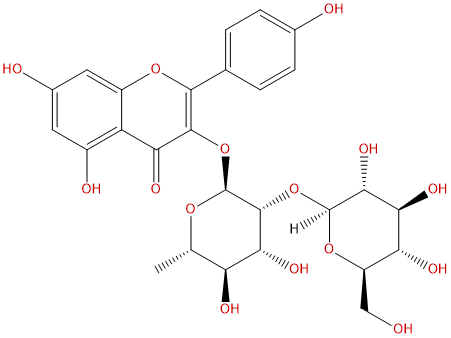
Flavonoids are the most widely distributed class of polyphenolic secondary metabolites in nature, and have attracted much attention for their diverse chemical structures and extensive biological activities. Kaempferol 3-O - β - D-glucopyranosyl - (1-2) - α - L-rhamnopyranoside (KG-R) is a disaccharide derivative of kaempferol, with a CAS number of 142451-65-8. As a member of the flavonol glycoside family, KG-R not only inherits the core pharmacological potential of kaempferol glycoside, such as antioxidant and anti-inflammatory properties, but its unique glycosylation modification may also significantly alter its physicochemical properties, bioavailability, and targeting specificity, thereby endowing it with novel biological activity. In recent years, with the advancement of natural product separation and identification technology and the deepening of molecular pharmacology research, KG-R has been discovered in various medicinal plants and has shown potential application value in anti-tumor, neuroprotection, cardiovascular protection, and metabolic disease intervention. This article aims to provide a systematic review of the chemical properties, plant sources, pharmacological activities, mechanisms of action, and pharmacological potential of KG-R, in order to provide comprehensive scientific references for the in-depth research and future development of this compound.
Chemical structure and physicochemical properties
The molecular formula of KG-R is C27H30O15, with a molecular weight of 594.5220. Its chemical structure is composed of Kaempferol as a glycoside, which is a classic flavonol skeleton with a 3,5,7,4 '- tetrahydroxy substitution pattern. The structural specificity of KG-R lies in its C-3 hydroxyl group being linked by a glycosidic bond to a disaccharide chain composed of glucose and xylose. Specifically, the disaccharide chain consists of a β - D-glucopyranose group connected to α - L-rhamnopyranose via a (1 → 2) glycosidic bond, while rhamnopyranose is linked to the 3-OH group of kaempferol. This glycosylation modification is a key factor affecting its water solubility and biological activity.
Based on its structure, KG-R exhibits typical physicochemical properties of flavonoid glycosides. The calculated lipid water partition coefficient (LogP) is -0.3242, indicating that the compound has hydrophilicity, mainly due to the presence of multiple hydroxyl and sugar groups. The topologically polar surface area (TPSA) is as high as 249.2000 Å ², further confirming its strong polarity characteristics. The theoretically calculated water solubility value is 2.8800 (LogS), indicating good solubility in water, which is beneficial for its extraction and formulation development in aqueous media. However, high polarity and high molecular weight also pose challenges to its ability to penetrate biofilms. Preliminary pharmacological predictions suggest that its ability to penetrate the blood-brain barrier is relatively low, which to some extent limits its direct effects on central nervous system diseases, but may also reduce potential central side effects. In terms of early safety warnings, the hERG inhibition prediction is negative, indicating a low risk of inducing QT interval prolongation in the heart; The Ames test predicted a value of 0.6, indicating that its mutagenic risk is in the category of concern but not high risk, but still needs experimental verification.
Plant sources and extraction methods
KG-R, as a flavonoid glycoside, is widely present in various plant families and genera, especially in traditional medicinal plants. Common plant sources include but are not limited to leguminous plants (such as Sophora), Rosaceae, Lamiaceae, Asteraceae, and some ferns. Its presence in plant bodies is often considered as a secondary defense substance for plants to cope with environmental stress such as ultraviolet radiation and pathogen infection.
The extraction of KG-R from plant materials usually follows the general extraction strategy for flavonoids. The solvent extraction method is the most commonly used method:
1. Solvent selection Due to the polarity of KG-R, methanol, ethanol, or their mixed solutions with water (such as 70-80% ethanol water solution) are commonly used as extraction solvents. These solvents can effectively dissolve glycosides.
2. Extraction technology In addition to traditional hot reflux extraction and impregnation methods, modern extraction techniques such as ultrasound assisted extraction (UAE) and microwave-assisted extraction (MAE) are widely used. These technologies utilize ultrasonic cavitation effect or microwave heating, which can significantly shorten extraction time, improve extraction efficiency, and reduce solvent consumption.
3. Purification and Separation After filtration and concentration, the crude extract needs to be further purified to obtain high-purity KG-R. Macroporous adsorption resins such as AB-8 and D101 are commonly used for initial enrichment, utilizing their adsorption desorption properties to separate flavonoid glycosides from impurities such as sugars and proteins. Then, the column chromatography technology is used for fine separation. The commonly used stationary phases include silica gel, reverse silica gel (such as ODS-C18) and dextran gel (such as Sephadex LH-20). High performance liquid chromatography (HPLC), especially preparative HPLC, is the final key step in obtaining high-purity KG-R monomers. C18 chromatography columns are commonly used, with methanol water or acetonitrile water (pH adjusted with a small amount of formic acid or acetic acid) as the mobile phase for gradient elution.
4. appraisal The isolated compounds need to be structurally confirmed by spectroscopic methods, including ultraviolet spectroscopy (UV), mass spectrometry (MS, such as ESI-MS), nuclear magnetic resonance spectroscopy (NMR, especially 1H NMR and 13C NMR), etc., and compared with literature data or standard samples to confirm their KG-R.
Pharmacological activity research
A large number of in vitro and in vivo studies have shown that KG-R has multiple biological activities, highlighting its potential as a multi-target lead compound.
-
Antioxidant and anti-inflammatory activities One of the core pharmacological foundations of KG-R is its powerful antioxidant capacity. The phenolic hydroxyl group in its molecular structure can effectively scavenge free radicals (such as DPPH, ABTS free radicals) and inhibit lipid peroxidation. This antioxidant effect is closely related to its anti-inflammatory effect. In cell models, KG-R can significantly inhibit the excessive production of nitric oxide (NO), prostaglandin E2 (PGE2), and pro-inflammatory cytokines (such as TNF - α, IL-6, IL-1 β) in macrophages (such as RAW264.7) induced by inflammatory stimuli such as lipopolysaccharide (LPS). Its anti-inflammatory effect is stronger than many simple flavonoid glycosides, suggesting that the sugar chain may enhance its interaction with cellular targets.
-
Antitumor activity KGR exhibits proliferation inhibitory activity against multiple cancer cell lines. It has been reported that it can inhibit the growth of breast cancer (such as MCF-7), liver cancer (such as HepG2), colon cancer (such as HT-29) and lung cancer cells. Its mechanism involves inducing cell cycle arrest (usually in G2/M phase or S phase) and triggering apoptosis in the mitochondrial pathway. It is worth noting that its toxicity to normal cells is usually low, showing a certain degree of selectivity.
-
Neuroprotective activity Despite limited blood-brain barrier penetration, KG-R has shown protective effects in cell models of neurodegenerative diseases such as Alzheimer's disease. It can alleviate neuronal damage induced by β - amyloid (A β) or glutamate, and improve cell survival rate. The mechanism may be related to reducing oxidative stress, inhibiting inflammasome activation, and regulating the expression of apoptosis related proteins. In addition, it may potentially improve cognitive function by inhibiting acetylcholinesterase (AChE) activity.
-
Cardiovascular protective activity KG-R has protective potential for the cardiovascular system. Research has shown that it can protect vascular endothelial cells from oxidative low-density lipoprotein (ox LDL) or high glucose induced damage, maintain nitric oxide synthase (eNOS) activity, promote NO production, and thus improve vasodilation function. In animal models, it may help to reduce the risk of atherosclerosis and alleviate myocardial ischemia-reperfusion injury.
-
Antibacterial and antiviral activity KG-R exhibits moderate inhibitory effects on certain bacteria (such as Staphylococcus aureus, Escherichia coli) and fungi. In recent years, studies have also found that it may have inhibitory effects on the replication of certain viruses (such as influenza virus, herpes simplex virus), and its mechanism may be related to interfering with virus adsorption or entry into host cells.
-
Other activities The preliminary study also suggests that KG-R has certain activity in anti diabetes (improving insulin resistance), liver protection (resisting chemical liver injury), etc.
Mechanism of action and molecular targets
The multiple pharmacological activities of KG-R stem from its regulatory effects on multiple intracellular signaling pathways, and its mechanism of action is complex and interrelated.
-
Nuclear factor kappa B (NF - κ B) signaling pathway This is the core pathway through which KG-R exerts anti-inflammatory and partially anti-tumor effects. KG-R can inhibit the phosphorylation and degradation of I κ B α under inflammatory stimulation, thereby preventing the translocation of NF - κ B p65 subunit to the nucleus and downregulating the expression of a series of pro-inflammatory factors (COX-2, iNOS, TNF - α, IL-6, etc.) and anti apoptotic proteins.
-
Mitogen activated protein kinase (MAPK) pathway KG-R can regulate the phosphorylation levels of MAPK family members such as ERK, JNK, p38. Under different cellular environments and concentrations, it may selectively inhibit or activate these kinases, thereby affecting cell proliferation, differentiation, and apoptosis decisions.
-
Phosphatidylinositol 3-kinase/protein kinase B (PI3K/Akt) pathway This pathway plays a critical role in cell survival, growth, and metabolism. KG-R often exhibits inhibition of excessive phosphorylation (activation) of Akt in tumor cells, thereby promoting the activation of pro apoptotic proteins (such as Bad, Bax) and inhibiting the function of anti apoptotic proteins (such as Bcl-2, Bcl xL), ultimately inducing apoptosis.
-
Nuclear factor E2 related factor 2/antioxidant response element (Nrf2/ARE) pathway In terms of antioxidant stress, KG-R can promote the transfer of Nrf2 from cytoplasm to nucleus, activate ARE, and upregulate the expression of a series of phase II detoxifying enzymes and antioxidant proteins (such as HO-1, NQO1, SOD, CAT), enhancing the cell's antioxidant defense ability.
-
Cell cycle and apoptosis executing proteins KG-R upregulates cyclin dependent kinase inhibitors (CDKI) such as p21 and p27, downregulates Cyclin B1 and CDK1, leading to cell cycle arrest. At the same time, it regulates the balance of Bcl-2 family proteins, activates caspase-9 and caspase-3, triggers a cascade reaction, and leads to cell apoptosis.
-
Enzyme inhibition KG-R can directly inhibit the activity of certain enzymes, such as acetylcholinesterase (AChE), alpha glucosidase, as well as inflammation related cyclooxygenase-2 (COX-2) and inducible nitric oxide synthase (iNOS).
These multi-target mechanisms together constitute the molecular basis of KG-R's pleiotropic pharmacological activity, and also reflect the characteristic of "multi-component multi-target" action of natural products.
Evaluation of drug properties and pharmacokinetics
Although KG-R exhibits excellent biological activity in vitro, its drug like and pharmacokinetic (PK) properties in vivo are key factors determining its successful development as a drug.
-
absorb As a highly polar glycoside compound, the oral absorption of KG-R may face challenges. Its absorption site is mainly in the small intestine, possibly through sodium dependent glucose transporter 1 (SGLT1) in small intestinal epithelial cells or passive diffusion (depending on the degree of deglycosylation). But the first pass effect is significant, as β - glucosidase and rhamnosidase in the gut microbiota and intestinal mucosal epithelial cells may hydrolyze it into kaempferol glycosides or monoglycosides, thereby altering its biological activity. The oral bioavailability of the prototype drug is expected to be low.
-
distribution Due to its high TPSA and hydrophilicity, the distribution of KG-R in the body may be limited to blood and extracellular fluid, with weak ability to penetrate tissues, especially adipose tissue and cross the blood-brain barrier. This limits its effect on certain tissue targets, but may also lead to more controllable systemic distribution and lower tissue accumulation toxicity.
-
Metabolism The main metabolic pathways of KG-R in the body are hydrolysis (deglycosylation) and II binding reactions (glucuronidation, sulfation). The liver and intestines are the main metabolic sites. The hydrolysis product kaempferol and its monoglycosides may have different activity and toxicity profiles from their original form. Combined reactions greatly increase its water solubility and promote excretion.
-
excretion Metabolites are mainly excreted in urine through the kidneys, and some prototypes or conjugates may also enter the intestine through bile and be excreted in feces.
-
Optimization strategy for drug properties In order to improve the pharmacological properties of KG-R, future research may consider the following strategies:
- Structural modification Chemical modification (such as esterification or alkylation) of the sugar moiety, or synthesis of prodrugs, to enhance their lipid solubility and membrane penetration.
- Formulation technology Using nano formulation technology such as liposomes, polymer nanoparticles, solid lipid nanoparticles, etc., KG-R is encapsulated or loaded to improve its stability, enhance absorption, achieve targeted delivery, and delay metabolism.
- combination therapy Combined use with P-glycoprotein inhibitors or metabolic enzyme inhibitors may increase their bioavailability.
At present, there is still a relative lack of complete preclinical pharmacokinetic research data on the KG-R system, which is a key gap that must be filled before it can move towards development and application.
Clinical application prospects and prospects
KG-R, as a natural flavonoid glycoside with multi-target activity, has shown broad application prospects in the prevention and treatment of various chronic diseases.
-
Potential therapeutic areas:
- Chronic inflammatory diseases Such as arthritis, inflammatory bowel disease (IBD), asthma, etc., their strong anti-inflammatory and antioxidant properties can be used as adjuvant treatment.
- Tumor adjuvant therapy and chemoprevention It can be used as a sensitizer or detoxifier for traditional radiotherapy and chemotherapy, or for chemoprevention in high-risk populations, utilizing its multi-target and low toxicity characteristics.
- Diseases related to metabolic syndrome It may be useful in the prevention and treatment of diabetes and its complications (such as diabetes nephropathy, neuropathy), and nonalcoholic fatty liver disease (NAFLD).
- Neurodegenerative diseases Although BBB penetration is poor, it may still have beneficial effects on Alzheimer's disease and Parkinson's disease by modifying formulations or targeting peripheral inflammation (an important source of neuroinflammation).
- cardiovascular disease: It is used as a preventive health care component or an auxiliary treatment drug for atherosclerosis and hypertension.
-
Development Challenge:
- Resources and Synthesis Obtaining high-purity KG-R from plants in large quantities is costly and requires the development of efficient and green chemical synthesis or biosynthetic methods (such as synthetic biology and enzyme catalysis).
- Pharmacokinetic bottleneck As mentioned earlier, its poor bioavailability and rapid metabolism are the main obstacles to its clinical translation.
- Depth of mechanism of action At present, research mainly focuses on phenomenon description and classical pathway validation, and further exploration is needed to determine the precise molecular targets (such as directly acting proteins), weight relationships between different activities, and potential off target effects.
- Systematic Toxicological Evaluation Lack of comprehensive preclinical safety evaluation data on long-term toxicity, reproductive toxicity, genetic toxicity, etc.
-
Future research directions:
- In depth mechanism research Use chemical biology methods such as affinity fishing, molecular docking, gene knockout/knock in to identify its direct target.
- Research on PK/PD Integration Conduct systematic pharmacokinetic pharmacodynamic (PK/PD) correlation studies in animals to clarify their in vivo mode of action and concentration range.
- Innovative formulation development Vigorously invest in research on targeted delivery systems based on nanotechnology to improve their efficacy and reduce side effects.
- Preclinical and clinical research Complete standardized preclinical safety evaluation and gradually advance to early clinical trials to verify its human safety and preliminary effectiveness.
Conclusion
Kaempferol-3-O-glucose (1-2) rhamnoside (KG-R) is a unique and diverse flavonoid glycoside molecule endowed by nature. From a chemical structure perspective, its disaccharide chain modification is a key bridge connecting hydrophilicity, biological recognition, and activity. At the pharmacological level, it exhibits multidimensional biological activities such as anti-inflammatory, antioxidant, anti-tumor, neuroprotective, and cardiovascular protection by regulating multiple key signaling pathways such as NF - κ B, MAPK, PI3K/Akt, and Nrf2, demonstrating the potential for multi-target therapy with "one stone, multiple birds". However, its inherent pharmaceutical deficiencies, particularly poor oral bioavailability and rapid in vivo metabolism, pose the main challenges on its path from "active compounds" to "candidate drugs". Future research should focus on elucidating its precise target through chemical biology, breaking through its delivery bottleneck using modern pharmaceutical technologies, and conducting systematic preclinical and clinical evaluations. Only through in-depth interdisciplinary cooperation can the medicinal value of KG-R be fully explored, making it a promising new drug for treating complex chronic diseases or an important source of functional health ingredients, and contributing to the cause of human health.