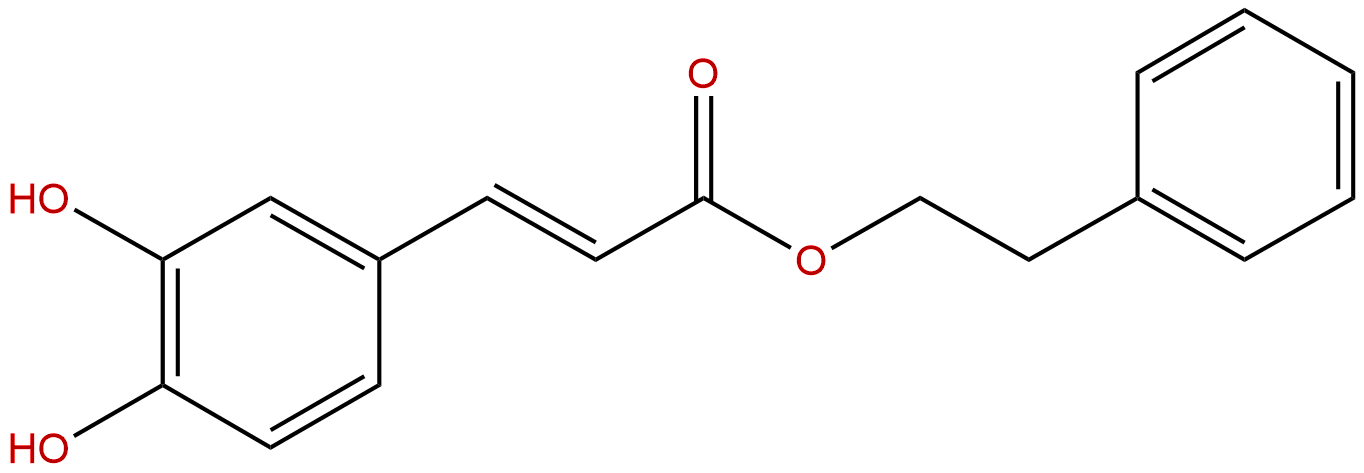


Product name: Caffeic acid phenethyl ester
Synonym name:
Catalogue No.: SBP03991
Cas No.: 104594-70-9
Formula: C17H16O4
Mol Weight: 284.311
Botanical Source:
Type of Compound:
Purity: 95%~99%
Analysis Method: HPLC-DAD or/and HPLC-ELSD
Identification Method: Mass, NMR
Packing: Brown vial or HDPE plastic bottle
Storage: Store in a well closed container, protected from air and light. Put into refrigerate or freeze for long term storage.
Whenever possible, you should prepare and use solutions on the same day. However, if you need to make up stock solutions in advance, we recommend that you store the solution as aliquots in tightly sealed vials at -20℃. Generally, these will be useable for up to two weeks.
The product could be supplied from milligrams to grams
Inquire for bulk scale.
For Reference Standard and R&D, Not for Human Use Directly.
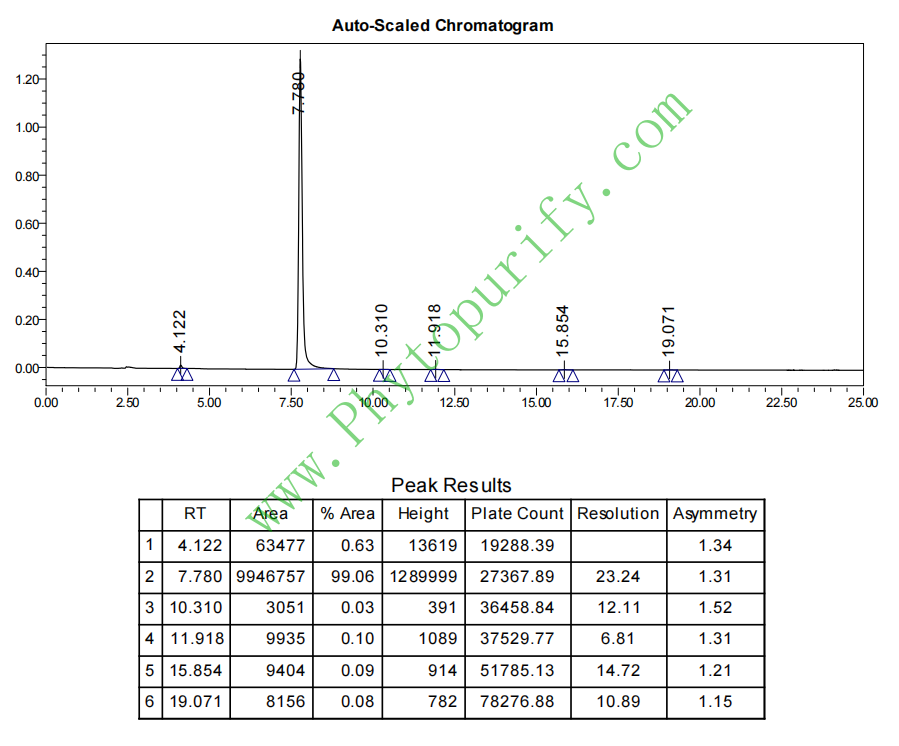
HPLC of Caffeic acid phenethyl ester
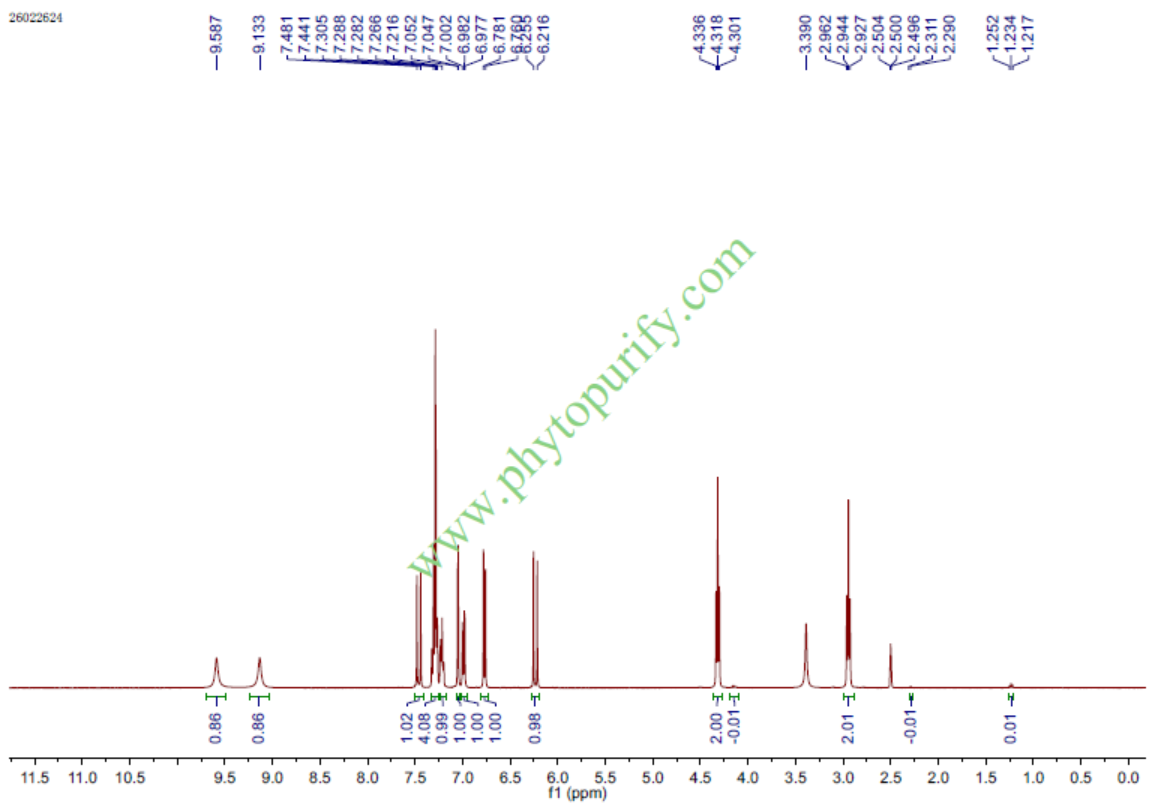
HNMR of Caffeic acid phenethyl ester
Storage conditions:Short-term storage at 2~8℃, long-term storage at -20 ~ -80℃
66.7600
3.5387
3.5260
.0306
5.3002
7.0637
High
92.8372
1.9624
Yes
Yes
Yes
No
No
Yes
0.0
No
Yes
Yes
Yes
As an important treasure trove for drug discovery and development, natural products continue to provide modern medicine with lead compounds with novel structures and diverse activities. Among them, caffeic acid phenyl ester (CAPE), as a natural phenolic compound derived from propolis, has attracted widespread attention in the field of pharmacology research since its biological activity was discovered. CAPE is a derivative formed by the ester bond between caffeic acid and phenylethanol, with a CAS number of 104594-70-9. Early research mainly focused on its antioxidant properties as one of the main active ingredients in propolis. With the deepening of research, its pharmacological activity spectrum has been greatly expanded, and it has been confirmed that CAPE has significant multiple biological activities such as anti-inflammatory, antioxidant, anti-tumor, antibacterial, antiviral, immune regulation, and neuroprotection. Of particular importance, CAPE has been identified as an effective inhibitor of the nuclear factor kappa B (NF - κ B) signaling pathway, providing a key explanation for its core anti-inflammatory and anti-tumor mechanisms. Given that chronic inflammation is a common pathological basis for various major diseases such as cancer, neurodegenerative diseases, metabolic syndrome, and autoimmune diseases, CAPE targeting key inflammatory pathways such as NF - κ B exhibits enormous therapeutic potential. This article aims to systematically review the chemical properties, plant sources, pharmacological activities, molecular mechanisms of action, pharmacological characteristics, and clinical application prospects of CAPE, in order to provide comprehensive academic references for the in-depth development and transformation research of this natural product.
The molecular formula of caffeic acid phenethyl ester is C ₁₇ H ₁₆ O ₄, with a molecular weight of 284.3110 g/mol. Its chemical structure consists of two parts: one is the parent nucleus of caffeic acid (3,4-dihydroxycinnamic acid), which endows the molecule with catechol structure and is its main antioxidant active center; The second is the phenethyl alcohol (phenethyl alcohol) moiety, which is connected to the carboxyl group of caffeic acid through ester bonds. This structure combines hydrophilic phenolic hydroxyl groups and hydrophobic phenethyl groups, determining its unique physicochemical properties.
From the analysis of the parameters related to drug formation, the logarithm of the lipid water partition coefficient (LogP) of CAPE is 3.5387, indicating that it has moderate to high lipophilicity, which is beneficial for its penetration of cell membranes but may also affect its water solubility. Its topological polar surface area (TPSA) is 66.7600 Å ², which is relatively small. The water-soluble data is 0.0306 mg/mL, which is a difficult to dissolve compound, posing a challenge to its formulation development. It is worth noting that the predictive model shows that CAPE has a high blood-brain barrier permeability, which provides an important material basis for its application in central nervous system diseases such as neuroinflammation, cerebral ischemia, Alzheimer's disease, etc. In the preliminary safety screening, CAPE did not show hERG potassium channel inhibitory activity (hERG inhibition: No), indicating a low potential risk of cardiac toxicity; The Ames test result is 0.0, indicating that there is no mutagenicity in this testing system, providing preliminary support for its safety.
CAPE is not widely present in the plant kingdom, and its most famous and primary natural source is propolis, especially poplar type propolis. Propolis is a gelatinous substance formed by bees collecting resin from plant spores or tree trunks and mixing it with their own secretions. It is used to repair beehives and serves as a natural antibacterial barrier. The specific plant resin collected by bees (such as the buds of European black poplar) contains abundant caffeic acid and its derivatives, which may form CAPE under the action of bee enzymes or during storage.
Therefore, the extraction of CAPE mainly starts from propolis raw materials. The conventional extraction methods include:
1. Solvent extraction method The most commonly used method. Usually, organic solvents such as ethanol (such as 70% -95%), methanol, or ethyl acetate are used for extraction, reflux, or ultrasound assisted extraction of propolis powder. Ethanol is the most commonly used due to its safety, low cost, and high efficiency in extracting phenolic substances. The crude extract is filtered and concentrated to obtain a CAPE rich extract.
2. Purification and Separation To further obtain high-purity CAPE, it is necessary to separate and purify the crude extract. Chromatography techniques such as silica gel column chromatography and preparative high-performance liquid chromatography (HPLC) are commonly used. By optimizing the mobile phase (usually methanol water or acetonitrile water system, adding a small amount of acid such as formic acid or acetic acid to improve peak shape), effective separation of CAPE from other propolis components (such as quercetin, kaempferol, other caffeic acid esters, etc.) can be achieved.
3. chemical synthesis Chemical synthesis is an important pathway for obtaining CAPE to meet the demands of extensive pharmacological research and potential drug development. The typical synthetic route is through Steglich esterification or DCC/DMAP mediated coupling reaction, in which protected caffeic acid (such as acetylated protected phenolic hydroxyl group) is condensed with phenylethanol, and finally deprotected to obtain CAPE. The synthesis method ensures stable supply and purity of the compound.
A large number of in vitro and in vivo studies have confirmed that CAPE has broad and powerful pharmacological activities, with its core functions revolving around anti-inflammatory and antioxidant effects, and extending to multiple disease fields.
The multiple pharmacological activities of CAPE stem from its precise regulation of multiple intracellular signaling pathways, among which inhibition of the NF - κ B pathway is considered its most core mechanism of action.
Core mechanism: Inhibition of NF - κ B signaling pathway NF - κ B is a key transcription factor that regulates inflammation, cell survival, proliferation, and immune response. In the resting state, NF - κ B (usually a p50/p65 dimer) binds to the inhibitory protein I κ B and exists in the cytoplasm. When stimulated by TNF - α, IL-1 β, or LPS, the I κ B kinase complex (IKK, including IKK α, IKK β, IKK γ) is activated, where IKBKB(IKKβ) The activity is crucial. Activated IKK phosphorylates I κ B, leading to its ubiquitination degradation and release of NF - κ B. NF - κ B immediately enters the nucleus, binds to specific DNA sequences, and initiates TNF、IL-6、NOS2 (inducible nitric oxide synthase)、PTGS1/2 (cyclooxygenase) Waiting for the transcription of a large number of pro-inflammatory factors and mediators.
CAPE can directly or indirectly inhibit this process. Research has shown that CAPE can be inhibited by IKBKB The activity of NF - κ B inhibits its phosphorylation and degradation, thereby blocking NF - κ B in the cytoplasm. In addition, CAPE can also inhibit the NF - κ B subunit RELA(p65) Nuclear translocation and its binding activity with DNA. By blocking the NF - κ B pathway, CAPE significantly downregulated the expression of key inflammatory cytokines such as TNF - α and IL-6 upstream.
Regulating other key inflammatory and apoptotic targets:
Antioxidant mechanism In addition to directly clearing free radicals, CAPE can also activate cellular defense systems. It can enhance the overall antioxidant capacity of cells by activating the Nrf2/ARE pathway, upregulating the expression of phase II detoxifying enzymes such as quinone oxidoreductase and heme oxygenase-1, as well as antioxidant proteins.
In summary, CAPE exerts its powerful anti-inflammatory, antioxidant, and various biological activities through multi-target and multi-level network regulation, especially by inhibiting core hub pathways such as NF - κ B and STAT3.
Although CAPE has excellent pharmacological activity, there are certain challenges in its drug development, especially in terms of pharmacokinetic properties, which must be faced during its conversion into drugs.
The broad pharmacological activity of CAPE presents promising prospects for its application in multiple clinical fields, but its transformation still requires solid research and promotion.
Potential therapeutic areas:
Challenges and Prospects:
Caffeic acid phenethyl ester, as a natural active molecule derived from propolis, occupies an important position in natural product pharmacology research due to its excellent and multiple pharmacological activities, especially its clear identity as an effective inhibitor of the NF - κ B pathway. From a chemical structure perspective, it cleverly combines the antioxidant caffeic acid core with the lipophilic phenethyl group, laying the material foundation for its biological activity. In terms of its mechanism of action, it precisely intervenes in core signaling axes such as NF - κ B and STAT3, and regulates multiple targets such as inflammasomes and ion channels, constructing a synergistic network that exerts a wide range of effects including anti-inflammatory, antioxidant, anti-tumor, and neuroprotective effects. However, its poor pharmacokinetic properties, such as low oral bioavailability and easy hydrolytic metabolism, are currently the main obstacles restricting its clinical drug conversion. Future research should focus on improving its delivery efficiency using modern pharmaceutical technologies and validating its therapeutic potential through in-depth preclinical and clinical studies. At the same time, using CAPE as a template for structural optimization and developing new generation derivatives is also highly promising. In summary, caffeic acid phenethyl ester is not only a natural product molecule with important research value, but also a bridge connecting traditional propolis applications with modern precision pharmacology research. Its deep development is expected to provide new candidate strategies and drug leaders for the prevention and treatment of various major diseases.
