| Catalog No | Package | Original Price | Price | Inventory | Quantity | Operating |
|---|---|---|---|---|---|---|
| BP4612-5mg | 5mg | $135.00 | Sign in |
|


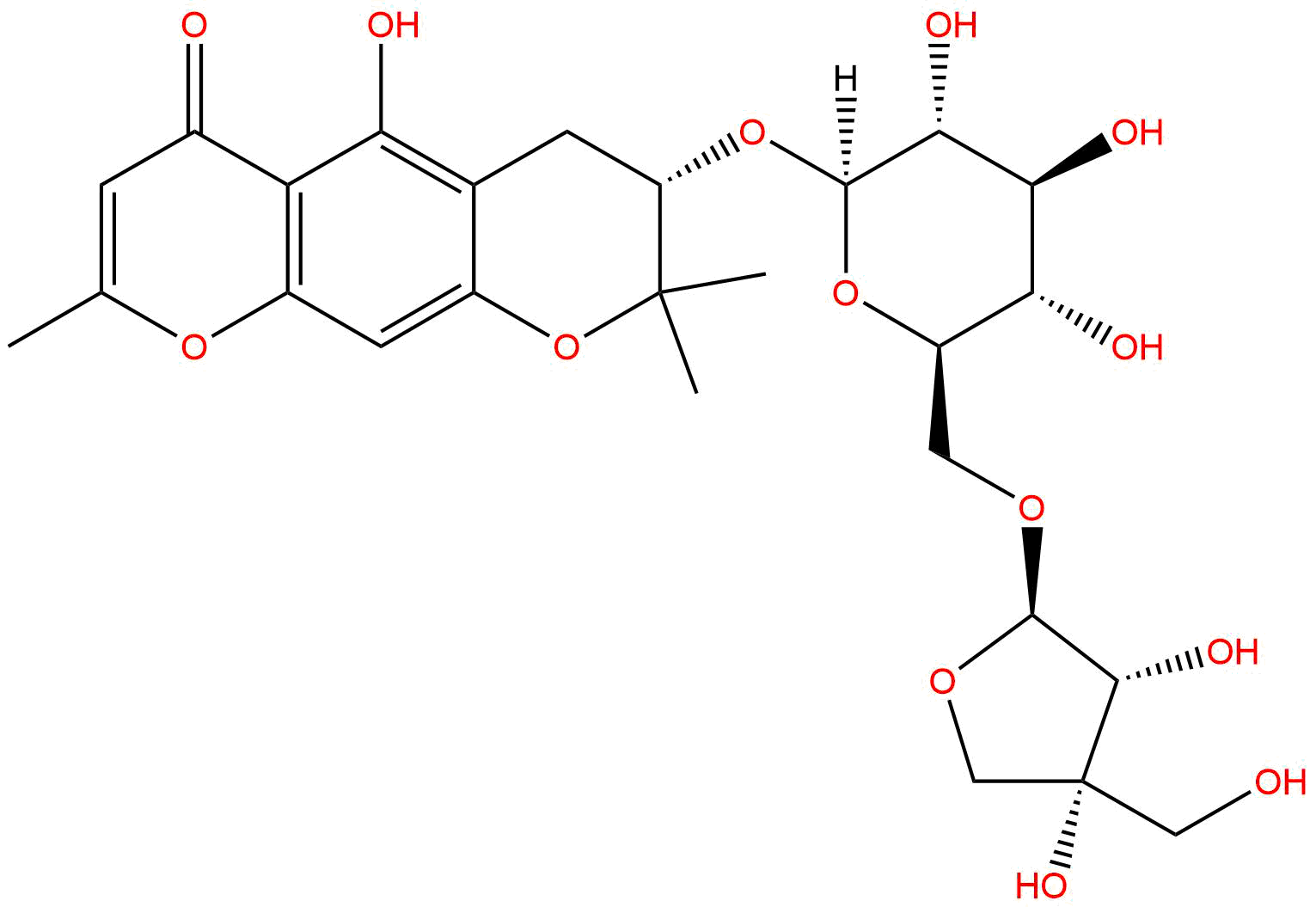
Product name: 6"-apiosyl sec-O-glucosylhamaudol
Synonym name:
Catalogue No.: BP4612
Cas No.: 2254096-95-0
Formula: C26H34O14
Mol Weight: 570.544
Botanical Source:
Type of Compound: Flavonoids
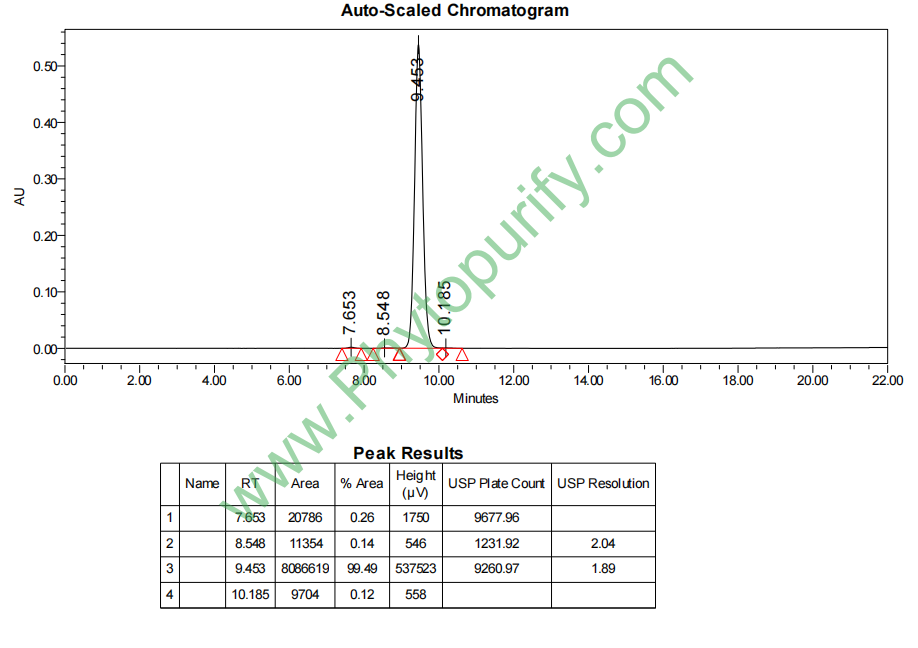
Purity: 95%~99%
Analysis Method: HPLC-DAD or/and HPLC-ELSD
Identification Method: Mass, NMR
Packing: Brown vial or HDPE plastic bottle
Storage: Store in a well closed container, protected from air and light. Put into refrigerate or freeze for long term storage.
Whenever possible, you should prepare and use solutions on the same day. However, if you need to make up stock solutions in advance, we recommend that you store the solution as aliquots in tightly sealed vials at -20℃. Generally, these will be useable for up to two weeks.
The product could be supplied from milligrams to grams
Inquire for bulk scale.
For Reference Standard and R&D, Not for Human Use Directly.
HPLC of 6"-apiosyl sec-O-glucosylhamaudol
Storage conditions:Short-term storage at 2~8℃, long-term storage at -20 ~ -80℃
217.9700
-.2193
-.2265
1.2337
.6019
.3169
Low
73.3637
5.1215
Yes
No
Yes
No
No
No
1.5
Yes
No
Yes
No
Natural products, as an important source of drug discovery and development, play an irreplaceable role in the history of human disease prevention and treatment. Especially complex glycoside compounds derived from traditional medicinal plants have always been a hot topic in new drug development due to their structural diversity and extensive biological activity. 6 "- β - D-Apinosyl sec-O-glucylhamadol (ASG), CAS number 225409-95-0, is a coumarin glycoside compound with a novel structure isolated and identified from traditional Chinese medicine in recent years. Its structure is on the classic coumarin skeleton, connecting glucose and apiose units through unique secondary glycosidic bonds. This glycosylation modification mode not only distinguishes it from common coumarin glycosides, but also profoundly affects its physicochemical properties and biological activity.
Haimao phenolic glycosides are usually associated with anti-inflammatory, analgesic, neuroprotective and other activities, and are one of the material bases for various traditional Chinese medicines such as Fangfeng and Duhuo to exert therapeutic effects. As a new member of this class of ingredients, ASG's unique "6" - position celery glycosylation "structure suggests that it may have special pharmacological activity and mechanism of action, providing a new chemical entity for the development of novel therapeutic drugs. At present, systematic pharmacological research and drug evaluation of ASG are still in their infancy, but preliminary data has shown its potential application value in the fields of inflammation, pain, and oxidative stress-related diseases. This article aims to systematically review the chemical structure, plant origin, pharmacological activity, mechanism of action, and pharmacological characteristics of ASG, in order to provide comprehensive scientific references for the in-depth research and future development of this compound.
The chemical structure core of ASG is the coumarin parent nucleus - hamadol. Haimaofen belongs to linear furan coumarins, and its basic skeleton is composed of benzo [a] - pyranone. The structural specificity of ASG lies in its glycosylation sites and connection modes. Unlike common coumarin-7-O-glycosides, the sugar chain of ASG is linked to the secondary hydroxyl group (sec OH) of coumarin glycoside, forming a rare sec-O-glycoside bond. This sugar chain consists of one molecule of β - D-glucose and one molecule of β - D-apiose. Glucose is connected to the secondary hydroxyl group of the glycoside through its first carbon, while apiose is further connected to the 6 "- hydroxyl group of glucose through its first carbon, forming the terminal modification of the" 6 "- β - D-apiose" group, hence the name 6 "- β - D-apiose".
This structural feature determines its unique physicochemical properties. Its molecular formula is C26H34O14 and its molecular weight is 570.5440. The calculated lipid water partition coefficient (LogP) is -0.2193, indicating that the compound has high hydrophilicity, which is mainly attributed to the two hydrophilic sugar groups (glucose and apiose) introduced into the molecule and the polarity of the coumarin core itself. The topologically polar surface area (TPSA) is as high as 217.9700 Å ², further confirming its strong polarity characteristics, which can affect its transmembrane absorption and distribution. The predicted water solubility value is 1.2337 (usually indicating good solubility), which is consistent with high TPSA and negative LogP values. These physicochemical parameters suggest that ASG may have good water solubility in conventional formulations, but its oral bioavailability may face challenges as it is not easily able to penetrate the biofilm composed of lipid bilayers.
ASG mainly comes from various traditional medicinal plants in the Apiaceae and Araliaceae families. According to current literature reports, it is used in traditional Chinese medicine for wind prevention(Saposhnikovia divaricata)The content in the roots and rhizomes is relatively high. Windproof, as an anti surface medicine, is commonly used to treat colds, headaches, and rheumatism. The research on its active ingredients mainly focuses on chromogens and ketones, but coumarins are also important active components. In addition, in plants of the same family such as Angelica sinensis(Angelica pubescens)There may also be structurally similar or precursor substances in the waiting list.
The extraction of ASG from plant materials usually follows the conventional process of natural product chemistry, but it needs to be optimized for its high polarity. The main steps are as follows:
1. Extract Methanol, ethanol, or ethanol water mixed solvents are often used for reflux extraction or ultrasound assisted extraction to fully extract polar glycoside components.
2. Enrichment and Coarse Separation After the extract is concentrated under reduced pressure, the resulting paste is often separated using macroporous adsorption resins (such as D101, AB-8), and eluted with a gradient of water and different concentrations of ethanol. ASG is usually enriched in the 20% -40% ethanol elution site.
3. Separation and purification Further purification relies on the combination of multiple chromatographic techniques. Silica gel column chromatography, reverse phase silica gel column chromatography (such as ODS-C18), dextran gel column chromatography (such as Sephadex LH-20) and preparative high performance liquid chromatography (HPLC) are commonly used. Given the strong polarity of ASG, reverse phase chromatography (using acetonitrile water or methanol water as mobile phase) is a key purification method. High performance liquid chromatography-mass spectrometry (HPLC-MS) and nuclear magnetic resonance spectroscopy (NMR, especially 1H-NMR, 13C-NMR, HSQC, HMBC) are the core techniques for ultimately identifying its structure, particularly determining the sugar linkage position and configuration.
4. Analysis and identification At present, the qualitative and quantitative analysis of ASG in plants mainly relies on high-performance liquid chromatography diode array detector (HPLC-DAD) or liquid chromatography-mass spectrometry (LC-MS) techniques, by comparing retention time, UV spectrum, and molecular ion peaks/characteristic fragment ions with reference standards.
Although in-depth research on ASG is still underway, multiple pharmacological action directions worthy of attention have been revealed based on the known activity and preliminary pharmacological screening of its parent nucleus structure (coumarin glycoside).
anti-inflammatory activity This is one of the most highly regarded activities of ASG. In cell models such as lipopolysaccharide induced RAW264.7 macrophages, ASG can dose dependently inhibit the production of nitric oxide (NO), prostaglandin E2 (PGE2), and pro-inflammatory cytokines such as tumor necrosis factor - α, interleukin-1 β, and interleukin-6. Its anti-inflammatory strength may be superior to that of unglycosylated sophoroside, suggesting that the terminal sophoroside may enhance its interaction with certain targets or improve cellular uptake.
Analgesic effect Closely related to anti-inflammatory activity. ASG showed significant analgesic effects in the phase II response (inflammatory pain) of acetic acid-induced mouse writhing test and formalin induced pain test. The analgesic mechanism may not be purely central, but rather related to the inhibition of the production and release of peripheral inflammatory mediators, thereby reducing the sensitivity of pain receptors.
Antioxidant and neuroprotective activities Coumarin compounds generally have the ability to scavenge free radicals. Preliminary studies have shown that ASG exhibits moderate activity in in vitro chemical antioxidant models, such as DPPH and ABTS free radical scavenging experiments. Of greater concern is that in the PC12 cell or primary neuron injury models induced by hydrogen peroxide or glutamate, ASG pretreatment can improve cell survival rate, reduce lactate dehydrogenase leakage and intracellular reactive oxygen species accumulation, suggesting its neuroprotective potential and potential intervention in oxidative stress-related neurological diseases such as ischemic stroke and Alzheimer's disease.
Other potential activities Based on the activity speculation of homologous compounds, ASG may also have anti allergic, immune regulating, vasodilatory and other effects, but these need to be confirmed by subsequent experiments.
The pharmacological activity of ASG is closely related to its regulation of key intracellular signaling pathways. The current research reveals that the mechanism of action mainly revolves around anti-inflammatory and antioxidant pathways.
Inhibition of NF - κ B signaling pathway This is the core mechanism by which ASG exerts anti-inflammatory effects. In the resting state, nuclear factor kappa B binds to its inhibitory protein I κ B and exists in the cytoplasm. When cells are stimulated by LPS and other stimuli, the I κ B kinase complex is activated, leading to phosphorylation and degradation of I κ B, thereby releasing NF - κ B (mainly p65/p50 dimer). NF - κ B enters the nucleus and initiates transcription of numerous inflammatory mediator genes. Research has shown that ASG can inhibit the phosphorylation and degradation of I κ B α, prevent nuclear translocation of NF - κ B p65 subunit, and subsequently downregulate the expression of inducible nitric oxide synthase, cyclooxygenase-2, and various inflammatory cytokines.
Regulating the MAPK signaling pathway The mitogen activated protein kinase pathway is another important inflammatory regulatory pathway. ASG has been shown to inhibit LPS induced phosphorylation activation of JNK, ERK, and p38 MAPK in RAW264.7 cells. The inhibition of MAPK pathway and the inhibition of NF - κ B pathway have a synergistic effect, jointly weakening the inflammatory response.
Activate Nrf2/ARE antioxidant pathway Nuclear factor E2 related factor 2 is the central regulator of cellular antioxidant stress response. Under oxidative stress, Nrf2 dissociates from its partner protein Keap1, enters the nucleus, binds to antioxidant response elements, and initiates transcription of phase II detoxifying enzymes and antioxidant enzymes such as heme oxygenase-1, quinone oxidoreductase 1, and superoxide dismutase. Preliminary evidence suggests that ASG may enhance cellular antioxidant defense by promoting Nrf2 nuclear translocation and upregulating the expression of proteins such as HO-1, which may be an important molecular basis for its neuroprotective effect.
Potential molecular targets In addition to the aforementioned pathway proteins, the specific direct targets of ASG, such as receptors and enzymes, are still under exploration. The coumarin mother nucleus and special sugar chains in its structure may enable it to interact with certain kinases, phosphatases, or inflammation related enzymes (such as 5-lipoxygenase, phosphodiesterase), which requires in-depth exploration through techniques such as molecular docking, surface plasmon resonance, and chemical proteomics.
Based on the provided pharmacological parameters and existing knowledge, conduct a preliminary evaluation of the pharmacological properties of ASG:
Absorption and oral bioavailability High TPSA (217.97) and negative LogP value (-0.219) indicate that ASG has strong hydrophilicity and poor lipid solubility. This indicates that its passive transmembrane diffusion ability is weak, and its absorption through the gastrointestinal tract after oral administration may be poor, with expected low bioavailability. Its absorption may depend on active transporters in the intestine, such as glucose transporters, but the specific mechanism is unclear. Formulation strategies such as making phospholipid complexes, nanocrystals, or using absorption enhancers may be necessary means to improve their oral absorption.
distribution The predicted blood-brain barrier permeability is "low", which is consistent with the rule that high polarity molecules are difficult to penetrate tightly packed brain capillary endothelial cells. This means that ASG may not easily enter the central nervous system, which is a challenge for treating central nervous system diseases, but also reduces the risk of central side effects. Its distribution may be more limited to hydrophilic chambers such as blood and extracellular fluid.
Metabolism and excretion As a glycoside compound, ASG is likely to be first hydrolyzed by glycosidases in intestinal microbiota and/or intestinal mucosal epithelial cells in vivo, undergoing deglycosylation reactions to produce secondary glycosides or aglycones such as coumarin. The activity, toxicity, and pharmacokinetic behavior of these metabolites may be completely different from the prototype drug, constituting its "prodrug" characteristics. The prototype drug and its metabolites are mainly excreted from urine through the kidneys.
Preliminary Safety Assessment:
Current status of pharmacokinetic research Currently, there are very few publicly reported studies on the in vivo pharmacokinetics of ASG systems, such as blood concentration time curves, absolute bioavailability, tissue distribution, and excretion studies in rats or mice. Establishing sensitive and specific biological analysis methods (such as LC-MS/MS) to detect ASG and its major metabolites in plasma and tissues is a prerequisite for future in-depth research on their in vivo fate, dose design, and optimization of dosing regimens.
As a novel natural coumarin glycoside, ASG's clinical application prospects are mainly based on the pharmacological basis of anti-inflammatory, analgesic, and neuroprotective effects, but it also faces many challenges.
Potential application directions:
1. Inflammatory diseases Can serve as a potential lead compound for anti-inflammatory drugs, used for the treatment of chronic inflammatory diseases such as rheumatoid arthritis, osteoarthritis, and inflammatory bowel disease. Its multi-target (NF - κ B, MAPK) anti-inflammatory mechanism may bring better therapeutic effects.
2. pain management Especially adjuvant therapy for inflammatory pain and neuropathic pain. Compared with traditional nonsteroidal anti-inflammatory drugs, it may have different mechanisms of action and better gastrointestinal safety (to be verified).
3. Neurological disorders Although BBB permeability is poor, its neuroprotective effect suggests that it may indirectly benefit from peripheral anti-inflammatory effects in response to strong peripheral and central inflammatory reactions following stroke and traumatic brain injury. Local delivery through nasal administration and other routes can also be explored for the treatment of neurodegenerative diseases.
Challenges faced and future research directions:
1. Optimization of drug properties The primary task is to address the issue of low oral bioavailability. It is necessary to comprehensively utilize pharmacology (new drug delivery systems), prodrug design (modifying sugar groups or mother nuclei to moderately increase lipid solubility) and other methods for structural optimization or formulation improvement.
2. In depth mechanism and target mining Using chemical biology methods to identify its direct target of action, elucidating its "structure activity target" relationship, and providing a basis for rational drug design.
3. Comprehensive preclinical evaluation After completing preliminary pharmacological validation, it is necessary to conduct standardized pharmacokinetic, safety pharmacology, toxicology (acute toxicity, long-term toxicity, reproductive toxicity, etc.), and confirmed genetic toxicity studies to comprehensively evaluate its development risks.
4. Research on the Material Basis of Traditional Chinese Medicine Clarify the content and extraction process stability of ASG in original medicinal materials such as windproof, as well as its contribution and changes in compound compatibility, providing scientific basis for quality control and efficacy interpretation of related traditional Chinese medicines.
6 "- β - D-apigenin glycosides (ASG) are a characteristic member of the natural coumarin glycoside family, and their unique 6" - apigenin glycosylated secondary glycoside structure endows them with distinct physicochemical characteristics and potential multiple pharmacological activities. Current research has preliminarily revealed their potential applications in anti-inflammatory, analgesic, antioxidant, and neuroprotective fields, and their mechanism of action is closely related to inhibiting the NF - κ B and MAPK inflammatory pathways and activating the Nrf2 antioxidant defense system. However, its strong polarity and predicted low oral bioavailability, low blood-brain barrier permeability, and the urgent need for experimental confirmation of genetic toxicity risks are key obstacles that it must face and overcome on the road to drug development. Future research needs to focus on improving drug properties through medicinal chemistry and pharmacology strategies, while delving into the molecular targets and action networks, and conducting systematic and standardized preclinical safety and efficacy evaluations. The research on ASG not only provides valuable lead compounds for the development of new anti-inflammatory and neuroprotective drugs, but also adds new content to our in-depth understanding of the pharmacological substance basis and scientific connotation of traditional Chinese medicine such as windbreak. With the continuous deepening of interdisciplinary research, this natural molecule is expected to demonstrate its unique value in the field of drug discovery.
