| Catalog No | Package | Original Price | Price | Inventory | Quantity | Operating |
|---|---|---|---|---|---|---|
| SBP00788-5mg | 5mg | $350.00 | Sign in |
|


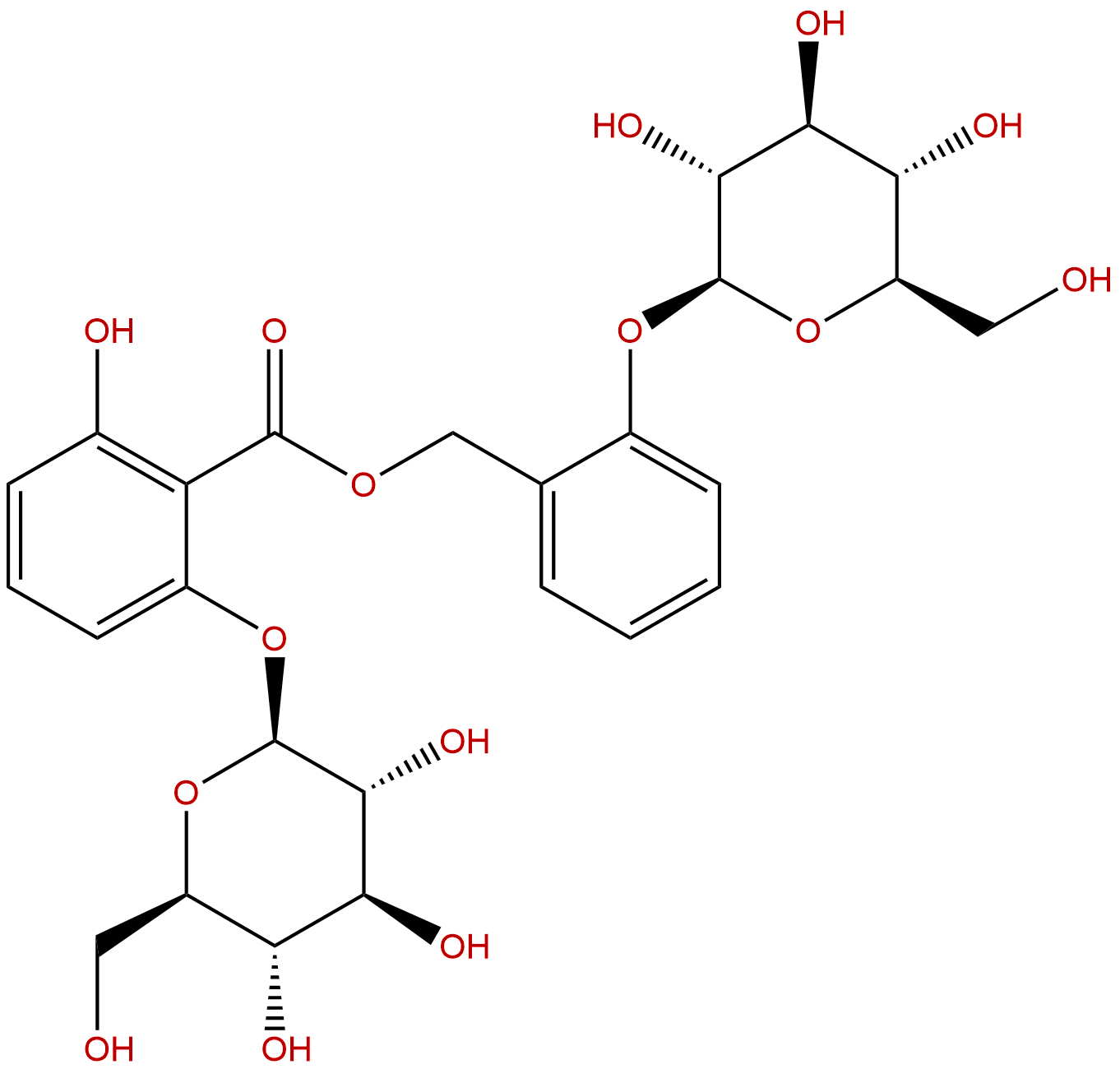
Product name: Henryoside
Synonym name:
Catalogue No.: SBP00788
Cas No.: 72021-23-9
Formula: C26H32O15
Mol Weight: 584.527
Botanical Source:
Physical Description: Powder
Type of Compound: Phenols
Purity: 95%~99%
Analysis Method: HPLC-DAD or/and HPLC-ELSD
Identification Method: Mass, NMR
Packing: Brown vial or HDPE plastic bottle
The product could be supplied from milligrams to grams. Inquire for bulk scale.
We provide solution to improve the water-solubility of compounds, thereby facilitating the variety of activity tests and clinic uses.
For Reference Standard and R&D, Not for Human Use Directly.
Storage conditions:Short-term storage at 2~8℃, long-term storage at -20 ~ -80℃
245.2900
-.6049
-.6156
12.8713
.6747
.0577
Low
68.7636
4.4734
Yes
No
No
No
No
No
0.0
Yes
No
Yes
Yes
Natural products, as an important source of drug discovery, play an irreplaceable role in the long history of human struggle against diseases. From the classic analgesic morphine to the antimalarial drug artemisinin, plant secondary metabolites continue to provide valuable lead compounds for modern drug development due to their unique chemical diversity and biological activity. Among numerous biologically active natural products, salidroside and its derivatives have attracted much attention due to their extensive pharmacological effects. Salicylic acid is a phenolic glycoside compound that is a natural precursor to the famous antipyretic, analgesic, and anti-inflammatory drug aspirin (acetylsalicylic acid). Its history can be traced back to the use of willow bark in ancient Greece. However, the existence of salidroside in the natural world goes far beyond simple glycosides. Its complex acylation and glycosylation modifications endow this class of compounds with more diverse and specialized biological activities.
Henrinoside, as a structurally unique acylated salidroside diglucoside, is an outstanding representative in this field. This compound was originally derived from plants of the Lonicera genus in the Lonicera family Viburnum veitchii The isolation and identification of the plant, also known as Henryoside, was carried out in the western Hubei region. Its name "Henryoside" also comes from the plant's epithet. Epiphyllum is an ornamental and medicinal shrub native to central and western China, with a long history of application in folk medicine. Modern pharmacological research has revealed that the glycoside of Camellia oleifera in western Hubei exhibits significant antispasmodic and uterine contraction properties, suggesting its potential application value in regulating smooth muscle function. More importantly, breakthroughs have been made in recent years in the study of its anti-inflammatory activity, revealing the complex mechanism of action of this compound in regulating inflammatory response through multiple targets and pathways, especially in intervening in key inflammatory signaling pathways such as IL-6/STAT3 and NF - κ B, as well as regulating NLRP3 inflammasome activity. These findings not only deepen our understanding of the material basis of traditional plant-based medicines, but also provide highly promising candidate molecules for the development of new anti-inflammatory drugs, especially for chronic inflammatory diseases and pain management.
This review aims to comprehensively and systematically review the research progress of aucubin in western Hubei. The article will first introduce its unique chemical structure and physicochemical properties, followed by an explanation of its plant origin and extraction methods. It will focus on summarizing its pharmacological activities in spasmolytic, uterine contraction, and anti-inflammatory aspects, and deeply explore its mechanism of action and key molecular targets. In addition, its pharmacokinetic characteristics and development potential will be evaluated based on its pharmacological parameters, and finally its clinical application prospects will be discussed. Through the writing of this article, it is hoped that it can provide a comprehensive and in-depth academic reference for researchers in the fields of natural product chemistry, pharmacology, and drug development regarding the glycoside of Camellia oleifera in western Hubei.
The chemical structure of Henryoside is the cornerstone of its biological activity. From a chemical classification perspective, it belongs to acylated salidroside diglucoside. Its core skeleton is Salicin, which is the β - D-glucopyranose glycoside of saligenin. However, the unique feature of Hubei Xiangchacai glycoside lies in the further modification and acylation of its sugar moiety. Specifically, its structural features can be described as follows: a salicin molecule, with a specific hydroxyl group (usually the 6th hydroxyl group) of its glucose group connected to a second glucose group, forming a Gentiobiose structure, which is a β - D-glucopyranose group - (1 → 6) - β - D-glucopyranose glycoside. More importantly, a hydroxyl group on this disaccharide chain (usually located at the 2nd or 6th position of the terminal glucose) is acylated by an aromatic organic acid, typically a phenylpropanoid compound such as caffeic acid or Ferulic acid, through ester bonding. This complex structure endows E'xi Xiangchacai glycoside with unique physicochemical properties and biological activity.
From the molecular formula, the molecular weight of E-xi Xiangchacai glycoside is 584.5270 Da, which is a medium-sized natural product. Its structure is rich in multiple hydroxyl groups (from sugar and phenolic hydroxyl groups) as well as ester bonds, which determine its polar physicochemical characteristics. Its lipophilic water partition coefficient (LogP) is -0.6049, which is a negative value, indicating that the compound has a high degree of hydrophilicity and its solubility in water is much greater than its solubility in lipophilic solvents such as octanol. This characteristic is highly consistent with its extremely low blood-brain barrier (BBB) penetration ability (assessed as "low"). Hydrophilic molecules are difficult to cross the dense blood-brain barrier composed of lipid bilayers, so the distribution and direct effects of aucubin in the central nervous system may be very limited, and its pharmacological effects should mainly occur in peripheral tissues.
Topological Polarity Surface Area (TPSA) is an important parameter for measuring the ability of molecules to form hydrogen bonds, closely related to oral absorption and membrane permeability. The TPSA of Hubei Xiangchacai glycoside is as high as 245.2900 Å ², far exceeding the commonly considered upper limit of 140 Å ² for oral medications. Such a high TPSA means that the molecule needs to overcome a huge energy barrier to penetrate the cell membrane, and its passive diffusion ability is extremely poor. However, this does not completely negate its oral bioavailability, as certain transporters such as glucose transporters GLUTs or organic anion transporters OATPs may mediate their transmembrane transport. Its calculated water solubility is 12.8713 mg/mL, belonging to highly water-soluble compounds, which provides convenience for its existence and distribution in solution form in vivo. In addition, key safety evaluations of the drug's properties showed that Echigoside has no inhibitory effect on hERG potassium channels (related to cardiac toxicity) (hERG inhibition: No), and the result in the Ames test (bacterial recovery mutation test, used to detect mutagenicity) was 0.0, indicating that it has no significant genetic toxicity risk in this testing system. These physicochemical properties and preliminary safety data provide positive signals for subsequent drug development, but also suggest that their high polarity and high molecular weight are the main challenges faced by oral administration, which may require the use of specific drug delivery systems or structural modifications to improve their membrane permeability.
The plant source of Henryoside in western Hubei is clear, mainly from the Caprifoliaceae family and the Fabaceae genus(Viburnum)Separated from plants, especially Western Hubei bean curd(Viburnum veitchii C. H. Wright), This plant, also known as Henry's Cramp, is a deciduous shrub native to mountainous forest edges or shrubs at elevations of 1000-2000 meters in central and western China (Hubei, Sichuan, Shaanxi, Gansu, etc.). This plant not only has ornamental value (its inflorescences are beautiful, and its autumn leaves turn red), but in traditional folk medicine, its roots, stems, leaves, or fruits are often used to treat rheumatism, bruises, menstrual disorders, and various spasmodic pains. It is precisely based on modern scientific exploration of folk medicine experience that researchers have discovered the active ingredient of Echigoside from this plant. In addition, further research may also be conducted on other plants of the Fabaceae genus, such as the southern Fabaceae(Viburnum fordiae)Or coral trees(Viburnum odoratissimum)The presence of this compound was detected in the middle of the experiment, but Quercus acutissima is still its main and most classic source.
Extracting and purifying aucubin from plant materials requires a systematic approach that combines classical natural product chemistry with modern chromatographic techniques. Due to the high water solubility and polarity of the compound, traditional organic solvent extraction methods (such as ethanol or methanol reflux), although effective, will simultaneously extract a large amount of other polar impurities, such as sugars, tannins, and other glycosides. Therefore, a typical extraction and separation process typically includes the following key steps:
Raw material pretreatment and extraction Collect fresh branches, leaves, or root bark of Quercus acutissima from western Hubei, dry them in the shade or at low temperatures, and then crush them. Usually used Ethanol water mixed solvent(such as 70% or 80% ethanol) for heating reflux extraction or cold soaking extraction. The addition of ethanol helps to disrupt the cell membrane, promote the dissolution of glycosides, and inhibit the large-scale leaching of water-soluble polysaccharides. After the extraction solution is concentrated under reduced pressure to recover ethanol, an aqueous phase extract is obtained.
Preliminary purification and liquid-liquid extraction Suspend the aqueous extract in water and perform liquid-liquid extraction using different polarity organic solvents such as petroleum ether, ethyl acetate, n-butanol, etc. Due to its strong polarity, the glycoside of western Hubei tea is mainly distributed in N-butanol phase In the middle. This step can effectively remove fat soluble pigments, chlorophyll, low polarity glycosides, and some medium polarity impurities, allowing the target compound to be enriched in the n-butanol extract.
Column chromatography separation The components of n-butanol extract are still complex and require multi-step column chromatography separation. Common fixed phases include:
Purification and identification After the above chromatographic steps, it is usually possible to obtain high purity of Hubei Xiangchacai glycoside. Its structural identification mainly relies on modern spectroscopic techniques, including:
The entire extraction and separation process requires precise operation to preserve the natural structure of the compound to the maximum extent possible, avoiding hydrolysis of ester bonds or breakage of glycosidic bonds.
The pharmacological activity research of E-xi Xiangchacai glycoside originated from the modern pharmacological validation of its traditional use in treating spastic pain and gynecological diseases. With the deepening of research, its anti-inflammatory activity has gradually become the focus and demonstrated multiple pharmacological potentials.
This is the earliest reported biological activity of Erxi Xiangchacai glycoside. Research has shown that this compound has significant effects on various isolated smooth muscle specimens Spasmodic effect For example, in guinea pig models of ileal spasm induced by acetylcholine, histamine, or barium chloride, aucubin can dose dependently inhibit strong smooth muscle contractions, exhibiting a direct myogenic relaxation effect similar to papaverine like. This effect does not depend on specific neurotransmitter receptors, suggesting that it may be achieved by interfering with calcium ion mobilization or phosphorylation of contractile proteins within smooth muscle cells. In addition, in the experiment of rat uterine smooth muscle in vitro, Hubei Xiangchacai glycoside showed completely different effects Uterine Contraction Characteristics It can enhance the rhythmic contraction of uterine smooth muscle. This bidirectional regulatory effect (intestinal relaxation vs. uterine contraction) is highly noteworthy, suggesting that its mechanism of action is tissue-specific and may be related to differences in receptor subtypes or signaling pathways expressed on different smooth muscles. This uterine contraction provides a scientific basis for its traditional use in treating menstrual disorders and promoting postpartum uterine involution. However, this effect also suggests that there may be risks associated with its use during pregnancy and requires strict evaluation.
In recent years, the most popular pharmacological activity of Hubei Xiangchacai glycoside is its strong anti-inflammatory effect Multiple in vitro and in vivo experiments have confirmed its anti-inflammatory efficacy. In classic inflammation models, such as the lipopolysaccharide (LPS) - stimulated macrophage model (e.g. RAW264.7 cells), Ezixiaocain can significantly inhibit the production of pro-inflammatory mediators such as nitric oxide (NO), prostaglandin E2 (PGE2), and various key pro-inflammatory cytokines (such as tumor necrosis factor - α TNF - α, interleukin-6 IL-6, interleukin-1 β IL-1 β). In animal models, Hubei Xiangchacai glycoside showed significant inhibitory effects on acute inflammation models such as xylene induced mouse ear swelling and carrageenan induced rat foot swelling. Its effects were comparable or better than positive control drugs (such as indomethacin), and the gastrointestinal side effects may be smaller. In addition, in chronic inflammation models such as adjuvant arthritis, the compound has also shown the ability to reduce joint swelling and lower inflammation scores. These studies have collectively established the potential of Hubei Xiangchacai glycoside as a natural anti-inflammatory active molecule with development potential.
Based on its anti-inflammatory and smooth muscle regulating properties, E'xi Xiangchacai glycoside may also have other related pharmacological activities. For example, its analgesic effect may be related to inhibiting the release of inflammatory mediators such as PGE2 and TNF - α, thereby reducing inflammatory pain. Its potential regulatory effects on TRPV1 and TRPA1 channels (see target section below) also suggest its potential role in neuropathic pain or itching. In addition, due to the close relationship between oxidative stress and inflammation, this compound may also have certain antioxidant activity, but its ability to directly scavenge free radicals still needs further verification.
The pharmacological activity of E-xi Xiangchacai glycoside, especially its anti-inflammatory effect, is achieved by acting on multiple key molecular targets and signaling pathways, reflecting the characteristic of natural products with multiple targets and pathways. According to existing research, its core mechanism mainly revolves around the following aspects:
Nuclear factor kappa B (NF - κ B) is the core transcription factor in inflammatory response. In the resting state, NF - κ B binds to its inhibitory protein I κ B and exists in an inactive form in the cytoplasm. When stimulated by inflammatory factors such as LPS and TNF - α, I κ B kinase (IKK, encoded by IKBKB) is activated, phosphorylating I κ B, leading to its ubiquitination degradation and release of NF - κ B (usually the p50/RELA p65 heterodimer). Activated NF - κ B translocates into the nucleus, initiating the transcription of a series of pro-inflammatory genes such as TNF - α, IL-6, IL-1 β, COX-2, iNOS, etc. Research has shown that E-xi Xiangchacai glycoside can significantly inhibit the activity of IKK β (IKBKB), thereby blocking the phosphorylation and degradation of I κ B, preventing the nuclear translocation of NF - κ B, and ultimately downregulating the expression of various pro-inflammatory factors. This is one of the core mechanisms of its anti-inflammatory effect.
Interleukin-6 (IL-6) is a multifunctional cytokine that plays a critical role in both acute and chronic inflammation. After binding to its receptor, IL-6 activates JAK kinase, which in turn phosphorylates signal transducer and activator of transcription factor 3 (STAT3). Phosphorylated STAT3 forms dimers and enters the nucleus, regulating the expression of target genes, including various pro-inflammatory and pro proliferative genes. It has been confirmed that E-xi Xiangchacai glycoside can reduce the production of IL-6 and directly or indirectly inhibit the phosphorylation level of STAT3. By blocking the IL-6/STAT3 signaling axis, this compound can effectively inhibit the inflammatory cascade and immune cell activation mediated by this pathway, which is of great significance for the treatment of IL-6 driven diseases such as rheumatoid arthritis and inflammatory bowel disease.
NLRP3 inflammasome is an important component of the innate immune system, and its abnormal activation is associated with various inflammatory diseases. The assembly and activation of NLRP3 inflammasomes require two signals: initiation signals (such as LPS activation of NF - κ B, upregulation of NLRP3 and pro-IL-1 β expression) and activation signals (such as ATP, sodium urate crystals, reactive oxygen species, etc.). After activation, NLRP3 recruits ASC and pro-caspase-1 to form a complex, leading to self splicing activation of caspase-1 (encoded by the CASP1 gene). Activated caspase-1 cleaves pro-IL-1 β and pro-IL-18 into mature IL-1 β and IL-18 and releases them, while also inducing a pro-inflammatory cell death called "pyroptosis". Hubei Xiangchacai glycoside may inhibit NLRP3 inflammasome through multiple pathways: on the one hand, it reduces the expression of NLRP3 and pro-IL-1 β by inhibiting the NF - κ B pathway (inhibiting the initiation signal); On the other hand, it is possible to inhibit the assembly and activation of inflammasomes (suppress activation signals) by clearing reactive oxygen species or directly interacting with NLRP3 protein, thereby reducing the maturation and release of IL-1 β.
The antispasmodic and analgesic effects of E-xi Xiangchacai glycoside may be related to its regulation of transient receptor potential (TRP) ion channels. TRPV1 and TRPA1 are non selective cation channels expressed on sensory neurons, which can be activated by various inflammatory mediators such as capsaicin, mustard oil, hypothermia, and mechanical stimulation, mediating pain and itch signals. Research has shown that E-xi Xiangchacai glycoside may act as an antagonist of TRPV1 and TRPA1, blocking their activation by inflammatory mediators and thus producing analgesic effects. In addition, the compound can also inhibit the activity or expression of cyclooxygenase-1 (PTGS1/COX-1) and inducible nitric oxide synthase (NOS2/iNOS). Inhibition of COX-1 can reduce the synthesis of prostaglandins (such as PGE2), which is related to their antispasmodic effects (prostaglandins are important smooth muscle contraction mediators) and anti-inflammatory effects (PGE2 is a potent pro-inflammatory substance). Inhibiting iNOS reduces the production of a large amount of nitric oxide (NO), which has cytotoxic and pro-inflammatory effects.
In summary, the western Hubei Xiangchacai glycoside acts simultaneously on IKBKB(IKKβ)、RELA(NF-κB p65)、STAT3、CASP1、TRPV1、TRPA1、PTGS1(COX-1)、NOS2(iNOS) And regulation IL-6、TNF By waiting for cytokines, a complex and multi-level network of anti-inflammatory and smooth muscle regulation is formed. This multi-target synergistic mode of action may have advantages over single target drugs in treating complex diseases such as chronic inflammation and pain, and is less likely to develop resistance.
It is necessary to rigorously evaluate the drug like and pharmacokinetic (ADME) properties of E'xi Xiangchacai glycoside from an active natural product to a candidate drug. Based on its physical and chemical parameters and existing research, we can analyze its development potential and challenges.
Pharmaceutical advantages:
1. High water solubility One of its biggest advantages is its water solubility of 12.87 mg/mL. This greatly facilitates the development of formulations, whether they are oral liquids, injections, or topical preparations, without the need for complex solubilization techniques.
2. Good preliminary safety: No hERG inhibitory activity and negative Ames test, preliminarily ruling out two common early drug development barriers, cardiotoxicity and genotoxicity. This has laid a solid foundation for subsequent toxicology research.
3. Clear pharmacological activity and mechanism Its activity in relieving spasms, uterine contractions, and anti-inflammatory is clear, and its mechanism of action (multi-target) is clear, providing scientific basis for indication selection.
Challenges in drug development and pharmacokinetic characteristics:
1. Extremely low membrane permeability This is the biggest challenge faced by western Hubei Xiangchacai glycoside. Its LogP is -0.6 and TPSA is as high as 245 Å ², indicating that it is almost impossible to cross the cell membrane through passive diffusion. This directly leads to its Oral bioavailability may be extremely low After oral administration, most drugs may not be absorbed by small intestinal epithelial cells and are directly excreted with feces. Even if a small amount is absorbed, it may mainly rely on transporters (such as glucose transporters SGLT1 or GLUT2, which are structurally similar to glycosides). However, this transport efficiency is usually limited and there is saturation and competition inhibition.
2. Low blood-brain barrier penetration This characteristic determines that it is not suitable for development as a central nervous system drug. However, its anti-inflammatory and antispasmodic effects mainly target peripheral tissues such as the intestine, uterus, and joints, so low BBB penetration may actually be an advantage in reducing central side effects.
3. Metabolic stability As a glycoside, Erxixiangchacai glycoside may face two main metabolic pathways in the body: one is hydrolyzed by β - glucosidase produced by gut microbiota in the intestine, producing aglycones (salicylate or its derivatives) and glycosyl moieties; Secondly, it is hydrolyzed by esterases in the liver, breaking acyl groups such as caffeoyl. These metabolic reactions may lead to a shorter half-life of their prototype drugs, and further research is needed to determine whether the metabolites are active or toxic. For example, the salicylate produced by hydrolysis can be further oxidized to salicylic acid, which has classic antipyretic, analgesic, and anti-inflammatory activities. Therefore, Hubei Xiangchacai glycoside may be a Prodrug Some of its in vivo pharmacological effects may come from its metabolites.
4. Consideration of administration route Due to the difficulty of oral absorption, development Non oral administration route Perhaps it is a more realistic choice. For example:
- Injection administration Intravenous or intramuscular injection can completely bypass the absorption barrier and directly enter the systemic circulation, exerting the effects of its prototype drug or active metabolite. Suitable for emergencies such as acute inflammation, spasmodic pain, or postpartum hemorrhage.
- Local administration: For local diseases such as skin inflammation, joint pain or hemorrhoids, gel, creams or patches for external use have been developed. Their high water solubility can make them reach effective concentration locally, while avoiding systemic exposure and side effects.
- Mucosal administration For example, oral mucosa patch, rectal suppository or nasal spray, the permeability of mucosa in these parts is relatively good, and can avoid the first pass effect of liver, which is a potential strategy to improve bioavailability.
Summary The medicinal properties of Hubei Xiangchacai glycoside exhibit typical "double-edged sword" characteristics. Its high water solubility and initial safety are significant advantages, but its extremely poor membrane permeability is the main bottleneck. Future drug development strategies should focus on Improve bioavailability Unfolding, for example: designing prodrugs (such as esterifying phenolic or sugar hydroxyl groups to increase lipid solubility), using nanocarriers (such as liposomes, polymer nanoparticles) for encapsulation, or developing non oral dosage forms. At the same time, a thorough study of its metabolic pathways and metabolites in vivo must be conducted to comprehensively evaluate its potential as a new drug candidate.
Based on the unique pharmacological activity spectrum of Hubei Xiangchacai glycoside, which has both antispasmodic, uterine contraction and strong anti-inflammatory effects, its clinical application prospects are broad, but it also faces clear challenges. Future research and development directions should focus on the following areas with high conversion potential:
1. Gynecology and obstetric diseases
its Uterine contraction effect This is its most direct application direction. Drugs can be developed to treat postpartum uterine involution and postpartum hemorrhage. Compared with the currently used oxytocin in clinical practice, Ezixiangchacai glycoside may have different mechanisms of action and fewer side effects. Meanwhile, it Spasmodic effect Can be used to relieve primary dysmenorrhea (caused by spasmodic contractions of uterine smooth muscle). A drug with dual effects of uterine contractions (promoting emptying) and spasmolysis (relieving pain) will be highly attractive in the field of gynecology. However, its use during pregnancy must be strictly excluded, and highly selective formulations must be developed.
2. Digestive system diseases
Its powerful Spasmodic effect It is suggested that it can be used to treat diseases characterized by smooth muscle spasm, such as irritable bowel syndrome (IBS), gastrointestinal spasm, and biliary colic. Its anti-inflammatory activity may have therapeutic value for inflammatory bowel diseases such as Crohn's disease and ulcerative colitis. Developed into oral sustained-release formulations or rectal suppositories, allowing them to exert their effects locally in the intestine, effectively relieving symptoms while avoiding potential problems caused by systemic absorption. Its low BBB penetration is also an advantage here, which can avoid the addictive side effects of central analgesics.
3. Inflammatory diseases and pain management
Its multi-target anti-inflammatory mechanism enables it to be used in the treatment of chronic inflammatory diseases, such as Rheumatoid arthritis, osteoarthritis There is potential in this aspect. It can be developed into a topical preparation (such as joint patch or gel) for local anti-inflammatory and analgesia, or used for acute attack by injection. In addition, its antagonistic effects on TRPV1 and TRPA1 enable it to Neuropathic pain, inflammatory pain The treatment may have unique value. Compared with traditional nonsteroidal anti-inflammatory drugs (NSAIDs), its mechanism of action does not rely on a single COX inhibition and may have better gastrointestinal safety.
4. Future research directions
In order to promote the clinical translation of Hubei Xiangchacai glycoside, future research should focus on the following aspects:
- In depth pharmacokinetic research Comprehensive in vivo ADME studies must be conducted, particularly in terms of absolute bioavailability after oral administration, metabolite identification (especially active metabolites), tissue distribution, and excretion pathways. This is the key to determining its administration route and dosage form design.
- Drug delivery system development Given its poor membrane permeability, developing efficient drug delivery systems is of utmost importance. For example, utilizing Phospholipid complex Improve its lipid solubility; Preparation Nano liposomes or polymeric micelle Realize targeted delivery and sustained release; design Prodrug(such as acetylation or phosphorylation of phenolic hydroxyl groups) to improve oral absorption.
- toxicological evaluation On the basis of good preliminary safety, it is necessary to conduct systematic preclinical toxicology studies on long-term toxicity, reproductive toxicity, immune toxicity, etc. Especially its uterine contraction effect needs to be evaluated for its impact on fetal and pregnancy outcomes.
- Study on Structure Activity Relationship Through the synthesis of a series of analogues of Hubei Xiangchacai glycosides, the effects of sugar group quantity, acyl group type, and position on their antispasmodic, uterine contraction, and anti-inflammatory activities were studied, in order to search for derivatives with stronger activity, higher selectivity, and better pharmacokinetic properties.
- Accurate positioning of indications Based on its mechanism of action and pharmacokinetic characteristics, the most likely indication for successful clinical development should be selected. For example,Topical treatment of inflammatory pain locally or Injection for postpartum hemorrhage This may be a more feasible starting point than oral treatment for systemic inflammation.
Henrinoside, a unique acylated salicin diglucoside derived from the traditional medicinal plant Eucommia ulmoides, vividly illustrates the transformation process from folk experience to modern science. This review systematically summarizes the research progress of this compound in terms of chemical structure, plant origin, pharmacological activity, mechanism of action, and pharmacological evaluation. Its structure is complex and exquisite, and its physical and chemical properties are characterized by high water solubility and low membrane permeability. In terms of pharmacological activity, it exhibits remarkable "dual" characteristics - it can both relieve spasms and uterine contractions, while possessing strong multi-target anti-inflammatory effects. By regulating multiple key pathways such as NF - κ B, IL-6/STAT3, NLRP3 inflammasome, and TRP ion channels, it achieves precise regulation of inflammation and pain.
Despite the challenge of low oral bioavailability in the development of medicinal properties, the high water solubility, good initial safety, and unique and clear pharmacological activity of Ezi Xiangchacai glycoside provide a solid foundation and clear direction for its further drug development. Future research should focus on overcoming absorption barriers through advanced drug delivery technologies or prodrug designs, and conducting in-depth pharmacokinetic and toxicological studies. We have reason to believe that with the continuous deepening of research, Hubei Xiangchacai glycoside and its derivatives have the potential to be developed into innovative drugs with Chinese independent intellectual property rights in multiple therapeutic fields such as gynecology, gastroenterology, rheumatology, and pain management, contributing to the cause of human health. The true clinical value of this treasure excavated from traditional plants is waiting to be further revealed and realized.
Batch can search by a CAS number,one per line
