


Synonym name: Norloganin
Catalogue No.: BP0883
Cas No.: 22255-40-9
Formula: C16H24O10
Mol Weight: 376.358
Botanical Source: Swertia caroliniensis and Dipsacus asperoides
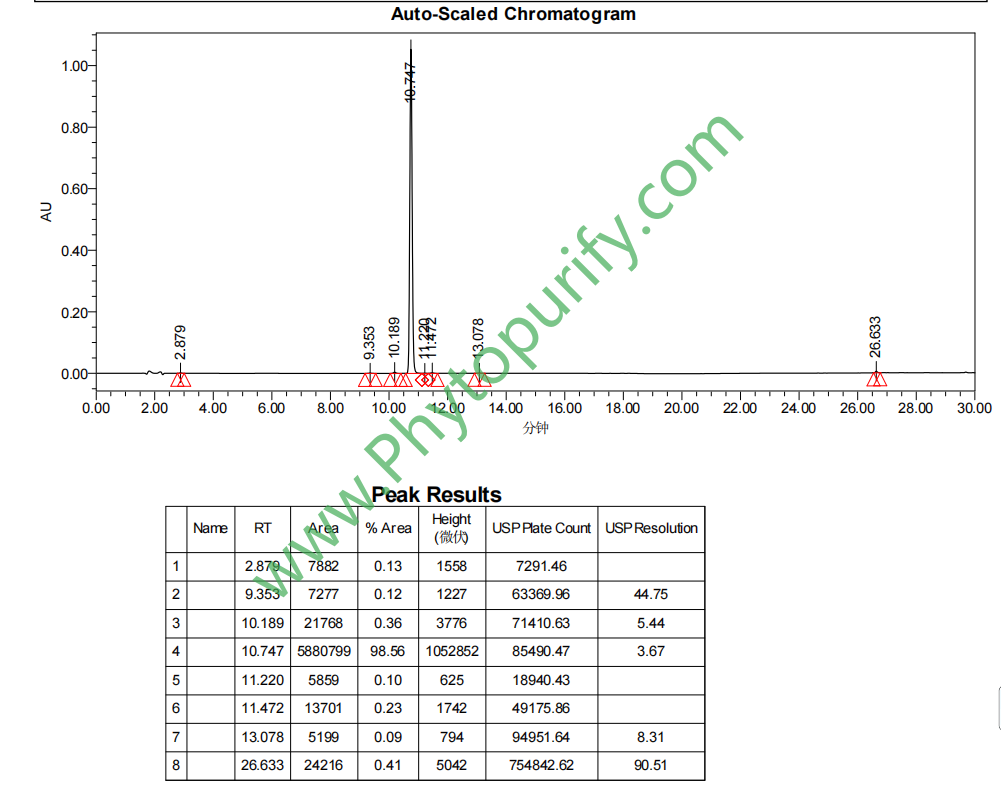
Purity: 95%~99%
Analysis Method: HPLC-DAD or/and HPLC-ELSD
Identification Method: Mass, NMR
Packing: Brown vial or HDPE plastic bottle
Can be supplied from milligrams to grams.
For Reference Standard and R&D, Not for Human Use Directly.
Inquire for bulk scale.
Description:
Loganic acid( 0.7% solution) has a strong intraocular pressure (IOP)-hypotensive effect, it exhibits both sides effect on superoxide generation. Loganic acid also has protective effects on atherosclerosis risk factors in hypercholesterolemic rabbits, it shows significant anti-inflammatory effects decreasing TNF-α and IL-6 activity in serum.
References:
Nat Prod Res. 2013;27(10):911-5.
Anti-inflammatory effect of three iridoids in human neutrophils.
To verify the anti-inflammatory potency of iridoids, three iridoids (two natural, Loganic acid: LA; geniposide: GE; and an artefact, 7(S)-n-butyl morroniside: BM) were investigated in vitro on the inhibition of superoxide generation in human neutrophils.
METHODS AND RESULTS:
All compounds showed inhibitory effect on fMLP-induced superoxide generation in a concentration-dependent manner with the following order: BM>LA>GE. BM exhibits potent inhibitory activity on superoxide anion induced by PMA, while LA and GE showed weak effect. When AA was used as stimulus, the generation of superoxide anion was suppressed by BM in a concentration-dependent manner.
CONCLUSIONS:
LA and GE exhibit both sides effect on superoxide generation.
Phytomedicine. 2014 Nov 15;21(13):1774-84.
The protective effect of the Cornus mas fruits (cornelian cherry) on hypertriglyceridemia and atherosclerosis through PPARα activation in hypercholesterolemic rabbits.
Cornelian cherry (Cornus mas L.) fruits have been used in traditional cuisine and in folk medicine in various countries. This study was conducted to evaluate the constituents and impact of cornelian cherry (C. mas L.) fruits lyophilisate on lipid levels, PPARα protein expression, atheromatous changes in the aorta, oxido-redox state, and proinflammatory cytokines in hypercholesterolemic rabbits.
METHODS AND RESULTS:
The HPLC-MS method was used for determining active constituents in cornelian cherry. In a subsequent in vivo study the protective effect of the cornelian cherry on diet-induced hyperlipidemia was studied using a rabbit model fed 1% cholesterol. Cornelian cherry (100mg/kg b.w.) or simvastatin (5mg/kg b.w.) were administered orally for 60 days. Two iridoids - Loganic acid and cornuside - and five anthocyanins were identified as the main constituents of the cornelian cherry. The administering of the cornelian cherry led to a 44% significant decrease in serum triglyceride levels, as well as prevented development of atheromatous changes in the thoracic aorta. Cornelian cherry significantly increased PPARα protein expression in the liver, indicating that its hypolipidemic effect may stem from enhanced fatty acid catabolism. Simvastatin treatment did not affect PPAR-α expression. Moreover, the cornelian cherry had a significant protective effect on diet-induced oxidative stress in the liver, as well as restored upregulated proinflammatory cytokines serum levels.
CONCLUSIONS:
In conclusion, we have shown Loganic acid to be the main iridoid constituent in the European cultivar of the cornelian cherry, and proven that the cornelian cherry could have protective effects on diet-induced hypertriglicerydemia and atherosclerosis through enhanced PPARα protein expression and via regulating oxidative stress and inflammation.
HPLC of Loganic acid
Storage conditions:Short-term storage at 2~8℃, long-term storage at -20 ~ -80℃
Loganic acid (CAS number: 22255-40-9) is a typical natural product of iridoids, mainly isolated from the fruit of Cornus officinalis. As an important plant secondary metabolite, loganin acid has received widespread attention in the field of natural product pharmacology in recent years due to its unique chemical structure and diverse biological activities. Numerous studies have shown that loganin acid has significant anti-inflammatory, antioxidant, and cell protective effects, especially in regulating inflammatory responses and redox homeostasis, demonstrating good potential. In addition, loganin can regulate diet induced atherosclerosis, which shows its application prospect in the prevention and treatment of cardiovascular diseases. This article will systematically review the chemical structure and physicochemical properties, plant sources and extraction methods, pharmacological activity and mechanism of action, pharmacological evaluation and pharmacokinetic characteristics of loganin acid, and explore its clinical application prospects and future development directions.
Maqian glycoside acid is a cyclic iridoid compound with a molecular formula of C16H24O10 and a molecular weight of 376.3580. Its structural features include a cyclic ether skeleton, connected with multiple hydroxyl and carboxyl functional groups, giving it high polarity and water solubility. The topological polar surface area (TPSA) of loganin acid is 166.14 Å ², indicating its strong polarity and hydrogen bond donor/acceptor ability, which facilitates stable binding with biomolecules. Its LogP value is -1.2267, indicating low lipid solubility, consistent with its good water solubility (around 48.54 mg/mL), which has a significant impact on oral absorption and in vivo distribution.
In terms of physicochemical properties, loganin acid is not easily able to pass through the blood-brain barrier (BBB), which may limit its direct application in central nervous system diseases, but reduces the risk of central neurotoxicity. The hERG channel inhibition experiment showed a negative result, indicating a low risk of cardiac toxicity. The Ames mutagenicity test showed 0, indicating good genetic toxicity safety. Overall, the physicochemical properties of loganin acid have laid a solid foundation for its further pharmacological research and drug development.
Maginogenic acid is mainly distributed in the fruit of Cornus officinalis, a plant in the family Cornaceae. It is widely used in traditional Chinese medicine and has the effects of tonifying the kidneys, consolidating essence, astringent essence, and stopping diarrhea. In addition to Cornus officinalis, some other plants such as Strychnos nux nomica also have a small amount of loganin acid present, but the main source is Cornus officinalis fruit.
The extraction method usually uses water or alcohol solvents for extraction, combined with column chromatography, reverse phase high performance liquid chromatography (RP-HPLC) and other techniques for purification. In recent years, modern extraction techniques such as ultrasound assisted extraction and microwave-assisted extraction have been applied to improve the extraction efficiency and purity of loganin acid. The specific process generally includes: crushing the dried Cornus officinalis fruit, extracting it with 70% ethanol or pure water, filtering and concentrating the extract, separating and purifying it using a silica gel column or C18 reverse phase column, and finally obtaining high-purity crystals or powders of loganin acid.
Maqian glycoside acid exhibits significant anti-inflammatory effects and can effectively inhibit the expression and release of various inflammatory mediators. Both in vitro cell models and in vivo inflammation models have confirmed that it reduces the expression of pro-inflammatory factors such as TNF - α, IL-6, IL-1 β, etc. by inhibiting the NF - κ B signaling pathway, thereby alleviating the inflammatory response. The relevant targets include NFKB1, TNF, IL-6, STAT3, CASP1, etc., showing their multi-target regulatory characteristics. In addition, loganin acid can regulate inflammation related ion channels such as TRPV1 and TRPA1, further regulating the neuroimmune interaction during the inflammatory process.
Maqian glycoside acid has strong free radical scavenging ability, which can effectively eliminate reactive oxygen species (ROS) such as superoxide anions and hydroxyl radicals, and alleviate oxidative stress damage. It activates the Nrf2 signaling pathway, promotes the expression of downstream antioxidant enzymes such as HO-1 and NQO1, and enhances the antioxidant defense ability of cells. In addition, loganin acid has a significant protective effect on heavy metal mediated cytotoxicity, which can alleviate heavy metal induced oxidative damage and cell apoptosis.
In diet induced atherosclerosis model, loganin can regulate lipid metabolism, reduce vascular endothelial damage, inhibit inflammatory reaction and oxidative stress, and delay the progress of atherosclerosis. Its mechanism of action involves multiple pathways such as anti-inflammatory, antioxidant, and regulation of lipid metabolism, demonstrating potential value in the prevention and treatment of cardiovascular diseases.
Preliminary studies have also found that loganin acid has certain potential in regulating immune function, antibacterial and neuroprotective effects, but the relevant mechanisms still need to be further explored.
The pharmacological effects of loganin acid are mainly achieved by regulating inflammation and oxidative stress-related signaling pathways. Its core mechanism of action includes:
Inhibition of NF - κ B signaling pathway NF - κ B is a key transcription factor in inflammatory response, and loganin acid inhibits the phosphorylation and degradation of I κ B α, preventing NF - κ B nuclear translocation and reducing the expression of pro-inflammatory factors such as TNF - α, IL-6, PTGS2 (COX-2), etc., achieving anti-inflammatory effects.
Activate the Nrf2 signaling pathway Nrf2, as the main regulator of cellular antioxidant defense, promotes the transfer of Nrf2 from cytoplasm to nucleus, induces the expression of antioxidant enzyme genes, and enhances cellular resistance to oxidative stress.
Regulating inflammation related targets Including STAT3, CASP1 (inflammasome component), TRPV1/TRPA1 (inflammation related ion channels), NOS2 (inducible nitric oxide synthase), PTGS1 (COX-1), etc., loganin acid achieves comprehensive regulation of inflammatory response through multi-target synergistic action.
Free radical scavenging and cell protection Matric acid directly scavenges ROS, protects mitochondrial function, and prevents cell apoptosis and necrosis, especially showing significant protective effects in cell damage induced by heavy metal toxicity.
In summary, loganin acid exhibits excellent pharmacological activity and potential therapeutic value due to its multi-target and multi pathway mechanism of action.
The pharmacological evaluation of loganin acid shows that it has good safety and pharmacokinetic characteristics:
Oral activity Maqian glycoside acid has good water solubility and moderate molecular weight, supporting its feasibility for oral administration. Although the LogP value is low, indicating limited lipid solubility, its polar structure facilitates absorption mediated by intestinal transporters.
Low blood-brain barrier penetration This limits its application in central nervous system diseases, but at the same time reduces the risk of central neurotoxicity.
No risk of cardiac toxicity The hERG channel inhibition experiment was negative, reducing the potential risk of arrhythmia.
No genetic toxicity The Ames test results showed no mutagenicity and met the requirements for safe medication.
Pharmacokinetic characteristics Currently, there is limited research on the in vivo metabolism and excretion of loganin acid. Preliminary data suggests that it has good bioavailability and a long half-life in animals, but further systematic studies are still needed.
Potential for drug interactions Due to its multi hydroxyl structure, it may interact with certain drug metabolizing enzymes or transporters, which requires special attention in subsequent research.
Based on the multiple pharmacological activities of loganin, especially its anti-inflammatory, antioxidant, and cardiovascular protective effects, it has broad clinical application prospects in various disease fields in the future:
Chronic inflammatory diseases For rheumatoid arthritis, inflammatory bowel disease, etc., loganin acid is expected to become a safe and effective candidate for anti-inflammatory drugs by regulating the NF - κ B and Nrf2 pathways.
cardiovascular disease: For atherosclerosis, hyperlipidemia, etc., loganin can be used as an auxiliary treatment drug to delay the progress of the disease.
Oxidative stress-related diseases It includes diabetes and its complications, neurodegenerative diseases, etc. The antioxidant effect of loganin provides a potential therapeutic basis for it.
Heavy metal poisoning and its application in environmental toxicology Its cell protective effect makes it a potential drug for preventing and treating heavy metal toxicity.
Future research should focus on the preclinical pharmacokinetics, toxicological evaluation, and clinical trial design of loganin acid to further clarify its safety and efficacy. In addition, the structural modification of loganin and the development of drug delivery systems will also promote its clinical translation.
As a natural product of cyclohexene ether terpenes with multiple targets and mechanisms, loganin acid exhibits rich pharmacological activity and good potential for drug development. Its mechanisms of action in anti-inflammatory, antioxidant, and cardiovascular protection have gradually been elucidated, and it has good safety and oral activity. Although there are still challenges in pharmacokinetics and clinical applications, with the advancement of modern drug development technology, loganin acid is expected to become an important candidate molecule for natural product drug development. The pharmacological mechanism research, structural optimization, and clinical validation of future systems will provide a solid foundation for their clinical applications and promote their widespread use in the field of natural medicine.
