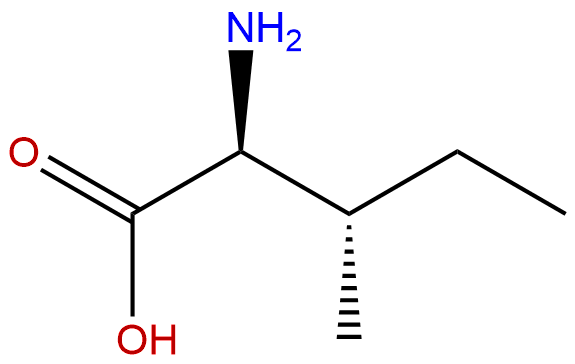
Product name: L-Isoleucine
Synonym name:
Catalogue No.: BP3541
Cas No.: 73-32-5
Formula: C6H13NO2
Mol Weight: 131.175
Botanical Source:
Physical Description:
Type of Compound: Amino Acids
Purity: 95%~99%
Analysis Method: HPLC-DAD or/and HPLC-ELSD
Identification Method: Mass, NMR
Packing: Brown vial or HDPE plastic bottle
Storage: Store in a well closed container, protected from air and light. Put into refrigerate or freeze for long term storage.
Whenever possible, you should prepare and use solutions on the same day. However, if you need to make up stock solutions in advance, we recommend that you store the solution as aliquots in tightly sealed vials at -20℃. Generally, these will be useable for up to two weeks.
The product could be supplied from milligrams to grams
Inquire for bulk scale.
For Reference Standard and R&D, Not for Human Use Directly.
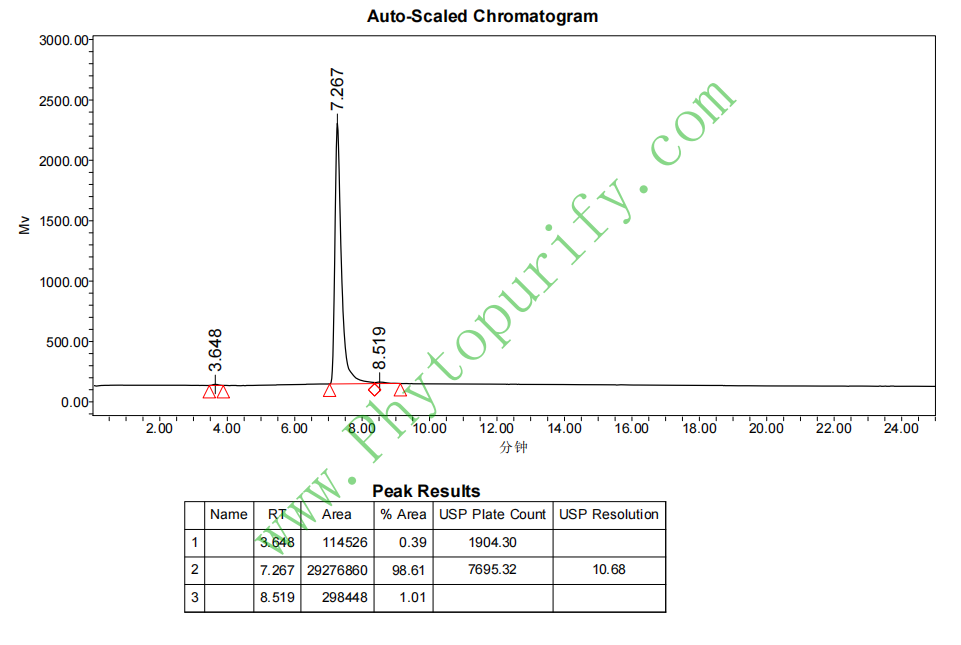
HPLC of L-Isoleucine
Storage conditions:Short-term storage at 2~8℃, long-term storage at -20 ~ -80℃
63.3200
.0104
.0065
64.1110
.4282
3.1096
Low
19.4085
2.8160
Yes
Yes
No
No
No
No
0.0
No
No
No
No
In the grand picture of life sciences, the importance of amino acids as the cornerstone of building the building block of life is self-evident. Among the twenty standard amino acids that make up proteins, branched chain amino acids (BCAAs) - leucine, isoleucine, and valine - have attracted attention due to their unique chemical structure and wide range of physiological functions. L-Isoleucine, as the L-enantiomer of isoleucine, is one of the essential branched chain amino acids for the human body. This means that the human body cannot synthesize it on its own and must obtain it through diet or exogenous supplementation. Its CAS registration number is 73-32-5, and its molecular formula is C ₆ H ₁ ∝ NO ₂.
For a long time, L-isoleucine has been mainly regarded as a raw material for protein synthesis and a regulator of energy metabolism. However, with the deepening of research, especially the rapid development of natural product pharmacology and molecular biology techniques, our understanding of L-isoleucine has far exceeded its traditional category as a nutrient. More and more evidence suggests that L-isoleucine is a multifunctional bioactive molecule with oral activity, playing a key role in cell signal transduction, immune regulation, metabolic homeostasis maintenance, and even anti infection defense. It is not only a metabolite of microorganisms such as brewing yeast and Escherichia coli, but also a metabolite of plants, algae, and even the human body itself, highlighting its universality and evolutionary conservation in the biological world.
In recent years, the role of L-isoleucine in regulating inflammatory responses and resisting pathogens has been particularly noteworthy. It can finely regulate the immune response of the body by affecting key signaling pathways, especially the mammalian target protein (mTOR) signaling pathway closely related to protein synthesis and cell growth. This regulatory effect endows L-isoleucine with great potential in the treatment of metabolic diseases, inflammatory diseases, infectious diseases and muscular atrophy. This review aims to systematically summarize the chemical properties, natural sources, pharmacological activities, mechanisms of action, pharmacological characteristics, and clinical application prospects of L-isoleucine, in order to provide a comprehensive and in-depth academic perspective on the modern pharmacological value of this classic molecule.
The chemical structure of L-isoleucine is the basis of its biological function. As an alpha amino acid, its structural formula includes an amino group (- NH ₂), a carboxyl group (- COOH), a hydrogen atom, and a unique side chain group, all connected to the same alpha carbon atom. The side chain of L-isoleucine is a butyl chain containing a chiral center, specifically (1S, 2S) -1-methylpropyl. This structure distinguishes it from leucine (with isobutyl side chain) and valine (with isopropyl side chain), both of which are BCAAs. L-Isoleucine contains two chiral carbon atoms (α - carbon and β - carbon), therefore there are four stereoisomers, but only L-Isoleucine (2S, 3S configuration) has biological activity and can participate in protein synthesis.
From the perspective of physical and chemical properties, L-isoleucine is a white crystalline or crystalline powder, odorless, and slightly bitter in taste. Its molecular weight is 131.1750 g/mol, belonging to small molecule compounds. Its lipid water partition coefficient (LogP) is 0.0104, indicating that it has extremely low lipophilicity and is almost completely hydrophilic. This characteristic is highly consistent with the data of a topological polar surface area (TPSA) of 63.3200 Å ². A TPSA value greater than 60 Å ² usually indicates good water solubility of the compound, but it is difficult to passively diffuse through the cell membrane. In fact, the water solubility of L-isoleucine (64.1110 mg/mL) is indeed high, which allows it to dissolve freely in water environments and facilitate transport in blood and interstitial fluids. However, its high water solubility and low fat solubility also directly lead to its lower blood-brain barrier (BBB) penetration ability. This means that exogenous supplementation of L-isoleucine is difficult to directly enter the central nervous system in large quantities, and its effects on the brain may be more indirectly mediated through peripheral signals or actively transported by specific amino acid transporters.
In addition, the key parameters for drug efficacy evaluation showed that the inhibitory risk of L-isoleucine on hERG potassium channels was "no", and the Ames test result was 0.0, indicating that it did not exhibit significant mutagenicity and cardiotoxicity risks in early safety screening. These physicochemical properties and preliminary safety data lay a solid foundation for the development of L-isoleucine as an oral nutritional supplement or potential therapeutic drug.
Although L-isoleucine is an essential amino acid for the human body, it is widely distributed in nature and is a component of almost all biological proteins. Therefore, its "natural product" attribute is reflected in the fact that it is a metabolic product of multiple organisms, rather than limited to specific rare plants. From the perspective of food sources, protein rich animal and plant tissues are abundant sources of L-isoleucine. For example, meat (especially red meat and poultry), fish, eggs, dairy products, legumes (such as soybeans and beans), nuts, and seeds. In the plant kingdom, algae such as spirulina are also a good source of L-isoleucine.
However, from the perspective of natural product pharmacology research, more attention is paid to how to efficiently extract and purify L-isoleucine from natural raw materials. The traditional extraction method is mainly based on protein hydrolysis. Firstly, protein rich raw materials such as soybean meal, corn gluten meal, animal blood meal, or hair are subjected to acid hydrolysis (usually using 6M hydrochloric acid, 110 ° C, 24 hours) or enzymatic hydrolysis. Although acid hydrolysis is thorough and cost-effective, it destroys tryptophan and converts glutamine and asparagine into glutamic acid and aspartic acid, respectively. Enzymatic hydrolysis conditions are mild and can better preserve the natural configuration of amino acids, but the hydrolysis efficiency is relatively low.
The mixed amino acid solution obtained by hydrolysis requires a series of separation and purification techniques to obtain high-purity L-isoleucine. Due to the similarity in structure between L-isoleucine, leucine, and valine, separation is extremely difficult. Common methods include:
1. Ion exchange chromatography This is the most classic and widely used method. By utilizing the differences in isoelectric points (pI) of different amino acids and adjusting the pH and ionic strength of the eluent, they can be sequentially separated on cation or anion exchange resins. The pI of L-isoleucine is approximately 6.02, which is very close to leucine (pI 5.98) and valine (pI 5.96), thus requiring precise gradient elution.
2. membrane separation technology Like nanofiltration and electrodialysis, they can be used for initial separation and desalination, improving subsequent purification efficiency.
3. Crystallization method By utilizing the difference in solubility of L-isoleucine in different solvents (such as water and ethanol), it is preferentially crystallized and precipitated by controlling temperature, pH, and adding seed crystals. This is a crucial step in obtaining high-purity products.
4. Simulated moving bed chromatography As a continuous chromatography technique, it can achieve efficient separation of L-isoleucine and leucine analogues, with the advantages of high yield and low solvent consumption, and is increasingly valued in modern industrial production.
With the development of biotechnology, microbial fermentation has become the mainstream industrial method for producing L-isoleucine. The genetically engineered strains of Corynebacterium glutamicum or Escherichia coli can efficiently and selectively synthesize and secrete L-isoleucine using inexpensive carbon sources such as glucose as substrates. This method has lower cost, environmental friendliness, and high optical purity of the product, and has basically replaced traditional protein hydrolysis methods.
The pharmacological activity research of L-isoleucine has expanded from the initial nutritional support to multiple disease fields, and its core role is reflected in the following aspects:
1. Promote protein synthesis and muscle metabolism
This is the most classic function of L-isoleucine. As a key activator of the mTOR signaling pathway (as described later), L-isoleucine can strongly stimulate protein synthesis in skeletal muscle and myocardium, while inhibiting protein degradation. This is of great significance for post exercise muscle recovery, prevention, and treatment of muscle atrophy (such as cachexia and sarcopenia). Research has shown that supplementing with L-isoleucine can increase muscle mass, strength, and function, especially when combined with resistance training.
2. Regulating glucose and lipid metabolism
L-Isoleucine plays a dual role in energy metabolism. On the one hand, it can be directly oxidized by muscles to provide energy, especially during exercise. On the other hand, it affects insulin signaling by activating the mTOR pathway. Research has found that L-isoleucine can promote insulin secretion and enhance the uptake and utilization of glucose by liver and muscle tissues, thereby helping to lower blood sugar levels. However, there is a controversial association between long-term high levels of BCAAs (including isoleucine) and the occurrence of insulin resistance, which may be related to feedback inhibition in metabolic pathways or accumulation of metabolic intermediates. In addition, L-isoleucine can regulate fat metabolism, promote fatty acid oxidation, and reduce fat accumulation.
3. Immune regulation and anti-inflammatory effects
This is a hot topic in the pharmacological activity research of L-isoleucine in recent years. Numerous in vitro and in vivo experiments have confirmed that L-isoleucine has significant immunomodulatory functions. It can regulate the proliferation, differentiation, and function of various immune cells such as macrophages, T cells, and B cells. In the inflammatory response, L-isoleucine exhibits a bidirectional regulatory effect. In acute inflammation models, it can inhibit the production of pro-inflammatory cytokines such as TNF - α, IL-6, IL-1 β, and alleviate tissue damage. The mechanism may involve regulation of the mTOR pathway and NF - κ B pathway. For example, in the lipopolysaccharide (LPS) - induced macrophage inflammation model, L-isoleucine pretreatment can significantly reduce the release of inflammatory mediators. This anti-inflammatory property demonstrates its potential in the treatment of inflammatory bowel disease, arthritis, sepsis, and other diseases.
4. Antipathogenic effect
L-isoleucine can resist pathogens, which is closely related to its immune regulatory function. By enhancing the activity of host immune cells, such as increasing the phagocytic and bactericidal activity of macrophages, promoting the antiviral response of T cells, L-isoleucine indirectly helps the body eliminate invading bacteria, viruses, and fungi. In addition, some studies suggest that L-isoleucine may directly affect the metabolism of pathogens. For example, for certain pathogens that rely on host amino acids, changing the concentration of local L-isoleucine may inhibit their growth. In the intestine, L-isoleucine can also promote the growth of beneficial bacteria (such as lactobacilli), inhibit the colonization of harmful bacteria, thereby maintaining intestinal barrier function and preventing intestinal infections.
5. Impact on the nervous system
Although L-isoleucine has a lower ability to penetrate the blood-brain barrier, it can still enter the brain through specific transporters. In liver diseases such as hepatic encephalopathy, due to the decreased metabolic capacity of the liver, the levels of aromatic amino acids (such as phenylalanine and tyrosine) in the blood increase, while the levels of BCAAs (including isoleucine) decrease. Supplementing with L-isoleucine can compete with aromatic amino acids to enter the brain, correcting neurotransmitter imbalances and improving symptoms of hepatic encephalopathy. In addition, L-isoleucine may also affect synaptic plasticity and cognitive function by regulating the mTOR pathway.
The core of L-isoleucine's diverse pharmacological activities lies in its regulation of key signaling pathways within cells, with the most crucial being MTOR signaling pathway MTOR is a serine/threonine protein kinase that serves as a central regulator of cell growth, proliferation, metabolism, and autophagy. L-Isoleucine, especially in synergy with leucine, is one of the most effective nutritional activators of mTORC1 (mTOR complex 1).
1. Activate mTORC1 signaling pathway
The mechanism by which L-isoleucine activates mTORC1 is complex and not fully understood, but it is known to involve multiple steps:
- Perceive amino acid levels The changes in amino acid concentration within cells are first sensed by specific sensors. Currently, it is believed that Sestrin2 and CASTOR1 are sensors for leucine and arginine, while sensors for L-isoleucine may involve other proteins, such as SLC38A9 (an amino acid transporter on lysosomal membranes).
- Activate Rag GTPase After sensing L-isoleucine, Rag GTPase (a heterodimer composed of RagA/B and RagC/D) is activated and transforms into an active conformation. Activated Rag GTPase recruits mTORC1 from the cytoplasm to the surface of lysosomes.
- Activate Rheb GTPase On the surface of lysosomes, mTORC1 meets another key activating factor Rheb (Ras homolog enriched in brain). The activity of Rheb is negatively regulated by the TSC (Tuberous Sclerosis Complex) complex. Amino acid signaling inhibits TSC complexes to maintain the active state of Rheb's GTP binding.
- MTORC1 activation On the surface of lysosomes, Rheb directly binds to the kinase domain of mTORC1, inducing conformational changes and activating its kinase activity.
2. Downstream effector molecules
Activated mTORC1 regulates protein synthesis by phosphorylating two major downstream effector molecules:
- EIF4EBP1 (eukaryotic translation initiation factor 4E binding protein 1)MTORC1 phosphorylates EIF4EBP1, causing it to dissociate from eukaryotic translation initiation factor 4E (eIF4E). The released eIF4E can assemble into eIF4F complexes with proteins such as eIF4G, initiating cap dependent mRNA translation.
- RPS6KB1 (ribosomal protein S6 kinase β 1, also known as p70S6K)MTORC1 phosphorylates and activates RPS6KB1. Activated RPS6KB1 further phosphorylates ribosomal protein S6 (rpS6) and other proteins involved in translation (such as eIF4B), thereby promoting ribosome biogenesis and translation of specific mRNAs.
3. Other molecular targets and signaling pathways
In addition to mTORC1, L-isoleucine may also exert its effects through other mechanisms:
- Regulating insulin/IGF-1 signaling Overactivation of mTORC1 can negatively feedback inhibit insulin signaling by phosphorylating IRS-1 (insulin receptor substrate 1), which may be one of the mechanisms associated with long-term high BCAAs levels and insulin resistance.
- Affects autophagy MTORC1 is a negative regulator of autophagy. L-Isoleucine inhibits autophagy by activating mTORC1. In certain pathological states, this inhibition may not be conducive to clearing damaged organelles, but when nutrients are sufficient, it helps maintain cellular homeostasis.
- Regulating the NF - κ B pathway The anti-inflammatory effect of L-isoleucine is partially achieved by inhibiting the NF - κ B signaling pathway. It may prevent NF - κ B nuclear translocation by reducing the degradation of I κ B α or inhibiting the activity of IKK complexes, thereby reducing the transcription of pro-inflammatory genes.
- As a signaling molecule L-Isoleucine itself or its metabolites (such as β - hydroxy - β - methylbutyric acid, HMB, Mainly derived from leucine, it may act as a signaling molecule that directly binds to certain receptors or enzymes, exerting non mTOR dependent effects.
In summary, L-isoleucine activates the mTORC1 signaling pathway and cross regulates other pathways such as insulin and NF - κ B, forming a complex signaling network that finely regulates protein synthesis, cell growth, metabolism, and immune response.
From the perspective of drug development, L-isoleucine possesses some desirable characteristics, but also faces challenges.
Drug Evaluation:
- Advantages As an endogenous substance, L-isoleucine has extremely high safety. The hERG inhibition risk is low, and the Ames test is negative, indicating no significant mutagenicity or cardiac toxicity. It has excellent water solubility and is easy to make into oral preparations (such as tablets, capsules, powders, or oral liquids). Oral bioavailability is high because it is actively absorbed through amino acid transporters in the intestine, such as B1.
- challenge Its LogP value is extremely low (0.0104), indicating poor lipid solubility, which leads to its Low blood-brain barrier penetration ability This limits its application in the treatment of central nervous system diseases (excluding hepatic encephalopathy). In addition, its half-life is relatively short and requires frequent administration to maintain effective blood drug concentration. As a nutritional supplement, it has a wide therapeutic window, but as a medication, precise dosage control is required to avoid potential side effects such as hyperammonemia and gastrointestinal discomfort.
Pharmacokinetic characteristics:
- absorb After oral administration of L-isoleucine, it is mainly rapidly and efficiently absorbed in the small intestine through sodium dependent neutral amino acid transporters (such as B ⁰ AT1) and L-type amino acid transporters (LAT1/2). Other amino acids in food compete with these transporters, thereby affecting their absorption rate. Taking it on an empty stomach results in faster absorption.
- distribution After absorption, L-isoleucine rapidly distributes to various tissues throughout the body, including the liver, kidneys, heart, and skeletal muscles. Due to its high water solubility, its distribution volume is mainly limited to extracellular fluid and intracellular fluid. As mentioned earlier, its rate of entry into the brain is limited.
- Metabolism The metabolism of L-isoleucine mainly occurs in the liver, kidneys, and muscles. The first step in its catabolism is transamination, catalyzed by branched chain amino acid transaminase (BCAT) to produce alpha keto - β - methylvaleric acid (KMV). Subsequently, KMV undergoes oxidative decarboxylation under the action of branched chain α - ketoacid dehydrogenase complex (BCKDH), which is an irreversible rate limiting step. Finally, its carbon skeleton enters the tricarboxylic acid cycle, generating acetyl CoA and succinyl CoA, providing energy for the body. The activity of BCKDH is strictly regulated by its phosphorylation state, and its activity will change in the state of hunger, exercise or diabetes.
- excretion Under normal circumstances, only a very small amount of L-isoleucine is excreted in its original form from urine. Its metabolites are mainly excreted through urine and respiration (CO ₂).
Based on its rich pharmacological activity and good safety, L-isoleucine has broad clinical application prospects, mainly concentrated in the following directions:
1. Sports nutrition and muscle health
This is the most mature application field of L-isoleucine. As a core component of BCAAs, it is widely used in sports nutrition supplements aimed at promoting muscle recovery after exercise, reducing muscle soreness, preventing muscle breakdown, and promoting muscle growth. Future research will focus more on optimizing the formulation of BCAAs (especially the ratio of leucine to isoleucine) and exploring their synergistic effects with other nutrients such as vitamin D and creatine.
2. Management of metabolic diseases
In view of its role in regulating glucose and lipid metabolism, L-isoleucine shows potential in the management of type 2 diabetes, obesity and non-alcoholic fatty liver disease (NAFLD). It may serve as an adjuvant therapy by improving insulin sensitivity, promoting glucose utilization, and fatty acid oxidation. However, it is important to be vigilant about the potential risk of insulin resistance associated with long-term high-dose supplementation. Future research needs to clarify its dose-response relationship and distinguish its different roles in healthy individuals and patients with metabolic disorders.
3. Inflammation and immune related diseases
The anti-inflammatory and immunomodulatory properties of L-isoleucine have opened the door for its application in various diseases. For example, in inflammatory bowel diseases such as Crohn's disease and ulcerative colitis, oral administration of L-isoleucine may help alleviate intestinal inflammation and repair the intestinal mucosal barrier. In critical conditions such as sepsis, it may reduce mortality by regulating excessive inflammatory responses and improving immune function. In addition, its potential applications in autoimmune diseases such as rheumatoid arthritis are also worth exploring.
4. Liver diseases
The application of L-isoleucine in the treatment of hepatic encephalopathy has been clinically validated. By correcting the imbalance of plasma amino acids, it can effectively improve the neurological and psychiatric symptoms of patients. In the future, it may be developed into longer acting formulations for long-term nutritional support in patients with cirrhosis and liver failure.
5. Anti infection field
L-isoleucine enhances host immune defense to resist pathogens, providing ideas for developing novel anti infection strategies. Especially in the context of increasingly severe antibiotic resistance, enhancing the body's ability to clear pathogens through nutritional immune regulation has become an attractive alternative or adjuvant therapy.
Outlook:
Although significant progress has been made in the study of L-isoleucine, there are still many issues that need to be addressed. Firstly, it is necessary to further elucidate the specific molecular mechanisms by which it activates the mTOR pathway under different physiological and pathological conditions, particularly its synergy and differences with leucine. Secondly, its long-term safety in the human body, especially the potential side effects at high doses (such as impact on insulin signaling), requires more rigorous clinical trial evaluation. Finally, the development of new formulations (such as prodrugs and nanoformulations) that can improve their bioavailability, prolong their half-life, or achieve targeted delivery will be an important direction for the future. With the development of metabolomics, systems biology, and precision medicine, the modern pharmacological value of the ancient molecule L-isoleucine will be more comprehensively revealed and ultimately transformed into an effective tool for benefiting human health.
L-Isoleucine, a seemingly simple essential amino acid, is actually a powerful natural bioactive molecule. It is not only the cornerstone of protein construction and a source of energy, but also a potent regulator of the key intracellular signaling pathway, the mTOR pathway, playing an indispensable role in protein synthesis, cell growth, metabolic homeostasis, and immune defense. Its good water solubility, oral activity, and excellent safety make it a candidate molecule with great potential for development. From sports nutrition to metabolic diseases, from inflammation regulation to anti infection treatment, the application prospects of L-isoleucine are broad and diverse. Future research requires the integration of multidisciplinary methods, from molecular mechanisms to clinical translation, to comprehensively reveal the full scope of its effects and overcome its pharmacokinetic limitations, ultimately unleashing the potential of this ancient molecule and making new contributions to human health.