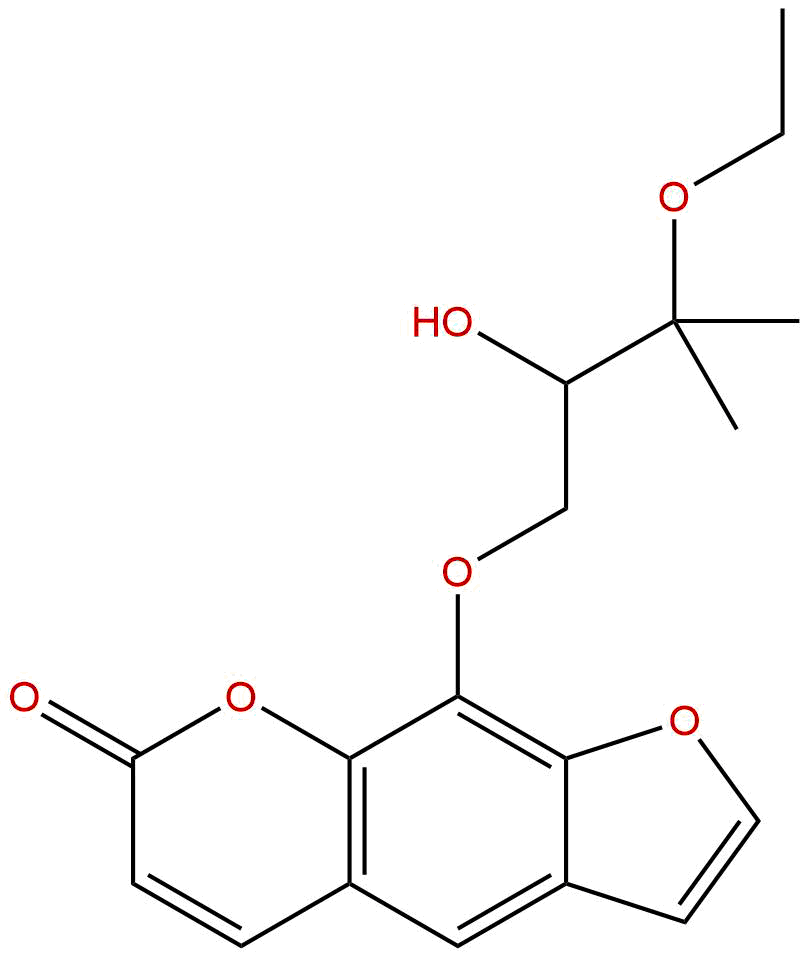
Research progress on multi-target antibacterial activity and pharmacological properties of a natural furan coumarin compound, oxidized tetrahydropalmatine ethanol ether
Introduction/Overview
Natural products, as an important source of drug discovery, play an irreplaceable role in the long history of human fight against diseases. Among them, furan coumarin compounds have always been a hot topic in natural product chemistry and pharmacology research due to their unique chemical skeleton and extensive biological activity. Oxyphylldanin hydrate-3 "- ethyl ether (CAS number: 55481-87-3), as a structurally unique derivative of furanocoumarin, has received widespread attention from the academic community in recent years due to its significant antibacterial activity.
Pre oxidized coumarin ethanol ether belongs to the linear furanocoumarin family, whose parent nucleus structure is composed of a coumarin ring fused with a furan ring, and is connected to an ethoxy substituted side chain at the C-3 'position. This unique structural modification endows the molecule with physicochemical properties and biological activity characteristics distinct from its parent compound oxypeucedanin. From the perspective of plant chemical taxonomy, oxytetracycline ethyl ether is mainly found in Apiaceae plants, especially in the roots, rhizomes, and fruits of plants belonging to the Angelica and Peucedanum genera, where its content is relatively abundant.
In recent years, with the increasingly severe problem of antibiotic resistance, the search for new antibacterial lead compounds has become an urgent need in the global public health field. The broad-spectrum antibacterial activity exhibited by oxytetracycline ethanol ether, especially its inhibitory effect on multidrug-resistant strains, makes it a potential candidate molecule for the development of new antibacterial drugs. More importantly, the compound can simultaneously act on multiple bacterial targets, including DNA gyrase (GYRA/GYPB), cell division protein FTSZ, acyl ACP reductase FABI, dihydrofolate reductase DHFR, penicillin binding protein PENA, ergosterol synthesis key enzyme ERG11/CYP51A1, and resistance related transporter CDR1. This multi-target mode of action not only enhances its antibacterial efficacy, but also reduces the risk of drug resistance.
This article will provide a systematic review of the research progress of oxytetracycline ethanol ether from the aspects of chemical structure and physicochemical properties, plant sources and extraction methods, pharmacological activity research, mechanism of action and molecular targets, drug evaluation and pharmacokinetic characteristics, and explore its clinical application prospects and future development directions, in order to provide reference for the in-depth research and development of this natural product.
Chemical structure and physicochemical properties
Chemical structure analysis
The chemical name of oxybutoxide ethanol ether is Oxyucedanin hydrate-3 "- ethyl ether, which can be expressed as 9- ((2S) -2-ethoxy-3-hydroxy-3-methylbutoxy) -7H-furo [3,2-g] chromen-7-one under the IUPAC naming system. The molecular formula of this compound is C18H20O6, with a molecular weight of 332.3520 g/mol.
From the perspective of structural characteristics, the core skeleton of the oxidized ethanol ether is linear furanocoumarin, which is formed by the fusion of benzo [a] - pyranone (coumarin) and furan ring at positions 5 and 6. Specifically, its structure includes the following key features: the C-7 position of the coumarin parent nucleus is connected to an oxygen-containing substituent, which is the (2S) -2-ethoxy-3-hydroxy-3-methylbutoxy side chain. This side chain structure is the key to distinguishing the ethanol ether of oxytetracycline from its parent compound oxytetracycline - the latter has an epoxy structure at the C-3 'site, while the former forms an ethoxy substituted alcohol hydroxyl structure through ethanol ring opening reaction.
From the perspective of stereochemistry, the C-2 'site in the side chain of the molecule has a chiral center, and naturally occurring oxidized tetrahydropalmatine ethanol ether is usually in the S configuration. This specific stereoconfiguration has a significant impact on its interaction with biological targets. In addition, the furan ring and coumarin ring in the molecule are coplanar, forming a large conjugated system. This not only endows the molecule with a characteristic UV absorption spectrum, but also provides a structural basis for its π - π stacking interaction with the target protein.
Physical and chemical property parameters
The physical and chemical properties parameters of oxytetracycline ethanol ether have important guiding significance for its pharmacological evaluation and formulation development. According to the results of computational chemistry and experimental measurements, the key physicochemical parameters of this compound are as follows:
Lipid water partition coefficient (LogP): 2.7058. This value indicates that pre oxidized quercetin ethanol ether has moderate lipophilicity and meets the requirement of LogP less than 5 in Lipinski's "Five Rules". Moderate lipid solubility is beneficial for the molecule to penetrate biological membranes, while avoiding poor water solubility due to excessive lipophilicity.
Topological Polarity Surface Area (TPSA)82.0400 Å ². This value reflects the total surface area of polar atoms (mainly oxygen atoms) in the molecule. According to medicinal chemistry experience, molecules with TPSA less than 140 Å ² typically have good oral bioavailability, while molecules with TPSA less than 90 Å ² are more likely to penetrate the blood-brain barrier. The TPSA value of oxytetracycline ethanol ether is within this critical range, indicating that it may have good oral absorption characteristics.
Water solubility 0.0259 mg/mL (approximately 78 μ M). The water solubility of this compound is relatively low, which is related to its large hydrophobic furan coumarin skeleton. Low water solubility may limit its formulation development, but it is expected to be improved through appropriate drug delivery systems such as liposomes, cyclodextrin inclusion complexes, etc.
Blood-brain barrier penetrability: High. Based on computational models, it is predicted that oxytetracycline ethanol ether has a high blood-brain barrier penetration ability. This characteristic suggests that the compound may have therapeutic potential for central nervous system infections, while also requiring attention to its potential neurotoxic risks.
HERG inhibition: Negative. HERG potassium channel inhibition is an important predictor of drug cardiac toxicity. The absence of inhibition of hERG channel by oxidized berberine ethanol ether indicates a low risk of QT interval prolongation and arrhythmia, which is a positive signal for the safety of this compound.
Ames test: 0.9 (weakly positive). The Ames test is used to evaluate the mutagenicity of compounds, and the results are expressed as the ratio of the number of revertant colonies to the blank control. The Ames test result of oxidized berberine ethanol ether is 0.9, close to the critical value of 1.0, indicating that it may have weak mutagenicity. This result needs to be validated and confirmed through more comprehensive genetic toxicity tests in subsequent research.
Plant sources and extraction methods
Main plant sources
Ethanol ether of oxytetracycline mainly exists in the roots, rhizomes, and fruits of Apiaceae plants. According to existing literature reports, this compound has been identified and isolated in the following plants:
When Belonging to Angelica Plants Including Angelica sinensis, Angelica dahurica, Angelica dahurica var. formosana, Japanese Angelica acutiloba, etc. Among them, the rhizome of Angelica dahurica is an important source of oxidized tetrahydropalmatine ethanol ether. Traditional Chinese medicine Angelica dahurica is commonly used in clinical practice to treat headaches, toothaches, ulcers, swelling and pain, and one of its active ingredients is furan coumarin compounds.
Peucedanum plants Including Peucedanum praeruptorum, Peucedanum japonicum, etc. As a commonly used traditional Chinese medicine, Qianhu has the effects of reducing qi, resolving phlegm, dispersing wind, and clearing heat. Its roots contain abundant furan coumarin components.
Other Umbelliferae Plants There have also been reports of oxytetracycline ethanol ether in plants such as Cnidium monnieri and Notopterygium incisum.
It is worth noting that the content of oxytetracycline ethanol ether in plants is influenced by various factors, including plant variety, growth environment, harvest season, processing methods, etc. Generally speaking, this compound has a high content in the roots and rhizomes of plants, and is also distributed to some extent in fruits and seeds. In addition, when plants are subjected to biological stress (such as pathogen infection), the synthesis of furan coumarin compounds is often upregulated, which is consistent with their ecological function as phytoflexins.
Extraction and Separation Purification Methods
The extraction of oxytetracycline ethanol ether is usually carried out using organic solvent extraction combined with modern chromatographic separation techniques for purification. The classic extraction process is as follows:
Raw material pretreatment Fresh or dry plant materials are crushed and sieved through a 40-60 mesh sieve to obtain a uniform powder. For root and stem medicinal herbs, it is recommended to dry them at low temperatures below 60 ℃ to avoid degradation of thermosensitive components.
Solvent extraction Common extraction solvents include methanol, ethanol, ethyl acetate, etc. Among them, 70% -95% ethanol aqueous solution is an ideal extraction solvent, which can effectively dissolve furan coumarin compounds while balancing economy and safety. The extraction method can be cold soaking (room temperature soaking for 48-72 hours), hot reflux extraction (60-80 ℃, 2-4 hours), or ultrasound assisted extraction (30-60 minutes). Ultrasonic assisted extraction has been widely adopted in recent years due to its high efficiency and time-saving characteristics.
Preparation of crude extract The extract is concentrated under reduced pressure to obtain a paste. The paste is suspended in an appropriate amount of water and subjected to liquid-liquid extraction using petroleum ether, ethyl acetate, and n-butanol in sequence. Ethanol ether of oxytetracycline is mainly enriched in the ethyl acetate extraction site.
chromatographic separation The ethyl acetate extract is preliminarily separated by silica gel column chromatography (normal phase), usually using petroleum ether ethyl acetate or chloroform methanol gradient elution systems. The target compound exhibits characteristic blue fluorescent spots on thin layer chromatography (TLC) under ultraviolet lamps (254 nm and 365 nm). For further purification, reverse phase silica gel column chromatography (such as ODS-C18), Sephadex LH-20 gel column chromatography and preparative high-performance liquid chromatography (prep HPLC) can be used. In HPLC separation, commonly used mobile phases are methanol water or acetonitrile water systems, with detection wavelengths of 254 nm or 320 nm.
Structural Identification The structure of the purified compound was confirmed by spectroscopic methods, including ultraviolet spectroscopy (UV), infrared spectroscopy (IR), mass spectrometry (MS), nuclear magnetic resonance hydrogen spectrum (¹ H-NMR), carbon spectrum (¹ ³ C-NMR), as well as two-dimensional nuclear magnetic resonance techniques (such as HSQC, HMBC, COSY, etc.). Among them, high-resolution mass spectrometry (HR-ESI-MS) can provide accurate molecular weight information, while NMR spectra can clarify the stereoisomers and substitution modes of side chains.
Pharmacological activity research
Antibacterial activity
The antibacterial activity of oxytetracycline ethanol ether is one of its most concerned pharmacological effects. Existing studies have shown that this compound has inhibitory effects on various pathogenic bacteria and fungi, exhibiting broad-spectrum antibacterial properties.
Antibacterial activity Ethanol ether of oxytetracycline exhibits varying degrees of inhibitory effects on both Gram positive and Gram negative bacteria. Among Gram positive bacteria, the inhibitory effect on Staphylococcus aureus, including methicillin-resistant Staphylococcus aureus (MRSA), is particularly prominent. The minimum inhibitory concentration (MIC) value is usually in the range of 8-64 μ g/mL, and the specific value varies depending on the strain and experimental conditions. It also has certain activity against Staphylococcus epidermidis, Enterococcus faecalis, and other bacteria. In terms of Gram negative bacteria, the inhibitory effect on standard strains such as Escherichia coli and Pseudomonas aeruginosa is relatively weak, with MIC values generally between 64-256 μ g/mL.
Antifungal activity Ethanol ether of oxytetracycline has inhibitory effects on common clinical pathogenic fungi such as Candida albicans, Candida tropicalis, and Candida krusei. Especially for fluconazole resistant Candida albicans strains, this compound can still maintain certain antibacterial activity, indicating that its mechanism of action may be different from that of azole antifungal drugs. In addition, it also has a certain inhibitory effect on filamentous fungi such as Aspergillus fumigatus.
Antibacterial activity enhancement strategy Research has found that the combination of oxytetracycline ethanol ether and certain commonly used clinical antibiotics can produce synergistic or additive effects. For example, the combination with fluconazole significantly enhances the inhibitory effect on drug-resistant Candida albicans, and the combination with vancomycin also improves the bactericidal effect on MRSA. This synergistic effect provides ideas for developing new combination therapy plans.
Other pharmacological activities
In addition to antibacterial activity, oxytetracycline ethanol ether also exhibits various other pharmacological effects, which are worth further exploration:
anti-inflammatory activity This compound can inhibit the production of nitric oxide (NO) and prostaglandin E2 (PGE2) in macrophages induced by lipopolysaccharide (LPS), and downregulate the expression of inducible nitric oxide synthase (iNOS) and cyclooxygenase-2 (COX-2). Its anti-inflammatory mechanism may be related to the inhibition of NF - κ B signaling pathway and MAPK phosphorylation.
antioxidant activity The furan coumarin skeleton endows the molecule with certain free radical scavenging ability. In DPPH, ABTS and other antioxidant activity assays, pre oxidized quercetin ethanol ether showed moderate antioxidant activity, weaker than the positive control vitamin C, but better than some structurally similar furan coumarin compounds.
Antitumor activity: The preliminary study shows that oxyimperatorin ethanol ether has cytotoxic effect on some tumor cell lines (such as human hepatoma cell HepG2, human breast cancer cell MCF-7), and the IC50 value is within the range of 10-50 μ M. Its anti-tumor mechanism may be related to inducing cell apoptosis and blocking the cell cycle, but related research is not yet in-depth.
Photosensitive activity As a furan coumarin compound, oxytetracycline ethanol ether has photosensitivity and can undergo cross-linking reaction with DNA under long wave ultraviolet (UVA) irradiation. This characteristic makes it potentially applicable in phototherapy (PUVA therapy), but at the same time, attention should be paid to its phototoxicity risk.
Mechanism of action and molecular targets
The antibacterial mechanism of oxytetracycline ethanol ether involves multiple molecular targets, and this multi-target mode of action is an important characteristic that distinguishes it from traditional single target antibiotics. The main targets and mechanisms of action will be elaborated in detail below.
Bacterial targets
DNA gyrase (GYRA/GYPB)DNA gyrase is a key enzyme in bacterial DNA replication, responsible for introducing negative supercoils to maintain the topological structure of DNA. Ethanol ether of oxytetracycline can inhibit the activity of DNA gyrase by binding to the GYRA subunit, thereby blocking bacterial DNA replication. Molecular docking studies have shown that the furan coumarin skeleton of this compound can insert into the active site of DNA gyrase, forming hydrogen bonds and π - π stacking interactions with key amino acid residues. This mechanism of action is similar to quinolone antibiotics, but the chemical structure is completely different, so it may still remain active against quinolone resistant strains.
Cell division protein FTSZ FTSZ is a key protein that forms the Z-ring during bacterial cell division, equivalent to microtubule proteins in eukaryotic cells. Ethanol ether of oxytetracycline can inhibit the polymerization activity of FTSZ, interfere with the formation of Z ring, and thus block the bacterial division process. This target has high selectivity because FTSZ is highly conserved in bacteria and lacks homologous proteins in mammalian cells.
Acyl ACP reductase FABI FABI is a key enzyme in the bacterial fatty acid synthesis pathway, catalyzing the reduction reaction of acyl ACP. Ethanol ether of oxytetracycline can inhibit the activity of FABI, interfere with the synthesis of bacterial cell membrane phospholipids, and lead to damage to cell membrane integrity. This target is the same as the known antibacterial drug triclosan, but the binding mode may differ.
Dihydrofolate reductase DHFR DHFR is a key enzyme in the folate metabolism pathway, catalyzing the reduction of dihydrofolate to tetrahydrofolate, which is an essential cofactor for nucleic acid synthesis. Ethanol ether of oxytetracycline can inhibit the activity of DHFR and block bacterial nucleotide synthesis. This mechanism of action is similar to trimethoprim, but the compound has a weaker inhibitory effect on mammalian DHFR, suggesting that it may have good selectivity.
Penicillin binding protein PENA PENA is a transpeptidase involved in the synthesis of peptidoglycans in bacterial cell walls and is a target of β - lactam antibiotics. Ethanol ether of oxytetracycline can bind with PENA, inhibit the cross-linking reaction of peptidoglycan, and thus damage the integrity of the cell wall. It is worth noting that the compound also has a certain affinity for PBP2a (MECA target) encoded by the mecA gene in MRSA, which may be one of the reasons for its activity against MRSA.
Fungal targets
Key enzyme ERG11/CYP51A1 for ergosterol synthesis ERG11 (in Candida albicans) or CYP51A1 (in Aspergillus) are key enzymes in the ergosterol synthesis pathway in fungal cell membranes, catalyzing the 14 α - demethylation of lanosterol. Ethanol ether of oxytetracycline can inhibit the activity of the enzyme, leading to obstruction of ergosterol synthesis, changes in cell membrane fluidity and permeability, and ultimately resulting in fungal cell death. This mechanism of action is similar to that of azole antifungal drugs, but the compound still maintains activity against azole resistant strains, suggesting that there may be differences in its binding mode with the target.
Drug resistance associated transporter protein CDR1 CDR1 is an important ABC transporter protein in Candida albicans, responsible for pumping drugs out of the cell and is one of the main mechanisms of fungal resistance. Research has found that oxytetracycline ethanol ether can inhibit the activity of CDR1 and increase the accumulation of drugs in fungal cells. This effect not only endows it with antifungal activity, but also enhances the sensitivity of other antifungal drugs (such as fluconazole) to drug-resistant strains, exerting a synergistic effect.
The advantages of multi-target synergistic effect
Ethanol ether of oxytetracycline acts on multiple bacterial and fungal targets simultaneously, and this multi-target mode of action has the following advantages: firstly, it reduces the risk of drug resistance - bacteria need to undergo mutations in multiple targets simultaneously to develop drug resistance, which is extremely difficult in evolution; Secondly, enhancing antibacterial efficacy - synergistic inhibition of multiple targets can produce stronger antibacterial effects; Thirdly, expanding the antibacterial spectrum - targeting different targets to make it effective against multiple pathogenic microorganisms; Fourth, overcome the existing resistance mechanism by inhibiting resistance related proteins (such as CDR1, PBP2a) to maintain their activity against resistant strains.
Evaluation of drug properties and pharmacokinetics
Analysis of drug properties parameters
Based on the classical rules of medicinal chemistry and modern computational tools, a comprehensive evaluation of the pharmacological properties of oxytetracycline ethanol ether is conducted
Lipinski's Five Rules The molecular weight of the compound (332.35 Da) is less than 500, the LogP (2.71) is less than 5, the number of hydrogen bond donors (1 alcohol hydroxyl group) is less than 5, and the number of hydrogen bond acceptors (6 oxygen atoms) is less than 10. It fully complies with Lipinski's five rules, indicating its good potential for oral drug development.
Veber rules TPSA (82.04 Å ²) is less than 140 Å ², and the number of rotatable bonds (5) is less than 10, which complies with the Veber rule and further supports its good oral bioavailability.
Pharmacophore characteristics The furan coumarin skeleton is a common pharmacophore in natural products, with the potential to interact with various biological targets. The ethoxy and hydroxyl groups in the side chains provide sites for hydrogen bonding interactions, which helps to enhance the binding affinity with the target protein.
Pharmacokinetic prediction
Using computer-aided drug design (CADD) tools to predict the pharmacokinetic properties of oxytetracycline ethanol ether:
absorb Based on its moderate lipid solubility and molecular weight, this compound is expected to have good intestinal absorption characteristics. The Caco-2 cell model predicts that its apparent permeability coefficient (Papp) is at a moderate level, and its oral bioavailability may be between 30% -60%.
distribution The high blood-brain barrier penetration suggests that the compound can be distributed to the central nervous system, with an estimated plasma protein binding rate between 85% and 95%. The apparent volume of distribution (Vd) is relatively large, indicating widespread tissue distribution.
Metabolism The metabolism of oxytetracycline ethanol ether mainly involves the cytochrome P450 enzyme system (CYP450), especially CYP3A4 and CYP2C9. The main metabolic pathways include: O-de ethylation of the side chain to generate oxypeucedanin; Oxidative ring opening of furan ring; And the hydroxylation reaction of coumarin ring. The activity of metabolites may be lower than that of the parent compound.
excretion The compound and its metabolites are mainly excreted through bile and urine. The half-life (t1/2) is expected to be between 4-8 hours, indicating a moderate clearance rate.
safety evaluation
acute toxicity Based on the structure-activity relationship analysis, the acute toxicity of oxytetracycline ethanol ether may be at a moderate level. In the zebrafish model, its LC50 value is approximately 50-100 μ M, indicating a certain safety window.
Phototoxicity As a furan coumarin compound, oxidized tetrahydropalmatine ethanol ether has potential phototoxicity. Under UVA irradiation, this compound can form adducts with DNA, leading to skin phototoxic reactions. This characteristic requires special attention in clinical applications to avoid simultaneous exposure to sunlight or ultraviolet radiation.
Genotoxicity The Ames test result is weakly positive (0.9), indicating a possible risk of mutagenicity. Further in vivo micronucleus tests, chromosome aberration tests, and other comprehensive evaluations of its genetic toxicity are needed.
cardiotoxicity The hERG inhibition test was negative, indicating that the compound has a low risk of causing QT interval prolongation and good cardiac safety.
Clinical application prospects and prospects
Potential applications in the field of antibacterial therapy
As a multi-target antibacterial natural product, oxytetracycline ethanol ether has potential application value in the following clinical fields:
Treatment of drug-resistant bacterial infections The activity exhibited by this compound against clinically challenging drug-resistant strains such as MRSA and fluconazole resistant Candida albicans makes it a candidate molecule for developing novel anti infective drugs. Especially its multi-target mode of action is expected to delay the development of drug resistance.
Combination therapy strategy The synergistic effect of oxytetracycline ethanol ether with existing antibiotics such as fluconazole and vancomycin provides the possibility for developing novel combination therapy regimens. By reducing the dosage of existing drugs, their toxic side effects can be reduced while improving treatment efficacy.
Topical preparations for local use: In view of its phototoxicity risk, this compound is more suitable for development as a topical preparation (such as cream, gel) for the treatment of fungal or bacterial infections of skin and mucosa. Traditional Chinese medicines such as Bai Zhi are used in traditional medicine to treat sores, swelling, and pain, and modern research provides scientific basis for the application of their active ingredients.
Formulation development strategy
To address the issue of low water solubility of oxytetracycline ethanol ether, the following formulation strategies can be adopted to improve its bioavailability:
Cyclodextrin inclusion complex The use of β - cyclodextrin or its derivatives (such as hydroxypropyl - β - cyclodextrin) to encapsulate this compound can significantly improve its water solubility and stability.
Liposome delivery system Encapsulating pre oxidized berberine ethanol ether in the bilayer membrane of liposomes can improve its solubility, while achieving targeted delivery and sustained release effects.
Solid dispersion By using solvent evaporation or melting methods, drugs can be dispersed in a water-soluble polymer matrix (such as polyvinylpyrrolidone, polyethylene glycol) to form a solid dispersion, which can improve the dissolution rate and oral absorption of drugs.
Future research directions
Research on Structural Optimization and Structure Performance Relationship Using oxidized tetrahydropalmatine ethanol ether as the lead compound, the side chains and parent nucleus were structurally modified through semi synthetic or total synthetic methods, and the structure-activity relationship was systematically studied in order to obtain derivatives with stronger activity, higher selectivity, and lower toxicity.
In depth elucidation of the mechanism of action Using molecular biology, structural biology, and chemical biology methods, further elucidate the precise binding modes of the compound with various targets, providing a structural basis for rational drug design.
In vivo efficacy and safety evaluation Establish appropriate animal infection models (such as skin infection models, systemic infection models), and systematically evaluate the in vivo efficacy, pharmacokinetic characteristics, and toxicological properties of oxytetracycline ethanol ether.
Sustainable utilization of natural resources Conduct research on the biosynthetic pathway of oxytetracycline ethanol ether, explore the use of genetic engineering or cell culture technology to achieve sustainable production, and reduce dependence on wild plant resources.
Conclusion
As a natural furan coumarin compound with a unique chemical structure, oxytetracycline ethanol ether exhibits multi-target antibacterial activity and good potential for drug development. Its simultaneous action on multiple targets such as bacterial DNA gyrase, FTSZ, FABI, DHFR, PENA, as well as fungal ERG11, CDR1, gives it a unique advantage in addressing the increasingly severe problem of antibiotic resistance. From the perspective of plant chemical taxonomy, this compound mainly exists in medicinal plants of the Umbelliferae family, and the application experience of traditional Chinese medicine provides valuable clinical clues for its modern development.
However, the research on oxidized tetrahydropalmatine ethanol ether still faces many challenges, such as low water solubility, potential phototoxicity and genotoxicity risks, and lack of in vivo pharmacological data, which are important factors restricting its clinical translation. Future research needs to overcome these bottlenecks through structural optimization and formulation innovation, based on a deeper understanding of its mechanism of action. Meanwhile, establishing a sustainable natural resource supply system is also a necessary condition for promoting the clinical application of this compound.
In summary, as a typical case in the field of natural product drug discovery, oxytetracycline ethanol ether not only demonstrates the modern scientific value of traditional Chinese medicine active ingredients, but also provides an important lead molecule for the development of new multi-target antibacterial drugs. With the continuous deepening of research, this natural product is expected to play a greater role in the field of anti infection therapy and contribute to human health.