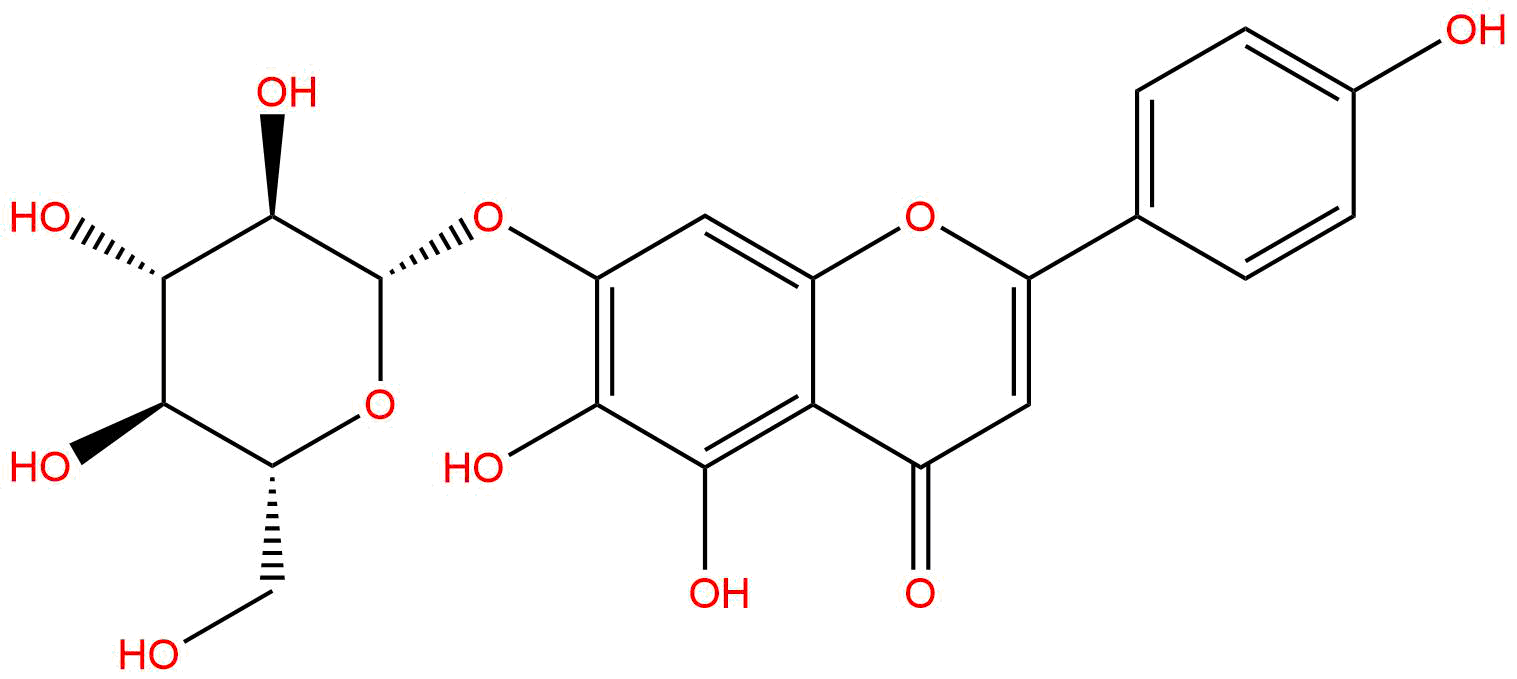


Product name: Scutellarein 7-glucoside
Synonym name:
Catalogue No.: BP4718
Cas No.: 26046-94-6
Formula: C21H20O11
Mol Weight: 448.38
Botanical Source:
Type of Compound:
Purity: 95%~99%
Analysis Method: HPLC-DAD or/and HPLC-ELSD
Identification Method: Mass, NMR
Packing: Brown vial or HDPE plastic bottle
Storage: Store in a well closed container, protected from air and light. Put into refrigerate or freeze for long term storage.
Whenever possible, you should prepare and use solutions on the same day. However, if you need to make up stock solutions in advance, we recommend that you store the solution as aliquots in tightly sealed vials at -20℃. Generally, these will be useable for up to two weeks.
The product could be supplied from milligrams to grams
Inquire for bulk scale.
For Reference Standard and R&D, Not for Human Use Directly.
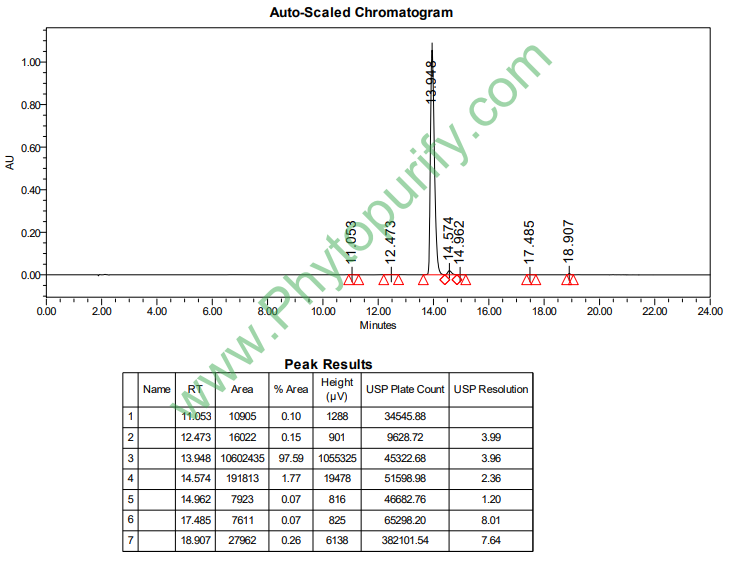
HPLC of Scutellarein 7-glucoside
Storage conditions:Short-term storage at 2~8℃, long-term storage at -20 ~ -80℃
190.2800
-.1572
-.2596
.9379
.5130
.1030
Low
80.3747
3.9297
Yes
No
No
No
Yes
No
1.2
Yes
No
Yes
No
Scutellarein-7-O-glucoside (CAS number: 26046-94-6), as a natural flavonoid compound, plays an important role in plant metabolites. Scutellarein, the parent nucleus of Scutellaria baicalensis, is a trihydroxyflavonoid with significant anti-inflammatory effects. The glycoside derivative formed by connecting the β - D-glucopyranose group at position 7 not only improves its water solubility, but may also affect its biological activity and pharmacokinetic properties. In recent years, with the deepening development of natural product pharmacology, wild baicalin-7-O-glucoside has gradually attracted attention in the research of antiviral and related diseases, especially in the potential mechanism of action on various viral targets, which has aroused widespread interest. This article aims to systematically review the chemical structure and physicochemical properties, plant sources and extraction methods, pharmacological activity and mechanism of action, pharmacological evaluation and pharmacokinetic characteristics of baicalin-7-O-glucoside, as well as its future clinical application prospects and challenges, providing theoretical basis and reference for related research and drug development.
Scutellaria baicalin-7-O-glucoside belongs to the class of glycosylated flavonoids, and its structure is based on Scutellarein, which is the parent nucleus structure of 5,6,7,4 '- tetrahydroxyflavone. This compound is linked to a β - D-glucopyranose residue via a glycosidic bond at the 7th hydroxyl position, forming a 7-O-glucoside structural unit. This glycosylation modification not only significantly improves its water solubility (about 0.9379, with good water solubility), but may also affect its molecular stability and bioavailability.
In terms of physicochemical properties, the molecular weight of baicalin-7-O-glucoside in Scutellaria baicalensis is 448.38 Da, which belongs to the category of medium molecular weight natural products. Its LogP value is -0.1572, indicating that the molecule has strong hydrophilicity and weak hydrophobicity, which is consistent with the typical characteristics of glycoside flavonoids. The polar surface area (TPSA) is 190.28 Å ², and a higher polar surface area suggests strong molecular polarity, which may limit its passive diffusion ability through the cell membrane. Its blood-brain barrier permeability is low, indicating that the compound is difficult to enter the central nervous system. The negative result of hERG channel inhibition experiment indicates a low risk of cardiac toxicity. The Ames test value is 1.2, indicating a low risk of genotoxicity and meeting safety requirements.
From a chemical structure perspective, wild baicalin-7-O-glucoside possesses a typical flavonoid skeleton and multiple hydroxyl structures, endowing it with strong antioxidant capacity and the potential to bind to various biological targets. The presence of glycosides may regulate their absorption, distribution, and metabolic processes in vivo by affecting molecular conformation and hydrophilicity.
Scutellaria baicalensis 7-O-glucoside is mainly found in plants of the Lampyridaceae family, especially in Scutellaria spp., where it is abundant. This type of plant is widely distributed in temperate and subtropical regions of Asia. Its rhizomes or whole plants are commonly used in traditional Chinese medicine, and it has the effects of clearing heat, detoxifying, anti-inflammatory, and relieving pain.
The common methods for extracting baicalin-7-O-glucoside from Scutellaria baicalensis include:
Solvent extraction method
Dry plant powder is subjected to reflux extraction or ultrasound assisted extraction using ethanol or methanol aqueous solution (50% -70%). This method is simple and efficient, and can effectively maintain the activity of flavonoids.
Column chromatography separation
The crude extract was separated and purified using techniques such as silica gel column chromatography and reverse phase C18 column chromatography, and the enrichment of the target compound was achieved through gradient elution.
Purification by High Performance Liquid Chromatography (HPLC)
HPLC technology is commonly used for improving final purity and quantitative analysis, combined with ultraviolet detection and mass spectrometry (HPLC-MS) technology to achieve compound identification.
Supercritical fluid extraction and membrane separation technology
In recent years, green extraction techniques such as supercritical CO ₂ extraction and membrane separation have also been attempted to be applied to the extraction of flavonoid glycosides, aiming to improve extraction efficiency and reduce the use of organic solvents.
During the extraction process, temperature, pH value, and solvent polarity have a significant impact on the stability and yield of baicalin-7-O-glucoside. Glycoside bonds are easily hydrolyzed, so the extraction conditions need to be controlled within an appropriate range to avoid hydrolysis and the formation of free baicalein.
The pharmacological activity research of wild baicalin-7-O-glucoside mainly focuses on its antiviral, anti-inflammatory, and antioxidant aspects.
Wild baicalin-7-O-glucoside has shown significant inhibitory effects in various viral infection models, involving viral targets including:
In vitro cell experiments and molecular docking studies have shown that baicalin-7-O-glucoside can effectively bind to the aforementioned targets, inhibiting virus replication and infection processes. In addition, its antiviral activity is accompanied by immune regulatory effects, enhancing the host's antiviral defense ability.
As a derivative of trihydroxyflavonoids, baicalin-7-O-glucoside has the function of inhibiting the release of inflammatory mediators. Reduce inflammatory response by downregulating the expression of pro-inflammatory factors such as TNF - α, IL-6, and NO. Its mechanism of action involves the regulation of NF - κ B and MAPK signaling pathways, inhibiting the transcription of inflammatory genes.
The multi hydroxyl structure endows the compound with strong free radical scavenging ability, which can effectively eliminate ROS (reactive oxygen species) and alleviate oxidative stress-related cell damage. The antioxidant effect provides an important auxiliary mechanism for its anti-inflammatory and antiviral effects.
Some studies have also reported the potential of baicalin-7-O-glucoside in neuroprotection, anti-tumor, and cardiovascular protection, but the relevant data is still in the preliminary stage and needs further validation.
The multi-target mechanism of action of baicalin-7-O-glucoside is the basis of its pharmacological activity. Molecular targets mainly include virus related proteins and host immune regulatory factors.
Viral protein inhibition
By binding to herpes virus UL42, UL54, ICP27, and TK proteins, it blocks viral DNA replication, transcription, and protein synthesis. UL42 is a DNA polymerase cofactor, UL54 is a viral DNA polymerase, ICP27 regulates viral mRNA splicing, and TK participates in nucleotide metabolism, both of which are key targets for antiviral activity.
Virus invasion blocking
Combining with the glycoprotein gD of herpes virus, it blocks the binding of virus to host cell receptors and inhibits virus invasion.
Regulation of HIV related targets
Inhibiting the expression or function of CCR5 and CXCR4 co receptors reduces the chance of HIV virus invasion into host cells. Simultaneously inhibiting the activity of HIV1 protease and integrase, blocking virus replication and genome integration.
immunomodulation
By regulating the activity of myeloperoxidase (MPO), reducing the production of inflammatory mediators and oxidative products, tissue damage can be alleviated.
Signal pathway regulation
Inhibiting the NF - κ B and MAPK signaling pathways, reducing the expression of pro-inflammatory factors, and alleviating inflammatory responses.
Molecular docking and in vitro experiments both support the above mechanism, indicating that baicalin-7-O-glucoside has the advantage of multi-target and multi pathway synergistic effects.
The molecular weight of scutellarin-7-O-glucoside (448.38 Da) meets the requirements of Lipinski rule for drug molecular weight (<500 Da), with a LogP of -0.1572, indicating its strong hydrophilicity, which is beneficial for solubility but may limit membrane permeability. The TPSA is as high as 190.28 Å ², indicating its high polarity, which may affect oral absorption and cell membrane penetration ability.
Good water solubility (0.9379), helpful for formulation development and in vivo distribution. The low permeability of the blood-brain barrier means that its application in the central nervous system is limited, but this also reduces the risk of central neurotoxicity.
The hERG channel inhibition experiment was negative, indicating a low risk of cardiac toxicity. The Ames test results showed a low risk of genotoxicity and good safety.
At present, there are relatively few systematic pharmacokinetic studies on baicalin-7-O-glucoside in wild Scutellaria baicalensis. Based on its structure and physicochemical properties, it is speculated that:
In the future, it is necessary to clarify its absorption, distribution, metabolism, and excretion (ADME) characteristics through in vivo pharmacokinetic experiments and metabolomics studies, in order to provide a basis for clinical applications.
Wild baicalin-7-O-glucoside has the potential to become a novel antiviral drug due to its multi-target antiviral activity and good safety. Especially in adjuvant therapy for herpes virus and HIV infections, it may play an important role. In addition, its anti-inflammatory and antioxidant properties provide a dual guarantee for treating inflammatory reactions caused by viral infections.
The key challenges for future clinical applications include:
In addition, the advantage of wild baicalin-7-O-glucoside as a natural product lies in its abundant sources and diverse structures. In the future, more derivatives can be developed through chemical modification and structural optimization to enhance activity and pharmacokinetic properties.
Wild Scutellaria baicalin-7-O-glucoside, as a natural flavonoid glycoside with significant antiviral and anti-inflammatory activities, has demonstrated good potential and safety for drug development. Its multi-target and multi mechanism mode of action provides new ideas for the development of novel antiviral drugs. Although research on its pharmacokinetics and clinical applications is still in its infancy, with technological advancements and deeper research, baicalin-7-O-glucoside is expected to become an important candidate molecule for the development of natural product drugs. In the future, it is necessary to strengthen its systematic pharmacology research, optimize the formulation process, promote clinical translation, and fully tap its potential in antiviral and related disease treatment.
