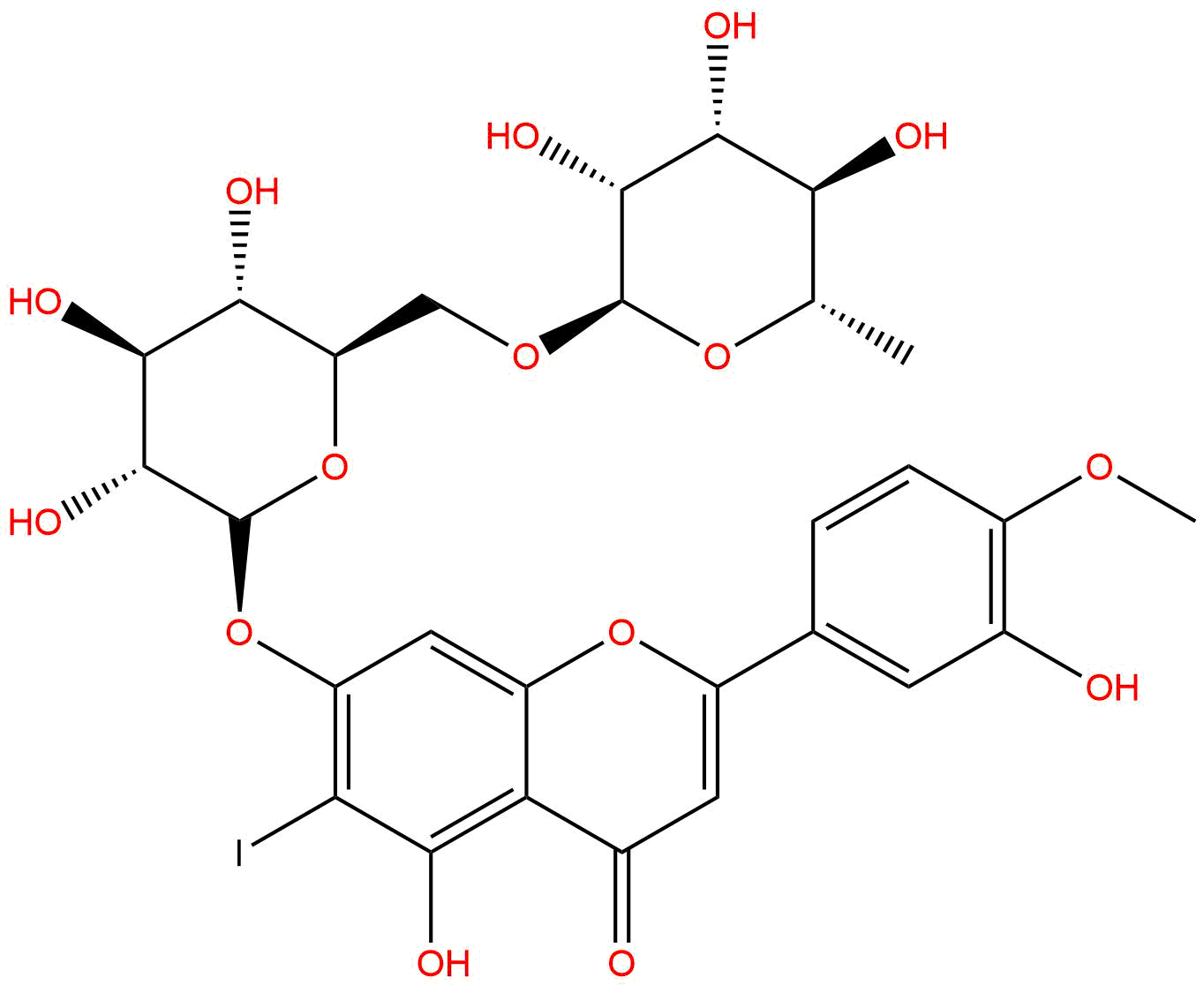


Product name: 6-Iodo Diosmin
Synonym name:
Catalogue No.: BP2146
Cas No.: 1431536-92-3
Formula: C28H31IO15
Mol Weight: 734.445
Botanical Source:
Type of Compound: Flavonoids
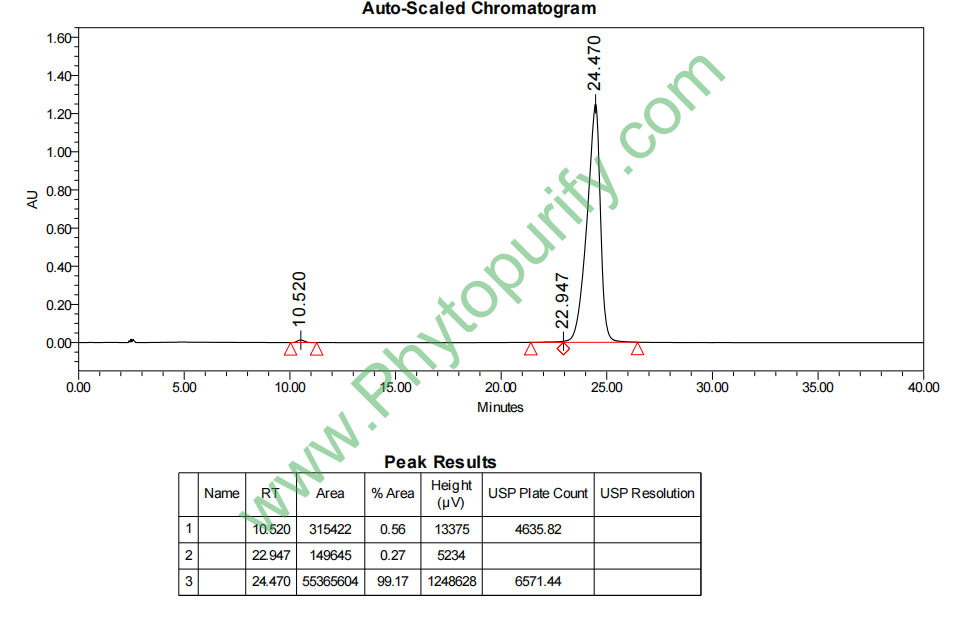
Purity: 95%~99%
Analysis Method: HPLC-DAD or/and HPLC-ELSD
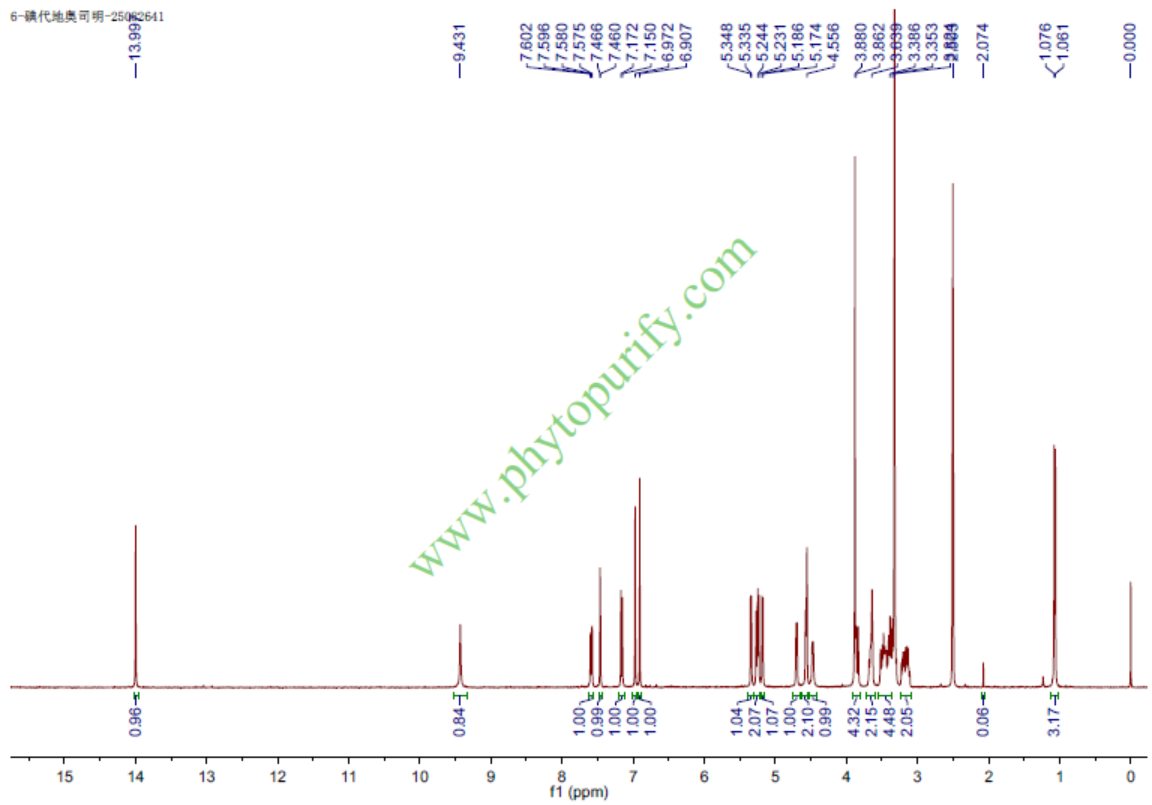
Identification Method: Mass, NMR
Packing: Brown vial or HDPE plastic bottle
Storage: Store in a well closed container, protected from air and light. Put into refrigerate or freeze for long term storage.
Whenever possible, you should prepare and use solutions on the same day. However, if you need to make up stock solutions in advance, we recommend that you store the solution as aliquots in tightly sealed vials at -20℃. Generally, these will be useable for up to two weeks.
The product could be supplied from milligrams to grams
Inquire for bulk scale.
For Reference Standard and R&D, Not for Human Use Directly.
HPLC of 6-Iodo Diosmin
HNMR of 6-Iodo Diosmin
Storage conditions:Short-term storage at 2~8℃, long-term storage at -20 ~ -80℃
238.2000
.5946
.4025
2.2166
.6310
.2782
Low
82.9805
4.8887
Yes
No
Yes
No
Yes
No
0.0
Yes
No
Yes
Yes
Venous dysfunction is a highly prevalent vascular disease worldwide, characterized by obstructed venous return, valve dysfunction, and venous hypertension. It often leads to a series of clinical symptoms such as chronic venous disease, varicose veins, and venous ulcers, seriously affecting the quality of life of patients. Traditional therapeutic drugs such as the flavonoid compound diosmin are widely used in clinical practice, but their efficacy and target of action are relatively limited, prompting researchers to focus on developing more targeted and efficient structurally modified derivatives. In this context, 6-Iodo Diosmin has emerged as a novel derivative of iodinated flavonoids. This compound aims to optimize its physicochemical properties and biological activity spectrum by introducing iodine atoms into the parent nucleus of diosmin, particularly targeting multiple molecular targets closely related to the pathological process of venous insufficiency, such as matrix metalloproteinases (MMPs), angiotensin-converting enzymes (ACE), endothelial nitric oxide synthase (NOS3), and cell adhesion molecules (ICAM1, VCAM1, etc.), demonstrating potential multiple regulatory abilities. This article aims to provide a systematic review of the chemical properties, pharmacological activity, mechanism of action, drug properties, and application prospects of 6-iododiosigmine in the treatment of venous diseases, in order to provide comprehensive academic references for the in-depth research and clinical translation of this compound.
6-Iodidosimin (CAS number: 1431536-92-3) is a semi synthetic derivative of the natural flavonoid glycoside diosmin. Its parent nucleus structure is flavonoids, specifically 7- [[6-O - (6-deoxy - α - L-mannopyranosyl) - β - D-glucopyranosyl] oxy] -5-hydroxy-2- (3-hydroxy-4-methoxyphenyl) -4H-1-benzopyran-4-one, and introduces an iodine atom at a specific position (position 6) of the benzopyranone ring. This structural modification significantly alters the electronic distribution and spatial conformation of the molecule.
The key physicochemical parameters are as follows: the molecular weight is 734.4450 g/mol, and the calculated lipid water partition coefficient (LogP) is 0.5946, indicating that the molecule has relatively balanced lipophilicity and hydrophilicity, which is beneficial for its absorption and distribution in organisms. The topologically polar surface area (TPSA) is as high as 238.2000 Å ², which is mainly attributed to the presence of multiple polar groups such as hydroxyl, glycosidic, and carbonyl groups in the molecule, indicating strong molecular polarity. The predicted water solubility value is 2.2166 mg/mL, which belongs to the range of slightly soluble to soluble, providing a basis for its formulation development. Based on its high TPSA and moderate LogP values, it is predicted that its ability to cross the blood-brain barrier is low. This may help reduce central nervous system related side effects for drugs that mainly act on the peripheral vascular system. The preliminary pharmacological risk assessment showed a negative risk of hERG channel inhibition, and the Ames test predicted a result of 0.0 (indicating no mutagenicity), providing preliminary positive signals for its safety.
6-Iodidosimin is not directly derived from plants, but is prepared by chemical synthesis using natural product osimin as a precursor. Diosmin itself is widely present in various Rutaceae plants, especially in the peel and leaves of lemons (Citrus limon) and citrus (Citrus spp.), as well as medicinal plants such as Agathosma betulina. The extraction of natural diosmin is usually carried out by organic solvents (such as methanol, ethanol) reflux extraction, ultrasound assisted extraction or microwave-assisted extraction, and then separated and purified by column chromatography (such as silica gel column, polyamide column) or preparative high-performance liquid chromatography (HPLC).
After obtaining high-purity diosmin, 6-iodo-diosmin can be synthesized by introducing iodine atoms into the 6th position of its flavonoid core through electrophilic substitution reaction. Common iodination reagents include combinations of elemental iodine (I ₂) with oxidants such as periodic acid and hydrogen peroxide, or under Lewis acid catalysis. The synthesis route requires precise control of reaction temperature, time, and reagent equivalents to ensure the selectivity (mainly occurring at position 6) and yield of the iodination reaction. The final product needs to undergo structural confirmation and purity identification through nuclear magnetic resonance (NMR, especially ¹ H NMR and ¹ ³ C NMR), mass spectrometry (MS), infrared spectroscopy (IR), and elemental analysis. At present, the synthesis and supply of this compound are mainly concentrated in research institutions and professional chemical suppliers.
Based on its structural characteristics and predictive binding ability with targets related to venous insufficiency, the pharmacological activity research of 6-iododiosimin mainly focuses on vascular protection, anti-inflammatory, antioxidant, and improvement of venous tone.
The multi-faceted improvement effect of 6-iododiosimin on venous insufficiency is attributed to its synergistic regulation of multiple key pathological molecular targets. The mechanism network of its action is shown in the following figure, and is elaborated in detail as follows:
flowchart TD
    A[6-碘代地奥司明] --> B[核心药理作用]

    B --> C[血管保护与张力调节]
    B --> D[抗炎与免疫调节]
    B --> E[抗氧化应激]
    B --> F[抑制基质重塑]

    C --> C1[抑制ACE<br>减少Ang II生成]
    C1 --> C2[缓解血管收缩与重构]
    C --> C3[上调NOS3<br>增加NO生成]
    C3 --> C4[促进血管舒张<br>改善内皮功能]

    D --> D1[抑制NF-κB通路]
    D1 --> D2[下调ICAM1, VCAM1, SELE表达]
    D2 --> D3[减少白细胞黏附与迁移]
    D1 --> D4[抑制促炎因子释放]

    E --> E1[清除自由基]
    E1 --> E2[保护内皮细胞<br>与基质成分]

    F --> F1[直接抑制MMP2/MMP9活性]
    F --> F2[保护COL1A1/COL3A1]
    F1 & F2 --> F3[维持静脉壁结构完整]

    C2 & C4 & D3 & D4 & E2 & F3 --> G[协同改善静脉功能不全<br>(减轻淤血、水肿、炎症、重构)]
1. Inhibition of angiotensin converting enzyme (ACE)ACE is a key enzyme in the renin-angiotensin system (RAS), catalyzing the conversion of angiotensin I into the potent vasoconstrictor angiotensin II (Ang II). Ang II not only causes vasoconstriction, but also promotes oxidative stress, inflammation, and fibrosis. 6-Iodidosimin alleviates abnormal venous constriction and pathological remodeling at the source by inhibiting ACE activity and reducing Ang II production.
2. Upregulation of endothelial nitric oxide synthase (NOS3)NOS3 catalyzes the generation of NO, which is the core of maintaining endothelial function health. Under venous insufficiency, the expression or activity of NOS3 is often impaired. This compound activates signaling pathways such as PI3K/Akt, upregulates the expression of NOS3, increases NO bioavailability, and effectively promotes venous dilation, inhibits platelet and leukocyte adhesion.
3. Regulation of cell adhesion molecules (ICAM1, VCAM1, SELE)These adhesion molecules play a crucial role in leukocyte recruitment and vascular inflammation. 6-Iodidosimin significantly downregulates the expression of ICAM1, VCAM1, and E-selectin (SELE) on the surface of endothelial cells by inhibiting inflammatory signaling pathways such as NF - κ B, thereby blocking the adhesion of white blood cells to endothelial cells and their migration to extravascular tissues, and reducing the inflammatory infiltration of venous walls.
4. Inhibition of matrix metalloproteinases (MMP2, MMP9)MMP2 and MMP9 are the main proteases that degrade the basement membrane and extracellular matrix such as type IV collagen. Their excessive activation is an important mechanism for thinning of venous walls, varicose veins, and valve dysfunction. This compound can directly or indirectly inhibit the activity of MMP2 and MMP9, protect the main structural proteins COL1A1 and COL3A1 of the vein wall from damage, and maintain the mechanical strength and elasticity of the vein.
5. Effect on platelet endothelial cell adhesion molecule (PECAM1)PECAM1 is involved in the regulation of leukocyte transendothelial migration and angiogenesis. 6-Iodideostigmine may affect the exudation process of inflammatory cells by regulating the function or expression of PECAM1, and may have a regulatory effect on pathological angiogenesis (such as capillary hyperplasia around venous ulcers).
In summary, 6-iododiosimin forms a multi-target, multi link synergistic network by acting on the ACE-NOS3 axis, inflammation adhesion pathway, and matrix degradation system, jointly combating the complex pathophysiological processes of venous insufficiency.
Although 6-iododiosimin has shown good in vitro activity, its pharmacological properties still require systematic evaluation.
Absorption, Distribution, Metabolism, and Excretion (ADME):
* absorb Its high TPSA and molecular weight may limit its passive transmembrane diffusion, and its oral bioavailability needs to be investigated. The glycoside structure may need to be hydrolyzed by gut microbiota or enzymes to form aglycones (6-iodo-lignin), which are then absorbed. Formulation technologies such as nanocrystals, phospholipid complexes, and cyclodextrin inclusion complexes may become key to improving their solubility and absorption.
* distribution The predicted lower blood-brain barrier permeability is mainly distributed in peripheral tissues and vascular systems, which is consistent with the localization of target organs (veins). The tissue distribution characteristics, especially the concentration in the vein wall, need to be determined through animal experiments.
* Metabolism As flavonoids, their main metabolic pathways may include liver phase I metabolism (such as hydroxylation and demethylation) and phase II binding reactions (glucuronidation and sulfation). The presence of iodine atoms may affect their metabolic sites and rates, and attention should be paid to the activity and toxicity of their metabolites.
* excretion It is speculated that its metabolites are mainly excreted through the kidneys and bile.
Challenges and optimization directions in drug development:
1. Solubility and permeability Although the predicted water solubility is acceptable, the actual permeability of biological membranes may be affected by their large molecules and polarity. Pre drug strategies (such as esterification modification) or novel delivery systems (such as liposomes, polymer micelles) are worth exploring.
2. Metabolic stability It is necessary to evaluate its metabolic stability in liver microsomes or liver cells to prevent excessive first pass effects.
3. safety Although there is no preliminary prediction of hERG inhibition and mutagenic risk, a comprehensive preclinical safety evaluation is still needed, including acute toxicity, chronic toxicity, reproductive toxicity, etc. The introduction of iodine atoms requires special attention to their potential impact on thyroid function (although the metabolism of organic iodine is different from that of inorganic iodine).
4. Drug interactions As a potential substrate or inhibitor of CYP450 enzyme, its interaction risk with other co administered drugs needs to be investigated.
6-Iodideostigmine has clear development prospects in the field of venous diseases, but its transformation path needs to be gradual.
Potential clinical applications:
1. Chronic venous insufficiency (CVI)As a first-line or second-line treatment drug, it is used to improve symptoms such as lower limb heaviness, pain, and edema, and prevent disease progression.
2. Adjuvant treatment of varicose veins Used before and after surgery or sclerotherapy to enhance venous tone, reduce inflammation, stabilize venous walls, and reduce recurrence rates.
3. Healing of venous ulcers Through its anti-inflammatory, antioxidant, and microcirculation promoting effects, it creates a favorable local environment for ulcer healing and can be used as a topical or oral adjuvant medication.
4. hemorrhoids Based on its effects of improving venous return, anti-inflammatory and reducing swelling, it can be used for the acute treatment of internal and external hemorrhoids.
Future research directions and challenges:
1. In depth study on the mechanism of action It is necessary to validate its multi-target action network in disease models closer to the human body, such as chronic venous hypertension animal models, and use techniques such as molecular docking and surface plasmon resonance to clarify its direct binding mode and affinity with key targets.
2. Structure Activity Relationship (SAR) Study Compare the activity differences between 6-iododiosimin and other iodine substituted or halogen substituted derivatives in the system to guide the design of better compounds.
3. Preclinical development Complete pharmacological, pharmacokinetic, and toxicological studies of the system, determine safe and effective dosage ranges, and develop dosage forms suitable for clinical administration.
4. Clinical study design Future clinical trials should focus on a clear target patient population and establish randomized double-blind trials controlled by diosmin or standard treatment to evaluate their efficacy and safety using objective indicators such as venous clinical severity score, ultrasound hemodynamic parameters, ulcer healing rate, and quality of life score.
5. Combination therapy strategy Explore its synergistic effects with pressure therapy, other vasoactive drugs, or minimally invasive surgery.
6-Iodidomide, as a structurally optimized derivative of diosmin, demonstrates the potential for multi-target and multi pathway intervention in the complex pathological mechanisms of venous insufficiency due to its unique iodinated chemical structure. Its pharmacological effects cover multiple key links, from inhibiting ACE and upregulating NOS3 to regulate vascular tone, to inhibiting adhesion molecule expression for anti-inflammatory purposes, and to protecting extracellular matrix to maintain venous structural integrity, forming a comprehensive spectrum of action. Although it faces challenges in drug development such as oral absorption and metabolic stability, it is expected to be overcome through modern pharmaceutical chemistry and formulation strategies. The current research is still in its early stages and there is an urgent need for in-depth preclinical and clinical studies to validate its effectiveness and safety. If subsequent research can confirm its superior therapeutic value, 6-iododiosigmine is expected to become an important new member of the venous disease drug library, providing a new and more comprehensive treatment option for billions of venous insufficiency patients worldwide. The research and development process also reflects the sustained vitality of the classic strategy of rational structural modification of natural products to obtain better drugs in modern new drug discovery.
