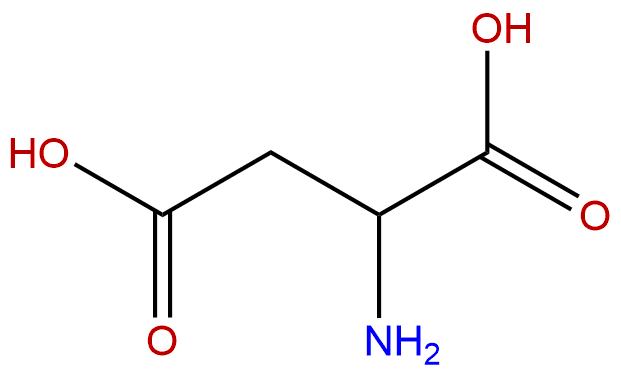


Product name: L-Aspartic acid
Synonym name: L-Asparaginic acid
Catalogue No.: BP3540
Cas No.: 56-84-8
Formula: C4H7NO4
Mol Weight: 133.103
Botanical Source:
Physical Description:
Type of Compound: Amino Acids
Purity: 95%~99%
Analysis Method: HPLC-DAD or/and HPLC-ELSD
Identification Method: Mass, NMR
Packing: Brown vial or HDPE plastic bottle
Storage: Store in a well closed container, protected from air and light. Put into refrigerate or freeze for long term storage.
Whenever possible, you should prepare and use solutions on the same day. However, if you need to make up stock solutions in advance, we recommend that you store the solution as aliquots in tightly sealed vials at -20℃. Generally, these will be useable for up to two weeks.
The product could be supplied from milligrams to grams
Inquire for bulk scale.
For Reference Standard and R&D, Not for Human Use Directly.
Storage conditions:Short-term storage at 2~8℃, long-term storage at -20 ~ -80℃
100.6200
-2.2546
-2.7851
49.3436
.3700
1.2178
Low
33.1639
2.4115
Yes
No
No
No
No
No
0.0
No
Yes
No
No
L-Aspartic acid, as a naturally occurring protein amino acid, is one of the oldest and most essential metabolic molecules in living organisms. Since 1868, the German chemist Ritter has been studying okra(Althaea rosea)Since its first separation and naming in the juice, research on it has spanned a century and a half. In classic biochemistry textbooks, L-aspartic acid is defined as a non essential amino acid widely involved in protein synthesis, urea cycle, and oxaloacetate replenishment reaction in the tricarboxylic acid (TCA) cycle. However, with the deepening development of metabolomics, medicinal chemistry, and molecular pharmacology, the role of L-aspartic acid has far exceeded the scope of "structural units". It is not only a precursor of neurotransmitters such as N-methyl-D-aspartate (NMDA), but also a key node connecting nitrogen metabolism, energy metabolism, and cellular signal transduction.
In recent years, L-aspartic acid has regained attention in the field of natural product pharmacology, with research focus shifting from simple nutritional supplementation to metabolic regulation in disease microenvironments. Especially in the fields of inflammatory diseases and tumor metabolism, the metabolic network of L-aspartic acid - involving key targets such as glutaminase (GLS), asparagine synthase (ASNS), and glutamate-oxaloacetate transaminase (GOT1/2) - has been proven to be an effective entry point for intervening in cell proliferation, oxidative stress, and immune response. In addition, its unique physicochemical properties, such as high water solubility and low blood-brain barrier permeability, make it an ideal drug carrier and prodrug design module, especially demonstrating great potential in colon targeted delivery systems. This article aims to systematically review the chemical nature, sources, pharmacological activities, and molecular mechanisms of L-aspartic acid in disease treatment, and explore its prospects and challenges in transforming from a natural metabolite to a clinical candidate drug based on its pharmacological parameters.
The chemical structure of L-aspartic acid is simple and exquisite, belonging to the alpha amino acid family. Its molecular formula is C ₄ H ₇ NO ₄, and its molecular weight is 133.10 g/mol. Structurally, it contains one amino group (- NH ₂), one carboxyl group (- COOH), and one side chain carboxyl group (- CH ₂ COOH), making it an acidic amino acid. Its IUPAC name is (2S) -2-aminobutanedioic acid, and its CAS number is 56-84-8. The L-configuration is its naturally occurring active form and the only configuration utilized in protein synthesis in living organisms.
From the perspective of physical and chemical properties, L-aspartic acid exhibits significant amphoteric electrolyte properties. Its isoelectric point (pI) is approximately 2.77, and under physiological pH (7.4) conditions, the molecule carries a negative charge and is in the form of an anion (aspartic acid). This characteristic determines its extremely high water solubility. According to the pharmacological parameters, its water solubility is as high as 49.34 mg/mL, far superior to most small molecule drugs. Although high water solubility is beneficial for distribution and absorption in body fluids, it also brings the challenge of poor lipid solubility. Its oil-water partition coefficient (LogP) is -2.25, indicating extremely low lipophilicity and difficulty in passive diffusion through lipid rich biofilms. The topological polar surface area (TPSA) is 100.62 Å ², which exceeds the recommended threshold for oral medication (<140 Å ²), indicating that its oral absorption may mainly rely on active transport mechanisms (such as amino acid transporters in the intestine) rather than passive diffusion.
It is worth noting that the blood-brain barrier (BBB) permeability of L-aspartic acid was evaluated as "low". This is related to its high polarity and lack of lipid soluble carrier transport system. In drug development, this feature is both a barrier limiting its application in central nervous system diseases and an advantage in designing peripheral targeted drugs, such as colitis treatment. In addition, the two carboxyl groups and one amino group contained in its structure provide abundant chemical modification sites, making it easy to improve its pharmacokinetic properties through esterification, amidation, or salt formation. The pharmacological evaluation showed no risk of hERG inhibition (IC50>10 μ M), and the Ames test result was negative (0.0), indicating that its genetic toxicity risk is extremely low and has a good safety basis.
Although L-aspartic acid can be synthesized from oxaloacetate through transamination in the human body, its plant sources are equally abundant in natural product research. The history of initial isolation from okra indicates that higher plants are an important source of L-aspartic acid. In plants, L-aspartic acid is one of the main forms of nitrogen assimilation and transport, widely present in leguminous plants (such as soybeans and peas), grasses (such as wheat and corn), as well as various vegetables and fruits. Especially in legume seeds and sugar beet molasses, their content is particularly prominent.
From the perspective of natural product extraction, the acquisition of L-aspartic acid usually does not rely on complex phytochemical separation, but rather relies more on microbial fermentation or enzymatic conversion. However, traditional extraction methods are still effective for studying the active ingredients derived from plants. The commonly used extraction methods include acid hydrolysis (using 6 M HCl to hydrolyze plant protein at 110 ℃, releasing bound amino acids) and solvent extraction (using water or dilute ethanol to extract at room temperature or heating conditions). Due to the high polarity of L-aspartic acid, water is the optimal extraction solvent. After deproteinization and decolorization, the extract can be purified by ion exchange chromatography (cation exchange resin). By utilizing its isoelectric point characteristics, L-aspartic acid can be precipitated by adjusting the pH value to around 2.77, or separated by a pH gradient of the eluent.
In modern industry, the production of L-aspartic acid mainly relies on enzymatic conversion, which utilizes aspartase to catalyze the addition reaction of fumaric acid (fumarate) and ammonia. This method has low cost, high yield, and environmental friendliness, and is currently the main source of market supply. For pharmacological research, commercially available high-purity (>99%) L-aspartic acid is usually sufficient to meet experimental needs. However, when studying specific active ingredients from natural product sources, it is still necessary to distinguish the differences between free and bound states (such as protein binding) and use high-performance liquid chromatography (HPLC) or amino acid analyzers for accurate quantification.
The pharmacological activity research of L-aspartic acid has undergone a profound transformation from basic nutrition to disease microenvironment regulation. Early research mainly focused on its role in energy metabolism and neurotransmitter synthesis, while recent studies have focused on its regulatory functions in inflammation, tumors, and metabolic diseases.
1. Anti inflammatory and immune regulatory activity
The role of L-aspartic acid in inflammatory diseases is increasingly being recognized. Research has shown that in colitis models, L-aspartic acid can alleviate inflammatory reactions by regulating gut microbiota metabolism and maintaining intestinal epithelial barrier function. The mechanism may be related to inhibiting the NF - κ B signaling pathway and reducing the expression of pro-inflammatory cytokines such as TNF - α and IL-6. In addition, L-aspartic acid, as a metabolic precursor of glutamine, plays a key role in the activation process of immune cells such as macrophages and T cells. In the inflammatory microenvironment, activated immune cells have a rapidly increasing demand for aspartic acid to support nucleotide synthesis and redox balance. Exogenous supplementation of L-aspartic acid can affect the metabolic reprogramming of immune cells, thereby regulating the intensity and outcome of inflammation.
2. Antitumor activity
In tumor pharmacology, the position of L-aspartic acid is relatively complex. On the one hand, it is the necessary 'fuel' for tumor cell proliferation. Many rapidly proliferating tumor cells (such as some leukemia, pancreatic cancer, and lung cancer cells) highly rely on exogenous aspartic acid or synthesize aspartic acid through the glutamine metabolic pathway (GLS/GLS2). Therefore, intervention strategies targeting the aspartate metabolism axis, such as inhibiting GLS or ASNS, have become a hot topic in the development of anticancer drugs. On the other hand, L-aspartic acid itself or its derivatives have also been explored as anti-tumor drugs. For example, by depriving the tumor microenvironment of aspartic acid or using aspartic acid as a carrier to deliver toxic groups to tumor cells, therapeutic potential has been demonstrated. It is worth noting that the metabolic association between L-aspartic acid and asparagine (catalyzed by ASNS) is a classic target for the treatment of acute lymphoblastic leukemia (ALL) - asparaginase therapy indirectly affects aspartate metabolism by consuming asparagine, thereby inhibiting leukocyte growth.
3. Neuroprotection and neurotoxicity
L-aspartic acid is an important excitatory amino acid in the central nervous system. As an endogenous agonist of NMDA receptors, moderate levels of L-aspartic acid are crucial for synaptic plasticity, learning, and memory. However, excessive release of L-aspartic acid can lead to excitotoxicity, causing neuronal damage, which is associated with the pathological processes of cerebral ischemia, epilepsy, and neurodegenerative diseases such as Alzheimer's disease and Huntington's disease. Therefore, the pharmacological activity of L-aspartic acid has a dual nature: it exerts nutritional and signaling effects at physiological concentrations, and becomes a neurotoxic factor at pathological concentrations. At present, antagonists targeting its receptors, such as memantine, have been used clinically for the treatment of Alzheimer's disease, while L-aspartic acid itself is more commonly used as a research tool or the basis for prodrug design.
4. Metabolic regulation and liver protection
In the liver, L-aspartic acid participates in the urea cycle and is a key substrate for clearing ammonia toxicity. In clinical practice, the complex of L-aspartic acid and ornithine (L-ornithine-L-aspartic acid, LOLA) is widely used to treat hepatic encephalopathy by promoting ammonia metabolism to reduce blood ammonia levels. In addition, L-aspartic acid can improve insulin resistance and fatty liver by regulating gluconeogenesis and fatty acid oxidation. It activates GOT1/GOT2, promotes malate aspartate shuttle, maintains mitochondrial redox balance, and protects liver cells from oxidative stress damage.
The pharmacological effects of L-aspartic acid are rooted in its core position in the cellular metabolic network, and its molecular targets include metabolic enzymes, transporters, and signal receptors. Based on the given target list, its mechanism of action can be summarized as follows:
1. Glutamine Aspartic Acid Metabolic Axis (GLS/ASNS/GOT1/GOT2)
This is the core mechanism by which L-aspartic acid exerts anti-tumor and immune regulatory effects. In rapidly proliferating cells, glutamine is converted to glutamate by glutaminase (GLS/GLS2), and then converted to alpha ketoglutarate by glutamate oxaloacetate transaminase (GOT1/GOT2) to enter the TCA cycle, while producing aspartic acid. Aspartic acid is subsequently used by asparagine synthase (ASNS) for the synthesis of asparagine, or for de novo synthesis of purine and pyrimidine nucleotides. Therefore, GLS, ASNS, and GOT1/2 form a metabolic network that determines the cell's dependence on aspartic acid. Inhibiting GLS (such as using CB-839) can block the production of aspartic acid, thereby inhibiting tumor growth; The high expression of ASNS is a sign of tumor resistance to asparaginase therapy.
2. Urea cycle and ammonia metabolism (CPS1/GLUL/GLUD1/GLUD2)
In the liver, L-aspartic acid clears ammonia through the urea cycle. Carbamoyl phosphate synthase 1 (CPS1) is the rate limiting enzyme in the urea cycle, and its product, citrulline, binds with aspartic acid to form arginine succinate. Meanwhile, glutamine synthetase (GLUL) and glutamate dehydrogenase (GLUD1/GLUD2) are also involved in the fixation and redistribution of ammonia. L-aspartic acid promotes the activity of these enzymes by providing a carbon skeleton, thereby reducing blood ammonia levels. This mechanism is the molecular basis for the treatment of hepatic encephalopathy with L-ornithine-L-aspartic acid.
3. Malic acid aspartic acid shuttle (GOT1/GOT2)
In energy metabolism, L-aspartic acid is a key component of the malic acid aspartic acid shuttle system. This system is responsible for transporting the reduced equivalent (NADH) produced by glycolysis in the cytoplasm to mitochondria for oxidative phosphorylation. GOT1 (cytoplasm) and GOT2 (mitochondria) catalyze the interconversion of aspartic acid and glutamate, maintaining a shuttle cycle. This mechanism is crucial for maintaining efficient energy supply to the myocardium, liver, and brain tissues, and is closely related to the regulation of cellular redox status.
4. Excitatory amino acid receptors
L-aspartic acid is an endogenous ligand for NMDA receptors. NMDA receptor is an ionotropic glutamate receptor with high permeability to calcium ions. L-aspartic acid and glycine jointly activate NMDA receptors, trigger calcium influx, and subsequently activate downstream signaling pathways such as CaMKII and CREB, participating in synaptic long-term potentiation (LTP). However, excessive activation can lead to calcium overload and neuronal death. Therefore, L-aspartic acid mediates its dual role in neuroplasticity and neurotoxicity through NMDA receptors.
The pharmacological evaluation of L-aspartic acid presents a typical "double-edged sword" feature. Its advantages lie in extremely high safety (no hERG inhibition, no genotoxicity) and good water solubility, but its disadvantages are equally evident: extremely low lipid solubility (LogP=-2.25) and low blood-brain barrier permeability.
Pharmacokinetic characteristics:
- absorb After oral administration of L-aspartic acid, its absorption mainly relies on amino acid transporters on small intestinal epithelial cells (such as ASCT2, EAAT3). Due to the saturation of transporters, their oral bioavailability is limited and varies greatly among individuals. Although its high water solubility is beneficial for dissolution in the intestine, it is difficult to penetrate cell membranes through passive diffusion.
- distribution L-aspartic acid is mainly distributed in plasma and extracellular fluid. Due to the low BBB permeability, its concentration in cerebrospinal fluid is much lower than in plasma. This characteristic makes it unsuitable for direct use in the treatment of central nervous system diseases, but it is beneficial for peripheral targeting (such as the liver and intestines).
- Metabolism L-aspartic acid is mainly metabolized in the body through transamination (GOT1/2) and decarboxylation, and participates in the TCA cycle and urea cycle. Its half-life is relatively short, usually several tens of minutes.
- excretion Untreated L-aspartic acid is mainly excreted in its original form through the kidneys. The renal tubules have a high efficiency in reabsorption of amino acids, but at high doses, urinary excretion increases.
Optimization strategy for drug properties:
Given the limitations of L-aspartic acid as a drug, its pharmacological optimization mainly focuses on prodrug design. The most successful case is the combination of it with ornithine to form L-ornithine-L-aspartic acid (LOLA), which is used for the treatment of hepatic encephalopathy by improving pharmacokinetics and targeting. In addition, L-aspartic acid is often used as a carrier for colon targeted prodrugs. Due to its limited absorption by transporters in the upper small intestine and the abundance of amino acid metabolizing enzymes in the colonic microbiota, coupling drugs with L-aspartic acid can ensure specific release of drugs in the colon, thereby treating inflammatory bowel diseases such as ulcerative colitis. This strategy utilizes the natural metabolic characteristics of L-aspartic acid to achieve precise delivery.
The clinical application prospects of L-aspartic acid are expanding from traditional nutritional supplements to precision medicine and targeted therapy fields.
Targeted therapy for inflammatory bowel disease (IBD)
Developing colon targeted anti-inflammatory drugs using L-aspartic acid as a prodrug carrier is currently one of the most promising directions for conversion. By coupling nonsteroidal anti-inflammatory drugs (NSAIDs) or immunosuppressants with L-aspartic acid, systemic side effects can be significantly reduced and local drug concentrations can be increased. Preclinical studies have shown good efficacy, and more clinical trials are needed in the future to validate its safety and efficacy in patients with Crohn's disease and ulcerative colitis.
2. Tumor metabolic therapy
The development of drugs targeting the aspartate metabolism axis is on the rise. GLS inhibitors (such as CB-839) have entered the clinical trial stage for the treatment of kidney cancer, triple negative breast cancer, etc. Meanwhile, as a drug resistance marker, the development of ASNS inhibitors or degraders has the potential to reverse tumor resistance to asparaginase therapy. In addition, L-aspartic acid itself, as a metabolic intervention, may be used to improve cancer cachexia or enhance immune therapy efficacy through dietary regulation or intravenous supplementation.
3. Liver disease and metabolic syndrome
The application of L-ornithine-L-aspartic acid in hepatic encephalopathy is quite mature. In the future, its indications may be extended to non-alcoholic steatohepatitis (NASH) and cirrhosis. By regulating the urea cycle and improving mitochondrial function, L-aspartic acid is expected to become a part of the comprehensive management of metabolic liver disease.
4. Adjuvant therapy for neurodegenerative diseases
Although L-aspartic acid itself is difficult to pass through the BBB, the role of its prodrugs or derivatives (such as N-acetylaspartate, NAA) in neuroprotection is worth exploring. NAA is the second most abundant amino acid in the brain, and its level is closely related to myelin formation and neuronal health. Developing aspartic acid derivatives that can cross the BBB for the treatment of multiple sclerosis or Alzheimer's disease is a promising but challenging direction.
L-aspartic acid, a simple molecule that existed at the beginning of life, is still showing new vitality in the field of natural product pharmacology after nearly two centuries of research. From its initial structural identification to its current role as a core node in metabolic regulation, our understanding of it has jumped from "nutritional elements" to "disease intervention targets". Its unique physicochemical properties - high polarity, low fat solubility, and low BBB permeability - are not only its shortcomings as a traditional drug, but also its advantages as a prodrug carrier and targeted delivery system. In the treatment of inflammation, tumors, and metabolic diseases, drug development targeting the aspartate metabolism network (GLS, ASNS, GOT1/2) is moving from the laboratory to clinical practice. In the future, with the deep integration of metabolomics and medicinal chemistry, we have reason to believe that L-aspartic acid and its derivatives will play a more important role on the stage of precision medicine, bringing new benefits to human health.
Batch can search by a CAS number,one per line
