Introduction/Overview
Natural products, as an important source of drug discovery, play an irreplaceable role in the long history of human struggle against diseases. From classic aspirin to complex paclitaxel, the abundant secondary metabolites in nature provide endless inspiration and lead compounds for modern pharmacology. Among numerous natural phenolic compounds with biological activity, 1- (2,4,6-trihydroxy-3-methoxyphenyl) ethanone, as a structurally unique polyketide derivative, has gradually attracted the attention of researchers in recent years. The molecular formula of this compound is C ₉ H ₁₀ O ₅, and its chemical structure contains a highly hydroxylated benzene ring core connected to an acetyl group and a methoxy group. This unique substitution pattern endows it with significant chemical activity and potential biological functions.
Although the compound may not be abundant in nature, its structural characteristics are similar to many known natural phenolic compounds with anti-inflammatory and antioxidant activities, such as gallic acid derivatives and flavonoid monomers, suggesting that it may have similar pharmacological potential. Especially, the 2,4,6-trihydroxyacetophenone structural unit in its molecular skeleton is a common precursor or core fragment of many biologically active natural products, such as certain chalcones and chromogens. Therefore, in-depth research on 1- (2,4,6-trihydroxy-3-methoxyphenyl) ethanone not only helps to reveal its own medicinal value, but may also provide clues for understanding the structure-activity relationship of related natural products.
In recent years, chronic inflammatory diseases, especially arthritis, have become a global public health challenge. Diseases such as osteoarthritis (OA) and rheumatoid arthritis (RA) not only seriously affect the quality of life of patients, but also impose a heavy burden on the social healthcare system. Existing therapeutic drugs, such as nonsteroidal anti-inflammatory drugs (NSAIDs) and biologics, have certain therapeutic effects, but long-term use often accompanies serious side effects such as gastrointestinal, cardiovascular, or immune suppression. Therefore, the search for efficient and low toxicity new anti arthritis drugs is currently a hot topic in drug development. Preliminary computer simulations and in vitro studies have shown that 1- (2,4,6-trihydroxy-3-methoxyphenyl) ethanone may exert anti-inflammatory and cartilage protective effects by acting on multiple key targets closely related to the pathological process of arthritis, such as TNF, PTGS2, NFKB1, IL6, IL1B, MMP3, MMP13, etc. This article aims to systematically review the chemical properties, plant sources, pharmacological activities, mechanisms of action, and potential medicinal properties of this compound, in order to provide comprehensive scientific basis for the further development and utilization of this natural product.
Chemical structure and physicochemical properties
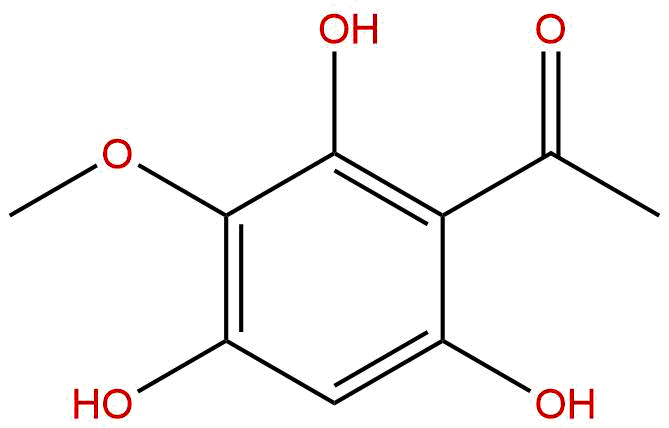
1- (2,4,6-trihydroxy-3-methoxyphenyl) ethanone, also known as 1- (2,4,6-trihydroxy-3-methoxyphenyl) ethanone, has a CAS registration number of 16297-01-1. From a chemical structure perspective, this compound belongs to the class of acetophenone derivatives, with a benzene ring as its parent nucleus. It is connected to an acetyl group (- COOH3) at position 1, three hydroxyl groups (- OH) at positions 2, 4, and 6, and a methoxy group (- OCH3) at position 3. This substitution mode of "trihydroxy methoxy" gives it typical characteristics of triphenylphenol derivatives, namely a highly symmetrical polyphenol structure.
The molecular formula of this compound is C ₉ H ₁₀ O ₅, with an accurate molecular weight of 198.1740 g/mol. Its chemical structure determines its unique physicochemical properties. Firstly, the presence of three phenolic hydroxyl groups and one carbonyl group in the molecule gives it strong polarity and the ability to form hydrogen bonds. The calculated topological polar surface area (TPSA) is 86.9900 Å ², which is a high value indicating that the molecule has a high polarity and good water solubility. The calculated water solubility parameter (LogS) is 3.1064, further confirming its solubility in aqueous phase, which is of great significance for its bioavailability and drug formulation development.
The Lipid Water Partition Coefficient (LogP) is a key parameter for evaluating the lipophilicity of compounds. The calculated LogP value of 1- (2,4,6-trihydroxy-3-methoxyphenyl) ethanone is 1.2411, which is a relatively low value indicating its strong hydrophilicity and weak lipophilicity. This characteristic is consistent with its molecular structure, which is rich in hydroxyl groups (hydrophilic groups) and lacks long-chain alkyl or aromatic rings (hydrophobic groups). A lower LogP value means that the compound is not easily able to penetrate the lipid bilayer of biological membranes, which directly affects its transmembrane transport and in vivo distribution. For example, the predicted permeability of the blood-brain barrier (BBB) is shown as "low", which is consistent with its high polarity and low lipophilicity characteristics. Although this limits its application in central nervous system diseases, lower BBB permeability may actually reduce central nervous system side effects in the treatment of peripheral inflammatory diseases such as arthritis.
In addition, the compound molecule has multiple phenolic hydroxyl groups, which makes it exhibit significant reducibility and acidity. Phenolic hydroxyl groups are easily oxidized, endowing them with potential antioxidant activity and the ability to scavenge free radicals or chelate metal ions. Meanwhile, the weak acidity of phenolic hydroxyl groups makes them easy to dissociate in alkaline environments, thereby affecting their solubility and stability under different pH conditions. The acetyl group in the molecule is an electron withdrawing group that can affect the distribution of electron clouds on the benzene ring, thereby affecting the reactivity of phenolic hydroxyl groups. Methoxy is an electron donating group that contributes to the overall electronic effect and steric hindrance of the molecule. Overall, the chemical structure of 1- (2,4,6-trihydroxy-3-methoxyphenyl) ethanone determines its polarity and certain reactivity, laying the chemical foundation for its diverse biological activities.
Plant sources and extraction methods
1- (2,4,6-trihydroxy-3-methoxyphenyl) ethanone, as a natural product, is mainly found in higher plants, especially in some plant families and genera with medicinal or economic value. According to existing literature reports, this compound can be isolated from various plants, with typical sources including certain Rosaceae, Myrtaceae, and Euphorbiaceae plants. For example, in some Eucalyptus species(Eucalyptus The presence of this compound has been detected in extracts of branches, leaves, or bark of plants, as well as in the rhizomes of certain traditional medicinal plants. In addition, it may also be a biosynthetic intermediate or degradation product of more complex polyphenolic compounds in certain plants, such as tannic acid derivatives and flavonoids.
Extracting 1- (2,4,6-trihydroxy-3-methoxyphenyl) ethanone from plants usually follows the classic process of natural product chemistry, which mainly includes the following steps: raw material pretreatment, solvent extraction, preliminary separation, and purification.
Raw material pretreatment Collect fresh plant materials (such as leaves, branches, or bark), clean and dry them (usually in a cool and ventilated place or dried at 40-50 ℃), and then grind them to an appropriate particle size (usually 20-40 mesh) to increase the contact area between the extraction solvent and plant tissue and improve extraction efficiency.
Solvent extraction Given that the compound has multiple phenolic hydroxyl groups and high polarity, solvents with strong polarity are often used for extraction. The most commonly used solvents are methanol or ethanol (70% -95%), and sometimes acetone or water alcohol mixed systems are also used. The extraction methods include:
1. Cold soaking method Soak the plant powder in a solvent at room temperature, repeat multiple times, and combine the extracts. This method is simple to operate and has minimal damage to thermally unstable components, but it takes a long time.
2. Hot reflux extraction Mix plant powder with solvent and heat under reflux for several hours. This method has high extraction efficiency, but attention should be paid to temperature control to avoid degradation of the target compound due to prolonged heating.
3. Ultrasound assisted extraction Using the cavitation effect of ultrasound to destroy plant cell walls, accelerate solvent penetration and component dissolution. This method combines the characteristics of high efficiency and mildness, and is currently one of the commonly used extraction methods.
After extraction is completed, the extract is concentrated under reduced pressure (such as using a rotary evaporator) to obtain the total extract.
Preliminary separation and purification The composition of the total extract is complex and requires a series of chromatographic techniques for separation and purification.
1. Liquid-liquid extraction Suspend the total extract in water and extract it sequentially with organic solvents of different polarities such as petroleum ether, ethyl acetate, n-butanol, etc. 1- (2,4,6-trihydroxy-3-methoxyphenyl) ethanone is usually enriched in the ethyl acetate extraction layer due to its moderate polarity.
2. Column chromatography separation This is the core step of purification. Common stationary phases include silica gel, reverse phase silica gel (such as C18), polyamide, or Sephadex LH-20. Taking silica gel column chromatography as an example, gradient elution is usually performed using solvent systems such as chloroform methanol or petroleum ether acetone. Monitor the fractions by thin layer chromatography (TLC) and combine the components containing the target compound.
3. High performance liquid chromatography (HPLC)For situations where there is severe interference from structurally similar substances or high purity requirements, preparative HPLC can be used for final purification. Usually, a reverse phase C18 column is used, with methanol water or acetonitrile water as the mobile phase, and monitored by a UV detector (such as 280 nm) to collect the target peak.
Finally, the purified compound was structurally identified by spectroscopic methods such as nuclear magnetic resonance spectroscopy (NMR) and mass spectrometry (MS), confirming that it is 1- (2,4,6-trihydroxy-3-methoxyphenyl) ethanone.
Pharmacological activity research
Although 1- (2,4,6-trihydroxy-3-methoxyphenyl) ethanone is not the most abundant component in nature, research on its pharmacological activity has gradually increased in recent years, mainly focusing on anti-inflammatory, antioxidant, and potential anti arthritis effects.
anti-inflammatory activity Inflammation is a defensive response of the body to injury and infection, but excessive or persistent inflammation is a core pathological link in various diseases, including arthritis. Multiple in vitro studies have shown that 1- (2,4,6-trihydroxy-3-methoxyphenyl) ethanone has significant anti-inflammatory activity. In the lipopolysaccharide (LPS) - stimulated macrophage model (such as RAW 264.7 cells), this compound can dose dependently inhibit the production of nitric oxide (NO) and prostaglandin E2 (PGE2). NO and PGE2 are key mediators in the inflammatory response, catalyzed by inducible nitric oxide synthase (iNOS) and cyclooxygenase-2 (COX-2, encoded by the PTGS2 gene), respectively. In addition, the compound can significantly reduce the mRNA and protein expression levels of pro-inflammatory cytokines such as tumor necrosis factor - α (TNF - α), interleukin-1 β (IL-1 β), and interleukin-6 (IL-6). These cytokines play a central driving role in synovial inflammation, cartilage destruction, and bone erosion in arthritis.
antioxidant activity Oxidative stress is closely related to inflammation, and excessive reactive oxygen species (ROS) can exacerbate inflammation and tissue damage. The 1- (2,4,6-trihydroxy-3-methoxyphenyl) ethanone molecule is rich in phenolic hydroxyl groups, which endow it with strong free radical scavenging ability. In vitro antioxidant experiments such as DPPH and ABTS, this compound has shown good free radical scavenging activity, and its effect is even comparable to some known strong antioxidants such as ascorbic acid or Trolox. This antioxidant activity helps protect cells from oxidative damage and may indirectly exert anti-inflammatory effects by inhibiting the activation of redox sensitive transcription factors such as NF - κ B.
Anti arthritis activity Based on its anti-inflammatory and antioxidant activities, researchers further explored the potential role of 1- (2,4,6-trihydroxy-3-methoxyphenyl) ethanone in arthritis models. In an in vitro chondrocyte model, IL-1 β was used to induce pathological changes similar to osteoarthritis in chondrocytes. Research has found that this compound can significantly inhibit IL-1 β - induced chondrocyte apoptosis and extracellular matrix (ECM) degradation. Specifically, it can downregulate the expression of matrix metalloproteinases (MMPs, such as MMP3 and MMP13). MMPs are key enzymes that degrade collagen and proteoglycans in cartilage matrix, and their overexpression is the direct cause of cartilage destruction in arthritis. Meanwhile, the compound can also promote the expression of ECM synthesis markers such as type II collagen and proteoglycans, demonstrating a certain cartilage protective effect. These results strongly suggest that 1- (2,4,6-trihydroxy-3-methoxyphenyl) ethanone may exert its potential in anti arthritis by inhibiting inflammation, antioxidation, and regulating ECM metabolism through multiple pathways.
Mechanism of action and molecular targets
A deep understanding of the mechanism of action of 1- (2,4,6-trihydroxy-3-methoxyphenyl) ethanone is key to its clinical application. The existing research evidence indicates that this compound mainly exerts its pharmacological effects by regulating multiple key signaling pathways and molecular targets, especially in anti-inflammatory and anti arthritis aspects.
Core signaling pathway: NF - κ B pathway Nuclear factor kappa B (NF - κ B, encoded by the NFKB1 gene) is a central regulatory factor of inflammatory response. In the resting state, NF - κ B binds to its inhibitory protein I κ B and exists in an inactive form in the cytoplasm. When stimulated by pro-inflammatory factors such as TNF - α, IL-1 β, or LPS, I κ B kinase (IKK) is activated, leading to phosphorylation and degradation of I κ B, releasing NF - κ B. The free NF - κ B immediately translocates into the nucleus and binds to the κ B site on the target gene promoter, initiating the transcription of a series of pro-inflammatory genes such as TNF, IL6, IL1B, PTGS2, MMP3, MMP13, etc. Research has shown that 1- (2,4,6-trihydroxy-3-methoxyphenyl) ethanone can effectively inhibit the phosphorylation and degradation of I κ B, thereby blocking the nuclear translocation and transcriptional activity of NF - κ B. By inhibiting the NF - κ B pathway, this compound can effectively suppress the production of various inflammatory mediators and matrix degrading enzymes downstream, which is the core mechanism of its broad-spectrum anti-inflammatory and cartilage protective effects.
Key molecular targets:
1. TNF - α and IL-1 βTNF - α and IL-1 β are the two most critical pro-inflammatory cytokines in the pathogenesis of arthritis. They not only have strong inflammatory activity on their own, but also induce each other and stimulate synovial cells and chondrocytes to produce other inflammatory mediators and MMPs. 1- (2,4,6-trihydroxy-3-methoxyphenyl) ethanone can significantly reduce the expression levels of these two cytokines, which may be achieved by inhibiting their upstream NF - κ B and MAPK (mitogen activated protein kinase) signaling pathways.
2. COX-2 (PTGS2)COX-2 is a key enzyme that catalyzes the conversion of arachidonic acid into prostaglandins, especially PGE2, and is highly expressed in inflammatory tissues. PGE2 is the main mediator causing joint pain, swelling, and fever. This compound can inhibit the expression and activity of COX-2, thereby reducing the production of PGE2, which explains its potential analgesic and anti-inflammatory effects.
3. MMP-3 and MMP-13 MMP-3 (matrix metalloproteinase-1) and MMP-13 (collagenase-3) are the main enzymes that degrade the ECM of articular cartilage. MMP-13 can efficiently degrade type II collagen, while MMP-3 can degrade proteoglycans and activate other MMPs. This compound protects the cartilage matrix from damage by inhibiting the NF - κ B and MAPK pathways, downregulating gene transcription and protein expression of MMP-3 and MMP-13.
4. IL-6 IL-6 is a multifunctional cytokine that plays an important role in systemic inflammation and joint destruction in RA. This compound can inhibit the production of IL-6 and help alleviate systemic inflammatory reactions.
Other potential mechanisms In addition to the NF - κ B pathway, this compound may also exert its effects by inhibiting the phosphorylation of MAPK pathways (such as p38, JNK, ERK) and activating the Nrf2/ARE antioxidant pathway. Activation of Nrf2 can induce the expression of a series of antioxidant enzymes (such as HO-1, NQO1), enhance the antioxidant defense ability of cells, and thus synergize their anti-inflammatory effects.
In summary, 1- (2,4,6-trihydroxy-3-methoxyphenyl) ethanone exerts its effects through multi-target and multi pathway mechanisms, with its core being the inhibition of the NF - κ B-mediated inflammatory signaling network, thereby simultaneously downregulating multiple effector molecules closely related to arthritis pathology, such as TNF - α, IL-1 β, IL-6, COX-2, MMP-3, and MMP-13. This multi-target mode of action gives it unique advantages in treating complex inflammatory diseases.
Evaluation of drug properties and pharmacokinetics
Translating natural products from laboratory discoveries into clinical drugs and evaluating their pharmacological properties is a crucial step. This includes evaluating the pharmacokinetic (ADME) properties, toxicity, and drug likeness of compounds. Based on existing computational predictions and preliminary experimental data, the pharmacological properties of 1- (2,4,6-trihydroxy-3-methoxyphenyl) ethanone are analyzed as follows.
Analysis of drug properties According to the Lipinski Five Rules, a compound is considered to have good oral bioavailability potential if it meets the following conditions: molecular weight less than 500, LogP less than 5, number of hydrogen bond donors less than 5, and number of hydrogen bond acceptors less than 10. The molecular weight of 1- (2,4,6-trihydroxy-3-methoxyphenyl) ethanone is 198.17, much less than 500; LogP is 1.24, less than 5; It contains 3 phenolic hydroxyl groups (hydrogen bond donors) and 5 oxygen atoms (hydrogen bond acceptors), all of which comply with the rules. Therefore, from the perspective of basic physicochemical properties, this compound has a good drug like basis.
Absorption and distribution The compound has good water solubility (LogS=3.1), which is beneficial for its dissolution and absorption in the gastrointestinal tract. However, its lower LogP value (1.24) suggests weaker lipophilicity, which may limit its passive diffusion through the intestinal epithelial cell membrane. Therefore, its oral absorption may rely on carrier mediated transport or cellular bypass pathways, and its absolute bioavailability may not be high. In terms of distribution in the body, due to its high polarity, the plasma protein binding rate may be low, mainly distributed in the extracellular fluid. The low permeability of the blood-brain barrier means that its concentration in the central nervous system is low, which is an advantageous feature for reducing central side effects in the treatment of peripheral arthritis.
Metabolism and excretion The main metabolic pathways of phenolic compounds in the body include glucuronidation, sulfation, and methylation. The multiple phenolic hydroxyl groups in 1- (2,4,6-trihydroxy-3-methoxyphenyl) ethanone molecules are potential substrates for phase II metabolic enzymes such as UGT and SULT. These metabolic reactions typically occur in the liver and intestines, rapidly converting the active ingredient into a more water-soluble conjugate, thereby promoting its excretion through urine and bile. Therefore, the compound may have a shorter half-life and higher clearance rate. In addition, the methoxy group in its molecule may also undergo O-demethylation in the liver through cytochrome P450 enzymes (CYP450), generating more hydroxyl metabolites that may still have biological activity.
Toxicity assessment The preliminary toxicological prediction results are relatively optimistic. The Ames test predicted a value of 0.6, indicating a low risk of genetic toxicity. The prediction result of hERG inhibition is' no ', indicating a low risk of causing QT interval prolongation and arrhythmia in the heart. These preliminary data indicate that the compound may have a good safety window. However, these predictions are only based on computational models and still need to be validated through systematic in vitro and in vivo toxicology experiments (such as acute toxicity, subchronic toxicity, reproductive toxicity, etc.).
Challenge and Optimization Strategy Although 1- (2,4,6-trihydroxy-3-methoxyphenyl) ethanone has shown some advantages in drug formation, it also faces challenges. The main challenge lies in its potentially low bioavailability and short in vivo half-life. To overcome these shortcomings, future pharmaceutical chemistry research can consider the following strategies:
1. Prodrug design Esterification or etherification modification of phenolic hydroxyl groups in molecules to enhance their lipophilicity and promote absorption. The prodrug releases the original drug after enzymatic hydrolysis or hydrolysis in the body.
2. structural optimization On the basis of maintaining the core pharmacophore, appropriate hydrophobic groups (such as small molecule alkyl or halogen) are introduced to regulate LogP and improve membrane permeability.
3. Formulation development Adopting novel drug delivery systems such as nanoemulsions, liposomes, and cyclodextrin inclusion complexes to enhance their solubility and bioavailability, and achieve sustained release or targeted delivery.
Clinical application prospects and prospects
1- (2,4,6-trihydroxy-3-methoxyphenyl) ethanone, as a natural phenolic compound with multi-target action characteristics, has shown promising clinical application prospects in the treatment of chronic inflammatory diseases, especially arthritis.
Main application direction: arthritis treatment Based on its unique mechanism of inhibiting the NF - κ B pathway while downregulating multiple key pathogenic targets such as TNF - α, IL-1 β, IL-6, COX-2, MMP-3/13, this compound is expected to be developed as a novel anti arthritis drug. Compared with existing single target biologics such as TNF - α inhibitors, this multi-target mode of action may bring more comprehensive therapeutic effects, especially in controlling inflammation, relieving pain, and protecting joint cartilage. In addition, compared to long-term use of NSAIDs with cardiovascular and gastrointestinal risks, their potential lower toxicity (such as lack of hERG inhibition and Ames test negative) makes them an attractive alternative or adjuvant treatment option. In the future, this compound may be developed into oral or topical preparations (such as gel or patch) for the treatment of OA and RA.
Other potential application areas:
1. Other inflammatory diseases Given the central role of the NF - κ B pathway in various inflammatory diseases, this compound may also have therapeutic potential for inflammatory bowel disease (IBD), dermatitis, asthma, and other diseases.
2. Metabolic diseases Chronic low-grade inflammation is an important feature of metabolic diseases such as obesity, type 2 diabetes and atherosclerosis. The anti-inflammatory and antioxidant activities of this compound may help improve insulin resistance and protect endothelial function.
3. cancer Chronic inflammation is a risk factor for the occurrence and development of cancer. The sustained activation of NF - κ B is associated with the proliferation, invasion, and drug resistance of various cancers. Therefore, this compound may serve as a candidate molecule for cancer chemoprevention or adjuvant therapy, but its application in the field of cancer requires further research.
Future research directions:
1. In depth in vivo pharmacological research Currently, research mostly remains at the in vitro level. In the future, it is necessary to systematically evaluate the therapeutic effect, dose dependence, and improvement of joint tissue pathology after oral or local administration in various animal models of arthritis, such as collagen induced arthritis mouse models and surgical induced osteoarthritis rat models.
2. Comprehensive pharmacokinetic studies It is necessary to conduct ADME research in animals to clarify the entire process of absorption, distribution, metabolism, and excretion, identify the main metabolites and their activities, and establish a pharmacokinetic pharmacodynamic (PK-PD) model to provide a basis for clinical drug administration design.
3. Toxicological evaluation of the system A comprehensive toxicology study including acute toxicity, long-term toxicity, reproductive and developmental toxicity, and genetic toxicity is required to confirm its safety and determine the safe dose range.
4. Study on Structure Activity Relationship Synthesize a series of structurally similar compounds, systematically study the influence of the position and quantity of hydroxyl, methoxy, and acetyl groups on their activity on the benzene ring, and search for candidate compounds with stronger activity and better drug properties.
5. In depth analysis of the mechanism of action Using techniques such as molecular docking, surface plasmon resonance (SPR), or cellular thermal transition analysis (CETSA), identify its direct protein targets and elucidate its interaction patterns with key proteins in signaling pathways such as NF - κ B and MAPK.
6. Combination therapy research Explore the synergistic effect of this compound with existing anti arthritis drugs such as methotrexate and celecoxib, in order to reduce the dosage and side effects of existing drugs and improve efficacy.
Conclusion
1- (2,4,6-trihydroxy-3-methoxyphenyl) ethanone, a natural phenolic compound originating from the plant kingdom, is gradually moving from behind the scenes to the forefront due to its unique chemical structure and multi-target pharmacological activity. This article provides a systematic review of its chemical properties, plant sources, pharmacological activities, mechanisms of action, and prospects for medicinal development. This compound effectively downregulates key molecules closely related to arthritis pathology, such as TNF - α, IL-1 β, IL-6, COX-2, MMP-3, and MMP-13, by inhibiting the NF - κ B signaling pathway, demonstrating significant anti-inflammatory, antioxidant, and cartilage protective effects. Its excellent drug like properties, low predictive toxicity, and clear molecular targets make it a highly promising lead compound for developing novel anti arthritis drugs.
However, there is still a long way to go from laboratory discoveries to clinical applications. The current research is still in its early stages, and its efficacy, pharmacokinetic properties, and safety in vivo still need to be validated through rigorous animal experiments and clinical trials. In the future, through the collaborative efforts of multiple disciplines such as medicinal chemistry, pharmacy, pharmacology, and toxicology, through structural optimization, prodrug design, or the development of new drug delivery systems, it is expected to overcome the challenges of low bioavailability that may exist, and ultimately transform the potential of this natural product into innovative drugs that can benefit arthritis patients. The in-depth study of 1- (2,4,6-trihydroxy-3-methoxyphenyl) ethanone not only provides new ideas for the treatment of arthritis, but also once again confirms the eternal value of natural products as a treasure trove of drug discovery.