Introduction/Overview
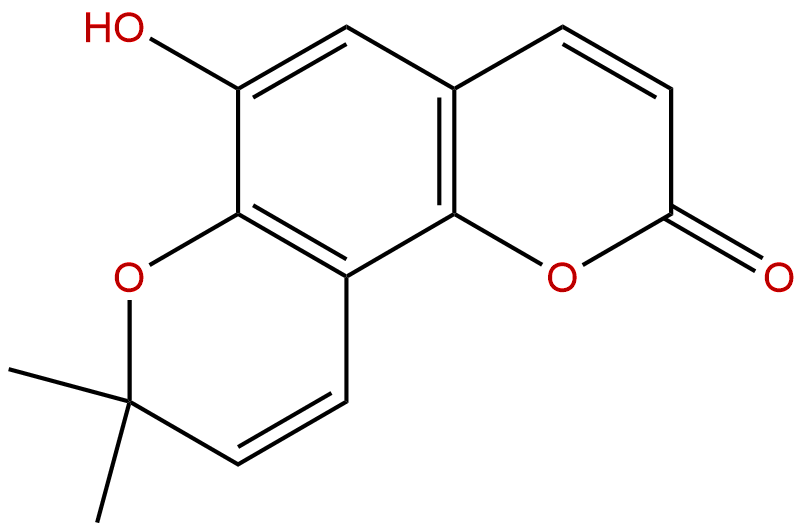
Norbraylin (CAS number: 60796-64-7) is a natural isoprenoid coumarin compound that has attracted much attention due to its unique chemical structure and biological activity. As a selective phosphodiesterase 4D2 (PDE4D2) inhibitor, demethylamine exhibits significant effects in regulating intracellular cyclic adenosine monophosphate (cAMP) levels, thereby affecting various physiological and pathological processes. In recent years, with the in-depth study of the function of PDE4 subtypes, PDE4D2 inhibitors have shown broad application potential in the fields of neurological diseases, inflammatory responses, and pain management. Especially in the field of analgesia, norepinephrine has shown good analgesic effects by regulating multi-target signaling pathways, becoming a hot topic in natural product pharmacology research.
The purpose of this article is to systematically review the chemical structure and physicochemical properties, plant sources and extraction methods, pharmacological activity and mechanism of action, drug evaluation and pharmacokinetic characteristics of desmopyramid, and explore its prospects and challenges in clinical applications, providing reference for subsequent basic and clinical research.
Chemical structure and physicochemical properties
Normeprazole belongs to the isoprenoid coumarin class compounds, with a molecular formula of C15H16O3 and a molecular weight of 244.2460. Its structural feature is that the coumarin skeleton is connected with isoprene side chains, giving it strong hydrophobicity and biological activity. The LogP value of this compound is 2.9832, indicating that it has moderate lipid solubility, which is beneficial for cell membrane penetration and in vivo distribution. The topological polar surface area (TPSA) is 59.67 Å ², which is within the ideal range for most small molecule drugs, indicating that it may have good bioavailability.
Low water solubility (0.0344 mg/mL) suggests limited solubility in aqueous phase, which may affect oral absorption and formulation design. The high permeability of the blood-brain barrier indicates that norepinephrine can effectively enter the central nervous system, which is of great significance for its development as an analgesic drug. The hERG channel inhibition test result is negative, indicating a low risk of cardiac toxicity. The Ames test score is 0.9, indicating that its genotoxicity potential is low and its safety is good.
In summary, the physicochemical properties of norepinephrine are suitable for its development as a central acting drug, but differences in water solubility may pose certain challenges to drug formulations.
Plant sources and extraction methods
Decamerophyll mainly exists in the rhizomes and leaves of certain specific plants, especially in the natural products belonging to the Apiaceae family and related plants. Classic literature reports that this compound was first isolated from certain traditional herbs, which have a history of analgesic and anti-inflammatory applications in folk medicine.
The extraction of demethylamine is usually carried out using organic solvent extraction methods, such as ethanol, methanol, or ethyl acetate extraction. The specific process includes:
- Sample Pretreatment After collecting plant materials, they are dried and crushed to increase the surface area.
- Solvent extraction Extract using 70% ethanol or methanol at room temperature or reflux conditions for several hours to several tens of hours.
- Concentrate the filtrate Remove the solvent through a rotary evaporator to obtain a concentrated extract.
- Separation and purification Separation and purification of target compounds using column chromatography (silica gel, C18 reverse phase column), high-performance liquid chromatography (HPLC), and other techniques.
- Structural Identification Confirm the structure of the compound through nuclear magnetic resonance (NMR), mass spectrometry (MS), and infrared spectroscopy (IR).
In recent years, new technologies such as ultrasound assisted extraction and microwave-assisted extraction have also been applied to the extraction of norepinephrine, improving extraction efficiency and purity, laying the foundation for large-scale production.
Pharmacological activity research
As a PDE4D2 inhibitor, the pharmacological activity of norepinephrine mainly manifests in regulating intracellular cAMP levels, thereby affecting various signaling pathways. PDE4 family members play key roles in inflammation, nerve conduction, and immune regulation, with the PDE4D2 subtype being particularly important.
PDE4D2 inhibitory activity
In vitro experiments showed that the inhibitory IC50 of demethylamine on PDE4D2 was 7.15 μ M, indicating moderate inhibitory activity. By inhibiting PDE4D2, norepinephrine can prevent the degradation of cAMP, increase cAMP levels, activate downstream signals such as protein kinase A (PKA), regulate the expression of inflammatory factors and neuronal excitability.
Analgesic effect
Dexmedetomidine has shown significant analgesic effects in various animal analgesic models. Its analgesic mechanism involves multi-target synergistic regulation, including:
- TRPV1 (Transient receptor potential vanillic acid subtype 1)Dexmedetomidine can regulate TRPV1 channel activity and weaken pain transmission.
- CNR1 (cannabinoid receptor 1)By affecting the endogenous cannabinoid system, it regulates pain perception.
- OPRD1, OPRM1, OPRK1 (δ, μ, κ opioid receptors)Enhance the analgesic effect mediated by opioid receptors.
- PTGS1, PTGS2 (cyclooxygenase 1 and 2)Inhibit the synthesis of inflammatory mediators and alleviate inflammatory pain.
- TRPA1 (Transient receptor potential vanillic acid subtype A1)Participate in the regulation of inflammation and neuropathic pain.
- SLC6A4 (Serotonin Transporter)Regulating the neurotransmitter balance in the central nervous system.
- DRD2 (dopamine D2 receptor)Affects nerve conduction and emotional regulation, indirectly participating in the analgesic process.
These multi-target effects have shown good analgesic effects of norepinephrine in both inflammatory and neuropathic pain, with relatively low side effects.
Other pharmacological activities
In addition to pain relief, norepinephrine also exhibits certain anti-inflammatory, antidepressant, and neuroprotective potential due to its PDE4 inhibitory effect, laying the foundation for its multiple pharmacological effects.
Mechanism of action and molecular targets
The core mechanism of action of norepinephrine is based on its selective inhibition of PDE4D2. PDE4D2 acts as a cAMP specific phosphodiesterase, regulating the hydrolysis of cAMP and controlling intracellular cAMP concentration. CAMP, as an important second messenger, participates in regulating inflammatory responses, nerve conduction, cellular metabolism, and other processes.
Dexmedetomidine inhibits PDE4D2, prevents cAMP degradation, leads to cAMP accumulation, activates signaling pathways such as PKA and cAMP responsive element binding protein (CREB), regulates gene expression, reduces the release of inflammatory factors (such as TNF - α, IL-1 β), alleviates neuronal excitability, and relieves pain.
In addition, norepinephrine has indirect regulatory effects on various pain related targets:
- TRPV1/TRPA1 These two types of transient receptor potential channels play a crucial role in pain perception. Dexmedetomidine reduces the excitability of nerve endings and alleviates pain transmission by regulating its activity.
- Opioid receptors (OPRD1, OPRM1, OPRK1)Enhance endogenous opioid system activity and exert analgesic effects.
- Cannabinoid receptor CNR1 Regulate neuroinflammation and pain perception, enhance analgesic effect.
- Serotonin transporter SLC6A4 and dopamine receptor DRD2 Regulating the balance of central nervous system neurotransmitters and improving pain related emotional disorders.
- Cyclooxygenase PTGS1/PTGS2 Inhibit prostaglandin synthesis and alleviate inflammatory pain.
Overall, norepinephrine exhibits unique pharmacological advantages by regulating the occurrence and transmission of pain through multi-target and multi-path synergistic effects.
Evaluation of drug properties and pharmacokinetics
Pharmaceutical properties parameters
The molecular weight (244.2460) and LogP (2.9832) of norepinephrine comply with Lipinski's "5 rules", indicating its good oral bioavailability potential. The TPSA is 59.67 Å ², below the threshold of 140 Å ², supporting its membrane permeability and blood-brain barrier permeability.
The low water solubility (0.0344 mg/mL) may limit its oral absorption rate and bioavailability, which needs to be improved through formulation optimization. The hERG channel inhibition negative and Ames test score (0.9) indicate high safety, with low risks of cardiac toxicity and genotoxicity.
The high permeability of the blood-brain barrier is an important advantage of it as a central analgesic drug, which is beneficial for exerting its effects on the central nervous system.
Pharmacokinetic characteristics
At present, there is limited systematic pharmacokinetic data on norepinephrine, but based on its physicochemical properties and structure, it is speculated that:
- absorb Oral absorption may be limited by water solubility, while moderate fat solubility is beneficial for intestinal penetration.
- distribution High blood-brain barrier permeability indicates a high distribution in the central nervous system and may reach effective concentrations in brain tissue.
- Metabolism Coumarin compounds are often metabolized by liver cytochrome P450 enzymes, and the same may be true for demethylamine. Metabolites need further identification.
- excretion Mainly excreted through the kidneys and bile, the specific clearance rate remains to be studied.
In the future, it is necessary to conduct systematic pharmacokinetic studies in vivo, including bioavailability, half-life, metabolic pathways, and drug interaction assessments, to provide a basis for clinical development.
Clinical application prospects and prospects
As a natural PDE4D2 inhibitor, norepinephrine has shown broad clinical application prospects due to its multi-target analgesic mechanism and good pharmacological parameters.
Analgesia field
At present, clinical analgesics often suffer from poor tolerance and significant side effects. Dexmedetomidine may provide a novel, effective, and safe analgesic option by regulating PDE4D2 and multiple pain related targets. It has potential effects on both central and peripheral pain, and is suitable for the management of inflammatory pain, neuropathic pain, and chronic pain.
Neurological disorders
PDE4D2 also plays an important role in cognitive function, depression, and other neurological disorders. The anti-inflammatory and neuroprotective effects of norepinephrine suggest its potential application value in diseases such as depression and Alzheimer's disease.
Challenges and Prospects in Drug Development
Although norepinephrine has good pharmacological activity and safety, its poor water solubility and pharmacokinetic properties still need to be optimized. Future research directions include:
- Formulation improvement Adopting technologies such as nanocarriers and solid dispersions to enhance water solubility and bioavailability.
- Structural modification Chemical modification is carried out based on the skeleton of norepinephrine to improve activity and selectivity.
- Systematic pharmacokinetic study Clarify the relationship between metabolic pathways and pharmacokinetics in the body.
- Preclinical safety evaluation Comprehensively evaluate toxicology and drug interactions.
- clinical trial Verify the efficacy and safety of its analgesic and other indications.
Overall, as a strong candidate for natural product drug development, norepinephrine is expected to become a novel drug for multi-target analgesia and treatment of neurological diseases in the future.
Conclusion
As a natural isoprenoid coumarin PDE4D2 inhibitor, norepinephrine has shown significant value in the field of natural product pharmacology due to its unique chemical structure and multi-target analgesic mechanism. Its physicochemical properties are suitable for the central nervous system and have good safety, providing strong support for the development of new analgesic drugs. In the future, through in-depth pharmacological mechanism research, pharmacokinetic optimization, and preclinical evaluation, norepinephrine is expected to become an innovative drug for the treatment of pain and related neurological disorders. With the continuous advancement of research on natural product drugs, the development and application prospects of demethylamine are worth looking forward to.