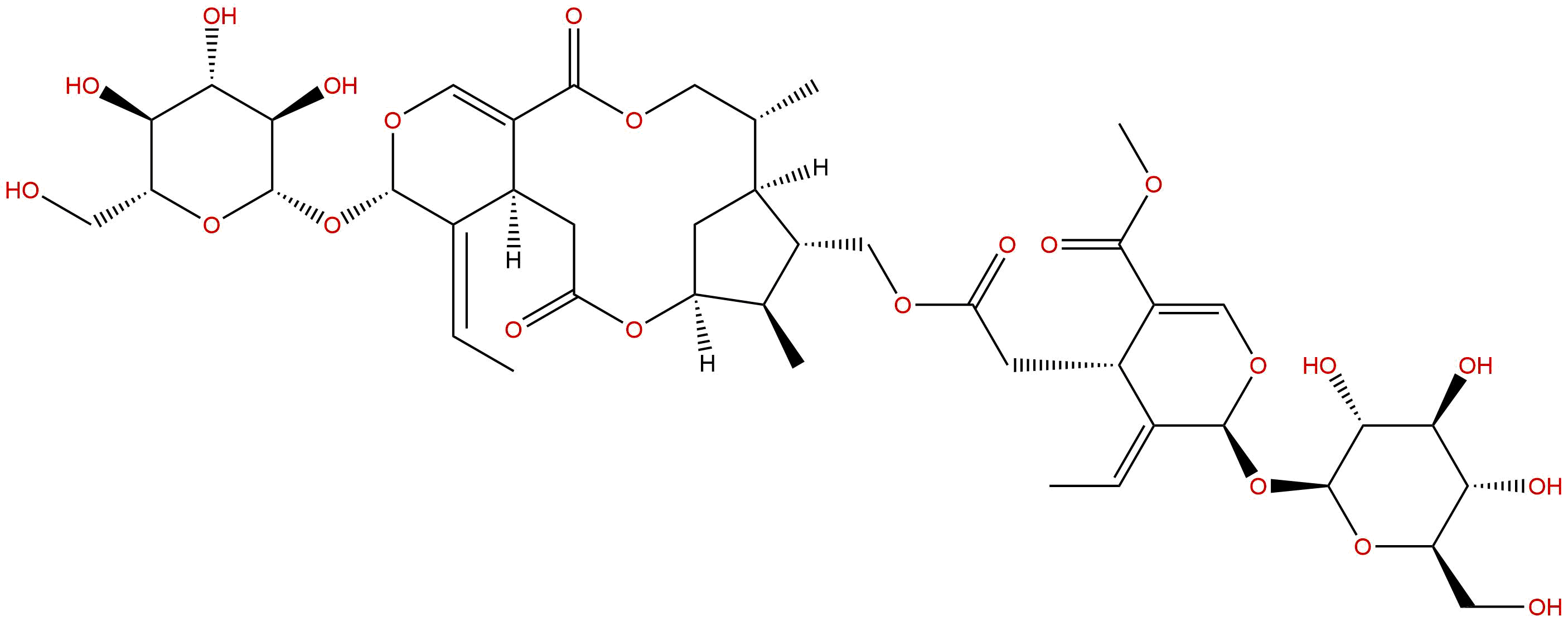


Product name: Jasnudifloside C
Synonym name:
Catalogue No.: BP5399
Cas No.: 244230-42-0
Formula: C43H60O22
Mol Weight: 928.931
Botanical Source:
Type of Compound:
Purity: 95%~99%
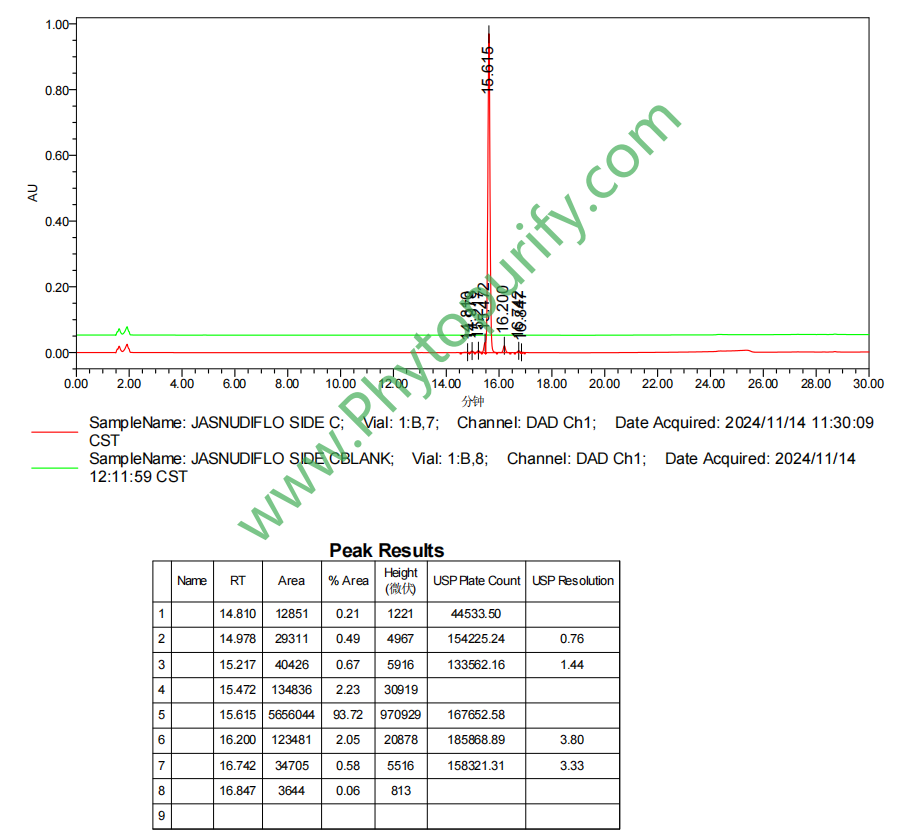
Analysis Method: HPLC-DAD or/and HPLC-ELSD
Identification Method: Mass, NMR
Packing: Brown vial or HDPE plastic bottle
Storage: Store in a well closed container, protected from air and light. Put into refrigerate or freeze for long term storage.
Whenever possible, you should prepare and use solutions on the same day. However, if you need to make up stock solutions in advance, we recommend that you store the solution as aliquots in tightly sealed vials at -20℃. Generally, these will be useable for up to two weeks.
The product could be supplied from milligrams to grams
Inquire for bulk scale.
For Reference Standard and R&D, Not for Human Use Directly.
HPLC of Jasnudifloside C
Storage conditions:Short-term storage at 2~8℃, long-term storage at -20 ~ -80℃
322.4200
.0893
.0893
2.1365
.4718
.5478
Low
65.5363
7.7414
Yes
No
No
No
Yes
No
0.0
Yes
Yes
Yes
Yes
Inflammation is a complex defensive response of the body to infection, tissue damage, or immune stimulation, involving the synergistic effects of multiple cell types, signaling pathways, and molecular mediators. Although acute inflammation is an important mechanism for the body to remove pathogens and repair tissues, the persistence of chronic inflammation has been confirmed to be closely related to the occurrence and development of a variety of major diseases, including rheumatoid arthritis, inflammatory bowel disease, atherosclerosis, diabetes, neurodegenerative diseases and even malignant tumors. Therefore, finding safe and effective anti-inflammatory drugs has always been a hot topic in the field of drug development. In recent years, natural products have shown great potential in the discovery of anti-inflammatory drugs due to their structural diversity, multi-target action characteristics, and relatively low toxicity and side effects.
Jasnudifroside C (CAS number: 244230-42-0) is derived from Jasnudifroside C, a plant of the Jasminum genus in the Oleaceae family(Jasminum nudiflorum A cyclic iridoid glycoside compound with a unique chemical structure isolated from Lindl. Cycloterpenoid glycosides are a class of secondary metabolites widely present in the plant kingdom, with various biological activities such as anti-inflammatory, antioxidant, hepatoprotective, and neuroprotective properties. As a traditional Chinese medicinal plant, Yingchun flower has flowers, leaves, and stems that can be used as medicine. It has the effects of clearing heat, detoxifying, promoting blood circulation, and relieving pain. It is commonly used in folk medicine to treat inflammation related diseases such as fever, headache, sore throat, and traumatic injuries. Yingchun glycoside C, as one of the active ingredients with high content in Yingchun flowers, has attracted widespread attention from scholars at home and abroad in recent years. Research has shown that this compound can inhibit the production of key inflammatory mediators by regulating multiple inflammatory signaling pathways, demonstrating significant anti-inflammatory activity. This article will provide a systematic review of the research progress of Jasminum glycoside C from the aspects of chemical structure, plant origin, pharmacological activity, mechanism of action, medicinal evaluation, and clinical application prospects, in order to provide reference for the in-depth development and utilization of this natural product.
Yingchun Flower Glycoside C belongs to the class of iridoid glycosides, and its chemical structure is formed by the connection of iridoid glycosides and glycosyl moieties through glycosidic bonds. According to existing literature reports, the molecular formula of this compound is C ₄∝ H ₆₀ O ₂, with a molecular weight of 928.9310 Da. From the structural characteristics, the glycoside part of Jasminum primrose C belongs to the secoiridoid skeleton, with a typical cyclopentane pyran ring system, and bond cleavage occurs between the C-7 and C-8 positions, forming a special secoiridoid structure. This structural feature endows the molecule with high chemical diversity and biological activity potential. The sugar moiety is usually composed of monosaccharide units such as glucose and xylose, and the specific sugar chain composition and connection methods vary depending on the plant source and isolation conditions. High resolution mass spectrometry (HR-MS) and nuclear magnetic resonance spectroscopy (NMR, including two-dimensional spectroscopic techniques such as ¹ H-NMR, ¹ ³ C-NMR, COSY, HSQC, HMBC, etc.) are the main methods for identifying its chemical structure.
In terms of physical and chemical properties, Yingchun Flower Glycoside C exhibits typical glycosidic compound characteristics. Its lipid water partition coefficient (LogP) is 0.0893, indicating that the compound has extremely low lipid solubility and is almost completely hydrophilic. This characteristic is closely related to the presence of multiple hydroxyl and sugar units in its molecule. The polar surface area (TPSA) is as high as 322.42 Å ², far exceeding the recommended upper limit of 140 Å ² for oral medications, indicating that the compound may be difficult to pass through biofilms through passive diffusion. The water solubility parameter is 2.1365, which belongs to the moderate water solubility range and can form a relatively stable solution under physiological pH conditions. It is worth noting that the blood-brain barrier permeability of this compound is evaluated as "low", which is consistent with its high polarity and high molecular weight characteristics, indicating that it may require special delivery strategies in the treatment of central nervous system diseases. In addition, the hERG inhibition risk assessment was negative, and the Ames test result was 0.0, indicating that the compound does not have significant genetic or cardiac toxicity risks, providing a safety basis for its further development.
The main plant source of Yingchunxin C is Yingchunxin(Jasminum nudiflorum Lindl.), This plant belongs to the Oleaceae family and the Jasminum genus(Jasminum)It is a deciduous shrub widely distributed in East Asia, including China, Japan, and South Korea. The flowering period of winter jasmine is in early spring, with flowers first and leaves later, and a golden color, which has high ornamental value. In traditional medicine, the whole plant of Yingchun flower can be used as medicine, and the flowers and leaves are often used to treat inflammatory diseases such as fever, headache, sore throat, urinary tract infections, and skin ulcers. Modern plant chemistry research has confirmed that winter jasmine is rich in various active ingredients such as iridoid glycosides, flavonoids, triterpenoids, and phenylethanoid glycosides, among which iridoid glycosides are the main pharmacological substances.
Other plants in the Jasminum genus, such as jasmine, besides the Spring Welcoming Flower(Jasminum sambac)Su Fang Hua(Jasminum officinale)It may also contain cyclohexene ether terpenoid glycosides with similar structures, but the content of Jasminum primrose glycoside C is relatively high in Jasminum primrose, which is one of the characteristic components of this plant. Research has shown that there are differences in the distribution of anthocyanins C in different parts of plants, with higher levels in flowers and leaves and lower levels in stems and roots. The harvesting season also affects its content, and the compound is most abundant in samples collected before and after the spring flowering period.
In terms of extraction methods, organic solvent extraction is usually used for the extraction of Jasminum lucidum glycoside C. Due to the high polarity of the compound, commonly used extraction solvents include methanol, ethanol, water, or their mixed solvents. Among them, a 50% -80% methanol or ethanol aqueous solution is the most commonly used extraction system, which can effectively extract the target compound while reducing the co solubility of lipophilic impurities. The extraction method can be cold soaking, reflux, or ultrasound assisted extraction. Ultrasound assisted extraction has been widely adopted in recent years due to its advantages of easy operation, high extraction efficiency, and short time. The extraction temperature is generally controlled at 40-60 ℃, and excessively high temperatures may lead to the degradation of iridoid glycosides.
The crude extract after extraction needs to undergo a systematic separation and purification process to obtain high-purity Jasminulin C. Common separation methods include liquid-liquid extraction (such as extraction with petroleum ether, ethyl acetate, n-butanol and other solvents in sequence, with the target compound mainly enriched in the n-butanol layer), macroporous adsorption resin column chromatography (such as D101, HPD100, etc., using ethanol water gradient elution), silica gel column chromatography (chloroform methanol water system), reverse phase ODS column chromatography (methanol water or acetonitrile water system), and preparative high-performance liquid chromatography (Pre HPLC). Among them, the combination strategy of macroporous adsorption resin and reverse phase column chromatography is a classic scheme for separating jasmonic acid C, which can obtain monomer compounds with a purity of over 95%. In recent years, new separation technologies such as high-speed countercurrent chromatography (HSCCC) have also been applied to the separation of this type of compound, demonstrating good separation efficiency and recovery rate.
The most noteworthy pharmacological activity of Yingchunxin C is its anti-inflammatory effect. Multiple in vitro and in vivo studies have confirmed that this compound can significantly inhibit inflammatory responses in various inflammatory models. In the macrophage RAW264.7 model stimulated by lipopolysaccharide (LPS), jasmonic acid C inhibits the production of nitric oxide (NO) and prostaglandin E ₂ (PGE ₂) in a concentration dependent manner, with a half maximal inhibitory concentration (IC ₅₀) at the micromolar level. Meanwhile, the compound can significantly reduce the secretion levels of pro-inflammatory cytokines such as tumor necrosis factor - α (TNF - α), interleukin-6 (IL-6), and interleukin-1 β (IL-1 β). In animal models, oral administration of Jasminum lucidum glycoside C can alleviate carrageenan induced paw swelling in rats, xylene induced ear swelling in mice, and cotton ball induced granuloma formation in rats, demonstrating a dual inhibitory effect on acute and chronic inflammation.
Oxidative stress is closely related to the inflammatory process, and excessive reactive oxygen species (ROS) can activate inflammatory signaling pathways, exacerbating tissue damage. Research has shown that Jasminum glycoside C has direct free radical scavenging ability, capable of scavenging DPPH free radicals, ABTS cationic free radicals, and superoxide anion free radicals. In cell models, this compound can reduce H ₂ O ₂ - induced oxidative damage, decrease intracellular ROS levels, and increase the activity of antioxidant enzymes such as superoxide dismutase (SOD), glutathione peroxidase (GSH Px), and catalase (CAT). These antioxidant properties may partially explain the molecular basis of their anti-inflammatory effects.
The liver is the main organ for drug metabolism and detoxification, and is also a common target for inflammatory reactions. Yingchun glycoside C showed protective effects in acute liver injury models induced by carbon tetrachloride (CCl ₄) and acetaminophen (APAP). Pre treatment with Jasminum glycoside C can significantly reduce serum transaminase (ALT, AST) levels, alleviate liver tissue necrosis and inflammatory cell infiltration, and inhibit the expression of pro-inflammatory cytokines in liver tissue. Its hepatoprotective mechanism may be related to inhibiting oxidative stress, reducing inflammatory response, and regulating the expression of apoptosis related proteins.
Given the low blood-brain barrier permeability of Jasminulin C, its neuroprotective effect may be indirectly achieved through peripheral pathways. However, some studies have still explored its potential in neuroinflammatory models. In LPS or A β - induced neuroinflammation models, Jasminum C can inhibit excessive activation of microglia, reduce the release of TNF - α, IL-1 β, and NO, and protect neurons from toxic damage caused by inflammatory mediators. These findings suggest that the compound may have potential therapeutic value for neurodegenerative diseases such as Alzheimer's disease, but more in vivo pharmacological data is needed to support it.
In addition to the aforementioned activities, Jasminum glycoside C has also been reported to have antibacterial, antiviral, and immunomodulatory effects. For example, the compound exhibits certain inhibitory effects on common pathogenic bacteria such as Staphylococcus aureus and Escherichia coli; In the influenza virus infection model, it can inhibit virus replication and alleviate virus induced inflammatory response. In addition, preliminary studies suggest that Jasminulin C may exert immunomodulatory effects by regulating the balance of T cell subsets, but its specific mechanism still needs further clarification.
The anti-inflammatory effect of Yingchun Flower Glycoside C involves the synergistic regulation of multiple signaling pathways and molecular targets, among which the regulation of NF - κ B and MAPK signaling pathways is the most critical.
Nuclear factor kappa B (NF - κ B) is the core transcription factor in inflammatory response, regulating the expression of various pro-inflammatory genes such as TNF - α, IL-6, IL-1 β, COX-2, and iNOS. In the resting state, NF - κ B binds to the inhibitory protein I κ B α and exists in an inactive form in the cytoplasm. When cells are stimulated by LPS, TNF - α, etc., I κ B kinase (IKK) is activated, phosphorylating I κ B α and causing it to undergo ubiquitination degradation. The released NF - κ B is then translocated into the nucleus, initiating target gene transcription. Research has shown that Jasminum glycoside C can inhibit LPS induced phosphorylation and degradation of I κ B α, block nuclear translocation of NF - κ B p65 subunit, and thus inhibit the transcriptional activity of NF - κ B. This effect may be achieved by directly inhibiting the activity of IKK β or interfering with the activation of upstream signaling molecules such as Toll like receptor 4 and TLR4. In addition, Jasminulin C can downregulate NF - κ B target genes such as TNF、IL6、IL1B、NOS2(Encoding iNOS) and PTGS2 The mRNA expression level encoding COX-2 inhibits the production of inflammatory mediators at the transcriptional level.
The mitogen activated protein kinase (MAPK) family includes three main pathways, ERK, JNK, and p38, which also play important roles in inflammatory responses. The activation of MAPK pathway can promote the activation of transcription factors such as AP-1, and co regulate the expression of inflammatory genes with NF - κ B. Research has shown that Jasminum glycoside C can inhibit LPS induced phosphorylation of p38 and JNK, but has little effect on ERK phosphorylation. This selective inhibition may be related to differences in its regulation of different upstream kinases. By blocking the p38 and JNK pathways, jasmonic acid C can further inhibit the production and release of inflammatory factors.
Yingchun Flower Glycoside C directly acts on various key inflammatory mediators and enzymes. INOS (derived from NOS2 Gene encoding) and COX-2 (encoded by)PTGS2 Gene coding is two important inducible enzymes in inflammatory response, catalyzing the synthesis of NO and PGE ₂, respectively. Yingchun Flower Glycoside C can significantly inhibit the expression of iNOS and COX-2 at both protein and mRNA levels, thereby reducing the excessive production of NO and PGE ₂. In addition, the compound can also inhibit the synthesis and secretion of pro-inflammatory cytokines such as TNF - α and IL-6. As an upstream initiating factor of inflammatory response, TNF - α inhibition can produce a cascade amplification effect, further downregulating the expression of downstream inflammatory mediators.
In addition to the classic pathways mentioned above, Jascin C may also exert anti-inflammatory effects by regulating other signaling molecules. For example, studies have shown that this compound can activate the Nrf2/ARE antioxidant pathway, promote the expression of antioxidant enzymes such as HO-1 and NQO1, and enhance the antioxidant defense ability of cells. In addition, jasmonic acid C may also regulate inflammatory response and cell survival by inhibiting the activation of signaling pathways such as STAT3 and PI3K/Akt. These multi-target and multi pathway action characteristics give Yingchunxin C unique advantages in anti-inflammatory treatment, but also increase the complexity of its mechanism of action research.
Based on classic pharmacological evaluation criteria such as Lipinski's "Five Rules" and Veber's Rules, the pharmacological properties of Jasminulin C face certain challenges. Its molecular weight (928.93 Da) far exceeds the threshold of 500 Da, the LogP value (0.0893) is below the acceptable range of -0.4 to 5.6, the TPSA (322.42 Å ²) is much higher than the recommended upper limit of 140 Å ², and the number of hydrogen bond donors and acceptors in the molecule exceeds the limits of 5 and 10. These parameters indicate that Jasminum glycoside C does not meet the physical and chemical properties requirements of traditional oral drugs, and may have problems such as low oral bioavailability and poor membrane permeability. However, many compounds with good activity in natural products do not fully comply with the "Five Rules", and in recent years, the successful development of "Beyond the Five Rules" (bRo5) drugs (such as certain macrolides and cyclic peptide antibiotics) has provided new ideas for the development of such compounds. The high polarity and high molecular weight characteristics of Yingchunxin C suggest that it may be more suitable for development as an injection or topical preparation, rather than a traditional oral dosage form.
At present, research on the pharmacokinetics of Jasminum lucidum glycoside C in vivo is relatively limited. Preliminary studies have shown that the compound has poor absorption and low bioavailability after oral administration, which may be related to its high polarity and high molecular weight, making it difficult to penetrate intestinal epithelial cells. After intravenous administration, jasmonic acid C is widely distributed in the body, but mainly retained in tissues such as blood and liver, with extremely low distribution in brain tissue, consistent with its assessment of low blood-brain barrier permeability. In terms of metabolism, iridoid glycosides mainly undergo metabolic pathways such as deglycosylation, methylation, and glucuronic acid binding in the body. Yingchun Flower Glycoside C may undergo glycosidic bond hydrolysis under the action of gut microbiota or liver enzymes, generating aglycones or secondary glycosides, which may have different biological activities and pharmacokinetic characteristics. The main excretion pathways are bile and urine, and the prototype drug and its metabolites can be detected in feces and urine.
As mentioned earlier, Yingchun Flower Glycoside C performed well in the preliminary safety evaluation. A negative hERG inhibition test indicates a lower risk of cardiac toxicity; The Ames test result is 0.0, indicating no significant mutagenicity. In acute toxicity studies, the half lethal dose (LD ₅₀) of oral administration of Jasminum glycoside C in mice is relatively high, and the safety window is wide. Subacute toxicity studies showed that after 28 days of continuous administration, no significant abnormalities were observed in the body weight, organ coefficient, hematological and biochemical indicators of rats, and no obvious toxic damage was found in the pathological examination of major organ tissues. These data preliminarily support the safety of Jasminum lucidum glycoside C, but deeper safety evaluations such as long-term toxicity and reproductive toxicity are still needed.
The most direct clinical application prospect of Yingchunxin C is as a candidate compound for anti-inflammatory drugs. Given its characteristic of exerting anti-inflammatory effects through multiple targets and pathways, this compound may have unique advantages in the treatment of chronic inflammatory diseases. For example, in autoimmune inflammatory diseases such as rheumatoid arthritis, inflammatory bowel disease, psoriasis, etc., salidroside C may alleviate disease symptoms by inhibiting the NF - κ B and MAPK pathways, reducing the production of key pro-inflammatory factors such as TNF - α and IL-6. Compared with existing biologics such as TNF - α monoclonal antibodies, small molecule natural products have the advantages of low production cost, convenient administration (possibly developed as injections or topical preparations), and low immunogenicity. However, the problem of low oral bioavailability needs to be improved through formulation techniques (such as liposomes, nanoparticles, phospholipid complexes, etc.) or structural modifications (such as prodrug design, glycosylation modification, etc.).
The hepatoprotective activity of Yingchunxin C provides a basis for its application in the treatment of liver diseases. Alcoholic liver disease, non-alcoholic fatty liver disease (NAFLD), and drug-induced liver injury all involve the involvement of oxidative stress and inflammatory reactions. Yingchun Flower Glycoside C may have therapeutic effects on the above-mentioned liver diseases by inhibiting hepatocyte apoptosis, reducing oxidative damage and inflammatory response. Especially for acute liver injury caused by excessive acetaminophen, this compound may serve as an adjuvant therapy to reduce the severity of liver injury. More preclinical studies are needed in the future to validate its efficacy in different liver disease models and explore its synergistic effects with existing hepatoprotective drugs such as silymarin and glycyrrhetinic acid.
Although the ability of jasmonic acid C to cross the blood-brain barrier is limited, the close relationship between peripheral inflammation and central nervous system diseases provides the possibility for indirect treatment strategies. Peripheral inflammation can affect central nervous system function through pathways such as the gut brain axis or the liver brain axis. Yingchun Flower Glycoside C may indirectly improve neuroinflammatory status by reducing peripheral inflammation, and have beneficial effects on neurodegenerative diseases such as Alzheimer's disease and Parkinson's disease. In addition, bypassing the blood-brain barrier through nasal administration or nano delivery systems may also be an effective strategy to increase its drug concentration in the brain.
The antioxidant and anti-inflammatory activities of Yingchun Flower Glycoside C make it have potential applications in the fields of cosmetics and skin care. Factors such as ultraviolet radiation and environmental pollution can induce oxidative stress and inflammatory reactions in the skin, leading to problems such as skin aging, pigmentation, and sensitivity. Yingchun Flower Glycoside C, as a natural active ingredient, can be added to skincare products to exert antioxidant, anti-inflammatory, and soothing effects on the skin. Its good water solubility makes it easy to prepare into water, essence or facial mask. In addition, the inhibitory effect of this compound on Staphylococcus aureus also provides a possibility for its application in the treatment of acne.
Despite the various pharmacological activities and good safety demonstrated by Jasminum glycoside C, its translation from laboratory research to clinical application still faces many challenges. Firstly, poor pharmacokinetic properties are the biggest obstacle, requiring the development of effective drug delivery systems or structural modifications to enhance their bioavailability. Secondly, current research mainly focuses on in vitro and animal models, lacking systematic preclinical pharmacological and toxicological evaluations, especially in long-term toxicity, reproductive toxicity, and carcinogenicity studies. Thirdly, although its mechanism of action has been partially elucidated, the specific molecular targets (such as directly bound proteins) are not yet clear, which limits structure based drug optimization. Fourth, the large-scale production and quality control of natural products are also problems that need to be solved in the process of industrialization.
Future research should focus on the following aspects: firstly, using modern medicinal chemistry methods to optimize the structure of Jasminum lucidum glycoside C, improving its pharmacokinetic properties while maintaining its activity; The second is to develop new drug delivery systems, such as liposomes, polymer nanoparticles, phospholipid complexes, etc., to improve their oral bioavailability or achieve targeted delivery; Thirdly, we will conduct in-depth research on the mechanism of action and use chemical biology methods (such as drug affinity reaction target stability technology, thermal proteomics analysis, etc.) to identify its direct target of action; The fourth is to promote the preclinical safety evaluation of the system, laying the foundation for clinical trial application; The fifth is to explore its synergistic effects with other drugs and develop compound formulations.
As a cyclic terpenoid glycoside isolated from the traditional medicinal plant Jasminum prolifera, Jasminum glycoside C has become a research hotspot in the field of natural product pharmacology due to its unique chemical structure and significant anti-inflammatory activity. This compound inhibits the expression of various inflammatory mediators such as iNOS, COX-2, TNF - α, IL-6, and IL-1 β by regulating key signaling pathways such as NF - κ B and MAPK, demonstrating good anti-inflammatory effects in various inflammatory models. Meanwhile, its additional activities such as antioxidant, hepatoprotective, and neuroprotective have further expanded its application prospects. Although the pharmacological evaluation shows that the compound has deficiencies in oral bioavailability and membrane permeability, the preliminary safety data is encouraging. In the future, through drug chemical modification, new formulation technology, and in-depth mechanism of action research, Jasminum glycoside C is expected to be developed as a new candidate drug for the treatment of inflammation related diseases. The in-depth study of this natural product not only helps to reveal the traditional pharmacological substance basis of Yingchun flower, but also provides valuable examples for discovering innovative drugs from traditional Chinese medicine. With the continuous deepening of research, the application value of Yingchunxin C and its derivatives in the pharmaceutical and health industries will be further explored and realized.
