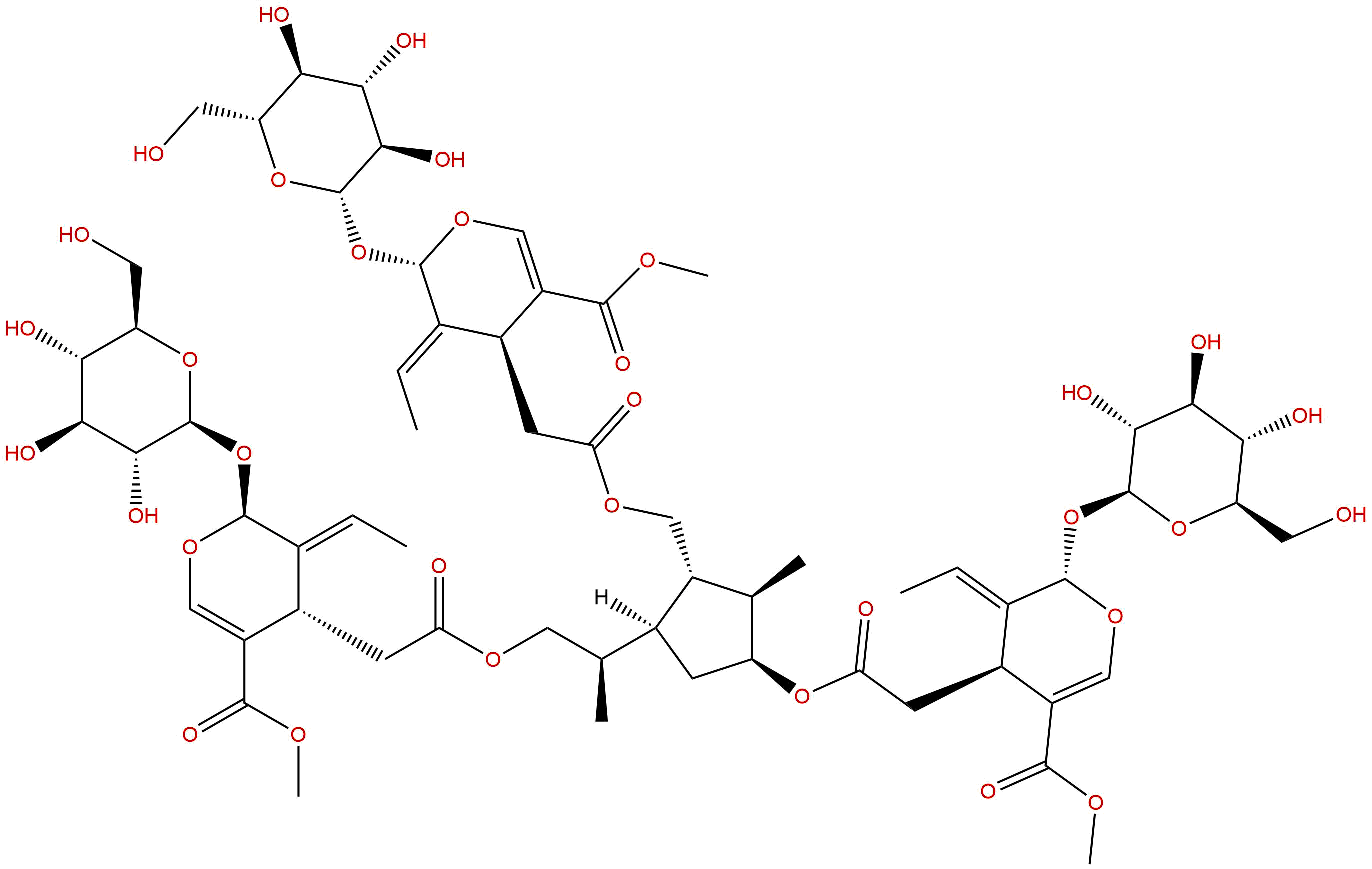


Product name: Jasnudifloside B
Synonym name:
Catalogue No.: BP5398
Cas No.: 244230-40-8
Formula: C61H86O33
Mol Weight: 1347.33
Botanical Source:
Type of Compound:
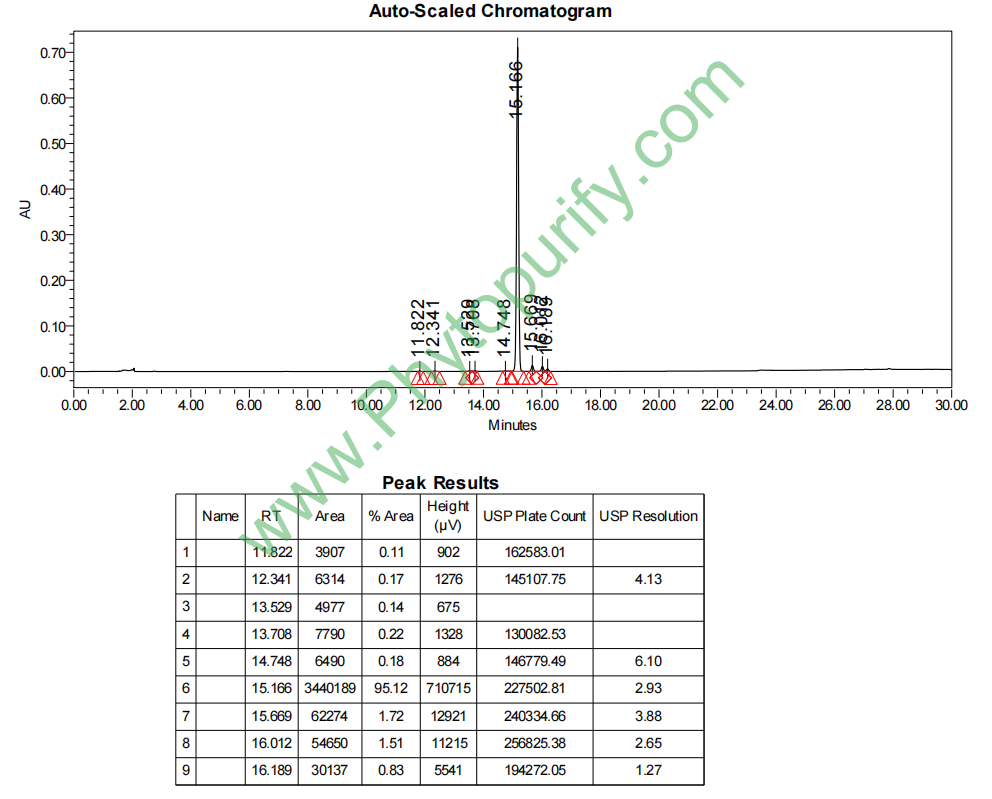
Purity: 95%~99%
Analysis Method: HPLC-DAD or/and HPLC-ELSD
Identification Method: Mass, NMR
Packing: Brown vial or HDPE plastic bottle
Storage: Store in a well closed container, protected from air and light. Put into refrigerate or freeze for long term storage.
Whenever possible, you should prepare and use solutions on the same day. However, if you need to make up stock solutions in advance, we recommend that you store the solution as aliquots in tightly sealed vials at -20℃. Generally, these will be useable for up to two weeks.
The product could be supplied from milligrams to grams
Inquire for bulk scale.
For Reference Standard and R&D, Not for Human Use Directly.
HPLC of Jasnudifloside B
Storage conditions:Short-term storage at 2~8℃, long-term storage at -20 ~ -80℃
483.6300
.8790
.8789
1.9686
.4152
.2010
Low
65.9195
7.6625
Yes
No
No
No
Yes
No
0.0
Yes
Yes
Yes
Yes
Natural products, as an important source of drug discovery, play an irreplaceable role in the long history of human struggle against diseases. From the classic analgesic morphine to the antimalarial drug artemisinin, and then to the anti-cancer drug paclitaxel, the chemical diversity inherent in nature provides endless inspiration and lead compounds for modern drug development. Among numerous biologically active natural products, iridoid glycosides from Oleaceae plants have attracted much attention due to their novel structures and diverse activities. Yingchun Flower(Jasminum nudiflorum Lindl.), As a typical representative of the Osmanthus genus in the Oleaceae family, it not only symbolizes early spring with its phenological characteristics of "welcoming spring", but also has a history of application in traditional Chinese medicine for clearing heat, detoxifying, promoting blood circulation, and relieving pain. In recent years, systematic studies on the chemical composition of Jasminum lucidum have revealed a series of structurally unique iridoid glycosides. Among them, Jasnudifroside B has gradually become a research hotspot in the field of natural product pharmacology due to its complex chemical structure and significant anti-tumor activity.
Jasnudifroside B, with a CAS number of 244230-40-8, is a polycyclic iridoid glycoside isolated from Jasnudifroside flowers. Its molecular weight is as high as 1347.3260 Da, far exceeding that of general small molecule drugs and belonging to the category of large molecule natural products. This structural feature not only endows it with unique biological activity, but also poses challenges to its medicinal properties. Preliminary pharmacological studies have shown that Jasminum B exhibits broad-spectrum anti-tumor potential, and its mechanism of action involves the regulation of multiple key signaling pathways and targets, including anti apoptotic proteins MCL1 and BCL2, transcription factor STAT3, matrix metalloproteinase MMP2, topoisomerase TOP1 and TOP2A, hypoxia inducible factor HIF1A, mitogen activated protein kinase MAPK1, estrogen receptor ESR1, and aromatase CYP19A1. This multi-target mode of action demonstrates unique advantages in overcoming tumor heterogeneity and drug resistance, in line with the current trend of anti-tumor drug development shifting from "single target" to "multi-target" or "network regulation".
This article aims to provide a systematic review of the research status of Jasminum B, comprehensively analyzing the research value and future development direction of this natural product from multiple dimensions such as chemical structure and physicochemical properties, plant sources and extraction methods, pharmacological activity, mechanism of action, drug evaluation, and clinical application prospects, in order to provide reference for subsequent basic research and drug development.
The chemical structure of Yingchun Flower Glycoside B is the material basis for its biological activity. From a structural classification perspective, it belongs to the dimer or more complex oligomer of iridoid glycosides. Cycloterpenes are a type of natural product with a cyclopentane [c] pyran monoterpene skeleton, widely distributed in the plant kingdom, especially abundant in plants of the Oleaceae, Rubiaceae, and Scrophulariaceae families. The structural feature of Yingchunxin B is that it is composed of multiple cyclohexene ether terpene units connected by specific glycosidic or ester bonds, forming a highly oxidized, high molecular weight polycyclic system. This complex polymer structure is relatively rare in nature and explains its unique biological activity spectrum.
Specifically, the molecular formula of Jasminum B is C ₆₂ H ₈₂ O ∝, with a precise molecular weight of 1347.3260 Da. Such a high molecular weight gives it significant physical and chemical properties. Its lipophilic water partition coefficient (LogP) is 0.8790, indicating that the compound has a certain hydrophilicity, which is mainly attributed to the large number of hydroxyl and sugar units in its molecular structure. The topological polar surface area (TPSA) is as high as 483.6300 Å ², which is much higher than the recommended upper limit of 140 Å ² for oral drugs, indicating poor transmembrane permeability. The water solubility parameter (1.9686) further confirms its good water solubility, which is consistent with the high TPSA value. These physicochemical properties collectively determine the absorption, distribution, metabolism, and excretion (ADME) process of Jasminum B in the body.
From the perspective of medicinal chemistry, the molecular structure of Jasminum B contains multiple donor and acceptor groups that can form hydrogen bonds, allowing it to interact extensively with various protein targets. For example, its abundant phenolic hydroxyl groups and hydroxyl groups on sugar groups can participate in the formation of hydrogen bonding networks, while ester and ether bonds provide the possibility of hydrophobic interactions. This structural multifunctionality is the structural basis for its ability to simultaneously act on multiple different functional targets such as MCL1, BCL2, STAT3, MMP2, TOP1, HIF1A, TOP2A, MAPK1, ESR1, and CYP19A1. However, this structural complexity also presents significant challenges in synthesis. Currently, the source of Jasminum B mainly relies on extraction and isolation from natural plants, and research on chemical total synthesis or semi synthesis has not been reported yet.
The discovery and isolation of Yingchun flower glycoside B originated from the study of Yingchun flower(Jasminum nudiflorum)Systematic study of chemical composition. Yingchun flower is native to China and widely distributed in North China, East China, and Southwest China. It is a common ornamental and medicinal plant. In folk medicine, the leaves, flowers, and roots of Yingchun flower can be used as medicine, which has the effects of clearing heat and detoxifying, diuresis, reducing swelling, promoting blood circulation, and relieving pain. It is commonly used to treat symptoms such as fever, headache, difficulty urinating, and traumatic injuries. Modern plant chemistry research has revealed that the flowers of Yingchun are rich in various types of secondary metabolites, including iridoid glycosides, iridoid glycosides, flavonoids, phenylethanoid glycosides, and triterpenoids. Among them, iridoid glycosides are its characteristic components and the main material basis for its anti-inflammatory, antiviral, and anti-tumor activities.
The extraction and separation of Yingchunxin B usually follow the classic process of natural product chemistry. Firstly, the dried whole plant or specific parts (such as aboveground parts) of Jasminum lucidum are crushed and subjected to cold soaking or hot reflux extraction using polar solvents such as methanol or ethanol. After the extraction solution is concentrated under reduced pressure, the total extract is obtained. Subsequently, using liquid-liquid extraction method, the total extract was subjected to graded extraction with petroleum ether, ethyl acetate, n-butanol, and water in sequence. Due to its high polarity and water solubility, Jascin B is usually enriched in the n-butanol extraction layer or water layer.
Further separation and purification require the use of various modern chromatographic techniques. Positive phase silica gel column chromatography is the most commonly used preliminary separation method, which separates iridoid glycosides from other impurities with lower polarity by gradient elution using chloroform methanol or ethyl acetate methanol systems with different ratios. Subsequently, reverse phase silica gel column chromatography (such as ODS-C18) is used for further refining, typically using methanol water or acetonitrile water systems for elution. For isomers or homologues with extremely similar structures, efficient separation techniques such as high-performance liquid chromatography (HPLC) or high-speed countercurrent chromatography (HSCCC) are essential. Finally, the chemical structure of Jasminum B was determined by spectroscopic methods such as nuclear magnetic resonance spectroscopy (NMR), high-resolution mass spectrometry (HR-MS), and circular dichroism (CD), combined with data comparison with known compounds. Due to its low content in plants and the cumbersome separation process with low yield, establishing an efficient and environmentally friendly extraction process is the key to promoting its in-depth research.
The most notable pharmacological activity of Yingchun Flower Glycoside B is its anti-tumor effect. Existing research evidence indicates that this compound exhibits significant proliferation inhibition and cytotoxic effects on various types of tumor cell lines, demonstrating broad-spectrum anti-tumor potential. Its mechanism of action is not singular, but rather achieved by regulating multiple signaling pathways and molecular targets closely related to tumor occurrence and development.
1. Inducing cell apoptosis:
The escape of cell apoptosis is one of the hallmark features of cancer. Yingchun Flower Glycoside B can effectively induce apoptosis in tumor cells, targeting the core of the apoptosis regulatory network - BCL2 family proteins. Research has shown that Jasminum B can downregulate the expression levels of anti apoptotic proteins MCL1 and BCL2, while possibly upregulating the activity of pro apoptotic proteins such as BAX and BAK, thereby breaking the stability of the mitochondrial outer membrane, leading to the release of cytochrome c, and activating the Caspase cascade reaction, ultimately triggering cell apoptosis. In addition, the STAT3 signaling pathway is continuously activated in various tumors, promoting cell survival and proliferation. Yingchun Flower Glycoside B has been found to inhibit the phosphorylation of STAT3, block its nuclear translocation, and inhibit the transcription of downstream target genes (such as MCL1, BCL2, Survivor, etc.), thereby synergistically promoting apoptosis.
2. Inhibit tumor invasion and metastasis:
Tumor metastasis is the main cause of death in cancer patients. Matrix metalloproteinases (MMPs), especially MMP2 and MMP9, play a crucial role in degrading extracellular matrix, promoting tumor cell invasion, and angiogenesis. Research has shown that Jasminum B can significantly reduce the activity or expression level of MMP2, thereby inhibiting the migration and invasion ability of tumor cells. This effect may be related to its regulation of the MAPK signaling pathway. MAPK1 (i.e. ERK2) is a key node in the MAPK/ERK pathway, and abnormal activation of this pathway is often associated with tumor invasion and metastasis. Yingchun Flower Glycoside B may downregulate the expression of MMP2 by inhibiting the phosphorylation of MAPK1.
3. Intervention in tumor microenvironment and angiogenesis:
The growth and metastasis of solid tumors depend on the generation of new blood vessels. Hypoxia inducible factor 1 alpha (HIF1A) is a core transcription factor for tumor cells to adapt to the hypoxic microenvironment, which can activate the expression of angiogenic factors such as vascular endothelial growth factor (VEGF). Yingchun Flower Glycoside B has been found to inhibit the protein expression or transcriptional activity of HIF1A, thereby cutting off the "nutrient supply line" of tumors and inhibiting tumor growth. In addition, the inhibitory effect of this compound on topoisomerases TOP1 and TOP2A is also worth noting. TOP1 and TOP2A are key enzymes in DNA replication and transcription processes, as well as classic targets for various clinical anticancer drugs such as camptothecin and etoposide. Jasminum B may exert cytotoxic effects by inhibiting the activity of these two enzymes, interfering with the DNA topology of tumor cells, leading to DNA damage and cell cycle arrest.
4. Intervention for hormone related tumors:
For hormone dependent tumors such as breast cancer, estrogen receptor alpha (ESR1) and aromatase (CYP19A1) are important therapeutic targets. CYP19A1 is responsible for converting androgens into estrogen and is the main source of estrogen in postmenopausal women's bodies. Yingchun Flower Glycoside B is predicted to have regulatory effects on ESR1 and CYP19A1. This suggests that it may inhibit the proliferation of hormone sensitive breast cancer cells by antagonizing estrogen signaling pathway or inhibiting estrogen synthesis, providing a new candidate molecule for the treatment of breast cancer.
The multi-target mode of action of Yingchunxin B is the core characteristic of its anti-tumor activity. This "multi-target, multi pathway" network regulatory mechanism may have advantages over single target drugs in dealing with complex and variable tumor systems, especially in overcoming tumor heterogeneity and delaying the development of drug resistance. The following provides a detailed analysis of its main molecular targets and mechanisms of action.
1. Apoptosis regulatory network: MCL1, BCL2, and STAT3
MCL1 and BCL2 are key anti apoptotic proteins in the BCL2 family, highly expressed in various hematological malignancies and solid tumors, and closely related to tumor occurrence, development, and chemotherapy resistance. Yingchunxin B downregulates the expression of MCL1 and BCL2 directly or indirectly, which is one of the core mechanisms for inducing apoptosis. STAT3 is a key transcription factor that connects extracellular signals with nuclear gene transcription. In tumor cells, the sustained phosphorylation (activation) of STAT3 drives the transcription of anti apoptotic genes such as MCL1 and BCL2. Jasminum B may inhibit its transcriptional activity by suppressing the activity of upstream kinases such as JAK or SRC, or directly interacting with STAT3 protein to block its phosphorylation and dimerization. Therefore, the regulation of MCL1/BCL2 by Jasmonic acid B may be partially achieved by inhibiting the STAT3 signaling pathway, forming a cascade inhibitory effect of "STAT3 → MCL1/BCL2".
2. Invasion and metastasis axis: MMP2 and MAPK1
MMP2 (gelatinase A) is a key enzyme that degrades type IV collagen and plays a decisive role in the process of tumor cells breaking through the basement membrane, invading, and metastasizing. MAPK1 (ERK2) is a core member of the RAS-RAF-MEK-ERK signaling pathway, which is crucial in regulating cell proliferation, differentiation, and migration. In many tumors, abnormal activation of MAPK1 upregulates the expression of MMP2. Jasminulin B may downregulate the expression of MMP2 at the transcriptional level by inhibiting the phosphorylation of MAPK1 and blocking the activation of downstream transcription factors such as AP-1. In addition, it may also directly bind to the catalytic domain of MMP2 protein, inhibiting its enzymatic activity. This inhibition of the "MAPK1 → MMP2" axis is the key molecular basis for the anti metastatic activity of Jasminum lucidum glycoside B.
3. DNA topology regulation: TOP1 and TOP2A
TOP1 and TOP2A are DNA topoisomerases that solve the problem of topological tension in DNA replication and transcription by cutting and reconnecting DNA strands. TOP1 cleaves single stranded DNA, while TOP2A cleaves double stranded DNA. Multiple clinical anticancer drugs, such as camptothecin inhibitor TOP1, anthracycline and podophyllotoxin inhibitor TOP2A, capture these topoisomerases on DNA fragmentation complexes, leading to the accumulation of DNA damage and ultimately causing cell death. The dual inhibitory effect of Yingchunxin B on TOP1 and TOP2A makes it a potential "dual target" topoisomerase inhibitor. This dual inhibition may produce a synergistic effect, enhance DNA damage effects, and potentially reduce resistance to single target inhibitors.
4. Tumor microenvironment and metabolic adaptation: HIF1A
HIF1A is a core regulatory factor for tumor cells to respond to the hypoxic microenvironment. Under normoxic conditions, HIF1A is hydroxylated by prolyl hydroxylase (PHD) and subsequently recognized and degraded by VHL protein. Under hypoxic conditions, HIF1A is stably expressed and forms a dimer with HIF1B, entering the nucleus to activate the transcription of downstream target genes such as VEGF, erythropoietin (EPO), and glycolytic enzymes, thereby promoting angiogenesis, red blood cell production, and metabolic reprogramming. Yingchun Flower Glycoside B may "starve" tumors, inhibit their angiogenesis and ability to adapt to hypoxia by promoting the degradation of HIF1A or inhibiting its transcriptional activity.
5. Hormone signaling pathway: ESR1 and CYP19A1
ESR1 (estrogen receptor alpha) is a member of the nuclear receptor superfamily, mediating the pro proliferative signaling of estrogen. CYP19A1 (aromatase) is the rate limiting enzyme in estrogen biosynthesis. The potential effect of Jasminum nudiflorum B on these two targets suggests its possibility in the treatment of hormone dependent tumors (such as breast cancer and endometrial cancer). It may act as an antagonist of ESR1, competitively inhibiting the binding of estrogen to receptors; Or as an inhibitor of CYP19A1, reducing the production of estrogen in the body. This dual endocrine regulation may have unique value in the treatment of breast cancer.
In summary, the mechanism of action of Jasminum B is not non-linear and singular, but forms a complex network that simultaneously acts on multiple key processes such as cell apoptosis, proliferation, invasion, metastasis, angiogenesis, DNA damage repair, and hormone signaling. This "multi-target synergistic" mode of action is the core advantage of its anti-tumor activity.
Despite the remarkable anti-tumor activity exhibited by Jasminum B, its complex chemical structure also presents significant challenges for drug development. The evaluation of drug properties is a key bridge connecting basic research and clinical translation, mainly assessing the ADME (absorption, distribution, metabolism, excretion) characteristics and toxicity of compounds.
1. Physical and chemical properties and the "Five Rules for Similar Drugs"
According to Lipinski's "Rule of Five", an ideal candidate oral drug should typically meet the following criteria: molecular weight<500, LogP<5, The number of hydrogen bond donors is less than 5, and the number of hydrogen bond acceptors is less than 10. The molecular weight of Yingchun Flower Glycoside B is as high as 1347.3260 Da, and the number of hydrogen bond donors and acceptors far exceeds the upper limit of the rule. In addition, its TPSA is as high as 483.6300 Å ², far higher than the usual threshold for oral medications (140 Å ²). These data strongly indicate that the transmembrane permeability of Jasminum B is extremely poor, and its oral bioavailability may be very low. Although its good water solubility (1.9686) is beneficial for the development of injectable formulations, its high polarity and large molecular weight make it difficult to passively diffuse through cell membranes. Therefore, Jasminum B is likely not an ideal oral drug candidate.
2. Penetration of blood-brain barrier and cardiotoxicity
The blood-brain barrier (BBB) penetration assessment shows that the BBB penetration ability of Jasminum B is "low". This is to some extent an advantage, as many anti-tumor drugs need to avoid entering the central nervous system to reduce neurotoxicity. However, for drugs that need to treat primary or metastatic brain tumors, low BBB penetration is a significant drawback. The hERG inhibition assessment result is' no ', which is a positive signal indicating that the risk of inducing QT interval prolongation and arrhythmia in the heart at therapeutic concentrations of Jasminum B is low. The Ames test result was 0.0, indicating that it did not exhibit significant genetic toxicity in the bacterial recovery mutation test, which is a favorable factor in its safety evaluation.
3. Pharmacokinetic challenges and strategies
Based on its physicochemical properties, it can be reasonably inferred that the pharmacokinetic characteristics of Jasminum B in vivo include poor oral absorption and low bioavailability; After intravenous administration, due to its high molecular weight and polarity, it may mainly be distributed in extracellular fluid, and renal clearance or bile excretion may be its main elimination pathway. Its rich hydroxyl and sugar structures make it a potential substrate for liver or intestinal microbiota metabolism, which may undergo phase II metabolic reactions such as hydrolysis, oxidation, and glucuronidation.
Faced with these challenges of drug development, future drug development strategies need to be innovative. First,Formulation design It's crucial. By utilizing nanotechnology such as liposomes, polymer nanoparticles, micelles, etc., Jasminum B can be encapsulated within it, improving its solubility and stability, and achieving tumor targeted delivery through enhanced permeability and retention effect (EPR effect). Secondly,Prodrug strategy It is another feasible path. By introducing cleavable lipid soluble groups (such as amino acid esters and phosphate esters) into the molecule, its polar groups can be temporarily "shielded", improving lipid solubility and membrane permeability. After entering the body, the original drug can be released through enzymatic or chemical hydrolysis. Finally,Simplification of Structure and Synthesis of Derivatives It's the fundamental way out. Although total synthesis is extremely difficult, it is possible to attempt structural simplification based on its active fragments (such as cyclohexene ether terpene cores or key sugar chains) to find derivatives with smaller molecular weight, stronger activity, and better drug properties.
As a natural product with unique chemical structure and multi-target anti-tumor activity, Yingchunxin B has broad clinical application prospects, but also faces huge challenges.
1. Potential indications
Based on its mechanism of action, Jasminum B may have therapeutic potential in the following types of tumors:
- Hematological malignancies: Given its inhibitory effect on MCL1 and BCL2, Jasminum B has great potential in the treatment of tumors highly dependent on MCL1 or BCL2 survival, such as multiple myeloma, acute myeloid leukemia, and chronic lymphocytic leukemia. It may be used as a monotherapy or in combination with BCL2 inhibitors such as Venetoclax to overcome drug resistance.
- Solid tumor: Its inhibitory effects on MMP2, HIF1A and MAPK1 make it valuable in the treatment of highly invasive and metastatic solid tumors (such as breast cancer, lung cancer, colorectal cancer, melanoma). The effect on ESR1 and CYP19A1 is especially directed to hormone receptor positive breast cancer.
- Hormone dependent tumors: Its dual regulation of ESR1 and CYP19A1 gives it unique advantages in the treatment of hormone dependent tumors such as breast cancer, endometrial cancer and prostate cancer.
2. Combination therapy strategy
Given its multi-target properties, Jasminum B is an ideal candidate molecule for combination therapy. For example:
- Combined use with chemotherapy drugs: Combined use with DNA damaging drugs such as cisplatin and doxorubicin may enhance DNA damage induced cell death by inhibiting TOP1/TOP2A and apoptotic proteins.
- Combined use with targeted drugs: Combined with BCL2 inhibitor (Venetoclax), it may achieve dual blockade of anti apoptotic proteins BCL2 and MCL1, effectively overcoming drug resistance. Combined use with MAPK pathway inhibitors (such as MEK inhibitors) may more thoroughly block the RAS-RAF-MEK-ERK pathway.
- Combined with immunotherapy: Inducing tumor cell apoptosis can release tumor antigens, which may enhance the efficacy of immune checkpoint inhibitors such as PD-1/PD-L1 antibodies. In addition, inhibiting the STAT3 signaling pathway can reverse the immunosuppressive state in the tumor microenvironment.
3. Future research directions
In the future, research on Jasminum B should focus on the following aspects:
- In depth mechanism research: Using proteomics, transcriptomics, and chemical biology methods, systematically identify the target proteins directly bound to it and elucidate the molecular details of its "multi-target" action.
- Structure performance relationship research: By separating more structurally similar natural products or conducting semi synthetic research, we can explore which functional groups or fragments in their molecules are necessary for activity, providing a basis for structural optimization.
- Pharmacokinetic optimization: Focus on developing targeted delivery systems based on nanotechnology, or designing prodrugs to overcome the bottlenecks of low oral bioavailability and poor membrane permeability.
- In vivo pharmacological and toxicological evaluation: Establish animal models of various tumors (such as xenograft tumor models and in situ tumor models), systematically evaluate their in vivo anti-tumor activity, pharmacokinetic characteristics, and safety.
- Expand activity spectrum research: In addition to its anti-tumor activity, its potential applications in other disease fields such as anti-inflammatory, antiviral, neuroprotective, etc. should also be explored.
Yingchun Flower Glycoside B, a complex iridoid glycoside derived from the traditional Chinese medicine Yingchun Flower, occupies an important position in the field of natural product pharmacology due to its unique chemical structure and multi-target anti-tumor mechanism. It exhibits broad-spectrum anti-tumor potential by regulating a series of key targets closely related to tumor occurrence, development, metastasis, and drug resistance, such as MCL1, BCL2, STAT3, MMP2, TOP1, HIF1A, TOP2A, MAPK1, ESR1, and CYP19A1. It particularly demonstrates unique advantages in intervening in "difficult to treat" processes such as apoptosis escape, invasion and metastasis, and tumor microenvironment adaptation.
However, the path from "natural active molecules" to "clinical drugs" is still full of challenges. Its enormous molecular weight, high polarity, and low membrane permeability, among other physicochemical properties, constitute the main obstacles to its drug development. Future research must not only delve into its mechanism of action, but also focus on overcoming its pharmacokinetic bottlenecks. Through innovative drug delivery systems, prodrug design, or structural simplification strategies, it is expected to translate the therapeutic potential of this natural product into clinical reality.
The research process of Yingchun Flower Glycoside B is a microcosm of the deep integration of modern medicinal chemistry and natural product chemistry. It reminds us that nature remains the most valuable source of inspiration for drug discovery, and in the face of these structurally complex natural products, we need to apply more advanced scientific technology and innovative thinking to unlock the therapeutic codes they contain, ultimately benefiting human health.
