Research progress on pharmacological activity and medicinal properties of Jasnudifroside A, a multi-target natural product
Introduction/Overview
Natural products, as an important source of drug discovery, play an irreplaceable role in the long-term struggle between humans and diseases. From artemisinin to paclitaxel, from camptothecin to triptolide, plant secondary metabolites provide rich chemical entities and unique pharmacological templates for modern drug development. Among numerous natural compounds with biological activity, iridoid glycosides have attracted much attention due to their structural diversity and wide pharmacological activities. Jasnudifroside A, as a cyclic terpenoid glycoside isolated from plants in the Oleaceae family, has shown remarkable biological activity in anti-tumor and antioxidant stress fields in recent years. Its multi-target action characteristics provide new ideas for the treatment of complex diseases.
The discovery of Yingchun Flower Glycoside A can be traced back to the early 21st century, when researchers studied Yingchun Flower(Jasminum nudiflorum The compound was isolated for the first time in Lindl. Yingchun flower, as a traditional Chinese medicinal herb, has the effects of clearing heat and detoxifying, promoting blood circulation and removing blood stasis. It is commonly used in folk medicine to treat diseases such as abscesses, sores, and injuries caused by falls and injuries. With the advancement of modern separation technology and pharmacological evaluation methods, the chemical structure of Jasminum lucidum glycoside A has been confirmed as a cyclic iridoid glycoside with unique glycosylation modifications. Its molecular skeleton contains multiple chiral centers and active functional groups, laying the foundation for subsequent structural modifications and structure-activity relationship studies.
In recent years, significant progress has been made in the pharmacological activity research of Jasminum lucidum glycoside A. Research has shown that this compound has significant inhibitory effects on the proliferation of various malignant tumor cells such as lymphoma, Hodgkin's lymphoma, and pancreatic tumors. Its mechanism of action involves multiple key targets such as apoptosis regulatory proteins MCL1 and BCL2, cell cycle regulatory factors CDC25B/CDC25A, signal transduction molecule STAT3, and tumor suppressor factor TP53. In addition, Yingchun Flower Glycoside A also exhibits antioxidant stress activation and can regulate the expression of antioxidant enzymes such as SOD1, CAT, GPX1, HO-1, indicating its potential application value in oxidative stress-related diseases. This article will provide a systematic review of the research progress of Jasminum lucidum glycoside A from the aspects of chemical structure and physicochemical properties, plant sources and extraction methods, pharmacological activity research, mechanism of action and molecular targets, pharmacological evaluation and pharmacokinetics, clinical application prospects and prospects.
Chemical structure and physicochemical properties
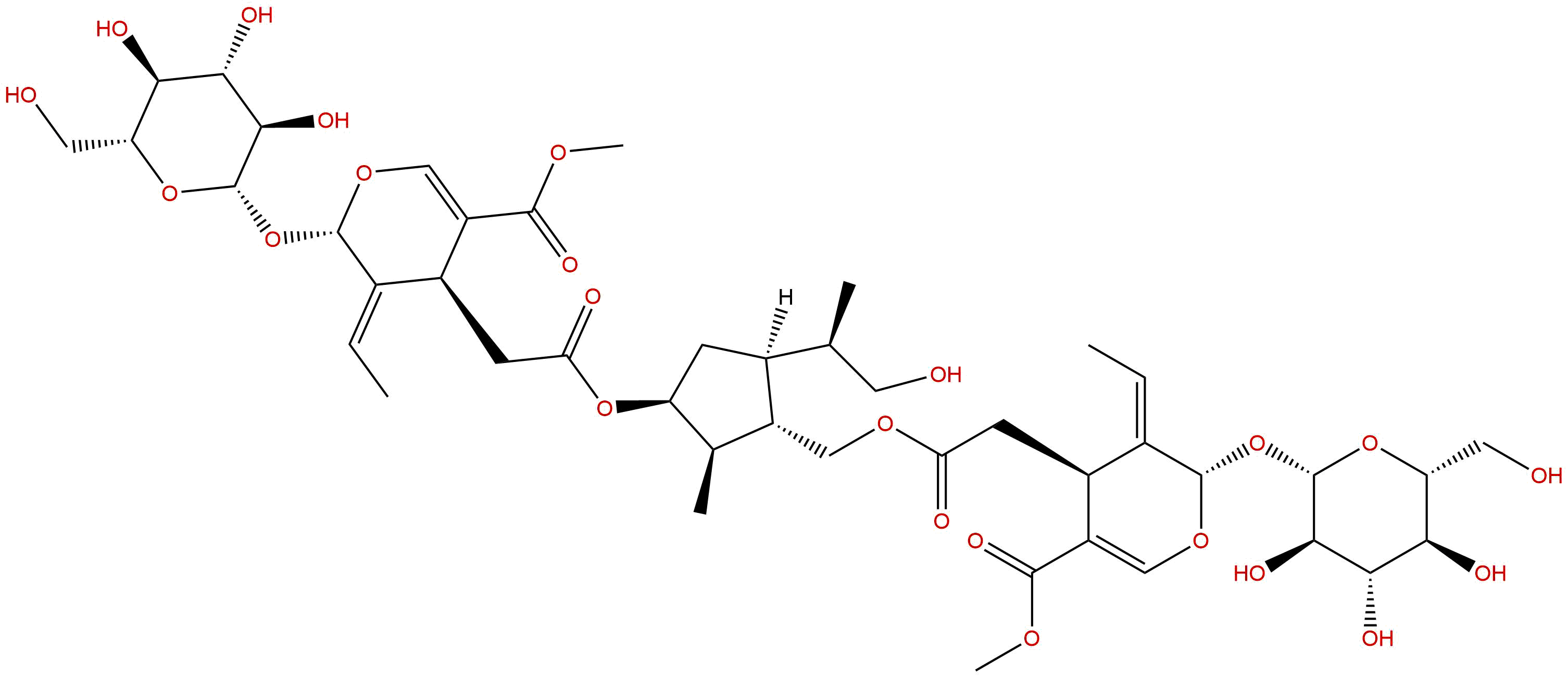
The chemical structure of Jasnudifroside A belongs to the class of iridoid glycosides, and its parent nucleus is an iridoid skeleton with a typical cyclopentane pyran ring system. The molecular formula of this compound is C ₄∝ H ₆₀ O ₂₄, with a molecular weight of 960.9730 Da. From the structural characteristics, multiple hydroxyl and carboxyl substituents are connected to the cyclohexene ether terpene parent nucleus of Jascin A, and are linked to the sugar moiety through glycosidic bonds. The glycosylation part is usually composed of monosaccharides or oligosaccharides such as glucose and xylose. This glycosylation modification not only increases the water solubility of the compound, but may also affect its biological activity and pharmacokinetic behavior.
There are multiple chiral centers in the chemical structure of Yingchunxin A, which give it a specific stereochemistry. The chiral configurations at positions C-1, C-5, C-8, C-9 of the iridoid skeleton have a significant impact on the biological activity of compounds. In addition, the connection position and configuration of the sugar moiety (α or β glycosidic bonds) are also key structural elements that determine its activity. In recent years, modern analytical techniques such as nuclear magnetic resonance spectroscopy (NMR), high-resolution mass spectrometry (HR-MS), and circular dichroism (CD) have been used to confirm the absolute configuration of Jasminum lucidum glycoside A.
In terms of physical and chemical properties, Jascin A exhibits moderate to high hydrophilicity. The lipid water partition coefficient (LogP) of the compound is 0.4126, indicating a good equilibrium distribution between the aqueous and lipid phases, which is beneficial for its transport and distribution in organisms. The topological polar surface area (TPSA) is 342.6500 Å ², which is a relatively high value reflecting the presence of a large number of polar groups (such as hydroxyl, carboxyl, sugar, etc.) in the molecule, consistent with its good water solubility (water solubility parameter of 4.0278). A high TPSA value usually means that the compound has difficulty passing through the blood-brain barrier. In fact, the blood-brain barrier penetration ability of Jasminulin A is evaluated as "low", which to some extent limits its application in central nervous system diseases, but also reduces the risk of central toxicity.
It is worth noting that the molecular weight of Jasminulin A is close to 1000 Da, belonging to the category of large molecule natural products. According to Lipinski's Rule of Five, compounds with a molecular weight greater than 500 Da may face challenges in oral absorption. However, many natural products (such as cyclosporine A, vancomycin, etc.), although not in compliance with the drug classification rules, can still achieve effective biological utilization through special transport mechanisms or formulation methods. Therefore, a comprehensive evaluation of the pharmacological properties of Jasminum lucidum glycoside A needs to be based on its specific pharmacokinetic characteristics.
Plant sources and extraction methods
Yingchun Flower Glycoside A is mainly derived from the Oleaceae genus of the Oleaceae family(Jasminum)Plants, including winter jasmine(Jasminum nudiflorum Lindl. is its main source. Yingchun flower is widely distributed in North China, Northwest China, and Southwest China. It is a common ornamental plant, and its flowers, leaves, and roots can all be used as medicine. In addition, plants of the same genus such as Yunnan Huangsuxin(Jasminum mesnyi)Su Fang Hua(Jasminum officinale)It may also contain jasmonic acid A or its structural analogues.
The content of jasmonic acid A in plants is usually low, and it often coexists with other iridoid glycosides, such as jasmonic acid B, jasmonic acid C, and other structurally similar compounds. Therefore, efficient extraction and purification methods are the key to obtaining high-purity Jasminulin A. At present, commonly used extraction methods include solvent extraction, ultrasound assisted extraction, microwave-assisted extraction, etc. Traditional solvent extraction methods typically use methanol, ethanol, or water ethanol mixed solvents as extractants to extract target compounds from plant materials through soaking, reflux, or percolation. Research has shown that a 70% ethanol aqueous solution has a high extraction efficiency for Jasminulin A and can effectively reduce the co extraction of impurities.
The ultrasound assisted extraction method utilizes the cavitation and mechanical effects of ultrasound to destroy plant cell walls, promote solvent permeation and solute diffusion, thereby significantly improving extraction efficiency. This method has the advantages of short extraction time, low solvent dosage, and easy operation. The microwave-assisted extraction method utilizes the penetrability and selective heating properties of microwaves to rapidly increase the internal temperature of plant cells, leading to cell rupture and accelerating the release of target compounds. However, strict control of temperature and power is required during the microwave extraction process to avoid degradation of thermosensitive compounds.
The crude extract after extraction needs to undergo further separation and purification steps to obtain high-purity Jasminulin A. Common separation and purification methods include liquid-liquid extraction, macroporous adsorption resin column chromatography, silica gel column chromatography, reverse phase silica gel column chromatography (such as ODS), high performance liquid chromatography (HPLC), etc. Among them, macroporous adsorption resin column chromatography is widely used for the preliminary separation of iridoid glycosides due to its advantages of large processing capacity, low cost, and reusability. The commonly used resin types include D101, AB-8, HPD100, etc. By adjusting parameters such as sample concentration and elution solvent (such as ethanol water gradient elution), effective separation of Jasmonic acid A from impurities with similar polarity can be achieved.
For the preparation of high-purity jasmonic acid A, it is usually necessary to combine multiple chromatographic techniques. For example, after preliminary separation using silica gel column chromatography, purification can be achieved through ODS reverse phase column chromatography or preparative HPLC. Preparative HPLC typically uses a C18 reverse phase chromatography column with acetonitrile water or methanol water as the mobile phase, and achieves efficient separation of target compounds through a gradient elution program. In addition, high-speed countercurrent chromatography (HSCCC), as a liquid-liquid distribution chromatography technique, has shown unique advantages in the separation of natural products, especially for compounds with high polarity and poor thermal stability.
Pharmacological activity research
Antitumor activity
The anti-tumor activity of Yingchun Flower Glycoside A is one of its most concerned pharmacological effects. Existing studies have shown that this compound has significant inhibitory effects on proliferation and induces apoptosis in various tumor cell lines, especially exhibiting good activity in hematological malignancies and solid tumors.
In terms of lymphoma and Hodgkin's lymphoma, jasmonic acid A can effectively inhibit the proliferation of lymphoma cells and induce cell apoptosis. Research has shown that this compound can activate the mitochondrial apoptosis pathway by regulating the expression of apoptosis related proteins, such as upregulating the pro apoptotic protein BAX and downregulating the anti apoptotic proteins BCL2 and MCL1. In addition, jasmonic acid A can also affect the expression of cell cycle regulatory proteins CDC25B and CDC25A, blocking the cell cycle in the G2/M phase and further inhibiting the proliferation of tumor cells. It is worth noting that the STAT3 signaling pathway plays a key role in the occurrence and development of lymphoma. Jasminum A can inhibit the phosphorylation activation of STAT3, thereby blocking the transcription of downstream target genes and exerting anti-tumor effects.
In terms of pancreatic tumors, jasmonic acid A also exhibits anti-tumor activity. Pancreatic cancer is a kind of digestive system tumor with extremely high malignancy. It is difficult to make early diagnosis, insensitive to radiotherapy and chemotherapy, and has a poor prognosis. Studies have found that Jasminum nudiflorum A can inhibit the proliferation and migration of pancreatic cancer cells and induce apoptosis. Its mechanism of action involves multiple targets, including APP, PTPN1, STAT3, ABCB1, PRKCA, etc. Among them, ABCB1 (P-glycoprotein) is a key protein mediating multidrug resistance in tumors, and the regulatory effect of Jasminum A on ABCB1 suggests that it may have the potential to reverse tumor drug resistance. In addition, Jascin A can also affect the metabolic reprogramming and inflammatory microenvironment of tumor cells by regulating targets such as IDH1, SIRT1, RELA, etc.
Antioxidant activation
Oxidative stress is the common pathological mechanism of many diseases (including tumors, neurodegenerative diseases, cardiovascular diseases, diabetes, etc.). Yingchun Flower Glycoside A also exhibits significant activity in antioxidant stress. Research has shown that this compound can upregulate the expression of antioxidant enzymes, including superoxide dismutase 1 (SOD1), catalase (CAT), glutathione peroxidase 1 (GPX1), and heme oxygenase-1 (HO-1). These enzymes play a crucial role in clearing reactive oxygen species (ROS) and maintaining cellular redox balance.
The antioxidant effect of Yingchun Flower Glycoside A may be achieved by activating the nuclear factor E2 related factor 2 (Nrf2) signaling pathway. Nrf2 is the main transcription factor regulating the expression of antioxidant genes, which binds to Keap1 under normal physiological conditions and is in an inhibited state. When cells are stimulated by oxidative stress, Nrf2 dissociates from Keap1 and translocates to the nucleus, where it binds to antioxidant response elements (ARE) and initiates transcription of downstream antioxidant enzyme genes. Yingchunxin A may upregulate the expression of genes such as SOD1, CAT, GPX1, and HO-1 by promoting nuclear translocation and transcriptional activity of Nrf2, thereby enhancing the antioxidant defense ability of cells.
Other pharmacological activities
In addition to its anti-tumor and antioxidant properties, Jasminum glycoside A may also have pharmacological effects such as anti-inflammatory and immune regulation. Cycloterpenoid glycosides typically exhibit anti-inflammatory activity, capable of inhibiting the production of inflammatory mediators and activation of inflammatory signaling pathways. The regulatory effect of Yingchun Flower Glycoside A on STAT3 also suggests its possible involvement in immune regulation processes. However, current research on the anti-inflammatory and immunomodulatory activities of Jasminum lucidum glycoside A is not sufficient and requires further in-depth exploration.
Mechanism of action and molecular targets
The pharmacological activity of Yingchun Flower Glycoside A is closely related to its multi-target action characteristics. By systematically analyzing existing research data, the main mechanisms and molecular targets of this compound in anti-tumor and antioxidant stress can be summarized.
Mechanism of anti-tumor action
In terms of anti-tumor effects, the mechanism of action of Jasminulin A involves multiple signaling pathways and molecular targets, mainly including the following aspects:
Apoptosis regulatory pathway Yingchun Flower Glycoside A can regulate the expression of BCL2 family proteins, including anti apoptotic proteins MCL1 and BCL2, as well as pro apoptotic proteins BAX, BAK, etc. By downregulating the expression of MCL1 and BCL2, reducing the ratio of anti apoptotic proteins to pro apoptotic proteins, promoting mitochondrial outer membrane permeability, releasing cytochrome c, activating apoptosis executing proteins such as CASP8 and CASP3, ultimately inducing tumor cell apoptosis. In addition, TP53, as an important tumor suppressor, also plays a crucial role in the apoptosis induced by Jasminulin A. Research has shown that Jasminulin A can upregulate the expression of TP53, enhance its transcriptional activity, and promote the expression of downstream pro apoptotic genes.
cell cycle regulation Jasminulin A can affect the expression of cell cycle regulatory proteins CDC25B and CDC25A. CDC25 family proteins are activators of cyclin dependent kinases (CDKs) and play a key role in regulating cell cycle checkpoints. Yingchun Flower Glycoside A downregulates the expression of CDC25B and CDC25A, inhibits the activity of CDK1 and CDK2, and blocks the cell cycle in the G2/M or G1/S phase, thereby inhibiting the proliferation of tumor cells.
signal transduction pathway The STAT3 signaling pathway is abnormally activated in various tumors, promoting tumor cell proliferation, survival, invasion, and angiogenesis. Yingchun Flower Glycoside A can inhibit the phosphorylation activation of STAT3, block its binding ability to DNA, and thus inhibit the transcription of downstream target genes such as Cyclin D1, Survivor, VEGF, etc. In addition, jasmonic acid A may also affect other signaling pathways, such as the MAPK pathway (involving MAPT), NF - κ B pathway (involving RELA), etc., which play important roles in tumor occurrence and development.
Inhibition of DNA Topoisomerase TOP2A is a subtype of DNA topoisomerase II that plays a critical role in DNA replication, transcription, and chromosome segregation. Jasminulin A may interfere with the topological structure of DNA by inhibiting the activity of TOP2A, leading to DNA damage and cell death. This mechanism is similar to commonly used anti-tumor drugs in clinical practice (such as etoposide, doxorubicin, etc.), suggesting that Jasminum A may have a similar anti-tumor mode of action.
Multidrug resistance reversal ABCB1 (P-glycoprotein) is a key transporter protein that mediates multidrug resistance in tumors, capable of pumping multiple chemotherapy drugs out of the cell and reducing intracellular drug concentrations. The regulatory effect of Yingchun Flower Glycoside A on ABCB1 suggests that it may have the potential to reverse tumor drug resistance. In addition, PTPN1 (protein tyrosine phosphatase 1B) also plays an important role in insulin signaling transduction and tumorigenesis, and the regulation of PTPN1 by Jasminulin A may affect the metabolism and signal transduction of tumor cells.
Mechanism of antioxidant stress response
In terms of antioxidant stress, Jasminulin A mainly upregulates the expression of antioxidant enzymes by activating the Nrf2 ARE signaling pathway. The specific mechanism includes promoting the dissociation of Nrf2 and Keap1, enhancing the nuclear translocation and transcriptional activity of Nrf2, and initiating the transcription of antioxidant enzyme genes such as SOD1, CAT, GPX1, HO-1, etc. These enzymes can synergistically clear excessive ROS in cells and alleviate oxidative stress damage to cells. In addition, Jasminulin A may also exert antioxidant effects by directly scavenging free radicals or chelating transition metal ions.
Multi target network analysis
From the perspective of systems pharmacology, the targets of Jasminum jasminoides A involve multiple biological processes such as apoptosis, cell cycle, signal transduction, DNA damage repair, and antioxidant defense. There is a complex network of interactions between these targets that collectively regulate the fate of cells. For example, there is a regulatory relationship between STAT3 and BCL2 family proteins, and the activation of STAT3 can upregulate the expression of MCL1 and BCL2; There is also an interaction between TP53 and CDC25B, and TP53 can inhibit the expression of CDC25B. Yingchun Flower Glycoside A can produce synergistic effects by acting on multiple targets simultaneously, enhancing its pharmacological activity and potentially reducing common resistance issues of single target drugs.
Evaluation of drug properties and pharmacokinetics
Drugability assessment
The evaluation of drug properties is a crucial step in determining whether natural products can be successfully converted into clinical drugs. The pharmacological parameters of Yingchun Flower Glycoside A show that its molecular weight is 960.9730 Da, LogP is 0.4126, TPSA is 342.6500 Å ², and water solubility is 4.0278. According to the Lipinski Class 5 Rule, this compound has two violations: a molecular weight greater than 500 Da, a LogP less than 5 but a TPSA greater than 140 Å ². However, the Class 5 Rule mainly applies to oral small molecule drugs, and its applicability to natural products, especially glycosides, is somewhat limited.
From an absorption perspective, the high molecular weight and polarity characteristics of Jasminum lucidum glycoside A may lead to its low oral bioavailability. However, there are many examples of natural products with high molecular weight but still good oral activity, such as cyclosporine A (molecular weight 1202 Da), which can be absorbed through the lymphatic system. In addition, its absorption characteristics may be improved through formulation techniques such as nanoparticles, liposomes, phospholipid complexes, or structural modifications such as prodrug design.
In terms of safety, the Ames test result was 0.0, indicating that Jasminulin A has no mutagenicity and a low risk of genetic toxicity. The hERG inhibition assessment is' no ', indicating a low risk of cardiac toxicity. The blood-brain barrier penetration ability is "low", which limits the application of the central nervous system but also reduces the risk of central toxicity. These safety data provide favorable conditions for the further development of Jasminulin A.
Pharmacokinetic characteristics
At present, there is insufficient systematic research on the pharmacokinetics of Jasminulin A, but based on its physicochemical properties and research experience of similar compounds, its pharmacokinetic characteristics can be inferred.
absorb The high molecular weight and polarity characteristics of Jasminulin A may lead to poor oral absorption. Glycoside compounds may be metabolized by gut microbiota in the intestine, hydrolyzed into aglycones or secondary glycosides, and these metabolites may have different absorption characteristics and biological activities. In addition, efflux transporters such as P-glycoprotein may limit its intestinal absorption.
distribution The LogP of Jasmonic acid A is 0.4126, indicating its strong hydrophilicity and mainly distributed in blood and extracellular fluid. Its high TPSA value limits its ability to pass through the blood-brain barrier, so its distribution in the central nervous system may be lower. In addition, the compound may bind to plasma proteins, affecting their free concentration and distribution volume.
Metabolism Cycloterpenoid glycosides mainly undergo metabolic reactions such as hydrolysis, oxidation, reduction, and binding in the body. The glycosyl portion may be hydrolyzed by glycosidases in the intestine or liver, releasing glycosides. Glycosides may further undergo oxidative metabolism through the cytochrome P450 enzyme system, or undergo binding reactions with glucuronic acid, sulfuric acid, etc., generating more water-soluble metabolites and promoting excretion.
excretion Jasminulin A and its metabolites are mainly excreted through the kidneys and bile. Due to its large molecular weight and strong polarity, glomerular filtration may be the main excretion pathway. Bile excretion may also play an important role, especially for compounds with molecular weights greater than 500 Da.
Clinical application prospects and prospects
Prospects of anti-tumor applications
The anti-tumor activity of Yingchunxin A in lymphoma, Hodgkin lymphoma, and pancreatic tumors provides important evidence for its clinical application. Lymphoma is a common hematological malignancy, and although existing chemotherapy regimens (such as CHOP regimen) are effective for some patients, recurrence and drug resistance issues remain prominent. Yingchunxin A, through its multi-target mechanism of action, may provide a new option for the treatment of lymphoma, especially for patients who are resistant to existing treatments.
Pancreatic cancer is known as the "king of cancer", and its 5-year survival rate is less than 10%. The existing treatment methods (surgery, chemotherapy, radiotherapy) have limited effectiveness and urgently require new therapeutic drugs. The inhibitory effect of jasminuside A on pancreatic cancer cells and its potential to reverse multidrug resistance make it a promising candidate compound for the treatment of pancreatic cancer. In the future, jasmonic acid A may be used as a single drug or in combination with existing chemotherapy drugs such as gemcitabine and albumin bound paclitaxel to improve treatment efficacy.
Application prospects of antioxidant stress
Oxidative stress plays an important role in many diseases (such as neurodegenerative diseases, cardiovascular diseases, diabetes and its complications, chronic inflammatory diseases, etc.). Yingchun Flower Glycoside A activates the Nrf2 signaling pathway, upregulates the expression of antioxidant enzymes, and has broad prospects for antioxidant stress applications. For example, in neurodegenerative diseases such as Alzheimer's disease and Parkinson's disease, oxidative stress is an important mechanism of neuronal damage. Jasminum A may protect neuronal function by reducing oxidative stress. Oxidative stress also plays a key role in diabetes complications such as diabetic nephropathy and diabetes retinopathy. Jasminum nudiflorum A may delay disease progression through antioxidant effect.
Challenges and Solutions Faced
Despite the broad application prospects of Yingchun Flower Glycoside A, its clinical translation still faces many challenges. Firstly, low oral bioavailability is one of its main issues. The solution strategy includes: developing new drug delivery systems (such as nanoliposomes, polymer micelles, phospholipid complexes, etc.) to improve drug solubility and intestinal permeability; Structural modifications, such as prodrug design, temporarily block polar groups to improve lipid solubility; Explore non oral routes of administration, such as intravenous injection, transdermal administration, etc.
Secondly, the mechanism of action still needs further clarification. Although multiple targets have been identified, the interaction network between these targets, identification of key targets, and differences in the mechanisms of action in different diseases still require further research. The application of systems pharmacology, network pharmacology, and omics technologies (such as transcriptomics, proteomics, metabolomics) will help to comprehensively reveal the mechanism of action of Jasminum glycoside A.
In addition, large-scale preparation and purification are also bottlenecks restricting its development. At present, Yingchun Flower Glycoside A is mainly extracted from plants, with low content and high cost. In the future, large-scale production can be achieved through methods such as plant cell culture, genetic engineering, chemical synthesis, or semi synthesis. The study of the structure-activity relationship will also provide guidance for optimizing its pharmacological activity and drug formation.
Conclusion
Yingchun flower glycoside A, as a natural product of iridoid glycosides isolated from traditional Chinese medicine Yingchun flower, exhibits significant pharmacological activity and multi-target action characteristics in the fields of anti-tumor and antioxidant stress. Its inhibitory effect on malignant tumors such as lymphoma, Hodgkin's lymphoma, and pancreatic tumors, as well as its regulatory effect on antioxidant enzymes such as SOD1, CAT, GPX1, and HO-1, provide a solid scientific basis for its clinical application. Although there are still challenges in terms of oral bioavailability, mechanism of action elucidation, and large-scale preparation, the comprehensive application of modern medicinal chemistry, pharmacy, pharmacology, and biotechnology has the potential to develop Jasminum A as a new candidate drug for the treatment of malignant tumors and oxidative stress-related diseases. In the future, with the continuous deepening of research, this natural product will make greater contributions to human health.