| Catalog No | Package | Original Price | Price | Inventory | Quantity | Operating |
|---|---|---|---|---|---|---|
| BP5071-5mg | 5mg | $750.00 | Sign in |
|


Storage conditions:Short-term storage at 2~8℃, long-term storage at -20 ~ -80℃
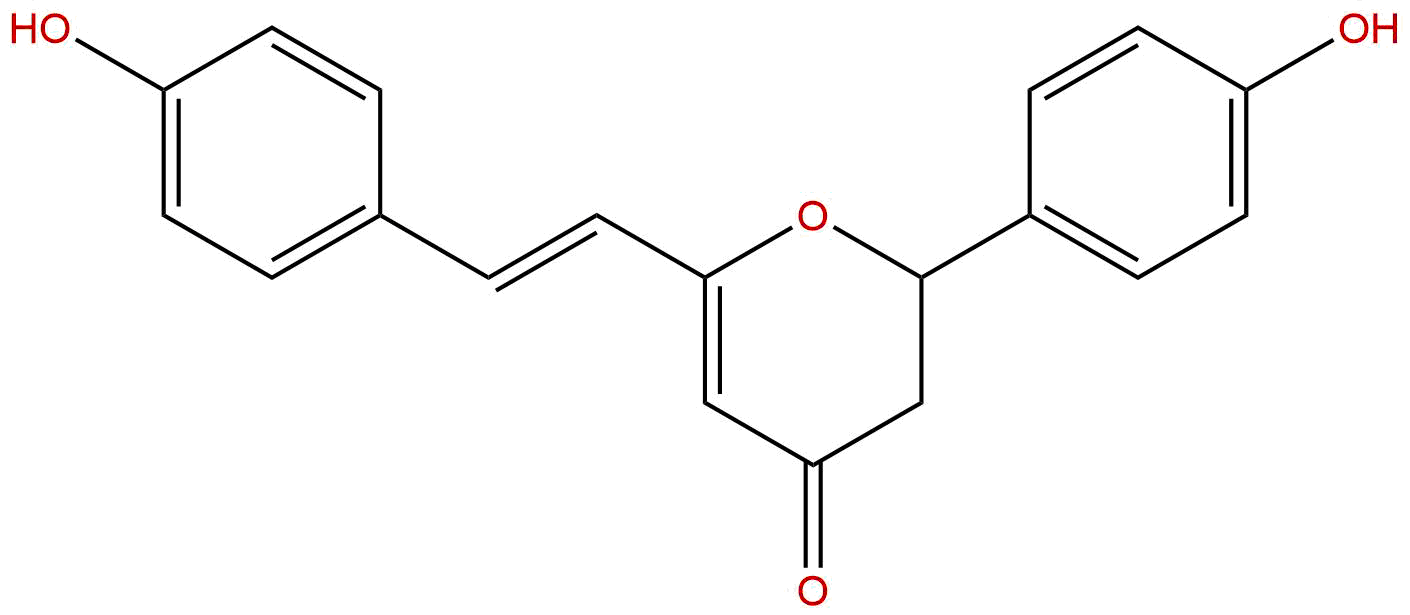
Cyclobis demethoxycurcumin (CBDMC), CAS number 1042441-12-2, is a natural product derived from curcumin and has attracted much attention in recent years due to its significant antioxidant and anti-inflammatory activities. Curcumin and its derivatives, as important candidate molecules for traditional Chinese medicine and modern drug development, have become a hot topic in natural product pharmacology research due to their multi-target regulation and low side effects. CBDMC, as a derivative of cyclic demethoxycurcumin, has a unique structure, excellent biological activity, and good pharmaceutical properties. This article will provide a systematic review of the chemical structure and physicochemical properties, plant sources and extraction methods, pharmacological activity and mechanism of action, pharmacological evaluation and pharmacokinetic characteristics of CBDMC, combined with its anti-inflammatory targets, to explore its potential and challenges for future clinical applications.
Double demethoxycurcumin is a cyclic dimer structure with a molecular formula of C18H16O5 and a molecular weight of 308.3330. Its structural feature is that two demethoxy curcumin units are connected by cyclization to form a stable cyclic configuration, endowing it with unique chemical and biological activities. Its LogP value is 2.9734, indicating moderate lipid solubility, which is beneficial for cell membrane permeability and in vivo distribution. The TPSA (topological polar surface area) is 66.7600, indicating that its polarity is moderate and conducive to binding with biomolecules and transmembrane transport.
Low water solubility (0.0714 mg/mL) suggests limited solubility in aqueous phase, which may affect oral bioavailability. It is worth noting that CBDMC has a high ability to penetrate the blood-brain barrier, indicating its potential application value in central nervous system diseases. In addition, the hERG channel inhibition test result was negative, indicating a low risk of cardiac toxicity. The Ames mutagenicity test result was 0.0, indicating a low risk of genotoxicity and good safety.
Double demethoxycurcumin mainly comes from the rhizomes of ginger plants such as Curcuma longa L. Curcumin compounds are the main bioactive components in turmeric. Traditional extraction methods often use ethanol or methanol as solvents, and crude extracts are obtained through ultrasound assisted extraction, Soxhlet extraction, or pressurized liquid extraction. Subsequently, high-purity CBDMC was obtained through separation and purification using techniques such as high-performance liquid chromatography (HPLC), column chromatography, and counter current chromatography.
In recent years, green extraction techniques such as supercritical CO2 extraction and microwave-assisted extraction have also been applied to the extraction of curcumin compounds, which not only improves extraction efficiency but also reduces the use of organic solvents, in line with the environmental trend of modern natural product extraction. During the purification process, analytical methods such as mass spectrometry (MS) and nuclear magnetic resonance (NMR) are used to ensure accurate identification of compound structures.
CBDMC exhibits significant antioxidant capacity. In the DPPH radical scavenging assay, its IC50 was approximately 250 μ M, indicating its excellent free radical scavenging ability. More notably, in the 2-deoxyribose (2-DR) oxidation assay, the IC50 of CBDMC was only 15-20 μ M, indicating its strong protective effect in preventing DNA damage induced by hydroxyl radicals. The antioxidant activity may be related to the stable free radical intermediates of its phenolic hydroxyl structure and cyclic configuration.
CBDMC exhibits significant anti-inflammatory effects in various in vitro and in vivo models. It is mainly achieved by regulating various inflammation related signaling pathways and targets, including key molecules such as IL-6, STAT3, CASP1, TRPV1, PTGS1, TNF, TRPA1, NOS2, PTGS2, and NFKB1. Research has shown that CBDMC can inhibit the expression of pro-inflammatory cytokines, reduce the release of inflammatory mediators, inhibit the activation and migration of inflammatory cells, and thus alleviate the inflammatory response.
In addition, CBDMC has inhibitory effects on inflammation related enzymes such as cyclooxygenase (PTGS1 and PTGS2) and inducible nitric oxide synthase (NOS2), reducing the production of prostaglandins and nitric oxide, further alleviating inflammation. Its inhibitory effect on the NFKB1 signaling pathway blocks the transcriptional activation of inflammatory genes, exerting a multi-target synergistic anti-inflammatory effect.
Although current research on CBDMC mainly focuses on antioxidant and anti-inflammatory fields, its high blood-brain barrier permeability suggests its potential application value in neuroprotection, anti-tumor, and metabolic diseases. Future related research is expected to further expand its pharmacological spectrum.
The mechanism of action of CBDMC mainly involves the regulation of various inflammatory and oxidative stress-related signaling pathways:
IL-6/STAT3 signaling pathway IL-6, as a pro-inflammatory cytokine, promotes the expression of inflammatory genes by activating the STAT3 transcription factor. CBDMC can inhibit the secretion of IL-6 and the phosphorylation of STAT3, block the transmission of inflammatory signals, and alleviate inflammatory reactions.
CASP1 (cysteine protease-1)As a key enzyme for inflammasome activation, CASP1 promotes the mature release of pro-inflammatory cytokines such as IL-1 β. CBDMC inhibits CASP1 activity and blocks the inflammatory cascade mediated by inflammasomes.
TRPV1 and TRPA1 channels These two types of transient receptor potential channels play important roles in inflammatory pain and neuroinflammation. CBDMC alleviates inflammation related pain and neural excitability by regulating the activity of TRPV1 and TRPA1.
PTGS1/PTGS2(COX-1/COX-2)As key enzymes involved in prostaglandin synthesis, PTGS1 and PTGS2 are involved in the production of inflammatory mediators. CBDMC inhibits its activity and reduces the production of pro-inflammatory prostaglandins.
TNF-αAs a major pro-inflammatory cytokine, TNF - α plays a central role in various inflammatory diseases. CBDMC reduces the expression of TNF - α and alleviates the inflammatory process.
NOS2 (inducible nitric oxide synthase)NOS2 produces a large amount of nitric oxide, which is involved in inflammation and oxidative stress. CBDMC inhibits NOS2 expression and reduces oxidative damage.
NFKB1 As a key transcription factor for inflammatory signaling, NFKB1 regulates the expression of various inflammatory genes. CBDMC inhibits the activation of NFKB1 and blocks the transcription of inflammatory genes.
In summary, CBDMC exerts its anti-inflammatory and antioxidant pharmacological effects through multi-target and multi pathway synergistic effects, reflecting the advantages of multi-target regulation of natural products.
The pharmacological evaluation of CBDMC shows that it has good potential for drug development:
In terms of pharmacokinetics, although there is currently limited data on the in vivo metabolism and excretion of CBDMC, its structural stability and lipid solubility suggest that it has good distribution characteristics in vivo. Further in vivo pharmacokinetic studies are needed in the future to clarify its absorption, distribution, metabolism, and excretion (ADME) characteristics, providing a basis for clinical translation.
Based on the excellent antioxidant and anti-inflammatory activities of CBDMC, as well as its good pharmacological parameters, its application prospects in various inflammation related diseases are broad. Specifically, it includes:
Future research should focus on the in vivo pharmacokinetics, toxicological evaluation, and preclinical model validation of CBDMC, combined with modern pharmaceutical technologies such as nanomedicine and sustained-release systems, to enhance its bioavailability and targeting. At the same time, conducting in-depth research on the mechanism and clarifying its role network in different disease models lays a solid foundation for clinical translation.
Double demethoxycurcumin, as a structurally unique natural product, exhibits excellent antioxidant and anti-inflammatory activities, and has good pharmacological and safety characteristics. The multi-target and multi pathway mechanism of action provides a solid scientific basis for its application in inflammation and related diseases. Although research on CBDMC is still in its early stages, its broad application prospects and potential clinical value deserve further exploration. In the future, through systematic pharmacokinetics, toxicology, and preclinical research, it is expected to promote the transformation of CBDMC into clinical drugs, enrich the research results in the field of natural product pharmacology, and benefit human health.
