Introduction/Overview
Natural products, as an important treasure trove for drug discovery and development, continue to contribute innovative and diverse lead compounds to modern medicine. Flavonoids are one of the widely distributed and biologically active secondary metabolites, and their core C6-C3-C6 skeleton structure endows them with diverse pharmacological potentials. Taxifolin-3 '- O-glucoside (T3G), as an important glycosylated derivative of the dihydroflavonol compound Taxifolin (also known as dihydroquercetin), has attracted much attention in recent years due to its unique biological activity. This compound (CAS number: 31106-05-5) not only inherits the powerful antioxidant and free radical scavenging abilities of quercetin, but also may exhibit new characteristics in solubility, bioavailability, and targeting specificity due to the introduction of its sugar group. Research has shown that T3G exhibits clear activity in anti tyrosinase, inhibiting collagenase, and anti fibrosis, providing potential application value in the prevention and treatment of skin pigmentary diseases, anti skin photoaging, organ fibrosis, and oxidative stress-related diseases. This article aims to systematically review the chemical structure, plant origin, pharmacological activity, mechanism of action, and medicinal characteristics of T3G, in order to provide comprehensive scientific references for the in-depth research and development of this natural product.
Chemical structure and physicochemical properties
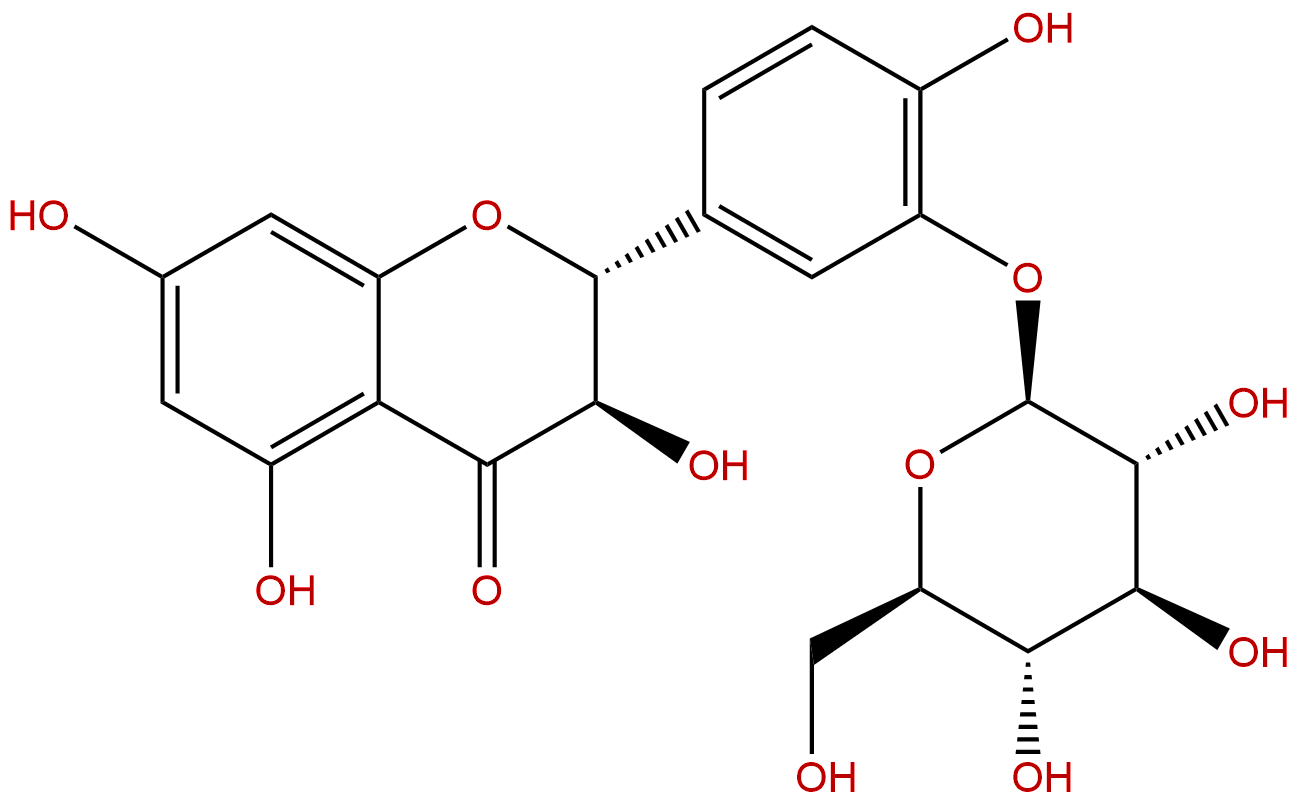
The molecular formula of kaempferol-3 '- O-glucoside is C21H22O12, with a molecular weight of 466.39. Its chemical structure is based on dihydroflavonol as the parent nucleus, specifically (+) - (2R, 3R) - dihydroquercetin. Compared with the parent compound of resveratrol (molecular weight 304.25), T3G is linked to a β - D-glucopyranose group via an O-glycosidic bond on the 3 '- hydroxyl group of the B ring. This structural modification significantly altered its physicochemical properties.
Firstly, the introduction of glucose groups greatly enhances the hydrophilicity of the molecule. The calculated lipid water partition coefficient (LogP) is -2.50, indicating that the compound has a high degree of hydrophilicity, which is beneficial for its dissolution in aqueous media. The topologically polar surface area (TPSA) is as high as 226.77 Å ², further confirming its strong polarity characteristics, which is mainly attributed to the presence of 12 hydrogen bond acceptors (mainly hydroxyl and oxygen atoms on the sugar ring) and multiple hydrogen bond donors in the molecule. Higher TPSA and hydrophilicity are usually associated with poorer cell membrane permeability, which is consistent with its prediction of low blood-brain barrier permeability.
In terms of optical activity, the C2 and C3 positions of its parent nucleus are in the R configuration, i.e. the (+) - isomer, which is consistent with the common active configurations in nature. The presence of glycosidic bonds makes it susceptible to the action of β - glucosidase in the gut and blood, which may hydrolyze into aglycone quercetin and glucose. This characteristic has a decisive impact on its pharmacokinetic behavior. Overall, T3G is a highly polar and water-soluble glycoside flavonoid compound, and its biological activity may originate from both the glycoside itself and its hydrolyzed glycoside products.
Plant sources and extraction methods
T3G is relatively widely distributed in nature, mainly found in various coniferous trees, some fruits, and medicinal plants. Its aglycone anthocyanins are common components in many plants, and the glycosidic form reflects the diversity of secondary metabolism in plants.
Main plant sources:
1. Pinus Lambertiana This is the most classic source of T3G. For example, it is more abundant in the heartwood of Pseudotsuga menziesii and the bark of Larix plants. The extract of Larix sibirica, a widely used medicinal plant in Russia and Siberia, contains T3G and other flavonoid glycosides.
2. Grape family plants T3G has been detected in the skin, seeds, and wine of Vitis vinifera, and is considered a component of the complex grape polyphenol system, contributing to the overall antioxidant activity of grape products.
3. Other sources In some citrus fruits, onions, and traditional medicinal plants such as milk thistle There are also reports of flavonoid glycosides in Silybum Marianum, but the specific content in the form of T3G varies depending on species and location.
Extraction and Separation Methods:
The extraction and separation of T3G usually follow the general process of natural product chemistry and are optimized for its polarity.
1. Extract Medium polarity solvents are often used for extraction. Due to the strong hydrophilicity of T3G, methanol, ethanol water mixed solutions (such as 70% -80% ethanol), or acetone water systems are commonly used for extraction, reflux, or ultrasound assisted extraction. These methods can effectively dissolve flavonoids from plant materials.
2. Enrichment and Purification After vacuum concentration, the crude extract can be preliminarily enriched using macroporous adsorption resins such as AB-8 and D101. High polarity impurities such as polysaccharides and proteins can be washed away with water, and then eluted with a certain concentration of ethanol to obtain the flavonoid glycoside enrichment site. Further purification relies on chromatographic techniques:
* column chromatography: Reversed silica gel (such as C18) and dextran gel (Sephadex LH-20) are often used for column chromatography. Sephadex LH-20 has excellent performance in separating flavonoid glycosides using methanol or methanol water as the mobile phase.
* High performance liquid chromatography Preparation type high performance liquid chromatography (HPLC) is the final key step in obtaining high-purity T3G monomers, usually using a reverse phase C18 chromatography column with methanol water or acetonitrile water (pH adjusted with a small amount of formic acid or acetic acid) as the mobile phase for gradient elution. By monitoring with a UV detector (with characteristic absorption around 280-290 nm), collect the target peak fraction, and obtain the pure product after freeze-drying or rotary evaporation.
Structural identification involves the comprehensive use of techniques such as nuclear magnetic resonance (NMR, including 1H, 13C, 2D-NMR), mass spectrometry (MS, especially high-resolution mass spectrometry HR-MS), and optical rotation measurement.
Pharmacological activity research
A large number of in vitro and in vivo studies have revealed the multifaceted biological activities of T3G, which revolve around antioxidant, enzyme inhibition, and anti fibrosis.
1. Antioxidant and free radical scavenging activity
T3G is an effective free radical scavenger. The catechol structure (B ring 3 ', 4' - dihydroxy) and the 3-hydroxy and 4-carbonyl groups on the C ring in its molecular structure are the key pharmacophores for its antioxidant activity. These functional groups can stably scavenge superoxide anions (O2 •−), hydroxyl radicals (• OH), peroxide radicals (ROO •), and stable DPPH radicals through single electron transfer or hydrogen atom transfer mechanisms. Glycosylation may slightly alter the hydrogen donating ability of individual phenolic hydroxyl groups, but overall it retains strong antioxidant potential. Its antioxidant capacity is the basis for preventing oxidative stress-related cell damage.
2. Antityrosinase activity
Tyrosinase is the rate limiting enzyme in melanin biosynthesis and an important target for skin whitening agents and the treatment of hyperpigmentation disorders. Research has shown that T3G has a significant inhibitory effect on tyrosinase. Its mechanism of action may be similar to that of its aglycone quercetin, which chelates with copper ions in the enzyme's active center through its B-ring ortho diphenol structure, or competes with substrates for binding sites, thereby inhibiting monophenolase and diphenolase activity. This characteristic makes it promising for the development of topical preparations for pigmentary skin diseases such as melasma and freckles.
3. Inhibit collagenase activity
Skin aging is closely related to the degradation of extracellular matrix, especially collagen, and matrix metalloproteinases (MMPs) are key executors of this process. T3G has been proven to effectively inhibit collagenase (mainly MMP-1), with an IC50 value of 193.3 μ M. Although the activity intensity is moderate, its significance is significant. It helps maintain the structure and elasticity of the dermis layer of the skin by inhibiting collagenase and reducing the excessive degradation of type I and III collagen, thereby exerting anti skin photoaging and wrinkle formation effects. This activity is complementary to its antioxidant effect, as UV induced oxidative stress is an important trigger for upregulating MMP expression.
4. Anti fibrotic effect
Fibrosis is a common pathological endpoint of various chronic diseases, such as liver fibrosis, pulmonary fibrosis, and myocardial fibrosis, characterized by excessive deposition of extracellular matrix and scar formation. T3G has been clearly identified as having important anti fibrotic effects. In the experimental model, it may exert its effect through the following pathways: ① inhibiting the activation and proliferation of effector cells such as hepatic stellate cells and fibroblasts; ② Downregulate the expression of pro fibrotic factors such as TGF - β 1; ③ Inhibit the synthesis and secretion of collagen (type I, type III); ④ Reduce inflammation and oxidative damage to tissues through antioxidant stimulation. This demonstrates the application prospects of T3G in the prevention and treatment of organ fibrosis.
5. Other potential activities
Based on the activity speculation and preliminary research of its parent nucleus structure, T3G may also have auxiliary activities such as anti-inflammatory, endothelial protection, and mild antibacterial, which together constitute the network pharmacology basis for its multi-target and multi pathway health benefits.
Mechanism of action and molecular targets
The pharmacological effects of T3G are not achieved through a single target, but involve a complex molecular network, and its core mechanism can be summarized as follows:
1. Direct antioxidant and activation of endogenous antioxidant system
T3G, as an exogenous antioxidant, directly neutralizes ROS. More importantly, it may upregulate the expression of endogenous antioxidant enzymes such as glutathione (GSH), superoxide dismutase (SOD), and catalase (CAT) in cells by regulating the nuclear factor E2 related factor 2/antioxidant response element (Nrf2/ARE) signaling pathway, thereby enhancing the overall antioxidant defense ability of cells.
2. Direct inhibition of key enzymes
* tyrosinase As a substrate analogue or metal ion chelating agent, it directly interacts with the enzyme active center.
* Collagenase (MMP-1)Possible inhibition of collagen substrate hydrolysis activity may occur through the binding of its phenolic hydroxyl group to zinc ions in the enzyme's active center, or through non competitive conformational changes in the enzyme.
* Other matrix metalloproteinases (MMPs) and inflammation related enzymes (such as COX-2, iNOS)It may exert inhibitory effects through similar molecular interactions or upstream signal regulation.
3. Regulating key signaling pathways
* TGF - β 1/Smad pathway This is the core pathway of fibrosis process. T3G may inhibit the generation of TGF - β 1 or phosphorylate Smad2/3 nuclear translocation, blocking its pro collagen gene transcription effect, which is one of its main molecular mechanisms for anti fibrosis.
* MAPK pathway The p38, JNK, ERK MAPK pathways activated by ultraviolet radiation or inflammatory factors can upregulate the expression of MMPs and inflammatory factors. The antioxidant and anti-inflammatory effects of T3G may be partially attributed to the inhibition of phosphorylation activation of these kinases.
* NF - κ B pathway As the main switch of inflammatory response, the activation of NF - κ B leads to the release of a large amount of inflammatory factors. T3G can exert anti-inflammatory effects by inhibiting the degradation of I κ B or nuclear translocation of NF - κ B p65 subunit, indirectly alleviating fibrosis and tissue damage.
4. Regulating cell cycle and apoptosis
In fibrotic or tumor cells with abnormal proliferation, T3G may induce cell cycle arrest or apoptosis by affecting cell cycle proteins (such as Cyclin D1) and apoptosis related proteins (such as Bcl-2/Bax, Caspase-3), thereby inhibiting pathological tissue proliferation.
Evaluation of drug properties and pharmacokinetics
Based on the provided pharmacological parameters and existing studies on flavonoid glycosides, a preliminary evaluation of the pharmacological properties of T3G can be conducted
Advantage:
1. High potential for safety Prediction shows no hepatotoxicity or cardiotoxicity, and does not inhibit hERG potassium channels (indicating low risk of arrhythmia). Although the Ames test is unknown, its natural source and good safety record of the parent nucleus anthocyanins provide positive references for it.
2. Good water solubility High hydrophilicity (LogP=-2.5) makes it easy to make into formulations such as solutions and injections, and it dissolves rapidly in aqueous environments after oral administration.
3. Clear active targets Clear activity of tyrosinase and collagenase is beneficial for the targeted development of topical skin preparations.
challenge:
1. Oral bioavailability may be low High polarity (high TPSA) results in poor transmembrane permeability, making it difficult to passively diffuse and absorb through intestinal epithelial cells. This is a common challenge faced by most flavonoid glycosides.
2. Low blood-brain barrier permeability Restricted its therapeutic application for central nervous system diseases.
3. Metabolism and transformation After oral administration, T3G is easily hydrolyzed by β - glucosidase in the gut microbiota and intestinal mucosal cells, producing aglycone quercetin and glucose. The absorption into the bloodstream may be mainly through glycosides and their II bound metabolites (sulfates, glucuronides). Therefore, the systemic effects after oral administration are largely mediated by aglycones and their metabolites. This suggests that the effective substance form needs to be clearly defined during research and development.
4. Lack of pharmacokinetic data in vivo There are few detailed research reports on the absorption, distribution, metabolism, and excretion (ADME) of pure T3G in animals or humans, which is a key data gap that must be filled in order to move towards drug development.
Formulation strategy:
To improve its bioavailability, the following strategies can be considered: ① Develop external preparations Such as cream, gel and essence liquid, which are used for skin whitening, anti-aging and avoiding oral absorption problems. ② Adopting a new drug delivery system Such as phospholipid complexes, nanoliposomes, cyclodextrin inclusion complexes, etc., to improve their membrane permeability. ③ Prodrug modification Or explore glycosylation in other parts to regulate lipid solubility.
Clinical application prospects and prospects
The various activities of T3G bring potential application prospects in multiple medical and health fields:
1. Dermatology field (with the most recent potential for conversion)
* Whitening and spot reducing cosmetics and medications As a natural tyrosinase inhibitor, it is used to improve melasma, post inflammatory pigmentation, freckles, and other conditions.
* Anti aging skincare products By virtue of its collagenase inhibition and antioxidant activity, it is added to anti wrinkle, firming, and repairing photoaging skincare products to protect collagen and resist environmental damage.
* Adjuvant treatment for skin diseases Used to alleviate oxidative stress and pigment abnormalities associated with inflammatory skin diseases such as eczema and dermatitis.
2. Anti organ fibrosis treatment
As a lead compound for anti fibrosis, it can be used to develop drugs or functional foods for the prevention and treatment of liver fibrosis (such as chronic hepatitis, fatty liver development), pulmonary fibrosis (such as idiopathic pulmonary fibrosis), renal fibrosis, etc. Further systematic preclinical animal model validation is needed.
3. As an antioxidant for chronic disease management
Its powerful free radical scavenging ability makes it valuable in assisting in the prevention or management of atherosclerosis, diabetes complications, neurodegenerative diseases (although BBB permeability is poor, peripheral anti oxidation is beneficial) and other chronic diseases closely related to oxidative stress, and can be used as a dietary supplement or functional food ingredient.
Future research directions and challenges:
1. In depth mechanism research Using techniques such as molecular docking, surface plasmon resonance, and gene knockout, accurately elucidate the interaction patterns with targets such as tyrosinase and collagenase.
2. Systematic pharmacokinetic study Conduct comprehensive research on ADME in animals to clarify its pharmacokinetic characteristics, absolute bioavailability, and major metabolites under different administration routes.
3. validation Evaluate the in vivo efficacy and dose-response relationship in animal models closer to human diseases, such as UV induced skin photoaging model and CCI4 induced liver fibrosis model.
4. Innovation in formulation technology Develop a new delivery system that can improve stability, permeability, or targeting in response to its physical and chemical properties.
5. clinical research After completing sufficient preclinical safety and efficacy evaluations, gradually advance human clinical trials to explore its safe dosage, efficacy, and final indications for topical and oral use.
Conclusion
As a natural dihydroflavonol glycoside, kaempferol-3 '- O-glucoside has demonstrated unique application value in the fields of skin health, anti-aging, and prevention and treatment of fibrotic diseases due to its clear anti tyrosinase, collagenase inhibition, antioxidant, and anti fibrotic multiple pharmacological activities. The glucose group in its chemical structure endows it with good water solubility, but also brings challenges in terms of oral bioavailability. The current research has preliminarily revealed its target and partial molecular mechanisms, but systematic pharmacokinetic studies and in-depth in vivo efficacy verification are still key steps in pushing it from an active compound to a candidate drug. In the future, through interdisciplinary research, combined with modern formulation technology and precise clinical development strategies, T3G is expected to be developed into a safe and effective topical product for the skin, or as a lead compound for anti fibrotic drugs, providing new natural solutions for the prevention and treatment of related diseases. The continuous exploration of T3G will not only help to tap into its medicinal potential, but also provide useful references for the research and development of other flavonoid glycoside natural products.