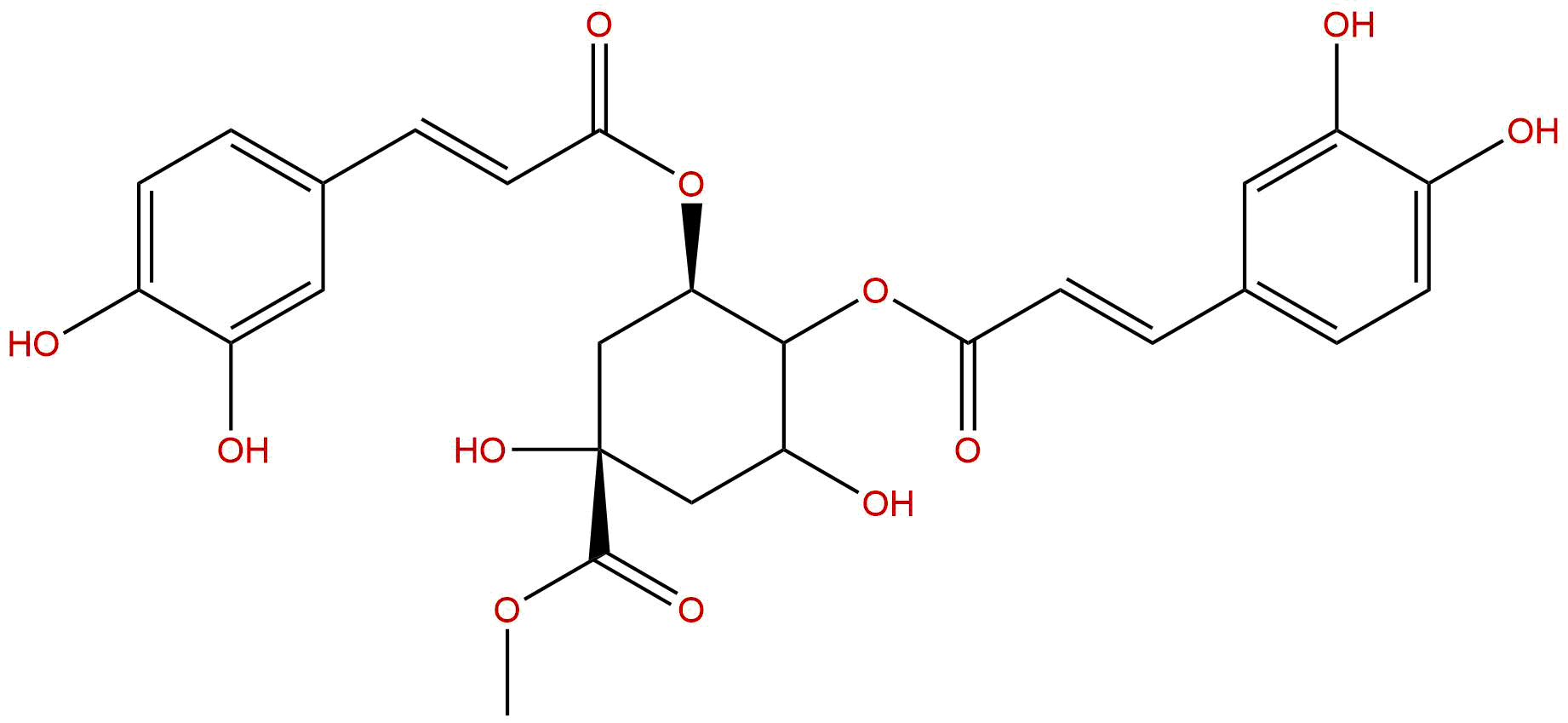


Product name: 3,4-O-Dicaffeoylquinic acid methyl ester
Synonym name: Macroantoin F;Methyl 4,5-di-O-caffeoylquinate
Catalogue No.: BP2296
Cas No.: 114637-83-1
Formula: C26H26O12
Mol Weight: 530.482
Botanical Source:
Type of Compound: Phenylpropanoids
Purity: 95%~99%
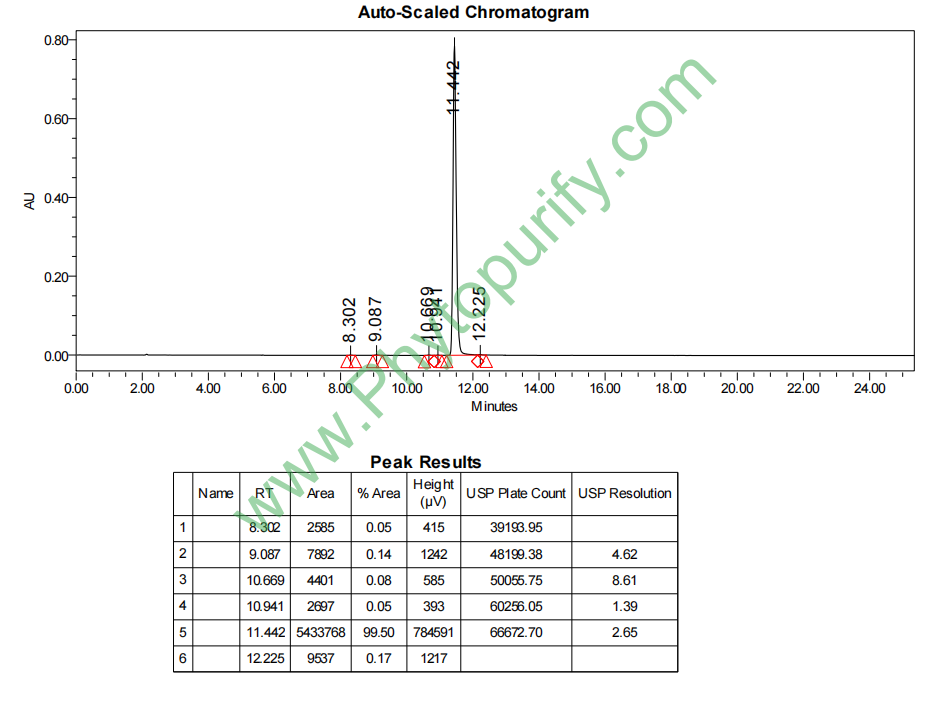
Analysis Method: HPLC-DAD or/and HPLC-ELSD
Identification Method: Mass, NMR
Packing: Brown vial or HDPE plastic bottle
Storage: Store in a well closed container, protected from air and light. Put into refrigerate or freeze for long term storage.
Whenever possible, you should prepare and use solutions on the same day. However, if you need to make up stock solutions in advance, we recommend that you store the solution as aliquots in tightly sealed vials at -20℃. Generally, these will be useable for up to two weeks.
The product could be supplied from milligrams to grams
Inquire for bulk scale.
For Reference Standard and R&D, Not for Human Use Directly.
HPLC of 3,4-O-Dicaffeoylquinic acid methyl ester
Storage conditions:Short-term storage at 2~8℃, long-term storage at -20 ~ -80℃
200.2800
1.5973
1.5738
.3485
.8266
.3243
Low
88.7719
4.1714
No
No
No
No
Yes
No
0.0
Yes
Yes
Yes
Yes
Natural products have always been an important source of drug discovery and development, especially demonstrating unique advantages in fields such as antibacterial, anti-inflammatory, and anti-tumor. Among numerous natural phenolic acid compounds with biological activity, chlorogenic acid and its derivatives have attracted much attention due to their extensive pharmacological activities. 3,4-O-Dicaffeoylquinic acid methyl ester, as an important derivative of dicaffeoylquinic acid methyl ester, has gradually emerged in natural product pharmacology research in recent years. This compound is formed by ester bonding between two molecules of caffeic acid and one molecule of quinic acid at positions 3 and 4, and further methylation. Its chemical structure endows it with unique physicochemical properties and biological activity.
Structurally, isochlorogenic acid B methyl ester belongs to the phenylpropanoid class of compounds and is one of the more complex members in the chlorogenic acid family. Compared with the common chlorogenic acid (3-O-caffeoylquinic acid), isochlorogenic acid B methyl ester has stronger antioxidant capacity and richer biological activity spectrum due to the presence of two caffeoyl groups. In recent years, with the continuous rise of the incidence rate of oral diseases and the increasingly serious problem of antibiotic resistance, the search for new, efficient and low toxic inhibitors of oral pathogens has become a research hotspot. Isochlorogenic acid B methyl ester has shown great potential as a lead compound for novel oral antibacterial drugs due to its significant inhibitory effect on various oral pathogenic bacteria and its different mechanism of action from traditional antibiotics.
This article will provide a systematic and in-depth overview of isochlorogenic acid B methyl ester from multiple dimensions, including chemical structure and physicochemical properties, plant sources and extraction methods, pharmacological activity research, mechanism of action and molecular targets, pharmacological evaluation and pharmacokinetics, clinical application prospects and prospects, aiming to provide comprehensive scientific basis for further research and development of this compound.
The chemical name of isochlorogenic acid B methyl ester is 3,4-O-Dicafeoylquinic acid methyl ester, and its core skeleton is quinic acid (1,3,4,5-tetrahydroxycyclohexanecarboxylic acid). On the 3rd and 4th hydroxyl groups of quinic acid, one molecule of caffeic acid (3,4-dihydroxycinnamic acid) is connected through ester bonds. In addition, the carboxyl group at position 1 of quinic acid is methylated to form a methyl ester structure. This structural feature makes it an isomer of isochlorogenic acid A (3,5-dicaffeoylquinic acid) and isochlorogenic acid C (4,5-dicaffeoylquinic acid), with the only difference being the substitution position of the caffeoyl group on the quinic acid ring.
From the molecular formula, the molecular formula of isochlorogenic acid B methyl ester is C26H26O12, with a molecular weight of 530.4820 g/mol. Its molecules are rich in phenolic hydroxyl groups (derived from caffeoyl groups) and ester bonds, which are key functional groups determining its physicochemical properties and biological activity. According to the calculated chemical parameters, the lipophilic water partition coefficient (LogP) of the compound is 1.5973, indicating that it has a certain degree of lipophilicity, but overall tends to be hydrophilic, which is related to the presence of multiple polar hydroxyl and ester groups in its molecule. The topologically polar surface area (TPSA) is as high as 200.2800 Å ², far exceeding the recommended upper limit of 140 Å ² for oral drugs, indicating that the compound may not easily diffuse through cell membranes through passive diffusion, and its oral bioavailability may be limited. The water solubility parameter is 0.3485 mg/mL, which belongs to the category of slight solubility, which will to some extent affect its formulation development.
In terms of stability, isochlorogenic acid B methyl ester is more sensitive to light, heat, and alkaline environments. The ester bonds in its molecules are prone to hydrolysis under strong acid or strong base conditions, producing caffeic acid and methyl quinate. Phenolic hydroxyl groups are easily oxidized in air, especially in the presence of light and metal ions, which may cause compounds to change color or decrease activity. Therefore, in storage and experimental operations, it is usually recommended to store in the dark, at low temperatures, dry, and use inert gas protection.
Isochlorogenic acid B methyl ester is widely distributed in nature, mainly found in plants such as Asteraceae, Caprifoliaceae, Rubiaceae, etc. Common plants rich in this compound include: Lonicera japonica, Chrysanthemum morifolium, Helianthus annuus, Coffee Arabica, and various Artemisia plants. Among them, honeysuckle, as a traditional Chinese medicine for clearing heat and detoxifying, has antibacterial and antiviral activities partially attributed to various caffeoylquinic acid components, including isochlorogenic acid B methyl ester. The content of this compound varies significantly among different plants, regions, harvest seasons, and parts (flowers, leaves, stems, roots), with higher levels usually found in flower buds and young leaves.
In terms of extraction methods, solvent extraction is usually used for the extraction of isochlorogenic acid B methyl ester. Due to the moderate polarity of the compound, commonly used extraction solvents are methanol, ethanol, or their aqueous solutions. In order to improve extraction efficiency, modern technologies such as ultrasound assisted extraction, microwave-assisted extraction, or enzyme assisted extraction can be used. For example, using a 70% ethanol aqueous solution and ultrasonic extraction at 50 ℃ for 30 minutes can effectively extract total caffeoylquinic acid components, including isochlorogenic acid B methyl ester, from honeysuckle. After vacuum concentration, the extract needs to be preliminarily purified. Common methods include liquid-liquid extraction (such as ethyl acetate extraction) and macroporous adsorption resin column chromatography (such as D101, AB-8 resin) to remove water-soluble impurities such as sugars and proteins.
Further separation and purification rely on chromatographic techniques. Silica gel column chromatography is a classic method, often using chloroform methanol water or ethyl acetate methanol water systems for gradient elution. Due to the extremely similar structure of isochlorogenic acid B methyl ester and its isomers, separation is difficult. High performance liquid chromatography (HPLC) and preparative HPLC are currently the most effective separation methods. Typically, a reverse phase C18 chromatographic column is used, with acetonitrile water (containing 0.1% formic acid or phosphoric acid) as the mobile phase for isocratic or gradient elution. High purity target compounds can be obtained by monitoring at 325-330 nm using a UV detector. In recent years, high-speed countercurrent chromatography (HSCCC) and molecular imprinting techniques have also been applied for the efficient separation of such compounds.
The pharmacological activity research of isochlorogenic acid B methyl ester mainly focuses on antibacterial, antioxidant, anti-inflammatory, and antiviral aspects, among which the inhibitory effect on oral pathogenic bacteria is particularly prominent.
Antibacterial activity Multiple studies have shown that isochlorogenic acid B methyl ester has significant inhibitory effects on various oral pathogenic bacteria, including Streptococcus mutans, Porphyromonas gingivalis, Fusobacterium nucleatum, and Prevotella intermedia. These bacteria are the main pathogens of oral diseases such as dental caries and periodontitis. Experimental data shows that the minimum inhibitory concentration (MIC) of isochlorogenic acid B methyl ester against Streptococcus mutans is usually in the range of 10-50 μ g/mL, and its activity is superior to or equivalent to certain traditional antibacterial drugs. It is worth noting that this compound not only inhibits the growth of planktonic bacteria, but also effectively suppresses the formation of bacterial biofilms and destroys mature biofilms that have already formed. This is of great significance for the prevention and treatment of oral infections that are mainly caused by biofilms.
antioxidant activity Due to the presence of two hydroxyl groups (derived from caffeoyl) in the molecule, isochlorogenic acid B methyl ester exhibits strong free radical scavenging ability. In vitro antioxidant models such as DPPH, ABTS, and FRAP, their activity is usually stronger than that of monocaffeoylquinic acid (such as chlorogenic acid) and commonly used antioxidants such as vitamin C or vitamin E. This antioxidant activity helps alleviate the damage to periodontal tissue caused by reactive oxygen species (ROS) released by neutrophils and macrophages in oral inflammatory responses.
anti-inflammatory activity In a macrophage model stimulated by lipopolysaccharide (LPS), isochlorogenic acid B methyl ester can significantly inhibit the production of pro-inflammatory cytokines such as tumor necrosis factor - α (TNF - α), interleukin-6 (IL-6), and interleukin-1 β (IL-1 β). The mechanism may be related to the inhibition of the activation of nuclear factor kappa B (NF - κ B) and mitogen activated protein kinase (MAPK) signaling pathways. This anti-inflammatory effect has potential value in alleviating the inflammatory process of periodontitis.
Antiviral activity Preliminary studies have also shown that isochlorogenic acid B methyl ester has a certain inhibitory effect on certain viruses such as influenza virus and respiratory syncytial virus, but its antiviral mechanism is not fully understood, which may be related to the inhibition of virus adsorption or neuraminidase activity.
A deep understanding of the mechanism of action of isochlorogenic acid B methyl ester, especially its interaction with molecular targets, is the key to developing it into a novel antibacterial drug. According to existing research, the inhibitory effect of this compound on oral pathogenic bacteria involves multiple targets, exhibiting a synergistic effect of multiple targets.
Based on the target information you provided, isochlorogenic acid B methyl ester may exert its effects through the following mechanisms:
Inhibition of DNA replication related enzymes The targets GYRA and GYRB are the A and B subunits of DNA gyrases, which are responsible for negative supercoiling of bacterial DNA and are key enzymes for DNA replication and transcription. The targets DHFR (dihydrofolate reductase) and FOLA (dihydrofolate synthase) are involved in folate metabolism, providing precursors for nucleotide synthesis. Molecular docking and enzyme activity inhibition experiments have shown that isochlorogenic acid B methyl ester can bind to the active sites of these enzymes, interfering with their normal functions through hydrogen bonding and hydrophobic interactions, thereby inhibiting bacterial DNA replication and cell division. This simultaneous inhibition of multiple nucleic acid metabolic targets makes it difficult for bacteria to develop drug resistance through a single gene mutation.
Interference with cell wall synthesis The target PBP2 (penicillin binding protein 2) is an important transpeptidase involved in bacterial cell wall peptidoglycan synthesis. Isochlorogenic acid B methyl ester may inhibit the cross-linking of peptidoglycan by binding to PBP2, leading to cell wall structural defects, bacterial osmotic pressure imbalance, and bacterial lysis and death. This mechanism of action is similar to that of beta lactam antibiotics, but due to their different chemical structures, it may still be effective against certain strains resistant to beta lactam antibiotics.
Inhibition of enzymes related to biofilm formation The targets GTFB (glucosyltransferase B) and FTFA (fructosyltransferase A) are extracellular enzymes secreted by Streptococcus mutans and other oral streptococci. They use sucrose as a substrate to synthesize water-insoluble pectin and fructan, which are the main matrix components of dental plaque biofilm. Isochlorogenic acid B methyl ester can effectively inhibit the enzymatic activity of GTFB and FTFA, reduce the synthesis of extracellular polysaccharides, and thus inhibit bacterial adhesion and biofilm formation on tooth surfaces. This mechanism explains why the compound can effectively inhibit the formation of biofilms.
Disrupting the integrity of the cell membrane The target ERG (ergosterol) is an important component of fungal cell membranes, but it is worth noting that some bacteria also contain steroid like substances in their cell membranes. Isochlorogenic acid B methyl ester, due to its amphiphilicity, may insert into bacterial cell membranes and interact with membrane phospholipids or sterols, increasing membrane permeability and leading to the leakage of important substances (such as potassium ions and ATP) from cells, ultimately resulting in bacterial death.
In summary, isochlorogenic acid B methyl ester does not act on a single target, but exerts its broad-spectrum and efficient antibacterial activity by simultaneously interfering with multiple key physiological processes such as bacterial nucleic acid metabolism, cell wall synthesis, biofilm formation, and cell membrane integrity. This multi-target mode of action is an important advantage that distinguishes it from traditional antibiotics, and it is also the fundamental reason why it is less likely to induce bacterial resistance.
To promote the clinical application of isochlorogenic acid B methyl ester from laboratory research, a systematic evaluation of its pharmacological properties is necessary. Based on the parameters you provided, we can conduct a preliminary analysis.
Analysis of drug properties parameters:
- Molecular weight (530.48 Da)Slightly higher than the recommended molecular weight of less than 500 Da according to the Lipinski rule. A larger molecular weight usually means that oral absorption may be poor, but it is not absolutely contraindicated, and many successfully marketed drugs have molecular weights exceeding 500 Da.
- LogP(1.60)Within the ideal range (0-3), it indicates that the compound has both hydrophilicity and lipophilicity, which is beneficial for dissolution and transmembrane transport in vivo.
- TPSA(200.28 Ų): Far above the threshold of 140 Å ². High TPSA usually means that the compound is difficult to passively diffuse through cell membranes, especially the blood-brain barrier. This is consistent with your evaluation of 'blood-brain barrier: low'. High TPSA also suggests that the compound may be mainly absorbed through active transport or cellular bypass pathways, and is not easily accessible to the central nervous system. This is an advantageous feature for developing non central nervous system targeted oral drugs, which can reduce central side effects.
- Water solubility (0.35 mg/mL)Belonging to the category of slight solubility. Low water solubility is a challenge that needs to be overcome in formulation development, which may require the use of solubilization techniques such as cyclodextrin inclusion, solid dispersion, or lipid nanoparticles.
- HERG inhibition (No)This is a very positive signal, indicating that the compound is unlikely to cause cardiac QT interval prolongation and fatal arrhythmias at therapeutic concentrations, and has high cardiac safety.
- Ames test (0.0)The result is negative, indicating that the compound does not exhibit mutagenicity in bacterial reverse mutation testing and has a low risk of genetic toxicity.
Pharmacokinetic characteristics:
At present, there is relatively limited data on the pharmacokinetics of isochlorogenic acid B methyl ester in vivo, but it can be inferred from studies on its analogues (such as chlorogenic acid and isochlorogenic acid A). After oral administration, this type of compound has poor absorption in the gastrointestinal tract and usually has low bioavailability. They are easily hydrolyzed by gut microbiota and intestinal wall esterases into caffeic acid and quinic acid, which are then absorbed into the bloodstream in the form of metabolites. After intravenous administration, it is widely distributed in the body, but has a short plasma half-life and is rapidly eliminated, mainly excreted through the kidneys and bile. Due to its high TPSA and polarity, its tissue permeability is limited, but it may be enriched in the liver and kidneys through specific transporters such as organic anion transporters (OATs).
The pharmacokinetic characteristics of isochlorogenic acid B methyl ester may be more favorable for local oral applications. Local administration (such as mouthwash, gel or dental materials) can directly act on oral mucosa and dental plaque to avoid first pass effects, increase local drug concentration, and reduce systemic exposure and systemic side effects. Therefore, developing its local formulations may be a better strategy.
Based on the unique pharmacological activity and preliminary pharmacological evaluation of isochlorogenic acid B methyl ester, its application prospects in the field of oral health are very broad.
As a new type of oral antibacterial agent Given its broad-spectrum antibacterial, anti biofilm, anti-inflammatory, and low risk of drug resistance, isochlorogenic acid B methyl ester is expected to be developed as a novel active ingredient for the prevention and treatment of common oral diseases such as dental caries, periodontitis, and oral candidiasis. It can be made into forms such as mouthwash, toothpaste, dental floss coating, oral patches, or dental filling material additives.
Synergistic effects with other drugs Research has shown that isochlorogenic acid B methyl ester exhibits synergistic or additive effects when used in combination with traditional antibiotics (such as amoxicillin, metronidazole) or antimicrobial peptides. This combination therapy strategy can reduce effective doses, minimize toxic side effects, and delay the development of drug resistance.
As a lead compound for structural optimization Although isochlorogenic acid B methyl ester has shown good activity, its poor water solubility and low oral bioavailability still need to be addressed. In the future, its structure can be modified through medicinal chemical methods, such as:
-Introducing hydrophilic groups (such as phosphate and sugar groups) to improve water solubility.
-Preparation of prodrugs, such as esterification of phenolic hydroxyl groups, to allow them to be enzymatically interpreted and released as active ingredients in the body.
-Synthesize a series of analogues, explore structure-activity relationships, and search for candidate compounds with higher activity and better pharmacokinetic properties.
Challenges and Future Directions Faced:
Despite the optimistic outlook, the development of isochlorogenic acid B methyl ester still faces many challenges. Firstly, the large-scale, high-purity, and low-cost preparation process still needs to be optimized. Secondly, more detailed in vivo pharmacological and toxicological studies are needed, especially safety evaluations for long-term use. In addition, its stability in complex oral microbiota environments, interactions with other symbiotic bacteria in the oral microbiota, and whether it can cause dysbiosis all require further research.
Future research directions should focus on:
1. In depth mechanism research Using omics techniques (proteomics, metabolomics) to comprehensively reveal its multi-target action network.
2. Formulation development Focus on developing local drug delivery formulations, such as sustained-release systems based on nanotechnology, to improve local bioavailability and persistence of action.
3. Clinical translational research Conduct rigorously designed clinical trials to verify its effectiveness and safety in humans.
4. Application of Synthetic Biology Explore the efficient production of isochlorogenic acid B methyl ester using genetically engineered microorganisms or plant cell factories to solve the problem of natural resource scarcity.
Isochlorogenic acid B methyl ester, as a natural derivative of dicaffeoylquinic acid methyl ester, exhibits various pharmacological activities due to its unique chemical structure, especially outstanding in inhibiting oral pathogenic bacteria and their biofilm formation. Its synergistic inhibitory effect on multiple key molecular targets such as DNA gyrase, dihydrofolate reductase, penicillin binding protein, and glucosyltransferase endows it with unique advantages of high efficiency and low drug resistance. Preliminary pharmacological evaluation shows that the compound has good cardiac safety and low genetic toxicity. Although its water solubility and oral bioavailability are insufficient, it is expected to be improved through local formulation development or structural modification.
In summary, isochlorogenic acid B methyl ester is a natural product lead compound with great potential for development, especially in the field of oral health. Future research should focus on addressing key issues such as large-scale preparation, formulation development, and clinical translation. With the continuous deepening of research, we have reason to believe that isochlorogenic acid B methyl ester and its derivatives have the potential to become a new generation of safe and efficient oral disease prevention and treatment drugs, contributing to human oral health.
