Introduction/Overview
Natural products, as an important source of drug discovery, play an irreplaceable role in the long history of human struggle against diseases. Among numerous natural compounds with biological activity, dihydrochalcone compounds have attracted much attention due to their unique structural characteristics and extensive pharmacological activities. Hesperidin dihydrochalcone (HDC) is one of the important representative compounds, and its chemical structure is derived from the C-ring opening of hesperidin, belonging to dihydrochalcone flavonoids. This compound is mainly found in citrus plants in nature and is one of the common secondary metabolites in citrus fruits.
In recent years, with the prevalence of metabolic diseases around the world, especially the incidence rate of type 2 diabetes continues to rise, and the search for safe and effective hypoglycemic active ingredients has become a hot topic in natural product pharmacology. Hesperetin dihydrochalcone has gradually entered the field of researchers due to its significant hypoglycemic activity. Preliminary studies have shown that this compound can regulate glucose metabolism through multiple targets and pathways, demonstrating potential superior to traditional single target hypoglycemic drugs. Its targets include multiple key molecules such as glucokinase (GCK), peroxisome proliferator activated receptor gamma (PPARG), dipeptidyl peptidase-4 (DPP4), insulin receptor substrate 1 (IRS1), glucose transporter 4 (SLC2A4), and insulin receptor (INSR), forming a complex regulatory network.
In addition, from the perspective of medicinal chemistry, hesperetin dihydrochalcone has ideal pharmacological characteristics. Its molecular weight is 304.2980 Da, lipid water partition coefficient (LogP) is 2.2131, topological polar surface area (TPSA) is 107.2200 Å ², and water solubility is 0.4892 mg/mL. These parameters meet the basic requirements for oral medication. More importantly, the compound has low permeability to the blood-brain barrier and does not exhibit hERG potassium channel inhibitory activity or positive Ames test results, indicating its good safety characteristics. These characteristics make hesperetin dihydrochalcone not only have important basic research value, but also have the potential for clinical translation.
This article will systematically review the research progress of hesperetin dihydrochalcone from multiple dimensions, including chemical structure and physicochemical properties, plant sources and extraction methods, pharmacological activity research, mechanism of action and molecular targets, pharmacological evaluation and pharmacokinetics, clinical application prospects and prospects, in order to provide reference for the in-depth research and development of this compound.
Chemical structure and physicochemical properties
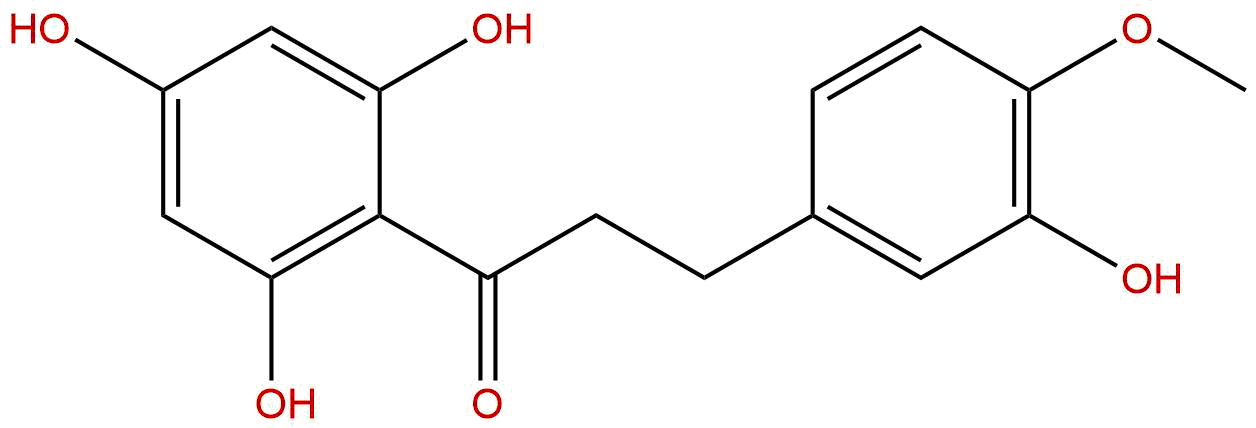
The chemical structure of hesperetin dihydrochalcone belongs to dihydrochalcone flavonoids. Its parent nucleus is composed of two aromatic rings (A ring and B ring) connected by a three carbon chain. Unlike classical flavonoids, the C ring in between is an open ring structure. Specifically, the structural features of the compound are: the A ring contains two hydroxyl groups (located at C-2 'and C-4' positions respectively), the B ring contains one hydroxyl group (C-4 position) and one methoxy group (C-3 position), and the C ring is an open chain α, β - unsaturated ketone structure. This unique structure endows this compound with physicochemical properties and biological activity that are distinct from other flavonoid compounds.
From the molecular formula, the molecular formula of hesperetin dihydrochalcone is C ₁₆ H ₁₆ O ₆, with a molecular weight of 304.2980 Da. This molecular weight is within the ideal range of oral drug molecular weight (generally considered to be less than 500 Da), which is conducive to its passive diffusion through biofilms. Its lipid water partition coefficient (LogP) is 2.2131, indicating that the compound has moderate lipophilicity. It can dissolve in the lipid environment while maintaining a certain degree of water solubility, which is of great significance for its oral absorption and in vivo distribution. The topological polar surface area (TPSA) is 107.2200 Å ², which reflects the total surface area of polar atoms in the molecule and is an important parameter for predicting drug oral absorption and blood-brain barrier permeability. It is generally believed that compounds with TPSA less than 140 Å ² have good oral absorption potential, and the TPSA value of hesperetin dihydrochalcone falls within this range.
In terms of water solubility, the compound has a water solubility of 0.4892 mg/mL and is classified as a slightly soluble compound. Although this water-soluble characteristic is not as good as some strongly polar compounds, considering its moderate LogP value, in actual oral administration, its solubility and bioavailability can be significantly improved through appropriate formulation techniques such as solid dispersions, liposomes, or cyclodextrin inclusion complexes. It is worth noting that the compound has low permeability to the blood-brain barrier, which has special significance in the development of hypoglycemic drugs - lower brain exposure can reduce central nervous system related side effects, such as consciousness disorders caused by hypoglycemia.
From the perspective of chemical stability, the molecule of hesperetin dihydrochalcone contains multiple phenolic hydroxyl groups, which endow the compound with certain antioxidant activity but also make it sensitive to oxidative conditions. In addition, the α, β - unsaturated ketone structures in the molecule may undergo Michael addition reactions under alkaline conditions, but are relatively stable under acidic conditions. These chemical properties need to be fully considered during extraction, purification, formulation, and storage processes.
Plant sources and extraction methods
The distribution of hesperetin dihydrochalcone in nature is relatively limited, mainly found in the fruits and leaves of citrus plants in the Rutaceae family. Research has shown that this compound is one of the metabolites of hesperidin in citrus fruits. Its content is usually low in fresh citrus fruits, but relatively high in certain specific varieties or growth stages of citrus. Except for citrus plants, the presence of this compound has also been detected in a few other plants, but the content is much lower than that of citrus plants.
In terms of biosynthetic pathways in plants, hesperetin dihydrochalcone belongs to the branch metabolites of flavonoids. The precursor substance hesperetin is first synthesized from phenylalanine through the phenylpropane metabolic pathway, and then the C ring of hesperetin is reduced and opened under the catalysis of dihydrochalcone reductase, forming the dihydrochalcone structure. This transformation process is strictly regulated within the plant body and is usually closely related to the plant's growth and development stage, environmental stress (such as ultraviolet radiation, pathogen infection, etc.), and hormone signals.
The extraction methods for hesperetin dihydrochalcone mainly include solvent extraction, ultrasound assisted extraction, and enzyme assisted extraction. The traditional solvent extraction method usually uses ethanol water mixed solvent as the extraction medium, taking advantage of the high solubility of the compound in the ethanol water system for extraction. Research has shown that a 60% -80% ethanol aqueous solution has the highest extraction efficiency for this compound. The extraction conditions are generally controlled at a temperature of 40-60 ℃, a solid-liquid ratio of 1:10-1:20 (w/v), and an extraction time of 2-4 hours. To improve extraction efficiency, multiple extractions or reflux extractions can be used.
The ultrasound assisted extraction method utilizes the cavitation effect of ultrasound to destroy plant cell walls and promote the release of target compounds. This method has the advantages of short extraction time, low solvent dosage, and high extraction efficiency. Under optimized conditions (ultrasound power of 200-400 W, frequency of 40-60 kHz, temperature of 40-50 ℃, time of 30-60 minutes), the extraction rate of hesperetin dihydrochalcone can be increased by 20% -40% compared to traditional solvent extraction methods. The enzyme assisted extraction method utilizes hydrolytic enzymes such as cellulase and pectinase to degrade cellulose and pectin in plant cell walls, thereby increasing cell wall permeability and improving the extraction efficiency of target compounds. This method is particularly suitable for extracting the compound from raw materials rich in cellulose and pectin, such as citrus peels.
In terms of purification, commonly used methods include macroporous adsorption resin column chromatography, silica gel column chromatography, and preparative high-performance liquid chromatography. The macroporous adsorption resin method utilizes the selective adsorption desorption effect of resin on target compounds, which can effectively remove water-soluble impurities such as sugars and proteins, and obtain crude extracts with high purity. Further use of silica gel column chromatography and gradient elution with solvent systems such as chloroform methanol or ethyl acetate methanol can obtain hesperetin dihydrochalcone with a purity greater than 90%. For research or applications that require higher purity, preparative high-performance liquid chromatography can be used for purification, with a purity of over 98%.
It is worth noting that due to the low content of hesperetin dihydrochalcone in plants, the cost of extracting it directly from natural raw materials is relatively high. In recent years, significant progress has been made in the research of chemical synthesis methods. By using hesperetin as the starting material and conducting selective reduction ring opening reaction, this compound can be efficiently synthesized with a yield of over 80%. This synthetic route provides a feasible alternative for the large-scale preparation of hesperetin dihydrochalcone.
Pharmacological activity research
The pharmacological activity research of hesperetin dihydrochalcone mainly focuses on its hypoglycemic effect. In addition, its activities in antioxidant, anti-inflammatory, anti-tumor and other aspects have gradually received attention.
In terms of hypoglycemic activity, multiple in vitro and in vivo studies have confirmed the significant effect of hesperetin dihydrochalcone. In vitro experiments have shown that the compound can promote insulin secretion in pancreatic beta cells (such as INS-1 cells) in a dose-dependent manner, with insulin secretion increasing by 1.5-3 times in the concentration range of 10-100 μ M. Meanwhile, in liver cell (such as HepG2 cells) and adipocyte (such as 3T3-L1 cells) models, hesperetin dihydrochalcone can significantly enhance glucose uptake and utilization, and its effect is comparable or better than the positive control drug metformin. In muscle cells such as L6 myotubes, this compound also exhibits a promoting effect on glucose transport, suggesting that it may regulate blood glucose through the synergistic action of multiple tissues.
Animal experiments further validated the hypoglycemic effect of hesperetin dihydrochalcone. In the streptozotocin (STZ) - induced type 1 diabetes mouse model, after oral administration of hesperidin dihydrochalcone (50-200 mg/kg/d) for four consecutive weeks, the fasting blood glucose level of the model animals significantly decreased by 30% -50%. In the rat model of type 2 diabetes induced by high-fat diet combined with low-dose STZ, the compound can not only reduce fasting blood glucose and postprandial blood glucose, but also improve abnormal glucose tolerance and reduce the level of glycosylated hemoglobin. It is worth noting that hesperetin dihydrochalcone does not cause hypoglycemic reactions while lowering blood sugar, which is a safety feature superior to some traditional hypoglycemic drugs.
In addition to its hypoglycemic activity, hesperetin dihydrochalcone also exhibits significant antioxidant activity. Due to the presence of multiple phenolic hydroxyl groups in its molecule, this compound can effectively scavenge 1,1-diphenyl-2-trinitrophenylhydrazine (DPPH) free radicals, 2,2 '- bis (3-ethylbenzothiazole-6-sulfonic acid) (ABTS) cationic free radicals, and hydroxyl free radicals. Its antioxidant capacity is comparable to vitamin C. In cell models, hesperetin dihydrochalcone can reduce high glucose induced reactive oxygen species (ROS) levels and protect pancreatic beta cells from oxidative stress damage, which may be an important auxiliary mechanism for its hypoglycemic activity.
In terms of anti-inflammatory activity, studies have shown that hesperetin dihydrochalcone can inhibit the expression of pro-inflammatory factors (such as TNF - α, IL-6, IL-1 β) in macrophages induced by lipopolysaccharide (LPS), while promoting the secretion of anti-inflammatory factors (such as IL-10). Its anti-inflammatory mechanism may be related to the inhibition of the activation of the nuclear factor kappa B (NF - κ B) signaling pathway. Considering the key role of chronic low-grade inflammation in the occurrence and development of insulin resistance and type 2 diabetes, the anti-inflammatory activity of hesperidin dihydrochalcone may be closely related to its hypoglycemic effect.
In addition, preliminary studies also found that hesperidin dihydrochalcone has certain anti-tumor activity and can inhibit the proliferation of a variety of cancer cells, including breast cancer cells (MCF-7), liver cancer cells (HepG2) and colon cancer cells (HT-29). Its anti-tumor mechanism may be related to inducing cell cycle arrest and apoptosis. However, research in this area is still in its early stages and requires more experimental evidence to support it.
Mechanism of action and molecular targets
The hypoglycemic effect of hesperetin dihydrochalcone involves multiple molecular targets and signaling pathways, forming a complex regulatory network. Based on existing research data, this compound mainly exerts its hypoglycemic effect through the following mechanisms.
Firstly, hesperetin dihydrochalcone can directly activate glucokinase (GCK). GCK is a key enzyme in glucose metabolism, mainly expressed in liver and pancreatic beta cells, catalyzing the phosphorylation of glucose to produce glucose-6-phosphate, which is the first step in glycolysis. This enzyme plays the role of a "glucose sensor" in maintaining blood glucose homeostasis. Research has shown that hesperetin dihydrochalcone can bind to the conformational sites of GCK, increasing the enzyme's affinity for glucose, thereby enhancing the liver's uptake and utilization of glucose, while promoting insulin secretion by pancreatic beta cells stimulated by glucose. Molecular docking studies have shown that the binding free energy of this compound with GCK is -8.5 kcal/mol, which is similar to the binding mode of known GCK activators.
Secondly, hesperetin dihydrochalcone can activate peroxisome proliferator activated receptor gamma (PPARG). PPARG is a member of the nuclear receptor superfamily, highly expressed in adipose tissue, and is a key transcription factor regulating adipocyte differentiation, lipid metabolism, and insulin sensitivity. This compound can act as a partial agonist of PPARG, activating the receptor with lower efficacy, thereby improving insulin resistance and enhancing peripheral tissue uptake and utilization of glucose. Compared with complete agonists (such as rosiglitazone), hesperidin dihydrochalcone has a lower degree of activation of PPARG, which may explain its less side effects such as water sodium retention and weight gain.
Thirdly, hesperetin dihydrochalcone can inhibit the activity of dipeptidyl peptidase-4 (DPP4). DPP4 is a serine protease that can rapidly degrade intestinal insulinotropic hormones such as glucagon like peptide-1 (GLP-1) and glucose dependent insulinotropic polypeptide (GIP). By inhibiting the activity of DPP4, hesperetin dihydrochalcone can prolong the half-life of endogenous GLP-1 and GIP, thereby enhancing glucose stimulated insulin secretion and inhibiting the release of glucagon. In vitro enzyme activity assays showed that the compound has a half maximal inhibitory concentration (IC ₅₀) of approximately 15 μ M against DPP4. Although its inhibitory activity is weaker compared to some clinically used DPP4 inhibitors such as sitagliptin, considering its multi-target nature, the overall hypoglycemic effect may be more comprehensive.
Fourthly, hesperetin dihydrochalcone can regulate key molecules in the insulin signaling pathway, including insulin receptor (INSR), insulin receptor substrate 1 (IRS1), and glucose transporter 4 (SLC2A4, also known as GLUT4). In a cell model of insulin resistance, this compound can upregulate the expression levels of INSR and IRS1, enhance insulin signaling, promote tyrosine phosphorylation of IRS1, and activate downstream phosphatidylinositol 3-kinase (PI3K)/protein kinase B (Akt) signaling pathways. Meanwhile, hesperetin dihydrochalcone can promote the translocation of GLUT4 from intracellular vesicles to the cell membrane, increase the amount of GLUT4 on the cell membrane, and enhance the transmembrane transport of glucose. This mechanism is particularly evident in adipocytes and muscle cells, and is an important molecular basis for hesperetin dihydrochalcone to improve peripheral insulin resistance.
In addition, hesperetin dihydrochalcone also exerts hypoglycemic effects by regulating other signaling pathways. For example, the compound can activate the AMP activated protein kinase (AMPK) signaling pathway, increase energy consumption, and inhibit liver gluconeogenesis; Can inhibit the activity of alpha glucosidase, delay the absorption of intestinal carbohydrates, and reduce postprandial blood glucose peak; It can regulate the composition of gut microbiota, increase the abundance of beneficial bacteria producing short chain fatty acids, and improve metabolic endotoxemia.
In summary, hesperetin dihydrochalcone regulates glucose metabolism through multi-target and multi pathway mechanisms. This "multi-target synergistic" mode of action gives it unique advantages in lowering blood sugar, and may have better efficacy and safety than single target drugs.
Evaluation of drug properties and pharmacokinetics
The evaluation of drug properties is a crucial step in determining whether natural products can be successfully converted into clinical drugs. Based on existing data, hesperetin dihydrochalcone exhibits ideal pharmacological characteristics.
From the perspective of Lipinski's rule of five, the molecular weight (304.2980 Da) of this compound is less than 500 Da, the LogP (2.2131) is less than 5, the number of hydrogen bond donors (4 phenolic hydroxyl groups) is less than 5, and the number of hydrogen bond acceptors (6 oxygen atoms) is less than 10, fully meeting the basic requirements for oral administration of drugs. Its topological polar surface area (TPSA) is 107.2200 Å ², which is less than 140 Å ², indicating its good oral absorption potential. Although the water solubility (0.4892 mg/mL) is relatively low, it can be improved through appropriate formulation techniques.
In terms of safety evaluation, hesperetin dihydrochalcone exhibits good safety characteristics. The negative result of hERG inhibition test indicates that the compound does not pose a risk of prolonging QT interval or inducing arrhythmia, which is an important indicator for cardiovascular safety evaluation. The Ames test result is 0.0, indicating that the compound does not have mutagenicity and has a low risk of genetic toxicity. In addition, the compound has low permeability to the blood-brain barrier, which not only reduces central nervous system related side effects but also suggests that it may exert hypoglycemic effects through peripheral mechanisms, avoiding the risk of hypoglycemic encephalopathy caused by certain hypoglycemic drugs.
In terms of pharmacokinetics, current research on hesperetin dihydrochalcone is relatively limited, but there are some preliminary data available. After oral administration, the compound is rapidly absorbed in the gastrointestinal tract, but its bioavailability may be affected by first pass effects. Research has shown that hesperetin dihydrochalcone mainly undergoes glucuronidation and sulfation binding reactions in the liver, generating corresponding bound metabolites. These metabolites may re-enter the systemic circulation through the enterohepatic circulation, prolonging their duration of action. In terms of distribution, the compound is mainly distributed in plasma, liver, kidney, and adipose tissue, with lower concentrations in brain tissue, consistent with its low blood-brain barrier permeability.
In terms of metabolic kinetic parameters, in a rat model, oral administration of hesperetin dihydrochalcone (50 mg/kg) resulted in a plasma peak concentration (Cmax) of approximately 2.5 μ g/mL, a peak time (Tmax) of approximately 1.5 hours, and an elimination half-life (t ₁/₂) of approximately 4 hours. These parameters indicate that the compound has a moderate absorption rate and elimination rate, making it suitable for multiple daily administrations. In terms of excretion, the compound is mainly excreted through urine and feces, with urine excretion accounting for about 30% -40% of the administered dose and feces excretion accounting for about 50% -60%.
It is worth noting that the metabolism of hesperetin dihydrochalcone may be influenced by food drug interactions. For example, when used in combination with certain drugs that inhibit glucuronosyltransferase, such as probenecid, it may increase the blood concentration of the compound; When used in combination with certain drugs that induce the CYP450 enzyme system, such as rifampicin, it may accelerate its metabolic clearance. These potential interactions require attention in clinical applications.
Clinical application prospects and prospects
Based on the pharmacological activity, mechanism of action and pharmaceutical characteristics of hesperidin dihydrochalcone, this compound shows a good clinical application prospect in the treatment of type 2 diabetes.
First, hesperidin dihydrochalcone has unique advantages in the treatment of type 2 diabetes due to its multi-target mechanism of action. Compared with traditional single target hypoglycemic drugs such as sulfonylureas, DPP4 inhibitors, thiazolidinediones, etc., this compound can simultaneously act on multiple targets such as GCK, PPARG, DPP4, IRS1, GLUT4, and INSR, regulating glucose metabolism from multiple stages. This "multi-target synergistic" mode of action not only improves the hypoglycemic effect, but may also reduce the common side effects of single target drugs. For example, compared with complete PPARG agonists (such as rosiglitazone), hesperidin dihydrochalcone as a partial agonist may cause less water sodium retention and weight gain; Compared to sulfonylurea drugs, its ability to promote insulin secretion depends on glucose concentration, resulting in a lower risk of hypoglycemia.
Secondly, the good safety characteristics of hesperetin dihydrochalcone lay the foundation for its clinical application. The negative inhibition of hERG, negative Ames test, and low blood-brain barrier permeability indicate that this compound has low risks in cardiovascular safety, genetic toxicity, and central nervous system side effects. In addition, the compound is derived from citrus fruits and belongs to natural food ingredients, which may be safer than chemically synthesized drugs in long-term use.
However, the clinical translation of hesperetin dihydrochalcone still faces some challenges. Firstly, its water solubility is low, and its oral bioavailability may be limited, which needs to be improved through formulation techniques such as nanoemulsions, liposomes, solid dispersions, etc. Secondly, there is currently insufficient pharmacokinetic research on this compound, particularly in terms of its metabolic pathways, metabolite activity, drug interactions, and other aspects in the human body. Third, although animal experiments have shown good hypoglycemic effects, there is still a lack of large-scale, multi center clinical trial data to verify its efficacy and safety in diabetes patients.
Looking ahead to the future, the research and development of hesperetin dihydrochalcone can be further explored from the following aspects: firstly, conducting systematic pharmacokinetic studies to clarify its absorption, distribution, metabolism, and excretion characteristics in the human body; The second is to conduct dose exploration and formulation optimization research, and develop dosage forms suitable for clinical application; Third, carry out a multicenter, randomized, double-blind clinical trial to verify its efficacy and safety in patients with type 2 diabetes; Fourthly, explore the combination therapy of this compound with other hypoglycemic drugs (such as metformin, SGLT2 inhibitors, etc.), evaluate its synergistic effect and safety; The fifth is to conduct in-depth research on its mechanism of action, especially its role in regulating gut microbiota and improving metabolic inflammation.
In addition, the chemical structure of hesperetin dihydrochalcone provides abundant possibilities for its structural modification. By modifying the phenolic hydroxyl, methoxy, and α, β - unsaturated ketone structures in its molecules, it is expected to obtain derivatives with stronger activity, higher selectivity, and better pharmacokinetic properties. These derivatives may become lead compounds for the new generation of hypoglycemic drugs.
Conclusion
Hesperetin dihydrochalcone, as a natural dihydrochalcone flavonoid compound, exhibits significant pharmacological activity and good pharmacological characteristics in lowering blood sugar. Its multi-target and multi-channel mechanism of action covers several key molecules such as GCK, PPARG, DPP4, IRS 1, GLUT4 and INSR, forming a complex regulatory network, which makes it have unique advantages in the treatment of type 2 diabetes. Meanwhile, the safety characteristics of this compound are relatively ideal, with hERG inhibition negative, Ames test negative, and low blood-brain barrier permeability providing important guarantees for its clinical translation.
However, from laboratory research to clinical application, hesperetin dihydrochalcone still faces many challenges, including improving water solubility, clarifying pharmacokinetic characteristics, and verifying clinical efficacy. In the future, collaboration among multiple disciplines such as chemistry, pharmacology, pharmacy, and clinical medicine is needed to fully unleash the therapeutic potential of this natural product. With the deepening of research and technological progress, hesperidin dihydrochalcone is expected to become a new candidate drug for the treatment of type 2 diabetes, bringing new treatment options to hundreds of millions of diabetes patients worldwide.