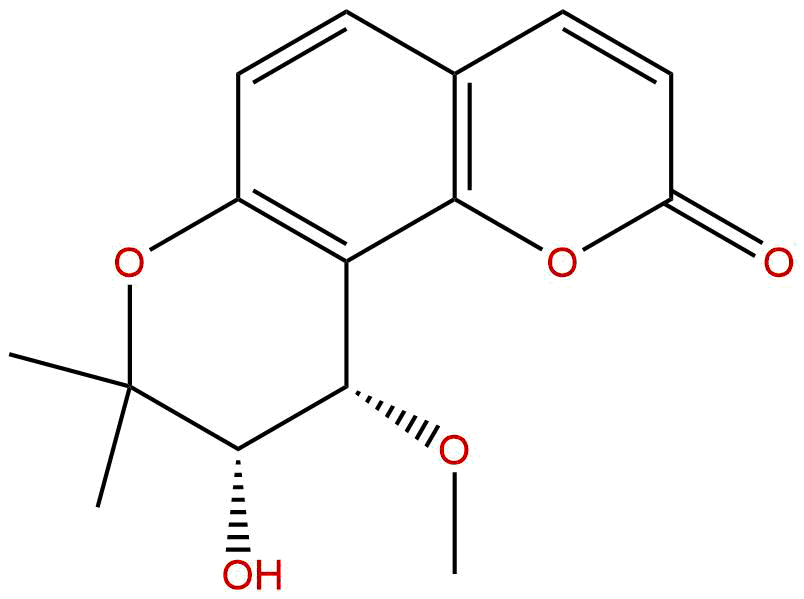


Product name: cis-Methylkhellactone
Synonym name: Cis-4'-Metbylkhellactone
Catalogue No.: BP2324
Cas No.: 34409-02-4
Formula: C15H16O5
Mol Weight: 276.288
Botanical Source:
Type of Compound: Coumarins
Purity: 95%~99%
Analysis Method: HPLC-DAD or/and HPLC-ELSD
Identification Method: Mass, NMR
Packing: Brown vial or HDPE plastic bottle
Storage: Store in a well closed container, protected from air and light. Put into refrigerate or freeze for long term storage.
Whenever possible, you should prepare and use solutions on the same day. However, if you need to make up stock solutions in advance, we recommend that you store the solution as aliquots in tightly sealed vials at -20℃. Generally, these will be useable for up to two weeks.
The product could be supplied from milligrams to grams
Inquire for bulk scale.
For Reference Standard and R&D, Not for Human Use Directly.
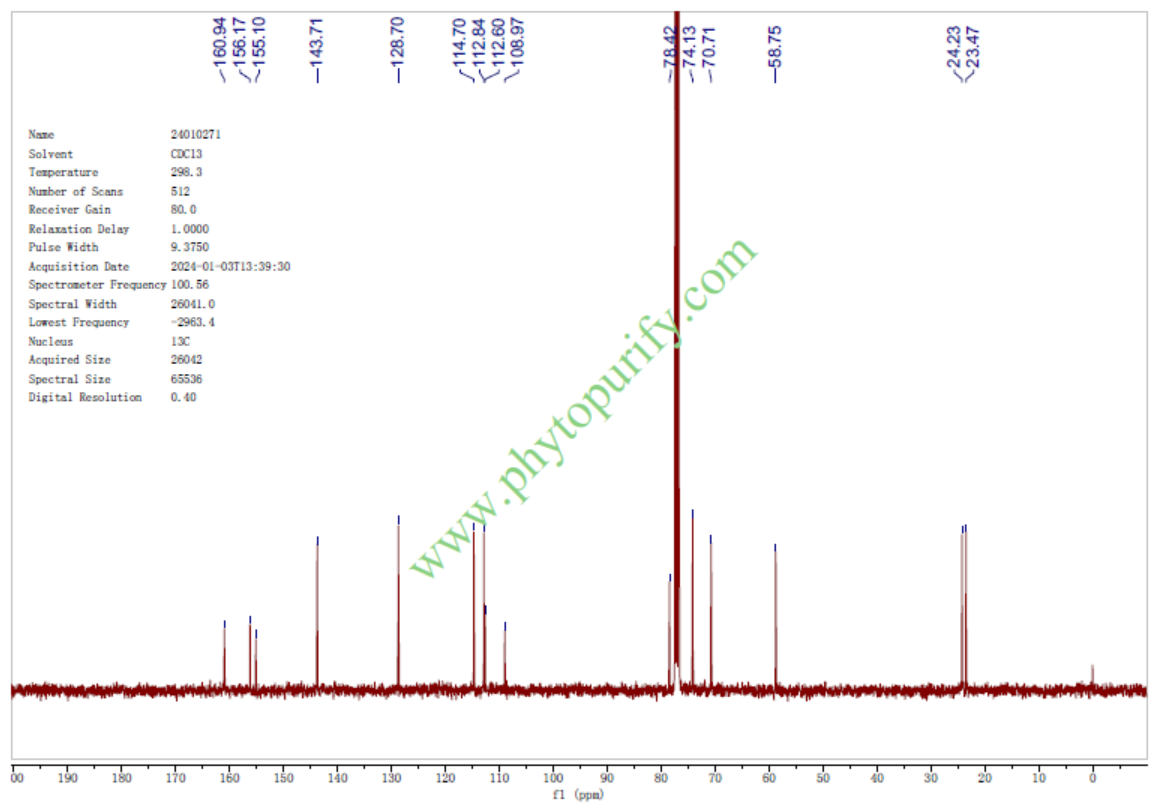
NMR of cis-Methylkhellactone
Storage conditions:Short-term storage at 2~8℃, long-term storage at -20 ~ -80℃
68.9000
1.9190
1.9190
.1216
2.3050
7.4713
High
73.6636
3.4977
Yes
No
No
No
Yes
Yes
1.5
Yes
No
Yes
Yes
Natural products, as an important source of drug discovery, play an irreplaceable role in the long struggle between humans and diseases. From ancient plant medicines to modern targeted therapy drugs, natural products and their derivatives have always been one of the core areas of innovative drug development. Coumarin compounds, as a class of benzopyranone derivatives widely present in nature, have long been highly valued by medicinal chemists and pharmacologists due to their structural diversity and extensive biological activity. Among them, Angular pyranocoumarins have become a research hotspot due to their unique chemical structure and significant pharmacological activity.
Cis Methylkhellactone, a typical angular coumarin, is mainly derived from the Umbelliferae plant, Peucedanum praeruptorum(Peucedanum praeruptorum Dunn's dry roots. As a traditional Chinese medicine, Qianhu was first recorded in the "Shennong Bencao Jing" and has the effects of reducing qi, resolving phlegm, dispersing wind, and clearing heat. It is commonly used to treat symptoms such as phlegm heat wheezing and wind heat cough. Modern pharmacological research has shown that Peucedanum praeruptorum and its active ingredients have great potential in cardiovascular protection, anti-inflammatory, anti-tumor and other aspects. Methyl Baihua Qianhulide is one of the key active ingredients in Qianhulu that exerts various pharmacological effects.
In recent years, with the continuous deepening of research on methyl paeoniflorin, its potential in the field of anti-tumor, especially anti lung cancer, has become increasingly prominent. Lung cancer is one of the malignant tumors with the highest incidence rate and mortality in the world. Although its treatment strategy has developed from traditional chemotherapy and radiotherapy to targeted treatment and immunotherapy, drug resistance and side effects are still huge challenges faced by clinical patients. Therefore, it is of great scientific significance and clinical value to search for efficient and low toxicity novel anti lung cancer lead compounds from natural products. This article aims to provide a systematic review of the chemical structure, plant origin, pharmacological activity, mechanism of action, medicinal properties, and clinical application prospects of methyl paeoniflorin, in order to provide comprehensive references for the in-depth research and development of this natural product.
The chemical name of methyl paeoniflorin is cis methylkhellactone, and its structure belongs to the angular dihydropyranocoumarin group. From a chemical structure perspective, it is composed of a coumarin parent nucleus (benzo [a] - pyranone) and a dihydropyran ring fused at positions C-7 and C-8, forming a unique four ring skeleton. There is a methyl group and a hydroxyl group attached to the C-3 'and C-4' positions of the dihydropyran ring, respectively, with the hydroxyl group at the C-4 'position being methylated to form a methoxy group. Its absolute configuration is (3'S, 4'S) - cis, and this cis configuration is the key structural feature that distinguishes it from other analogues (such as trans ketorolactone), as well as the structural basis for its specific biological activity.
The molecular formula of methyl paeoniflorin is C ₁₅ H ₁₆ O ₅, with a molecular weight of 276.2880 g/mol. Its physical and chemical properties are crucial for understanding its in vivo behavior. The lipid water partition coefficient (LogP) of this compound is 1.9190, indicating that it has moderate lipophilicity and is soluble in both organic solvents and water. Its topological polar surface area (TPSA) is 68.900 Å ², which is lower than the commonly recognized threshold for good oral absorption (140 Å ²), indicating that it may have good oral bioavailability. However, its water solubility (0.1216 mg/mL) is relatively low, which may become one of the challenges in its formulation development. It is worth noting that the compound is predicted to have high blood-brain barrier (BBB) penetration ability, which provides a possibility for its treatment of central nervous system diseases or brain metastases, but may also bring central nervous system related toxic side effects. In addition, hERG inhibition is predicted as' no ', indicating a low risk of causing cardiac QT interval prolongation and arrhythmia, which is a favorable safety signal. The Ames test result is 1.5, indicating that it may have potential genetic toxicity and further in vitro and in vivo experiments are needed for validation and evaluation.
Methyl Baihua Qianhu lactone is mainly derived from the Apiaceae family of the genus Baihua Qianhu(Peucedanum praeruptorum The root of Dunn. Baihua Qianhu is a genuine medicinal herb of Qianhu recorded in the Chinese Pharmacopoeia, mainly distributed in East China, Central China, and Southwest China. In addition, in the purple flowered Qianhu(Peucedanum decursivum Maxim and other plants in the genus Peucedanum have also found the presence of this component, but the content is usually low.
The traditional extraction method is mainly based on solvent extraction. Due to the moderate lipophilicity of methyl paeoniflorin, ethanol or methanol is often used as the extraction solvent. Usually, after crushing the dried roots of Houttuynia cordata, soaking or reflux extraction is carried out with a certain concentration of ethanol (such as 70% -95%) at room temperature or under heating conditions. After the extraction solution is concentrated under reduced pressure, the total extract is obtained. Subsequently, the total extract was preliminarily separated using liquid-liquid extraction method, such as sequentially extracting with petroleum ether, ethyl acetate, n-butanol, and water. Methyl paeoniflorin is mainly enriched in the ethyl acetate extraction layer due to its polarity.
In order to obtain high-purity monomer compounds, multiple chromatographic separation techniques need to be combined. The classic separation process includes: performing silica gel column chromatography on the ethyl acetate extract, and gradient elution using solvent systems such as petroleum ether ethyl acetate or chloroform methanol. Combine the fractions containing the target compound through thin-layer chromatography (TLC) detection. Subsequently, Sephadex LH-20 gel column chromatography, reverse phase silica gel (ODS) column chromatography and preparative high-performance liquid chromatography (Pre HPLC) can be further used for purification. Finally, the structure of the obtained compound was identified by spectroscopic techniques such as nuclear magnetic resonance spectroscopy (NMR) and mass spectrometry (MS), and it was confirmed to be methyl gibberellin.
In recent years, in order to improve extraction efficiency and reduce solvent consumption, some modern extraction techniques have also been applied to the extraction of active ingredients from Houttuynia cordata, such as ultrasound assisted extraction, microwave-assisted extraction, and supercritical fluid extraction. These methods have shown advantages in shortening extraction time and improving yield, but further optimization is still needed for large-scale industrial applications.
The pharmacological activity research of methyl paeoniflorin mainly focuses on its anti-tumor, anti-inflammatory, and cardiovascular protection aspects.
Antitumor activity This is currently the most active field of research. Multiple in vitro studies have shown that methyl paeoniflorin exhibits significant inhibitory effects on the proliferation of various tumor cell lines, especially lung cancer cells (such as A549, H1299, etc.). Its characteristic of action is dose-dependent and time-dependent. Unlike traditional cytotoxic chemotherapy drugs, methyl paeoniflorin can induce apoptosis in tumor cells at lower concentrations, and has relatively low toxicity to normal cells, demonstrating a certain degree of selectivity. In addition to lung cancer, it also showed certain inhibitory activity on breast cancer, liver cancer, colon cancer and other cell lines.
anti-inflammatory activity Inflammation is an important microenvironmental factor in the occurrence and development of tumors. Research has found that methylgibberellin can inhibit the production of nitric oxide (NO) and prostaglandin E2 (PGE2) in macrophages (such as RAW264.7 cells) induced by lipopolysaccharide (LPS), and downregulate the expression of inducible nitric oxide synthase (iNOS) and cyclooxygenase-2 (COX-2). This indicates its potential anti-inflammatory activity, which may indirectly exert anti-tumor effects by inhibiting inflammatory pathways.
Cardiovascular protective activity The traditional efficacy of Qianhu is highly compatible with modern cardiovascular protection. Research has shown that methyl paeoniflorin has the effect of dilating blood vessels and lowering blood pressure. The mechanism may be related to the inhibition of voltage dependent calcium channels and receptor regulated calcium channels, thereby reducing calcium ion influx and relaxing vascular smooth muscle. In addition, it can inhibit platelet aggregation, improve hemorheology, and have a certain protective effect on myocardial ischemia-reperfusion injury.
Other activities Preliminary studies also suggest that methyl paeoniflorin may have antioxidant and anti fibrotic activities, but its specific effects and mechanisms need to be further elucidated.
The pharmacological activity of methyl paeoniflorin is the result of multi-target and multi pathway synergistic effects. Especially in the field of anti lung cancer, its mechanism of action has been deeply studied at the molecular level, involving multiple key targets and signaling pathways.
Inducing apoptosis and regulating BCL2 family Apoptosis is a classic pathway through which anti-tumor drugs exert their effects. Methyl berberine can upregulate the expression of pro apoptotic protein Bax and downregulate the expression of anti apoptotic protein BCL2, thereby disrupting the balance between BCL2/Bax, leading to a decrease in mitochondrial membrane potential, release of cytochrome c, activation of Caspase cascade reaction, and ultimately inducing tumor cell apoptosis. BCL2 is one of its key targets for direct or indirect action.
Inhibition of STAT3 signaling pathway Signal transducer and activator of transcription factor 3 (STAT3) is continuously activated in various tumors, promoting tumor cell proliferation, survival, angiogenesis, and immune escape. Research has shown that methylgibberellin can inhibit the phosphorylation of STAT3 in lung cancer cells, thereby blocking its nuclear translocation and transcriptional activity, downregulating the expression of downstream target genes (such as Cyclin D1, Survivor, VEGF, etc.), and exerting anti-tumor effects.
Regulating the TLR4/NF - κ B pathway Toll like receptor 4 (TLR4) is a key receptor that mediates inflammatory responses. In the tumor microenvironment, activation of TLR4 can promote the activation of NF - κ B, thereby upregulating a series of pro-inflammatory factors and anti apoptotic genes. Methyl paeoniflorin may inhibit tumor progression driven by inflammation by suppressing the expression or activity of TLR4, blocking downstream NF - κ B signaling pathways.
Affects drug transport and metabolism ABCB1 (P-glycoprotein) and ABCA1 are important drug transporters. The high expression of ABCB1 is one of the main reasons for multidrug resistance (MDR) in tumors. Methyl gibberellin may reverse drug resistance by inhibiting the function of ABCB1, increasing the accumulation of chemotherapy drugs in tumor cells. In addition, its regulation of ABCA1 may affect cholesterol metabolism, indirectly affecting the growth and migration of tumor cells.
Regulating oxidative stress and Nrf2 pathway Nuclear factor E2 related factor 2 (NFE2L2, also known as Nrf2) is a key transcription factor for cells to cope with oxidative stress. In tumors, the activation of Nrf2 not only protects normal cells from damage, but may also help tumor cells resist chemotherapy and radiation therapy. The regulatory effect of methyl paeoniflorin on Nrf2 may have a dual nature, depending on cell type and microenvironment.
Inhibit invasion and metastasis Matrix metalloproteinase-2 (MMP2) is a key enzyme that degrades the extracellular matrix and is closely related to tumor invasion and metastasis. Methyl paeoniflorin can downregulate the expression and activity of MMP2, thereby inhibiting the migration and invasion ability of lung cancer cells. In addition, its potential impact on MAPT (Tau protein) and ESR2 (estrogen receptor beta) may also be related to tumor progression and metastasis.
In summary, methyl paeoniflorin acts on multiple targets such as BCL2, STAT3, TLR4, ABCB1, MMP2, NFE2L2, and synergistically regulates multiple biological processes including apoptosis, proliferation, inflammation, drug resistance, oxidative stress, and metastasis, forming a complex molecular network for its anti lung cancer effect.
The evaluation of drug properties is a crucial step in determining whether natural products can be transported from the laboratory to clinical practice. Based on existing data, a preliminary analysis is conducted on the pharmacological properties of methyl gibberellin.
Analysis of drug properties According to the Lipinski Five Rules, the molecular weight (276.3<500), LogP (1.92<5), number of hydrogen bond donors (1 hydroxyl group,<5), and number of hydrogen bond acceptors (5 oxygen atoms,<10) of methyl paeoniflorin all meet the requirements, indicating its good oral drug potential. The TPSA value (68.9 Å ²) also supports its good oral absorption.
Pharmacokinetic properties At present, there are few systematic studies on the pharmacokinetics of methyl paeoniflorin in vivo, but preliminary predictions can be made based on its physicochemical properties. Its high BBB penetration ability suggests its ability to enter the central nervous system, which is advantageous for treating brain tumors or neurological diseases, but caution should also be exercised against central neurotoxicity. Its low water solubility (0.12 mg/mL) may limit its dissolution and absorption in the body, resulting in low oral bioavailability. Therefore, developing appropriate formulation technologies (such as solid dispersions, liposomes, cyclodextrin inclusion complexes, etc.) to improve their solubility and bioavailability is an important direction for future research. Its metabolic pathway may involve oxidation and glucuronic acid binding reactions of the liver CYP450 enzyme system, and the specific metabolic enzymes and metabolites need to be elucidated.
safety evaluation HERG inhibition negativity is an important safety advantage that reduces the risk of cardiac toxicity. However, a positive Ames test result (1.5) is a safety warning signal that cannot be ignored, indicating that the compound or its metabolites may have mutagenicity. This requires high attention and must be validated through more comprehensive genetic toxicity evaluations such as in vivo micronucleus tests and chromosome aberration tests in subsequent research. In addition, its high BBB penetration also suggests the need for comprehensive neurotoxicity evaluation.
Methyl paeoniflorin, as a natural coumarin with multi-target action characteristics, has shown promising application prospects in tumor treatment, especially in the comprehensive treatment of lung cancer.
As a candidate anti-tumor drug Given its ability to inhibit lung cancer cell proliferation, induce apoptosis, reverse drug resistance, and inhibit metastasis through multiple mechanisms, methylgibberellin has the potential to be developed as a novel anti-tumor drug. Especially its low hERG inhibition risk gives it potential advantages in terms of safety.
As a chemotherapy sensitizer Methyl paeoniflorin can inhibit the function of ABCB1 (P-gp), which makes it a potential chemotherapy sensitizer that can be used in combination with traditional chemotherapy drugs such as paclitaxel and doxorubicin to improve efficacy and overcome multidrug resistance.
As an anti-inflammatory and immunomodulatory agent Its inhibitory effect on the TLR4/NF - κ B pathway suggests that it may enhance anti-tumor immune response by improving chronic inflammation in the tumor microenvironment. Combining it with immune checkpoint inhibitors (such as PD-1/PD-L1 antibodies) may produce a synergistic effect.
Challenges and Future Directions Faced:
1. Poor water solubility and bioavailability issues This is the primary obstacle that limits its clinical translation. Efficient drug delivery systems such as nanoparticles, liposomes, phospholipid complexes, etc. need to be developed to improve their solubility and oral bioavailability.
2. Genetic toxicity concerns The positive result of Ames test must be clarified. A systematic in vitro and in vivo genetic toxicity study is needed to clarify the strength, mechanism, and safety threshold of its mutagenicity. If genotoxicity is confirmed, it will greatly limit its development as a long-term oral drug, but it may be considered for local administration or short-term treatment.
3. Deep analysis of the mechanism of action Although multiple targets have been identified, their direct action on target proteins is still unclear. It is necessary to use techniques such as Drug Affinity Reaction Target Stability (DARTS) and Cell Thermal Transition Analysis (CETSA) to identify high affinity direct targets, providing precise guidance for structural optimization and drug design.
4. Study on Structure Activity Relationship Using methyl paeoniflorin as the lead compound, a series of derivatives were synthesized through systematic structural modification. The effects of different substituents on activity, selectivity, and pharmacokinetic properties were studied, and it is expected to obtain candidate compounds with better drug properties.
5. In vivo efficacy and safety evaluation Multiple animal models of lung cancer (such as subcutaneous transplant tumor model, in situ tumor model, and metastatic tumor model) need to be established to comprehensively evaluate their in vivo anti-tumor activity, pharmacokinetic characteristics, and long-term toxicity.
Methyl Baihua Qianhu lactone, as an important active ingredient in traditional Chinese medicine Qianhu, exhibits various pharmacological activities based on its unique horn shaped pyranose coumarin structure, especially in the field of anti lung cancer, with great potential. Its mechanism of action involves regulating multiple molecular targets closely related to tumor occurrence, development, drug resistance, and metastasis, such as BCL2, STAT3, TLR4, ABCB1, MMP2, NFE2L2, etc., reflecting the advantages of natural product multi-target and multi pathway synergistic effects. The pharmacological evaluation shows that it has good drug like properties and low hERG inhibition risk, but poor water solubility and potential genetic toxicity are the main obstacles to its clinical translation.
In the future, research on methyl paeoniflorin should focus on: 1) solving its water solubility problem through modern formulation technology; 2) Identify its genetic toxicity risk through in-depth toxicological research; 3) Using chemical biology methods to elucidate its direct target of action; 4) Reasonable structural optimization based on structure-activity relationships. The implementation of these works will help transform this natural product with a long history of application into safe and effective modern drugs, providing new strategies and choices for the treatment of malignant tumors such as lung cancer. The in-depth study of methyl paeoniflorin is not only a process of developing a single drug, but also a model for exploring the scientific connotation of traditional Chinese medicine and promoting the development of innovative natural product drugs.
