| Catalog No | Package | Original Price | Price | Inventory | Quantity | Operating |
|---|---|---|---|---|---|---|
| BPF0685-100mg | 100mg | $30.00 | Sign in |
|


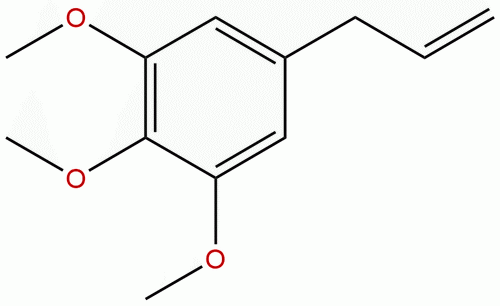
Product name: Elemicin
Synonym name: Elemicin
Catalogue No.: BPF0685
Cas No.: 487-11-6
Formula: C12H16O3
Mol Weight: 208.257
Botanical Source:
Physical Description:
Type of Compound: Phenylpropanoids
Purity: 95%~99%
Analysis Method: HPLC-DAD or/and HPLC-ELSD
Identification Method: Mass, NMR
Packing: Brown vial or HDPE plastic bottle
The product could be supplied from milligrams to grams
Inquire for bulk scale.
For Reference Standard and R&D, Not for Human Use Directly.
Storage conditions:Short-term storage at 2~8℃, long-term storage at -20 ~ -80℃
27.6900
2.8768
2.8769
.1164
8.3974
68.5597
High
80.0548
1.9420
Yes
Yes
Yes
No
Yes
No
0.6
No
Yes
Yes
Yes
Natural products, as an important source of drug discovery, play an indispensable role in the long struggle between humans and diseases. Among them, phenylpropanoid compounds derived from plant secondary metabolites have attracted much attention due to their structural diversity and wide range of biological activities. Elemicin, also known as 1,2,3-trimethoxy-5- (2-propenyl) benzene, is a typical ethylbenzene compound widely present in the volatile oils of various medicinal and edible plants such as nutmeg, fennel, basil, and artemisia. Its unique chemical structure endows it with complex biological effects, making it a controversial and highly valuable molecule in the field of natural product pharmacology research.
The research history of elephantine can be traced back to the last century, with early studies mainly focusing on its sensory properties and potential neurotoxicity as a flavoring ingredient. However, with the development of modern pharmacology and toxicology, the biological activity spectrum of elemene has been continuously expanded. Research has shown that elemene has various pharmacological activities such as anti influenza virus, antibacterial, and antioxidant properties. It is particularly noteworthy that in recent years, studies have found that elemene can inhibit stearoyl CoA desaturase 1 (SCD1) through metabolic activation, which is closely related to lipid metabolism reprogramming and tumor development. SCD1 is a key enzyme that catalyzes the synthesis of monounsaturated fatty acids and is highly expressed in various tumor cells. It is crucial for maintaining the fluidity of tumor cell membranes, signal transduction, and energy metabolism. Therefore, as a potential SCD1 inhibitor, elemene has demonstrated unique value in the field of anti-tumor research.
However, the medicinal prospects of elemene are not smooth sailing. Its metabolites, especially 1 '- hydroxyelemene, have been shown to have significant hepatotoxicity, which is closely related to the potential health risks associated with long-term consumption as a spice. This "double-edged sword" characteristic - having both clear pharmacological activity and potential toxicity - makes elemene an ideal model for studying the mechanism of "toxicity activity" transformation of natural products. This article aims to comprehensively review the chemical properties, plant sources, pharmacological activities, mechanisms of action, pharmacological evaluation, and clinical application prospects of elemene, in order to provide a systematic scientific basis for its further in-depth research and development.
The chemical structure of elemene belongs to the class of ethylbenzenes, with a core skeleton of a benzene ring containing three methoxy groups (- OCH ∝) at positions 1, 2, and 3, and one allyl group (- CH ₂ - CH=CH ₂) at position 5. Its system is named 1,2,3-trimethoxy-5- (2-propenyl) benzene, with a molecular formula of C ₁₂ H ₁₆ O3. This structure determines its unique physicochemical properties.
From the perspective of structural characteristics, the presence of three methoxy groups endows the molecule with certain polarity and hydrogen bonding acceptance ability, while allyl provides hydrophobicity and reactivity. This hydrophilic lipophilic amphiphilic structure enables it to cross biological membranes and participate in various metabolic reactions. The molecular weight of elemene is 208.2570 Da, which belongs to small molecule compounds and meets the basic requirements for molecular weight in the drug class rules. Its lipid water partition coefficient (LogP) is 2.8768, indicating that it has moderate lipophilicity and is easy to penetrate cell membranes and the blood-brain barrier. In fact, its blood-brain barrier penetration has been evaluated as "high", indicating that elemene may have central nervous system activity, but at the same time, it may also pose a risk of neurotoxicity.
The topological polar surface area (TPSA) is 27.6900 Å ², far below the commonly assumed passive absorption threshold (140 Å ²), indicating its good oral absorption potential. The low water solubility (0.1164 mg/mL) to some extent limits its bioavailability, but it is also within an acceptable range. In terms of chemical reactivity, the double bond of allyl is the main reaction site, which can undergo metabolic transformations such as epoxidation and hydroxylation. In addition, the methoxy group on the benzene ring can undergo O-demethylation reaction under the action of cytochrome P450 enzyme (CYP450), generating phenolic metabolites. These metabolic transformations are key steps in the pharmacological activity or toxicity of elephantine. It is worth noting that the Ames test result is 0.6, which is usually interpreted as a potential genotoxic risk, suggesting that it may have mutagenicity, which requires high vigilance in drug development. Overall, the physicochemical properties of elemene conform to the basic characteristics of oral drugs, but its potential genetic toxicity and high blood-brain barrier penetration are issues that require special attention.
Elephantine is not a rare compound, it is widely present in nature, especially in the essential oils of various plants such as Umbelliferae, Camphor, Nutmeg, and Lamiaceae, which are abundant in content. Its main plant sources include:
Given that elephantin mainly exists in the volatile oil components of plants, its extraction methods usually revolve around essential oil extraction techniques. The most classic method is steam distillation Plant raw materials (such as nutmeg powder and fennel seeds) are heated with water, and volatile components are distilled off with water vapor. After condensation, oil and water are separated to obtain essential oils. This method is easy to operate, cost-effective, and suitable for industrial production, but high temperatures may lead to the degradation of some thermosensitive components.
Organic solvent extraction method It is another commonly used method. Extracting or percolating plant raw materials using low boiling point solvents such as n-hexane, petroleum ether, and ethanol, and recovering the solvents to obtain extracts or essential oils. This method has high extraction efficiency, but there may be residual organic solvents in the product.Supercritical fluid extraction method Especially supercritical CO ₂ extraction has been widely used in the extraction of high value-added plant essential oils in recent years. This method is carried out under low temperature and anaerobic conditions, which can preserve the natural structure of thermosensitive components such as elemene to the greatest extent possible, and the product has no solvent residue, with extremely high quality. However, the equipment investment and operating costs are relatively high.
In order to obtain high-purity elemene monomers, further separation and purification are usually required based on the crude extract. Common methods include Silica gel column chromatography Using the differences in adsorption capacity of different compounds on silica gel for separation;High performance liquid chromatography method Especially for preparative HPLC, it can achieve high purity and high recovery separation. In addition,Molecular distillation method It can also be used to enrich and purify elemene from essential oils. The selection of extraction method depends on factors such as raw material characteristics, target purity, production scale, and cost control.
The pharmacological activity spectrum of elemene is relatively broad, covering multiple aspects such as antimicrobial, antioxidant, anti-inflammatory, and anti-tumor effects. However, in recent years, its anti-tumor activity has undoubtedly received the most attention.
Numerous in vitro and in vivo studies have shown that elemene has inhibitory effects on proliferation and induces apoptosis in various tumor cell lines. Its anti-tumor mechanism is complex, involving multiple signaling pathways and molecular targets. Studies have shown that elemene can significantly inhibit the growth of breast cancer, prostate cancer, lung cancer, liver cancer, colon cancer, melanoma and other cancer cells. For example, in breast cancer cells MCF-7 and MDA-MB-231, elemene can induce cell apoptosis by down regulating the expression of anti apoptotic proteins MCL1 and BCL2, while up regulating the pro apoptotic protein Bax, activating caspase cascade reaction. In addition, it can also inhibit the phosphorylation of the STAT3 signaling pathway, thereby blocking the transcription of downstream target genes such as Cyclin D1 and Survivin, inhibiting cell proliferation, and promoting apoptosis.
Elephantine has shown the ability to inhibit tumor cell migration and invasion in terms of invasion and metastasis. The mechanism is related to the downregulation of the expression of matrix metalloproteinases MMP2 and MMP9, which are key molecules for degrading extracellular matrix and promoting tumor metastasis. Meanwhile, elemene can also inhibit the expression of HIF1A, reduce the adaptability of tumor cells in hypoxic environments, and thus inhibit angiogenesis and tumor growth. It is worth mentioning that elemene also has inhibitory effects on topoisomerases TOP1 and TOP2A, similar to the classic chemotherapy drugs camptothecin and etoposide, suggesting that it may exert cytotoxicity by interfering with DNA replication and transcription.
Elephantine has been reported to have anti influenza virus activity. Research has shown that elemene can directly inactivate influenza virus particles or inhibit virus infection by interfering with the process of virus adsorption and entry into host cells. Its mechanism of action may be related to the destruction of the integrity of the virus envelope or interaction with the virus hemagglutinin protein. In addition, elemene can indirectly exert antiviral effects by regulating the immune response of host cells, such as inducing the production of interferon.
As a plant essential oil component, elemene exhibits broad-spectrum antibacterial activity and has inhibitory effects on various bacteria and fungi such as Staphylococcus aureus, Escherichia coli, and Candida albicans. Its antibacterial mechanism may involve disrupting the integrity of microbial cell membranes, leading to leakage of cellular contents. Meanwhile, elephantine also has certain antioxidant capacity, which can scavenge DPPH free radicals, ABTS cationic free radicals, and inhibit lipid peroxidation. This antioxidant activity may be related to the electron donating ability of the methoxy group on its benzene ring, but overall, its antioxidant activity is weaker than common phenolic antioxidants such as vitamin E and butylhydroxytoluene.
The hepatotoxicity of elemene is one of its most significant toxicological characteristics. Research has shown that elemene itself is not a direct hepatotoxic substance, and its toxicity mainly originates from metabolic activation in the liver. Under the catalysis of CYP450 enzymes (mainly CYP2C9 and CYP1A2), the allyl side chain of elemene undergoes hydroxylation, producing the reactive metabolite 1 '- hydroxyelemene. 1 '- Hydroxyelemene is further catalyzed by sulfotransferase or glucuronate transferase to form highly active sulfate or glucuronate esters. These ester metabolites are strong electrophilic reagents that can covalently bind with large molecules such as proteins and DNA in liver cells, forming adducts that can cause liver cell damage, necrosis, and even induce carcinogenesis. This metabolic activation mechanism is highly similar to the hepatotoxicity mechanism of other ethylbenzene compounds such as Safrole. Therefore, although elephantine has various pharmacological activities, its potential hepatotoxicity is the main obstacle limiting its medicinal development.
The pharmacological activity of elemene is multi-target and multi pathway, and its mechanism of action is complex. According to existing research, its core mechanism of action can be summarized as follows:
This is the most distinctive mechanism of the anti-tumor effect of elephantine. As mentioned earlier, elemene is metabolized by CYP450 enzymes in the body into 1 '- hydroxyelemene, which is further converted into highly active sulfate esters. Surprisingly, this reactive metabolite can selectively inhibit stearoyl CoA desaturase 1 (SCD1). SCD1 is a key enzyme that catalyzes the conversion of saturated fatty acids (such as stearic acid) into monounsaturated fatty acids (such as oleic acid). Tumor cells are highly dependent on the activity of SCD1 in order to maintain the membrane fluidity, lipid signaling molecule synthesis, and energy supply required for rapid proliferation. The metabolites of elephantine irreversibly inhibit the enzymatic activity of SCD1 by covalently binding to its active site, leading to a decrease in intracellular levels of monounsaturated fatty acids and accumulation of saturated fatty acids. This imbalance in lipid composition can trigger endoplasmic reticulum stress, disrupt cell membrane function, and ultimately induce tumor cell apoptosis. This mechanism reveals the potential reason for the selective toxicity of elemene on tumor cells, as normal cells have a lower dependence on SCD1.
Elephantine can directly regulate the core mechanism of cell apoptosis. It downregulates the expression of anti apoptotic proteins MCL1 and BCL2, while upregulating pro apoptotic proteins Bax, Bad, etc., disrupting mitochondrial membrane potential, promoting cytochrome c release, thereby activating caspase-9 and caspase-3, and executing the cell apoptosis program. In addition, elephantine can also inhibit the STAT3 signaling pathway. STAT3 is a key transcription factor that is continuously activated in various tumors, driving cell proliferation, survival, and angiogenesis. Elephantine inhibits the activity of JAK kinase, reduces the phosphorylation of STAT3, and thus blocks its nuclear translocation and target gene transcription.
Elephantine inhibits the degradation of the basement membrane by tumor cells by downregulating the expression of MMP2 and MMP9, thereby weakening their invasion and metastasis ability. Meanwhile, it can also inhibit the expression of HIF1A. HIF1A is a core transcription factor for cells to cope with hypoxic environments, which can induce the expression of angiogenic factors such as vascular endothelial growth factor (VEGF). Elephantine reduces the protein stability or transcriptional activity of HIF1A, decreases the secretion of VEGF, thereby inhibiting the formation of tumor neovascularization and cutting off the nutritional supply to the tumor.
The inhibitory effect of elemene on TOP1 and TOP2A allows it to interfere with DNA replication and transcription processes, which may be another source of its cytotoxicity. In addition, studies have found that elemene has phytoestrogenic like activity and can bind to the estrogen receptor ESR1, exerting partial excitatory or antagonistic effects. It can also inhibit the activity of aromatase CYP19A1, thereby affecting the synthesis of estrogen in the body. These effects may have special significance in hormone dependent tumors (such as breast cancer).
The antiviral activity of elemene may be related to its direct destruction of the virus envelope or interference with the binding of the virus to host cell receptors. Its antibacterial effect is mainly attributed to its hydrophobicity, which can insert and destroy the cell membranes of bacteria and fungi, leading to increased membrane permeability and leakage of cellular contents.
To develop elephantine as a drug, it is necessary to comprehensively evaluate its pharmacological properties, including its performance in absorption, distribution, metabolism, excretion (ADME), and safety.
According to the provided pharmacological parameters, elemene exhibits certain drug like properties. Its molecular weight (208.26 Da) and LogP (2.88) both conform to Lipinski's five rules, indicating that it has good oral absorption and membrane permeability. The low TPSA (27.69 Å ²) further supports its excellent passive diffusion ability. However, its water solubility (0.1164 mg/mL) is poor and it belongs to a low solubility compound, which may limit its oral bioavailability. High blood-brain barrier penetration is a double-edged sword. On one hand, it may be beneficial for treating central nervous system diseases, but on the other hand, it also increases the risk of neurotoxicity. The most critical obstacle lies in its safety: the Ames test result is 0.6, indicating its potential genotoxicity; And clear liver toxicity is the biggest obstacle on its path to becoming a drug.
The pharmacokinetic research on elemene is relatively limited, but there are some preliminary understandings.absorb Elephantine can be absorbed by the gastrointestinal tract after oral administration, but due to its poor water solubility, absorption may be incomplete and vary greatly among individuals.distribution Due to its high lipophilicity, elemene is widely distributed in the body, especially prone to accumulation in adipose tissue and lipid rich organs such as the liver and brain. Its high blood-brain barrier penetrability means it can enter the central nervous system.Metabolism The metabolism of elephantine is mainly carried out in the liver, which is a key link in determining its pharmacological activity and toxicity. The main metabolic pathways include: 1)Allyl side chain oxidation CYP450 enzymes (mainly CYP2C9, CYP1A2) catalyze the production of 1 '- hydroxyelemene, which is a key step in the development of liver toxicity. 2)O-demethylation Methoxy is demethylated to generate corresponding phenolic metabolites. 3)Double bond epoxidation The double bond of allyl is epoxidized to form an epoxide intermediate. These primary metabolites will further combine with glucuronic acid, sulfuric acid, etc. to form more water-soluble complexes, which are excreted through urine or bile.excretion Elephantine and its metabolites are mainly excreted from the body through urine and feces.
The hepatotoxicity and genetic toxicity of elemene are the main obstacles to its development as a drug. The source of its toxicity lies in the electrophilic intermediates produced by metabolic activation. Therefore, future pharmaceutical chemistry strategies should focus on "detoxification and enhancement", that is, reducing or eliminating its toxicity while retaining or enhancing its anti-tumor activity. Possible strategies include:
Despite significant toxicity issues, the unique SCD1 inhibition mechanism and extensive anti-tumor activity of elemene still have potential clinical application prospects in specific therapeutic fields.
Elephantine, as an SCD1 inhibitor, provides a new approach for targeting tumor lipid metabolism. In view of the importance of SCD1 in a variety of cancers (such as liver cancer, breast cancer, prostate cancer, lung cancer), elemene or its structurally optimized derivatives are expected to be developed as a new anti-tumor drug. Especially for "lipid addicted" tumors that rely on fatty acid synthesis and desaturation, elemene may have better therapeutic effects. However, the risk of directly using natural elephantine is too high. Future research should focus on:
In addition to anti-tumor effects, the antiviral and antibacterial activities of elemene are also worthy of attention. In the post antibiotic era, the development of new antibiotics is urgently needed. Elephantine, as a natural antibacterial ingredient, has a different mechanism of action from traditional antibiotics and is not prone to cross resistance. After structural modification to reduce its toxicity, it is possible to develop antibacterial agents for local use in the treatment of skin infections or oral diseases. In addition, its anti influenza virus activity also provides clues for the development of new antiviral drugs.
Elephantine is widely present in daily edible spices, and its potential health risks from long-term low-dose exposure cannot be ignored. Although the content of elemene in spices is usually low, long-term high intake (such as the habit of chewing meat cardamom in some areas) may still pose a risk of liver damage. Therefore, from the perspective of public health, it is necessary to re evaluate the safety of fragrances containing high levels of elemene and establish reasonable intake limit standards. At the same time, developing spice varieties with low or no elemene is also a direction worth exploring.
As a typical natural vinylbenzene compound, the research process of elemene vividly illustrates the "opportunities and challenges" of natural products in drug discovery. On the one hand, it inhibits SCD1 through a unique metabolic activation mechanism, demonstrating a novel anti-tumor mode of action and possessing multiple pharmacological activities such as antiviral and antibacterial, providing valuable chemical frameworks and targets for innovative drug development. On the other hand, its inherent metabolic activation characteristics result in liver toxicity and potential genetic toxicity, creating an insurmountable barrier for its drug development.
Future research should not only focus on describing the natural activity of elemene, but also explore more deeply the molecular mechanism of its "toxicity activity" transformation. Based on this, modern medicinal chemistry, chemical biology, and pharmacy methods should be used to rationally modify its structure and design dosage forms. The goal is to minimize the risk of toxicity while preserving its core pharmacological activity. The story of elephantine reminds us that natural products are both a treasure trove of medicines and a source of toxins. Only by deeply understanding its inherent chemical and biological logic can we leverage its strengths and avoid its weaknesses, ultimately transforming these "double-edged sword" molecules into truly beneficial medicines for humanity. The in-depth study of elemene not only contributes to the development of novel SCD1 inhibitors, but also provides an important paradigm for understanding the toxicology and pharmacology of other ethylbenzene compounds.
Batch can search by a CAS number,one per line
