Indigo Orchid: Potential Molecular from Ancient Dyes to Modern Drugs
1. Overview
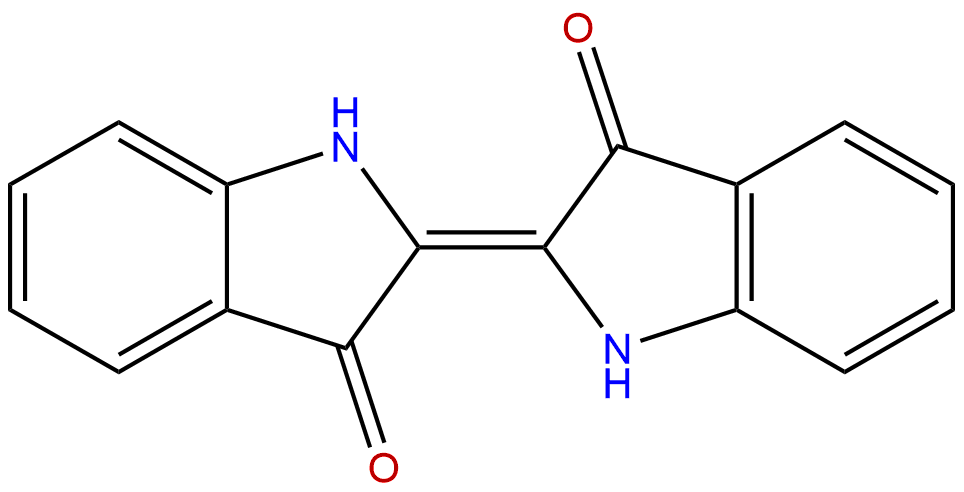
Indigo, also known as 2- (1,3-dihydro-3-oxo-2H-indol-2-ylidene) -1,2-dihydro-3H-indol-3-one, is a natural organic compound with a long history and important application value. Its CAS number is 482-89-3, molecular formula is C16H10N2O2, and molecular weight is 262.2680 g/mol. The most well-known role of indigo is as a classic blue dye, which has been widely used for thousands of years in textile dyeing, especially for cellulose fibers such as cotton and linen. However, modern pharmacological research reveals that indigo is far more than that. It has been found to be one of the potent endogenous ligands of aromatic hydrocarbon receptors (AhR) present in human urine, and participates in the regulation of AhR mediated signaling pathways in vivo together with indirubin. This discovery elevates indigo from a simple dye to a small molecule compound with potential biological activity.
In recent years, with the revival of natural product pharmacology and the deepening of molecular pharmacology, the anti-inflammatory and antioxidant pharmacological activities of indigo have gradually been revealed. According to database information, its function involves multiple key targets closely related to inflammation and immune response, such as TNF, PTGS2 (COX-2), IL6, IL1B, NFKBIA, etc., indicating its important research value in the field of anti-inflammatory therapy. This article will start from its chemical essence, systematically review the plant sources, traditional applications, modern pharmacological mechanisms, medicinal evaluation of indigo, and look forward to its future research prospects, aiming to provide a comprehensive and professional perspective for researchers.
2. Chemical structure and physicochemical properties
The chemical structure of indigo orchid is the basis of its function. Its SMILES is represented as O=C1/C (=C2 \ Nc3cccc3C2=O) Nc2cccc21, which clearly depicts its core skeleton: two indole ketone structures are connected by a central double bond, forming a large conjugated planar system. This highly conjugated π - electron system is the fundamental reason for the deep blue color of indigo (with a maximum absorption wavelength of approximately λ max 600-660 nm), and it is also its core physicochemical property as a dye.
From the analysis of medicinal parameters, the molecular weight of indigo is 262.27 g/mol, which meets the requirement of "molecular weight less than 500" in Lipinski's five rules. Its lipid water partition coefficient LogP is 3.0676 and LogD is 3.0678, indicating that the molecule has moderate lipophilicity, which is beneficial for its penetration of cell membranes, but excessive lipophilicity may also affect its water solubility. In fact, its water solubility is only 0.0052 mg/mL, making it a poorly soluble compound, which may be a major limiting factor for its oral bioavailability. The calculated total polar surface area (TPSA) is 58.2 Å ², much lower than the commonly assumed membrane permeability boundary (140 Å ²), indicating its good membrane permeability potential.
Other key parameters further describe its biopharmaceutical characteristics: the permeability of Caco-2 cells is 29.57 × 10 ⁻⁶ cm/s, which belongs to moderate permeability; The predicted blood-brain barrier (BBB) penetration is "high", indicating that it may have central nervous system activity or side effects. The plasma protein binding rate (PPB) is as high as 90.12%, which means that only a small amount of free drugs exert pharmacological effects in the body, which may affect the strength and duration of drug efficacy. The in vitro effective permeability (Peff) is 2.91 cm/s × 10 ⁻⁴, and the synthetic accessibility score is 2.34, indicating a relatively mature synthetic pathway.
3. Plant sources and traditional applications
The main natural source of indigo orchid is leguminous plants Indigo plant(Indigofera tinctoria L.), Its processed product is the famous' indigo '. In addition, the polygonum blue of the Polygonaceae family(Polygonum tinctorium)Isatis indigotica of the Brassicaceae family(Isatis indigotica)Plants can also produce indigo precursors. In traditional Chinese medicine, the use of indigo (mainly composed of indigo, indigo carmine, etc.) has a history of over a thousand years. It is included in classic medical books such as "Compendium of Materia Medica". It has a salty and cold nature, and belongs to the liver, lung, and stomach meridians. It has the effects of clearing heat and detoxifying, cooling blood and eliminating spots, and purging fire and calming the nerves. Clinically, it is commonly used for symptoms such as warm toxic spots, blood heat and vomiting, chest pain and coughing up blood, mouth sores, cheek burns, laryngeal obstruction, and pediatric epilepsy. Traditionally, indigo naturalis is mainly used externally or taken orally in pill powder.
It is worth noting that there is an interesting correspondence between traditional applications and modern pharmacological discoveries. For example, indigo naturalis is used to treat "hair spots" (similar to inflammatory rashes, purpura, etc. in modern medicine) and "pharyngitis" (pharyngitis), which coincides with its anti-inflammatory and immune regulatory activities revealed by modern research. This reflects the naive scientific cognition inherent in traditional empirical medicine. Extracting indigo from plants is a complex biotransformation process: the colorless precursor substance in plant leaves, indophenol glycosides, undergo a series of steps such as soaking, fermentation, and oxidation, and finally oxidize and polymerize in the air to form insoluble blue indigo precipitate. This ancient biotechnology is an outstanding example of early human utilization of microorganisms and chemical reactions.
4. Pharmacological activity and mechanism of action
Modern pharmacological research has brought indigo from the category of dyes to the field of bioactive molecules. The database information clearly indicates its relationship with anti-inflammatory It is activity related and provides five key targets of action: TNF, PTGS2 (COX-2), IL6, IL1B, and NFKBIA. These targets form a tightly interconnected inflammatory signaling network core.
Detailed explanation of the mechanism of action:
-
Regulation of cytokine network TNF - α (tumor necrosis factor - α), IL-6 (interleukin-6), and IL-1 β (interleukin-1 β) are the three core pro-inflammatory cytokines that play a leading role in acute phase response, fever, cell apoptosis, and chronic inflammatory diseases such as rheumatoid arthritis and inflammatory bowel disease. Indigo can act on these targets, possibly by inhibiting their gene transcription or protein secretion, thereby blocking the initiation and amplification of the "waterfall" inflammatory response upstream.
-
Inhibition of cyclooxygenase-2 (COX-2/PTGS2)COX-2 is a key rate limiting enzyme in prostaglandin synthesis, strongly induced to express at the site of inflammation, producing a large amount of pro-inflammatory mediators such as PGE2, leading to pain, redness, and fever. The inhibitory effect of indigo on PTGS2 is similar to the mechanism of action of nonsteroidal anti-inflammatory drugs (NSAIDs), but may have higher selectivity (relative to structural COX-1), thereby reducing the risk of gastrointestinal side effects while exerting anti-inflammatory and analgesic effects.
-
Intervention on NF - κ B signaling pathway NF - κ B is the "master switch" that regulates the expression of numerous inflammatory cytokine genes. NFKBIA, also known as I κ B α, is an inhibitory protein of NF - κ B. In the resting state, I κ B α sequesters NF - κ B in the cytoplasm. When stimulated by inflammation, I κ B α is phosphorylated and degraded, allowing NF - κ B to enter the nucleus and initiate transcription. Indirubin acts on NFKBIA, possibly by stabilizing I κ B α, inhibiting its degradation, or affecting upstream kinases (such as IKK), thereby preventing the activation of NF - κ B and achieving widespread inhibition of downstream genes such as TNF, IL6, IL1B, COX-2, etc. This is one of the core mechanisms by which it exerts multi-target anti-inflammatory effects.
-
Aromatic hydrocarbon receptor (AhR) activation Current descriptions indicate that indigo is a potent endogenous AhR ligand in the human body. AhR is a ligand activated transcription factor that is translocated into the nucleus after activation. It not only participates in the metabolism of exogenous toxins (such as inducing CYP1A1), but also plays a key role in immune regulation, cell differentiation, and barrier function maintenance. The activation of AhR can guide the immune response towards anti-inflammatory and tolerance, such as promoting the differentiation of regulatory T cells (Tregs) and inhibiting the excessive activation of Th17 cells. This provides another important molecular pathway for indigo to treat autoimmune diseases and chronic inflammation.
In summary, the anti-inflammatory effect of indigo is not achieved through a single target, but through Multi target and multi pathway synergy Implemented: It directly inhibits key pro-inflammatory factors and enzymes, and systematically regulates the inflammatory network by regulating two central signaling nodes, NF - κ B and AhR. This multi-target mode of action may have unique advantages in treating chronic inflammatory diseases with complex etiology, but it also increases the complexity of studying its mechanism of action and predicting side effects.
5. Evaluation of drug properties
Based on the provided pharmacological parameters, we can conduct a preliminary evaluation of the development prospects of indigo as a potential drug. Firstly, utilizing the classic Lipinski's Five Rules(Rule of Five) for judgment:
1. Molecular weight (262.27)<500 ✅
2. LogP(3.07)< 5 ✅
3. The number of hydrogen bond donors (known from the structural formula as 0 N-H or O-H, actually 0)<5 ✅
4. The number of hydrogen bond acceptors (a total of 4 N and O atoms) is less than 10 ✅
Indigo orchid fully complies with Lipinski's five rules, indicating its good oral absorption potential.
However,Further analysis of other parameters reveals a series of challenges:
- Solubility and permeability The extremely low water solubility (0.0052 mg/mL) is the primary obstacle for it to become an oral medication. Although its Caco-2 permeability and predicted BBB permeability are good (belonging to BCS class II or IV compounds), the issue of "dissolution limited absorption" is prominent. In the development of formulations, solubilization techniques such as nanocrystals, solid dispersions, and cyclodextrin inclusion may be required.
- Metabolism and toxicity A Ames test value of 1.8 (usually>1.5 indicating a risk of mutagenicity) and a clearly labeled risk of "chromosomal aberration" are significant safety concerns for the drug. Its phototoxicity (Photo_tox) is also "present", indicating the need to avoid exposure to sunlight after use. In addition, the data shows that it has an impact on serum alkaline phosphatase (Ser_LK), gamma glutamyltransferase (Ser_GGT), aspartate aminotransferase (Ser_ST), and alanine aminotransferase (Ser_LT), strongly suggesting potential Hepatotoxicity Respiratory sensitization (Resp_Sens) is "yes" and caution should also be exercised.
- pharmacokinetics High plasma protein binding rate (90.12%) can lead to low free drug concentration, which may require an increase in dosage to achieve effective blood drug concentration, but this can also exacerbate the risk of toxicity. Its high BBB penetration is a double-edged sword: it may be advantageous for targeting central nervous system diseases such as multiple sclerosis and encephalitis; If targeting peripheral inflammation, it may lead to central nervous system side effects.
Comprehensive Assessment As a lead compound, indigo orchid Advantage It lies in a clear anti-inflammatory multi-target mechanism of action, compliance with the five rules of class drugs, and mature synthetic pathways. but its disadvantage Equally significant, especially in terms of poor water solubility, potential genetic toxicity, hepatotoxicity, and phototoxicity. These toxicity data largely limit the possibility of directly developing modern drugs for systemic administration, especially long-term oral medication. Future development strategies may be more inclined towards: 1)Structural modification Through chemical modification, while retaining pharmacophores, improve solubility and reduce toxicity, such as synthesizing more water-soluble prodrugs or derivatives; 2)Local administration Developing topical formulations using its anti-inflammatory activity for the treatment of skin inflammatory diseases such as psoriasis and eczema, which can avoid systemic toxicity; 3)As a tool compound Used for studying the AhR pathway and inflammatory mechanisms.
6. Research Status and Application Prospects
Currently, research on indigo has surpassed its staining function and entered a multidisciplinary exploration stage. In terms of basic research, scientists are working to elucidate the specific details of its regulation of immune cell function (such as macrophages, T cells) through the AhR and NF - κ B pathways, as well as its interaction with gut microbiota (as AhR ligands are closely related to gut immune homeostasis). In terms of applied research, in addition to traditional staining fields (such as biological sample staining and vascular imaging indicators) and industrial fields (such as corrosion inhibitors), its applications in biomedical fields are being expanded.
The main research directions and prospects include:
- Exploration of Treatment for Inflammatory Diseases Based on its multi-target anti-inflammatory properties, study its efficacy in animal models for diseases such as rheumatoid arthritis, colitis, dermatitis, etc. Topical preparations may be the fastest direction to achieve conversion.
- As a probe for AhR targeted therapy AhR has become an emerging target for the treatment of immune oncology and autoimmune diseases. Indigo orchid, as an endogenous AhR ligand, is a valuable tool compound for studying the biological functions of AhR and screening for better AhR regulators.
- Development of drug delivery system To address the issue of poor solubility, research is being conducted on novel nano drug delivery systems (such as liposomes and polymer micelles) for targeted delivery of indigo to inflammatory sites, improving therapeutic efficacy and reducing systemic exposure and toxicity.
- Combination therapy research Explore whether the combination of indigo or its low toxicity derivatives with existing anti-inflammatory drugs can produce synergistic effects, reduce their respective dosages and side effects.
- Security reassessment and structural optimization Conducting in-depth research on the mechanisms of genetic toxicity and hepatotoxicity, and cutting off toxic groups or pathways through rational drug chemical design, is the key to pushing it into clinical practice.
In short, indigo orchid is a fascinating molecule that has emerged from ancient civilization, carries rich history, and is revitalized under the lens of modern science. It bridges the gap between traditional wisdom and modern pharmacology. Despite the challenges on its path to becoming a drug, especially in terms of safety constraints, its unique chemical structure and multi-target mechanism of action make it a continuously attractive and inspiring research object in the development of anti-inflammatory drugs and basic immunological research. Future breakthroughs are likely to rely on close collaboration among multiple disciplines such as chemistry, pharmacology, pharmaceuticals, and toxicology, ultimately achieving a magnificent transformation from the "ancient blue" to the "medicine of life".