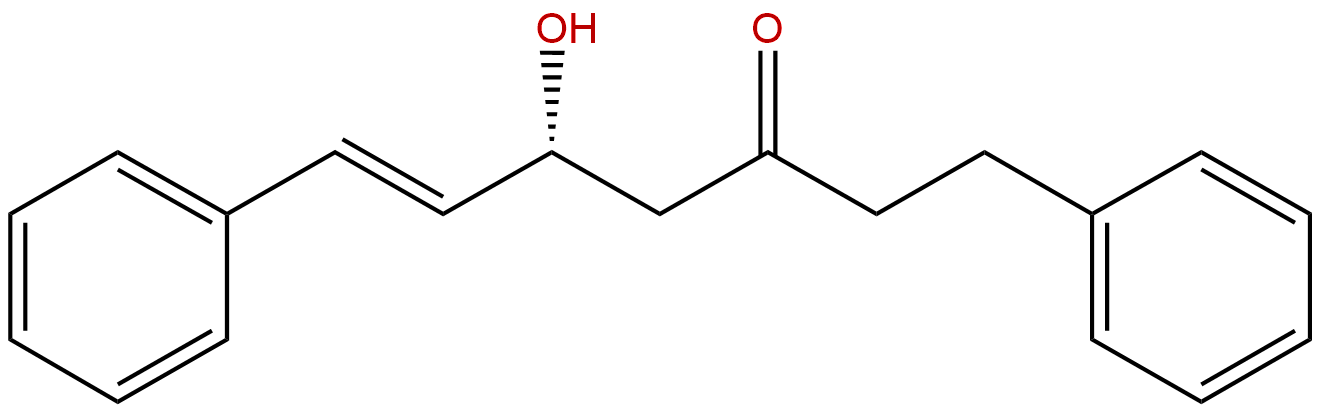


Product name: (5R)-trans-1,7-diphenyl-5-hydroxy-6-hepten-3-one
Synonym name:
Catalogue No.: BP3004
Cas No.: 87095-74-7
Formula: C19H20O2
Mol Weight: 280.367
Botanical Source:
Physical Description: Powder
Type of Compound: Phenols
Purity: 95%~99%
Analysis Method: HPLC-DAD or/and HPLC-ELSD
Identification Method: Mass, NMR
Packing: Brown vial or HDPE plastic bottle
The product could be supplied from milligrams to grams. Inquire for bulk scale.
We provide solution to improve the water-solubility of compounds, thereby facilitating the variety of activity tests and clinic uses.
For Reference Standard and R&D, Not for Human Use Directly.
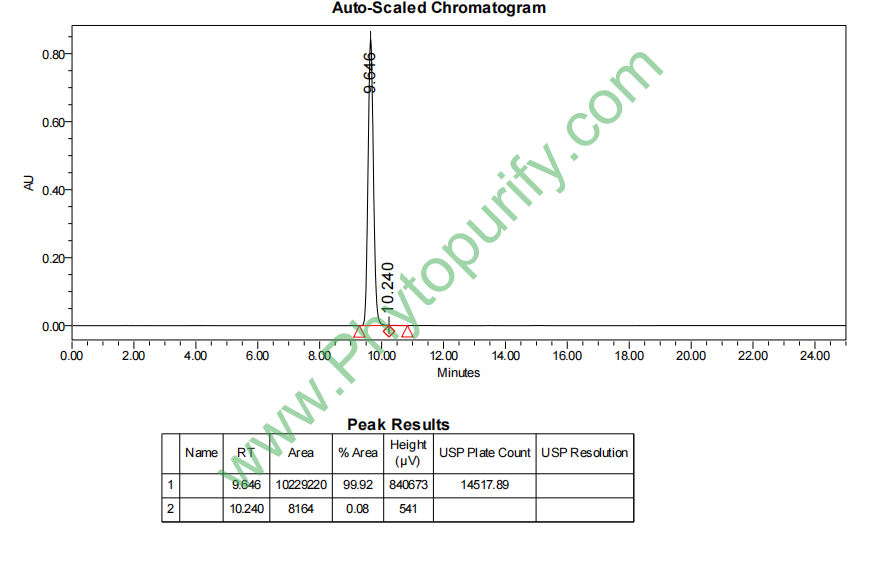
HPLC of (5R)-trans-1,7-diphenyl-5-hydroxy-6-hepten-3-one
Storage conditions:Short-term storage at 2~8℃, long-term storage at -20 ~ -80℃
37.3000
3.2144
3.2144
.0100
6.0018
11.3169
High
93.1704
2.4285
Yes
Yes
Yes
No
No
Yes
0.0
No
Yes
Yes
Yes
Melanoma is an invasive malignant tumor originating from skin melanocytes, and its incidence rate continues to rise worldwide. Despite significant progress in modern therapies such as immune checkpoint inhibitors and targeted therapies, the high metastasis, drug resistance, and treatment-related toxicity of melanoma remain serious challenges in clinical practice. Therefore, exploring lead compounds with novel structures, unique mechanisms of action, and low toxicity from natural products has always been an important direction for the development of anti-tumor drugs. 1,7-Bisphenyl-5-hydroxy-6-hepten-3-one ((5R) - trans-1,7-diphenyl-5-hydroxy-6-hepten-3-one, hereinafter referred to as DHHO), as a natural chalcone derivative with a specific stereoconfiguration, has attracted much attention due to its multi-target and multi pathway pharmacological activity in anti melanoma research. This article aims to provide a systematic review of the chemical properties, plant sources, pharmacological activities, molecular mechanisms of action, and pharmacological potential of DHHO, in order to provide comprehensive scientific references for the in-depth research and development of this compound.
The chemical name of DHHO is (5R) - trans-1,7-diphenyl-5-hydroxy-6-hecten-3-one, with a CAS number of 87095-74-7. Its molecular formula is C19H20O2 and its molecular weight is 280.3670. This compound belongs to the chalcone family, and its core structural feature is an α, β - unsaturated ketone skeleton, with benzene rings (positions 1 and 7) connected at both ends, and a hydroxyl group attached to the 5th carbon. There is a trans double bond between positions 6 and 7, and the 5th carbon is in the R configuration. This specific stereochemical structure is crucial for its biological activity.
From the analysis of physical and chemical properties, the lipid water partition coefficient (LogP) of DHHO is 3.2144, indicating that it has moderate lipophilicity and is conducive to penetrating the cell membrane. Its topological polar surface area (TPSA) is 37.3000 Å ², which is relatively small, consistent with its molecule containing only one hydroxyl and one carbonyl group as polar groups. The low water solubility, about 0.0100 mg/mL, suggests that solubilization strategies may need to be considered in formulation development. It is worth noting that its predicted blood-brain barrier permeability is "high", which provides a unique advantage for its potential application in the treatment of melanoma that may undergo brain metastasis. In addition, preliminary pharmacological risk assessment showed that the hERG inhibition and Ames mutagenicity risks were both negative (0.0), providing early positive signals for its safety.
DHHO is mainly isolated from Zingiberaceae plants, especially certain Curcuma and Alpinia plants. These plants are commonly used in traditional medicine for anti-inflammatory, antioxidant, and anti-tumor purposes. Its extraction and separation usually follow the standard process of natural product chemistry.
Firstly, the dried plant rhizomes or rhizomes are crushed and subjected to cold soaking or hot reflux extraction using organic solvents such as methanol, ethanol, or ethyl acetate. The crude extract was obtained by vacuum concentration of the extraction solution. Subsequently, various chromatographic techniques were used for separation and purification. Usually, silica gel column chromatography is used first, with different ratios of petroleum ether ethyl acetate or chloroform methanol gradient elution for preliminary separation. The fraction containing the target compound is further purified by high performance liquid chromatography (HPLC), especially preparative reverse phase HPLC (usually using a C18 column with methanol water or acetonitrile water as the mobile phase), to obtain high-purity DHHO. The confirmation of its three-dimensional configuration requires the comprehensive use of techniques such as nuclear magnetic resonance (NMR), mass spectrometry (MS), infrared spectroscopy (IR), specific rotation determination, and X-ray single crystal diffraction.
Numerous in vitro and partially in vivo studies have confirmed that DHHO exhibits significant and selective anti-tumor activity against melanoma cells.
1. In vitro anti proliferative and pro apoptotic effects: DHHO can effectively inhibit the proliferation of various human melanoma cell lines (such as A375, SK-MEL-28, B16-F10), with IC50 values typically at the micromolar level, and relatively low toxicity to normal melanocytes or fibroblasts, demonstrating a certain degree of selectivity. Its anti proliferative effect is closely related to inducing cell cycle arrest, and research mostly points to its ability to block cells in the G2/M phase. More importantly, DHHO can strongly induce apoptosis in melanoma cells, characterized by a decrease in mitochondrial membrane potential, release of cytochrome c, activation of Caspase-3/9, and phosphatidylserine efflux.
2. Inhibit migration, invasion, and angiogenesis: The high metastasis of melanoma is the main cause of treatment failure. DHHO can significantly inhibit the migration and invasion ability of melanoma cells. In addition, it can also inhibit the lumen formation of human umbilical vein endothelial cells (HUVEC), indicating its potential for anti angiogenesis, which is crucial for cutting off tumor nutrient supply and inhibiting metastasis.
3. In vivo anti-tumor activity: In a melanoma xenograft mouse model, intraperitoneal injection or gavage of DHHO can dose dependently inhibit tumor growth without significant weight loss or organ toxicity, preliminarily demonstrating its in vivo effectiveness and tolerability.
4. Other related activities: In addition to its direct anti-tumor effect, DHHO also exhibits antioxidant and neuroprotective potential, which may be related to its regulation of pathways such as Nrf2, providing the possibility for reducing oxidative stress damage in combination therapy.
The anti melanoma effect of DHHO is not achieved through a single target, but through a complex multi-target network, which helps overcome the problem of resistance to single target drugs. Existing research has revealed its interactions with multiple key targets and pathways:
1. Energy metabolism and AMPK pathway: DHHO has been confirmed to be an activator of AMP activated protein kinase (AMPK, encoded by PRKAA1). AMPK is an energy receptor in cells, and its activation can inhibit synthetic metabolic pathways such as mammalian rapamycin target protein (mTOR), leading to cell growth arrest and autophagy. DHHO activates AMPK to reprogram the energy metabolism of melanoma cells and inhibit their proliferation.
2. Apoptosis regulation and BCL2/STAT3: DHHO can downregulate the expression of anti apoptotic protein Bcl-2, disrupt mitochondrial stability, and promote apoptosis. Meanwhile, it can effectively inhibit the phosphorylation and nuclear translocation of signal transduction and transcription activator 3 (STAT3). STAT3 is a continuously activated oncogene in melanoma, involved in regulating cell proliferation, survival, and immune escape. DHHO promotes apoptosis by inhibiting STAT3 and downregulating downstream target genes such as Survivor and Mcl-1.
3. Melanin synthesis and TYR: Tyrosinase (TYR) is the rate limiting enzyme in melanin synthesis. DHHO has an inhibitory effect on TYR activity, which not only affects the pigment phenotype of melanoma cells, but may also affect cell survival by interfering with related metabolic pathways.
4. Invasion and metastasis and MMP2/PKC/MAPT: DHHO can downregulate the expression of matrix metalloproteinase-2 (MMP2), thereby weakening the ability of cells to degrade extracellular matrix and inhibiting invasion. Protein kinase C (PKC) isoenzymes (such as PRKCA, PRKCE) play complex roles in cellular signal transduction and tumor progression, and DHHO may affect cell behavior by regulating the activity of specific PKC subtypes. In addition, studies suggest that DHHO may interact with microtubule associated protein Tau (MAPT), which may affect cytoskeleton dynamics and subsequently affect cell morphology and migration.
5. Stress response and NFE2L2/HIF1A: DHHO can activate the nuclear factor E2 related factor 2 (NFE2L2/Nrf2) pathway, enhance cellular antioxidant stress resistance, which may be a protective feedback or affect tumor cell sensitivity to treatment in specific environments. On the other hand, it can inhibit the stability and activity of hypoxia inducible factor-1 alpha (HIF1A). HIF1A plays a central role in tumor adaptation to hypoxic microenvironment, promoting angiogenesis and metastasis, and inhibiting HIF1A is an important mechanism for DHHO to resist angiogenesis and metastasis.
Based on its physicochemical parameters and preliminary biological data, a preliminary evaluation of the pharmacological properties of DHHO is conducted
Advantage:
1. Moderate molecular weight(<500), meeting the basic requirements of the five principles of generic drugs.
2. Novel structure It has a clear three-dimensional configuration, providing a clear starting point for optimization.
3. Multi-target effect May reduce the risk of clinical drug resistance.
4. High blood-brain barrier permeability It has strategic significance for the prevention and treatment of melanoma brain metastasis.
5. Preliminary safety is good No hERG inhibition or mutagenicity warning.
Challenges and unknowns:
1. Poor water solubility This is its main pharmaceutical challenge. In the future, it may be necessary to develop nano formulations (such as liposomes, polymer micelles), prodrugs, or eutectic technologies to improve their bioavailability.
2. Lack of pharmacokinetic data Currently, there is almost no detailed research on the absorption, distribution, metabolism, and excretion (ADME) of DHHO. Key information on its metabolic stability, major metabolites, plasma half-life, tissue distribution characteristics (especially brain tissue distribution), and possible interactions with liver drug enzymes (such as CYP450) urgently need to be elucidated through preclinical pharmacokinetic studies.
3. Potential toxicity Although the initial Ames test was negative, a comprehensive assessment of genetic toxicity, long-term toxicity, and reproductive toxicity still needs to be conducted in the later stages of development.
DHHO, as a natural lead compound with multi-target anti melanoma activity, has broad clinical application prospects, but the road ahead is long.
As a lead compound for novel anti melanoma drugs: Its core value lies in providing a structural template for the development of a new generation of small molecule anti melanoma drugs. Future pharmaceutical chemistry work will focus on structural optimization, aiming to improve potency, enhance water solubility, optimize pharmacokinetic properties, and further validate the advantages of multi-target synergistic effects.
2. Combination therapy strategy: The combination application of DHHO with existing standard therapies such as BRAF/MEK inhibitors and immune checkpoint inhibitors is worth exploring. For example, its STAT3 inhibitory activity may reverse the inhibitory state of the tumor immune microenvironment and enhance the efficacy of PD-1 inhibitors; Its AMPK activation effect may synergize with targeted metabolic therapy.
3. Treatment for brain metastases: Its high BBB permeability is its unique advantage. Developing formulations that can effectively deliver DHHO into the brain for the prevention or treatment of melanoma brain metastases may be a promising niche direction.
4. Path from laboratory to clinical: To achieve clinical application, the following steps must be systematically completed: first, conduct in-depth structure-activity relationship research and structural optimization of the system to obtain candidate drug molecules. Secondly, conduct comprehensive preclinical studies, including pharmacodynamics (validated in more clinically relevant models such as the PDX model), pharmacokinetics, and safety evaluation. Finally, after obtaining sufficient data support, apply for and conduct clinical trials.
In summary, 1,7-Bisphenyl-5-hydroxy-6-hecten-3-one (DHHO) is a natural active molecule derived from plants in the ginger family. Its unique chemical structure and multi-target mechanism of action make it highly promising in anti melanoma research. It exerts anti-tumor effects from multiple levels, including inhibiting proliferation, inducing apoptosis, preventing migration and invasion, and angiogenesis, by synergistically regulating multiple key targets such as AMPK, STAT3, BCL2, MMP2, and HIF1A. Despite facing challenges such as poor water solubility and unclear pharmacokinetic properties, its high blood-brain barrier permeability and good preliminary safety characteristics have laid a positive foundation for its further development. Future research should focus on its structural optimization, formulation development, systematic preclinical ADME/Tox evaluation, and actively explore its combination therapy strategies. With the continuous deepening of research, DHHO is expected to provide a new and promising candidate drug direction for the treatment of melanoma, especially refractory and metastatic melanoma.
