Introduction/Overview
Natural products, as an important source of drug discovery, play an irreplaceable role in the history of human disease treatment. Among them, active ingredients derived from traditional medicinal plants continue to provide lead compounds for modern drug development due to their structural diversity and unique biological activity. Dragon Blood Tree(Dracaena SPP resin, commonly known as "Dragon's Blood", is a traditional medicine with a long history of application. It is used in multiple traditional medical systems to treat traumatic bleeding, inflammation, pain, and digestive system diseases. Its deep red resin is rich in various structural types of compounds such as flavonoids, stilbene, and steroidal saponins, forming the material basis for its diverse pharmacological activities. Cochinchinenin A, a characteristic flavane compound isolated from the dragon blood tree, has attracted much attention due to its significant analgesic activity. In recent years, with the in-depth exploration of its pharmacological effects such as hemostasis and anti-inflammatory, as well as the preliminary elucidation of its molecular mechanism of action, Jianye Longxue A has shown great potential as a new lead compound for hemostatic or analgesic drugs. This article aims to provide a systematic review of the chemical structure, plant origin, pharmacological activity, mechanism of action, pharmacological evaluation, and clinical application prospects of Jianye Longxue A, in order to provide comprehensive academic references for the in-depth research and development of this compound.
Chemical structure and physicochemical properties
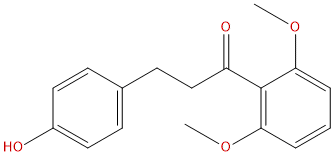
The chemical name of Jianye Longxue A is (2S) -7-hydroxy-5-methoxy-6-methyl-8- (3-methylbut-2-en-1-yl) -2-phenyl-2,3-dihydrochromene-4-one, and its CAS registration number is 221696-69-1. Structurally, it belongs to the class of flavan-4-one compounds, with a core skeleton of a dihydrochromen-4-one (benzodihydropyran-4-one) structure. This molecule has a chiral center (C-2 position), and its natural form is usually in the S configuration. Its structural features include: 7-hydroxy and 5-methoxy substituents on the A ring, methyl substitution at the C-6 position, an isoprenyl (3-methylbut-2-en-1-yl) side chain at the C-8 position, and a phenyl group at the C-2 position. This unique substitution pattern, especially the presence of isopentenyl and methoxy groups, has a significant impact on its lipid solubility and biological activity.
According to the provided pharmacological parameters, the molecular weight of Jianye Longxue A is 286.3270 g/mol, which belongs to the category of small molecule compounds. The calculated lipid water partition coefficient (LogP) is 3.0937, indicating that the compound has moderate lipophilic properties, which is consistent with its hydrophobic benzene ring and isopentenyl side chains in the structure. The topologically polar surface area (TPSA) is 55.7600 Å ², which is relatively small, suggesting that its membrane permeability may be good. The water solubility value is 0.1218 (usually measured in mg/mL or logS, which is not specified here but is relatively small), further confirming its lipophilicity. In the development process, formulation strategies may need to be considered to improve its solubility and bioavailability. It is particularly noteworthy that its predicted blood-brain barrier permeability is "high", which provides an important material basis for its potential central nervous system related activities (such as analgesia). In addition, the preliminary assessment of key toxicity risks showed no inhibitory activity on hERG potassium channels (hERG inhibition: No), and the Ames test result was 0.0 (usually indicating no mutagenicity), providing early support for its relatively good safety profile.
Plant sources and extraction methods
Sword leaf dragon blood A mainly comes from the Liliaceae or Asparagaceae families (according to the latest classification) of the dragon blood tree genus(Dracaena)Plants, especially the Sword Leaf Dragon Blood Tree(Dracaena cochinchinensis Resin of (Lour.) S.C. Chen. This plant is mainly distributed in Yunnan, Guangxi, and some parts of Southeast Asia in China. The collection of its resin is usually done by cutting the tree trunk, collecting the fresh red resin that flows out, and drying it to obtain the medicinal herb 'Dragon's Blood'.
The extraction and separation of sword leaf dragon blood extract A from dragon blood is usually carried out using organic solvent extraction combined with modern chromatographic techniques. The classic process is as follows:
1. Rough extraction Dry Dragon's Blood Resin Powder is subjected to reflux extraction or ultrasound assisted extraction using a suitable organic solvent (such as 95% ethanol, methanol, or acetone). This step aims to dissolve most of the polar to moderately polar components.
2. Extraction and Separation After concentrating the crude extract, solvents of different polarities (such as petroleum ether, ethyl acetate, n-butanol, water) are often used for liquid-liquid distribution extraction in the system. Jianye Longxue A is usually enriched in the ethyl acetate extraction site due to its equipolarity.
3. Chromatographic purification The ethyl acetate fraction was subjected to silica gel column chromatography, with different ratios of petroleum ether ethyl acetate or chloroform methanol gradient elution for preliminary separation. Subsequently, the fraction containing the target compound was further purified by high performance liquid chromatography (HPLC), especially preparative or semi preparative reverse phase HPLC (commonly C18 column, methanol water or acetonitrile water as mobile phase), to obtain high-purity berberine A monomer.
4. appraisal The structural identification of pure compounds is comprehensively carried out using techniques such as ultraviolet spectroscopy (UV), infrared spectroscopy (IR), mass spectrometry (MS), one-dimensional and two-dimensional nuclear magnetic resonance spectroscopy (1H NMR, 13C NMR, HSQC, HMBC, COSY, NOESY, etc.), and compared and confirmed with literature data or chemically synthesized reference standards.
In recent years, green and efficient technologies such as supercritical fluid extraction and high-speed countercurrent chromatography have gradually been applied to the extraction and separation of such compounds to improve yield and reduce organic solvent consumption.
Pharmacological activity research
The pharmacological activity research of Jian Ye Long Xue Su A has expanded from its initial analgesic effect to multiple fields, among which the hemostatic activity is particularly prominent.
-
Analgesic effect As its early discovered basic activity, stegosaurin A has shown significant effects in various animal models of pain. For example, in the mouse acetic acid writhing test, hot plate test, and formalin induced pain test (second phase), berberine A can dose dependently reduce pain response. Its analgesic effect may be partially independent of the opioid receptor system, suggesting that it has different mechanisms of action.
-
Hemostatic effect This is the current focus of pharmacological research on Sword Leaf Dragon Blood Essence A. In vitro and in vivo experiments have shown that it can significantly shorten the bleeding time and clotting time of mice and rats. In models of tail vein bleeding and partial liver resection bleeding, Jianye Longxue A exhibits a strong hemostatic effect. Its hemostatic effect is not simply physical sealing, but involves biological regulation of multiple links in the coagulation system.
-
Anti inflammatory and antioxidant effects Research has shown that Jian Ye Long Xue Su A has an inhibitory effect on lipopolysaccharide (LPS) - induced macrophage inflammation, and can downregulate the production of inflammatory mediators such as nitric oxide (NO), prostaglandin E2 (PGE2), tumor necrosis factor - α (TNF - α), interleukin-6 (IL-6), etc. At the same time, it also has the ability to scavenge free radicals such as DPPH and ABTS, exhibiting antioxidant activity. The anti-inflammatory and antioxidant effects may complement their analgesic and tissue protective effects.
-
Other activities Preliminary studies also suggest that Sword Leaf Dragon Blood Essence A may have antibacterial and wound healing promoting activities, which are consistent with its traditional uses, but further systematic research is needed.
Mechanism of action and molecular targets
The pharmacological effects of Jian Ye Long Xue Su A, especially its outstanding hemostatic activity, stem from its multidimensional regulation of key targets in the coagulation and fibrinolysis systems. According to the provided target information, its mechanism of action can be summarized as follows:
-
Activation of endogenous and exogenous coagulation pathways:
- Regulation of coagulation factors Jianye Longxue A may upregulate or enhance the function of multiple coagulation factors by affecting liver synthesis or direct activation. The targets involved include prothrombin (F2), coagulation factor VII (F7), coagulation factor IX (F9), and coagulation factor X (F10). These factors are the core components of the coagulation cascade, and their activation collectively leads to the explosive production of thrombin. Thrombin is a key enzyme in the process of hemostasis, which can convert soluble fibrinogen into insoluble fibrin, forming a stable thrombus.
- Von Willebrand factor (VWF)VWF is crucial in the initial stage of platelet adhesion and aggregation. Jianye Longxue A may enhance platelet adhesion under damaged vascular endothelium and initiate primary hemostasis by promoting endothelial cell release or stabilizing VWF oligomers.
-
Inhibition of fibrinolytic system:
- Plasminogen activator inhibitor-1 (SERPINE1/PAI-1)PAI-1 is the main inhibitor of tissue type plasminogen activator (t-PA) and urokinase type plasminogen activator (u-PA), which inhibits fibrinolysis by suppressing the activation of plasminogen. Jianye Longxue A has been reported to upregulate the expression or activity of PAI-1, which helps maintain the stability of formed hemostatic suppositories, prevent premature dissolution, and consolidate hemostatic effects.
-
Regulation of anticoagulation pathways:
- Protein C (PROC)The protein C system is an important natural anticoagulant pathway in the body, and activating protein C (APC) can inactivate coagulation factors Va and VIIIa, thereby downregulating coagulation reactions. Jianye Longxue A may moderately regulate this pathway in some way, promoting coagulation while avoiding excessive anticoagulation cancellation, but its specific mode of action (inhibition or regulation) needs further experimental clarification.
Integrated mechanism hypothesis Jianye Longxue A may exert its effect through "multi-target synergy": on the one hand, it accelerates the formation of fibrin clots (procoagulant) by promoting coagulation factor activity and platelet adhesion (VWF); On the other hand, by enhancing PAI-1 activity, the degradation of clots by the fibrinolytic system is inhibited (anti fibrinolytic). The synergistic effect of these two aspects enables it to quickly and effectively achieve hemostasis. Its analgesic and anti-inflammatory mechanisms may be related to the inhibition of cyclooxygenase (COX), regulation of NF - κ B or MAPK signaling pathways, but the specific targets remain to be elucidated.
Evaluation of drug properties and pharmacokinetics
Based on the physical and chemical parameters and preliminary toxicity data mentioned earlier, Jianye Longxue A has shown certain potential as a drug, but its comprehensive pharmacological evaluation still needs systematic research.
-
Absorption, distribution, metabolism, excretion (ADME):
- absorb Moderate LogP values and small TPSA indicate good intestinal permeability, which may be absorbed orally. But its low water solubility may limit its dissolution rate in gastrointestinal fluids, becoming a potential bottleneck for oral bioavailability.
- distribution The predicted high blood-brain barrier permeability means it can enter the central nervous system, which is consistent with its potential analgesic site. Further in vivo distribution experiments are needed to determine its enrichment in various tissues and organs, such as the liver, kidneys, and bleeding sites.
- Metabolism As a yellow alkane compound, the phenolic hydroxyl and isopentenyl groups in its structure are common metabolic sites. It is speculated that it may undergo phase I metabolism (such as oxidation and demethylation) and phase II combined metabolism (glucuronidation and sulfation) in the liver. It is crucial to clarify the main metabolic enzymes (such as CYP450 isoenzymes) and metabolites for evaluating drug interactions and toxicity.
- excretion Metabolites may be mainly excreted through the kidneys (urine) or bile (feces). The excretion pathway of the prototype drug needs to be studied.
-
Pharmacokinetics (PK)Currently, there are few publicly available reports on the pharmacokinetic studies of the Jianye Longxue A system. Future research requires the establishment of sensitive and specific biological analysis methods (such as LC-MS/MS) to determine the blood drug concentration time curve after administration in animal models (rats, dogs, etc.), and calculate key PK parameters such as peak time (Tmax), peak concentration (Cmax), half-life (t1/2), area under the drug time curve (AUC), and oral bioavailability (F). These data are the basis for evaluating its dosing regimen and clinical translational potential.
-
Preliminary evaluation of safety The provided "hERG inhibition: no" and "Ames test: 0.0" are positive early signals, reducing their main risks of causing cardiac toxicity (QT interval prolongation) and genetic toxicity. However, a complete preclinical safety evaluation still needs to include in vitro cytotoxicity tests, acute toxicity tests, repeated dose toxicity tests (14 days, 28 days, 90 days), reproductive toxicity, immunotoxicity, etc., to comprehensively evaluate its safety window.
-
Formulation development considerations: In view of its poor water solubility, solid dispersion, cyclodextrin inclusion, nanocrystals, liposomes and other solubilization technologies can be considered in the development of the preparation, or it can be developed into liposomes for injection, gel/paste for external use and other dosage forms to adapt to different clinical application scenarios (such as acute hemostasis, postoperative analgesia, etc.).
Clinical application prospects and prospects
The unique pharmacological properties of Jian Ye Long Xue Su A bring potential application prospects in multiple therapeutic fields.
-
Development of hemostatic drugs This is the most promising direction. The mechanism of multi-target synergistic hemostasis of Jianye Longxue A may provide a more efficient and controllable new hemostatic strategy to address the problems of traditional hemostatic drugs having a single effect or the risk of thrombosis. Its potential application scenarios include:
- surgical operation Used for preventing and controlling intraoperative and postoperative bleeding, especially for patients with coagulation dysfunction.
- Trauma First Aid: It is developed into a quick hemostatic dressing or spray for on-site first aid of accidental injuries such as battlefield and traffic accidents.
- Internal bleeding diseases As an adjuvant therapy for certain hereditary or acquired coagulation factor deficiencies and platelet dysfunction diseases.
- Rescue of anticoagulant overdose Explore the possibility of using it to combat bleeding caused by excessive use of anticoagulants such as warfarin.
-
Development of analgesic drugs Based on its clear analgesic activity and possible central role, it can be developed into a novel analgesic drug, especially suitable for inflammatory pain and neuropathic pain. If its mechanism of action is indeed different from opioid drugs, it may avoid serious side effects such as addiction and respiratory depression.
-
Composite preparations and combination therapy It can be combined with existing hemostatic or analgesic drugs to form compound preparations, exerting synergistic effects, or reducing their respective dosages to minimize side effects.
-
Outlook and Challenges:
- In depth mechanism research Chemical biological methods such as affinity fishing, molecular docking, gene knockout/knockdown need to be used to accurately verify its direct interaction and regulatory details with the aforementioned coagulation/fibrinolysis targets.
- structural optimization A systematic structure-activity relationship study and structural modification were conducted using Jianye Longxue A as the lead compound, aiming to improve its activity, water solubility, metabolic stability, and further optimize its safety profile.
- Preclinical and clinical research Complete toxicological studies on ADME/PK and GLP standards for the system, establish robust production processes for active pharmaceutical ingredients and formulations, and advance to clinical trials to verify their safety and efficacy in humans.
- Intellectual Property Layout Comprehensive patent protection is provided around its pharmaceutical applications, derivatives, and formulation processes.
Conclusion
Jianye Longxue A, as a characteristic active ingredient in the traditional medicine Dragon's Blood, is a successful example of modern natural product drug research. Starting from the traditional analgesic use, its powerful multi-target hemostatic activity has gradually been revealed, highlighting the enormous potential of exploring modern scientific value from traditional medical knowledge. The current research has preliminarily elucidated its chemical essence, partial pharmacological activity, and possible target network of action, and demonstrated its good pharmacological basis. However, transforming it from a promising natural compound into a true clinical drug still faces many challenges, such as in-depth analysis of its mechanism of action, optimization of pharmacokinetic properties, systematic safety evaluation, and formulation development. In the future, through interdisciplinary collaboration and in-depth systematic research from the molecular to the whole level, Jianye Longxue A is expected to be developed into a novel and effective hemostatic or analgesic drug with a novel mechanism of action. It can not only provide new treatment options for patients with related diseases, but also provide useful references for the modern research and utilization of natural products.