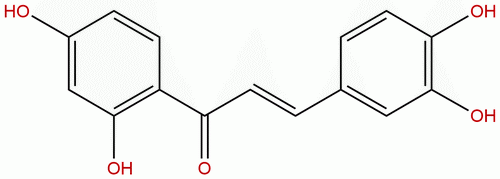


Product name: Butein
Synonym name: Butein
Catalogue No.: SBP01739
Cas No.: 487-52-5
Formula: C15H12O5
Mol Weight: 272.256
Botanical Source:
Physical Description:
Type of Compound: Chalcones
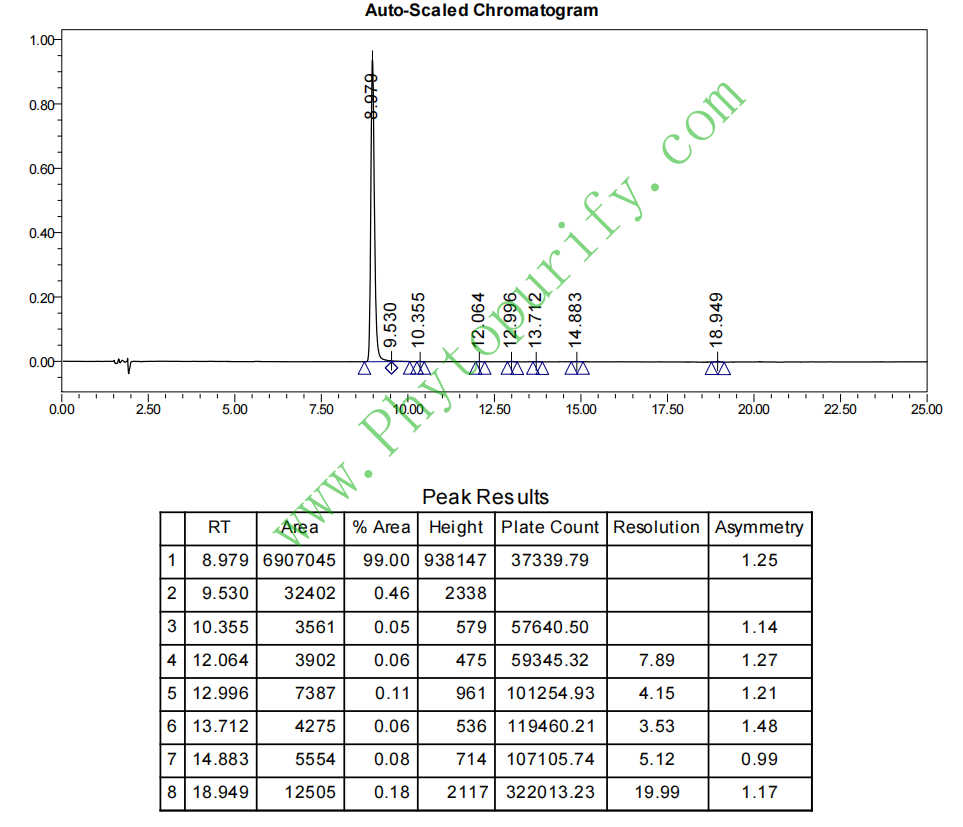
Purity: 95%~99%
Analysis Method: HPLC-DAD or/and HPLC-ELSD
Identification Method: Mass, NMR
Packing: Brown vial or HDPE plastic bottle
The product could be supplied from milligrams to grams
Inquire for bulk scale.
For Reference Standard and R&D, Not for Human Use Directly.
HPLC of Butein
Storage conditions:Short-term storage at 2~8℃, long-term storage at -20 ~ -80℃
97.9900
2.5967
2.4641
.1435
4.5874
7.8138
Low
88.7985
2.2250
Yes
No
Yes
No
Yes
No
0.6
Yes
Yes
Yes
Yes
Natural products, as an important source of drug discovery, play an indispensable role in the long history of human fight against diseases. From classic aspirin to complex paclitaxel, the rich chemical structures found in nature provide endless inspiration for modern pharmacology. Among the numerous naturally occurring polyphenolic compounds with biological activity, Butein has attracted increasing attention from researchers due to its unique chemical structure and extensive pharmacological activities. Purple rivet, chemically known as 3,4,2 ', 4' - tetrahydroxychalcone, is a naturally occurring chalcone compound. Chalcone is a precursor of flavonoids, characterized by two aromatic rings connected by an α, β - unsaturated ketone bridge. This unique structural framework endows purple lignin with diverse biological activities.
The pharmacological activity spectrum of purple rivet is extremely broad, covering multiple aspects such as antioxidant, anti-inflammatory, anti-tumor, anti fibrosis, neuroprotection, and regulation of glucose and lipid metabolism. Its mechanism of action also exhibits the characteristics of multi-target and multi pathway. Early studies revealed the function of purple rivet as a protein tyrosine kinase inhibitor, which can inhibit the activity of epidermal growth factor receptor (EGFR) and p60c src, with half maximal inhibitory concentrations (IC50) of 16 μ M and 65 μ M, respectively. This discovery laid the foundation for its application in the field of anti-tumor. Subsequent studies have further demonstrated that Zizhuyin is a cAMP specific phosphodiesterase (PDE) inhibitor, particularly exhibiting selective inhibitory effects on the PDE4 subtype (IC50=10.4 μ M). By inhibiting PDE4, Zizhuyin can increase intracellular cAMP levels, thereby regulating downstream signaling pathways and exerting anti-inflammatory and immune regulatory effects. What is even more remarkable is that purple rivet has been found to be an activator of silencing information regulatory factor 1 (SIRT1) (STAC). SIRT1 is an NAD+- dependent deacetylase that plays a central role in regulating cellular aging, metabolism, stress response, and genomic stability. Purple rivet can simulate the effect of heat restriction by activating SIRT1, improve metabolic health, and may delay the occurrence of age-related diseases.
Given the enormous therapeutic potential demonstrated by purple rivet, this article aims to provide a systematic review of its chemical structure, plant origin, pharmacological activity, mechanism of action, medicinal properties, and clinical application prospects, in order to provide comprehensive references for the in-depth research and development of this natural product.
The chemical structure of Butein belongs to chalcones, and its systematic name is (E) -1- (2,4-dihydroxyphenyl) -3- (3,4-dihydroxyphenyl) propan-2-en-1-one. Its molecular formula is C15H12O5 and its molecular weight is 272.2560 g/mol. Structurally, the purple rivet is formed by connecting an A ring (2,4-dihydroxyphenyl) and a B ring (3,4-dihydroxyphenyl) through a three carbon chain containing alpha, beta unsaturated ketones. The two hydroxyl groups on ring A are located at positions 2 and 4, while the two hydroxyl groups on ring B are located at positions 3 and 4. This multi hydroxyl substitution mode is the structural basis for the strong antioxidant activity of purple rivet, as phenolic hydroxyl groups can effectively scavenge free radicals. Meanwhile, the α, β - unsaturated ketone structure is an important Michael addition receptor that can react with nucleophilic groups (such as cysteine thiol groups) in proteins or DNA, which may be one of the key mechanisms regulating various signaling pathways and target protein activity.
In terms of physical and chemical properties, purple rivet appears as yellow or orange yellow needle shaped crystals. Its lipid water partition coefficient (LogP) is 2.5967, indicating that it has a certain lipophilicity and can penetrate cell membranes well, while retaining a certain degree of water solubility (water solubility of 0.1435 mg/mL), which provides favorable conditions for its absorption and distribution in vivo. The topological polar surface area (TPSA) of purple rivet is 97.99 Å ², which is a relatively high value, usually indicating that its oral absorption may be limited and its ability to cross the blood-brain barrier is weak. In fact, the evaluation of pharmacological parameters also shows that its blood-brain barrier penetration ability is "low", indicating that the application of Zizhuyin in the treatment of central nervous system diseases may require special delivery strategies. In addition, hERG inhibition was evaluated as' no ', indicating a low risk of causing cardiac QT interval prolongation and arrhythmia, which is a positive pharmacological indicator. The Ames test result is 0.6, indicating a potential genetic toxicity risk and requiring more rigorous toxicological evaluation in subsequent drug development. Overall, purple rivet has a good parent nucleus structure as a starting point for optimizing lead compounds, but its water solubility, metabolic stability, and potential toxicity issues need to be improved through structural modification or formulation design.
Purple rivet is not a rare natural product, it is widely present in various medicinal plants and daily diets. One of its main sources is the lacquer tree family plants, especially those from Southeast Asia, such as the Thai purple rivet flower(Butea monosperma Also known as purple mineral or purple rivet tree, this plant contains abundant purple rivet in its flowers, stem bark, and seeds, which is also the origin of its name "purple rivet". In addition, purple rivet is also present in other plants of the lacquer tree family, such as Rhus verniciflua(Wild lacquer tree) and Rhus succedanea(Wax poplar tree). Among the Rosaceae plants, apples(Malus domestica)The skin and flesh of the fruit also contain purple rivet, although the content is relatively low. In addition, Asteraceae plants such as Coreopsis tinctoria(Golden Chicken Chrysanthemum) and Bidens pilosa Ghost needle grass is also an important source of purple rivet. The wide availability of these plant sources, especially their presence in edible plants, provides a basis for the dietary intake and safety assessment of purple rivet.
The extraction method of purple rivet mainly relies on classical natural product chemical separation techniques. Due to its moderate polarity as a polyphenolic compound, the most commonly used extraction solvents for purple rivet are methanol, ethanol, or their aqueous solutions. Usually, dried plant materials such as purple rivet flowers or wild lacquer tree bark are crushed and then soaked or percolated with a certain concentration of ethanol (such as 70% -95%) at room temperature or heating conditions. In order to improve extraction efficiency and selectivity, modern technologies such as ultrasound assisted extraction or microwave-assisted extraction can also be used. The crude extract is obtained by filtering and concentrating the extract under reduced pressure. Subsequently, using liquid-liquid extraction method, preliminary separation was carried out based on the distribution coefficient differences of purple rivet in different solvents, for example, extracting purple rivet from the aqueous phase with ethyl acetate or n-butanol. Further purification usually adopts column chromatography, such as silica gel column chromatography, polyamide column chromatography or Sephadex LH-20 gel column chromatography. Gradient elution using solvent systems such as chloroform methanol or ethyl acetate methanol can effectively separate purple rivet from other coexisting flavonoids and phenolic compounds. Finally, high-purity purple rivet monomers were obtained through recrystallization or preparative high-performance liquid chromatography (Prep HPLC). Its structure can be confirmed by techniques such as ultraviolet spectroscopy (UV), infrared spectroscopy (IR), mass spectrometry (MS), and nuclear magnetic resonance spectroscopy (NMR).
The pharmacological activity research of purple rivet has been quite in-depth, and it has shown significant effects in multiple disease models, mainly including the following aspects:
antioxidant activity Purple rivet is an efficient free radical scavenger and metal ion chelating agent due to its multiple phenolic hydroxyl groups in its molecular structure. Numerous in vitro experiments have confirmed that purple rivet can directly scavenge 1,1-diphenyl-2-trinitrophenylhydrazine (DPPH) free radicals, 2,2 '- diazobis (3-ethylbenzothiazoline-6-sulfonic acid) (ABTS) cationic free radicals, hydroxyl free radicals, and superoxide anions. More importantly, purple rivet can also upregulate the expression of a series of endogenous antioxidant enzymes, such as superoxide dismutase (SOD1, SOD2), catalase (CAT), glutathione peroxidase 1 (GPX1), and heme oxygenase 1 (HMOX1), by activating the nuclear factor E2 related factor 2 (Nrf2)/antioxidant response element (ARE) signaling pathway. This dual antioxidant mechanism of direct clearance and indirect induction gives it significant advantages in protecting cells from oxidative stress damage. For example, in skin cell models, purple rivet can inhibit the expression of matrix metalloproteinases 1 (MMP1) and MMP3 induced by ultraviolet radiation or hydrogen peroxide, thereby exerting photoprotective and anti-aging effects. At the same time, it can also inhibit the activity of tyrosinase (TYR), reduce the production of melanin, and demonstrate potential skin whitening effects.
Antitumor activity The anti-tumor effect of purple rivet is one of the current research hotspots. Its mechanism of action is complex and diverse, involving multiple signaling pathways. Firstly, as mentioned earlier, Zizhuyin is a protein tyrosine kinase inhibitor that can inhibit the activity of key oncogenic kinases such as EGFR and Src, thereby blocking downstream proliferation signals such as the Ras/Raf/MEK/ERK and PI3K/AKT pathways. Secondly, Zirivetin can induce apoptosis of various tumor cells (such as HeLa cervical cancer cells, HepG2 liver cancer cells, MCF-7 breast cancer cells, etc.). The mechanism of inducing apoptosis includes activating the mitochondrial apoptosis pathway (leading to cytochrome c release and caspase cascade activation), upregulating the expression of pro apoptotic proteins Bax and Bak, and downregulating the expression of anti apoptotic proteins Bcl-2 and Bcl xL. In addition, purple rivet can also inhibit the proliferation, invasion, and metastasis of tumor cells by suppressing the activity of transcription factors such as NF - κ B and STAT3. Of particular note is that research has found that Zizhuyin can target the transcription factor FoxO3a through the AKT and ERK/p38 MAPK pathways, increasing the sensitivity of HeLa cells to the chemotherapy drug Cisplatin. This means that purple rivet may serve as a chemotherapy sensitizer, reducing the dosage of chemotherapy drugs, alleviating toxic side effects, and improving treatment efficacy.
anti-inflammatory activity The anti-inflammatory activity of purple rivet is closely related to its inhibitory effect on PDE4. PDE4 is a cAMP specific hydrolase primarily expressed in immune and inflammatory cells. Purple rivet can activate protein kinase A (PKA) by inhibiting PDE4 and increasing intracellular cAMP levels. PKA can phosphorylate and inhibit the activity of transcription factors cAMP response element binding protein (CREB) and NF - κ B. NF - κ B is the core regulatory factor of inflammatory response. When its activity is inhibited, it significantly downregulates the expression of various pro-inflammatory cytokines (such as TNF - α, IL-1 β, IL-6) and inflammatory mediators (such as COX-2, iNOS). In the macrophage model stimulated by lipopolysaccharide (LPS), purple rivet can effectively inhibit the production of nitric oxide (NO) and prostaglandin E2 (PGE2). In animal models, purple rivet has shown good therapeutic effects on various acute and chronic inflammation models, such as carrageenan induced toe swelling and collagen induced arthritis.
Other pharmacological activities In addition to the main activities mentioned above, Zizhuyin also exhibits various other beneficial pharmacological effects. For example, in metabolic diseases, as an activator of SIRT1, Zirivetin can improve insulin sensitivity, promote glucose uptake, and inhibit fat production, showing the potential of anti diabetes and anti obesity. In terms of liver protection, Zizhuyin can alleviate liver damage and fibrosis induced by various factors such as carbon tetrachloride, alcohol, and high-fat diet. Its mechanism involves antioxidant, anti-inflammatory, and inhibition of hepatic stellate cell activation. In terms of neuroprotection, Zizhuyin can alleviate the neurotoxicity induced by β - amyloid protein (A β) and improve cognitive function in Alzheimer's disease model animals through antioxidant and anti-inflammatory effects. In addition, Zizhuyin also has antiviral (such as anti HIV, anti influenza virus), antibacterial, and anti angiogenic activities.
The pharmacological activity of purple rivet is the result of its interaction with multiple molecular targets, and its mechanism of action exhibits a high degree of networking and pleiotropy. Based on existing research, its core mechanism of action can be summarized as follows:
Directly targeting signaling enzymes Purple rivet can directly bind to various protein kinases and phosphodiesterases, regulating their activity. as Protein tyrosine kinase inhibitor It inhibits the activity of kinases such as EGFR and Src by competitively binding to ATP binding sites or conformational regulation, thereby blocking downstream pro proliferative and anti apoptotic signaling pathways such as Ras/MAPK and PI3K/AKT. as PDE4 inhibitors Purple rivet binds to the catalytic domain of PDE4, preventing the hydrolysis of cAMP and leading to an increase in intracellular cAMP levels. CAMP acts as a second messenger, further activating downstream effector proteins such as PKA and Epac, ultimately inhibiting inflammatory responses and immune cell activation. as SIRT1 activator Purple rivet can bind to the enzyme active center of SIRT1, enhancing its deacetylase activity. The activation of SIRT1 can regulate various substrate proteins, such as p53, FOXO, PGC-1 α, and NF - κ B, thereby affecting cellular stress resistance, metabolic regulation, and inflammatory response.
Regulating transcription factors Purple rivet can achieve extensive regulation of gene expression by affecting the activity of multiple key transcription factors.Nrf2 It is the main regulator of cellular antioxidant defense. Purple rivet protein modifies key cysteine residues on Keap1 protein, promoting the dissociation and translocation of Nrf2 from Keap1 into the nucleus, binding to ARE, and initiating the transcription of downstream antioxidant enzymes and phase II detoxifying enzymes (such as HMOX1, NQO1, GST).NF-κB It is the core transcription factor of inflammatory response. Purple rivet inhibits the activity of I κ B kinase (IKK), preventing the phosphorylation and degradation of I κ B α, thereby retaining NF - κ B (p65/p50) in the cytoplasm and preventing it from entering the nucleus to initiate the transcription of pro-inflammatory genes.FoxO3a It is an important transcription factor that regulates cell cycle, apoptosis, and stress resistance. Purple rivet inhibits the AKT and ERK/p38 MAPK pathways, reduces the phosphorylation of FoxO3a, promotes its nuclear localization, and upregulates the expression of its target genes such as Bim and p27, inducing cell apoptosis and cell cycle arrest.
Regulating cellular signaling pathways Purple rivet has integrated and reshaped multiple important cellular signaling pathways through the regulation of key enzymes and transcription factors mentioned above. For example, in terms of anti-tumor effects, Zizhuyin simultaneously inhibits the two main pro survival pathways of EGFR/Ras/MAPK and PI3K/AKT/mTOR, and activates the JNK/p38 MAPK stress pathway, thereby synergistically inducing tumor cell apoptosis. In terms of anti-inflammatory effects, Zizhuyin achieves strong inhibition of inflammatory responses by inhibiting the PDE4/cAMP/PKA pathway and NF - κ B pathway. In terms of antioxidant activity, Zizhuyin has constructed a powerful endogenous antioxidant defense system by activating the Nrf2/ARE pathway.
In summary, the mechanism of action of purple rivet is not a single target, but rather through a network regulation mode of "multi-target, multi pathway", synergistically exerting its various pharmacological activities such as antioxidant, anti-inflammatory, anti-tumor, etc. This multi-target characteristic is both its advantage (which may produce synergistic effects and reduce drug resistance) and its challenge (which may bring off target effects and increase toxic side effects).
The drug like and pharmacokinetic (ADME) properties of purple rivet from laboratory research to clinical application must be carefully evaluated as key factors.
Drugability assessment Based on Lipinski's "Rule of Five", the molecular weight (272.26 Da<500 Da), LogP (2.60<5), number of hydrogen bond donors (4 phenolic hydroxyl groups), and number of hydrogen bond acceptors (5 oxygen atoms) of Zilin meet the basic requirements for oral medication. However, its TPSA value (97.99 Å ²) is slightly higher than the recommended upper limit of 140 Å ² for oral medications, indicating the possibility of incomplete oral absorption. In addition, the Ames test result (0.6) indicates that it has potential mutagenicity, which may be due to its alpha, beta unsaturated ketone structure having Michael receptor activity, which may covalently bind to DNA. Therefore, as a lead compound, purple rivet has certain defects in its pharmacological properties and needs to be optimized through structural modification. For example, methylation or glycosylation modification of phenolic hydroxyl groups can reduce their polarity, improve metabolic stability, and potentially reduce their toxicity. Introducing specific functional groups to enhance their binding affinity with targets while reducing reactivity with non targets is also an important optimization direction.
pharmacokinetics At present, research on the pharmacokinetics of purple rivet in vivo is relatively limited, but there are some preliminary understandings.absorb The oral bioavailability of purple rivet may be low, mainly due to its poor water solubility and intestinal first pass metabolism. Polyphenolic compounds are prone to glucuronidation and sulfation in the intestine, forming complexes and reducing their free concentration.distribution The binding rate between purple rivet and plasma proteins (such as albumin) may be high. Its blood-brain barrier penetration ability has been evaluated as' low ', which limits its application in the treatment of central nervous system diseases.Metabolism Purple rivet mainly undergoes phase II metabolism in the body, including glucuronic acid binding, sulfate binding, and methylation. These metabolic reactions mainly occur in the liver and intestines. Its α, β - unsaturated ketone structure may also be captured by the glutathione (GSH) system in the body, forming adducts.excretion Purple rivet and its metabolites are mainly excreted through bile and urine.
Given the limitations of purple rivet in pharmacokinetics, researchers are exploring various strategies to improve its drug properties. For example, the use of nanotechnology (such as liposomes, polymer nanoparticles, solid lipid nanoparticles) to encapsulate paclitaxel can improve its water solubility and bioavailability, achieving targeted delivery. The formation of a complex between purple rivet and phospholipids (phospholipid complex) can also significantly improve its lipid solubility and oral absorption. In addition, developing prodrugs of purple rivet, such as esterifying or phosphorylating its phenolic hydroxyl group to release the original drug after enzymatic hydrolysis in vivo, is also an effective method to improve its bioavailability.
Purple rivet has shown great clinical application prospects in the treatment and prevention of various diseases due to its extensive pharmacological activity and unique multi-target mechanism of action.
Antitumor therapy The potential of purple rivet as a chemotherapy sensitizer is particularly prominent. It can enhance the sensitivity of tumor cells to traditional chemotherapy drugs such as cisplatin and doxorubicin by targeting mechanisms such as FoxO3a. This means that in future clinical applications, Zizhuyin may be used as an adjuvant therapy drug, combined with chemotherapy drugs, in order to achieve the same or even better therapeutic effect while reducing the dosage of chemotherapy drugs, thereby reducing the toxic side effects on patients. In addition, the inhibitory effect of purple rivet on tyrosine kinases such as EGFR suggests that it may be effective against certain tumor types that are resistant to targeted drugs.
Chronic inflammatory diseases Purple rivet, as a PDE4 inhibitor and NF - κ B inhibitor, has great potential in the treatment of chronic inflammatory diseases. For example, in diseases such as rheumatoid arthritis, inflammatory bowel disease (such as Crohn's disease, ulcerative colitis), psoriasis, and asthma, abnormal inflammatory response is the core pathological link. Multiple PDE4 inhibitors, such as Aplast, have been approved for the treatment of psoriasis and psoriatic arthritis. As a naturally occurring PDE4 inhibitor, Zizhuyin may have better safety and is expected to be developed as a novel drug or dietary supplement for the treatment of these chronic inflammatory diseases.
Metabolic diseases Purple rivet, as an activator of SIRT1, has a similar effect to calorie restriction, which can improve insulin resistance, promote fatty acid oxidation, and inhibit fat synthesis. This makes it valuable in the treatment of type 2 diabetes, non-alcoholic fatty liver disease (NAFLD) and obesity. Developing purple rivet or its derivatives as SIRT1 activators may provide new strategies for the treatment of metabolic syndrome.
Skin Health and Anti Aging The antioxidant, anti-inflammatory, and tyrosinase inhibitory properties of purple rivet make it an ideal active ingredient in cosmetics and skin care products. It can be used to develop sunscreen, anti-aging face cream and whitening products to resist UV damage and reduce the formation of wrinkles and spots.
Neurodegenerative diseases Although purple rivet has limited ability to penetrate the blood-brain barrier, its strong antioxidant and anti-inflammatory activities, as well as its ability to activate SIRT1, still make it promising for the treatment of neurodegenerative diseases such as Alzheimer's and Parkinson's disease. Future research directions may include the development of purple rivet derivatives or nano delivery systems that can efficiently penetrate the blood-brain barrier.
prospect Future research on purple rivet should focus on the following directions: firstly, to deeply elucidate the network regulatory mode of its multi-target mechanism, especially the synergistic and antagonistic relationships between different targets. The second is to systematically optimize the structure of purple rivet through medicinal chemical methods, in order to improve its water solubility, metabolic stability, and bioavailability, and reduce its potential genetic toxicity. The third is to develop efficient and safe delivery systems, such as nano formulations, phospholipid complexes, etc., to overcome their pharmacokinetic barriers. The fourth is to conduct systematic in vivo pharmacological and toxicological research, especially to verify its safety and effectiveness in large animal models and clinical trials. The fifth is to explore the synergistic effects of purple rivet with other natural products or clinical drugs, and develop compound preparations.
Purple rivet, as a typical natural chalcone compound, occupies an important position in the field of natural product pharmacology due to its unique chemical structure and multiple pharmacological activities. From early protein tyrosine kinase inhibitors to later PDE4 inhibitors and SIRT1 activators, researchers have continuously deepened their understanding of the mechanism of action of Zilin, revealing its complex pattern of regulating cell fate through multi-target and multi pathway networks. Its enormous potential in multiple fields such as antioxidant, anti-inflammatory, anti-tumor, metabolic regulation, and neuroprotection makes it a highly valuable lead compound for development.
However, the clinical application of Zizhuyin still faces many challenges, mainly including low oral bioavailability, metabolic instability, and potential genetic toxicity. The solution to these problems relies on the collaborative efforts of multiple disciplines such as medicinal chemistry, pharmacy, and pharmacology. Through reasonable structural modification and advanced delivery technology, it is expected to transform the natural treasure of purple rivet into a drug or functional product that can truly benefit human health. With the continuous deepening of research, we have reason to believe that Zizhuyin and its derivatives will play a more important role in precision medicine and health management in the future.
