| Catalog No | Package | Original Price | Price | Inventory | Quantity | Operating |
|---|---|---|---|---|---|---|
| BPF2284-5mg | 5mg | $290.00 | Sign in |
|


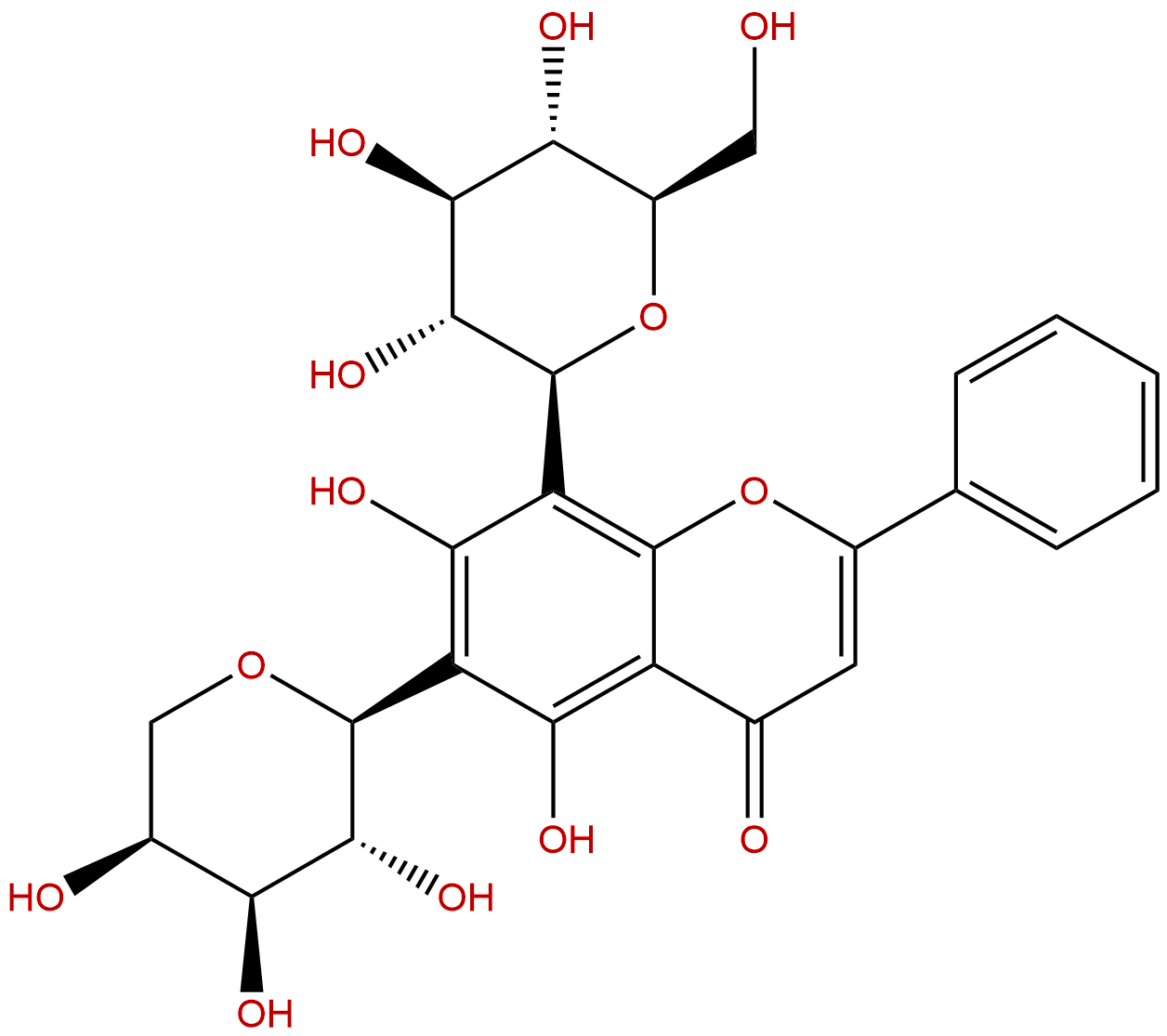
Product name: Chrysin 6-C-arabinoside 8-C-glucoside
Synonym name:
Catalogue No.: BPF2284
Cas No.: 185145-33-9
Formula: C26H28O13
Mol Weight: 548.497
Botanical Source:
Type of Compound:
Purity: 95%~99%
Analysis Method: HPLC-DAD or/and HPLC-ELSD
Identification Method: Mass, NMR
Packing: Brown vial or HDPE plastic bottle
Storage: Store in a well closed container, protected from air and light. Put into refrigerate or freeze for long term storage.
Whenever possible, you should prepare and use solutions on the same day. However, if you need to make up stock solutions in advance, we recommend that you store the solution as aliquots in tightly sealed vials at -20℃. Generally, these will be useable for up to two weeks.
The product could be supplied from milligrams to grams
Inquire for bulk scale.
For Reference Standard and R&D, Not for Human Use Directly.
Storage conditions:Short-term storage at 2~8℃, long-term storage at -20 ~ -80℃
230.7400
-.2277
-.2843
1.7520
.6213
.2123
Low
78.9952
4.6786
Yes
No
No
No
Yes
Yes
0.6
Yes
No
Yes
No
Natural products, as an important source of drug discovery, play an irreplaceable role in the long history of human struggle against diseases. Flavonoids, as the most widely distributed class of polyphenolic secondary metabolites in nature, have attracted much attention due to their structural diversity and extensive biological activity. Among them, Chrysin (5,7-dihydroxyflavone), as a typical natural flavonoid, exists in honey, propolis and various plants, and has been proven to have various pharmacological activities such as antioxidant, anti-inflammatory, anti-tumor, neuroprotective, etc. However, the poor water solubility and low bioavailability of poplar extract greatly limit its clinical application potential. To address this bottleneck, researchers have turned their attention to its glycosylated derivatives. Glycosylation modification can not only significantly improve the physicochemical properties of parent compounds, such as solubility and stability, but may also endow them with new biological activities or enhance their existing activities.
Chrysin 6-C-arabinoside 8-C-glucoside (CAG) is a special dual carbon flavonoid that has entered the field of researchers in this context. Its unique structural feature is that one arabinose group and one glucose group are directly connected to the C-6 and C-8 positions of the poplar core through stable C-C bonds, respectively. This dual C-glycosylation mode is relatively rare in nature. Compared with common O-glycosides, C-glycosides have stronger acid and enzyme hydrolysis resistance, thus exhibiting higher metabolic stability and longer duration of action in vivo. In recent years, with the advancement of separation and purification technology and activity screening methods, the potential of CAG in the field of antioxidant stress and related diseases has gradually been revealed, becoming an emerging hotspot in natural product chemistry and pharmacology research. This review aims to systematically sort out the chemical structure, plant origin, pharmacological activity, mechanism of action, and pharmacological characteristics of CAG, in order to provide comprehensive scientific basis for the in-depth development and utilization of this compound.
The chemical name of CAG is paeoniflorin 6-C - β - D-arabinopyranosyl-8-C - β - D-glucopyranoside, with a molecular formula of C ₂₆ H ₂₈ O ₁ ∝ and a molecular weight of 548.4970 Da. Structurally, this compound belongs to the flavonoid subclass of flavonoids, with its parent nucleus being 2-phenylchromenone (4H-1-benzopyran-4-one). Compared with the parent poplar extract, CAG is connected to an arabinose group and a glucose group at positions C-6 and C-8 of the A ring, respectively. These two sugar groups are both connected to the flavonoid backbone through C-C bonds, which endows CAG with unique chemical stability distinct from O-glycosides. The introduction of sugar groups not only increases the hydrophilicity of the molecule, but also significantly changes its spatial conformation and electronic distribution.
In terms of physical and chemical properties, CAG exhibits typical polar natural product characteristics. The lipid water partition coefficient (LogP) of the compound is -0.2277, indicating good hydrophilicity, which is consistent with the structural characteristics of the molecule containing multiple hydroxyl groups and two polar sugar groups. The higher water solubility (1.7520 mg/mL) is a major advantage compared to the parent poplar extract (which has extremely low water solubility), providing favorable conditions for its absorption and distribution in organisms. The topological polar surface area (TPSA) is as high as 230.7400 Å ², far exceeding the recommended upper limit of 140 Å ² for oral medications. A high TPSA value usually indicates poor passive diffusion ability between molecules and cell membranes, but also suggests a greater potential for hydrogen bonding with target proteins. In addition, the blood-brain barrier permeability of CAG was evaluated as' low ', which is closely related to its high polarity and high molecular weight. This characteristic may pose a barrier in the treatment of central nervous system diseases, but may become an advantage in therapeutic scenarios that require avoiding central side effects, such as peripheral antioxidant and anti-inflammatory treatments. Preliminary toxicological predictions indicate that the inhibitory risk of CAG on hERG potassium channels is low (No), with an Ames test result of 0.6, suggesting that its genetic toxicity risk is relatively controllable, but more rigorous experimental verification is needed.
CAG, as a naturally occurring double C-glycosylated flavonoid, has relatively limited plant sources and is mainly distributed in certain medicinal plants and vegetables. The main sources of current literature reports include:
The extraction and purification of CAG usually follow the classic process of natural product chemistry and are optimized based on its polarity characteristics. The main steps include:
The pharmacological activity research of CAG mainly focuses on its antioxidant stress resistance, and gradually expands to related fields such as anti-inflammatory, anti fibrotic, and neuroprotective effects.
Oxidative stress is the common pathological basis of many chronic diseases (such as cardiovascular diseases, diabetes, neurodegenerative diseases and cancer). As a polyphenolic compound, the antioxidant activity of CAG is one of its core pharmacological effects.
Oxidative stress is closely related to inflammatory response, and ROS itself can act as a second messenger to activate the inflammatory pathway. The antioxidant effect of CAG can indirectly exert anti-inflammatory effects. Research has found that in a lipopolysaccharide (LPS) - stimulated macrophage model (such as RAW264.7 cells), CAG can inhibit the production of pro-inflammatory factors such as tumor necrosis factor - α (TNF - α), interleukin-6 (IL-6), and nitric oxide (NO). The mechanism may be related to the inhibition of the activation of the nuclear factor kappa B (NF - κ B) signaling pathway. In addition, the regulatory effect of CAG on matrix metalloproteinases (MMPs) is also worth paying attention to. MMP1 and MMP3 are key enzymes involved in extracellular matrix degradation and play important roles in inflammatory tissue remodeling. CAG may alleviate tissue damage by inhibiting the overexpression of MMPs.
Based on its antioxidant and anti-inflammatory activities, the potential of CAG in anti fibrosis has also attracted the interest of researchers. In hepatic stellate cell (HSC) activation models or renal tubular epithelial mesenchymal transition (EMT) models, CAG may exert anti fibrotic effects by inhibiting the transforming growth factor - β 1 (TGF - β 1) signaling pathway, reducing the deposition of α - smooth muscle actin (α - SMA) and collagen (such as Collagen I, III). This effect is closely related to its ability to regulate the balance of MMP/IMP (matrix metalloproteinase tissue inhibitor).
Although the blood-brain barrier permeability of CAG is low, there are still studies exploring its potential in neurological diseases. In neuronal oxidative stress models (such as glutamate or H ₂ O ₂ - induced damage), CAG can alleviate neuronal apoptosis and protect mitochondrial function. The mechanism may involve activating the nuclear factor E2 related factor 2 (NRF2) pathway and upregulating the expression of downstream antioxidant enzymes. In addition, CAG may also demonstrate potential cognitive improvement effects in Alzheimer's disease models by inhibiting acetylcholinesterase (AChE) activity, but the evidence in this regard is not yet sufficient.
The pharmacological effects of CAG are the result of the synergistic action of multiple targets and pathways. Based on existing research, its core mechanism of action can be summarized as follows:
The molecular structure of CAG contains multiple phenolic hydroxyl groups (especially the 5,7-dihydroxy group in the A ring), which are excellent hydrogen atom donors that can directly neutralize free radicals (such as · OH, O ₂⁻ ·), convert them into stable quinone structures, and thus interrupt free radical chain reactions. At the same time, its adjacent phenolic hydroxyl structure (although there is no typical ortho dihydroxy group in CAG, 5-OH and 4-carbonyl can form chelating sites) and hydroxyl groups on the sugar group endow it with the ability to chelate transition metal ions (such as Fe ² ⁺, Cu ² ⁺), thereby inhibiting metal ion catalyzed oxidation reactions.
This is the most critical mechanism by which CAG exerts antioxidant effects. NRF2 (encoded by the gene NFE2L2) is the main transcription factor for cells to cope with oxidative stress. Under normal physiological conditions, NRF2 binds to the inhibitory protein Keap1 in the cytoplasm and is in an inactive state degraded by ubiquitination. After entering the cell, CAG itself or its oxidative metabolites can covalently modify key cysteine residues on Keap1 protein (such as Cys151, Cys273), causing a conformational change in Keap1 and releasing NRF2. The released NRF2 translocates into the nucleus and binds to antioxidant response elements (ARE), initiating the transcription of a series of downstream protective genes, including:
* Phase II detoxifying enzyme Such as heme oxygenase-1 (HMOX1) and quinone oxidoreductase 1 (NQO1).
* antioxidant enzyme Such as SOD1, SOD2, CAT, GPX1.
* Glutathione synthesis related enzymes Examples include glutamate cysteine ligase catalytic subunit (GCLC) and modified subunit (GCLM).
By activating the NRF2 pathway, CAG can systematically upregulate the overall antioxidant capacity of cells, rather than just acting as a "scavenger" for free radicals.
NF - κ B is a core transcription factor that regulates inflammatory response and cell survival. ROS can activate the NF - κ B pathway. CAG indirectly inhibits the activity of I κ B kinase (IKK) by reducing intracellular ROS levels, preventing the phosphorylation and degradation of I κ B α, thereby trapping NF - κ B (p65/p50 dimer) in the cytoplasm and preventing it from entering the nucleus to initiate the transcription of pro-inflammatory genes (such as TNF - α, IL-6, iNOS, COX-2) and pro oxidative genes (such as NADPH oxidase subunit). In addition, CAG may also directly act on key proteins in the NF - κ B signaling pathway, such as inhibiting phosphorylation of p65.
MMP1 (interstitial collagenase) and MMP3 (matrix metalloproteinase) are key enzymes involved in extracellular matrix (ECM) degradation. Under oxidative stress and inflammatory conditions, the expression and activity of MMPs are upregulated, leading to excessive degradation of ECM and involvement in tissue remodeling, fibrosis, and tumor invasion. CAG may regulate MMPs through the following pathways:
* Inhibition of MAPK pathway By inhibiting the phosphorylation of mitogen activated protein kinases (MAPKs) such as p38 and JNK, the transcription of MMPs is reduced.
* Upregulation of TIMP expression TIMP is an endogenous inhibitor of MMPs. CAG may upregulate the expression of TIMP-1 and TIMP-2 by activating NRF2 or other pathways, thereby balancing the ratio of MMP/TIMP.
* Directly inhibit activity CAG may directly inhibit the enzymatic activity of MMPs by chelating the Zn ² ⁺ ions required for their active centers.
TYR is a key rate limiting enzyme in the process of melanin synthesis. The regulatory effect of CAG on TYR may be bidirectional. At normal physiological concentrations, the antioxidant effect of CAG may inhibit TYR activation and melanin production induced by ultraviolet radiation, demonstrating whitening potential. However, under certain pathological conditions, its effects may be more complex. The interaction between CAG and TYR may involve competing for binding sites with the substrate (tyrosine), or inhibiting its activity by chelating copper ions from the TYR active center.
In summary, CAG synergistically exerts its antioxidant, anti-inflammatory, and tissue protective effects through a multi-level and multi-target network of "direct clearance pathway activation signal inhibition enzyme activity regulation". Among them, the activation of NRF2 is considered a key upstream event that plays a core protective role.
The conversion of natural active ingredients into clinical drugs must undergo strict pharmacological evaluation. Based on existing data, conduct a preliminary analysis of the pharmacological properties of CAG.
At present, there is insufficient systematic research on the pharmacokinetics of CAG in vivo, but based on its structural characteristics and related C-glycosides (such as puerarin, isoliquiritigenin-4 '- O-apioside, etc.), it can be inferred that its general characteristics are:
Overall, the pharmacological properties of CAG have a double-edged sword characteristic. Its high water solubility and metabolic stability are advantages, but the low membrane permeability and potential low oral bioavailability caused by high polarity are its main challenges. Future pharmacokinetic studies should focus on its absorption mechanism, absolute bioavailability, major metabolites and their activities, as well as how to improve its oral absorption through formulation techniques such as nanoparticles, phospholipid complexes, and prodrug design.
Based on the pharmacological activities of antioxidant, anti-inflammatory, and anti fibrotic properties of CAG, it has shown broad application prospects in the prevention and treatment of various diseases.
Future research directions:
Poplar extract 6-C-arabinose 8-C-glucoside, as a structurally unique natural double C-glycosylated flavonoid, has gained a place in the field of natural product pharmacology due to its stable chemical structure, good water solubility, and strong antioxidant activity. It exhibits great potential in combating oxidative stress-related diseases through multi-target and multi pathway approaches, particularly by activating the NRF2/ARE antioxidant defense system and inhibiting the NF - κ B inflammatory pathway. Although it still faces challenges in terms of low oral bioavailability in drug development, its unique pharmacological advantages and controllable toxicological risks indicate its development value as a lead compound or functional ingredient. Future research should focus on elucidating its in vivo mechanism of action, optimizing its pharmacokinetic properties, and promoting its clinical translation. With the continuous deepening of research, CAG is expected to play an important role in metabolic diseases, cardiovascular diseases, and skin health, contributing a natural product power to human health.
Batch can search by a CAS number,one per line
