Introduction/Overview
In the field of natural product chemistry and pharmacology research, phenolic acid compounds derived from plants have attracted much attention due to their extensive biological activity and low toxicity. Among them, hydroxycinnamoylquinic acid compounds are an important class of secondary metabolites widely distributed in various medicinal and edible plants. 3-O-p-Coumaroylquinic acid (3-pCoQA, CAS number: 5746-55-4) is a typical representative of this type of compound, which is formed by the esterification and condensation of the carboxyl group of p-coumaroylquinic acid (4-coumaroylquinic acid) with the hydroxyl group at position 3 of quinic acid (usually (-) - quinic acid). It is not only a key plant metabolic intermediate involved in the biosynthesis pathways of lignin and flavonoids, but also a leading compound in drug development due to its significant pharmacological activity, especially antiviral potential, demonstrated in various in vitro and in vivo models.
In recent years, with the frequent occurrence of new and sudden viral infectious diseases worldwide, searching for highly effective and low toxicity antiviral drugs from natural products has become a research hotspot. Traditional Chinese medicine and folk herbs have accumulated rich experience in antiviral infection treatment, and their material basis is often closely related to phenolic acid components similar to 3-pCoQA. This article aims to systematically review the chemical properties, plant sources, pharmacological activities, especially its antiviral effects and potential molecular targets of 3-O-coumaroyl quinic acid, and comprehensively evaluate its development prospects as a lead compound for antiviral drugs based on its pharmacological parameters, in order to provide comprehensive scientific references for the in-depth research and application of this compound.
Chemical structure and physicochemical properties
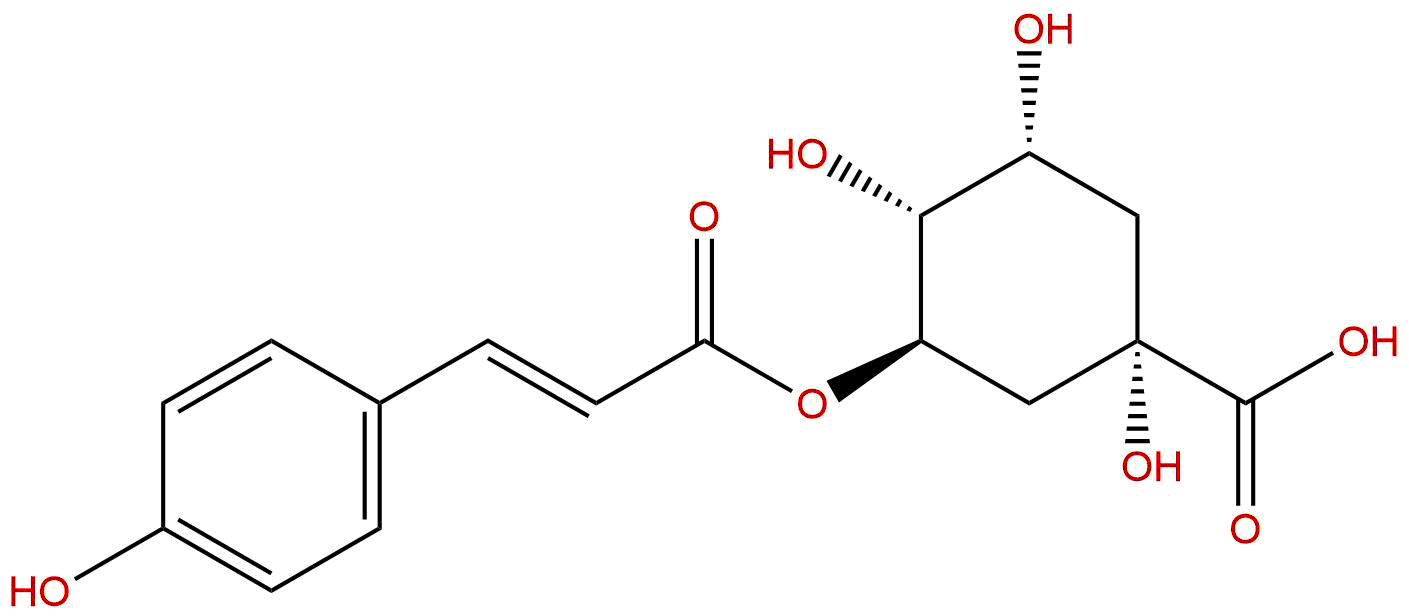
3-O-p-coumaroyl quinic acid is a typical cinnamic acid ester compound, whose chemical structure consists of two parts: one is cyclic quinic acid (a cyclohexane polyol carboxylic acid), and the other is linear p-coumaroyl (4-hydroxycinnamoyl). Specifically, the carboxyl group of coumaric acid is covalently connected to the hydroxyl group at the 3rd position on the (-) - quinic acid ring through ester bonds, forming an ester structure. Its molecular formula is C16H18O8 and its molecular weight is 338.3120 g/mol.
The physicochemical properties of this compound are closely related to its structure. The calculated lipid water partition coefficient (LogP) is approximately -0.1092, indicating that the molecule has hydrophilicity and tends to partition in the aqueous phase. This is consistent with the measured water solubility data (about 3.7343 mg/mL), showing good water solubility, which is beneficial for its dissolution and distribution in organisms. The topologically polar surface area (TPSA) is as high as 144.5200 Å ², reflecting the presence of multiple hydrogen bond donors and acceptors (such as hydroxyl, carboxyl, and ester groups) in the molecule, which further explains its hydrophilic properties and strong intermolecular interaction potential.
In stereochemistry, the quinic acid moiety usually exists in the form of (-) - enantiomers, and the multiple chiral centers on its ring determine the spatial conformation of the molecule, which may affect its recognition and binding to biological targets. The coumarin moiety contains a benzene ring and an acrylic double bond, and its 4-position hydroxyl group can participate in hydrogen bonding formation or undergo modifications such as methylation and glycosylation. The structural feature of combining rigidity and flexibility enables 3-pCoQA to interact with biomolecules such as proteins in various ways.
Plant sources and extraction methods
3-O-coumaroyl quinic acid is widely distributed in the plant kingdom, especially in dicotyledonous plants where its content is relatively abundant. It is one of the key intermediates in the phenylpropane metabolism pathway of plants, commonly found in the following families and genera of plants:
1. Asteraceae plants The leaves and fruits (coffee beans) of coffee (Coffea spp.) are one of its main sources and also the constituent units of chlorogenic acid compounds.
2. Rosaceae plants Commonly found in the skin and flesh of Rosaceae fruits such as apples, pears, peaches, and plums, it is related to fruit flavor, color, and stress resistance.
3. Solanaceae plants It has also been found in plants such as tobacco and potatoes.
4. medicinal plants In many traditional medicinal plants, such as honeysuckle, chrysanthemum, dandelion, etc., the presence of this type of ingredient has been detected, and it is often considered as one of the material basis for its heat clearing, detoxification, and anti-inflammatory effects.
The extraction of 3-pCoQA from plant materials usually uses solvent extraction method. Due to its high polarity, aqueous organic solvents such as methanol water, ethanol water, or acetone water systems are commonly used for extraction. In order to improve extraction efficiency and selectivity, modern extraction techniques have also been applied:
* conventional method Cold soaking, hot reflux, Soxhlet extraction.
* Auxiliary technology Ultrasonic assisted extraction and microwave-assisted extraction can effectively destroy plant cell walls, shorten extraction time, and improve yield.
* green technology Pressurized liquid extraction is carried out at suitable temperature and pressure, with high efficiency and low solvent usage.
The crude extract after extraction needs further separation and purification to obtain high-purity 3-pCoQA. The commonly used techniques include:
1. Liquid-liquid extraction Preliminary enrichment was carried out by utilizing the distribution differences between organic solvents such as ethyl acetate and n-butanol and water.
2. column chromatography This is the core purification step, often using macroporous adsorption resin, silica gel, polyamide, or reverse phase silica gel (such as C18) as the stationary phase, and gradient elution with different ratios of methanol water or acetonitrile water (often with a small amount of formic acid or acetic acid added to adjust pH).
3. Preparation type high-performance liquid chromatography For the final refinement, preparative HPLC (usually using a reverse phase C18 column) is the most effective method to obtain monomer compounds with chromatographic purity for activity studies and standard preparation.
4. appraisal The structural identification of compounds mainly relies on the combination of spectroscopic techniques such as mass spectrometry (MS, especially high-resolution mass spectrometry HR-MS for determining molecular formulas), nuclear magnetic resonance spectroscopy (NMR, including 1H NMR, 13C NMR, and 2D NMR such as COSY, HSQC, HMBC for determining connection modes and stereoconfigurations), and ultraviolet spectroscopy (UV, with characteristic absorption of coumaroyl groups at~310 nm).
Pharmacological activity research
Numerous studies have shown that 3-O - has diverse pharmacological activities against coumaroyl quinic acid, with antiviral activity being the most prominent, as well as antioxidant, anti-inflammatory, neuroprotective, and other effects.
1. Antiviral activity
This is the pharmacological activity of 3-pCoQA that has received the most attention. Research has shown that it exhibits inhibitory effects on various viruses:
* Herpesvirus Has a significant inhibitory effect on herpes simplex virus type 1 (HSV-1) and type 2 (HSV-2). Its function may involve interfering with multiple processes such as virus adsorption, invasion, or intracellular replication. Studies on relevant targets suggest that it may be related to the interaction of viral proteins such as UL42 (DNA polymerase helper subunit), UL54 (ICP27, infection cell protein 27, an important post transcriptional regulator), TK (thymidine kinase) and viral glycoprotein gD (involved in viral entry).
* Human Immunodeficiency Virus (HIV)As a pathogen of AIDS, HIV is an important target for antiviral research. 3-pCoQA has been reported to inhibit HIV-1 replication. Its potential mechanism of action may include acting as an antagonist of CCR5 or CXCR4 (key co receptors for HIV invasion into host cells), blocking virus cell fusion; Inhibiting the activity of HIV-1 protease (HIV1-PR) and affecting the processing and maturation of viral polyprotein; Or interfere with the function of viral integrase (INT), preventing viral DNA from integrating into the host genome.
* Other viruses There are also studies suggesting that it may have certain inhibitory potential against influenza virus, hepatitis B virus, etc., but the specific mechanism still needs to be further explored.
2. Antioxidant activity
The phenolic hydroxyl structure in the 3-pCoQA molecule enables it to effectively scavenge free radicals such as DPPH free radicals, ABTS free radical cations, superoxide anions, and hydroxyl free radicals. Its antioxidant mechanism includes directly providing hydrogen atoms or electrons to neutralize free radicals, as well as chelating metal ions (such as Fe2+, Cu2+) to prevent Fenton reaction. This antioxidant capacity is the basis for its anti-inflammatory, anti-aging, and prevention of oxidative stress-related diseases such as cardiovascular disease and neurodegenerative diseases.
3. Anti inflammatory activity
In macrophage inflammation models induced by lipopolysaccharides (LPS), 3-pCoQA can downregulate the production of nitric oxide (NO), prostaglandin E2 (PGE2), and pro-inflammatory cytokines (such as TNF - α, IL-1 β, IL-6). Its anti-inflammatory effect is closely related to the inhibition of the activation of inflammatory signaling pathways such as nuclear factor kappa B (NF - κ B) and mitogen activated protein kinase (MAPK).
4. Neuroprotective activity
In neuronal injury models induced by oxidative stress or β - amyloid protein, 3-pCoQA exhibits a protective effect, increasing cell survival rate and reducing apoptosis. Its neuroprotective effect is related to its antioxidant and anti-inflammatory properties, as well as its potential regulation of neurotransmitter metabolism and neurotrophic factor expression.
5. Other activities
Some studies have also reported that 3-pCoQA has potential biological activities such as antibacterial, anti-tumor (by inducing apoptosis, inhibiting proliferation, etc.), and improving insulin resistance, demonstrating its multifaceted medicinal value.
Mechanism of action and molecular targets
The multiple pharmacological activities of 3-O-coumarinic acid stem from its interactions with various biomolecule targets. Based on existing research, its mechanism of action can be summarized as follows:
1. Antiviral mechanism and targets
Its antiviral effect has multi-target characteristics:
* Targeting the virus entering the stage Possible binding between the phenolic hydroxyl and aromatic ring structures in the molecule and the chemokine receptors CCR5 or CXCR4 on the host cell surface may hinder the binding of HIV gp120 protein to the receptor through steric hindrance, thereby inhibiting the fusion of the virus with the cell. For herpes virus, it may interfere with the recognition of virus envelope glycoprotein gD and host receptors.
* Targeting the viral enzyme system:
* HIV-1 protease (HIV1-PR)3-pCoQA may mimic the structure of natural substrates and competitively bind to the active center of HIV-1 protease, inhibiting its cleavage of Gag and Gag Pol oligomers, resulting in the production of immature, non infectious viral particles.
* HIV integrase (INT)Possible chelation of Mg2+ions necessary for the active center of integrase, or direct binding to the catalytic core region, inhibits the integration of viral cDNA into the host chromosome.
* Virus DNA polymerase related protein Like the UL42 protein of HSV, which acts as an auxiliary subunit of DNA polymerase, 3-pCoQA may interfere with its interaction with polymerase or DNA, inhibiting viral DNA replication.
* Virus regulatory protein Like ICP27 (UL54) of HSV, which is involved in mRNA processing and transport, 3-pCoQA may affect its function and disrupt viral gene expression.
* Targeting host factors Myeloperoxidase (MPO) is a key enzyme in neutrophils that produces strong oxidants such as hypochlorous acid, and is overactivated in inflammation and certain viral infections. 3-pCoQA may indirectly exert antiviral and organ protective effects by inhibiting MPO activity, reducing tissue oxidative damage and inflammatory responses related to infection.
2. Mechanisms of antioxidant and anti-inflammatory effects
* Direct antioxidant As a hydrogen donor, it directly quenches various reactive oxygen/nitrogen species.
* Regulating signal pathways:
* NF - κ B pathway Inhibiting the activation of I κ B kinase (IKK), preventing I κ B degradation and NF - κ B nuclear translocation, thereby downregulating the expression of inflammatory mediator genes.
* MAPK pathway Inhibit the phosphorylation of p38, JNK, and ERK, and reduce the production of pro-inflammatory cytokines.
* Nrf2/ARE pathway Possible activation of this pathway may upregulate the expression of phase II detoxifying enzymes such as heme oxygenase-1 (HO-1), quinone oxidoreductase-1 (NQO1), and antioxidant proteins, enhancing cellular defense capabilities.
3. Mechanisms of neuroprotective effects
In addition to the above-mentioned antioxidant and anti-inflammatory pathways, it may also involve inhibiting acetylcholinesterase activity, regulating glutamate excitotoxicity, inhibiting excessive activation of microglia, and promoting the expression of brain-derived neurotrophic factor (BDNF).
Evaluation of drug properties and pharmacokinetics
Based on the provided pharmacological parameters and research on relevant phenolic acid compounds, a preliminary evaluation of the pharmacological properties of 3-pCoQA can be conducted
1. Physical, chemical and pharmaceutical properties
* Solubility and permeability The high water solubility (3.7343 mg/mL) and low LogP value (-0.1092) indicate that it belongs to Class III (high solubility, low permeability) or possibly Class I (high solubility, high permeability) compounds in the Biopharmaceutical Classification System (BCS). This is beneficial for its formulation development in aqueous media and dissolution and absorption in the gastrointestinal tract. But its larger TPSA may limit its passive transmembrane diffusion ability.
* Blood-brain barrier permeability Predicted as' low ', which is consistent with the characteristics of most highly polar phenolic acid compounds. For the treatment of central nervous system (CNS) viral infections, this may be a challenge that requires improving their ability to enter the brain through structural modifications or the use of drug delivery systems.
* Preliminary Safety Assessment The inhibitory prediction of hERG is' no ', indicating a low potential risk of causing QT interval prolongation in the heart and good cardiovascular safety. The Ames test predicted a result of 0.0, indicating that it may not be mutagenic and has a low risk of genetic toxicity. These are important safety signals in the early stages of drug development.
2. Pharmacokinetic characteristics
Although there are limited reports on the detailed pharmacokinetic studies of 3-pCoQA itself, it can be inferred from studies on its structural analogues, such as chlorogenic acid
* absorb After oral administration, it may be partially absorbed in the stomach and upper small intestine. Ester bonds may be partially hydrolyzed by intestinal esterases or microbial enzymes to produce quinic acid and coumaric acid, the latter of which can be rapidly absorbed. The absorption degree and rate of prototype drugs and hydrolysis products are influenced by various factors.
* distribution After absorption, it is widely distributed in various tissues throughout the body, but due to its high polarity, it is mainly distributed in the blood and hydrophilic tissue chambers, with limited amount entering adipose tissue and crossing the blood-brain barrier. The plasma protein binding rate may be moderate.
* Metabolism This is its main way of elimination. In addition to possible ester bond hydrolysis, it may undergo extensive II binding reactions in the liver and intestine, such as glucuronic acid binding, sulfation, and methylation (especially for the phenolic hydroxyl group of coumaric acid), generating various metabolites.
* excretion The prototype drug and its metabolites are mainly excreted in urine through the kidneys, and some can also enter the intestine through bile and be excreted in feces. The overall elimination half-life may be relatively short.
3. Challenges and optimization directions for drug development
* challenge Oral bioavailability may be low (first pass effect and intestinal hydrolysis), poor blood-brain barrier penetration, fast metabolism in vivo, and short half-life.
* Optimization Strategy:
* Structural modification By alkylating, glycosylation or preparing prodrugs (such as ester prodrugs) of phenolic hydroxyl groups, lipid solubility can be increased, membrane permeability and metabolic stability can be improved.
* Formulation technology Adopting formulation technologies such as nanocrystals, liposomes, solid dispersions, and cyclodextrin inclusion complexes to enhance its solubility and oral absorption. For CNS targeting, nano drug delivery systems such as brain targeted liposomes and polymer nanoparticles can be developed.
* route of administration: Consider developing injection (such as intravenous injection for acute severe viral infection) or local drug delivery (such as gel for skin treatment of HSV infection).
Clinical application prospects and prospects
3-O-p-coumaroyl quinic acid, as a multi-target and multi active natural product, has broad clinical application prospects, but also faces many challenges.
1. Potential clinical application directions
* antiviral therapy This is the most promising direction. Consider developing it as:
* Broad spectrum antiviral adjuvant drugs Specially suitable for local treatment of skin and mucosal infections caused by HSV, such as oral herpes and genital herpes.
* Components of anti HIV combination therapy Given that it may act on multiple links such as HIV entry and enzyme system, or can be combined with other antiretroviral drugs to enhance efficacy and reduce drug resistance. Further research is needed on its interaction with existing drugs.
* Candidate molecules for addressing emerging viral diseases Its multi-target properties may be effective for certain emerging viruses and can be used as candidate lead compounds for screening and optimization.
* Inflammatory related diseases: It is used to treat chronic low-grade inflammation related diseases, such as metabolic syndrome, atherosclerosis, neuritis, etc., as a dietary supplement or plant medicine ingredient for antioxidant and anti-inflammatory.
* Adjuvant therapy for neurodegenerative diseases Based on its neuroprotective activity, it may have potential value in the prevention and adjuvant therapy of diseases such as Alzheimer's disease and Parkinson's disease.
2. Future research prospects
* In depth mechanism research Using techniques such as molecular docking, surface plasmon resonance, and isothermal titration calorimetry, accurately verify its direct binding and binding mode with targets such as MPO, CCR5/CXCR4, HIV1-PR, INT, etc. Conduct systematic pharmacology research based on omics technology to comprehensively reveal its functional network.
* Systematic pharmacokinetic study Comprehensively evaluate its absolute bioavailability, tissue distribution, metabolic profile, and excretion pathways in animal models (rodents, non-human primates), and identify its main active forms (prototypes or metabolites).
* Preclinical efficacy and safety evaluation Validate its in vivo antiviral efficacy in appropriate animal models of viral infection, such as HSV infected mouse models and humanized mouse HIV models. Complete systematic toxicology research, including acute toxicity, chronic toxicity, reproductive toxicity, etc.
* Structural optimization and drug design Using 3-pCoQA as the parent nucleus, a systematic structure-activity relationship study was conducted to synthesize a series of derivatives through rational design, aiming to improve their antiviral activity, selectivity, and drug formation (such as metabolic stability and BBB permeability).
* Explore combination therapy Study its synergistic effect with existing clinical antiviral drugs and search for a combination scheme that enhances efficacy and reduces toxicity.
Conclusion
3-O-p-coumaroyl quinic acid is a phenolic acid compound endowed by nature with unique structure and diverse activities. From a chemical structure perspective, it serves as a bridge connecting the primary metabolism of plants with the secondary metabolism of phenylpropanoids; From a pharmacological perspective, it exhibits remarkable multi-target antiviral potential and possesses multiple beneficial activities such as antioxidant and anti-inflammatory properties. Although there are challenges in drug development such as oral bioavailability and blood-brain barrier permeability, modern medicinal chemistry and pharmaceutical technology provide possibilities for solving these problems.
The current research has laid a solid foundation for its application, but to truly develop it into clinically usable drugs or therapeutic agents, it still requires in-depth collaboration and unremitting efforts from multiple disciplines such as pharmacology, medicinal chemistry, pharmacy, and clinical medicine. With a more precise analysis of its mechanism of action, a more comprehensive understanding of its pharmacokinetic behavior, and optimization of its structure through rational drug design, 3-O-p-coumaroyl quinic acid and its derivatives are expected to occupy a place in the future research and development of antiviral drugs, anti-inflammatory drugs, and even neuroprotective drugs, contributing their unique value to human health. The continuous exploration of such natural products also fully reflects the enormous potential and significance of mining modern drug lead compounds from traditional medicinal plant resources.