| Catalog No | Package | Original Price | Price | Inventory | Quantity | Operating |
|---|---|---|---|---|---|---|
| BP4614-5mg | 5mg | $450.00 | Sign in |
|


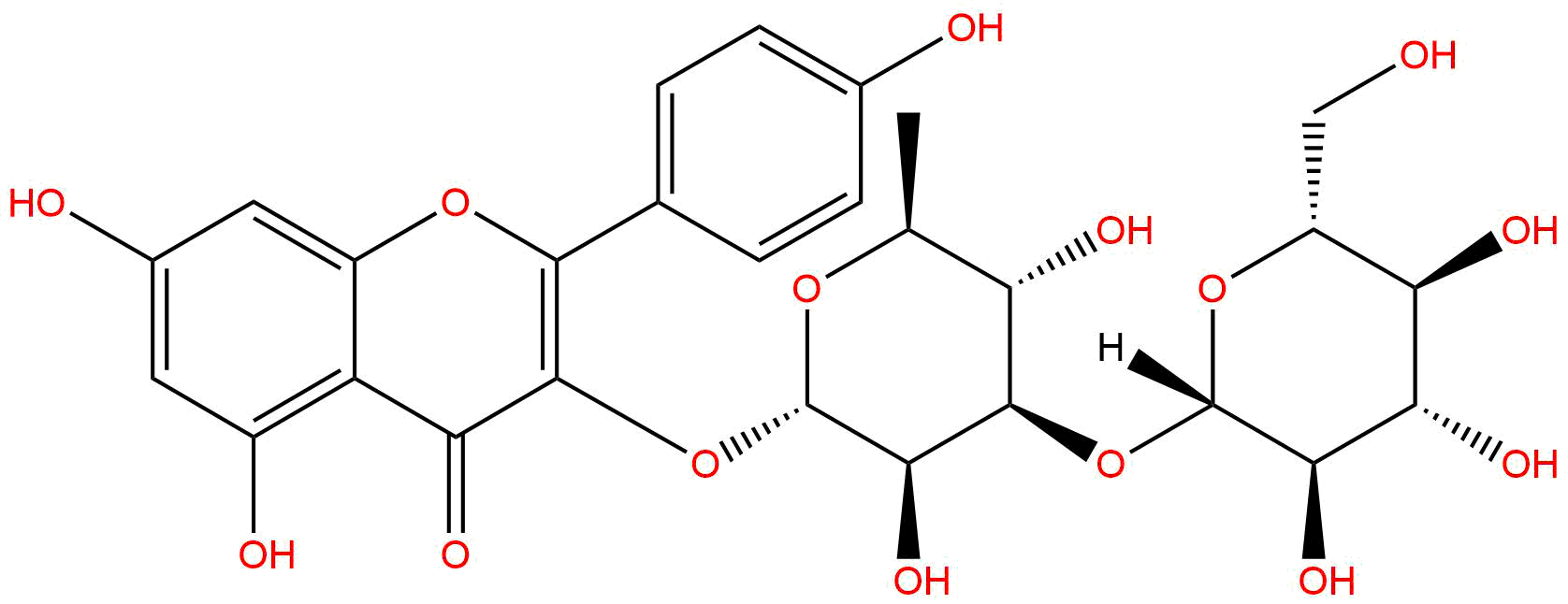
Product name: Ternatumoside II
Synonym name:
Catalogue No.: BP4614
Cas No.: 1473419-87-2
Formula: C27H30O15
Mol Weight: 594.522
Botanical Source:
Type of Compound: Flavonoids
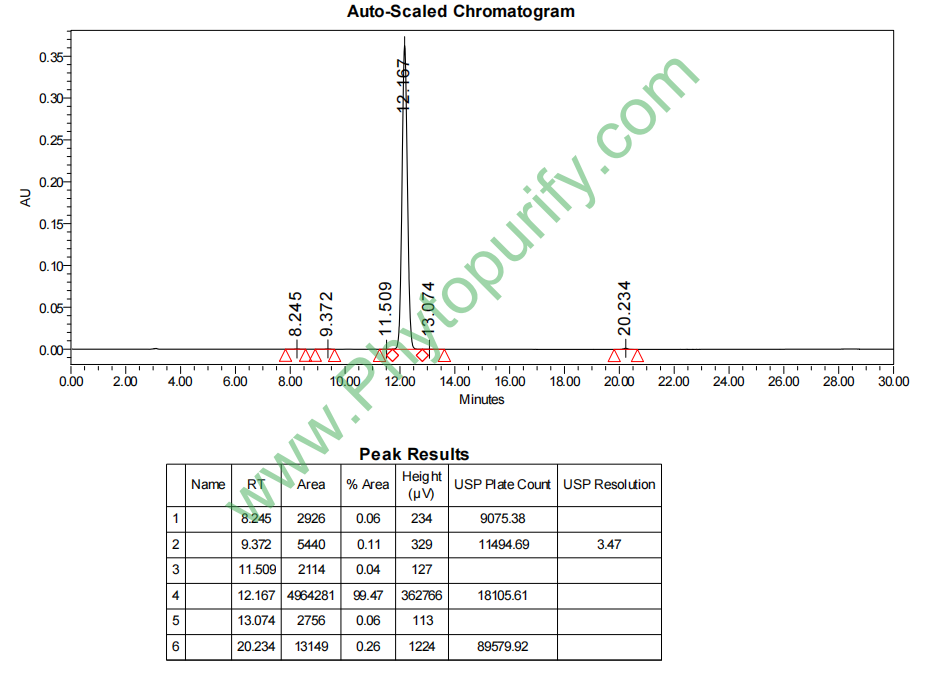
Purity: 95%~99%
Analysis Method: HPLC-DAD or/and HPLC-ELSD
Identification Method: Mass, NMR
Packing: Brown vial or HDPE plastic bottle
Storage: Store in a well closed container, protected from air and light. Put into refrigerate or freeze for long term storage.
Whenever possible, you should prepare and use solutions on the same day. However, if you need to make up stock solutions in advance, we recommend that you store the solution as aliquots in tightly sealed vials at -20℃. Generally, these will be useable for up to two weeks.
The product could be supplied from milligrams to grams
Inquire for bulk scale.
For Reference Standard and R&D, Not for Human Use Directly.
HPLC of Ternatumoside II
Storage conditions:Short-term storage at 2~8℃, long-term storage at -20 ~ -80℃
249.2000
-.3638
-.4652
2.9215
.3975
.1446
Low
75.3897
4.6834
Yes
No
Yes
No
Yes
No
1.2
Yes
Yes
Yes
Yes
Flavonoids, as one of the largest and most biologically active families of natural products, are widely distributed in the plant kingdom and have long been of great concern due to their diverse pharmacological activities. Kaempferol, as a common flavonol glycoside, often exhibits enhanced bioavailability and unique biological activity in its glycosylated derivatives. Ternatumoside II (CAS number: 1473419-87-2) is one of its members, which is a novel flavonoid glycoside. In its molecular structure, the kaempferol glycoside is connected to a disaccharide chain composed of glucose and rhamnose through a hydroxyl group at position 3. This compound was initially isolated from the medicinal plant R. crenulata, and preliminary studies have revealed its significant immunomodulatory and antioxidant activities, particularly its ability to stimulate interferon - γ (IFN - γ) expression, making it potentially valuable in the fields of anti-inflammatory, antiviral, and immune related disease treatment. Meanwhile, its clear free radical scavenging ability suggests its potential in combating oxidative stress-related diseases such as neurodegenerative and cardiovascular diseases. This article aims to systematically review the chemical properties, plant sources, pharmacological activities, mechanisms of action, medicinal properties, and clinical application prospects of Ternatumosis II, in order to provide comprehensive scientific references for the in-depth research and development of this natural product.
The molecular formula of Ternatumoside II is C27H30O15, with a molecular weight of 594.5220. Its core structure is Kaempferol (4 ′, 5,7-trihydroxyflavonol) glycoside. Unlike many flavonol glycosides, glycosylation occurs on the 3-hydroxyl group of the aglycone, connected by a disaccharide chain. This disaccharide chain is composed of one molecule of β - D-glucose and one molecule of α - L-rhamnose connected by glycosidic bonds. Usually, the end of glucose is connected to rhamnose to form structures such as Rutinose or Neohesperidose. The specific connection method needs to be accurately identified by spectroscopic techniques such as nuclear magnetic resonance, but the name "glucose rhamnose" suggests its disaccharide composition.
Its physical and chemical properties are closely related to its structure. The logarithm of the calculated lipid water partition coefficient (LogP) is -0.3638, indicating that the compound has strong hydrophilicity, which is consistent with the presence of multiple hydroxyl and sugar groups on the molecule. The topologically polar surface area (TPSA) is as high as 249.2000 Å ², further confirming its high polarity characteristics, which affect its transmembrane permeability. The theoretically calculated water solubility value is 2.9215 (usually measured in mg/mL or logS, indicating moderate to high solubility), indicating good solubility in aqueous media, which is beneficial for formulation development. However, high polarity and large TPSA also result in a predicted "low" blood-brain barrier (BBB) permeability, meaning it may be difficult to enter the central nervous system through passive diffusion. In addition, preliminary pharmacological screening showed no inhibitory activity on hERG potassium channels (hERG inhibition: no), indicating a low potential risk of cardiac toxicity; The Ames test result is 1.2 (usually a value close to 1 indicates no mutagenicity), preliminarily indicating no genetic toxicity risk. These physicochemical and early safety parameters laid the foundation for its subsequent research.
The main plant source currently reported for Ternatumosis II is the Chinese cabbage genus in the family Saxifragaceae R. crenulata(usually referring to thick leaved rock cabbage or similar species). Chinese cabbage plants are commonly used in traditional medicine to treat cough, bronchitis, and inflammatory diseases, and their active ingredients are based on various phenolic compounds including flavonoid glycosides.
The extraction and separation of Ternatumoside II from plant materials usually follow the conventional process of natural product chemistry, but optimization is needed for its polarity characteristics:
1. Extract Medium polarity solvent systems are often used for extraction to balance the polarity and extraction efficiency of flavonoid glycosides. Common methods include:
* Alcohol extraction method Use methanol, ethanol, or water alcohol mixed solvents with different ratios (such as 70% -80% ethanol) for hot reflux extraction or ultrasound assisted extraction. This method is highly efficient and can simultaneously extract multiple flavonoid glycosides.
* Water extraction method Considering its good water solubility, hot water extraction is also an option, but it may extract more impurities such as polysaccharides and proteins.
2. Enrichment and Separation After vacuum concentration, the crude extract is usually preliminarily enriched using the polarity characteristics of flavonoid glycosides.
* solvent partitioning Ternatumoside II is commonly used for liquid-liquid distribution of ethyl acetate, n-butanol, and water. Due to its strong hydrophilicity, Ternatumoside II is mainly enriched in the n-butanol layer or water layer.
* column chromatography This is a crucial step in separation and purification. Large pore adsorption resins (such as D101, AB-8) are commonly used for column chromatography, with water ethanol gradient elution to preliminarily separate different polar components. Subsequently, further fine separation and purification were carried out by silica gel column chromatography (eluent such as chloroform methanol water system), reverse phase silica gel column chromatography (such as ODS, C18, eluent such as methanol water or acetonitrile water system) or Sephadex gel column chromatography. Among them, reverse phase chromatography is an effective method for obtaining high-purity monomers due to its high polarity matching with flavonoid glycosides.
3. appraisal The isolated pure compounds need to be structurally identified using modern spectroscopic techniques, including ultraviolet spectroscopy (UV), mass spectrometry (MS, such as ESI-MS to determine molecular weight), and one-dimensional and two-dimensional nuclear magnetic resonance spectra (1H NMR, 13C NMR, HSQC, HMBC, COSY, etc.), to accurately determine their planar structure and the connection positions and configurations of sugar groups.
Although the pharmacological activity research of Ternatumosis II is still in its early stages, it has shown multiple biological effects, mainly focusing on immune regulation and antioxidant aspects.
Immune regulatory activity:
antioxidant activity:
Potential associated activity(Based on the activity speculation of its core structure kaempferol and similar flavonoid glycosides):
At present, there is insufficient research on the precise molecular mechanism of action of Ternatumosis II, but based on its known IFN - γ stimulatory activity and the commonality of flavonoid glycosides, its potential pathways and targets can be explored.
Possible mechanism of stimulating IFN - γ production:
Mechanism of antioxidant action:
Potential molecular targets:
Based on calculations and preliminary experimental data, a preliminary evaluation of the pharmacological properties of Ternatumoside II is conducted
Prediction and Challenges of Absorption, Distribution, Metabolism, and Excretion (ADME):
Preliminary evaluation of safety:
Formulation development considerations:
Ternatumosis II, as a natural flavonoid glycoside with unique immune regulation and antioxidant activity, its clinical application prospects mainly depend on the results of subsequent in-depth research, and potential directions include:
Immune modulators or immune adjuvants:
Oxidative stress-related diseases:
Challenges faced and future research directions:
Ternatumoside II, also known as kaempferol-3-O-glucose rhamnoside, is a flavonoid glycoside compound with clear immunostimulatory and antioxidant activity isolated from the traditional medicinal plant R. crenulata. Its unique chemical structure endows it with good water solubility and preliminary safety characteristics. Although current research is still in its early stages, its core activity of stimulating IFN - γ expression provides remarkable lead compounds for the development of novel immunomodulators, antiviral adjuvants, or vaccine adjuvants. Meanwhile, its free radical scavenging ability provides the possibility for intervening in oxidative stress-related diseases. However, in order to translate this potential into practical clinical applications, there is still a lot of basic and translational research work that urgently needs to be carried out, including in-depth elucidation of its molecular mechanism of action, systematic evaluation of its in vivo efficacy and pharmacokinetic characteristics, completion of preclinical safety assessments, and exploration of possible formulation optimization strategies. With the gradual answers to these scientific questions, Ternatumosis II is expected to demonstrate its unique value in the field of natural product drug development, providing new candidate molecules for the treatment of immune imbalances and oxidative stress-related diseases.
