Introduction/Overview
Coumarin compounds are a class of benzo [a] - pyranone derivatives widely found in nature, which have attracted much attention due to their structural diversity and wide range of biological activities. Among them, hydroxycoumarin, as an important secondary metabolite, plays a key role in plant defense, signal transduction, and exhibits various pharmacological potentials such as anti-inflammatory, antioxidant, anti-tumor, and antibacterial effects. 7,8-Dihydroxy-4-methylcoumarin (CAS: 2107-77-9) is a structurally unique derivative of dihydroxycoumarin. The adjacent phenolic hydroxyl groups at positions 7 and 8 in its molecule endow it with strong electron supply and metal chelation abilities, indicating potential antioxidant and regulatory activities in cellular signaling pathways. In recent years, with a deeper understanding of the molecular mechanisms of inflammatory diseases, especially the complex cytokine networks and signaling pathways (such as NF - κ B, MAPK, etc.) in chronic inflammatory diseases such as arthritis, the search for natural small molecules that can intervene in these pathways with multiple targets and high safety has become a research hotspot. This review aims to systematically summarize the chemical properties, natural sources, pharmacological activities, especially the mechanism of action and molecular targets of 7,8-dihydroxy-4-methylcoumarin in anti arthritis, and to preliminarily evaluate its pharmacological properties, in order to provide scientific references for the in-depth research and potential drug development of this compound.
Chemical structure and physicochemical properties
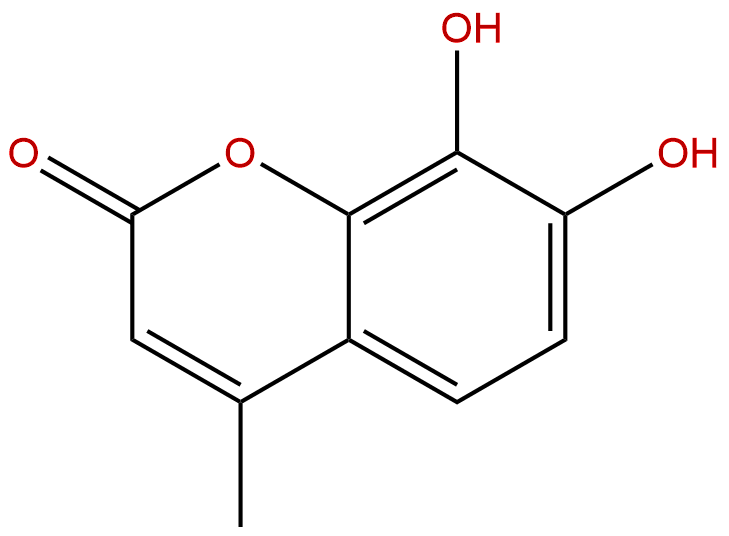
7,8-dihydroxy-4-methylcoumarin, chemical name 7,8-dihydroxy-4-methyl-1-benzopyran-2-one, molecular formula C10H8O4, molecular weight 192.17 g/mol. Its basic skeleton is coumarin (1,2-benzopyran-2-one), with a phenolic hydroxyl group (- OH) attached to the 7th and 8th positions of the benzene ring, and a methyl group (- CH3) attached to the 4th position of the pyranone ring. This ortho dihydroxy structure is the chemical basis for many of its biological activities, making it prone to redox reactions, scavenging free radicals, and chelating with metal ions such as Fe ³ ⁺ and Cu ² ⁺.
According to the provided pharmacological parameters, the lipid water partition coefficient (LogP) of the compound is 1.67, indicating that it has moderate lipophilicity and is conducive to transmembrane transport and absorption. The topologically polar surface area (TPSA) is 70.67 Å ², which is relatively low and usually favorable for the permeability of the compound. Its water solubility value is 0.3888 (usually measured in mg/mL or logS, not specified here, but the value is relatively small), indicating that its solubility in water is limited and it belongs to slightly soluble or poorly soluble compounds. This may require consideration of solubilization strategies in formulation development. It is worth noting that its blood-brain barrier (BBB) permeability is predicted to be "high", suggesting that the compound may have central nervous system permeability potential, which provides a structural basis for its application in diseases that may be accompanied by neuroinflammation, such as central complications of rheumatoid arthritis. In addition, hERG inhibition was predicted as' no ', indicating a lower potential risk of cardiac toxicity; The Ames test value is 0.6 (usually a mutagenicity score, a low value indicates a low risk of mutagenicity), suggesting a relatively low genetic toxicity risk. These physicochemical and preliminary toxicological parameters together depict a small molecule profile with a good drug like starting point.
Plant sources and extraction methods
7,8-dihydroxy-4-methylcoumarin is not widely present in nature and is mainly isolated from specific plant genera. According to literature reports, this compound is mainly found in some Asteraceae and Rutaceae plants. For example, in Eupatorium Belonging to Pterocaulon It has been detected in the aboveground parts of Asteraceae plants. These plants are often used in traditional medicine to treat fever, inflammation, and pain, and the study of their active ingredients provides clues for the discovery of this compound.
The extraction and separation method follows the conventional process of natural product chemistry. Firstly, plant materials (usually dry stems and leaves) are collected, crushed, and extracted using organic solvents. Common extraction solvents include methanol, ethanol, acetone, or their mixed solvents with water, which are used for Soxhlet extraction or cold soaking. After vacuum concentration, the crude extract was separated and purified using various chromatographic techniques. Due to the presence of phenolic hydroxyl groups and weak acidity, the compound can be preliminarily enriched using acid-base separation method. Further purification is often carried out using silica gel column chromatography, with different ratios of petroleum ether ethyl acetate or chloroform methanol gradient elution. Preparative high-performance liquid chromatography (HPLC) is the final key step in obtaining high-purity monomers, typically using a reverse phase C18 column with methanol water or acetonitrile water (pH adjusted with a small amount of formic acid or acetic acid) as the mobile phase. The structural identification is confirmed by a comprehensive use of ultraviolet spectroscopy (UV, coumarins have characteristic absorption at 300-350 nm), infrared spectroscopy (IR, showing carbonyl and hydroxyl characteristic peaks), mass spectrometry (MS, providing molecular weight and fragment information), and nuclear magnetic resonance spectroscopy (NMR, especially ¹ H NMR and ¹ ³ C NMR). Its CAS number (2107-77-9) is its unique identifier in the chemical database. At present, the compound can also be prepared by chemical synthesis for in-depth pharmacological research and structural modification.
Pharmacological activity research
Numerous in vitro and in vivo pharmacological studies have shown that the core pharmacological activity of 7,8-dihydroxy-4-methylcoumarin is concentrated in anti-inflammatory and antioxidant This is closely related to its chemical structure.
-
anti-inflammatory activity This is the most highly anticipated activity of the compound. In various inflammatory cell models, such as lipopolysaccharide (LPS) - stimulated macrophage RAW264.7 and mouse monocyte J774A. 1, 7,8-dihydroxy-4-methylcoumarin can significantly inhibit the production of inflammatory mediators such as nitric oxide (NO) and prostaglandin E2 (PGE2). In rat or mouse models of acute and chronic arthritis induced by carrageenan and Freund's complete adjuvant (CFA), this compound exhibits good anti-inflammatory and analgesic effects when administered orally or intraperitoneally, effectively reducing paw swelling and improving joint pathological damage (such as synovial hyperplasia, inflammatory cell infiltration, cartilage destruction).
-
antioxidant activity Its catechol structure is an effective free radical scavenger. In DPPH, ABTS, superoxide anion, and hydroxyl radical scavenging experiments, the compound showed strong in vitro antioxidant activity. In cellular oxidative stress models such as H ₂ O ₂ - induced cell damage, it can enhance the activity of intracellular antioxidant enzymes such as superoxide dismutase (SOD) and glutathione peroxidase (GSH Px), while reducing levels of reactive oxygen species (ROS) and malondialdehyde (MDA). This antioxidant effect complements its anti-inflammatory activity, as oxidative stress is an important activating factor in the inflammatory signaling pathway.
-
Other potential activities Based on its core structure, research also suggests that it may have antibacterial, antifungal, and mild tyrosinase inhibitory activity (possibly related to phenolic hydroxyl groups), but research in these areas is relatively scarce and lacks depth.
Mechanism of action and molecular targets
The anti-inflammatory effect of 7,8-dihydroxy-4-methylcoumarin, especially its anti arthritis effect, is not achieved through a single target, but through the synergistic intervention of multiple targets and pathways in the inflammatory network. Its mechanism of action mainly revolves around inhibiting key inflammatory signaling pathways such as nuclear factor kappa B (NF - κ B) and mitogen activated protein kinase (MAPK), and downregulating the expression of downstream pro-inflammatory factors and destructive enzymes. The specific roles of arthritis related targets can be analyzed as follows:
-
Inhibition of NF - κ B signaling pathway NF - κ B is the core transcription factor of inflammatory response. In the resting state, NF - κ B (usually in the form of p50/p65 dimer) binds to the inhibitory protein I κ B and exists in the cytoplasm. Inflammatory stimuli such as TNF - α and IL-1 β can activate I κ B kinase (IKK), leading to phosphorylation and degradation of I κ B, thereby releasing NF - κ B into the nucleus and initiating transcription of target genes. Research has shown that 7,8-dihydroxy-4-methylcoumarin can inhibit IKK activity, prevent phosphorylation and degradation of I κ B α, and thus block nuclear translocation of NF - κ B (including NFKB1/p50 subunits). This directly leads to the suppression of the expression of numerous pro-inflammatory genes downstream.
- Downregulate pro-inflammatory cytokines Including:TNF-α、IL-6、IL-1βThese cytokines are key mediators in the pathology of arthritis, leading to synovitis, cartilage destruction, and bone erosion. Inhibiting their production can alleviate the inflammatory cascade reaction from the source.
- Inhibition of inducible cyclooxygenase-2 (PTGS2/COX-2)COX-2 is a key enzyme that catalyzes the production of prostaglandins (such as PGE2) from arachidonic acid, mediating pain and inflammation. This compound reduces PGE2 levels by inhibiting the NF - κ B pathway and decreasing the transcriptional expression of COX-2.
- Inhibition of matrix metalloproteinases (MMPs):MMP-3 (Matrix Dissolving Protein) and MMP-13 (Collagenase-3) It is the main enzyme that degrades the extracellular matrix of articular cartilage cells, such as collagen II and proteoglycans. Their overexpression is the direct cause of cartilage destruction in arthritis. NF - κ B is an important factor regulating MMP gene expression. This compound exerts a cartilage protective effect by inhibiting NF - κ B and significantly downregulating the expression of MMP-3 and MMP-13.
-
Regulation of MAPK signaling pathway The MAPK pathway (including p38, JNK, ERK) plays an important role in inflammatory response and cellular stress. Research suggests that this compound may inhibit the phosphorylation activation of p38 and JNK in LPS induced macrophages, thereby further suppressing the activity of transcription factors such as AP-1 and synergistically inhibiting the production of inflammatory mediators.
-
Anti oxidative stress mechanism In addition to directly clearing free radicals, this compound can also activate the cell's own antioxidant defense system - the nuclear factor E2 related factor 2 (Nrf2) pathway. Nrf2 is a key factor regulating the expression of genes driven by antioxidant response elements (ARE). 7,8-dihydroxy-4-methylcoumarin may modify the cysteine residue on Keap1, promoting Nrf2 dissociation and entering the nucleus, upregulating the expression of phase II detoxifying enzymes and antioxidant proteins such as heme oxygenase-1 (HO-1) and quinone oxidoreductase 1 (NQO1), thereby enhancing the cell's resistance to oxidative and inflammatory damage.
In summary, 7,8-dihydroxy-4-methylcoumarin targets through NF-κB、MAPK and Nrf2 Wait for key signal nodes to form a network that inhibits pro-inflammatory/oxidative signals, enhances anti-inflammatory/antioxidant defense, and comprehensively downregulates them TNF-α、IL-6、IL-1β、COX-2、MMP-3、MMP-13 The expression of key pathogenic molecules provides a solid molecular pharmacology basis for the treatment of chronic inflammatory diseases such as arthritis.
Evaluation of drug properties and pharmacokinetics
Based on the parameters provided in the previous text and existing research, a preliminary evaluation of the pharmacological properties of 7,8-dihydroxy-4-methylcoumarin is conducted
- Absorption and distribution Moderate LogP value (1.67) and lower TPSA indicate good membrane permeability, suggesting that oral absorption may be good. High BBB permeability prediction is a prominent feature, but whether it can achieve effective therapeutic concentrations in the brain requires experimental verification. In the treatment of arthritis, drugs need to be distributed to the joint synovium and cartilage tissue, and their moderate lipophilicity may be beneficial for distribution in lipid rich inflammatory cell membranes and joint tissues.
- Metabolism and excretion As a derivative of coumarin, its metabolic pathway deserves attention. Phenolic hydroxyl groups are common sites for II binding reactions such as glucuronidation and sulfation, which may be their main metabolic pathway. The preliminary Ames test negative result (0.6) suggests that the prototype or major metabolite may not have significant genetic toxicity, but comprehensive metabolite identification and toxicity assessment still need to be conducted.
- Preliminary Safety Assessment Inhibition of hERG negative prediction reduces its risk of action potential QT interval prolongation, which is an important safety green light in early drug development. However, this cannot completely rule out other cardiac or organ toxicities, and more comprehensive in vitro cytotoxicity and in vivo acute and chronic toxicity experiments are needed. Coumarin compounds typically require attention to their potential hepatic enzyme induction or inhibition effects, as well as phototoxicity risks (although dihydroxy substitution may alter their photochemical properties), all of which require specialized investigation.
- Research gap in pharmacokinetics (PK)Currently, there is a significant lack of pharmacokinetic studies on the 7,8-dihydroxy-4-methylcoumarin system in public literature, including absolute bioavailability, plasma half-life, tissue distribution, major metabolites, and excretion pathways. This is a key data gap that must be filled in its development towards candidate drugs. Its poor water solubility may affect its dissolution rate in gastrointestinal fluids, thereby affecting oral bioavailability. Future pharmaceutical research may need to consider solubilization techniques such as solid dispersions, nanocrystals, or cyclodextrin inclusion complexes.
Clinical application prospects and prospects
7,8-dihydroxy-4-methylcoumarin in treatment arthritis(including rheumatoid arthritis and osteoarthritis) have shown clear application prospects. Its multi-target mechanism of action is consistent with the trend of pursuing "multi-path inhibition" in modern arthritis treatment to achieve better efficacy and overcome drug resistance. Compared with traditional nonsteroidal anti-inflammatory drugs (NSAIDs, such as selective COX-2 inhibitors), it not only inhibits the COX-2/PGE2 pathway, but also suppresses upstream cytokines such as TNF - α and IL-6, as well as destructive enzymes such as MMPs, theoretically having a more comprehensive potential for disease modification. Compared with biologics such as anti TNF - α monoclonal antibodies, as small molecule compounds, they have obvious advantages such as convenient oral administration, low production costs, and no immunogenicity risks.
However, pushing it from a lead compound to a clinical candidate drug still faces a series of challenges and areas that require further research:
- Research on Structural Optimization and Structure Activity Relationship (SAR)Systematically investigate the effects of the position, quantity, methyl substitution, and pyranone ring modification of hydroxyl groups on its activity, selectivity, and pharmacokinetic properties. For example, can the metabolic stability or water solubility be improved by modifying phenolic hydroxyl groups (such as making prodrugs)? Can the inhibitory activity against specific targets (such as MMP-13) be enhanced or oral bioavailability improved by introducing other functional groups?
- In depth preclinical development of the system Standardized preclinical pharmacodynamic (validated in more and more closely related arthritis models), pharmacokinetic (ADME studies), and toxicological (including repeated administration toxicity, reproductive toxicity, carcinogenicity, etc.) evaluations must be completed to establish a complete safety profile.
- Deep exploration of the mechanism of action Using chemical biology methods such as affinity fishing and molecular probes to identify its direct target proteins in cells, clarify whether it directly inhibits enzyme activities such as IKK and MMPs, or indirectly regulates pathways through other upstream targets.
- Explore new indications Its high BBB permeability and anti-inflammatory and antioxidant properties suggest that it may have application value in neurodegenerative diseases (such as Alzheimer's disease, Parkinson's disease), multiple sclerosis and other neuroinflammatory related diseases, which is worth exploring.
- Potential for combination therapy To investigate the synergistic effect or reduction of side effects of its combination therapy with existing anti arthritis drugs such as methotrexate and low-dose glucocorticoids.
Conclusion
7,8-dihydroxy-4-methylcoumarin, as a natural source of dihydroxycoumarin, exhibits significant anti-inflammatory, antioxidant, and anti arthritis activities due to its unique catechol structure. Its mechanism of action involves inhibition of key inflammatory signaling pathways such as NF - κ B and MAPK, as well as activation of the Nrf2 antioxidant pathway, resulting in multi-target downregulation of the expression of key pathogenic molecules in arthritis such as TNF - α, IL-6, IL-1 β, COX-2, MMP-3, MMP-13, etc. The preliminary pharmacological parameters indicate that it has a good starting point for drug like properties and a low risk of cardiac toxicity prediction. Despite significant gaps in systematic pharmacokinetics and toxicology research, its clear pharmacological effects and multi-target properties make it a valuable lead compound for anti arthritis development. Future research should focus on systematic preclinical evaluation, structural optimization based on structure-activity relationships, and precise analysis of action targets, in order to promote the development of this natural small molecule into innovative drugs with independent intellectual property rights and provide new treatment options for patients with chronic inflammatory diseases such as arthritis.