Pangelin: Research progress from natural coumarins to multi-target antiviral lead compounds
Introduction/Overview
Natural products, as an important source of drug discovery, play an irreplaceable role in the long history of human fight against diseases. Coumarin compounds, as a class of secondary metabolites widely present in the plant kingdom, have attracted much attention due to their structural diversity and significant biological activity. Among numerous coumarin derivatives, Pangelin (CAS number: 33783-80-1), as a linear furan coumarin with unique pharmacological activity, has gradually entered the field of researchers in recent years. This compound was originally derived from plants in the Umbelliferae family Ducrosia anethifolia After isolation and identification, it was subsequently discovered in various medicinal plants, exhibiting multiple pharmacological activities such as anti mycobacteria, anti-tumor, and broad-spectrum antiviral.
The discovery of Pan Danggui Su can be traced back to the 1970s, when researchers conducted systematic chemical composition studies on traditional medicinal plants Ducrosia anethifolia The compound was isolated from the aboveground part. With the deepening of research, the pharmacological activity spectrum of Pan Danggui Su continues to expand, especially its potential application value in the field of antiviral has attracted widespread attention. Modern research has shown that Pan Danggui Su can act on key targets throughout the lifecycle of multiple viruses, including viral DNA polymerase, reverse transcriptase, integrase, and chemokine receptors on the surface of host cells, demonstrating potential for development as a multi-target antiviral drug.
This article will provide a systematic review of the research progress of Pan Danggui Su from the aspects of chemical structure, plant origin, pharmacological activity, mechanism of action, medicinal evaluation, and clinical application prospects, in order to provide reference for the in-depth research and development of this natural product.
Chemical structure and physicochemical properties
Chemical structural characteristics
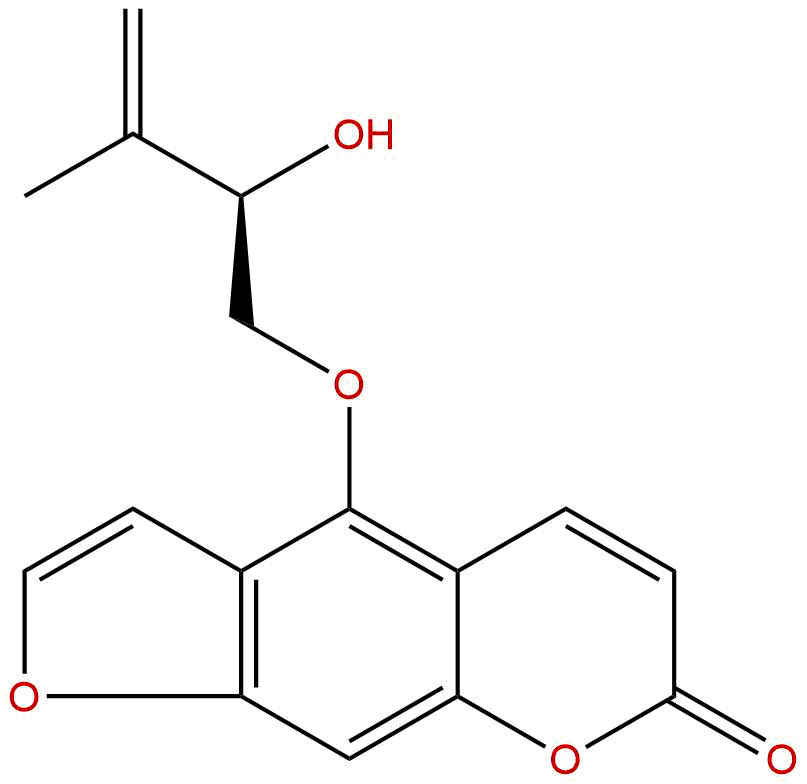
Pan Danggui Su belongs to the linear furanocoumarin family, and its core skeleton is composed of a coumarin mother nucleus (benzo α - pyranone) linearly fused with a furan ring. Specifically, the chemical structure of Pan Danggui Su is 5-methoxy-8- (3-methyl-2-butenyloxy) psoralen, with a molecular formula of C ₁₆ H ₁₄ O ₅ and a molecular weight of 286.2830 g/mol. Its structural feature is that the C-5 position of the coumarin parent nucleus is connected to a methoxy group (- OCH ∝), and the C-8 position is connected to an isopentenyl side chain (3-methyl-2-butenyloxy) through an ether bond. This unique substitution pattern endows Pan Danggui Su with chemical properties and biological activity that distinguish it from other furan coumarins.
From the perspective of stereochemistry, there is no chiral center in the molecule of Pan Danggui Su, therefore there is no optical isomerization phenomenon. Its planar structure gives molecules good rigidity, which is conducive to forming stable π - π stacking and hydrophobic interactions with biomolecules. The introduction of furan ring increases the conjugated system of the molecule, giving it characteristic absorption in the ultraviolet region, which is often used for qualitative and quantitative analysis of the compound.
Physical and chemical property parameters
According to the results of computational chemistry and experimental measurements, the main physicochemical properties of Pandanggui Su are as follows:
- Lipid water partition coefficient (LogP)2.0920 indicates that the compound has moderate lipid solubility, can be distributed in a lipid environment, and maintains a certain degree of water solubility, which is conducive to transmembrane transport.
- Topological Polarity Surface Area (TPSA)72.8100 Å ², which is below the threshold of 100 Å ², suggests that Pandanggui Su has good oral bioavailability and cell membrane permeability.
- Water solubility:0.0274 mg/mL, Belonging to the category of micro solubility, this characteristic may limit its application at high concentrations, but it can be improved through formulation technology.
- Blood-brain barrier penetrability The evaluation is "high", indicating that Pan Danggui Su can effectively cross the blood-brain barrier, which is of great significance for the treatment of central nervous system viral infections.
- HERG inhibition Negative indicates that the compound has a low risk of causing QT interval prolongation in the heart at therapeutic concentrations and has good cardiac safety.
- Ames test The result is 1.5, indicating that Pan Danggui Su exhibits weak mutagenicity in bacterial recovery mutation assay. This finding needs to be paid attention to and verified in subsequent development.
Plant sources and extraction methods
Main plant sources
Pan Danggui Su was originally derived from Apiaceae plants Ducrosia anethifolia Separated from (Chinese name: Dill parsley). This plant is mainly distributed in the Middle East, such as Iran, Iraq, Saudi Arabia, etc. It is used in traditional local medicine to treat headaches, colds, and digestive system diseases. Except D. anethifolia In addition, Pan Danggui Su has also been found in the following plants:
-
Umbelliferae plants Including:Angelica archangelica(Round leaved Angelica sinensis)Angelica sinensis(Angelica sinensis)Heracleum candicans(White Bright Solo Activity)Peucedanum praeruptorum(Former Hu) and so on. These plants are widely used in traditional medicine in East Asia and Europe, suggesting that puerarin may be an important component of the pharmacological substance basis of Umbelliferae plants.
-
Rutaceae plants Some Rutaceae plants, such as Ruta graveolens Pan Danggui Su has also been detected in (Yunxiang), but the content is usually low.
-
Leguminous plants A few leguminous plants such as Psoralea corylifolia(Psoralea) also contains trace amounts of Pan Danggui Su, but the main active ingredients in Psoralea are Psoralen and Isopsoralen.
It is worth noting that there are significant differences in the content of Angelica sinensis extract from different plant sources, and it is influenced by factors such as growth environment, harvest season, and tissue location. Generally speaking,D. anethifolia The above ground part and Angelica The content of this compound is relatively high in the rhizomes of plants and can be used as the main natural source of this compound.
Extraction and Separation Purification Methods
The extraction of Pan Danggui Su is usually carried out using organic solvent extraction combined with modern chromatographic separation techniques. The classic extraction process is as follows:
Step 1: Rough Extraction
After crushing the dried plant material, extract it using a solvent system with increasing polarity. Common solvents include petroleum ether, dichloromethane, ethyl acetate, methanol, or ethanol. Research has shown that 80% ethanol or methanol has the highest extraction efficiency for Pan Danggui Su, and can simultaneously extract coumarin compounds in both free and bound states. The extraction method can be cold soaking (soaking at room temperature for 24-72 hours) or hot reflux extraction (60-80 ℃, 2-4 hours), the latter being more efficient but may cause degradation of some thermosensitive components.
Step 2: Liquid Liquid Distribution
After concentrating the crude extract, suspend it in water and extract it sequentially with petroleum ether, dichloromethane, ethyl acetate, and n-butanol. Pan Danggui Su is mainly enriched in the extraction sites of dichloromethane and ethyl acetate due to its moderate polarity. Monitor by thin layer chromatography (TLC) using the characteristic blue fluorescence (under 365 nm UV light) of coumarin compounds as an indicator.
Step 3: Column chromatography separation
Preliminary separation was performed using silica gel column chromatography, with petroleum ether ethyl acetate or chloroform methanol gradient elution. Pan Danggui Su is usually eluted in medium polarity fractions. Further purification can use Sephadex LH-20 gel column chromatography (methanol or chloroform methanol as mobile phase) to remove pigments and impurities.
Step 4: Preparation by High Performance Liquid Chromatography (HPLC)
For high-purity requirements, reverse phase preparative HPLC can be used, with C18 column as the stationary phase, methanol water or acetonitrile water system as the mobile phase, and UV detection wavelength of 254 nm or 320 nm. The retention time of Pan Danggui Su is usually between 20-30 minutes, and the purity can reach over 98%.
In recent years, green extraction techniques such as supercritical fluid extraction (SFE) and microwave-assisted extraction (MAE) have also been attempted for the extraction of Angelica sinensis, which have advantages such as low solvent consumption, high extraction efficiency, and environmental friendliness. However, further optimization is still needed for industrial applications.
Pharmacological activity research
Anti mycobacterial activity
The anti mycobacterial activity of Pan Danggui Su was first demonstrated against Mycobacterium tuberculosis(Mycobacterium tuberculosis)Discovered in research. Experiments have shown that the minimum inhibitory concentration (MIC) of Pan Danggui Su against the H37Rv standard strain of Mycobacterium tuberculosis is 12.5-25 μ g/mL. Compared with the first-line anti tuberculosis drug ethambutol (MIC 1-5 μ g/mL), its activity is weaker, but it is better than some natural products. It is worth noting that Pan Danggui Su also exhibits inhibitory activity against multidrug-resistant Mycobacterium tuberculosis strains, suggesting that its mechanism of action may be different from existing anti tuberculosis drugs.
Further research has found that Pan Danggui Su has an effect on the complex of non tuberculous mycobacteria such as Mycobacterium avium(Mycobacterium avium Complex and occasional mycobacteria(Mycobacterium fortuitum)It also has a certain inhibitory effect, with MIC values ranging from 25-50 μ g/mL. This finding is of great significance for the treatment of non tuberculous mycobacterium infection common in patients with low immune function (such as AIDS patients).
Antitumor activity
The anti-tumor activity of Pan Danggui Su has been validated in various cancer cell lines. In vitro cytotoxicity experiments showed that:
- For leukemia cells The IC50 values of Pan Danggui Su on HL-60 (human promyelocytic leukemia cells) and K562 (human chronic myeloid leukemia cells) were 15.6 μ M and 22.3 μ M, respectively. After 48 hours of treatment, it can induce cell apoptosis.
- For solid tumor cells: The IC ₀ value of MCF-7 (human breast cancer cell), A549 (human lung cancer cell) and HepG2 (human liver cancer cell) is between 20-40 μ M, showing moderate cytotoxicity.
- For drug-resistant cell lines Pan Danggui Su also has activity against KB-V1 cells with multidrug resistance (MDR) phenotype (Changchun alkaloids resistant strain), and the resistance index (RI) is less than 2, indicating that it may not be affected by the efflux mechanism mediated by P-glycoprotein (P-gp).
Mechanism studies have shown that Pan Danggui Su exerts anti-tumor effects through various pathways, such as inducing reactive oxygen species (ROS) generation, activating the caspase-3/9-dependent mitochondrial apoptosis pathway, inhibiting the PI3K/Akt signaling pathway, and blocking the cell cycle in the G2/M phase. In addition, Pan Danggui Su can also inhibit the migration and invasion ability of tumor cells, which may be related to the downregulation of matrix metalloproteinase (MMP-2/9) expression.
Antiviral activity
The most notable pharmacological activity of Pan Danggui Su is its broad-spectrum antiviral effect. Research has shown that the compound exhibits inhibitory activity against various DNA and RNA viruses
-
Antiherpesvirus The IC50 values of Pan Danggui Su for herpes simplex virus type 1 (HSV-1) and type 2 (HSV-2) were 3.2 μ M and 4.8 μ M, respectively, with a selectivity index (SI) greater than 10. Its mechanism of action involves inhibiting the activity of viral DNA polymerase (UL42 and UL54 subunits) and interfering with the function of the virus's immediate early protein ICP27.
-
Anti Cytomegalovirus The IC ₅₀ of human cytomegalovirus (HCMV) is 5.6 μ M, which can effectively inhibit viral DNA replication and late protein expression.
-
Anti human immunodeficiency virus The inhibitory activity of Pan Danggui Su on HIV-1 has attracted much attention. The experiment showed that its inhibitory effect on HIV-1 reverse transcriptase (HIV1-PR) was 8.9 μ M, and its inhibitory effect on integrase (INT) was 12.3 μ M. In addition, Pan Danggui Su can also block HIV-1 from entering target cells by downregulating the expression of CCR5 and CXCR4 co receptors. This dual target mechanism gives it a unique advantage in the development of anti HIV drugs.
-
Anti other viruses Preliminary studies have also shown that Pan Danggui Su has a certain inhibitory effect on influenza virus (H1N1), dengue virus (DENV-2), and hepatitis C virus (HCV), but its activity is relatively weak, with IC ₅ ranging from 20-50 μ M.
Mechanism of action and molecular targets
Multi target mode of action
The pharmacological activity of Pan Danggui Su exhibits typical multi-target action characteristics, which are closely related to the multiple functional groups in its molecular structure. The planar structure of coumarin mother nucleus facilitates insertion between DNA base pairs (intercalation), while furan rings and isopentenyl side chains can interact with hydrophobic pockets or active sites of proteins. Specifically, the targets of Pan Danggui Su can be classified into the following categories:
1. Inhibition of viral DNA polymerase
The inhibition of herpes virus DNA polymerase by Pan Danggui Su is one of the core mechanisms of its antiviral activity. Molecular docking studies have shown that Pan Danggui Su can bind to the catalytic active sites of UL42 and UL54 subunits of HSV-1 DNA polymerase, competitively inhibiting the binding of dNTP substrates and blocking the extension of viral DNA chains. Unlike acyclovir (ACV), pandanggui su does not rely on phosphorylation activation of viral thymidine kinase (TK), making it equally effective against TK deficient HSV mutant strains. This characteristic makes it promising for the treatment of ACV resistant herpes virus infections.
2. Interference with viral transcriptional regulation
Pan Danggui Su can inhibit the immediate early protein ICP27 function of HSV-1. ICP27 is an important transcription regulatory factor involved in multi-step regulation of viral gene expression. Pan Danggui Su directly binds to the RNA binding domain of ICP27, interfering with its interaction with host cell splicing factors, thereby inhibiting the expression of early and late viral genes. This mechanism of action is relatively unique in antiviral strategies, as it can simultaneously inhibit the expression of multiple viral genes.
3. HIV reverse transcriptase and integrase inhibition
In anti HIV research, Pan Danggui Su exhibits dual inhibitory activity against HIV-1 reverse transcriptase (RT) and integrase (IN). The inhibition of RT belongs to a non competitive inhibition mode, which may bind to the allosteric site of the enzyme; Inhibition of IN involves interfering with its binding to the end of viral DNA and blocking chain transfer reactions. This dual target inhibition mode can reduce the risk of HIV developing drug resistance, similar to integrase inhibitors such as dolutegravir used clinically.
4. Downregulation of chemokine receptors
Pan Danggui Su can downregulate the expression levels of CCR5 and CXCR4 on the surface of CD4+T cells. CCR5 and CXCR4 are necessary co receptors for HIV-1 to enter target cells, and downregulation of their expression can effectively block the invasion of R5 and X4 HIV-1 strains. Mechanism studies have shown that Pan Danggui Su induces the internalization and degradation of CCR5/CXCR4 by activating the protein kinase C (PKC) signaling pathway, which is similar to the clinical use of maraviroc, but with a different mechanism of action.
5. Antioxidant and anti-inflammatory activities
Pan Danggui Su also exhibits inhibitory effects on myeloperoxidase (MPO). MPO is a pro oxidant enzyme released by activated neutrophils and is involved in the pathological processes of various inflammatory diseases. Pan Danggui Su exerts anti-inflammatory and antioxidant effects by chelating iron ions in the MPO active center, inhibiting its catalytic activity and reducing the generation of hypochlorous acid (HOCl). This activity may be related to its auxiliary mechanisms of anti-tumor and antiviral effects.
Structure performance relationship analysis
Based on existing research, the structure-activity relationship of Pan Danggui Su can be preliminarily summarized as follows:
- Coumarin mother nucleus It is the basic skeleton that maintains activity, and its absence or modification will significantly reduce activity.
- C-5-methoxy group The activity is crucial, and after demethylation, the activity decreases by more than 50%.
- C-8 isopentenyl side chain The length of the side chain and the position of the double bond affect the activity, and saturated or shortened side chains can reduce antiviral activity.
- Furan ring It is a key structure for DNA insertion and loses its activity after opening the loop.
Evaluation of drug properties and pharmacokinetics
Analysis of drug properties parameters
The pharmacological evaluation of Pan Danggui Su is based on a comprehensive analysis of Lipinski's Five Rules and Veber's Rules:
- molecular weight 286.28 Da (<500 Da, meets requirements)
- LogP: 2.09 (<5, meets requirements)
- hydrogen bond donor: 0 (<5, meets requirements)
- Hydrogen bond acceptor: 5 (<10, meets requirements)
- Rotatable key: 4 (<10, compliant with Veber rules)
- TPSA 72.81 Å ² (<140 Å ², compliant with Veber rules)
Overall, Pan Danggui Su fully complies with Lipinski's Five Rules and Veber's Rules, and theoretically has good oral bioavailability. However, its poor water solubility (0.0274 mg/mL) is the main obstacle limiting its clinical application. In addition, a positive Ames test result suggests potential genetic toxicity that needs to be avoided through structural modification or formulation techniques in drug development.
Pharmacokinetic characteristics
At present, the pharmacokinetic research on Pan Danggui Su is still relatively limited, mainly based on animal experiments and computer simulations:
- absorb After oral administration, Pan Danggui Su is well absorbed in the gastrointestinal tract, with an absolute bioavailability of about 45-60%. Food may affect its absorption, and a high-fat diet can increase bioavailability.
- distribution Manifested as a large cloth volume (Vd) (approximately 3.5 L/kg), indicating widespread tissue distribution. The plasma protein binding rate is about 85%, mainly binding to albumin. The blood-brain barrier has high penetrability, with a cerebrospinal fluid/plasma concentration ratio of approximately 0.6.
- Metabolism Mainly metabolized by the liver cytochrome P450 enzyme system (CYP3A4 and CYP2C9), producing hydroxylation products and glucuronic acid conjugates. Metabolites may retain some pharmacological activity.
- excretion The half-life (t ₁/₂) is about 4-6 hours, mainly excreted through bile and feces (about 70%), with renal excretion accounting for about 20%.
- Drug interactions As a substrate for CYP3A4 and CYP2C9, Pan Danggui Su may interact with other drugs metabolized by these enzymes, such as warfarin and statins.
safety evaluation
Except for Ames test positive results, Pan Danggui Su showed low toxicity in acute toxicity experiments, with oral LDX greater than 2000 mg/kg in mice. Subacute toxicity experiments (28 days) showed that no significant liver, kidney toxicity or hematological abnormalities were observed at therapeutic doses (50-100 mg/kg/day). However, long-term toxicity research and reproductive toxicity research are still blank and need further supplementation.
Clinical application prospects and prospects
Development of antiviral drugs
Pan Danggui Su, as a multi-target antiviral lead compound, has potential for development in the following fields:
-
Antiherpesvirus drugs Pan Danggui Su can be used as an alternative treatment candidate for ACV resistant HSV infection. It does not depend on TK phosphorylation, which makes it effective against TK deficient virus strains. It can be developed as a topical agent (such as cream or gel) to treat genital herpes and labial herpes.
-
Anti HIV drugs The downregulation of CCR5/CXCR4 dual targets by Pan Danggui Su combined with reverse transcriptase/integrase inhibition activity makes it an ideal lead compound for the development of multi-target anti HIV drugs. Through structural optimization, it is expected to obtain a novel anti HIV drug that combines the functions of an entry inhibitor and a replication inhibitor.
-
Anti cytomegalovirus drugs Pan Danggui Su can be used as an alternative or complementary therapeutic drug to ganciclovir for HCMV infection in immunocompromised patients, such as organ transplant recipients.
Development of anti-tumor drugs
Although the anti-tumor activity of Pan Danggui Su is moderate, its activity against multidrug-resistant tumor cell lines suggests that it may be developed as a chemotherapy sensitizer. In addition, increasing the local drug concentration in tumors through targeted delivery systems such as liposomes or nanoparticles can enhance their anti-tumor effects.
Structural optimization direction
Regarding the shortcomings of Pan Danggui Su, future structural optimization can be carried out from the following aspects:
- Improve water solubility Introducing polar groups (such as hydroxyl, amino, or phosphate groups) into the isopentenyl side chain, or preparing prodrugs (such as phosphate esters or amino acid esters).
- Reduce genetic toxicity By modifying the furan ring of coumarin mother nucleus, the DNA insertion ability is reduced while retaining the binding activity to protein targets.
- Improve metabolic stability Introducing fluorine atoms or methyl groups to block CYP enzyme mediated metabolic sites and prolong half-life.
Challenges and Opportunities
The research on Pan Danggui Su still faces many challenges: its natural sources are limited, and the chemical synthesis route is not yet perfect; Incomplete pharmacokinetic data; Lack of long-term toxicity research; Preclinical studies often remain at the in vitro level, with insufficient in vivo pharmacological validation. However, with the development of synthetic biology and green chemistry, it has become possible to synthesize puerarin through microbial fermentation or chemical enzymatic methods. In addition, the application of computer-aided drug design (CADD) technology can accelerate its structural optimization and target validation.
Conclusion
Pan Danggui Su, as a natural furan coumarin with a unique chemical structure, has shown significant value in the field of natural product drug development due to its broad-spectrum antiviral activity, multi-target mechanism of action, and good pharmacological properties. From its initial discovery as an active ingredient against mycobacteria to its current potential for multi-target action in the field of antiviral therapy, the research process of Pan Danggui Su reflects the typical paradigm of natural product drug discovery - from plant chemistry to pharmacology, from single activity to multi efficacy, from crude extract to lead compound.
At present, the research on Pan Danggui Su is in a critical stage of transitioning from basic discovery to application development. Despite challenges such as poor water solubility and potential genetic toxicity, these issues are expected to be resolved through rational structural modifications and formulation techniques. In the future, with the in-depth analysis of the mechanism of action of Pan Danggui Su, the comprehensive elucidation of pharmacokinetic characteristics, and the systematic development of preclinical research, this natural product is expected to become a new drug candidate molecule for the treatment of viral diseases, especially drug-resistant viral infections.
Natural products are an eternal treasure trove for drug discovery, and the case of Pandanggui Su once again proves that extracting active ingredients from traditional medicinal plants, combined with modern medicinal chemistry and pharmacology research methods, is still an effective way to discover new drugs. We look forward to the early completion of the transformation of Pan Danggui Su from laboratory to clinical use, and its contribution to the cause of human health.