


Product name: Kukoamine A
Synonym name: Kukoamine A Acetate
Catalogue No.: BP0833
Cas No.: 75288-96-9
Formula: C28H42N4O6
Mol Weight: 530.666
Botanical Source: Lycii Cortex
Physical Description:
Type of Compound: Alkaloids
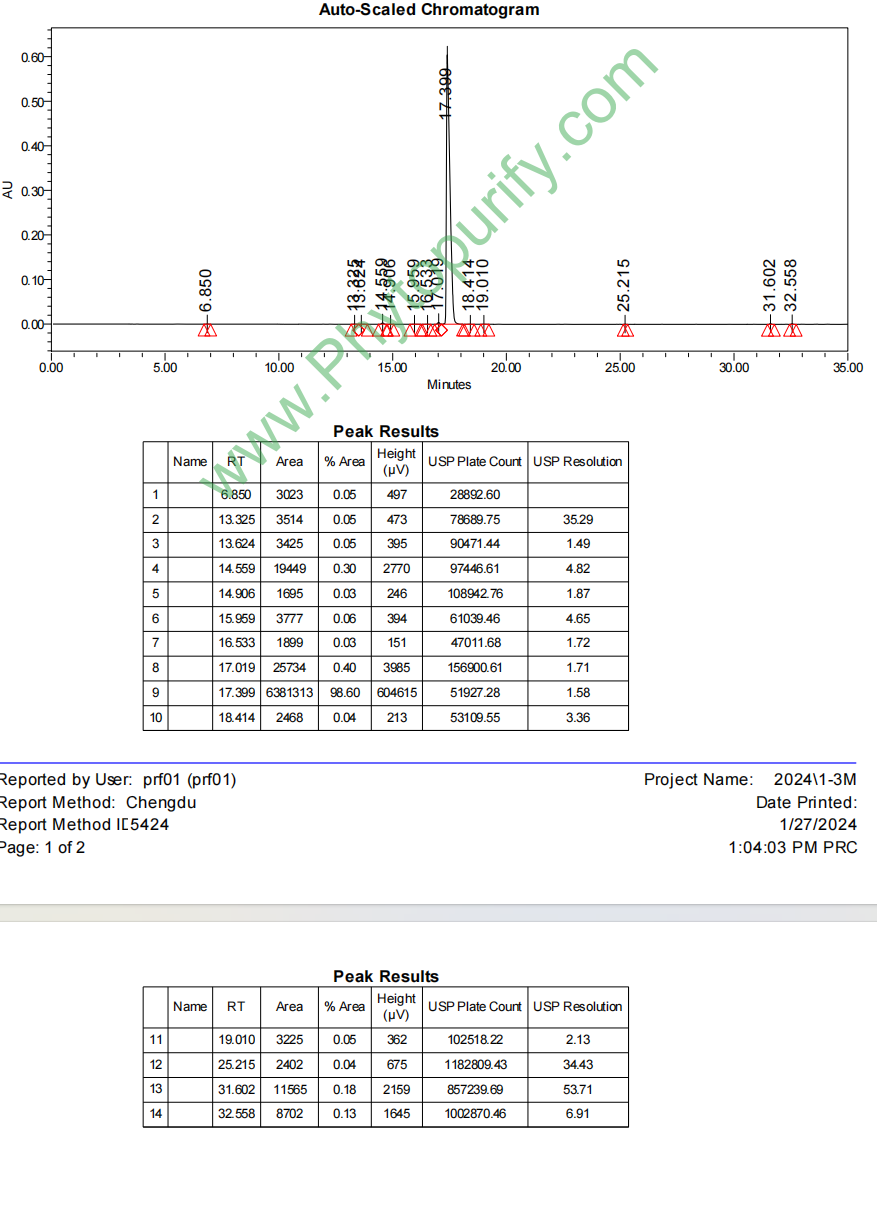
Purity: 95%~99%
Analysis Method: HPLC-DAD or/and HPLC-ELSD
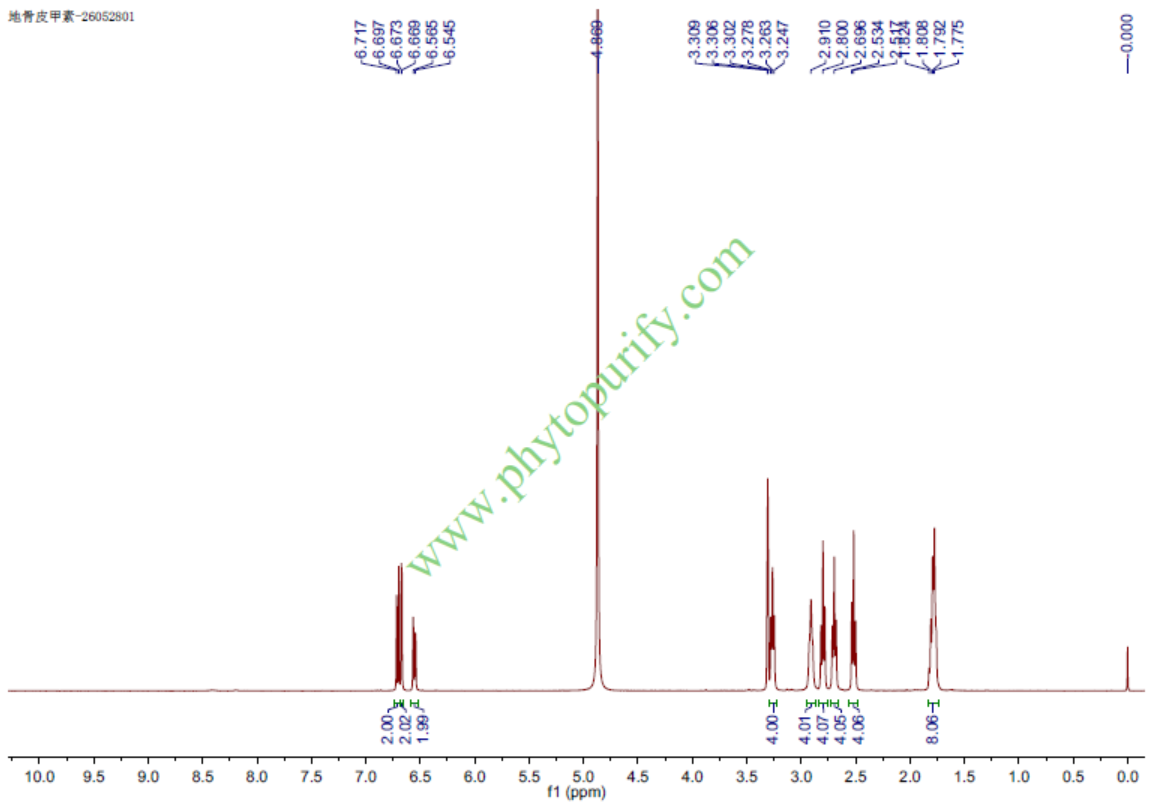
Identification Method: Mass, NMR
Packing: Brown vial or HDPE plastic bottle
Storage: Store in a well closed container, protected from air and light. Put into refrigerate or freeze for long term storage.
Whenever possible, you should prepare and use solutions on the same day. However, if you need to make up stock solutions in advance, we recommend that you store the solution as aliquots in tightly sealed vials at -20℃. Generally, these will be useable for up to two weeks.
The product could be supplied from milligrams to grams
Inquire for bulk scale.
Description:
Kukoamine A possesses anticancer, cytoprotective, antioxidant, and anti-inflammatory activities, it also has neuroprotective effects through inhibiting oxidative stress and apoptosis after whole-brain irradiation (WBI) in rats. Kukoamine A prevents radiation-induced neuroinflammation and preserves hippocampal neurogenesis in rats by inhibiting activation of NF-κB and AP-1. It attenuates insulin resistance and fatty liver through downregulation of Srebp-1c.
References:
Journal of Enzyme Inhibition and Medicinal Chemistry, 2009, 24(5):1188-1193.
Kukoamine A analogs with lipoxygenase inhibitory activity.
Kukoamine A (KukA) is a spermine (SPM) conjugate with dihydrocaffeic acid (DHCA), with interesting biological activities.
METHODS AND RESULTS:
The four possible regioisomers of KukA, as well as a series of KukA analogs incorporating changes in either the SPM or the DHCA structural units, were evaluated for their antioxidant activity and their inhibitory activity on soybean lipoxygenase (LOX) and lipid peroxidation. The reducing properties of the compounds were evaluated using the 1,1-diphenyl-2-picrylhydrazyl (DPPH) free radical scavenging assay and found to be in the range 5-97.5%. KukA significantly inhibits LOX with IC(50) 9.5 mu M. All tested analogs inhibited lipid peroxidation in the range of 11-100%.
CONCLUSIONS:
The most potent compounds KukA and its analog 3, in which the DHCA units had been replaced by O,O'-dimethylcaffeic acid units, were studied for their anti-inflammatory activity in vivo on rat paw edema induced by carrageenan and found to be of comparable activity to indomethacin. The results of the biological tests are discussed in terms of structural characteristics.
Molecules, 2018, 23(4):973.
Antioxidant and Cytoprotective Effects of Kukoamines A and B: Comparison and Positional Isomeric Effect.
METHODS AND RESULTS:
In this study, two natural phenolic polyamines, Kukoamine A and kukoamine B, were comparatively investigated for their antioxidant and cytoprotective effects in Fenton-damaged bone marrow-derived mesenchymal stem cells (bmMSCs). When compared with kukoamine B, Kukoamine A consistently demonstrated higher IC50 values in PTIO•-scavenging (pH 7.4), Cu2+-reducing, DPPH•-scavenging, •O2−-scavenging, and •OH-scavenging assays. However, in the PTIO•-scavenging assay, the IC50 values of each kukoamine varied with pH value. In the Fe2+-chelating assay, kukoamine B presented greater UV-Vis absorption and darker color than kukoamine A. In the HPLC–ESI–MS/MS analysis, Kukoamine A with DPPH• produced radical-adduct-formation (RAF) peaks (m/z 922 and 713). The 3-(4,5-Dimethylthiazol-2-yl)-2,5-diphenyl (MTT) assay suggested that both kukoamines concentration-dependently increased the viabilities of Fenton-damaged bmMSCs at 56.5–188.4 μM. However, Kukoamine A showed lower viability percentages than kukoamine B.
CONCLUSIONS:
In conclusion, the two isomers Kukoamine A and kukoamine B can protect bmMSCs from Fenton-induced damage, possibly through direct or indirect antioxidant pathways, including electron-transfer, proton-transfer, hydrogen atom transfer, RAF, and Fe2+-chelating. Since kukoamine B possesses higher potentials than Kukoamine A in these pathways, kukoamine B is thus superior to Kukoamine A in terms of cytoprotection. These differences can ultimately be attributed to positional isomeric effects.
Neurochemistry International, 2017:S0197018616301875.
Neuroprotective effects of Kukoamine A against cerebral ischemia via antioxidant and inactivation of apoptosis pathway.
Kukoamine A (KuA) is a bioactive compound, which is known for a hypotensive effect. Recent studies have shown that KuA has anti-oxidative effect and anti-apoptosis stress in vitro. However, its neuroprotective effect in rats with cerebral ischemia is still unclear.
METHODS AND RESULTS:
In the study, we investigated whether KuA could attenuate cerebral ischemia induced by permanent middle cerebral artery occlusion (pMCAO) in rats. Results revealed that KuA could significantly reduce infarct volume both pre-treatment and post-treatment, and increase corresponding Garcia neurological scores. Acute KuA postconditioning not only significantly reduced cerebral infarct volume, brain water content and improved neurological deficit scores, but also decreased the number of TUNEL-positive cells. Moreover, it markedly increased the activities of Cu/Zn-SOD and Mn-SOD, reduced levels of MDA and H2O2. Increased expressions of caspase-3, cytochrome c and the ratio of Bax/Bcl-2 were significantly alleviated with KuA treatment.
CONCLUSIONS:
These findings demonstrated that KuA was able to protect the brain against injury induced by pMCAO via mitochondria mediated apoptosis signaling pathway.
HPLC of Kukoamine A
HNMR of Kukoamine A
Storage conditions:Short-term storage at 2~8℃, long-term storage at -20 ~ -80℃
163.1800
1.4760
-1.0321
1.6545
.4346
.4386
Low
71.5300
2.5581
Yes
No
No
No
No
No
0.6
No
No
No
No
Natural products, as an important source of drug discovery, play an irreplaceable role in the long struggle between humans and diseases. One of the core tasks of modern medicinal chemistry and pharmacology research is to isolate and identify single compounds with clear pharmacological activity from traditional herbs, and elucidate their mechanisms of action. Kukoane A, derived from the traditional Chinese medicine Kukoane (also known as Ningxia wolfberry) Lycium chinense Miller or Goji berries Lycium barbarum L. The spermidine alkaloids derived from dried root bark have received widespread attention in recent years due to their unique multi effect pharmacological activities. Its chemical structure is composed of dihydrocaffeoyl and spermine skeleton connected by amide bonds, which endows it with the ability to cross the blood-brain barrier and the potential to act on various biological targets.
The research history of digoxin can be traced back to the last century, but it was not until the past two decades, with the advancement of modern isolation techniques and pharmacological evaluation systems, that its rich biological functions were gradually revealed. Early research mainly focused on its anti-inflammatory and antioxidant activities, and subsequently found that it has significant proliferation inhibition and pro apoptotic effects on various tumor cells, and can improve insulin resistance by regulating lipid metabolism. Of particular note is that digoxin exhibits a protective effect on the nervous system, inducing autophagy and inhibiting neuroinflammation, providing a new candidate molecule for the treatment of central nervous system diseases such as Parkinson's disease and glioblastoma. In addition, its anti parasitic (such as Trypanosoma) and antibacterial potential have also been preliminarily confirmed. This article aims to systematically review the chemical properties, plant sources, pharmacological activities, mechanisms of action, pharmacological characteristics, and clinical application prospects of digoxin, in order to provide comprehensive academic references for the in-depth development and transformation research of this natural product.
The chemical name of Kukoanine A is N1, N12 bis (dihydrocaffeoyl) spermine, with a molecular formula of C28H42N4O6 and a molecular weight of 530.6660 g/mol. Structurally, it belongs to the category of polyamine alkaloids, with the core skeleton being spermine, an endogenous polyamine widely present in organisms and involved in regulating cell proliferation and differentiation. The two terminal amino groups of spermine are condensed with a dihydrocaffeoyl group (3,4-dihydroxybenzoyl) through amide bonds to form a symmetrical linear molecular structure. This structural feature combines the cationic properties of polyamines with the antioxidant properties of phenolic hydroxyl groups.
In terms of physical and chemical properties, digoxin exhibits a moderate preference for drug like properties. Its lipid water partition coefficient (LogP) is 1.4760, indicating that it has a certain degree of lipophilicity, but overall tends to be hydrophilic, which is consistent with the presence of multiple polar groups (phenolic hydroxyl groups, amide bonds, amino groups) in its molecule. The topological polar surface area (TPSA) is as high as 163.1800 Å ², which is significantly higher than the recommended threshold for oral drugs (<140 Å ²), indicating the possible existence of an oral absorption barrier. However, its water solubility prediction value is 1.6545 mg/mL, indicating good water solubility, which provides convenience for its distribution and administration in vivo. It is particularly crucial that, despite its high TPSA, osteocalcin is predicted to penetrate the blood-brain barrier (BBB), which gives it a unique advantage in the treatment of central nervous system diseases, possibly due to its ability to utilize the endogenous polyamine transport system through the spermine skeleton. In addition, the predictive model shows that it does not have hERG potassium channel inhibitory activity (No), and the Ames test result is 0.6 (usually considered negative for<0.5 and suspicious positive for 0.5-0.9), indicating a low risk of genetic toxicity, but further experimental verification is needed. These physical and chemical parameters together outline the profile of digoxin as a natural lead compound with central nervous system targeting potential, good water solubility, and preliminary controllable safety.
The main plant source of Di Gu Pi Jia Su is the Lycium genus in the Solanaceae family, Ningxia Lycium(Lycium chinense Miller and Goji berries(Lycium barbarum L. The root bark, also known as the traditional Chinese medicine "Di Gu Pi". Di Gu Pi has the effects of cooling blood, removing steam, clearing the lungs, and reducing fire in traditional Chinese medicine theory. It is commonly used to treat symptoms such as yin deficiency, hot flashes, and lung heat cough. Modern research has shown that there are various active ingredients in the cortex of the earth, including alkaloids, cyclic peptides, flavonoids, organic acids, etc. Among them, cortex of the earth is one of the most representative spermine alkaloids. It is worth noting that this compound is extremely low or absent in the fruit of goji berries, mainly enriched in the root bark, which is completely consistent with traditional medicinal sites.
The extraction and separation of digoxin usually follow the classic process of natural product chemistry. Firstly, the dried medicinal herb of Digupi is crushed and extracted using a polar solvent. Due to the presence of multiple polar groups in its molecule, commonly used extraction solvents include methanol, ethanol, or a certain proportion of aqueous alcohol solution. To improve extraction efficiency, heating reflux, ultrasound assisted or microwave-assisted extraction techniques can be used. After vacuum concentration, crude extracts usually require acid-base treatment to enrich alkaloid components. For example, the crude extract is dissolved in an acidic aqueous solution (such as dilute hydrochloric acid) to make the alkaloids salt and dissolve in the aqueous phase. Then, the lipid soluble impurities are removed by organic solvent extraction, and the pH is adjusted to alkaline with an alkaline solution (such as ammonia water) to free the alkaloids. Finally, organic solvents such as chloroform and ethyl acetate are used for extraction to obtain the total alkaloid fraction.
Further separation and purification require the combination of multiple chromatographic techniques. Due to the high polarity of digoxin A and its frequent coexistence with structurally similar compounds such as digoxin B, reverse phase silica gel column chromatography (such as ODS-C18) is a commonly used method, using methanol water or acetonitrile water systems for gradient elution. In addition, ion exchange chromatography, high-speed countercurrent chromatography, and preparative high-performance liquid chromatography (Pre HPLC) are also commonly used to obtain high-purity monomer compounds. During the separation process, thin layer chromatography (TLC) or high-performance liquid chromatography (HPLC) is used for monitoring, and the structural identification of the final product relies on spectroscopic techniques such as nuclear magnetic resonance spectroscopy (NMR) and mass spectrometry (MS). With the deepening understanding of the pharmacological activity of digoxin, establishing an efficient, environmentally friendly, and scalable extraction and purification process is crucial for its subsequent pharmacological research and industrial development.
The pharmacological activity spectrum of digoxin is extremely broad, covering multiple fields such as anti-inflammatory, anti-tumor, neuroprotective, metabolic regulation, and anti infection, demonstrating multi-target and multi pathway action characteristics.
1. Anti inflammatory activity
Inflammation is the fundamental pathological process of various diseases. Di Gu Pi Jia Su exhibits significant anti-inflammatory effects. In vitro studies have shown that in a macrophage model stimulated by lipopolysaccharide (LPS), osteocalcin can dose dependently inhibit the production of nitric oxide (NO), reactive oxygen species (ROS), and prostaglandin E2 (PGE2). At the same time, it can significantly reduce the release of pro-inflammatory cytokines such as tumor necrosis factor - α (TNF - α), interleukin-1 β (IL-1 β), and interleukin-6 (IL-6). Its mechanism of action involves direct inhibition of cyclooxygenase-2 (COX-2) activity and regulation of its expression. In addition, digoxin can also downregulate the expression of various inflammatory mediators at the transcriptional level by affecting the nuclear factor kappa B (NF - κ B) signaling pathway and inhibiting the nuclear translocation of its key subunit RELA. These findings lay a solid foundation for its application in inflammatory diseases.
2. Antitumor activity
Di Gu Pi Jia Su has inhibitory effects on various cancer cell lines. Studies have shown that it can effectively inhibit the proliferation, migration and invasion of glioblastoma, liver cancer, breast cancer, lung cancer and other cancer cells. Its anti-tumor mechanism mainly includes the following aspects: Firstly, digoxin can induce cell cycle arrest, arrest cancer cells in the G0/G1 phase, and thus inhibit their unlimited proliferation. Secondly, it can induce apoptosis in tumor cells by activating the mitochondrial pathway or death receptor pathway, manifested by the activation of Caspase family proteins and changes in the expression of apoptosis related proteins such as Bax and Bcl-2. It is worth noting that digoxin can also induce autophagy in tumor cells, which may play a dual role in promoting survival or death in different contexts. Its ultimate effect on tumors depends on cell type and microenvironment. In addition, its inhibition of tumor cell migration and invasion suggests its potential value in anti-tumor metastasis.
3. Neuroprotective activity
Due to its ability to penetrate the blood-brain barrier, digoxin has attracted much attention in the field of neurological disease research. In Parkinson's disease models, osteocalcin can protect dopaminergic neurons from damage by neurotoxins such as MPTP or 6-OHDA. Its neuroprotective mechanism is related to inhibiting oxidative stress, reducing neuroinflammation, and inducing autophagy to clear misfolded proteins such as alpha synuclein. In the study of glioblastoma, osteocalcin not only directly kills tumor cells, but may also exert anti-tumor effects by regulating the tumor microenvironment. In addition, studies have shown that digoxin can activate μ - opioid receptors, providing new clues for its application in pain relief and neural regulation.
4. Metabolic regulatory activity
Di Gu Pi Jia Su has also shown potential in improving metabolic disorders. In the palmitic acid-induced insulin resistance cell model, digoxin can significantly improve cell sensitivity to insulin. Its mechanism of action is closely related to the downregulation of the expression of sterol regulatory element binding protein-1c (Srebp-1c). Srebp-1c is an important transcription factor that regulates the synthesis of fatty acids and triglycerides. By inhibiting Srebp-1c, osteocalcin can reduce abnormal lipid accumulation in cells and alleviate oxidative stress and endoplasmic reticulum stress, thereby reversing insulin resistance. This finding suggests that scutellarin may have therapeutic potential for metabolic diseases such as non-alcoholic fatty liver disease (NAFLD) and type 2 diabetes.
5. Other activities
In addition to the main activities mentioned above, Geodermin has also been reported to have antiparasitic (such as inhibiting Trypanosoma thiol reductase) and antioxidant activities. Its inhibitory effect on soybean lipoxygenase also suggests that it may be involved in regulating the arachidonic acid metabolism pathway.
The pleiotropy of digoxin is due to its ability to interact with multiple molecular targets and regulate complex signaling networks. Its core mechanism of action can be summarized as follows:
1. Regulation of anti-inflammatory signaling pathway
One of the core targets of the anti-inflammatory effect of digoxin A is the NF - κ B pathway. It can inhibit the activity of I κ B kinase (IKBKB), prevent the phosphorylation and degradation of I κ B protein, thereby causing NF - κ B dimers (such as RELA/p50) to remain in the cytoplasm and unable to enter the nucleus to initiate the transcription of downstream pro-inflammatory genes (such as TNF, IL6, NOS2, PTGS1/COX-2). In addition, it can directly inhibit the enzymatic activity of COX-2 and reduce the synthesis of PGE2. The regulation of NLRP3 inflammasome (involving CASP1) may also be part of its anti-inflammatory mechanism. Meanwhile, its regulatory effect on transient receptor potential channels (such as TRPV1, TRPA1) may be related to its effects in pain and itch related inflammation.
2. Regulation of anti-tumor signaling pathways
The anti-tumor mechanism of digoxin involves multiple pathways. It can induce G0/G1 phase arrest by activating the p53/p21 pathway or inhibiting the expression of Cyclin D1 and cyclin dependent kinase (CDK4/6). In terms of inducing apoptosis, it can activate the mitochondrial apoptosis pathway, leading to a decrease in mitochondrial membrane potential, release of cytochrome C, and subsequently activate Caspase-9 and Caspase-3. Meanwhile, it can also activate exogenous apoptotic pathways by upregulating the expression of death receptors such as Fas. In addition, the inhibition of STAT3 signaling pathway by digoxin A has also attracted much attention. STAT3 is an oncogenic transcription factor that is continuously activated in various tumors. Osteodermin can inhibit the phosphorylation of STAT3, thereby downregulating the expression of its target genes (such as Survivor, Bcl xL, MMP-2/9), synergistically promoting apoptosis and inhibiting metastasis. The autophagy induced by it is usually related to the regulation of the AMPK/mTOR signaling axis.
3. Metabolic regulation mechanism
In terms of metabolic regulation, digoxin reduces de novo lipid synthesis in the liver and adipocytes by downregulating the expression and activity of Srebp-1c. This effect may involve improvement of insulin signaling pathways (such as IRS-1/Akt) and inhibition of endoplasmic reticulum stress (such as PERK/eIF2 α pathway). By reducing lipid toxicity and improving mitochondrial function, insulin sensitivity can be restored.
4. Neuroprotective mechanisms
In the nervous system, osteocalcin enhances the expression of antioxidant enzymes such as HO-1 and NQO1 by activating the Nrf2/ARE pathway, thereby combating oxidative stress. Meanwhile, it reduces the release of neurotoxic factors by inhibiting the excessive activation of microglia. The autophagy induced by it helps to clear protein aggregates with neurotoxicity, such as alpha synuclein. In addition, the excitatory effect on μ - opioid receptors may provide direct neuroprotective or analgesic effects.
In summary, digoxin does not act on a single target, but rather exerts its pharmacological activity through a "multi-target, multi pathway" network regulation mode. This mode of action not only has its advantages (wide therapeutic effect, less likely to develop drug resistance), but also brings challenges to the in-depth study of its mechanism.
A systematic evaluation of the pharmacological properties of digoxin is required to promote it from a natural product to a clinical candidate drug. Based on existing computational predictions and preliminary experimental data, its pharmacological characteristics are as follows:
1. Physical and chemical properties and drug like properties
As mentioned earlier, the molecular weight of digoxin A (530.67 Da) is slightly higher than the limit of molecular weight less than 500 Da in the "Lipinski rule". Its LogP is 1.476, which complies with the rules. However, its hydrogen bond donors (phenolic hydroxyl and amide N-H) and acceptors (carbonyl and amino) are abundant, resulting in a TPSA of up to 163.18 Å ², exceeding the recommended 140 Å ². These characteristics suggest that it may have a low oral bioavailability issue. However, its good water solubility (1.65 mg/mL) is a positive factor. Overall, digoxin belongs to the "borderline drug molecule" and needs to be improved for oral absorption through formulation methods or prodrug strategies.
2. Penetration of blood-brain barrier
This is one of the most prominent pharmacological advantages of digoxin. Although TPSA is relatively high, both predictions and preliminary experimental evidence suggest that it can penetrate the blood-brain barrier. This may be attributed to its spermine skeleton being recognized by the polyamine transport system on brain capillary endothelial cells, thereby achieving active transport. This characteristic makes it irreplaceable in the treatment of central nervous system diseases such as Parkinson's disease and glioblastoma.
3. Security prediction
The preliminary toxicological prediction results are relatively optimistic. HERG inhibition risk is' no ', reducing the risk of cardiac toxicity. The Ames test result is 0.6, which is in the suspicious positive range, indicating a possible genetic toxicity risk. This requires strict verification through standard bacterial reverse mutation test (Ames test) and in vitro micronucleus test. In addition, its selective toxicity to normal cells and tumor cells, as well as acute toxicity data in animals, are key factors determining whether it can enter preclinical development.
4. Pharmacokinetic characteristics
At present, there are insufficient detailed research reports on the pharmacokinetics of digoxin in vivo. Based on its physicochemical properties, it is speculated that its oral absorption may be poor and its bioavailability may be low. Intravenous administration may be a more effective route of administration. In the body, the phenolic hydroxyl and amide bonds it contains are potential metabolic sites, which may undergo II phase metabolic reactions such as glucuronidation, sulfation, methylation, and amide bond hydrolysis. It is widely distributed, especially able to enter brain tissue. The metabolic and excretion pathways require further research. In the future, developing its prodrugs (such as acetylating phenolic hydroxyl groups) to increase lipid solubility, or adopting new drug delivery systems such as nanoliposomes and polymer micelles, is an important direction to improve its oral bioavailability and targeting.
The unique pharmacological activity and mechanism of action of digoxin have opened up broad prospects for its application in multiple disease fields.
1. Neurological disorders
Given its excellent blood-brain barrier penetration and neuroprotective effects, digoxin has great potential in the treatment of neurodegenerative diseases such as Parkinson's disease and Alzheimer's disease. It is expected to become a candidate drug for disease modifying therapy that improves disease progression through multiple mechanisms of anti-inflammatory, antioxidant, and autophagy induction. Meanwhile, its inhibitory effect on glioblastoma provides a new chemotherapy option for this highly malignant brain tumor, especially when used in combination with other chemotherapy drugs or radiotherapy, which may have a synergistic effect.
2. Metabolic disorders
By downregulating the effect of Srebp-1c on improving insulin resistance and lipid metabolism disorder, it has become a potential candidate molecule for the treatment of type 2 diabetes, non-alcoholic fatty liver disease (NAFLD) and obesity. Its natural origin and relatively low toxicity give it an advantage in the long-term management of chronic metabolic diseases.
3. Inflammatory diseases
Its strong anti-inflammatory activity, especially its inhibition of the NF - κ B pathway and COX-2, makes it suitable for treating various acute and chronic inflammatory diseases such as rheumatoid arthritis, inflammatory bowel disease, and acute lung injury.
4. Tumor treatment
In addition to glioblastoma, the inhibitory effect of osteocalcin on various solid tumors makes it a promising broad-spectrum anti-tumor lead compound. Future research should focus on its combination therapy with existing chemotherapy drugs such as temozolomide and cisplatin, in order to reduce the dosage and toxic side effects of chemotherapy drugs and overcome drug resistance.
Future research directions Should include:
- In depth mechanism research Using omics techniques such as proteomics and metabolomics to systematically depict its functional network and identify its direct targets of action.
- Pharmacokinetic optimization The system conducts in vivo ADME research and improves its pharmacokinetic properties through prodrug design, nano formulations, and other means.
- safety evaluation Conduct comprehensive preclinical toxicology studies, including long-term toxicity, reproductive toxicity, and genetic toxicity.
- Study on Structure Activity Relationship Synthesize a series of structurally similar compounds and explore their key pharmacophores in order to discover derivatives with higher activity, better selectivity, and superior pharmacokinetic properties.
- clinical translation After completing sufficient preclinical research, explore the feasibility of entering clinical trials, starting with indications for local or intravenous administration (such as local chemotherapy for glioblastoma).
As a type of spermine alkaloid derived from the traditional Chinese medicine Di Gu Pi, Di Gu Pi Jia has become a shining star in the field of natural product pharmacology due to its unique chemical structure, ability to cross the blood-brain barrier, and multi effect pharmacological activities covering anti-inflammatory, anti-tumor, neuroprotective, and metabolic regulation. It is not only a key molecule in explaining the modern scientific connotation of the traditional efficacy of Di Gu Pi, but also a highly valuable drug lead compound for development. Although there are challenges in drug formulation, especially in terms of oral bioavailability, its unique pharmacological advantages and good preliminary safety predictions provide clear directions for subsequent drug chemical modification and formulation research. With the in-depth analysis of its mechanism of action and optimization of its pharmacokinetic properties, digoxin and its derivatives are expected to provide new therapeutic strategies for major health threats such as neurodegenerative diseases, malignant tumors, and metabolic diseases in the future, truly achieving a magnificent transformation from ancient herbs to modern drugs.
