


Product name: Kukoamine B
Synonym name:
Catalogue No.: BP0834
Cas No.: 164991-67-7
Formula: C28H42N4O6
Mol Weight: 530.666
Botanical Source: Lycii Cortex
Physical Description:
Type of Compound: Alkaloids
Purity: 95%~99%
Analysis Method: HPLC-DAD or/and HPLC-ELSD
Identification Method: Mass, NMR
Packing: Brown vial or HDPE plastic bottle
Storage: Store in a well closed container, protected from air and light. Put into refrigerate or freeze for long term storage.
The product could be supplied from milligrams to grams
Inquire for bulk scale.
Description:
Kukoamine B is a potent dual inhibitor for both Lipopolysaccharides (LPS) and oligodeoxynucleotides containing CpG motifs (CpG DNA), LPS and CpG DNA are important pathogenic molecules for the induction of sepsis,are drug targets for sepsis treatment, thus kukoamine B is worthy of further investigation as a potential candidate to treat sepsis. Kukoamine B may potentially serve as an agent for prevention of several human neurodegenerative and other disorders caused by oxidative stress, it has protective effects against hydrogen peroxide (H2O2) induced cell injury and potential mechanisms in SH-SY5Y cells.
References:
Exp. Ther. Med. ,2015, 9(3):725-32.
A novel role of kukoamine B: Inhibition of the inflammatory response in the livers of lipopolysaccharide-induced septic mice via its unique property of combining with lipopolysaccharide
Kukoamine B (KB), derived from the traditional Chinese herb cortex Lycii, exerts anti-inflammatory effects due to its potent affinity with lipopolysaccharide (LPS) and CpG DNA; however, little is known regarding whether the in vivo administration of KB can effectively inhibit inflammation in septic mice.
METHODS AND RESULTS:
The present study thus aimed to investigate the inhibitory effects of KB on the inflammatory response in the livers of LPS-induced septic mice. KB treatment in the LPS-induced septic mice significantly decreased the plasma level of LPS. In addition, KB protected against liver injury, as confirmed by improved histology and decreased aminotransferase levels in the serum. Further experiments revealed that KB attenuated liver myeloperoxidase activity and reduced the expression of vascular cell adhesion molecule-1 and intercellular adhesion molecule-1. These effects were accompanied by decreases in the levels of tumor necrosis factor α and interleukin-1β in the liver tissue. In parallel, the activity of nuclear factor-κ-gene binding (NF-κB) in the livers of LPS-induced septic mice was markedly inhibited with KB treatment.
CONCLUSIONS:
In combination, these results demonstrate that KB inhibits inflammation in septic mice by reducing the concentrations of plasma LPS, decreasing leukocyte sequestration and interfering with NF-κB activation, and, therefore, suppressing the pro-adhesive phenotype of endothelial cells.
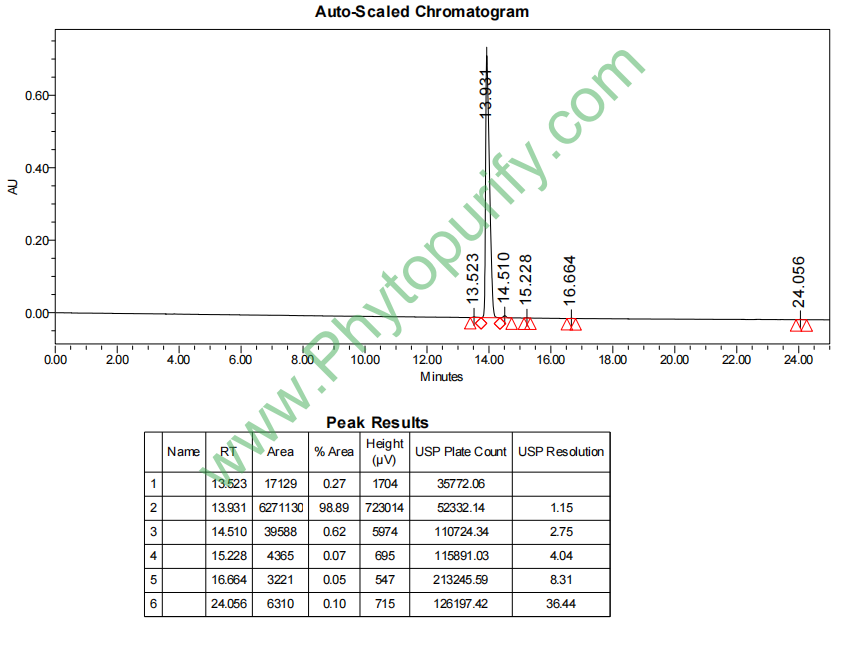
HPLC of Kukoamine B
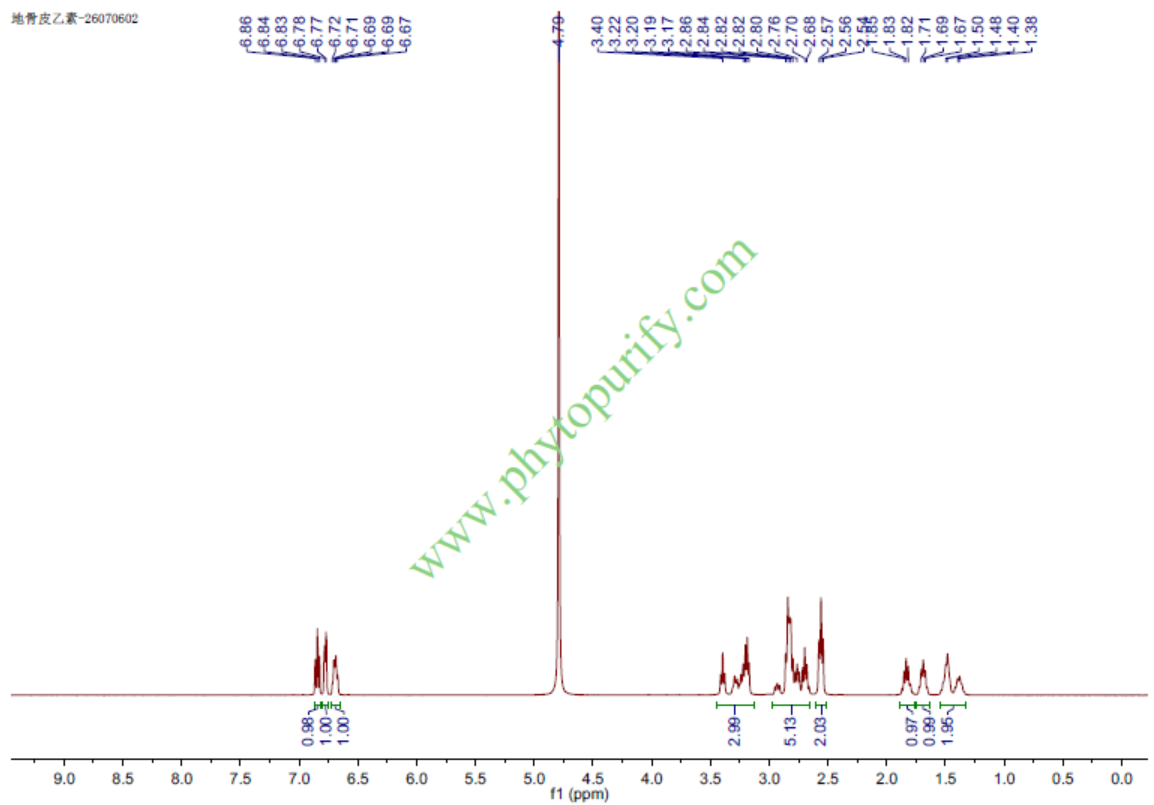
HNMR of Kukoamine B
Storage conditions:Short-term storage at 2~8℃, long-term storage at -20 ~ -80℃
168.3800
1.0859
-1.4759
3.7726
.4217
.2788
Low
72.1477
2.7068
Yes
No
No
No
No
No
0.0
No
No
No
No
Natural products, as an important source of drug discovery, play an indispensable role in the long struggle between humans and diseases. Isolating and identifying compounds with significant biological activity from traditional herbs, and elucidating their mechanisms of action, is an important paradigm in modern pharmacological research. Di Gu Pi, as a traditional Chinese medicine herb with a long history of application, originates from the Lycium barbarum plant in the Solanaceae family(Lycium chinense Mill. or Ningxia Goji Berry(Lycium barbarum L. The dried root bark of () has the effects of cooling blood, removing steam, clearing the lungs, and reducing fire. It is commonly used to treat symptoms such as yin deficiency, hot flashes, bone steaming, night sweats, and lung heat cough. Modern pharmacological research has revealed that Dioscorea opposita contains various chemical components, including alkaloids, flavonoids, phenylpropanoids, and polysaccharides. Among them, Kukoanine B, as a unique spermine alkaloid, has attracted widespread attention from the international academic and pharmaceutical industries in recent years due to its excellent and multiple pharmacological activities, especially as a dual inhibitor of lipopolysaccharide (LPS) and CpG DNA.
The discovery and research of Kukoane B (KB) is a model for the modernization of traditional Chinese medicine. It is not the most abundant component in the dermis, but its unique chemical structure and strong biological activity make it stand out. Research has shown that KB can simultaneously neutralize two key pathogen associated molecular patterns (PAMPs) with high affinity - the Gram negative bacterial cell wall component LPS and the unmethylated CpG motif in bacterial DNA. This characteristic demonstrates great potential in the treatment of sepsis, a systemic inflammatory response syndrome caused by infection. Sepsis is one of the main causes of death in intensive care unit (ICU) patients, and its pathological mechanism is complex, involving multiple links such as pathogen invasion, immune system overactivation, inflammatory cytokine storm, and multiple organ dysfunction. Although traditional antibiotic treatment can kill pathogens, it cannot effectively control subsequent inflammatory storms, and antagonists targeting a single inflammatory factor have repeatedly failed in clinical trials. KB inhibits the activation of multiple inflammatory pathways from the source by simultaneously blocking LPS and CpG DNA, two key initiating signals, providing a novel strategy for the treatment of sepsis.
In addition to anti-inflammatory and anti sepsis effects, more and more studies have revealed the protective role of KB in other disease fields, such as diabetes, osteoporosis, neurodegenerative diseases and oxidative stress related diseases. These findings greatly expand the pharmacological connotation of KB, making it a highly promising multifunctional natural product lead compound for development. The purpose of this article is to comprehensively and systematically review the research progress of diglycoside, covering its chemical structure and physicochemical properties, plant sources and extraction methods, pharmacological activity, mechanism of action, drug evaluation, and clinical application prospects, in order to provide reference for the in-depth research and development of this compound.
Kukoane B is a naturally occurring spermine alkaloid. Its chemical structure consists of three parts: a spermine skeleton, and two dihydrocaffeoyl groups connected to both ends of spermine through amide bonds. Specifically, the chemical name of KB is N1, N12 bis (dihydrocaffeoyl) spermine. Its molecular formula is C28H42N4O6, with a molecular weight of 530.66 g/mol. The CAS registration number is 164991-67-7.
Structurally, KB molecules are rich in phenolic hydroxyl and amino groups, which endow them with unique physicochemical properties and biological activity. Phenolic hydroxyl groups give it a certain acidity and endow it with strong antioxidant capacity, which can directly eliminate free radicals or chelate metal ions. Multiple amino groups (including secondary amines and amide bonds on the spermine backbone) make it positively charged under physiological pH conditions, which is crucial for its binding to negatively charged biomolecules such as LPS and DNA. The LogP value of KB is 1.0859, indicating that it has a certain lipophilicity but overall leans towards hydrophilicity. Its topological polar surface area (TPSA) is as high as 168.38 Å ², much higher than the recommended threshold of 140 Å ² for oral drugs, indicating that its oral absorption may be poor and difficult to penetrate the blood-brain barrier (BBB). The predicted value of water solubility is 3.7726 mg/mL, indicating a certain degree of solubility in water. In addition, computer simulations predicted that it does not have hERG (human ether-a-go-go related gene) potassium channel inhibitory activity (hERG inhibition: no), and the Ames test result was 0.0, indicating a low risk of genetic toxicity. These physicochemical properties and early toxicity prediction results provide important information for the preliminary safety assessment of KB, but also point out potential challenges it may face in drug development, such as oral bioavailability issues.
Di Gu Pi Yi Su mainly comes from plants of the Lycium genus in the Solanaceae family, including Ningxia Lycium(Lycium barbarum L. ) and Goji berries(Lycium chinense Mill.'s dried root bark, also known as traditional Chinese medicine ground bone bark. In addition, it has been reported that KB is present in the fruits (goji berries) and leaves of goji berries, but the content is usually highest in the root bark. There may be significant differences in the KB content of goji berries from different regions, harvest seasons, and varieties.
The content of KB in plants is relatively low and belongs to trace active ingredients. Therefore, its extraction and purification require efficient and specific methods. The traditional extraction method usually includes the following steps:
With the development of separation technology, some new methods such as molecular imprinting technology and macroporous adsorption resin combination technology have also been explored for efficient enrichment and purification of KB, aiming to reduce costs and improve yields to meet the needs of scientific research and potential industrial production.
Di Gu Pi Yi Su exhibits extensive and significant pharmacological activities, and its research mainly focuses on the following aspects:
This is the most highly anticipated pharmacological activity of KB. KB can directly bind and neutralize LPS (Kd=1.23 µ M) and CpG DNA (Kd=0.66 µ M), thereby blocking their binding to Toll like receptor 4 (TLR4) and Toll like receptor 9 (TLR9), and inhibiting the activation of downstream signaling pathways. In macrophage models stimulated by LPS or CpG DNA, KB can significantly inhibit the production of pro-inflammatory factors such as tumor necrosis factor - α (TNF - α), interleukin-6 (IL-6), nitric oxide (NO), and prostaglandin E2 (PGE2), and downregulate the expression of inducible nitric oxide synthase (iNOS/NOS2) and cyclooxygenase-2 (COX-2/PTGS2). In vivo experiments, KB can significantly improve the survival rate of LPS induced endotoxin shock mice, alleviate multi organ damage, and reduce serum levels of inflammatory factors. More importantly, in the sepsis model induced by cecal ligation and puncture (CLP), which is closer to clinical practice, KB also showed significant therapeutic effects, surpassing traditional antibiotics or single target antagonists, demonstrating the advantage of its "source blockade" strategy.
KB also showed protective effect in the model of diabetes and its complications. Research has shown that KB can improve insulin resistance and promote glucose uptake. The mechanism may be related to the activation of AMP activated protein kinase (AMPK) signaling pathway, inhibition of inflammatory response and oxidative stress. In the model of diabetes nephropathy, KB can reduce glomerular hypertrophy, mesangial matrix dilatation and proteinuria, which is related to inhibiting transforming growth factor - β 1 (TGF - β 1)/Smad signaling pathway and reducing extracellular matrix deposition. In addition, KB can protect pancreatic beta cells from damage and promote insulin secretion.
The multiple phenolic hydroxyl groups in KB molecules are the structural basis for their strong antioxidant activity. It can directly scavenge various free radicals, such as 1,1-diphenyl-2-trinitrophenylhydrazine (DPPH) free radical, hydroxyl free radical, and superoxide anion free radical. KB can also chelate metal ions that promote oxidation (such as Fe ² ⁺, Cu ² ⁺) and inhibit lipid peroxidation. In cell models, KB can upregulate the activity of antioxidant enzymes such as superoxide dismutase (SOD), catalase (CAT), and glutathione peroxidase (GSH Px), reduce reactive oxygen species (ROS) levels, and protect cells from oxidative stress-induced damage.
KB has a bidirectional regulatory effect on bone metabolism, which can inhibit bone resorption by osteoclasts and promote bone formation by osteoblasts. In the osteoclast differentiation model, KB can inhibit osteoclastogenesis induced by receptor activator of nuclear factor kappa B ligand (RANKL), by inhibiting the NF - κ B and MAPK signaling pathways, as well as downregulating the expression of osteoclast specific genes such as protease K (CTSK) and tartrate resistant acid phosphatase (TRAP). In osteoblasts, KB can promote their proliferation, differentiation, and mineralization, which may be related to the activation of the Wnt/β - catenin signaling pathway. In the osteoporotic mouse model induced by ovariectomy (OVX), KB can effectively improve bone microstructure and increase bone density.
The neuroprotective effect of KB is mainly reflected in its potential therapeutic value for neurodegenerative diseases such as Alzheimer's disease (AD) and Parkinson's disease (PD). KB can inhibit the aggregation and fiber formation of β - amyloid protein (A β), and promote the depolymerization of formed A β fibers. It can also alleviate the neurotoxicity induced by A β and protect neurons from damage. In the PD model, KB can inhibit the aggregation of alpha synuclein and alleviate dopaminergic neuron damage induced by 1-methyl-4-phenyl-1,2,3,6-tetrahydropyridine (MPTP). Its neuroprotective mechanism is related to antioxidant, anti-inflammatory, and regulation of autophagy and apoptosis pathways. Although KB prediction is difficult to penetrate the blood-brain barrier, research suggests that it may indirectly affect the central nervous system by acting on peripheral immune cells or through other transport mechanisms, or exert its effects through its metabolites.
The mechanism of action of digoxin B is multi-target and multi pathway, and its core lies in the molecular recognition ability endowed by its unique chemical structure.
This is the most core and unique mechanism of KB. The spermine skeleton in KB molecules carries a positive charge, while the dihydrocaffeoyl group provides hydrophobic interactions and hydrogen bonds. This structure enables it to bind with high affinity to the lipid A portion of LPS and the backbone of CpG DNA, thereby "neutralizing" these PAMPs and preventing them from binding to TLR4 and TLR9 on the surface of immune cells. This "source blocking" strategy avoids the limitations of a single inflammatory cytokine antagonist and can simultaneously inhibit the activation of multiple downstream inflammatory signaling pathways (such as NF - κ B, MAPK, IRF3), effectively controlling the inflammatory storm.
In addition to directly neutralizing PAMPs, KB can also directly act on intracellular signaling molecules.
- NF - κ B pathway KB can inhibit the activity of I κ B kinase (IKK/IKBKB), prevent the phosphorylation and degradation of I κ B α, thereby inhibiting the nuclear translocation and transcriptional activity of NF - κ B (such as RELA/p65), and reducing the expression of downstream pro-inflammatory genes (such as TNF, IL6, NOS2, PTGS1/2).
- STAT3 pathway KB can inhibit IL-6 induced phosphorylation and dimerization of STAT3, thereby blocking the important inflammatory and pro cancer signaling pathway of IL-6/STAT3.
- MAPK pathway KB can inhibit the phosphorylation of MAPKs such as p38, JNK, and ERK, reducing the production of inflammatory mediators.
- CASP1/inflammasome pathway KB can inhibit the assembly and activation of NLRP3 inflammasomes, reduce the activation of Caspase-1 (CASP1), and thus inhibit the maturation and secretion of IL-1 β and IL-18.
KB has been found to regulate transient receptor potential (TRP) ion channels.
- TRPV1 and TRPA1 KB can inhibit the activity of these ion channels associated with pain and inflammation. This may be another mechanism by which it exerts analgesic and anti-inflammatory effects.
KB exerts antioxidant effects by directly scavenging free radicals and chelating metal ions. Meanwhile, it can activate the Nrf2/ARE antioxidant signaling pathway and upregulate the expression of a series of antioxidant enzymes. In terms of cell apoptosis, KB can regulate the expression of Bcl-2 family proteins, inhibit the release of mitochondrial cytochrome c and the activation of Caspase-3, thereby protecting cells from apoptosis.
KB can activate AMPK, which is a key sensor for cellular energy metabolism. The activation of AMPK helps to improve insulin resistance and promote the oxidative utilization of glucose and fatty acids. In addition, KB can induce autophagy, which is a cellular self-cleaning mechanism that helps clear misfolded proteins (such as A β, α - synuclein) and damaged organelles, playing an important role in neuroprotection.
Although Di Gu Pi Yi Su has strong pharmacological activity, its medicinal properties face some challenges, mainly due to its physicochemical properties and pharmacokinetic characteristics.
At present, there is relatively limited in vivo research data on the pharmacokinetics of KB, but existing studies have revealed its key characteristics:
- absorb Due to its high molecular weight and polarity, the oral bioavailability of KB is expected to be very low. After oral administration, most drugs may not be absorbed by the gut or metabolized by the gut microbiota. Therefore, in current animal research, KB is often administered via intravenous or intraperitoneal injection. Developing appropriate drug delivery systems (such as liposomes, nanoparticles) or prodrug strategies is key to improving their oral bioavailability.
- distribution KB is mainly distributed in the blood and highly perfused tissues such as the liver, kidneys, and lungs. Its predicted BBB penetration ability is low, which limits its application in central nervous system diseases. But as mentioned earlier, it may act indirectly through peripheral mechanisms or metabolites.
- Metabolism KB is mainly metabolized in the liver and intestines. The main metabolic pathways include glucuronidation and sulfation of phenolic hydroxyl groups, as well as oxidation of the spermine skeleton and hydrolysis of amide bonds. Whether its metabolites have biological activity remains to be clarified.
- excretion KB and its metabolites are mainly excreted through urine and bile.
Di Gu Pi Yi Su, as a multifunctional natural product with a unique mechanism of action, has broad clinical application prospects, but also faces many challenges.
This is the most direct and promising application direction for KB. Its mechanism of "dual neutralization" of LPS and CpG DNA makes it theoretically superior to any existing single target drug. Future research should focus on:
- preclinical research Validate its efficacy in more and more clinically relevant sepsis animal models (such as CLP model, pneumonia model), and optimize the dosing regimen (dosage, route, timing).
- combination therapy Explore the synergistic effect of KB with standard treatment regimens such as antibiotics and vasoactive drugs.
- Formulation development Given its low oral bioavailability, developing intravenous injection formulations is the top priority. Meanwhile, inhalation administration can be explored for the treatment of sepsis caused by pulmonary infections.
The anti-inflammatory activity of KB makes it potentially used in the treatment of rheumatoid arthritis, inflammatory bowel disease, atherosclerosis and other chronic inflammatory diseases. In these diseases, KB may play a role by inhibiting key pathways such as NF - κ B and STAT3, as well as regulating immune cell function.
KB's anti diabetes and anti obesity potential deserves further exploration. By activating AMPK and improving insulin resistance, KB may become a candidate drug for the treatment of type 2 diabetes and its complications (such as diabetes nephropathy and diabetes retinopathy).
Although poor BBB penetration is the main obstacle, the neuroprotective effect of KB can still be explored through the following pathways:
- Peripheral mechanism By regulating peripheral immune inflammatory responses, it indirectly affects neuroinflammation in the central nervous system.
- Nano drug delivery system Using nanotechnology (such as BBB targeted nanoparticles) to deliver KB into the brain.
- Prodrug design Design prodrugs that can penetrate the BBB and transform into active forms in the brain.
The bidirectional regulation of bone metabolism by KB (inhibiting osteoclast and promoting osteogenesis) gives it a unique advantage in the treatment of osteoporosis, which may be superior to current drugs that only inhibit bone resorption or promote bone formation.
The future research on collagen should focus on the following key directions:
1. In depth mechanism research Using omics techniques such as proteomics and metabolomics to systematically reveal the molecular target network of KB, particularly its interaction with polyamine metabolism.
2. Research on Structural Optimization and Structure Performance Relationship Using KB as the lead compound, design and screen derivatives with higher activity, better pharmacokinetic properties, and lower toxicity through chemical synthesis or semi synthesis. For example, improving metabolic stability by reducing the number of phenolic hydroxyl groups or methylating them.
3. Drug delivery system development Develop new drug delivery systems, such as liposomes, polymer nanoparticles, micelles, phospholipid complexes, etc., to address their low oral bioavailability and poor BBB penetration.
4. Comprehensive toxicological evaluation Conduct systematic in vivo toxicology studies, including acute, subchronic, and chronic toxicity tests, as well as effects on reproductive development and the immune system.
5. Research on Industrial Production Develop efficient, low-cost, and environmentally friendly extraction, purification, and synthesis processes to meet the needs of future large-scale production and clinical research.
Di Gu Pi Yi Su, a spermine alkaloid derived from traditional Chinese medicine Di Gu Pi, stands out in the field of natural product pharmacology due to its unique chemical structure and excellent mechanism of "double neutralization" of LPS and CpG DNA. It not only provides a new treatment strategy for the medical problem of sepsis, but also shows exciting potential in many fields such as anti-inflammatory, anti diabetes, antioxidant, anti osteoporosis and neuroprotection. Despite challenges in drug development, particularly in terms of oral bioavailability and blood-brain barrier penetration, these obstacles are expected to be overcome through in-depth mechanism research, rational structural optimization, and advanced drug delivery technologies. The research process of diglycoside perfectly illustrates the classic path from discovering lead compounds in traditional herbs to utilizing modern pharmacology and medicinal chemistry methods for innovative drug development. With the continuous deepening of research, we have reason to believe that diglycoside and its derivatives have the potential to become new drugs for treating various complex diseases in the future, making important contributions to human health.
