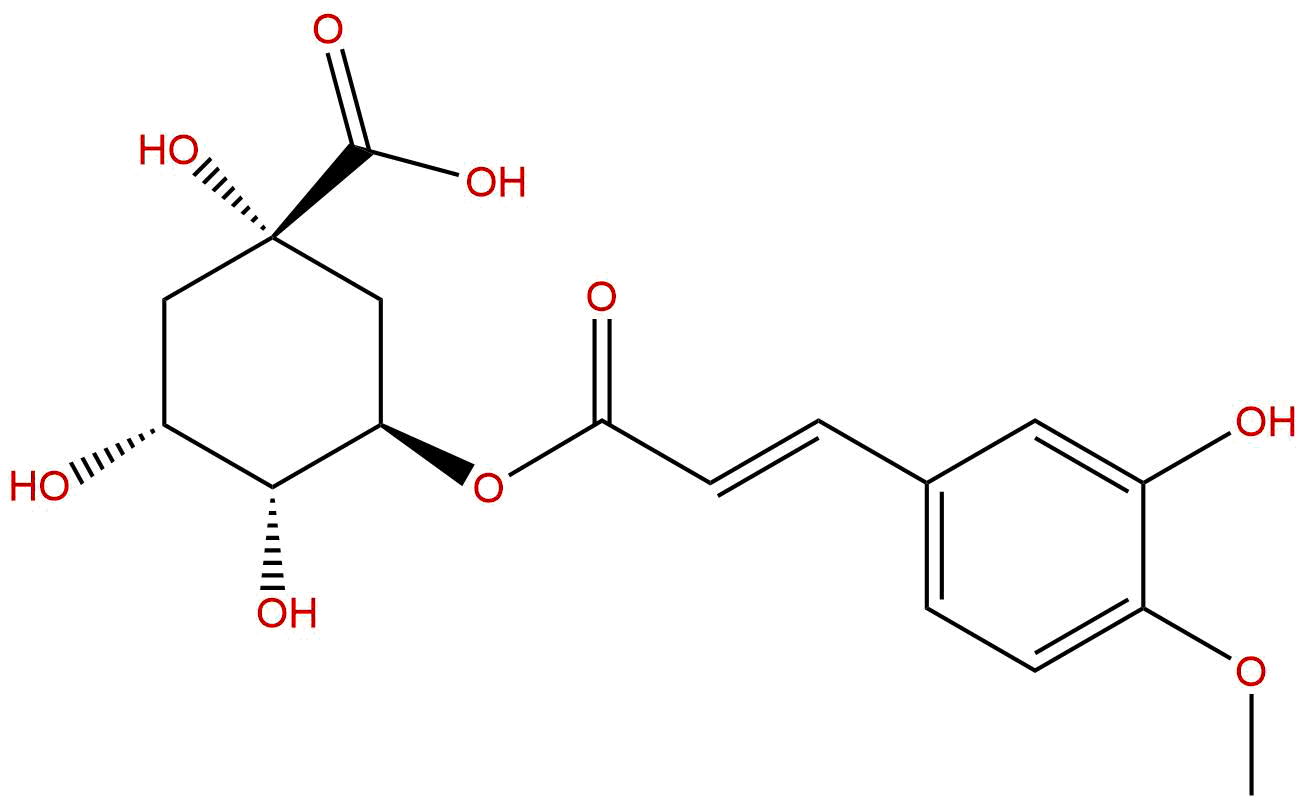


Product name: 5-O-Isoferuloylquinic acid
Synonym name: 4'-O-methyl-Chlorogenic acid
Catalogue No.: BP2314
Cas No.: 57496-29-4
Formula: C17H20O9
Mol Weight: 368.338
Botanical Source:
Type of Compound: Phenylpropanoids
Purity: 95%~99%
Analysis Method: HPLC-DAD or/and HPLC-ELSD
Identification Method: Mass, NMR
Packing: Brown vial or HDPE plastic bottle
Storage: Store in a well closed container, protected from air and light. Put into refrigerate or freeze for long term storage.
Whenever possible, you should prepare and use solutions on the same day. However, if you need to make up stock solutions in advance, we recommend that you store the solution as aliquots in tightly sealed vials at -20℃. Generally, these will be useable for up to two weeks.
The product could be supplied from milligrams to grams
Inquire for bulk scale.
For Reference Standard and R&D, Not for Human Use Directly.
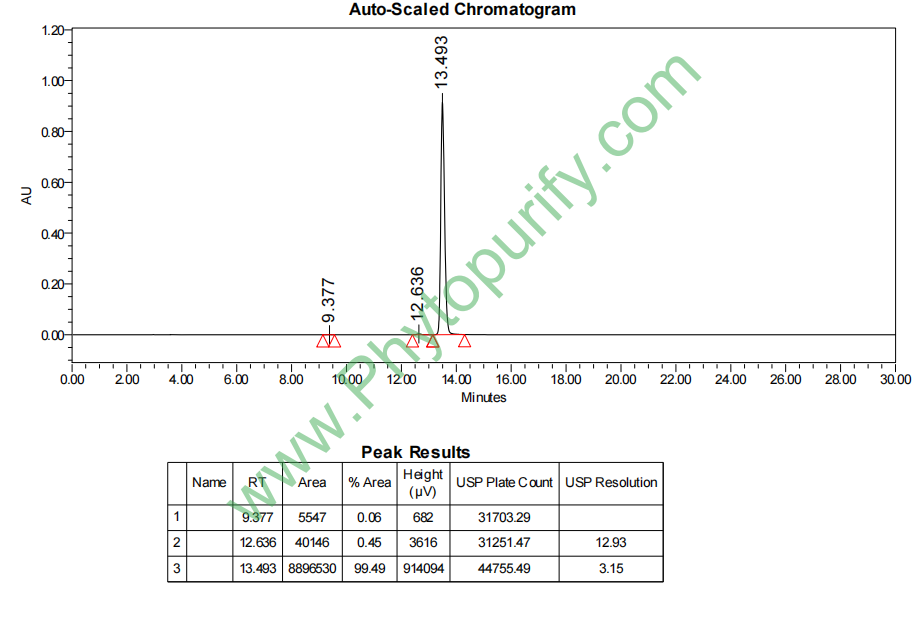
HPLC of 4'-O-methyl-Chlorogenic acid
Storage conditions:Short-term storage at 2~8℃, long-term storage at -20 ~ -80℃
153.7500
.1398
-2.0979
5.5872
.8363
.3169
Low
76.6893
3.7957
Yes
No
No
No
Yes
No
0.0
Yes
Yes
Yes
Yes
Natural products, as an important source of drug discovery, play an irreplaceable role in the long history of human struggle against diseases. Among them, quinic acid and its derivatives are a class of phenolic acid compounds widely present in the plant kingdom, which have attracted much attention due to their diverse biological activities. Quinic acid itself is a key intermediate in the shikimic acid pathway, and its ester derivatives formed with hydroxycinnamic acid (such as caffeic acid, ferulic acid, isoferulic acid, etc.) form a structurally diverse and functionally rich compound family. These compounds are commonly referred to as chlorogenic acids (CGAs) and are important active ingredients commonly found in many medicinal plants and daily diets.
Among numerous chlorogenic acid homologs, 5-O-Isoferuloylquinic acid is a relatively unique and increasingly valuable member in research. Compared with the more common 5-O-caffeoylquinic acid (chlorogenic acid), 5-O-isoferuloylquinic acid replaces caffeoyl in structure with isoferuloyl. The slight differences in this structure result in unique characteristics in its physical and chemical properties, biological activity spectrum, and mechanism of action. Isoferulic acid (3-hydroxy-4-methoxycinnamic acid), as a structural isomer of ferulic acid (4-hydroxy-3-methoxycinnamic acid), significantly affects the molecular antioxidant capacity, interaction mode with biomolecules, and metabolic pathways due to the relative position changes of its methoxy and hydroxyl groups.
In recent years, with the advancement of separation and purification technology and the improvement of biological activity screening systems, 5-O-isoferuloylquinic acid has gradually been identified and extensively studied from complex plant extracts. Research has revealed that this compound not only inherits the antioxidant and anti-inflammatory activities shared by chlorogenic acid compounds, but also exhibits unique potential in anti-tumor, neuroprotective, and metabolic regulation aspects. Its low cytotoxicity and good water solubility make it a highly promising candidate molecule for development. However, compared to star molecules such as chlorogenic acid, there is still a lack of systematic reviews on 5-O-isoferuloylquinic acid. This article aims to comprehensively review the chemical properties, natural sources, pharmacological activities, mechanisms of action, and pharmacological evaluation of this compound, in order to provide reference for in-depth research in this field and to look forward to its future clinical application prospects.
The chemical name of 5-O-isoferuloylquinic acid can be systematically named according to the IUPAC nomenclature as: (1S, 3R, 4R, 5R) -3- [(E) -3- (3-hydroxy-4-methoxyphenyl) prop-2-enoxy] -1,4,5-trihydroxycyclohexane-1-carboxylic acid. Its structure consists of two parts connected by ester bonds: a quinic acid molecule (1,3,4,5-tetrahydroxycyclohexane-1-carboxylic acid) and an isoferulic acid molecule (3-hydroxy-4-methoxycinnamic acid). The ester bond is formed between the 5-hydroxy group of quinic acid and the carboxyl group of isoferulic acid, hence the name 5-O-isoferuloylquinic acid.
From a stereochemical perspective, the quinic acid moiety has four chiral centers (C-1, C-3, C-4, C-5) with absolute configurations of 1S, 3R, 4R, 5R. The isoferulic acid moiety usually exists in the trans (E -) configuration, which is the most common form in natural cinnamic acid derivatives. The molecular formula of this compound is C ₁₇ H ₂₀ O ₉, with a molecular weight of 368.3380 g/mol.
The key difference between 5-O-isoferuloylquinic acid and its structural analogue 5-O-caffeoylquinic acid (chlorogenic acid) lies in the substitution mode on the benzene ring. Caffeic acid has an ortho dihydroxy group (3,4-dihydroxy), while isoferulic acid has one hydroxyl group (3-position) and one methoxy group (4-position). The presence of this methoxy group alters the electron cloud distribution of isoferuloyl, thereby affecting its ability as a hydrogen atom donor and potentially altering its binding mode with specific protein targets. Compared with 5-O-feruloylquinic acid, the difference between the two lies in the relative positions of the hydroxyl and methoxy groups on the benzene ring (3-hydroxy-4-methoxy vs. 4-hydroxy-3-methoxy). This regional isomerization phenomenon is not uncommon in natural products, but often leads to significant differences in activity.
Based on computational chemistry methods and experimental data, 5-O-isoferuloylquinic acid exhibits the following key pharmaceutical related physicochemical properties:
Lipid water partition coefficient (LogP)Its LogP value is 0.1398. This value is very close to zero, indicating that the compound has extremely low lipid solubility and is almost not inclined to be distributed in the organic phase. This is highly consistent with the structural feature of the molecule containing multiple hydroxyl groups (three free hydroxyl groups in the quinic acid moiety and one phenolic hydroxyl group in the isoferulic acid moiety) and one carboxyl group. A low LogP value indicates that its oral absorption may be poor, but it is beneficial for dissolution and transport in aqueous environments such as blood.
Topological Polarity Surface Area (TPSA)The TPSA is 153.7500 Å ². TPSA is an important parameter for predicting drug oral absorption and blood-brain barrier penetration ability. It is generally believed that molecules with TPSA greater than 140 Å ² have lower oral absorption rates and are difficult to penetrate the blood-brain barrier. The TPSA value of 5-O-isoferuloylquinic acid is relatively high, mainly contributed by its multiple hydroxyl groups, one carboxyl group, and one ester bond. This is consistent with its predicted low blood-brain barrier penetration.
Water solubility The predicted water solubility value is 5.5872 (possibly measured in mg/mL or logS). This value indicates that the compound has good water solubility, which is attributed to the abundant polar functional groups in its molecule. Good water solubility is an advantageous attribute in drug development, which is beneficial for formulation development and intravenous administration.
Blood-brain barrier penetrability Predicted as' low '. This is consistent with high TPSA and low LogP values. This characteristic means that the potential application of 5-O-isoferuloylquinic acid in the treatment of central nervous system diseases is limited, but on the other hand, it also reduces the risk of central nervous system toxicity.
HERG inhibition risk Predicted as' no '. The inhibition of hERG (human Ether - à - go Related Gene) potassium ion channels is the main cause of prolonged QT interval and fatal arrhythmias (such as apical torsion ventricular tachycardia) in the heart. The predicted result is an important safety signal, indicating that 5-O-isoferuloylquinic acid has a low potential risk in terms of cardiac safety.
Ames test results The predicted value is 0.0. The Ames test is a standard method for detecting the mutagenicity of compounds. The result of 0.0 indicates that the compound is negative in the bacterial recovery mutation test, meaning it does not have direct genetic toxicity. This is another positive early safety evaluation indicator.
Overall, 5-O-isoferuloylquinic acid has the characteristics of high water solubility, low fat solubility, low blood-brain barrier penetration, low hERG inhibition risk, and low genetic toxicity. These properties lay the foundation for its potential as a candidate drug for treating peripheral diseases such as metabolic disorders, inflammatory diseases, and some cancers, but also suggest that it may face challenges in terms of oral bioavailability.
5-O-isoferuloylquinic acid is not a rare compound and is widely distributed in the plant kingdom, especially in dicotyledonous plants. It is usually present as a minor or major component in a mixture of chlorogenic acids in various medicinal and edible plants. Its main sources include:
Asteraceae plants Asteraceae is one of the most abundant sources of chlorogenic acid compounds. For example, in echinacea(Echinacea purpurea)、chamomile(Matricaria chamomilla)、chrysanthemum(Chrysanthemum morifolium)And Atractylodes(Atractylodes lancea)The presence of 5-O-isoferuloylquinic acid has been detected in various medicinal plants of the Asteraceae family. In certain varieties of coffee(Coffea In spp., although chlorogenic acid is the main component, it also contains trace amounts of isomers of isoferuloylquinic acid.
Apiaceae plants The plants in this family are as follows:Chinese angelica(Angelica sinensis)、Ligusticum chuanxiong(Ligusticum chuanxiong)And Bupleurum(Bupleurum chinense)Waiting is an important component of traditional Chinese medicine. Research has shown that these plants contain various phenolic acid components, among which 5-O-isoferuloylquinic acid is one of the active ingredients, especially in Angelica sinensis where the content is relatively high.
Lamiaceae plants Many lip shaped medicinal and edible plants, such as rosemary(Rosmarinus officinalis)、sage(Salvia officinalis)、thyme(Thymus vulgaris)And mint(Mentha haplocalyx)Wait, it also contains the compound. These plants usually have strong antioxidant and antibacterial activities, and 5-O-isoferuloylquinic acid may contribute to some of the efficacy.
Other plants: In honeysuckle(Lonicera japonica)、burdock(Arctium lappa)、peanut shell(Arachis hypogaea)And some fruit This ingredient has also been identified in blueberries and apples. Its content is usually influenced by plant species, growth environment, harvesting time, and processing methods.
Given that 5-O-isoferuloylquinic acid often coexists with structurally similar compounds such as chlorogenic acid, cryptochlorogenic acid, and neochlorogenic acid in plants, its efficient extraction and purification are prerequisites for studying its activity.
Extract The most commonly used extraction method is Solvent extraction method Due to the high polarity of the compound, high polarity solvents or mixed solvents are usually used. Common solvent systems include methanol water (such as 70% methanol), ethanol water (such as 60-80% ethanol), or acetone water. The extraction process is usually carried out at room temperature or under heating reflux conditions, supplemented by ultrasound or microwave assistance to improve efficiency. The crude extract is obtained by filtering and concentrating the extract under reduced pressure.
Preliminary purification The crude extract contains a large amount of sugars, lipids, pigments, and other phenolic compounds. Liquid liquid extraction (such as sequential extraction with different polar solvents such as petroleum ether and ethyl acetate) can remove some non-polar impurities.Macroporous adsorption resin Column chromatography (such as D101, HPD100, etc.) is a classic method for separating phenolic acid compounds. By using ethanol water gradient elution at different concentrations, the fractions containing the target components can be enriched.
Efficient purification To obtain high-purity 5-O-isoferuloylquinic acid monomer, high-resolution chromatographic techniques are required.
The structure of the purified compound needs to be confirmed by methods such as nuclear magnetic resonance spectroscopy (NMR), high-resolution mass spectrometry (HR-MS), and ultraviolet spectroscopy (UV). Especially NMR technology can clearly distinguish 5-O-isoferuloylquinic acid from other positional isomers.
In recent years, research on the pharmacological activity of 5-O-isoferuloylquinic acid has gradually deepened, revealing its potential therapeutic effects in multiple disease models.
As a phenolic acid compound, antioxidant activity is one of its most fundamental activities. The 5-O-isoferuloylquinic acid molecule contains a phenolic hydroxyl group, which can act as a hydrogen atom donor and effectively scavenge various free radicals, such as DPPH free radicals, ABTS cationic free radicals, superoxide anions, and hydroxyl free radicals. Its antioxidant mechanism includes direct clearance of free radicals, chelation of transition metal ions (such as Fe ² ⁺, Cu ² ⁺) to inhibit Fenton reaction, and upregulation of endogenous antioxidant enzyme activity (such as superoxide dismutase SOD, glutathione peroxidase GPx, catalase CAT) in cells. Research has shown that its antioxidant capacity is usually weaker than chlorogenic acid with ortho phenolic hydroxyl structure, but stronger than ferulic acid with only mono phenolic hydroxyl. This moderate intensity of antioxidant activity may enable it to exert beneficial effects while avoiding the risk of promoting oxidation that may arise from excessive antioxidant activity.
Inflammation is the common pathological basis of various chronic diseases. 5-O-isoferuloylquinic acid has shown significant anti-inflammatory effects in both in vitro and in vivo inflammatory models. In a macrophage model stimulated by lipopolysaccharide (LPS), this compound can significantly inhibit the production of pro-inflammatory mediators such as nitric oxide (NO), prostaglandin E2 (PGE2), and pro-inflammatory cytokines such as tumor necrosis factor - α (TNF - α), interleukin-1 β (IL-1 β), and interleukin-6 (IL-6). The mechanism is closely related to the inhibition of the activation of nuclear factor kappa B (NF - κ B) and mitogen activated protein kinase (MAPK) signaling pathways. In animal models such as the carrageenan induced rat foot swelling model and the acetic acid-induced mouse peritoneal capillary permeability increase model, 5-O-isoferuloylquinic acid showed dose-dependent anti-inflammatory effects.
The anti-tumor activity of 5-O-isoferuloylquinic acid is currently one of the research hotspots. Several studies have confirmed that it can inhibit the proliferation of many cancer cell lines, including human liver cancer cells (HepG2), human colon cancer cells (HT-29, Caco-2), human breast cancer cells (MCF-7) and human lung cancer cells (A549). Its mechanism of action involves multiple aspects:
* Inducing cell cycle arrest By regulating the expression of cyclins and cyclin dependent kinases (CDKs), cancer cells are arrested in the G0/G1 or G2/M phase.
* Inducing cell apoptosis By activating the mitochondrial pathway (endogenous pathway), the mitochondrial membrane potential decreases, cytochrome c is released, which in turn activates Caspase-9 and Caspase-3, ultimately leading to cell apoptosis. At the same time, it can also upregulate the expression of pro apoptotic protein Bax and downregulate the expression of anti apoptotic protein Bcl-2.
* Inhibit cell migration and invasion In vitro experiments showed that the compound can inhibit the scratch healing ability and Transwell chamber migration ability of cancer cells, suggesting its potential anti metastatic potential. This may be related to the inhibition of matrix metalloproteinases (MMPs) activity.
* Enhance chemotherapy sensitivity Preliminary studies have shown that the combination of 5-O-isoferuloylquinic acid with certain chemotherapy drugs (such as cisplatin and 5-fluorouracil) can produce a synergistic effect, reducing the dosage and toxic side effects of chemotherapy drugs.
It is worth noting that its toxicity to normal cells is usually much lower than its toxicity to cancer cells, demonstrating a certain degree of selectivity, which is an important advantage as an anti-tumor candidate drug.
Despite its low blood-brain barrier penetration, 5-O-isoferuloylquinic acid has been reported to have neuroprotective potential, possibly mainly through its action on the periphery or through indirect pathways regulating neuroinflammation in the brain. In vitro neuronal injury models (such as A β - induced neurotoxicity and oxidative stress-induced damage), this compound can reduce neuronal apoptosis, lower reactive oxygen species (ROS) levels, and protect mitochondrial function. In animal models, such as the scopolamine induced mouse memory impairment model, oral or intraperitoneal injection of 5-O-isoferuloylquinic acid can improve learning and memory abilities and increase acetylcholine levels in the brain. These effects may be closely related to their anti-inflammatory and antioxidant activities.
The pharmacological activity of 5-O-isoferuloylquinic acid is not derived from a single target, but is achieved through the synergistic action of multiple targets and pathways. Its core mechanism of action can be summarized as follows:
NF - κ B signaling pathway NF - κ B is the core transcription factor of inflammatory response. In the resting state, NF - κ B binds to the inhibitory protein I κ B and exists in an inactive form in the cytoplasm. When stimulated by LPS, TNF - α, etc., I κ B kinase (IKK) is activated, phosphorylates and degrades I κ B, releases NF - κ B into the nucleus, and initiates transcription of pro-inflammatory genes. 5-O-isoferuloylquinic acid can inhibit the activity of IKK, prevent the phosphorylation and degradation of I κ B, thereby blocking the nuclear translocation of NF - κ B and downregulating the expression of downstream target genes such as iNOS, COX-2, TNF - α, IL-6, etc.
MAPK signaling pathway The MAPK family includes three main pathways: ERK, JNK, and p38, which are involved in regulating cell proliferation, differentiation, stress response, and apoptosis. 5-O-isoferuloylquinic acid can inhibit the phosphorylation of ERK, JNK, and p38 induced by LPS or other stimuli, thereby blocking the signal transduction of these pathways. This inhibitory effect is closely related to anti-inflammatory and anti-tumor activity.
PI3K/Akt/mTOR signaling pathway This pathway is a key pathway that regulates cell growth, proliferation, and metabolism, and is abnormally activated in various cancers. Research has shown that 5-O-isoferuloylquinic acid can inhibit the activity of PI3K, reduce the phosphorylation level of Akt, and thereby inhibit the activity of its downstream effector molecule mTOR. This is considered one of the important mechanisms by which it induces cancer cell apoptosis and inhibits cell proliferation.
In recent years, the regulatory role of natural products in epigenetic modifications has received attention. Preliminary evidence suggests that 5-O-isoferuloylquinic acid may alter chromatin status by inhibiting the activity of histone deacetylases (HDACs) or DNA methyltransferases (DNMTs), thereby reactivating silenced tumor suppressor genes. For example, it may promote the expression of cell cycle inhibitors such as p21 by inhibiting HDAC activity, increasing the acetylation levels of histones H3 and H4. The research in this field is still in its infancy, but it provides a new perspective for understanding its anti-tumor mechanism.
Although there is a lack of large-scale binding experimental data, based on computational chemistry studies such as molecular docking, 5-O-isoferuloylquinic acid is believed to have direct interactions with certain cell surface receptors or nuclear receptors. For example, it may act as a ligand to bind with aromatic hydrocarbon receptors (AhR), regulating the expression of downstream target genes such as CYP1A1, thereby affecting heterologous metabolism and immune regulation. In addition, it may also interact with certain G protein coupled receptors (GPCRs), but the specific targets still need to be experimentally validated.
Given the low oral bioavailability of 5-O-isoferuloylquinic acid, most of the ingested compounds enter the colon and interact with the gut microbiota. Esterases in the gut microbiota can hydrolyze this compound, releasing quinic acid and isoferulic acid. These metabolites, especially isoferulic acid, may be absorbed into the systemic circulation and exert systemic pharmacological effects. In addition, the compound itself or its metabolites may also regulate the composition and function of the gut microbiota, such as promoting the growth of beneficial bacteria (such as bifidobacteria and lactobacilli) and inhibiting the proliferation of harmful bacteria, thereby indirectly affecting host health through the "entero-X axis" (such as the gut brain axis and gut liver axis). This "prodrug" or "indirect action" mode may be an important reason for the difference in pharmacological activity between its in vivo and in vitro activities.
Based on the physical and chemical properties described earlier (LogP 0.14, TPSA 154, good water solubility) and early safety evaluation (no hERG inhibition risk, Ames test negative), 5-O-isoferuloylquinic acid exhibits a good "drug like" skeleton, especially with significant advantages in safety. However, its medicinal properties also face key challenges:
Oral bioavailability This is the biggest obstacle to its development as an oral medication. High polarity (low LogP) and high TPSA make it difficult for it to passively diffuse through the lipid bilayer of intestinal epithelial cells. In addition, it may be a substrate for intestinal efflux transporters (such as P-glycoprotein, P-gp), further limiting its absorption. Therefore, its oral bioavailability is expected to be very low.
Metabolic stability This compound contains ester bonds and is easily hydrolyzed by esterases in plasma and liver, which may result in a shorter half-life in the body. In addition, its phenolic hydroxyl and carboxyl groups are also potential sites of action for phase II metabolic enzymes such as glucuronosyltransferase UGT and sulfotransferase SULT, which are prone to binding reactions and quickly cleared.
Plasma protein binding rate Its high water solubility may be accompanied by a lower plasma protein binding rate, which means a high concentration of free drugs but may also lead to rapid filtration and excretion by the kidneys.
At present, specialized pharmacokinetic studies on 5-O-isoferuloylquinic acid are not sufficient, but the results of studies on its structural analogues (such as chlorogenic acid) can be used for inference.
Given the above challenges, in order to develop 5-O-isoferuloylquinic acid as a clinical drug, multiple strategies need to be adopted to improve its pharmacokinetic properties:
5-O-isoferuloylquinic acid, as a natural product with multiple pharmacological activities, has broad clinical application prospects, but also faces many challenges.
Anti inflammatory and immune regulation Given its precise anti-inflammatory activity, it can be developed for the treatment of chronic inflammatory diseases such as rheumatoid arthritis, inflammatory bowel disease (IBD), etc. The problem of poor oral absorption can be avoided by local administration (such as enema treatment for IBD) or injection administration.
Antitumor adjuvant therapy Its selective killing of tumor cells, enhanced chemotherapy sensitivity, and low toxicity make it a highly promising chemotherapy sensitizer or adjuvant therapy drug. The combination therapy is expected to reduce the dosage of chemotherapy drugs, alleviate toxic side effects, and improve the quality of life of patients.
Metabolic diseases Its inhibitory effect on alpha glucosidase and ability to regulate lipid metabolism suggest that it can be used to develop health products or drugs that assist in lowering blood sugar or blood lipids. Especially for the prevention and treatment of type 2 diabetes and its complications.
Neurodegenerative diseases Although the blood-brain barrier penetration is low, it may still have beneficial effects on neurodegenerative diseases such as Alzheimer's disease and Parkinson's disease by regulating peripheral inflammation and gut microbiota. In addition, the development of intranasal drug formulations can bypass the blood-brain barrier and directly target the central nervous system.
Liver protection In the prevention and treatment of drug-induced liver injury, alcoholic liver disease, and non-alcoholic fatty liver disease (NAFLD), its antioxidant and anti-inflammatory properties can play a protective role.
In depth mechanism research It is necessary to use modern molecular biology techniques such as CRISPR-Cas9 gene editing, proteomics, and metabolomics to systematically identify the protein targets it directly acts on and elucidate the molecular network of its multi-target synergistic effects.
Pharmacokinetic optimization Conduct pharmacokinetic studies of the system in different animal models to clarify its absorption, distribution, metabolism, and excretion (ADME) characteristics. Focus on developing prodrugs and new formulations to solve the bottleneck problem of low oral bioavailability.
Study on Structure Activity Relationship Systematically synthesize a series of derivatives of 5-O-isoferuloylquinic acid, compare their activity differences, identify key pharmacophores, and provide guidance for drug design based on this skeleton.
toxicological evaluation Although the early safety indicators are good, comprehensive acute and chronic toxicology studies, including reproductive toxicity, developmental toxicity, and carcinogenicity evaluations, are still needed to ensure its clinical safety.
Clinical translational research After completing sufficient preclinical research, rigorous clinical trials should be designed to first evaluate their safety and tolerability in healthy volunteers, and then validate their efficacy and safety in target indication patients.
5-O-isoferuloylquinic acid, as a unique and increasingly popular member of the chlorogenic acid family, exhibits a diverse pharmacological activity spectrum beyond traditional antioxidant categories due to its unique chemical structure. It has significant potential in anti-inflammatory, anti-tumor, and metabolic regulation. Its good early safety features (low hERG inhibition risk, no genetic toxicity) have laid an important foundation for its subsequent development. However, the low oral bioavailability and potential rapid metabolism caused by high polarity are the core challenges it faces in transitioning from laboratory to clinical applications.
Future research should focus on overcoming these pharmacokinetic barriers through medicinal chemistry and modern formulation techniques, while utilizing systems biology methods to further elucidate their complex mechanisms of action. It can be foreseen that with the continuous deepening of research, 5-O-isoferuloylquinic acid and its derivatives are expected to occupy a place in drug development in the fields of chronic inflammatory diseases, cancer adjuvant therapy, and metabolic disorders, contributing new strength to human health. The in-depth exploration of these "non celebrity" natural products is an important source of continuous innovation in the field of natural product drug discovery.
