Introduction/Overview
Natural products have always been an important source of drug discovery and development, especially in the fields of anti-tumor and antiviral research. China has abundant medicinal plant resources, among which Rubiaceae plants have attracted much attention due to their diverse secondary metabolites and significant biological activities. Xiaohongshen(Rubia yunnanensis)Also known as Dian Qian Cao, it is a perennial herbaceous plant of the Qian Cao genus, mainly distributed in Yunnan, Sichuan and other places in China. Its roots are commonly used in folk medicine to treat diseases such as traumatic injuries, rheumatism, inflammation and tumors. The systematic study of the chemical composition of Xiaohongshen revealed a series of novel and highly active anthraquinone, naphthoquinone, and naphthoquinone compounds. Among them, Rubinophthhin A, as a unique naphthoquinone glycoside, has attracted widespread interest in the pharmaceutical industry since its isolation and identification due to its inhibitory activity against tobacco mosaic virus (TMV) and potential anti-tumor effects.
The discovery of Xiaohongshen naphthol glycoside A not only enriches the chemical diversity of naphthoquinone natural products, but also provides new ideas for searching for novel antiviral and anti-tumor lead compounds from traditional Chinese medicine. Unlike many classic quinone compounds such as emodin and purpurin, Xiaohongshen naphthol glycoside A has a reduced naphthoquinone nucleus, which may endow it with unique redox biological properties. In recent years, with the deepening of research on the pharmacological activity of Xiaohongshen naphthol glycoside A, its potential in regulating cell apoptosis, inhibiting tumor metastasis, and affecting the tumor microenvironment has gradually emerged. Its mechanism of action has also been preliminarily revealed in relation to multiple key tumor related targets, such as MCL1, BCL2, STAT3, MMP2, etc. This article aims to comprehensively review the chemical structure, physicochemical properties, plant sources, extraction methods, pharmacological activity, mechanism of action, pharmacological evaluation, and clinical application prospects of naphthol glycoside A in Xiaohongshen, in order to provide a systematic reference for the in-depth research and development of this natural product.
Chemical structure and physicochemical properties
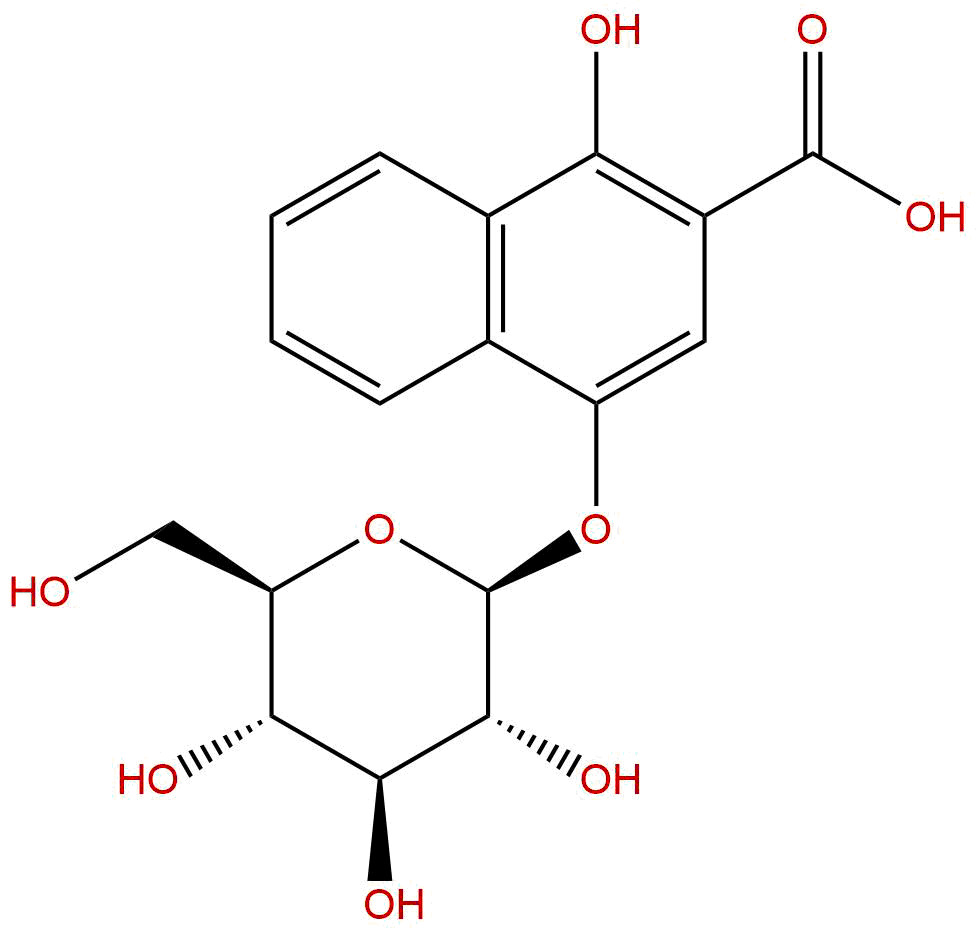
The chemical structure of Rubinophthhin A belongs to the naphthoquinone glycosides. Its core skeleton is 1,4-naphthoquinone, which is a reduced form in which the 1st and 4th positions of the naphthalene ring are replaced by hydroxyl groups. The mother nucleus is connected to a glucose group at position C-2, forming an O - β - D-glucopyranose bond. This structural feature distinguishes it from common naphthoquinone compounds (such as hydroquinone), which typically have an oxidized quinone structure. The presence of the naphthoquinone nucleus allows for the possible involvement of naphthol A in the redox cycle in both in vivo and in vitro environments, exerting dual effects of antioxidant or pro oxidant, which is closely related to its pharmacological activity.
From the perspective of physical and chemical properties, the molecular formula of Xiaohongshen naphthol glycoside A is C ₁₆ H ₂₂ O ₉, with a molecular weight of 366.3220 Da, belonging to small molecule polar compounds. Its lipid water partition coefficient (LogP) is 0.6162, indicating that it has a certain hydrophilicity, which is mainly attributed to the presence of multiple hydroxyl groups and one glucose group in the molecule. The topologically polar surface area (TPSA) is as high as 156.9100 Å ², which is much higher than the recommended upper limit of 140 Å ² for oral drugs. This suggests that its oral absorption may be poor and the membrane permeability may be low. The predicted value of water solubility is 5.3853 mg/mL, indicating good water solubility, which is beneficial for its dissolution and transport in biological fluids. However, high polarity and high TPSA also result in a lower ability to penetrate the blood-brain barrier (BBB), with a predicted result of "low". This means that the potential of the compound in the treatment of central nervous system diseases may be limited, but it also reduces the potential risk of neurotoxicity. In terms of early safety assessment, hERG inhibition was predicted as' no ', indicating a lower risk of causing QT interval prolongation and arrhythmia in the heart; The Ames test predicted a value of 0.6, indicating potential genotoxicity, but this value is within a critical range and needs to be validated through more accurate experiments in the future.
Plant sources and extraction methods
Xiaohongshen naphthol glycoside A is mainly derived from the Rubiaceae plant Xiaohongshen(Rubia yunnanensis)Dry roots. This plant is mainly distributed in southwestern China, especially in the Yunnan Plateau region, growing on slopes, forest edges or grasslands at an altitude of 1500-2800 meters. As a commonly used medicinal herb in the local area, the rhizome of Xiaohongshen is often used as madder in folk culture(Rubia cordifolia)The substitute is used, but its chemical composition spectrum differs from that of madder. The roots of Xiaohongshen are rich in anthraquinones (such as alizarin and hydroxyalizarin), naphthoquinones (such as furomollugin), and naphthoquinone glycosides. Xiaohongshen naphthol glycoside A is one of the representative naphthoquinone glycosides.
For the extraction of naphthol A from Xiaohongshen, classical natural product chemistry methods are usually used, combined with modern chromatographic separation techniques. The basic process is as follows:
1. Raw material pretreatment Grind the dried red ginseng roots to an appropriate particle size (such as 20-40 mesh) to increase the solvent contact area.
2. Solvent extraction Based on the polarity of the target compound, methanol, ethanol, or aqueous ethanol (such as 70% -95% ethanol) is often used as the extraction solvent. Adopting cold soaking, percolation or reflux extraction methods. Usually, extract 2-3 times with 80% ethanol reflux, each time for 1-2 hours, and combine the extracts.
3. Concentration and preliminary separation Concentrate the extract under reduced pressure until there is no alcohol taste, and obtain a paste. Disperse the extract in water and perform liquid-liquid extraction with petroleum ether, ethyl acetate, and n-butanol in sequence to remove fat soluble impurities (such as chlorophyll and oil) and enrich the target components. Xiaohongshen naphthol glycoside A is mainly enriched in the n-butanol extraction layer or water layer due to its glycoside structure and high polarity.
4. chromatographic separation Perform systematic chromatographic separation on n-butanol extract. Common methods include:
* Macroporous adsorption resin column chromatography Resin such as D101 and AB-8 can effectively remove highly polar impurities such as sugars and preliminarily enrich glycoside components by washing with a water ethanol gradient.
* Silica gel column chromatography Use solvent systems such as chloroform methanol water or ethyl acetate methanol water for gradient elution.
* Gel column chromatography For example, Sephadex LH-20 uses molecular sieve action to separate based on molecular weight, and is commonly eluted using methanol or water methanol systems.
* Preparation type high-performance liquid chromatography (Pre HPLC)As the final purification method, a reverse phase C18 chromatography column was used with acetonitrile water or methanol water as the mobile phase, and high-purity Xiaohongshen naphthol glycoside A monomer was obtained by isocratic or gradient elution. Its purity can be confirmed by HPLC-UV or HPLC-ELSD detection, usually requiring a purity greater than 98%.
Pharmacological activity research
The pharmacological activity research of Xiaohongshen naphthol glycoside A is still in its infancy, but existing studies have revealed its potential in antiviral and anti-tumor aspects.
1. Antiviral activity
The initial reported biological activity of Xiaohongshen naphthol glycoside A was its inhibitory effect on tobacco mosaic virus (TMV). TMV is a typical positive single stranded RNA virus that poses great harm to economic crops such as tobacco and tomatoes. Research has shown that Xiaohongshen naphthol glycoside A can effectively inhibit the infection and replication of TMV, and its mechanism of action may involve interfering with the assembly of viral coat proteins or inhibiting the synthesis of viral RNA. This discovery not only provides candidate molecules for the development of new plant-based antiviral pesticides, but also suggests that it may have potential inhibitory effects on other RNA viruses, such as certain human pathogenic viruses, and is worth further exploration.
2. Antitumor activity
The anti-tumor activity is currently the core research direction of Xiaohongshen naphthol glycoside A. Preliminary in vitro cell experiments showed that the naphthol glycoside A of Red Ginseng had different levels of proliferation inhibitory activity on a variety of human tumor cell lines (such as liver cancer, breast cancer, lung cancer, leukemia, etc.). Its functional characteristics are as follows:
* Inducing cell apoptosis Research has found that Xiaohongshen naphthol glycoside A can induce tumor cell apoptosis through endogenous (mitochondrial) and exogenous (death receptor) pathways. Specifically, it is manifested as activating Caspase-3/9, upregulating the Bax/Bcl-2 ratio, causing a decrease in mitochondrial membrane potential, releasing cytochrome c, and ultimately triggering an apoptotic cascade reaction.
* Inhibit cell proliferation By affecting cell cycle regulatory proteins such as Cyclin D1 and CDK4/6, tumor cells are arrested in the G0/G1 or G2/M phase, thereby inhibiting their unlimited proliferation.
* Anti metastatic activity In highly invasive tumor cells (such as highly metastatic breast cancer cell MDA-MB-231), red ginseng naphthol glycoside A showed the ability to inhibit cell migration and invasion. The mechanism may be related to the downregulation of the expression and activity of matrix metalloproteinases (MMP-2/9), thereby hindering the degradation of extracellular matrix by tumor cells.
* Reverse drug resistance Preliminary evidence suggests that Xiaohongshen naphthol glycoside A may partially reverse multidrug resistance (MDR) by inhibiting the function or expression of P-glycoprotein (P-gp), increasing the accumulation of chemotherapy drugs in drug-resistant tumor cells.
Mechanism of action and molecular targets
The anti-tumor mechanism of Xiaohongshen naphthol glycoside A is multi-target and multi pathway. Through molecular docking, transcriptomics, and functional validation studies, the interaction relationship between it and multiple key tumor related targets has been preliminarily revealed.
1. Regulating apoptosis related proteins (MCL1, BCL2)
MCL1 and BCL2 are key anti apoptotic proteins in the Bcl-2 family, highly expressed in various tumors, and closely related to tumor occurrence, development, and chemotherapy resistance. Xiaohongshen naphthol glycoside A is predicted to bind to the BH3 binding groove of MCL1 and BCL2 proteins, simulating the action of BH3 only protein, thereby competitively inhibiting its binding to pro apoptotic proteins (such as Bax, Bak) and relieving the inhibition of apoptosis. Experimental evidence shows that after treatment with Xiaohongshen naphthol glycoside A, the expression levels of MCL1 and BCL2 in tumor cells decrease, while the expression of Bax increases, leading to increased mitochondrial outer membrane permeability and triggering apoptosis.
2. Inhibit the STAT3 signaling pathway
STAT3 (Signal Transduction and Transcription Activation Factor 3) is a key oncogenic transcription factor, and sustained activation of STAT3 can promote cell proliferation, inhibit apoptosis, promote angiogenesis, and immune escape. Xiaohongshen naphthol glycoside A can inhibit the phosphorylation of STAT3 (Tyr705 site), prevent its dimerization and incorporation into the nucleus, thereby downregulating the expression of downstream target genes (such as Cyclin D1, Survivor, VEGF, MMP-2). This is considered one of the core mechanisms by which it exerts anti proliferative, pro apoptotic, and anti metastatic activities.
3. Inhibit matrix metalloproteinase (MMP2)
MMP2 (matrix metalloproteinase 2) is a key enzyme that degrades type IV collagen (the main component of the basement membrane) and plays a decisive role in tumor invasion and metastasis. Xiaohongshen naphthol glycoside A downregulates the transcription and protein expression of MMP2 by inhibiting the STAT3 or MAPK/ERK signaling pathways. It may also directly bind to the catalytic zinc ions of MMP2, inhibiting its enzymatic activity and effectively reducing the invasion and migration ability of tumor cells.
4. Affects DNA topoisomerases (TOP1, TOP2A)
DNA topoisomerase is an important target for anti-tumor drugs. Molecular docking simulation shows that Xiaohongshen naphthol glycoside A may bind to the active sites of TOP1 and TOP2A, forming a drug enzyme DNA ternary complex, stabilizing the cleavage complex, preventing DNA reconnection, leading to DNA damage, and inducing cell apoptosis. This mode of action is similar to classical topoisomerase inhibitors such as camptothecin and etoposide, but the specific binding mode needs to be confirmed by crystallographic experiments.
5. Intervention of hypoxia inducible factor 1A (HIF1A) and angiogenesis
HIF1A (hypoxia inducible factor 1 alpha) is a key regulatory factor for tumor adaptation to the hypoxic microenvironment, and its activation can promote the expression of angiogenic factors such as VEGF. Xiaohongshen naphthol glycoside A can inhibit the protein accumulation and transcriptional activity of HIF1A, possibly by promoting its degradation or inhibiting its synthesis, thereby reducing the secretion of VEGF and exerting anti angiogenic effects. This helps to cut off the nutritional supply of tumors, inhibit tumor growth and metastasis.
6. Other potential targets
In addition, it is predicted that Xiaohongshen naphthol glycoside A may interact with targets such as MAPK1 (ERK2), ESR1 (estrogen receptor alpha), and CYP19A1 (aromatase). For example, inhibiting the MAPK/ERK pathway can affect cell proliferation and differentiation; The potential regulation of ESR1 and CYP19A1 suggests that they may play a dual role in hormone dependent tumors (such as breast cancer), both as selective estrogen receptor modulators and inhibiting estrogen synthesis.
Evaluation of drug properties and pharmacokinetics
Based on the predicted pharmacological parameters, Xiaohongshen naphthol glycoside A exhibits a characteristic of "good and bad coexistence".
Advantage:
* Good water solubility The water solubility of 5.3853 mg/mL is much higher than many insoluble natural products such as paclitaxel and camptothecin, which is beneficial for their formulation development (such as injections, oral liquids) and in vivo absorption.
* Low risk of cardiac toxicity HERG inhibition is predicted as' no ', reducing the risk of arrhythmia failure due to QT interval prolongation in clinical development.
* Low blood-brain barrier penetration Although it limits its application in brain diseases, it also reduces the possibility of central nervous system toxicity.
Disadvantages and challenges:
* Poor oral absorption caused by high polarity LogP is 0.6162 and TPSA is as high as 156.9, which complies with the violation terms of LogP and TPSA in the Lipinski Five Rules (usually requiring TPSA<140 and LogP<5). This strongly suggests that its oral bioavailability may be extremely low, making it difficult to passively diffuse through intestinal epithelial cells. Therefore, oral administration may not be the ideal route, while intravenous or transdermal administration may be a better choice.
* Potential genetic toxicity The Ames test predicted a value of 0.6, which is at the critical point between positive and negative. This requires high vigilance and must be rigorously validated in subsequent in vitro and in vivo genetic toxicity tests, such as micronucleus tests and chromosome aberration tests. If genetic toxicity is confirmed, it will seriously hinder its development as a long-term oral drug, but may not affect its development as a short-term injectable anti-tumor drug.
* Metabolic stability unknown Currently, there is a lack of data on the metabolic stability of naphthol A in small red ginseng in liver microsomes or in vivo. Its glycosidic bonds may be hydrolyzed by gut microbiota or liver β - glucosidase to generate aglycones, thereby altering its pharmacological activity and pharmacokinetic characteristics. Further metabolism of aglycones, such as glucuronidation and sulfation, also needs to be studied.
Prospects of pharmacokinetics Due to its high polarity and glycosidic structure, Xiaohongshen naphthol glycoside A may have a faster distribution and elimination rate if administered intravenously. Its distribution volume may be small, mainly distributed in extracellular fluid. In terms of metabolism, deglycosylation may be the main metabolic pathway. Excretion may occur in its original form or metabolite form through the kidneys (urine) and bile (feces). Future pharmacokinetic studies should focus on addressing key parameters such as oral bioavailability, metabolic pathways, half-life, and protein binding rate.
Clinical application prospects and prospects
As a structurally novel natural product, the clinical application prospects of Xiaohongshen naphthol glycoside A mainly focus on anti-tumor fields, but it also faces many challenges.
1. Development of anti-tumor drugs
The multi-target action characteristics of Xiaohongshen naphthol glycoside A (simultaneously acting on apoptosis, STAT3, MMP, topoisomerase, etc.) are its unique advantages as an anti-tumor drug, which may help overcome the problem of resistance to single target drugs. Its potential indications may include:
* Liver cancer, breast cancer, lung cancer Abnormal activation of STAT3, MCL1/BCL2, and high expression of MMP are often present in these tumors.
* leukemia The inhibitory effect on hematological tumors is worth exploring.
* combination therapy Given its potential to reverse MDR, Xiaohongshen naphthol glycoside A is expected to be used in combination with conventional chemotherapy drugs such as doxorubicin and paclitaxel to improve efficacy and reduce drug resistance.
2. Optimize the structure as a lead compound
Due to its pharmacological defects (poor oral absorption, potential genetic toxicity), there is a high risk of developing it directly as an oral medication. A more feasible strategy is to use it as a lead compound for systematic structural modification:
* Prodrug design Esterification or etherification modification of phenolic hydroxyl or sugar groups to enhance lipid solubility and improve oral absorption. Release the original drug through enzymatic interpretation in the body.
* Glycogen research Study the activity and pharmacological properties of its aglycone (i.e. naphthoquinone with glucose removed). Glycosides may have better membrane permeability, but their water solubility may decrease. We need to balance the relationship between the two.
* Sugar substitution Attempt to replace glucose with other sugar groups (such as lactose, xylose) or chemically modify sugar groups to alter its pharmacokinetics and targeting.
* Mother nucleus modification Introducing specific functional groups (such as halogens and methyl groups) onto the naphthoquinone nucleus to enhance affinity and selectivity towards specific targets while reducing toxicity.
3. Antiviral applications
Although TMV is a plant virus, this activity suggests that Xiaohongshen naphthol glycoside A may have broad-spectrum antiviral potential. Further evaluation can be conducted on its inhibitory activity against human pathogenic viruses such as influenza virus, dengue virus, enterovirus, etc., and the mechanism of action can be explored to determine whether it targets viral replication enzymes or host factors.
4. As a tool molecule
The unique naphthoquinone structure and multi-target properties of Xiaohongshen naphthol glycoside A make it a valuable tool molecule for studying the STAT3 signaling pathway, apoptosis regulation, tumor metastasis mechanism, and redox biology.
Conclusion
Xiaohongshen naphthol glycoside A is a natural product with a unique naphthoquinone glycoside structure isolated from traditional Chinese medicine Xiaohongshen. It combines antiviral (TMV) and anti-tumor activities, and exerts effects on inducing apoptosis, inhibiting proliferation, anti metastasis, and potential anti angiogenesis by regulating multiple key molecular targets such as MCL1, BCL2, STAT3, MMP2, TOP1, etc. Its good water solubility and low cardiac toxicity provide favorable conditions for its development, but the low oral bioavailability and potential genetic toxicity caused by high polarity are the main bottlenecks for its drug development.
In the future, research on Xiaohongshen naphthol glycoside A should focus on the following aspects: firstly, conducting in-depth in vivo and in vitro pharmacological evaluations to clarify its anti-tumor spectrum and depth of action; The second is to systematically elucidate its pharmacokinetic characteristics and metabolic pathways; Thirdly, rational drug chemical modifications should be carried out based on its structural characteristics to improve drug properties; The fourth is to comprehensively reveal its functional network using modern omics technologies such as proteomics and metabolomics. Despite the numerous challenges ahead, Xiaohongshen naphthol glycoside A, as a novel molecular entity derived from a unique medicinal plant in China, has unique chemical space and biological functions. Through in-depth research and structural optimization, it is expected to eventually develop into an anti-tumor or antiviral candidate drug with independent intellectual property rights, contributing to the cause of human health.