Introduction/Overview
Methyl salicylate, also known as methyl ortho hydroxybenzoate, with a CAS number of 119-36-8, is a widely present aromatic organic compound in nature. Its most well-known source is wintergreen oil, so it is often referred to as wintergreen oil essence. Since ancient times, plant extracts containing methyl salicylate have been used in traditional medicine to alleviate muscle pain, joint inflammation, and headaches. With the development of modern pharmacology, methyl salicylate, as a classic local analgesic and anti-inflammatory agent, its application has expanded from traditional herbal preparations to modern over-the-counter drugs, food flavors, daily chemical essence and even agricultural fields. In recent years, with the in-depth exploration of its molecular mechanism of action, the multi-target regulatory effect of methyl salicylate in the inflammatory signaling pathway has received increasing attention. Its derivatives such as lactide have also been found to have cyclooxygenase (COX) inhibitory activity, providing new ideas for the development of novel and safe anti-inflammatory and analgesic drugs. This article aims to systematically review the chemical properties, plant sources, pharmacological activities, molecular mechanisms of action, pharmacological evaluation, and clinical application prospects of methyl salicylate, in order to provide comprehensive scientific references for the in-depth research and development of this natural product.
Chemical structure and physicochemical properties
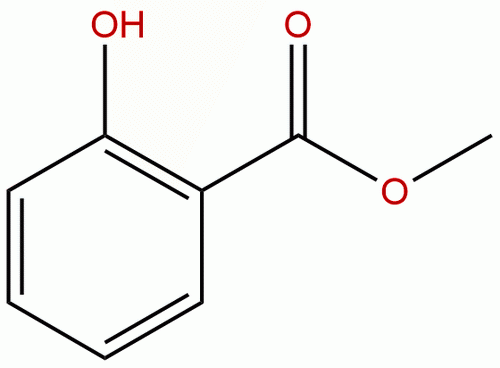
The molecular formula of methyl salicylate is C8H8O3, with a molecular weight of 152.1490 g/mol. Its chemical structure consists of a benzene ring, with adjacent positions (positions 1 and 2) connected to a hydroxyl group (- OH) and a methyl ester group (- COOCH3). This ortho substituted benzoate structure is the basis of its biological activity, which combines the anti-inflammatory activity of salicylic acid (ortho hydroxybenzoic acid) with the volatility and transdermal absorption characteristics of esters.
In terms of physical and chemical properties, methyl salicylate is a colorless to pale yellow oily liquid at room temperature, with a characteristic strong holly aroma and sweetness. Its lipid water partition coefficient (LogP) is 2.0849, indicating that the compound has moderate lipophilicity, which is beneficial for its penetration of biological membranes, especially the stratum corneum of the skin, thus achieving effective absorption after local administration. Its topological polar surface area (TPSA) is 46.5300 Å ², which is relatively small and further supports its good membrane permeability. The water solubility is relatively low, about 2.5060 mg/mL, and it belongs to compounds that are slightly soluble in water. This compound has high volatility and can pass through the blood-brain barrier, indicating its potential impact on the central nervous system, although its main application is focused on peripheral local effects. In the preliminary safety screening, the Ames test result was 0.6, indicating a low risk of mutagenicity; Meanwhile, the data shows that it has no significant inhibitory effect on the potassium channel of the human ether - à - go go related gene (hERG), suggesting that its risk of cardiac toxicity may be relatively low. These basic pharmacological parameters provide a theoretical basis for its safety as an external medication.
Plant sources and extraction methods
Methyl salicylate is widely distributed in nature and is a secondary metabolite of various plants, especially abundant in Ericaceae and Betulaceae plants. Its most famous commercial source is gaultheria procumbens(Gaultheria procumbens L.), Holly, whose leaves can be distilled by steam to obtain holly oil rich in methyl salicylate (with a content of over 90%). In addition,birch(Betula Spp.) bark Spiraea(Spiraea Spp.) and certain orchid This ingredient is also present in the variety.
The traditional extraction methods mainly include steam distillation After shredding fresh or dried leaves of plants (such as winter green leaves), they are placed in a distillation device and steam is introduced to allow volatile oils to be distilled out along with the steam. After condensation and oil-water separation, crude oil can be obtained. This method has a mature process and is suitable for large-scale production, but some thermosensitive components may change due to high temperatures.
Modern extraction techniques are more diverse and refined:
1. Organic solvent extraction method Using solvents such as ethanol and petroleum ether for extraction or Soxhlet extraction, suitable for small-scale laboratory preparation or extraction from matrices containing non-volatile components.
2. Supercritical fluid extraction (SFE) method Carbon dioxide is commonly used as a supercritical fluid, which has mild conditions (lower temperature), good selectivity, and no solvent residue. It can efficiently extract high-purity methyl salicylate, but the equipment cost is relatively high.
3. Microwave assisted extraction (MAE) and ultrasound assisted extraction (UAE)The use of microwave or ultrasound energy to accelerate plant cell rupture and component dissolution can significantly shorten extraction time and improve extraction efficiency, making it a green and efficient modern extraction method.
The crude methyl salicylate extracted usually needs to be further purified, such as vacuum distillation, column chromatography (silica gel, gel), etc., to obtain high-purity products that meet the pharmaceutical or spice standards. Different plant sources and extraction processes can affect the composition and biological activity of the final product, thus requiring attention in research and application.
Pharmacological activity research
The core pharmacological activity of methyl salicylate is concentrated in Analgesia and anti-inflammatory And extend to other related biological effects.
-
Analgesic effect Methyl salicylate is a classic local analgesic. Its analgesic mechanism includes its effect on peripheral sensory nerve endings. It can activate transient receptor potential vanillic acid subtype 1 (TRPV1) and transient receptor potential anchor protein subtype 1 (TRPA1) channels, initially producing a mild stimulus (warmth or coolness), and then reducing the sensitivity of nerve endings to pain stimuli through an "adversarial stimulus" mechanism, thereby relieving muscle pain, joint pain, and neuropathic pain. Numerous preclinical studies and human applications have confirmed its effectiveness in relieving acute and chronic musculoskeletal pain.
-
anti-inflammatory effect Methyl salicylate has clear nonsteroidal anti-inflammatory drug (NSAID) properties. In various animal models of acute and chronic inflammation, such as carrageenan induced paw swelling in rats and adjuvant arthritis, local application of methyl salicylate can significantly reduce tissue swelling and decrease inflammatory cell infiltration. Its anti-inflammatory effect is closely related to the inhibition of the production and release of various inflammatory mediators.
-
Other activities:
- Antibacterial and antifungal Research has shown that methyl salicylate has inhibitory effects on certain bacteria (such as Staphylococcus aureus and Escherichia coli) and fungi (such as Candida albicans), which explains its use in traditional medicine for treating mild skin infections and as a preservative.
- antioxidant Its phenol structure gives it a certain free radical scavenging ability, which helps alleviate tissue damage related to oxidative stress.
- Signal function in plants In the plant kingdom, methyl salicylate is a volatile derivative of salicylic acid that plays a crucial role as a signaling molecule for systemic acquired resistance (SAR) in plant defense against pathogen invasion. This characteristic is also applied in agriculture as an eco-friendly pesticide that stimulates crop autoimmune responses.
- Transdermal absorption enhancer Due to its good lipid solubility and skin permeability, methyl salicylate is often used as a carrier or enhancer to help other drug components penetrate the skin barrier.
Mechanism of action and molecular targets
The anti-inflammatory and analgesic effects of methyl salicylate are not achieved through a single target, but involve a complex multi-target network, mainly through the regulation of key inflammatory signaling pathways.
-
Regulation of inflammatory mediators and signaling pathways:
- Inhibition of nuclear factor kappa B (NF - κ B) pathway NF - κ B is the core transcription factor of inflammatory response. Methyl salicylate and its metabolites (such as salicylic acid) can inhibit the activity of IKB kinase (IKBKB), prevent the degradation of inhibitory protein I κ B, and thus reduce the transfer of NF - κ B (such as RELA/p65 subunit) to the nucleus. This directly leads to a decrease in transcription of various pro-inflammatory cytokine genes downstream.
- Inhibition of pro-inflammatory cytokines Methyl salicylate can significantly reduce the expression levels of key pro-inflammatory cytokines such as tumor necrosis factor - α (TNF - α) and interleukin-6 (IL-6). Inhibition of IL-6 may indirectly affect its downstream JAK/STAT3 signaling pathway. The sustained activation of STAT3 is closely related to chronic inflammation and autoimmune diseases, and the inhibition of STAT3 activity by methyl salicylate is an important part of its anti-inflammatory mechanism.
- Inducible nitric oxide synthase (iNOS/NOS2) and prostaglandin inhibition Methyl salicylate can downregulate the expression of iNOS and reduce the production of excessive nitric oxide (NO), which is an important inflammatory mediator. More importantly, its structural analogue methyl salicylate lactide has been confirmed to be a COX inhibitor, and methyl salicylate itself may also reduce the synthesis of prostaglandins (such as PGE2) catalyzed by COX-1 (PTGS1) and COX-2 by affecting arachidonic acid metabolism, which is one of the core mechanisms by which it exerts NSAID like effects.
-
Direct effects on sensory neurons:
- Adjustment of TRPV1 and TRPA1 channels As mentioned earlier, methyl salicylate is an agonist of TRPV1 and TRPA1. This activation initially causes local irritation, but may subsequently lead to channel desensitization or depletion of local neuropeptides triggered by calcium ion influx, resulting in persistent analgesic and anti neurogenic inflammatory effects.
-
Potential impact on cell pyroptosis:
- Caspase-1 (CASP1) is a key enzyme in inflammasome activation, responsible for cleaving interleukin-1 β (IL-1 β) and IL-18 precursors into active forms and triggering cell pyroptosis. There are studies suggesting that salicylate drugs may interfere with the assembly or activation of inflammasomes. Whether methyl salicylate regulates IL-1 β - driven inflammatory response by affecting CASP1 is a direction worthy of further exploration.
In summary, methyl salicylate forms a multi-layered and synergistic anti-inflammatory and analgesic network by simultaneously acting on TRP channels (peripheral sensory nerves), inhibiting COX activity (reducing prostaglandins), and regulating core transcription pathways such as NF - κ B and STAT3 (reducing TNF - α, IL-6, iNOS, etc.).
Evaluation of drug properties and pharmacokinetics
As a main ingredient of over-the-counter medication that has been used for a long time, methyl salicylate has its unique medicinal characteristics.
pharmacokinetics:
* absorb After topical application, methyl salicylate can be rapidly absorbed through the stratum corneum of the skin due to its suitable LogP value and low molecular weight. The absorption rate and degree are affected by the preparation matrix (gel, cream, patch), skin condition and use area.
* distribution After absorption into the systemic circulation, due to its high lipid solubility and small molecular size, it can be distributed to tissues throughout the body and can pass through the blood-brain barrier. This explains why central nervous system symptoms such as tinnitus, dizziness, and blurred consciousness may occur when high-dose ingestion or long-term topical poisoning occurs.
* Metabolism Methyl salicylate is mainly rapidly hydrolyzed by esterases (present in the liver, blood, and tissues) in the body to its main active metabolite——salicylic acid Therefore, its systemic pharmacological effects and toxicity are largely derived from salicylic acid. Salicylic acid further binds to glycine through the liver to form salicylic acid, or binds to glucuronic acid, or undergoes hydroxylation.
* excretion Metabolites are mainly excreted through the kidneys and urine. The elimination of salicylic acid follows first-order kinetics, but when the dosage is too high, it can be converted to zero order kinetics, which can easily lead to accumulation poisoning.
Advantages and limitations of medicinal properties:
* Advantage:
1. Local administration with minimal systemic side effects As an external medication, its systemic exposure is much lower than that of oral NSAIDs, greatly reducing the risk of systemic side effects such as gastrointestinal ulcers, bleeding, and kidney damage caused by classic NSAIDs.
2. Rapid onset of action Transdermal absorption is fast, with high local concentration, which can quickly exert analgesic and anti-inflammatory effects at the site of action.
3. Good patient compliance Easy to use, no need for oral administration, avoiding first pass liver effects.
4. Multi-target effect The mechanisms are diverse and may be more effective for complex inflammatory states.
* Limitations and Risks:
1. Dose control and toxicity risk The absorption rate of the skin can vary, and if used extensively, for a long time, or for damaged skin, it may lead to excessive systemic absorption, causing salicylic acid poisoning (salicylic acid reaction), manifested as tinnitus, nausea, vomiting, respiratory alkalosis, secondary metabolic acidosis, etc. In severe cases, it can be life-threatening.
2. local stimulation May cause contact dermatitis or skin irritation in some populations.
3. Limited depth of action For deep tissue inflammation, its infiltration and efficacy may be insufficient.
4. Rapid metabolism Short half-life in the body, frequent administration is required to maintain local effects.
Therefore, in terms of medicinal properties, methyl salicylate is an excellent topical and local therapeutic agent, but the dosage and range of use need to be strictly regulated, and systemic toxicity should be monitored.
Clinical application prospects and prospects
The clinical application of methyl salicylate is very mature, but based on its multi-target mechanism and new research progress, its future development still has potential.
Current Application:
* Musculoskeletal pain management: The core ingredients of various externally applied pain relieving creams, gel, liniments, spray and patches are widely used to relieve back pain, arthritis, sprains, muscle strain, etc.
* Sports Medicine and Rehabilitation Used for muscle relaxation and fatigue recovery before and after exercise.
* Local anti-inflammatory Adjuvant treatment for mild local soft tissue inflammation.
* Non-medical use As a seasoning used in food and beverages, as a fragrance used in cosmetics and toothpaste, and as a pesticide signaling molecule.
Future prospects and research directions:
1. Development of a new delivery system By utilizing technologies such as microemulsion, liposome, nanoparticle, microneedle, or sustained-release transdermal patches, the skin permeability of methyl salicylate can be improved, its release rate controlled, local retention time increased, and systemic absorption reduced, thereby enhancing efficacy and safety. For example, developing a joint cavity deep delivery system for osteoarthritis.
2. Structural modification and derivative research and development Using methyl salicylate as the parent nucleus, chemical modification is carried out, and it has been found that methyl salicylate lactose glycosides have COX inhibitory activity. Through rational drug design, derivatives with higher selectivity, stronger efficacy, or new mechanisms of action (such as specific STAT3 inhibitors) may be developed for oral or injectable administration to treat systemic inflammatory diseases.
3. Combination therapy strategy Compound it with other analgesic and anti-inflammatory ingredients with different mechanisms of action (such as menthol, capsaicin, other plant extracts or synthetic drugs) to produce synergistic effects, reduce the required dosage of each component, and minimize side effects.
4. Expand into new therapeutic fields Further investigate its precise effects on targets such as TRP channels and inflammasomes (CASP1), and explore its potential value in the adjuvant treatment of neuropathic pain, itching, skin inflammatory diseases (such as atopic dermatitis), and certain autoimmune diseases.
5. Re evaluation of Safety and Precision Medication Utilizing modern analytical techniques and modeling to more accurately assess the systemic exposure risks of different populations (such as children, elderly, and individuals with impaired skin barrier function) after topical use, and establish more scientific medication guidelines.
Conclusion
Methyl salicylate, a natural compound derived from plants such as holly, has gone through a long journey from traditional herbal medicine to modern over-the-counter use and is still widely used worldwide. Its unique chemical structure endows it with excellent transdermal properties, clear analgesic and anti-inflammatory activities, and molecular characteristics of multi-target action. It effectively alleviates local pain and inflammation by regulating TRPV1/TRPA1 channels, inhibiting COX activity, intervening in NF - κ B and STAT3 signaling pathways, and other multiple mechanisms. As a local administration formulation, it has significant systemic safety advantages compared to oral NSAIDs while exerting therapeutic effects. However, its potential risk of salicylic acid poisoning requires us to use it in a standardized manner.
In the future, with the innovation of drug delivery technology, the deepening of structural biology and molecular pharmacology, methyl salicylate and its derivatives are expected to break through the limitations of being mainly used as topical relievers, and develop towards a more efficient, safe, and precise direction. Whether as the cornerstone of new transdermal formulations or as a template for developing multi-target anti-inflammatory lead compounds, methyl salicylate, an ancient natural molecule, will continue to radiate new vitality in drug development and disease treatment. Continuous basic and clinical research on it will not only help optimize existing therapies, but also provide a classic example for discovering modern drugs from natural products.